
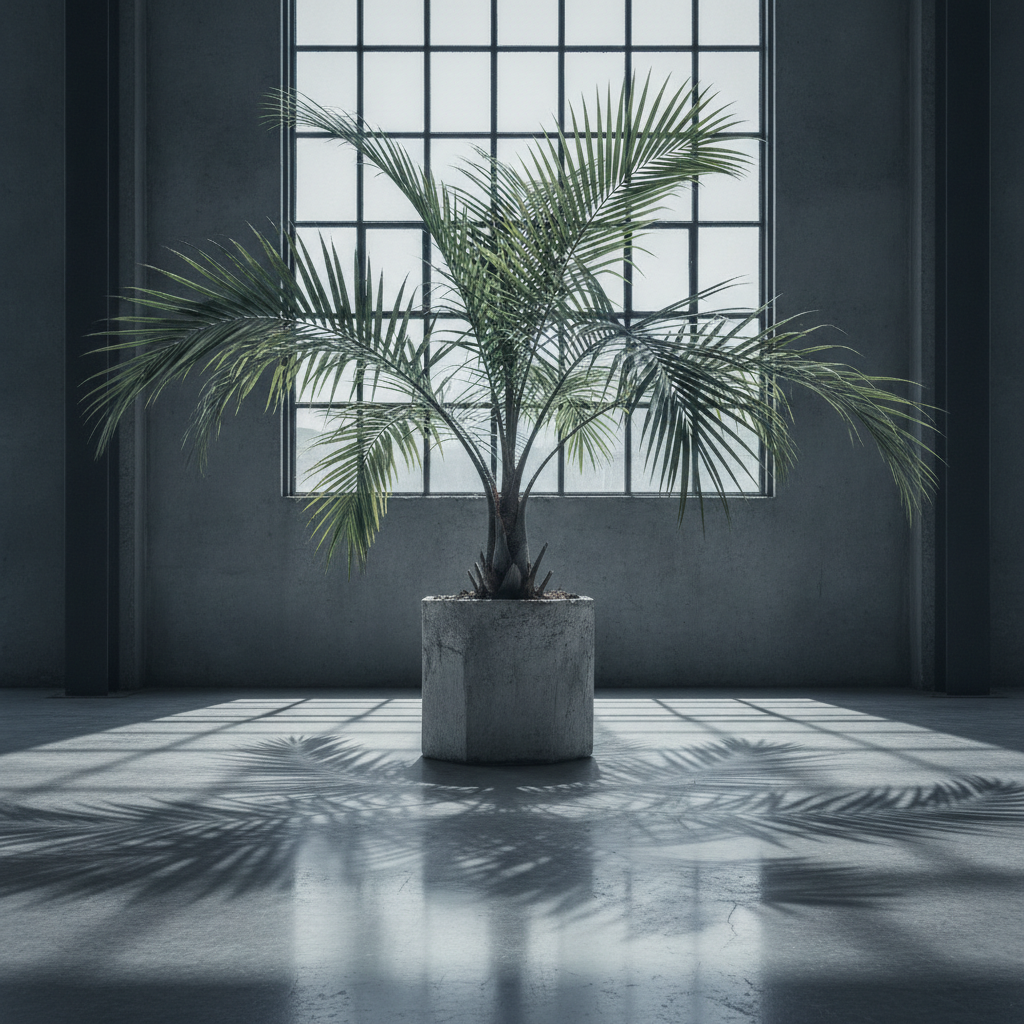
Few houseplants announce their architecture as boldly as the triangle palm. Where most feather palms spray their fronds in a loose, rounded shuttlecock, Dypsis decaryi arranges its leaf bases in three neat vertical ranks set roughly 120 degrees apart, so the base of the plant forms a distinct triangular column when viewed from above. That single structural quirk, paired with arching blue-grey-green fronds dusted in a waxy bloom, makes it one of the most sculptural palms you can grow indoors. It is also, happily, one of the more forgiving, hailing from a hot, dry corner of Madagascar where dry air and lean soils are the norm rather than the exception.
This guide covers everything from the light and watering that keep a triangle palm merely alive to the conditions that let it truly thrive, along with the feeding regime, propagation method and troubleshooting knowledge that separate a tired specimen from a striking one.
- Quick reference
- Why grow a triangle palm
- Light
- Watering
- Soil and potting
- Fertilising
- Propagation
- Pests and problems
- Varieties and forms
- Frequently asked questions
Quick Reference
| Botanical name | Dypsis decaryi |
| Common names | Triangle palm, three-sided palm |
| Family | Arecaceae |
| Native range | South-east Madagascar (Anosy region) |
| Mature size | 1.5 to 3 m indoors (4.5 to 6 m outdoors) |
| Light | Bright indirect light to full sun |
| Water | Moderate; let the top 3 to 5 cm (1 to 2 in) dry |
| Humidity | Average household (30 to 50%); tolerates dry air |
| Temperature | 18 to 27 degrees C (64 to 81 degrees F); protect below 10 degrees C (50 degrees F) |
| Soil | Free-draining, sandy and gritty |
| Fertiliser | Palm feed with potassium and magnesium, growing season only |
| Propagation | Seed only |
| Toxicity | Non-toxic to cats, dogs and humans |
| Growth rate | Slow to moderate |
Why Grow a Triangle Palm as a Houseplant
The triangle palm earns its place indoors on the strength of its silhouette. Its fronds emerge in three flat planes, so from certain angles the plant looks almost two-dimensional, then rotates into a full, feathery fountain as you walk around it. The foliage carries a distinctive blue-grey cast overlaid with a fine waxy bloom, and the leaf bases and central rachis are often flushed with a cinnamon to reddish-brown fuzz that adds warmth against the cool tones of the leaflets. It is a palm that reads as designed rather than merely leafy.
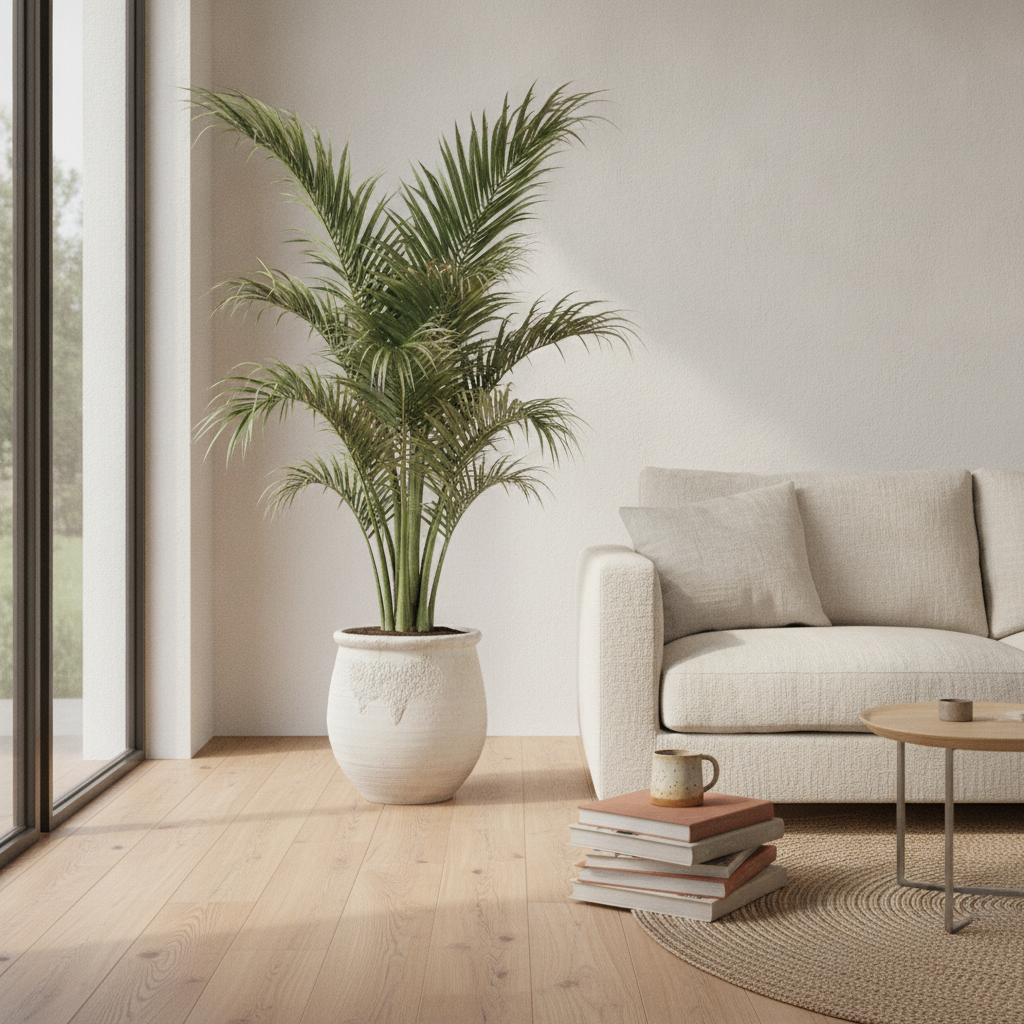
Beyond looks, its origins make it unusually suited to indoor life. In the wild Dypsis decaryi grows on dry, sandy hillsides in the far south-east of Madagascar, an area with a long dry season and lean, fast-draining soils. As a result it tolerates the low humidity, occasional missed watering and confined roots of container culture far better than moisture-loving palms such as the areca or the parlour palm. It is also genuinely pet-friendly, carrying no known toxicity to cats, dogs or people, which removes a common worry for households with curious animals. Grown well, it forms a solitary trunk topped by a crown of arching fronds and can serve for years as an architectural floor plant that asks relatively little in return.
It is worth knowing that this is a slow palm and a solitary one. It produces a single stem rather than clumping offsets, so you are cultivating one specimen that gains height gradually over many seasons. Patience is part of the deal, but the payoff is a plant that ages into a real focal point rather than outgrowing its welcome in a year or two.
Light
Light is the single biggest lever you have with a triangle palm. This is a sun-loving species that in its native range grows in open, exposed positions, so indoors it wants the brightest spot you can offer. A position within a metre or two of a south or west-facing window is ideal, where it receives several hours of bright light and can take a few hours of direct sun on the foliage without scorching. In lower light it will survive, but growth slows to a crawl, new fronds emerge smaller and paler, and the plant gradually stretches and thins as it reaches for the window.
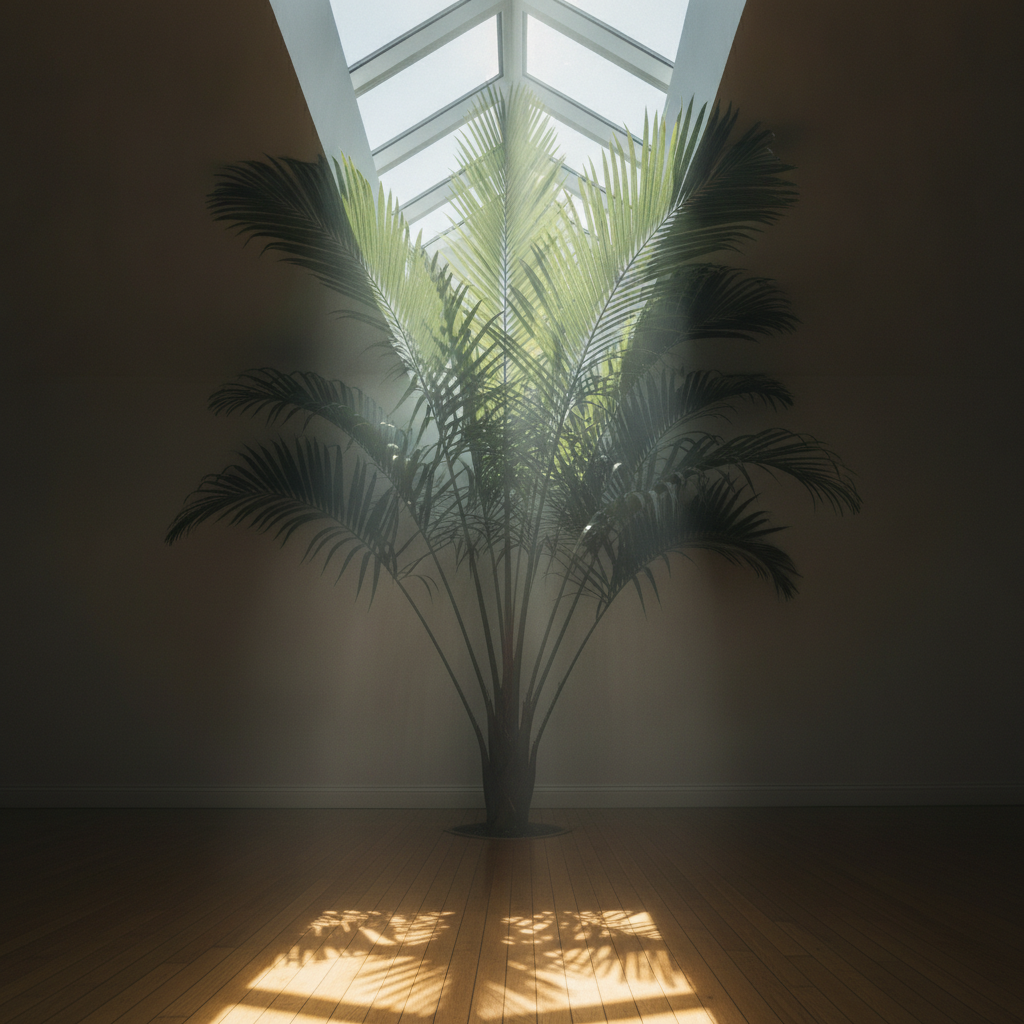
If you can only provide moderate light, the plant will hold on but never look its best, and the striking blue-grey bloom tends to fade toward a flatter green. Where natural light is genuinely limited, a full-spectrum grow light suspended above the crown for ten to twelve hours a day makes a real difference and can carry the plant through dark winters. A palm that has been indoors in low light should be moved into stronger sun gradually over a week or two, since foliage adapted to shade can burn if it is suddenly exposed to intense direct rays.
Pro Tip — Even growth: Rotate the pot a quarter turn every couple of weeks so all three ranks of fronds receive similar light. A triangle palm grown against a wall will otherwise lean noticeably toward the brightest side and lose its symmetry.
Watering
The triangle palm is markedly more drought-tolerant than most feather palms, and the fastest way to kill one is to keep it constantly wet. The guiding principle is to water thoroughly, then let the surface dry before watering again. In practice this means allowing the top 3 to 5 cm (1 to 2 in) of the mix to dry out, then watering deeply until liquid runs from the drainage holes, and tipping away anything that collects in the saucer. During the warm growing months this cycle might come around once a week; in winter, with lower light and cooler temperatures, it may stretch to every two or three weeks.
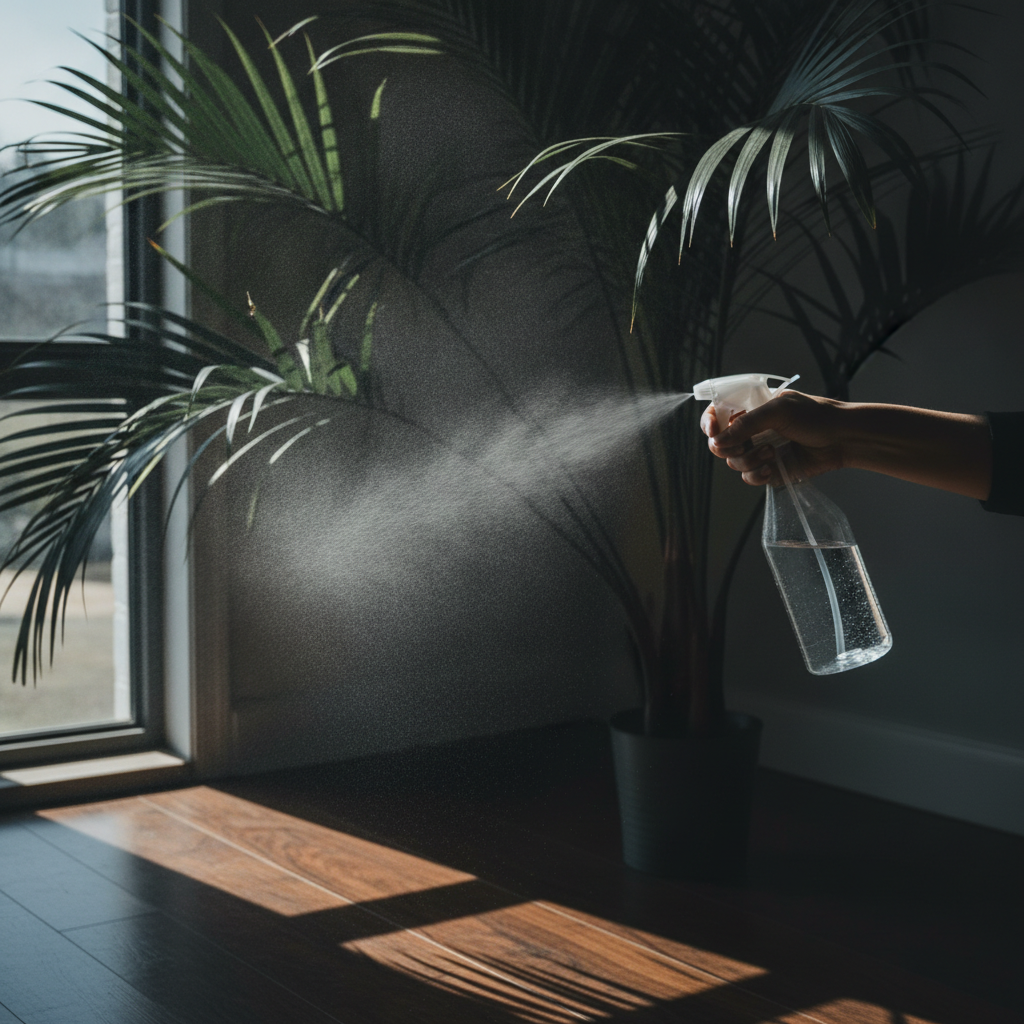
Because the plant evolved on free-draining ground, it resents having its roots sitting in saturated soil, which quickly leads to root rot and the sudden collapse of lower fronds. Err on the side of slightly too dry rather than too wet, and always judge by the soil rather than the calendar. A useful habit is to push a finger or a wooden skewer into the mix before each watering: if it comes out with damp soil clinging to it, wait. Like most palms, the triangle palm is sensitive to fluoride and salts, so if your tap water is heavily treated, using filtered or rainwater and flushing the pot occasionally will help keep the frond tips from browning.
Warning — Cold, wet roots: The combination of cold and wet is the most dangerous condition for this palm. In winter, cut watering right back, and never leave the pot standing in a tray of water, as roots that are both chilled and waterlogged rot fast.
Soil and Potting
Drainage is everything for a triangle palm. The ideal mix is open and gritty, closer to what you would give a cactus than a fern. A reliable blend is roughly two parts quality potting compost to one part coarse perlite or pumice and one part coarse sand or fine grit, which holds enough moisture to keep the roots active while letting excess water pass straight through. A dedicated palm or cactus compost amended with extra perlite achieves much the same thing. Whatever you use, the pot must have generous drainage holes, and a heavy or clay-based mix that stays soggy should be avoided entirely.
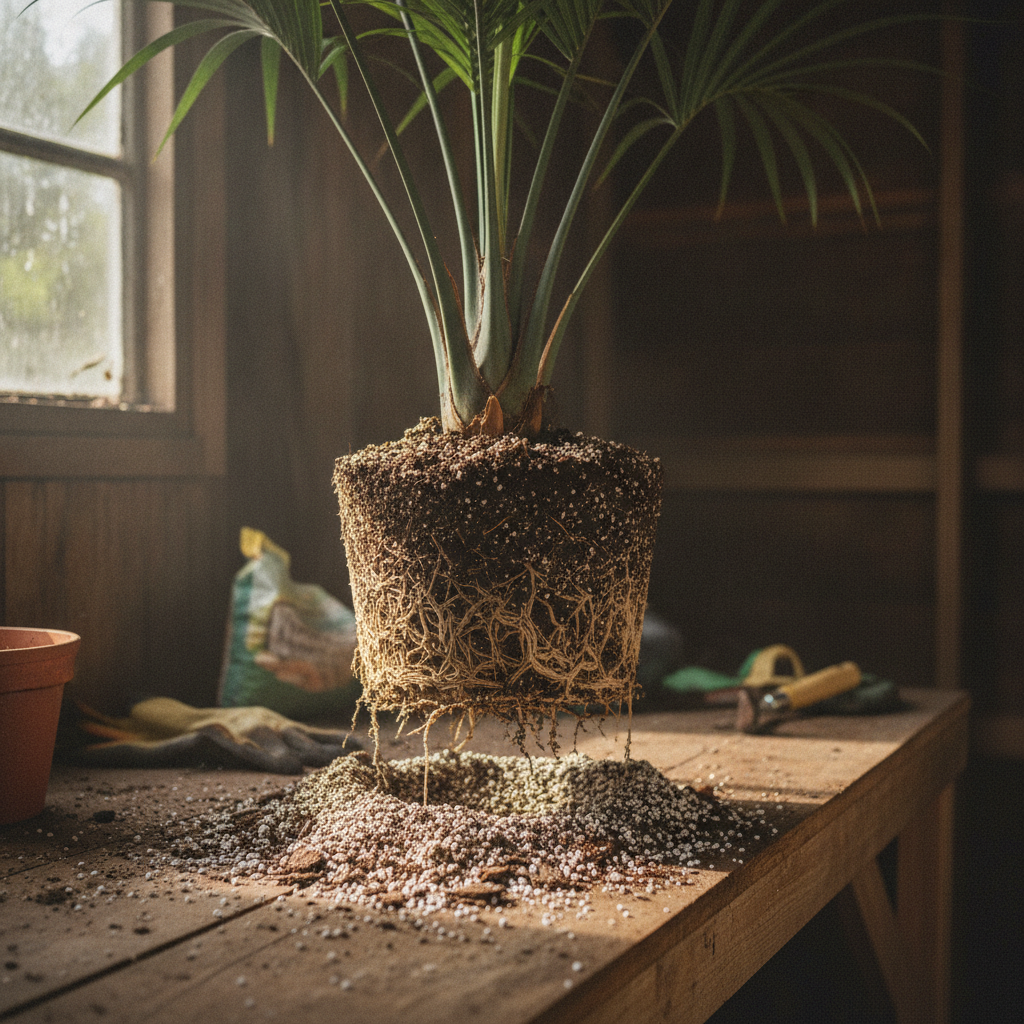
Triangle palms are slow growers with relatively modest root systems and are happiest a little snug in their container, so there is no need to rush them into larger pots. Repotting every two to three years, or only when roots are visibly circling the base and pushing out of the drainage holes, is plenty. When you do move up, choose a pot just one size larger, since an oversized container holds a large volume of wet soil that the roots cannot use, inviting rot. Palms also dislike root disturbance, so handle the root ball gently and avoid teasing the roots apart more than necessary. A heavy, wide-based pot is worth choosing for a tall specimen, as a mature triangle palm becomes top-heavy and can tip a lightweight container.
- Water the plant a day before repotting so the root ball holds together and slides out cleanly.
- Ease the palm from its old pot, supporting the base of the trunk rather than pulling on the fronds.
- Position it in the new pot at the same depth it grew before, never burying the trunk deeper.
- Fill around the sides with fresh gritty mix, firming gently to remove large air pockets.
- Water thoroughly to settle the soil, then hold off on feeding for four to six weeks while new roots establish.
Fertilising
Palms are hungry for particular nutrients, and the triangle palm is no exception. It draws heavily on potassium and magnesium, and deficiencies in these two elements are behind most of the yellowing and spotting you see on cultivated specimens. For that reason a purpose-made palm fertiliser, which is formulated with the right ratio of potassium and magnesium alongside nitrogen and trace elements, is a far better choice than a generic houseplant feed. Apply it through the active growing season from spring into early autumn, following the label rates, and stop entirely in the darker months when the plant is barely growing and cannot use the nutrients.
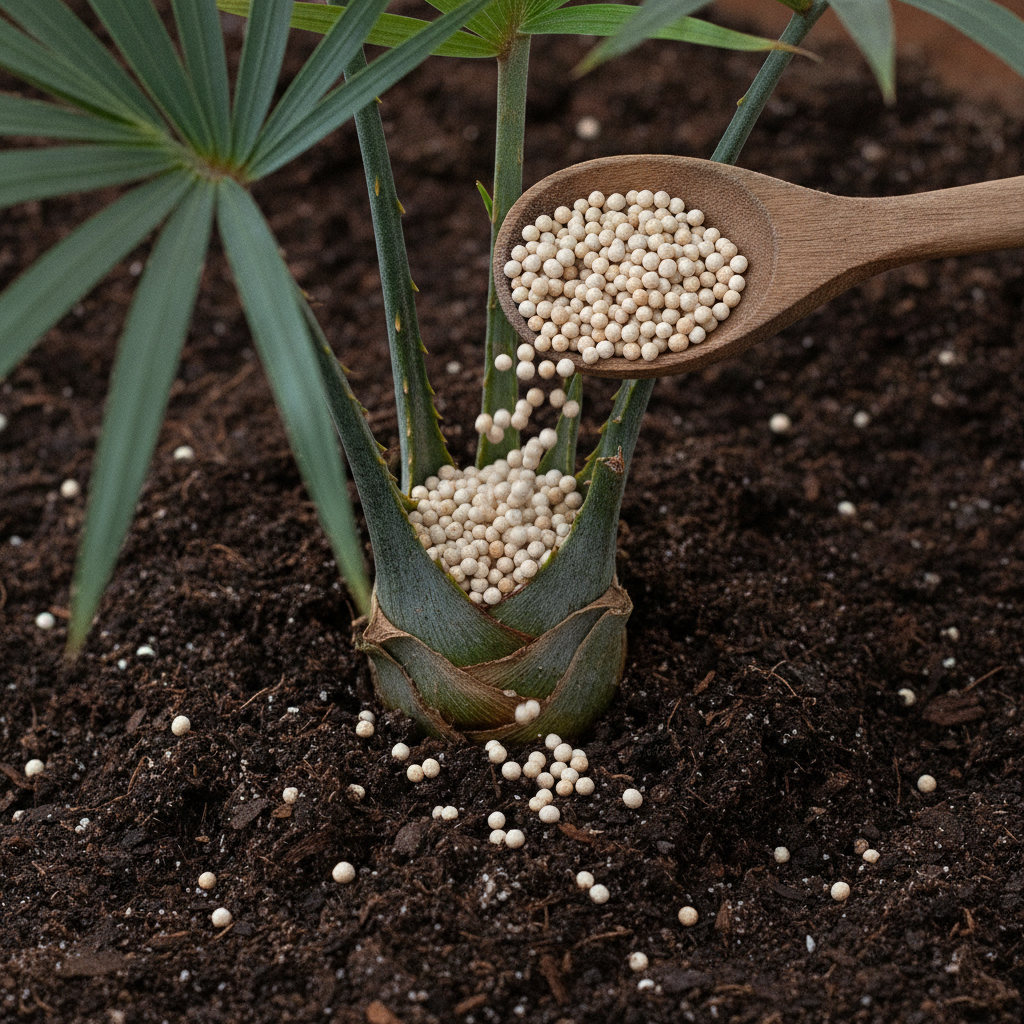
Slow-release palm granules scattered over the soil surface in spring are the simplest approach, feeding gently over several months, but a diluted liquid palm feed applied every four to six weeks works equally well if you prefer more control. Whichever you choose, resist the temptation to overfeed. Palms are sensitive to a build-up of fertiliser salts, which scorch the root tips and brown the frond ends, so a lighter hand applied consistently beats an occasional heavy dose. If older fronds develop yellow margins or translucent spotting despite regular feeding, a supplementary dose of magnesium in the form of dissolved Epsom salts often corrects it.
Pro Tip — Read the oldest fronds: Nutrient problems show first on the lowest, oldest leaves because the palm moves mobile nutrients such as potassium and magnesium up to its newest growth. Yellowing that starts at the bottom of the plant usually points to feeding, not watering.
Propagation
Here the triangle palm asks for patience above all. Unlike clumping palms that throw up offsets you can divide, Dypsis decaryi is strictly solitary, producing a single growing point and no suckers. That means it cannot be propagated by division, cuttings or any vegetative method, and every new plant must be grown from seed. Cutting into the crown or attempting to split the trunk will simply kill the plant, since a palm has only one terminal bud from which all new leaves emerge.
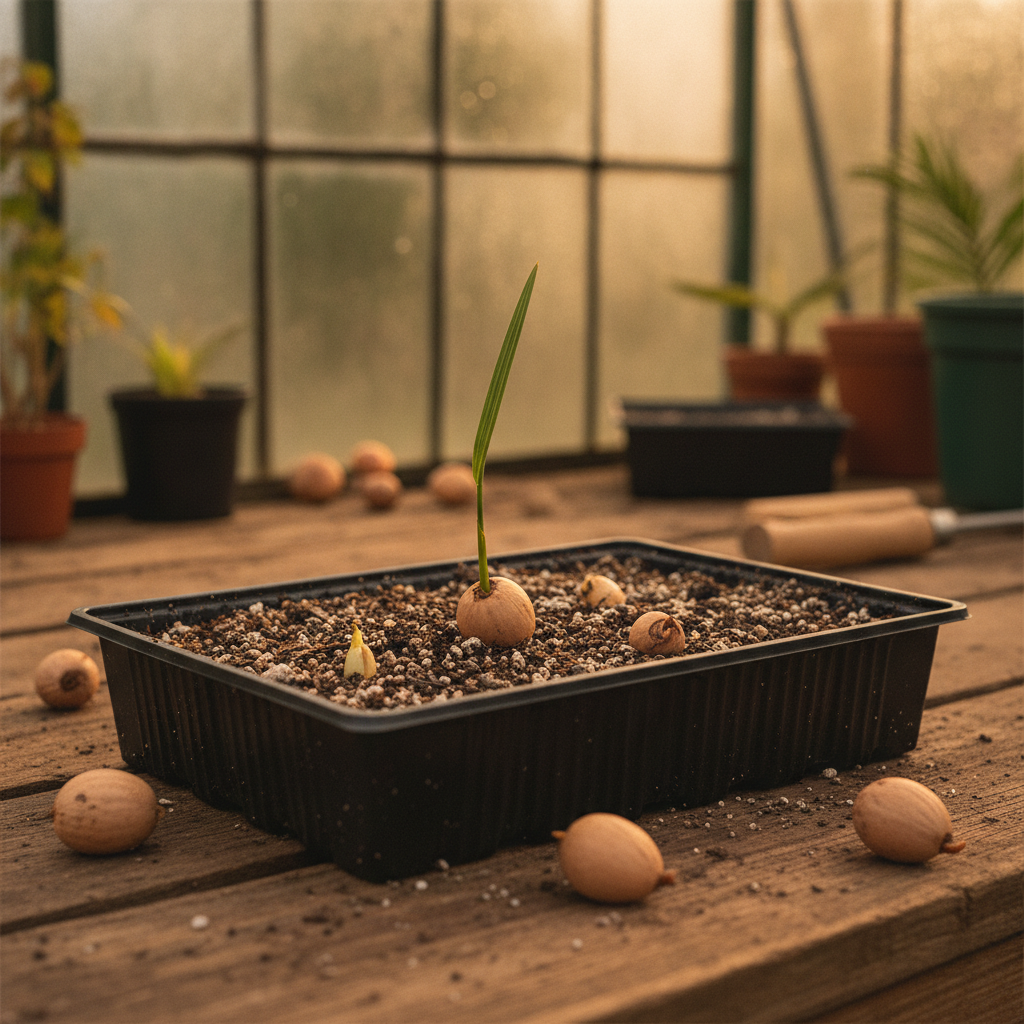
If you want to raise your own, start with fresh seed, as palm seed loses viability quickly. Soaking the seeds in warm water for a day or two before sowing helps soften the coat and speed germination. Sow them shallowly in a moist, gritty seed mix, keep the container consistently warm at around 27 to 30 degrees C (81 to 86 degrees F), and be prepared to wait, since germination is erratic and often takes two to four months, sometimes longer. Bottom heat from a propagation mat makes a substantial difference and is close to essential in a cool home.
- Soak fresh seed in warm water for 24 to 48 hours, changing the water once.
- Sow into a moist, free-draining seed mix, barely covering the seed.
- Keep the container warm and humid, ideally on a heat mat at 27 to 30 degrees C (81 to 86 degrees F).
- Maintain even moisture without waterlogging, and wait patiently through several weeks or months.
- Once seedlings show a strap-like first leaf and a small root system, pot them individually into a gritty palm mix.
Seed-raised triangle palms grow slowly in their early years, spending their first season or two producing simple undivided leaves before the characteristic feathery, three-ranked form develops. For most people, buying an established plant is far quicker, but growing from seed is deeply rewarding for those willing to invest the time.
Pests and Problems
A healthy triangle palm in a bright, airy spot is fairly resilient, but a handful of issues crop up often enough to watch for. Spider mites are the most common indoor pest, thriving in the warm, dry air that the palm otherwise enjoys. They show up as fine stippling on the leaflets and delicate webbing between them, usually appearing first on plants that are stressed or dusty. Mealybugs, which look like small tufts of white cotton lodged in the leaf axils, and scale insects, which cling as small brown bumps along the fronds and stems, are the other two culprits to inspect for.
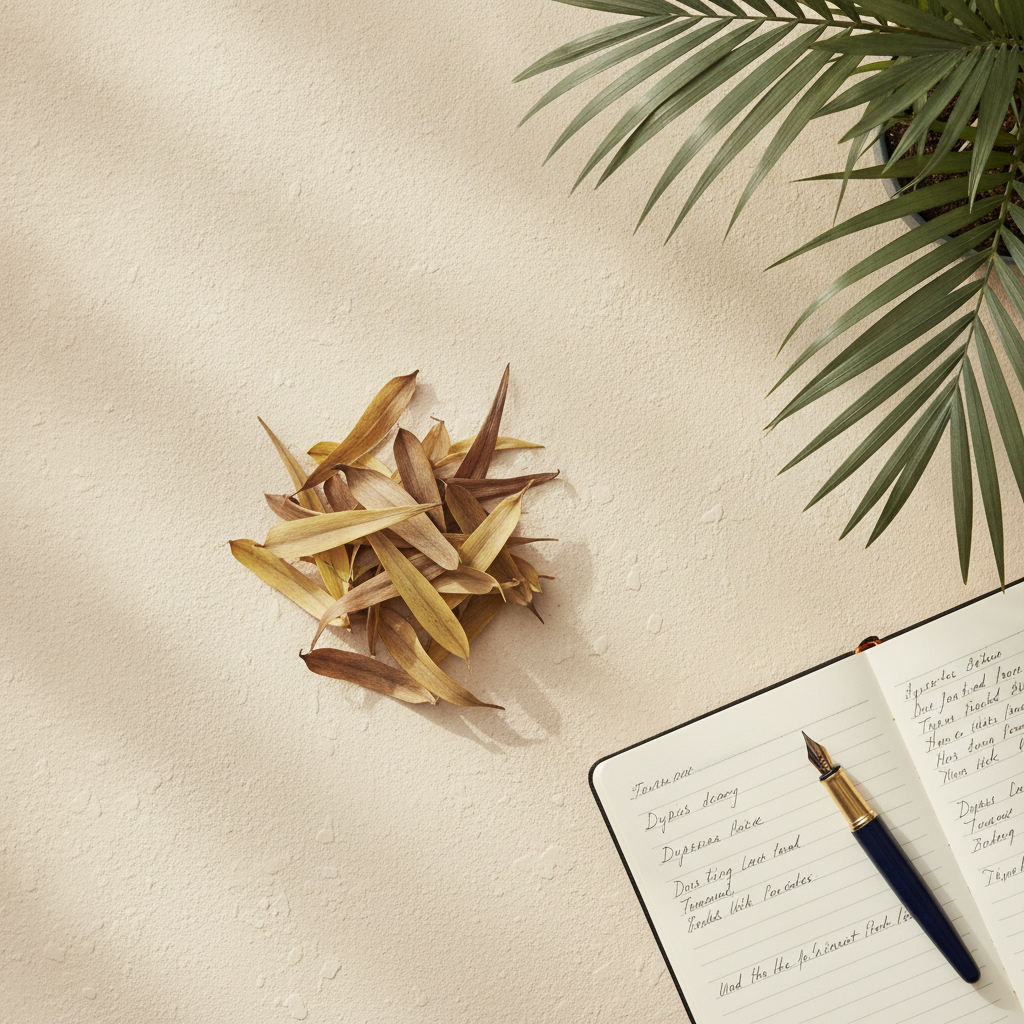
Keeping the foliage clean goes a long way toward prevention. Wiping the fronds with a damp cloth every few weeks removes dust and disrupts mites before they establish, and a periodic rinse in the shower does the same job for a larger plant. When an infestation takes hold, treat it promptly with insecticidal soap or a neem oil spray, covering the undersides of the leaflets thoroughly and repeating every seven to ten days until the problem clears. Isolate an affected plant from your other greenery while you deal with it.
Cultural problems are more common than pests. Browning frond tips usually signal dry air, inconsistent watering or a build-up of salts and fluoride from tap water, and are eased by more even watering and the occasional flush with filtered water. Yellowing of the oldest, lowest fronds is a normal part of the plant shedding spent leaves, but widespread or premature yellowing points to a potassium or magnesium deficiency and calls for a proper palm feed. Soft, browning stems and a plant that collapses from the base almost always indicate root rot from overwatering, the hardest problem to reverse and the best one to avoid through careful watering and sharp drainage.
Warning — Do not cut the growing tip: A palm grows from a single central bud. Trimming genuinely dead lower fronds is fine, but never cut into the top of the plant or remove the emerging spear, as damage to the crown is usually fatal.
Varieties and Forms
The triangle palm is grown as the true species rather than as a range of named cultivars, so you will not find the long list of variegated forms that exist for many popular houseplants. What varies instead is the plant’s appearance across its life stages and the subtle differences in leaf colour between individuals, some leaning more strongly toward silvery blue and others toward green. The two forms most people encounter are the imposing mature specimen and the softer juvenile plant, and knowing what each looks like helps when choosing one to buy.
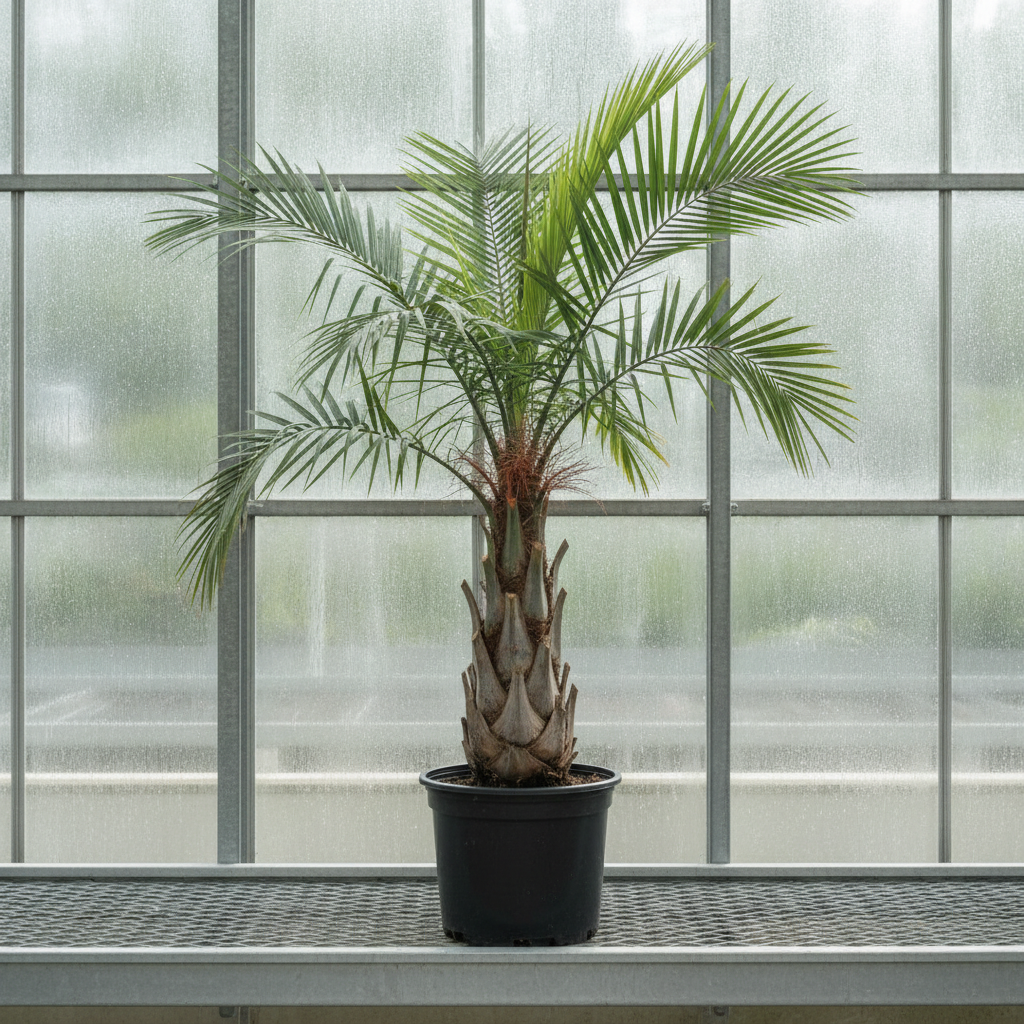
Mature specimen
An established plant develops a stout trunk with the leaf bases stacked in three unmistakable vertical ranks, arching silvery blue-green fronds and cinnamon-coloured fuzz at the frond bases. This is the form that reads as a true architectural palm and makes the boldest statement as a floor plant.
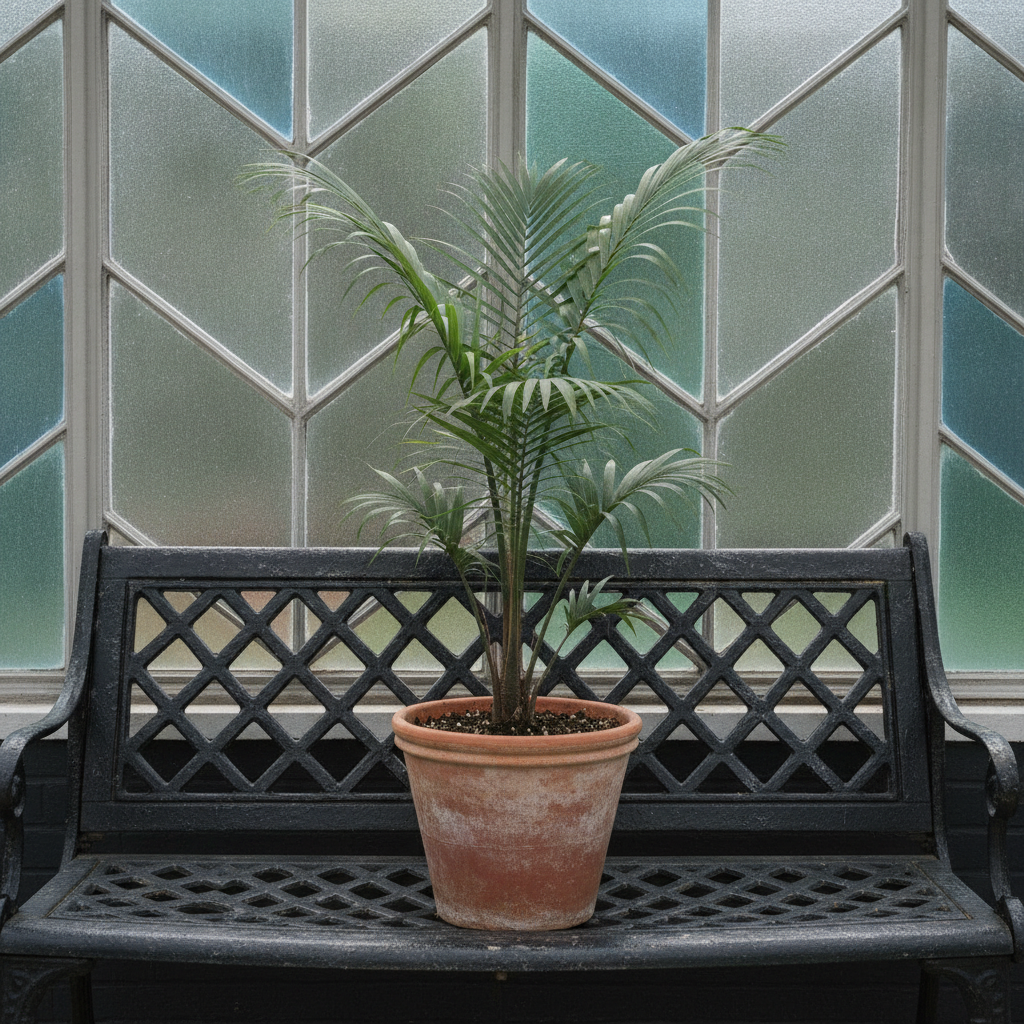
Juvenile plant
A younger triangle palm is compact and low, with soft arching blue-green fronds and no visible trunk yet. The three-ranked habit is only beginning to form at this stage, so juveniles look more like a soft feathery clump and suit a tabletop or bright shelf until they gain height.
Frequently Asked Questions
Is the triangle palm safe for cats and dogs?
Yes. Dypsis decaryi is considered non-toxic to cats, dogs and humans, in common with other Dypsis palms such as the areca. It is a sensible choice for households with pets, though it is always wise to discourage animals from chewing any houseplant.
Why are the tips of my triangle palm turning brown?
Brown frond tips most often result from dry air, uneven watering or a build-up of salts and fluoride from tap water. Water more consistently, let only the surface dry between drinks, and flush the pot occasionally with filtered or rainwater. A little tip browning on the oldest fronds is normal and nothing to worry about.
How fast does a triangle palm grow?
Slowly to moderately. Indoors it typically adds a modest amount of height each year and may take many seasons to reach 2 to 3 m (6.5 to 10 ft). Bright light, warmth and steady feeding through the growing season give the fastest growth this palm is capable of.
Can I grow a triangle palm from a cutting?
No. It is a solitary palm with a single growing point and produces no offsets, so it cannot be propagated from cuttings or by division. The only way to raise a new plant is from fresh seed, germinated with warmth over a period of two to four months.
How much light does a triangle palm need?
As much as you can give it. This is a sun-loving palm that does best in bright indirect light with some direct sun, ideally near a south or west-facing window. It tolerates moderate light but grows slowly and loses its blue-grey colour, so supplement with a grow light if your home is dim.
What temperature can a triangle palm tolerate?
It is happiest between 18 and 27 degrees C (64 to 81 degrees F) and should be protected from temperatures below about 10 degrees C (50 degrees F). It is not frost hardy, so keep it away from cold draughts, unheated porches and windows that turn icy in winter.






