
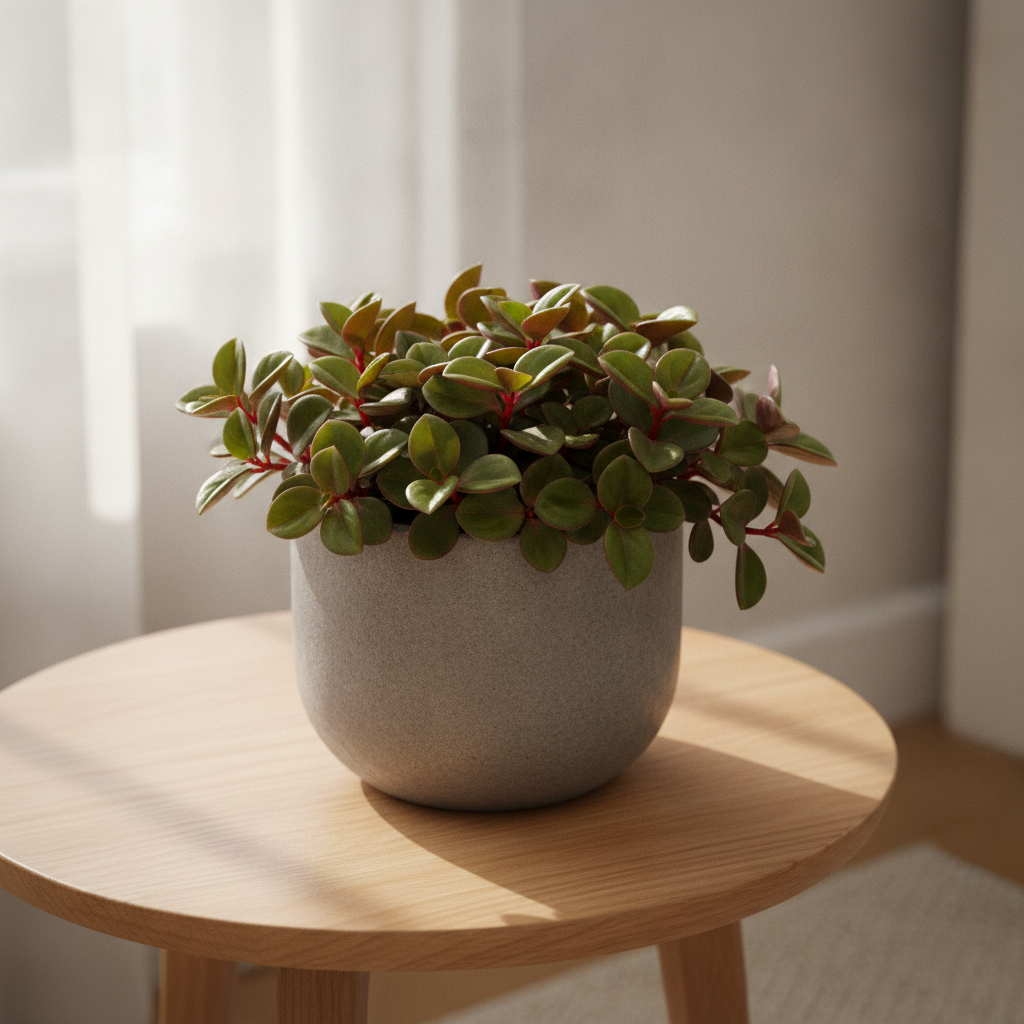
Few small houseplants deliver as much colour per square centimetre as the Ruby Rubber Plant, known to botanists as Peperomia graveolens and to collectors as Ruby Glow or simply Ruby Peperomia. It is a compact, semi-succulent member of the pepper family, Piperaceae, native to the dry Andean valleys of southern Ecuador, where it clings to rocky, gritty slopes near the city of Loja at around 1,500 metres (4,900 feet) above sea level. Its signature feature is the leaf: a thick, canoe-shaped blade folded along the midrib, glossy olive to lime green on the upper surface with a translucent central window, and a deep, glowing wine-red on the underside. Those leaves are carried on stems the colour of garnet, so that even a young plant looks like a cluster of tiny jewels.
The Ruby Rubber Plant has a reputation for being fussy, but that reputation is only half deserved. Almost every problem traces back to a single cause: treating a desert succulent like a leafy tropical. Get the light bright, the soil gritty and the watering restrained, and this is a genuinely forgiving little plant that asks for very little attention. This guide covers everything you need to move from merely keeping a Ruby Rubber Plant alive to seeing it thrive, colour up and multiply, from the exact light levels it prefers to step-by-step propagation, soil recipes, feeding, and the handful of pests worth watching for.
Contents
- Quick Reference
- Why the Ruby Rubber Plant Makes a Rewarding Houseplant
- Light Requirements
- Watering & Humidity
- Soil, Potting & Repotting
- Fertilising
- Propagation
- Pests & Diseases
- Popular Varieties
- Frequently Asked Questions
Quick Reference: Ruby Rubber Plant at a Glance
| Light | Bright indirect light, with a little direct morning sun to deepen the red pigment |
| Watering | Soak and dry; water only once the top half of the mix is dry, roughly every 10 to 14 days |
| Temperature | 18 to 27 degrees C (64 to 81 degrees F); keep above 10 degrees C (50 degrees F) |
| Humidity | Average household humidity of 40 to 50 per cent is ample; no misting needed |
| Fertiliser | Half-strength balanced feed once a month in spring and summer only |
| Toxicity | Non-toxic to cats, dogs and humans |
Why the Ruby Rubber Plant Makes a Rewarding Houseplant
The first reason to grow Peperomia graveolens is obvious the moment you see it in good light: the contrast between the cool olive upper leaf and the hot burgundy underside is unlike almost anything else on a windowsill. Because the plant stays small, rarely exceeding 25 centimetres (10 inches) in height and spread, it packs that drama into a footprint that fits on the corner of a desk or the ledge of a bright bathroom. It is a collector’s plant that never outgrows its welcome.
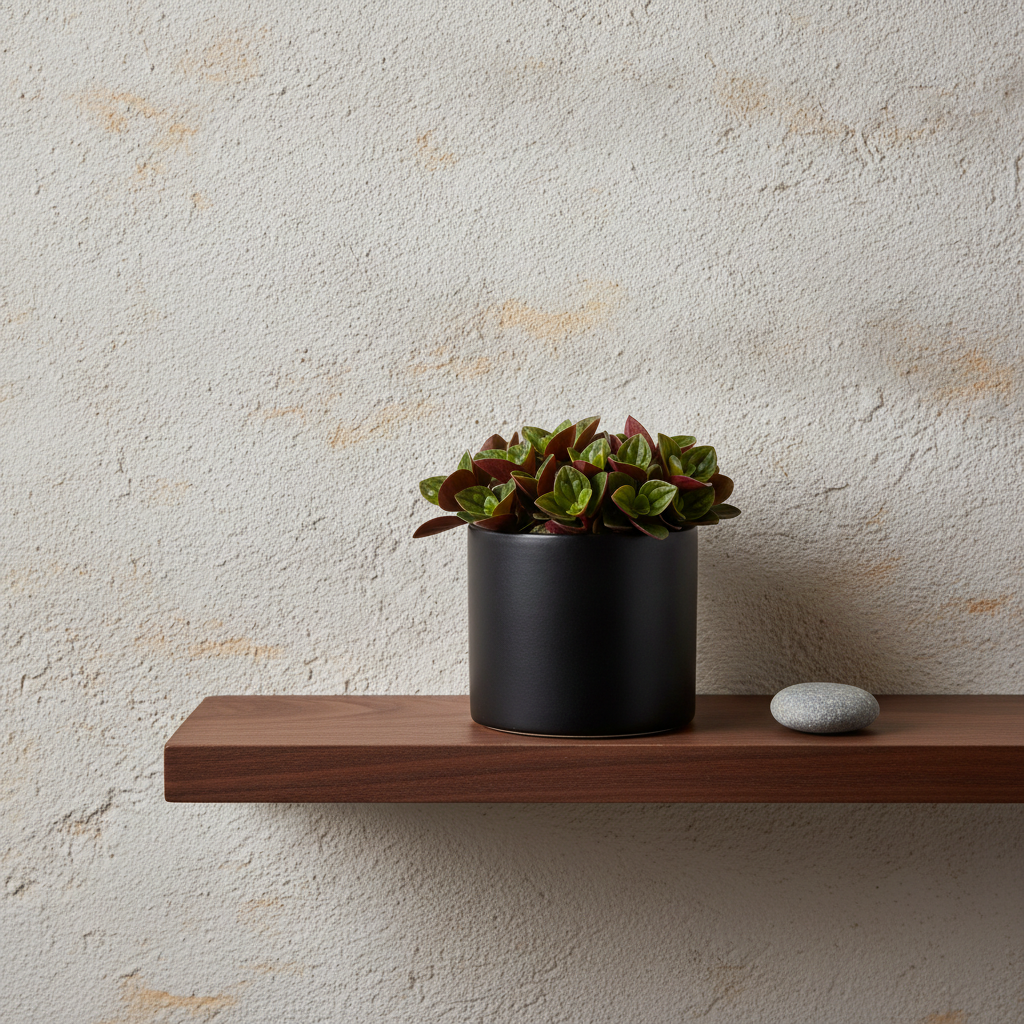
The second reason is temperament. As a semi-succulent, the Ruby Rubber Plant stores water in its fleshy leaves and stems, which means it copes gracefully with the occasional missed watering and actively prefers a grower who forgets it now and then. It has no need for the humidity domes, pebble trays or daily misting that many tropical houseplants demand. For anyone who has struggled with thirsty, sulking ferns or calatheas, the low-maintenance rhythm of a succulent peperomia can feel like a relief. Add to this that the plant is entirely non-toxic, and it becomes a safe, sculptural choice for homes with curious cats, dogs or children.
Important — Toxicity: The Ruby Rubber Plant is not listed as toxic to cats or dogs by the ASPCA, and peperomias in general are considered pet-safe. While no plant material should be eaten in quantity, you can grow this species without the worry that accompanies many popular houseplants such as pothos or philodendron.
Light Requirements
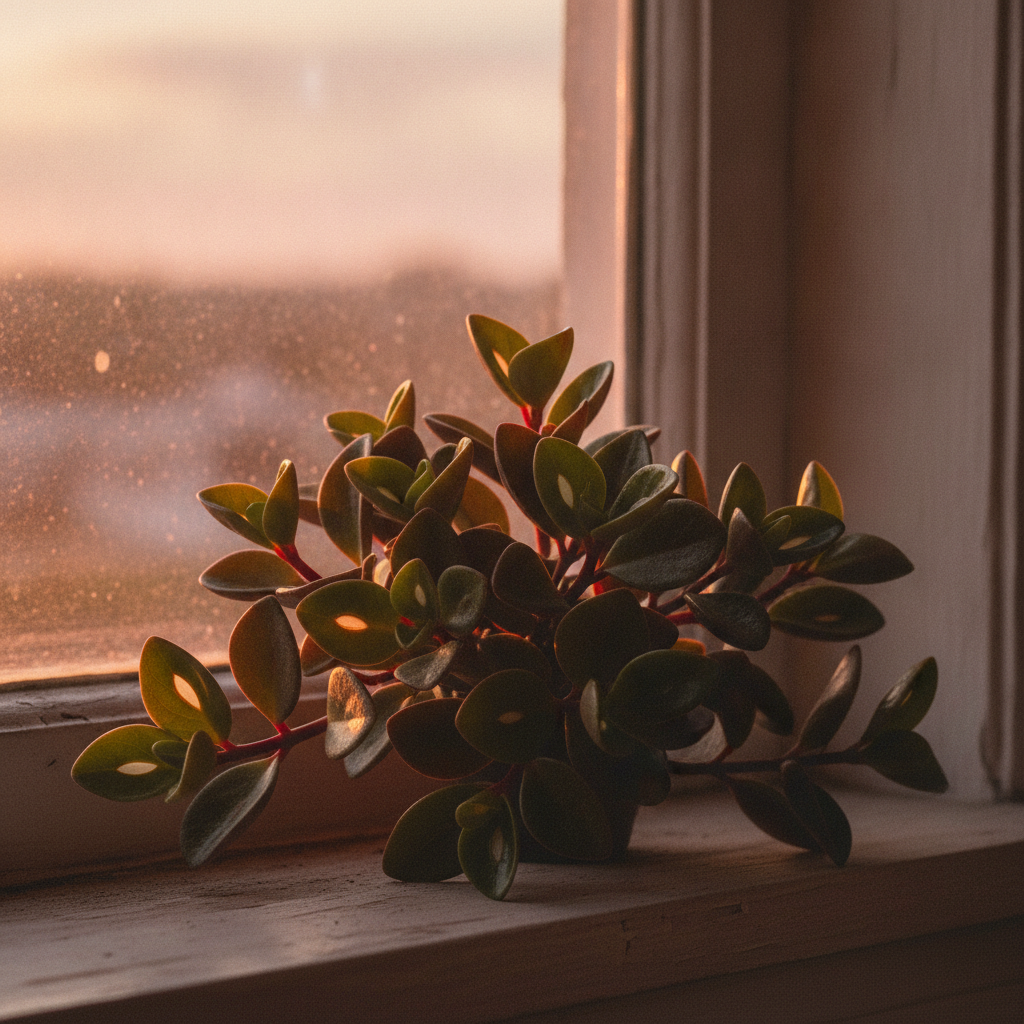
Light is the single most important factor in growing a good-looking Ruby Rubber Plant, because light is what drives the ruby colour in the first place. In its native Ecuadorian habitat the plant grows exposed on rocky slopes, receiving strong, filtered sunlight for much of the day. Indoors it wants the brightest indirect light you can offer, ideally supplemented by an hour or two of gentle direct sun.
The translucent stripe running down the centre of each leaf, often called a window, is a clue to how this plant handles light. In some succulents these windows allow light to penetrate deeper into the water-storing tissue, an adaptation to bright, arid conditions. Give the plant enough light and the stems flush a deeper red, the leaves stay compact and the undersides glow; starve it of light and the stems stretch, the spacing between leaves widens, and the whole plant fades toward a flat, uniform green.
Light Levels Explained
Understanding the practical light categories helps you place the plant correctly. The figures below are approximate illuminance values in lux, useful as a rough guide rather than a laboratory standard.
| Light Category | Approx. Level | Typical Location | Outcome |
|---|---|---|---|
| Direct sun | 50,000 lux and above | Unshaded south window in summer | Risk of scorch in the hottest hours; fine in morning only |
| Bright indirect | 15,000 to 30,000 lux | Near an east or west window | Ideal; strong colour and compact growth |
| Medium | 5,000 to 15,000 lux | A metre or two back from a bright window | Survives, but colour and form suffer over time |
| Low | 1,000 to 5,000 lux | North-facing room, interior wall | Slow decline, stretching and loss of red |
| Very low | Below 1,000 lux | Windowless or deep interior spot | Not viable long term |
Window Orientation and Placement
South-facing window: The brightest option and a fine home for a Ruby Rubber Plant, provided you soften the fiercest midday and afternoon sun in summer with a sheer curtain. Unfiltered summer sun through south glass can scorch the fleshy leaves.
East-facing window: Arguably the sweet spot. Gentle morning sun colours the plant up without the heat stress of afternoon light, and the bright indirect light for the rest of the day keeps growth tight and compact.
West-facing window: Also excellent, offering strong afternoon light. Watch that the leaves do not overheat behind glass on the hottest days, and pull the plant back slightly if you see any pale bleaching.
North-facing window: Usually too dim for good colour and form. The plant may survive on a north sill but will gradually stretch and green up. If a north window is all you have, plan to supplement with a grow light.
Pro Tip — Rotate for Symmetry: Because this plant grows toward light, give the pot a quarter turn each time you water. This keeps the low rosette even and stops it from leaning permanently toward the glass.
How Light Affects Leaf Colour
The red pigments responsible for the ruby undersides and stems are anthocyanins, protective compounds that many plants produce in response to bright light. In strong light the plant ramps up anthocyanin production, deepening the burgundy tones; in shade it lets them fade because they are no longer needed. If your Ruby Rubber Plant has turned mostly green, the message is almost always the same: move it somewhere brighter. Colour typically returns within a few weeks of improved light, expressed most vividly in new growth.
Warning — Direct Sunlight: Acclimatise the plant gradually to any increase in direct sun. Moving it straight from a dim spot into blazing midday light can bleach or scorch the leaves within a day, leaving permanent pale or crispy patches. Increase exposure over one to two weeks.
Artificial Lighting
The Ruby Rubber Plant responds well to a full-spectrum LED grow light, which is often the simplest way to keep colour strong through a dark winter or in a room without a suitable window. Position the light roughly 20 to 30 centimetres (8 to 12 inches) above the plant and run it for 10 to 12 hours a day. Because the plant is small, a single modest desk-style grow lamp is usually plenty.
Seasonal Adjustments
Light levels indoors can fall dramatically between summer and winter. A spot that was perfect in July can become marginal in December, when the sun sits low and days are short. Move the plant closer to the window for the darker months, or add supplementary lighting, and pull it back again in spring as the light strengthens. Adjusting placement with the seasons is one of the quiet habits that separates a thriving Ruby Rubber Plant from a struggling one.
Watering & Humidity
If light gives the Ruby Rubber Plant its colour, watering is what keeps it alive or kills it. This is a succulent at heart, and the fastest route to a dead plant is a kind, generous watering schedule. The fleshy leaves and stems are built to hoard moisture through dry spells, so the plant genuinely prefers to run on the lean side.
When to Water
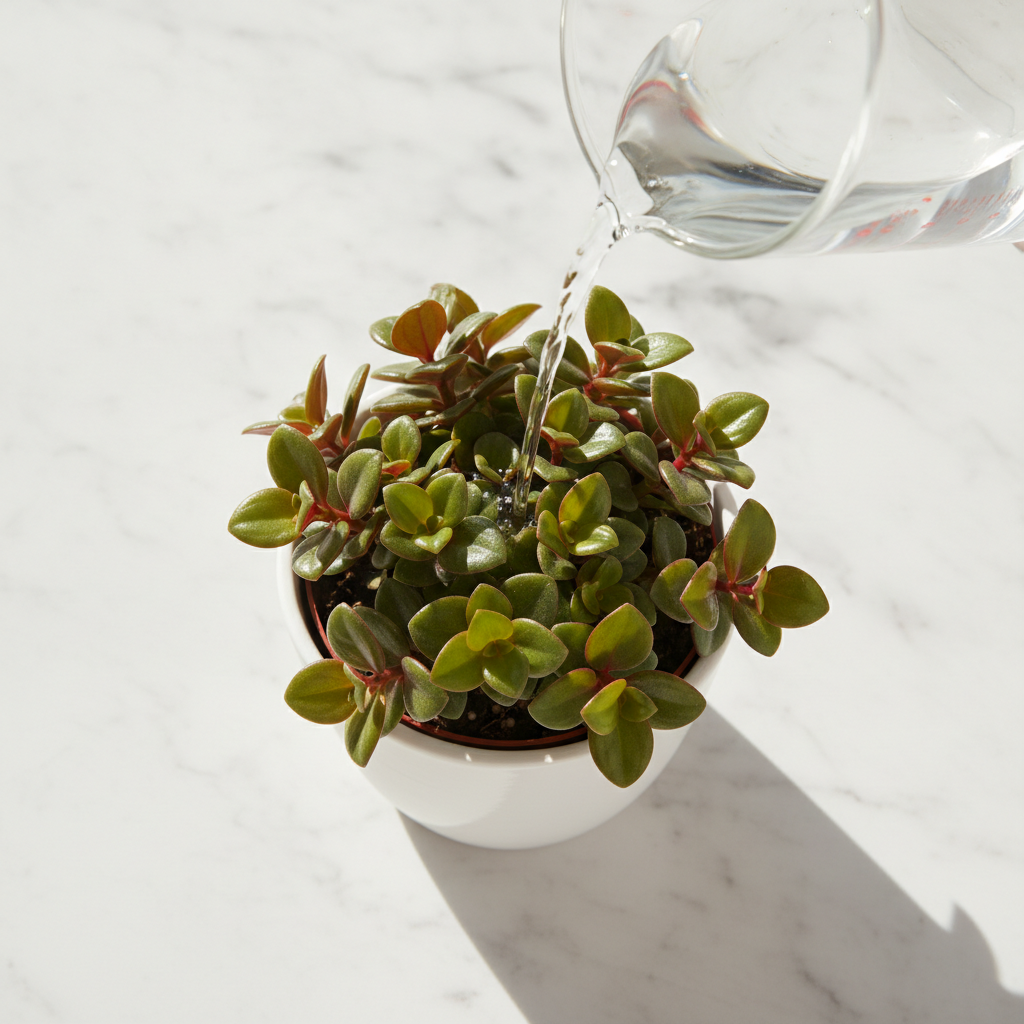
The reliable rule is to water only when the top half of the potting mix has dried out completely. In a warm, bright spot during summer this might mean watering every 10 to 14 days; in winter, with cooler temperatures and weaker light, the interval can stretch to three or four weeks. Rather than counting days, learn to read the plant. Push a finger into the mix, lift the pot to feel its weight, or use a wooden skewer that comes out clean and dry when it is time to water.
The leaves themselves are an honest gauge. Plump, firm foliage means the plant is well hydrated and needs nothing. Leaves that feel slightly soft or look faintly wrinkled are a signal that the water reserves are running low and a drink is due. This visual feedback makes the Ruby Rubber Plant one of the easier succulents to read once you tune into it.
Pro Tip — Underwater by Default: When in doubt, wait. A thirsty Ruby Rubber Plant recovers within hours of watering, while an overwatered one may rot beyond saving. If you cannot decide whether to water, give it another two or three days.
How to Water Correctly
- Check that the top half of the mix is dry using a finger or skewer before you begin.
- Water at the soil surface, avoiding the crown and the folded leaves where water can pool and cause rot.
- Add water slowly until it runs freely from the drainage holes, wetting the entire root ball.
- Let the pot drain completely for several minutes, then tip away any water left standing in the saucer or cover pot.
- Return the plant to its spot and do not water again until the mix has dried by at least half.
Signs of Overwatering vs. Underwatering
| Symptom | Overwatering | Underwatering |
|---|---|---|
| Leaf colour | Yellowing, translucent or blackening leaves | Dulling green, edges tinged brown |
| Leaf texture | Soft, mushy, waterlogged | Wrinkled, thin, slightly deflated |
| Soil | Stays wet for many days, may smell sour | Bone dry, pulling away from the pot sides |
| Roots | Brown, soft and foul-smelling | Dry but firm and pale |
| Stem base | Blackened, collapsing at soil level | Firm, occasionally shrivelled |
Warning — Root Rot: Soft, blackened stems at soil level are the classic sign of rot in this species, and it moves fast. At the first sign, take healthy leaf or stem cuttings immediately as an insurance policy, because a rotting Ruby Rubber Plant is often easier to replace through propagation than to rescue.
Humidity Requirements
Here the Ruby Rubber Plant parts company with most of its peperomia cousins. Coming from a relatively dry montane climate rather than a steamy rainforest, it is perfectly content in ordinary household humidity of 40 to 50 per cent. There is no need for pebble trays, humidifiers or misting, and in fact misting can be counterproductive.
Wet foliage sitting in still air is an invitation to fungal spotting and to rot within the folded leaves. If your home is unusually dry, for example next to a hard-running radiator in winter, the plant will still cope far better than a fern would. Focus your attention on getting the watering and light right, and let humidity look after itself.
Good air movement is more valuable to this plant than high humidity. A gently circulating room, or an occasional open window in mild weather, helps the soil surface dry between waterings and keeps fungal problems at bay.
Water Quality
Ruby Rubber Plants are not especially fussy about water quality, but because they are watered infrequently, mineral salts from hard tap water can accumulate in the mix over time. If you notice a white crust forming on the soil surface or pot rim, flush the pot thoroughly every few months, or switch to filtered or collected rainwater. Room-temperature water is always kinder than cold water straight from the tap.
Soil, Potting & Repotting
The right soil is your best insurance against the watering mistakes that most often kill this plant. A Ruby Rubber Plant needs a mix that drains almost as fast as you can pour water through it, holding just enough moisture to sustain the fine roots without ever staying soggy.
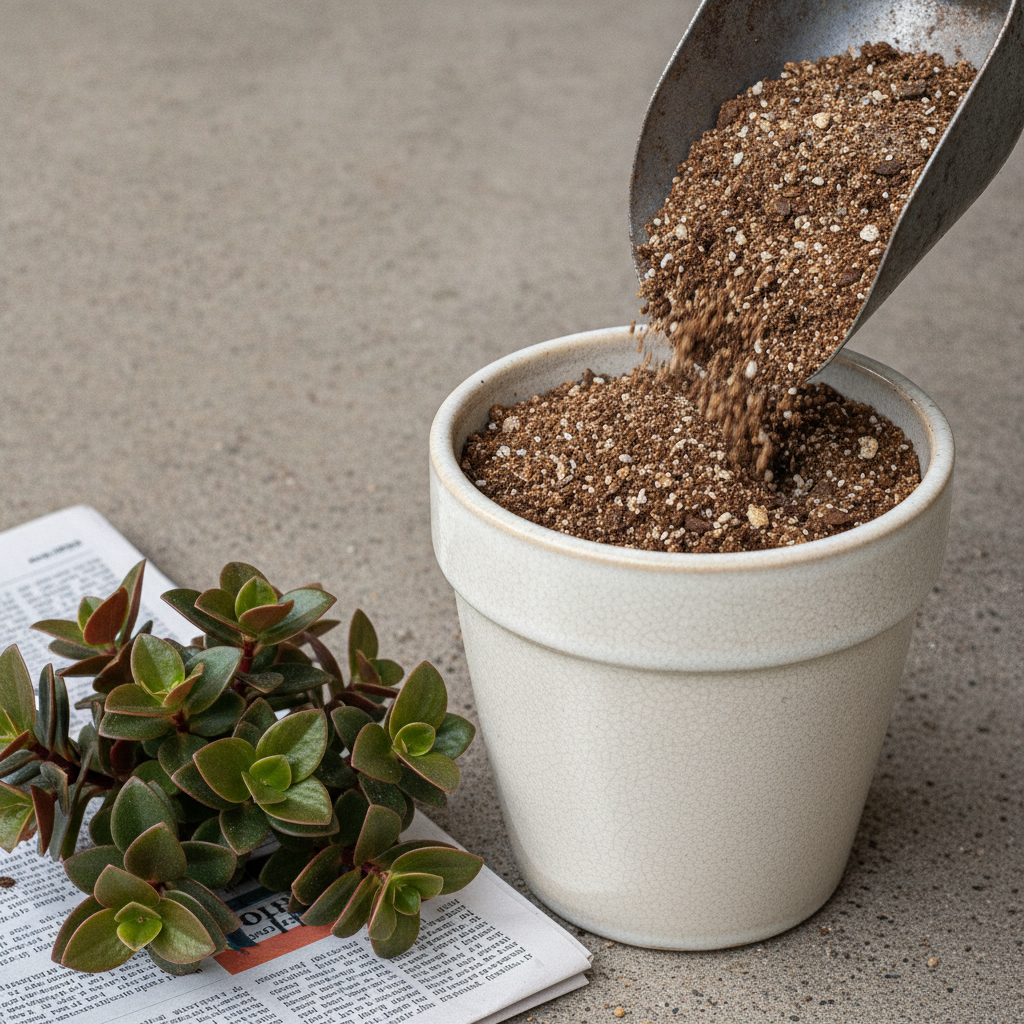
Ideal Soil Composition
Start from a cactus and succulent compost and open it up further with generous grit. The aim is a mix that is airy, gritty and quick to dry. A standard peat-based houseplant compost used on its own holds far too much water and will eventually rot the roots.
| Component | Proportion | Function |
|---|---|---|
| Cactus and succulent compost | 2 parts | Base structure and modest moisture retention |
| Perlite or pumice | 1 part | Aeration and rapid drainage |
| Coarse horticultural grit or coarse sand | 1 part | Weight, drainage and a free-draining root run |
| Fine orchid bark or coco chips | Half part | Air pockets and structure that resist compaction |
The Ruby Rubber Plant prefers a slightly acidic to neutral mix, roughly pH 6.0 to 7.0, which most commercial succulent composts already provide. There is no need to test or adjust pH under normal conditions.
Pro Tip — Quick Mix Recipe: For a fast, reliable blend, combine two handfuls of cactus compost with one handful of perlite and one handful of coarse grit. If water pools on the surface for more than a second or two when you pour it, add more grit.
Choosing the Right Pot
Pot choice matters more for succulents than for most houseplants, because the container directly affects how quickly the mix dries. A well-chosen pot works with your soil to protect the roots from sitting wet.
Drainage holes are non-negotiable. Never plant a Ruby Rubber Plant in a pot without a drainage hole. Standing water at the base of the pot is the most common cause of fatal rot, and no watering discipline can fully compensate for a sealed container.
Pot material: Unglazed terracotta is the ideal choice because it is porous and wicks moisture away from the mix, letting the roots breathe and dry faster. Glazed ceramic and plastic both work, but they hold water longer, so lean even harder on a gritty mix and a cautious hand if you use them.
Pot size: Keep the plant slightly snug. A pot only a little larger than the root ball dries out at a healthy pace, whereas an oversized pot holds a large reservoir of damp soil around the small root system and invites rot. Choose a container just 2 to 3 centimetres (about an inch) wider than the current one when moving up.
When to Repot
Ruby Rubber Plants are slow growing and have modest root systems, so they need repotting only every two to three years, or when you can see roots emerging from the drainage holes and the plant has clearly filled its pot. Spring, at the start of the active growing season, is the best time. Refreshing the gritty mix every couple of years is often as valuable as increasing pot size, because old succulent soil breaks down and loses its drainage.
How to Repot: Step-by-Step
- Water lightly a day before repotting so the root ball holds together but is not saturated.
- Ease the plant out by squeezing a plastic pot or tapping a rigid one, supporting the fragile stems from below rather than pulling on them.
- Gently tease away the old mix and inspect the roots, trimming any that are brown, soft or rotten with clean scissors.
- Add a layer of fresh gritty mix to the base of the new pot, then position the plant at the same depth it grew before.
- Fill around the roots with fresh mix, firming lightly so the plant sits stable without compacting the soil.
- Wait three to five days before watering, giving any disturbed or cut roots time to callus and reducing the risk of rot.
Warning — Transplant Shock: The brittle stems snap easily, so handle the plant by the root ball, not the foliage. Any leaves or stems that break off during repotting need not be wasted; set them aside to use as propagation material.
Fertilising
The Ruby Rubber Plant is a light feeder, adapted to lean, mineral soils where nutrients are scarce. It does not need heavy feeding to look its best, and overfeeding does more harm than under-feeding by scorching the roots and forcing weak, stretched growth.
Think of fertiliser as a gentle seasonal supplement rather than a regular necessity. A little balanced feed during the growing months keeps the leaves plump and the colour strong, while the plant rests almost entirely through autumn and winter.
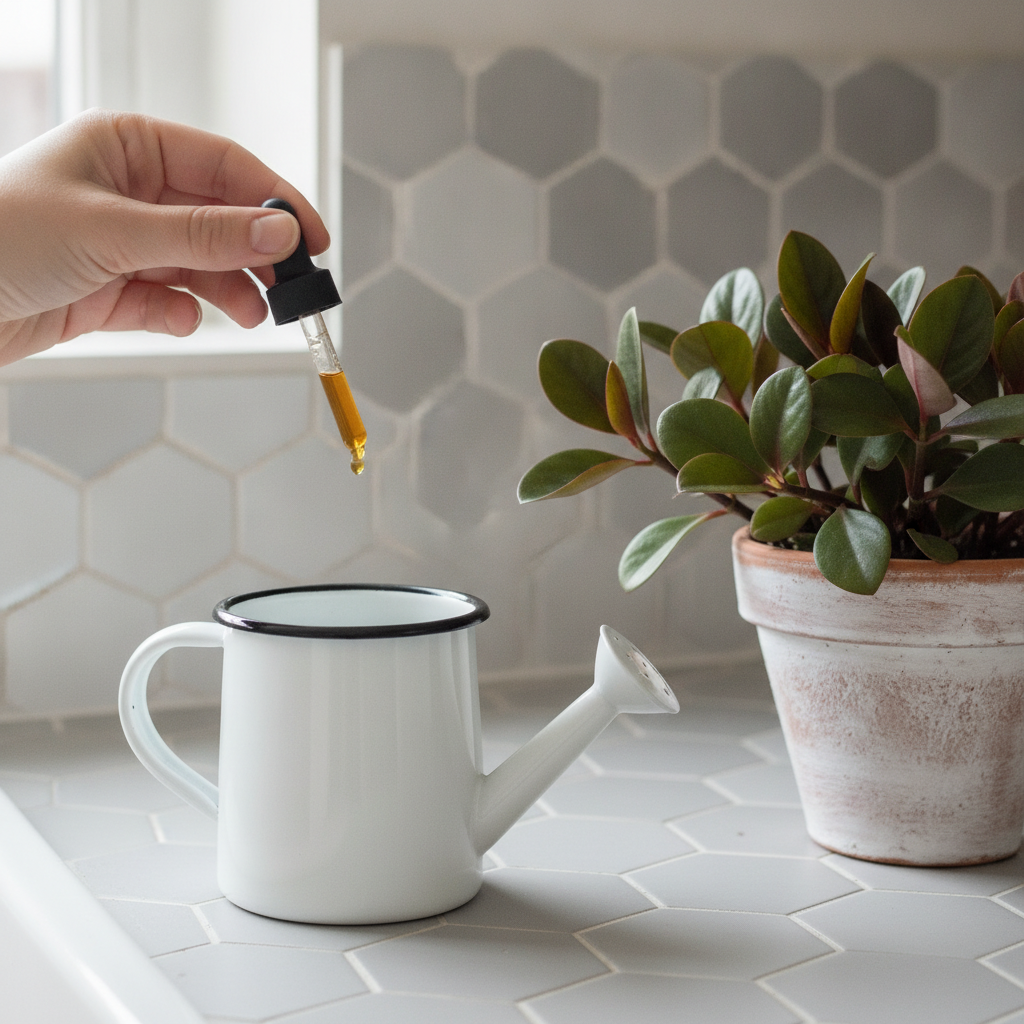
Understanding Plant Nutrients
Fertilisers are labelled with an NPK ratio showing the percentages of nitrogen, phosphorus and potassium, the three nutrients plants use in the largest quantities. For a Ruby Rubber Plant a balanced ratio such as 10-10-10, or a general houseplant feed diluted well, covers all its needs. A handful of secondary nutrients and trace elements round out healthy growth.
| Nutrient | Symbol | Primary Function | Deficiency Symptoms |
|---|---|---|---|
| Nitrogen | N | Leaf and stem growth, green pigment | Pale, yellowing older leaves, stunted growth |
| Phosphorus | P | Root development and energy transfer | Weak roots, dull foliage, poor vigour |
| Potassium | K | Overall hardiness and water regulation | Browning leaf edges, weak stems |
| Calcium | Ca | Cell wall strength | Distorted or stunted new growth |
| Magnesium | Mg | Core of the chlorophyll molecule | Yellowing between leaf veins |
| Iron | Fe | Chlorophyll production | Yellow new leaves with green veins |
Types of Fertiliser
Liquid fertilisers: The easiest choice for this plant, because you can dilute them precisely and apply only when the plant is actively growing. A balanced liquid houseplant feed at half the recommended strength is ideal.
Slow-release granular: Convenient but harder to control with a small succulent. If you use them, apply at half the stated rate and keep in mind that they continue releasing nutrients even during the dormant season when the plant does not want them.
Organic fertilisers: Products such as diluted worm-casting tea or a gentle organic houseplant feed work well and are difficult to overdose. They release nutrients slowly and support soil life, which suits the plant’s preference for a mild, steady supply.
Feeding Schedule
Feed once a month with a half-strength balanced fertiliser from spring through to the end of summer, which usually means roughly April to August in the northern hemisphere. Stop feeding entirely in autumn and winter, when growth slows and the roots cannot use the extra nutrients. Four or five light feeds across the growing season are all a healthy Ruby Rubber Plant requires.
Pro Tip — Feed Onto Damp Soil: Always apply diluted fertiliser to soil that is already slightly moist, never bone dry. Feeding a parched root ball concentrates the salts against dry roots and can cause chemical burn.
How to Fertilise
- Dilute a balanced liquid feed to half the strength printed on the label.
- Water the plant lightly first if the mix is very dry, then wait an hour.
- Apply the diluted feed evenly across the soil surface until it just begins to drain.
- Tip away any run-off so nutrients do not sit and concentrate in the saucer.
- Resume normal watering, and do not feed again for a full month.
Warning — Salt Build-Up: Because these plants are watered sparingly, fertiliser salts can accumulate faster than in thirstier houseplants. Flush the pot thoroughly with plain water two or three times a year to leach out excess salts and prevent leaf-tip browning.
Propagation
Propagating the Ruby Rubber Plant is genuinely satisfying, because it roots readily from both leaves and stem tips, and because it gives you a way to keep the plant going indefinitely. That last point matters: individual rosettes can weaken and decline after flowering, so keeping a few young plants coming is the surest way never to be without one.
The best time to propagate is spring and early summer, when warmth and light drive fast rooting. All you need are clean, sharp scissors or a blade, some gritty mix or perlite, and a little patience, as this succulent roots more slowly than a thirsty vine such as pothos.
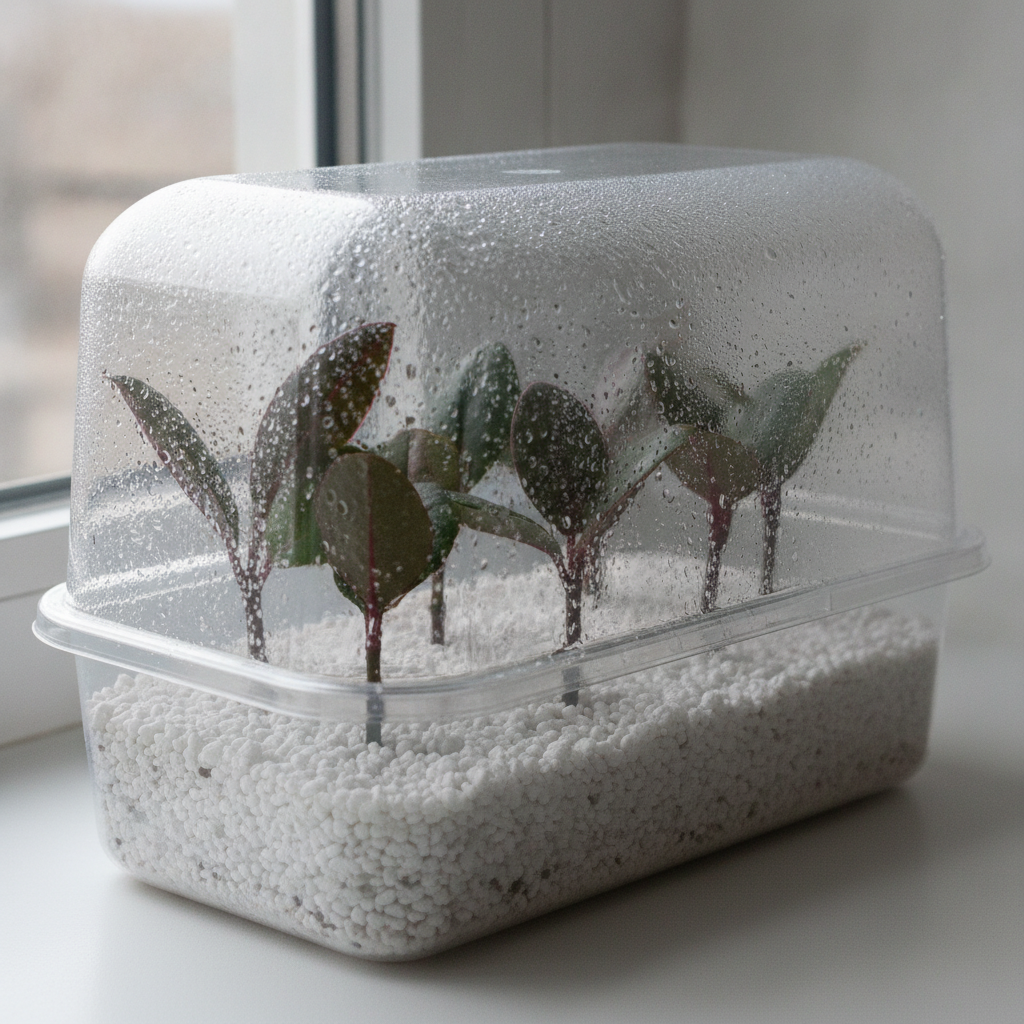
Understanding Leaves, Stems and Petioles
A successful cutting depends on keeping the right tissue intact. Each leaf is joined to the red stem by a short stalk called the petiole, and it is from the base of the leaf and petiole that new roots and eventually a new plantlet emerge. When you take a leaf cutting, include that small stalk; when you take a stem cutting, make sure it carries at least one or two leaves and a node, the point where leaves attach and roots form. Understanding this structure is the difference between a cutting that strikes and one that simply shrivels.
Leaf Cuttings: Step-by-Step
Leaf propagation is the classic method for peperomias and works beautifully with the Ruby Rubber Plant. It is slow but high yielding, since a single plant can supply many leaves.
- Select a plump, healthy leaf and remove it with its short petiole attached, using a clean blade.
- Leave the cutting on a dry surface for one to two days so the cut end forms a callus, which guards against rot.
- Insert the petiole and lower edge of the leaf just into a tray of damp gritty mix or pure perlite.
- Place the tray in bright indirect light and keep the medium barely moist, never wet.
- Wait patiently; roots form over several weeks and a tiny plantlet appears at the leaf base within one to three months.
Pro Tip — Light Humidity Helps: A loose clear cover or propagation dome raises humidity just enough to speed rooting, but prop it open a little each day. Trapped, stagnant moisture is the quickest way to rot succulent cuttings.
Stem Cuttings: Step-by-Step
Stem or tip cuttings are faster than leaf cuttings because they already carry a growing point. This method is ideal when a plant has grown leggy and you want to restart it compactly.
- Cut a healthy stem tip a few centimetres long, making sure it carries two or more leaves and at least one node.
- Remove the lowest leaf to expose a node, then let the cutting callus for a day or two.
- Insert the callused end into gritty mix or perlite, or root it in a small jar of water if you prefer to watch the roots develop.
- Keep it in warm, bright indirect light and mist the medium only lightly if it dries out.
- Once firm white roots reach two to three centimetres, pot the cutting into the standard gritty succulent mix.
Troubleshooting Propagation
| Problem | Likely Cause | Solution |
|---|---|---|
| Cutting turns soft and mushy | Too much moisture, no callus formed | Let cuttings callus first and keep the medium only barely damp |
| Cutting shrivels and dries | Medium too dry or air too hot | Lightly moisten the medium and move out of direct sun |
| No roots after many weeks | Low light or cold temperatures | Provide warmth and bright indirect light; be patient |
| Roots form but no plantlet | Normal for leaf cuttings; plantlet lags roots | Keep conditions stable and wait a few more weeks |
Pests & Diseases
The Ruby Rubber Plant is not especially prone to pests, and a healthy, well-grown specimen shrugs off most problems. Nearly all the trouble it does encounter is tied to excess moisture, whether that is rot from wet soil or the sap-sucking insects that thrive in stagnant, overwatered conditions.
Prevention is far easier than cure. Inspect new plants before bringing them home, keep the growing conditions on the lean and airy side, and check under the folded leaves now and then, since that sheltered spot is exactly where pests like to hide.
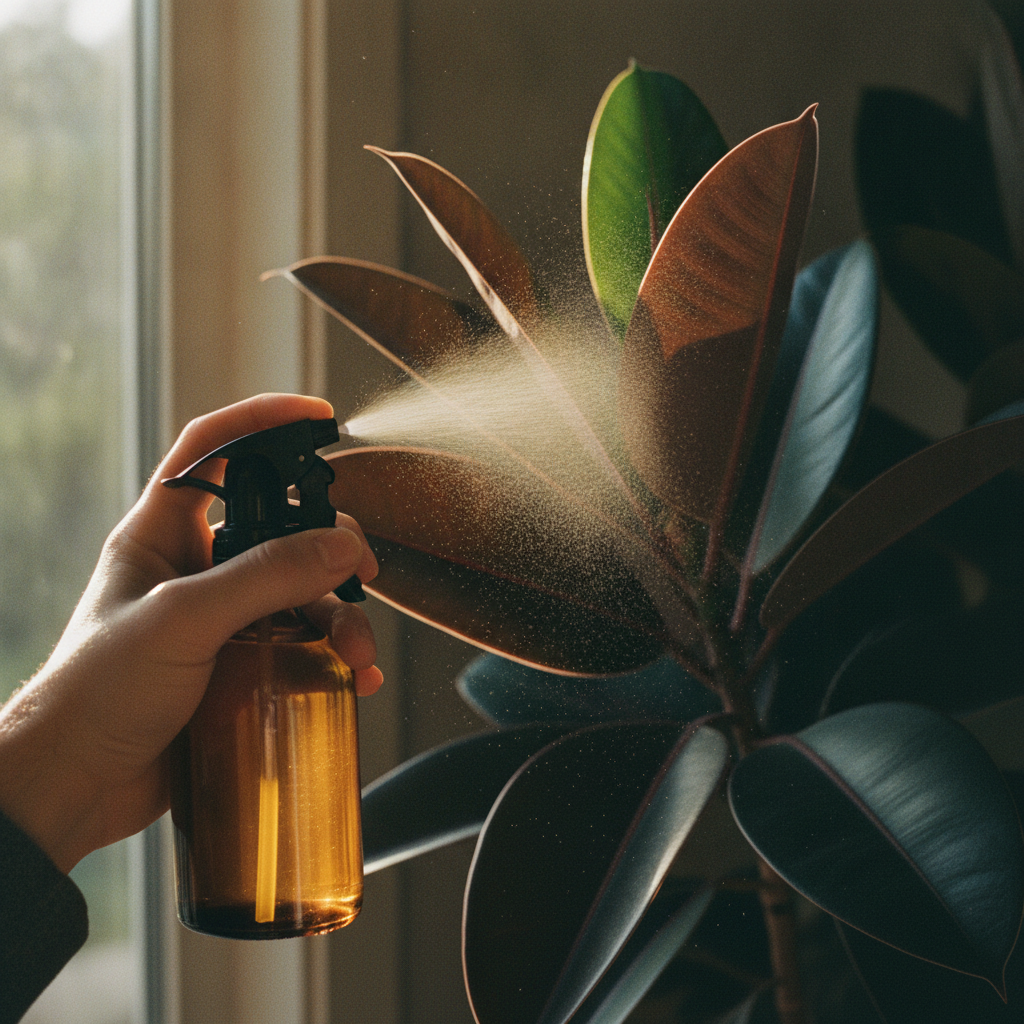
Common Pests
Mealybugs (Pseudococcus longispinus)
Mealybugs are the most likely pest on a Ruby Rubber Plant, appearing as small white cottony tufts tucked into the leaf axils and the folds of the foliage. They suck sap, weaken the plant and leave sticky honeydew behind.
Treatment: Dab each insect with a cotton bud dipped in isopropyl alcohol, then follow up with a neem or horticultural soap spray every week until no new bugs appear. Isolate the plant while you treat it.
Spider Mites (Tetranychus urticae)
Spider mites are tiny and thrive in warm, dry, still air. They cause fine pale stippling on the leaves and, in bad cases, delicate webbing between the stems. On a red-and-green plant the damage can be easy to miss until it spreads.
Treatment: Rinse the plant, improve air circulation, and treat with neem oil or a miticide, repeating every five to seven days to break the rapid breeding cycle.
Fungus Gnats (Bradysia species)
Fungus gnats are small dark flies whose larvae live in persistently damp soil. Adults are more a nuisance than a danger, but their presence is a reliable warning that the mix is being kept too wet for this succulent.
Treatment: Let the soil dry out more thoroughly between waterings, top-dress with a layer of grit, and use yellow sticky traps to catch the adults while the larvae starve.
Common Diseases
Root and Stem Rot (Pythium and Fusarium species)
By far the most serious threat to a Ruby Rubber Plant, rot sets in when the roots or stem base sit in wet, airless soil. It shows as blackening, softening tissue at soil level and collapse of the affected stems, and it can move through a plant within days.
Treatment: Remove the plant from its pot, cut away all soft, discoloured tissue, and take healthy cuttings from any firm growth as a backup. Repot any salvageable portion into fresh, dry gritty mix and withhold water for several days.
Leaf Spot (Cercospora and other fungi)
Fungal leaf spot appears as brown or blackish blotches, often ringed, and is usually triggered by water sitting on the foliage in poorly ventilated conditions. It is uncommon on a plant grown dry and bright.
Treatment: Remove affected leaves, stop any overhead watering or misting, improve air movement, and keep the foliage dry. A copper-based fungicide can help in persistent cases.
Pest and Disease Summary
| Pest / Disease | Identification | Treatment |
|---|---|---|
| Mealybugs | White cottony tufts in leaf folds and axils | Alcohol swabs, then neem or soap sprays weekly |
| Spider mites | Fine pale stippling and faint webbing | Rinse, raise airflow, neem or miticide repeated |
| Fungus gnats | Small flies around damp soil | Dry the soil, grit top-dressing, sticky traps |
| Root and stem rot | Black, soft, collapsing stem base | Cut away rot, take cuttings, repot dry |
| Leaf spot | Brown ringed blotches on leaves | Remove leaves, dry foliage, improve airflow |
Prevention Strategies
The single most effective preventive measure is restraint with the watering can. A Ruby Rubber Plant grown lean, in gritty soil and good light, is naturally resistant to both the rots and the pests that plague overwatered specimens. Quarantine any new plant for a couple of weeks before it joins your collection, and wipe or rinse the foliage occasionally to remove dust and spot trouble early.
Good airflow rounds out a healthy regime. A gently moving, well-lit room discourages both fungal disease and sap-sucking insects, keeping the sheltered leaf folds drier and less inviting. Combined with careful watering, it makes serious pest outbreaks rare.
Pro Tip — Neem as Routine Defence: A monthly wipe or light spray of diluted neem oil during the growing season acts as a gentle deterrent, stopping mealybugs and mites before they establish rather than fighting them once they take hold.
Popular Varieties
Compared with sprawling genera that offer dozens of named cultivars, Peperomia graveolens is grown mostly as the species itself, sold under the trade names Ruby Glow, Ruby Rubber Plant or Ruby Peperomia. Even so, there is meaningful variation to seek out, from a striking variegated form to a family of related ruby-toned peperomias that make natural companions on the same shelf.
The table below sets the true forms of the species alongside a few close relatives that share its jewel-like colouring, so you can build a collection around the ruby theme.
| Variety | Leaf Appearance | Light Needs | Growth Rate | Availability |
|---|---|---|---|---|
| Ruby Glow (species form) | Olive-green windowed tops, wine-red undersides on red stems | Bright indirect with some sun | Slow | Common |
| Variegated Ruby Glow | As above, splashed with cream and pink variegation | Bright indirect | Very slow | Rare |
| Peperomia ‘Ruby Cascade’ | Small round leaves, green above and red beneath, trailing | Bright indirect | Moderate | Increasingly common |
| Peperomia rubella | Tiny green leaves with deep red undersides, wiry red stems | Bright indirect | Moderate | Uncommon |
| Peperomia ‘Schumi Red’ | Rippled deep red-bronze rounded leaves | Bright indirect | Slow | Uncommon |
Featured Varieties
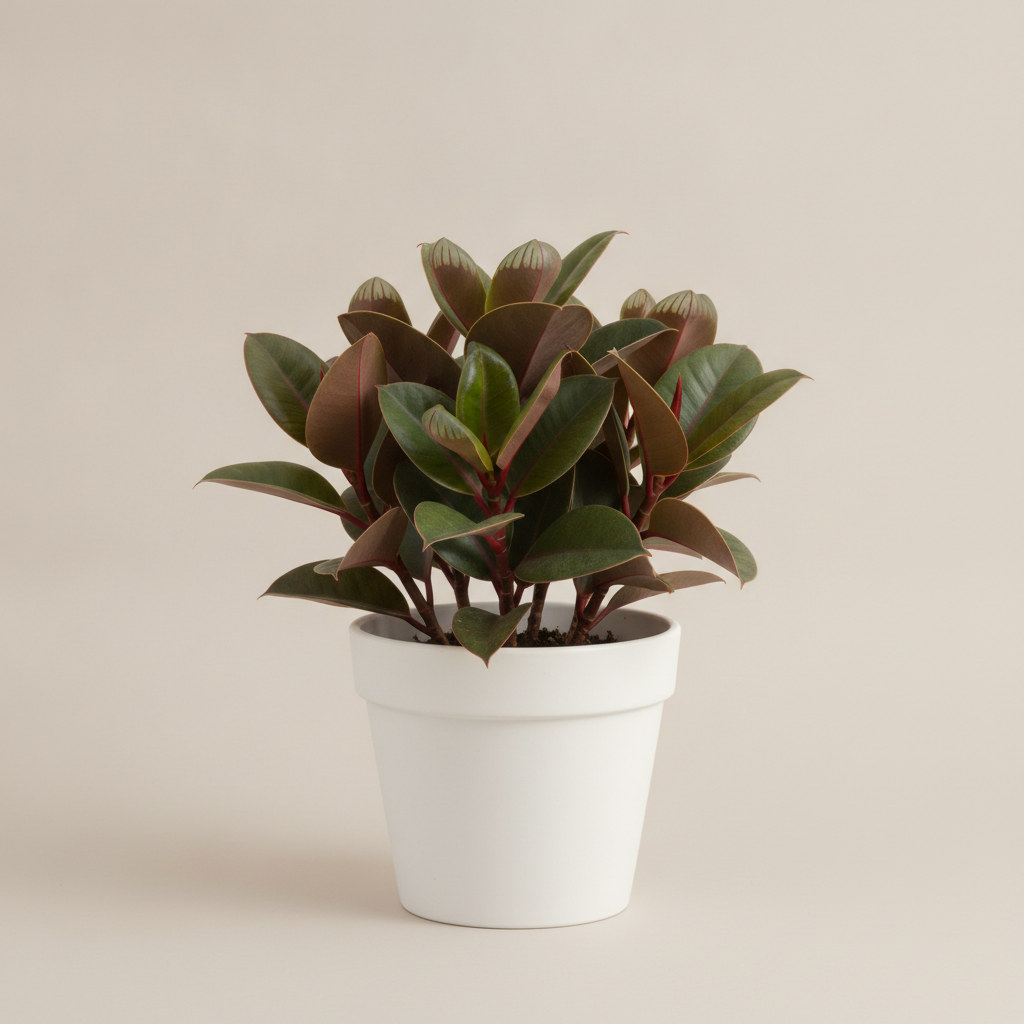
Ruby Glow
The classic and most widely sold form, and the reason the plant earns its ruby name. Compact rosettes of boat-shaped succulent leaves sit olive-green above and burgundy below on vivid red stems, colouring most intensely in strong light.
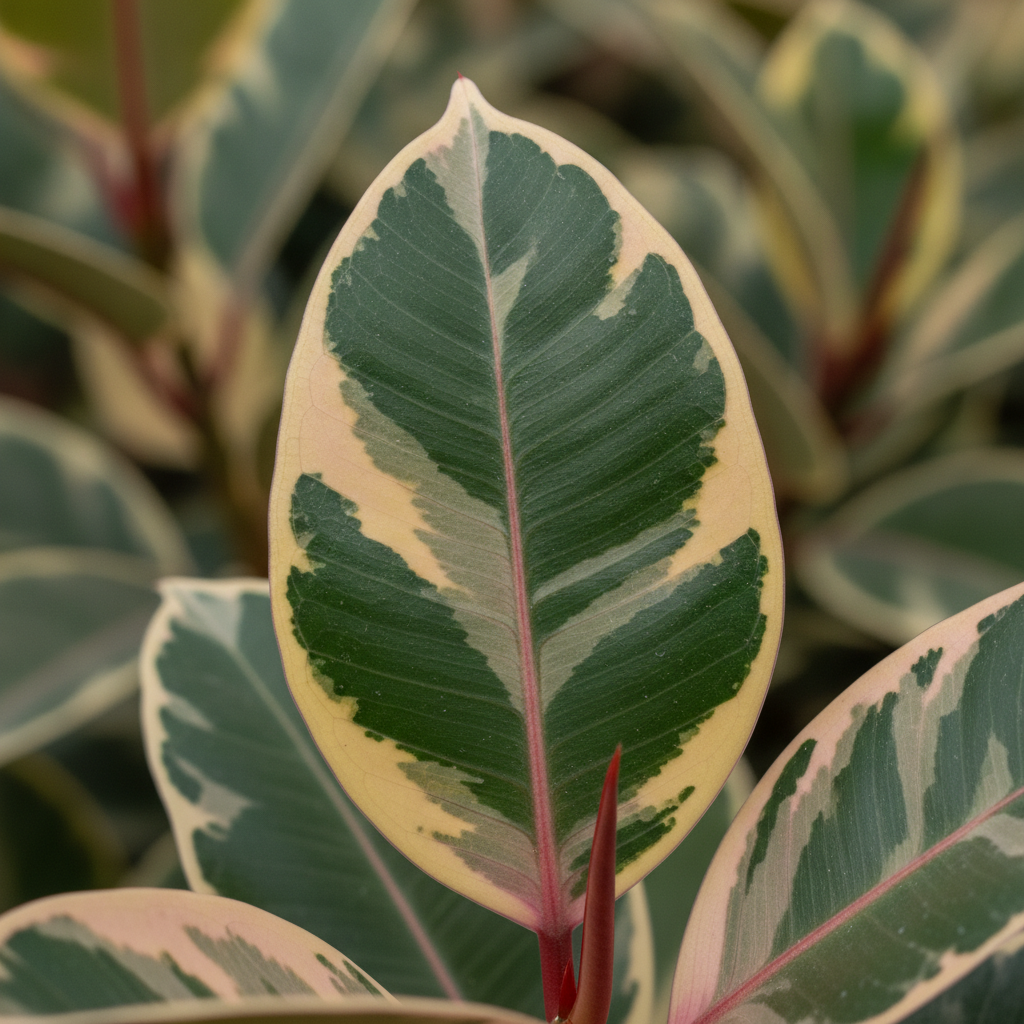
Variegated Ruby Glow
A scarce and prized form in which the fleshy leaves are streaked with creamy-yellow and soft pink over the usual olive and red. Reduced chlorophyll makes it slower and a little more light-hungry, so give it bright indirect light to hold the variegation.
Variety Profiles in Detail
Ruby Glow (Peperomia graveolens)
This is the plant most people mean when they say Ruby Rubber Plant. Discovered in southern Ecuador and introduced to cultivation in the late twentieth century, it has become a favourite among succulent and peperomia collectors alike for its jewel colouring and easy, compact habit. Grown well, it forms a dense clump of red-stemmed rosettes that can flower with slender reddish spikes; the species name graveolens, meaning strong-smelling, refers to the mild musty scent of those flowers, which many growers simply snip off.
Peperomia ‘Ruby Cascade’ (Peperomia hybrid)
Though not a true graveolens, Ruby Cascade is the natural trailing companion to the ruby theme. Its small round leaves, green on top and rich red beneath, tumble on long red stems, making it ideal for a hanging pot or a high shelf where the Ruby Glow rosettes sit below. It shares the same love of bright indirect light and lean, well-drained soil.
Choosing the Right Variety for Your Space
For most homes the species-form Ruby Glow is the ideal starting point: widely available, affordable and reliably colourful in a bright window. If you are drawn to rarer plants and can offer consistently good light, the variegated form rewards the extra care with unusual pastel tones. And if you want to build a display, pairing the upright rosettes of Ruby Glow with a trailing Ruby Cascade above gives you two heights and two habits from a single, coherent palette of green and garnet.
Frequently Asked Questions
Why are my Ruby Rubber Plant’s leaves turning green instead of red?
Loss of red colour is almost always a light problem. The burgundy pigments are anthocyanins produced in response to bright light, so in dim conditions the plant lets them fade. Move it to a brighter spot with some gentle direct sun and the colour will return in the new growth over a few weeks.
How often should I water a Ruby Rubber Plant?
Water only when the top half of the mix is dry, which is roughly every 10 to 14 days in summer and every three to four weeks in winter. It is far safer to underwater than to overwater this semi-succulent, so when in doubt, wait.
Why is my Ruby Rubber Plant’s stem going soft and black?
A soft, blackening stem base is root or stem rot caused by soil that has stayed too wet. Act quickly: unpot the plant, cut away all soft tissue, take healthy cuttings as a backup, and repot the firm growth into fresh, dry gritty mix. Improve drainage and water more sparingly to prevent a recurrence.
Is the Ruby Rubber Plant safe for cats and dogs?
Yes. Peperomias, including Peperomia graveolens, are not listed as toxic to cats or dogs by the ASPCA and are considered pet-safe. It is still sensible to discourage pets from chewing any houseplant, but this species carries none of the risk associated with pothos, philodendron or dieffenbachia.
Why does my Ruby Rubber Plant smell unpleasant when it flowers?
The species name graveolens means strong-smelling, a reference to the faintly musty scent of its slender reddish flower spikes. The smell is mild and short-lived, and many growers simply cut the spikes off, which also helps direct the plant’s energy back into its foliage.
How do I propagate a Ruby Rubber Plant?
Take a healthy leaf with its short stalk, or a stem tip with a couple of leaves and a node. Let the cut end callus for a day or two, then insert it into damp gritty mix or perlite in bright indirect light. Roots form over several weeks, and leaf cuttings produce a small new plantlet within one to three months.
Why are the leaves on my Ruby Rubber Plant wrinkled?
Slightly wrinkled or soft leaves usually mean the plant is thirsty and has drawn down its water reserves, so give it a thorough watering and the leaves should plump up within a day. If the leaves are wrinkled and the soil is still wet, however, suspect root rot rather than thirst and check the roots.
Does the Ruby Rubber Plant need high humidity?
No. Unlike many tropical peperomias, this species comes from a drier montane climate and is happy in ordinary household humidity of 40 to 50 per cent. Avoid misting, which can encourage rot in the folded leaves, and prioritise good light and airflow instead.






