
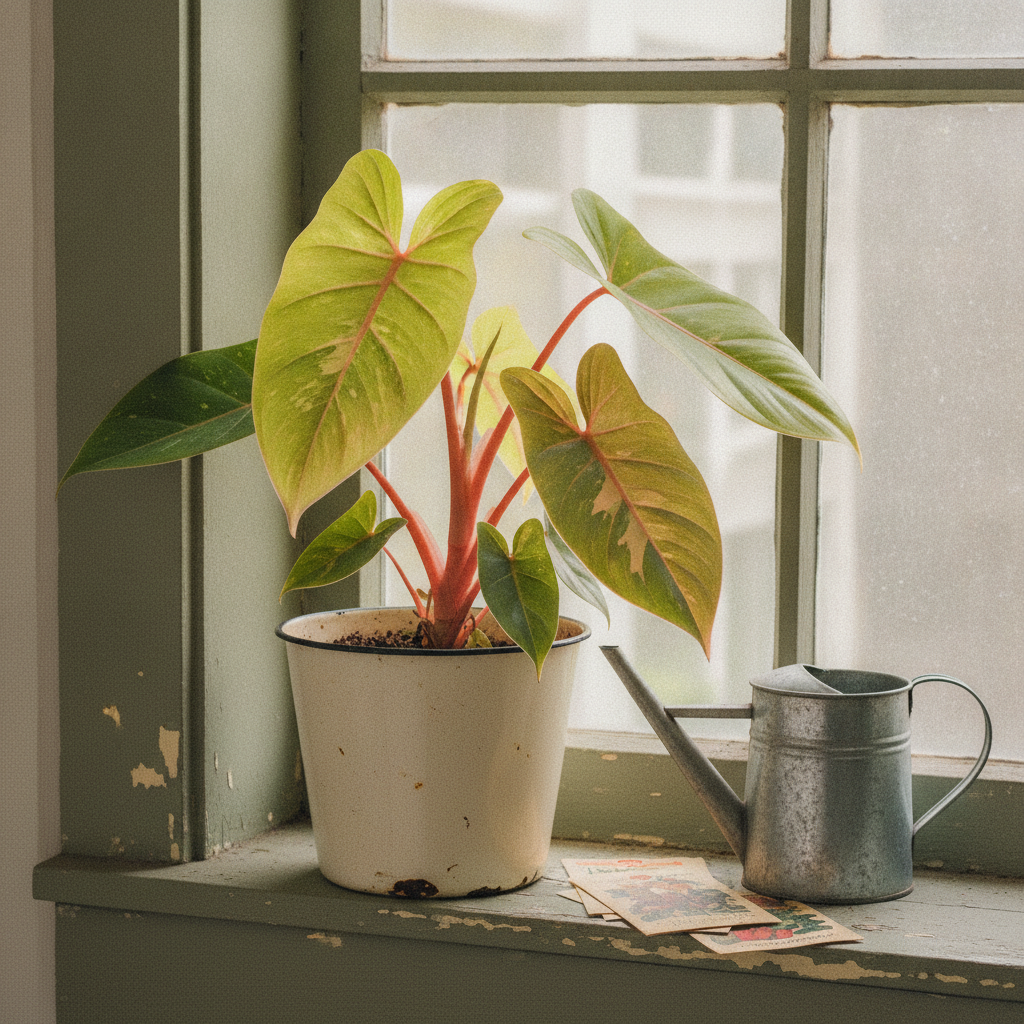
Few houseplants look quite as though an artist has been at work on them as the Painted Lady Philodendron (Philodendron erubescens ‘Painted Lady’). Each new leaf unfurls a luminous chartreuse-yellow, freckled and splashed with pink and rose, before settling into a calmer green as it matures. Held aloft on coral-red petioles, the effect is a plant that seems to repaint itself from the top down, week after week. This guide covers everything you need to take a Painted Lady from merely surviving to genuinely thriving, drawing on the habits of its rainforest-climbing relatives to explain why each element of care matters.
Quick Reference
The table below summarises the conditions a Painted Lady Philodendron needs. Treat these as the baseline to return to whenever the plant looks unhappy, and read the detailed sections that follow for the reasoning behind each figure.
| Common name | Painted Lady Philodendron, Painted Philodendron |
| Botanical name | Philodendron erubescens ‘Painted Lady’ |
| Family | Araceae (the aroids) |
| Light | Bright, indirect light; some gentle filtered morning sun |
| Water | When the top 3 to 5 cm (1 to 2 in) of mix dries out |
| Soil | Chunky, free-draining aroid mix |
| Temperature | 18 to 27 degrees C (64 to 81 degrees F) |
| Humidity | Average to high, ideally above 60 per cent |
| Feeding | Balanced liquid feed monthly in spring and summer |
| Mature size | Around 60 to 90 cm (2 to 3 ft) tall indoors, taller with support |
| Toxicity | Toxic to pets and people if chewed or swallowed |
- Why grow a Painted Lady Philodendron
- Light
- Watering
- Soil and potting
- Fertilising
- Propagation
- Pests and problems
- Varieties and relatives
- Frequently asked questions
Why Grow a Painted Lady Philodendron as a Houseplant
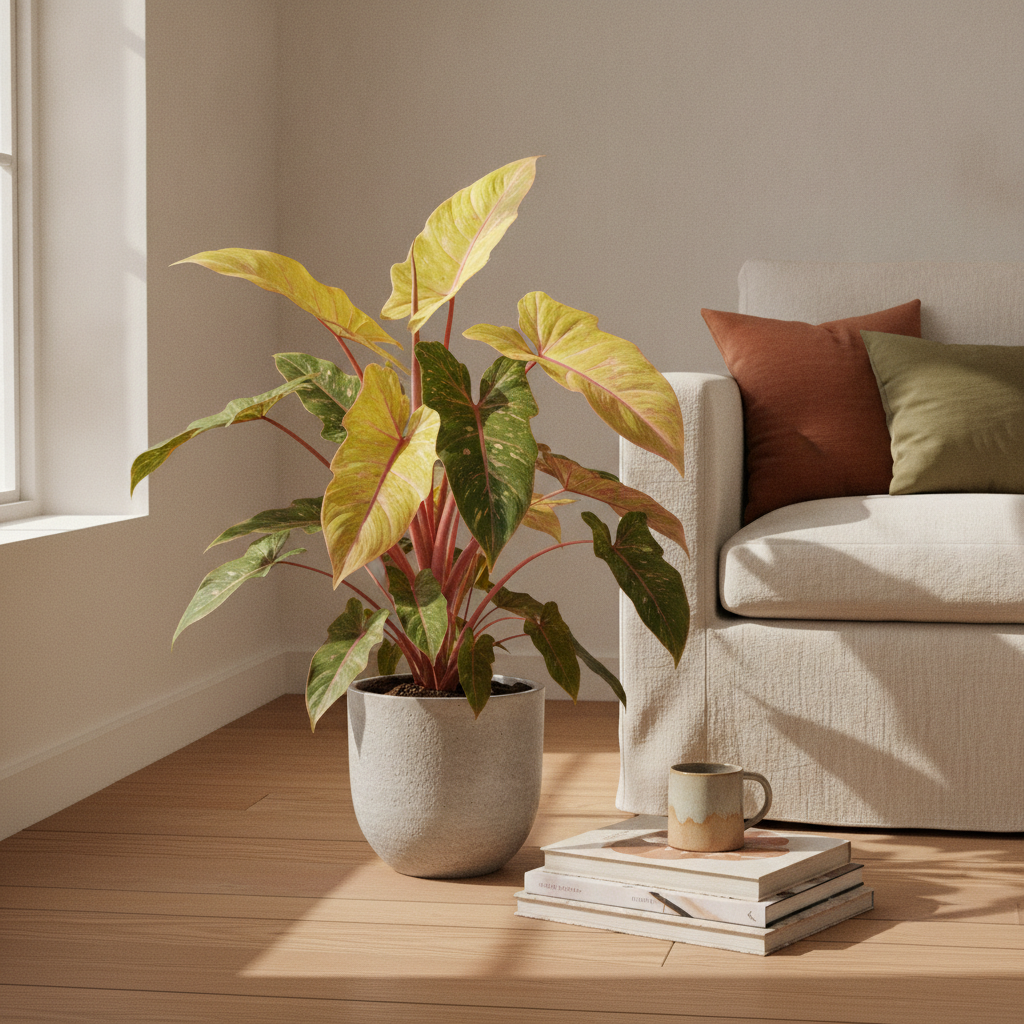
The Painted Lady is a hybrid cultivar of Philodendron erubescens, a species native to the humid forests of Colombia and the wider neotropics, where its relatives climb tree trunks toward the brighter canopy. The cultivar was selected for one trait above all others: the colour of its emerging foliage. Where most philodendrons produce green growth that simply gets larger, the Painted Lady delivers a moving target of colour, with each fresh leaf arriving acid-yellow and dappled with pink before it slowly greens over a few weeks. The bright red-pink petioles persist far longer, lending the whole plant a warm glow even once the leaves have matured.
Beyond its looks, the Painted Lady appeals because it is far more forgiving than its rarer, more highly variegated cousins. Its colour comes from pigment rather than from missing chlorophyll, so unlike the heavily white-variegated philodendrons it does not struggle to photosynthesise, does not scorch as readily, and grows at a satisfying pace. It is a self-heading to moderately climbing plant, meaning it stays reasonably compact and upright as a younger specimen, then begins to reach and vine as it matures, at which point a moss pole transforms it into a genuine feature. For anyone who has kept a heartleaf philodendron or a pothos alive, the Painted Lady is a natural and rewarding next step.
Pro Tip — Read the newest leaf: The colour and condition of the most recently unfurled leaf tells you more about your care than any older leaf can. Vivid, well-formed new growth means your light and feeding are on target; small, pale, or distorted new leaves are the first sign something needs adjusting.
Light
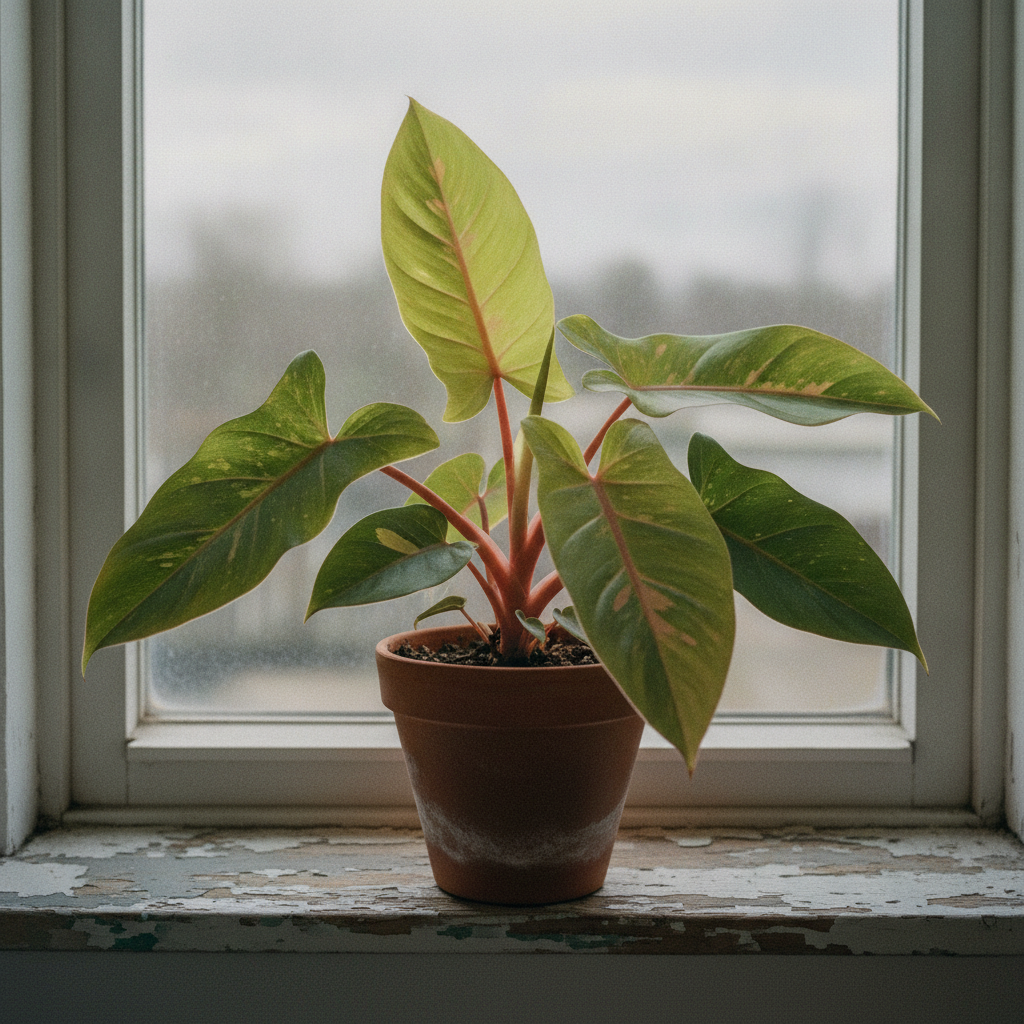
Light is the single most important factor in keeping a Painted Lady colourful, because the warm pigments that make the new growth so striking only develop fully under bright conditions. In its native forest, Philodendron erubescens climbs upward in search of stronger light filtered through the canopy, and that is exactly the quality of light it wants indoors: bright and generous, but diffused rather than the full force of unobstructed midday sun. An east-facing window with gentle morning light, or a spot a metre or two back from a brighter south or west window, suits it perfectly.
The difference between surviving and thriving shows up clearly here. In low light a Painted Lady will live, but its new leaves emerge smaller, the chartreuse arrives muted, the pink freckling fades, and the gaps between leaves stretch out as the plant reaches for a better position. In good bright light the same plant produces larger leaves, holds richer colour, and grows in a tighter, more upright form. Too much direct sun, on the other hand, scorches the tender new foliage and bleaches the older leaves to a washed-out yellow-green, so the goal is brightness without harsh exposure.
If your home simply lacks a bright window, a full-spectrum LED grow light fills the gap well. Run it for ten to twelve hours a day, positioned close enough to be effective but far enough that the leaves never feel warm to the touch. Rotating the pot a quarter turn each week keeps growth even, since the plant will always lean toward its light source over time.
Warning — Sudden moves scorch leaves: Moving a Painted Lady straight from a shaded corner into a sunny window can burn the foliage within days. Acclimatise it over one to two weeks by shifting it progressively closer to the brighter spot.
Watering
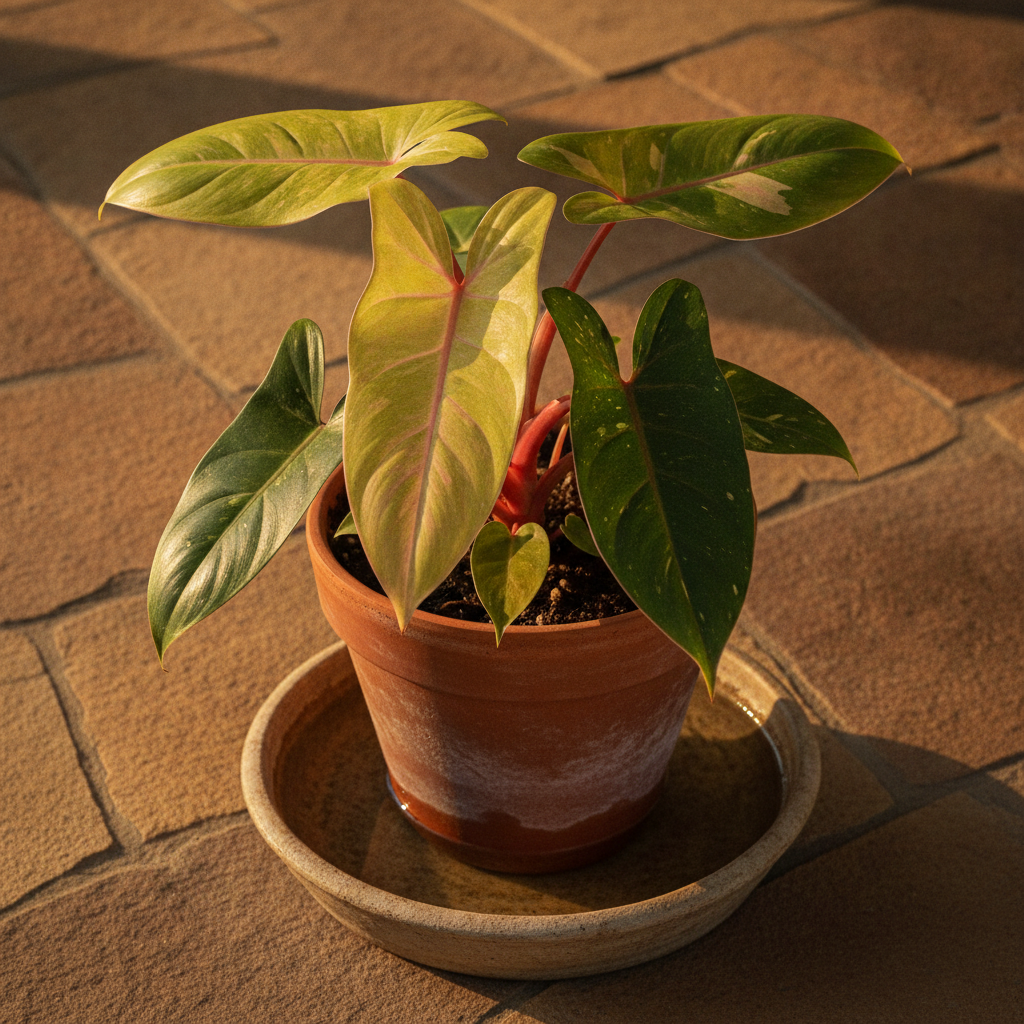
The Painted Lady likes its potting mix to be evenly moist during active growth but never waterlogged, and the simplest reliable rule is to water once the top 3 to 5 cm (1 to 2 in) of the mix has dried out. Push a finger into the surface to check, or lift the pot to feel its weight; a freshly watered pot is noticeably heavier than a dry one, and this weight test quickly becomes second nature. When you do water, do it thoroughly, letting it run from the drainage holes so the entire root ball is moistened and any built-up salts are flushed through, then empty the saucer so the roots are never left standing in water.
Overwatering is the most common way to lose a philodendron, and it rarely means giving too much water at once. It means watering again before the mix has had a chance to breathe, so the roots sit in airless, sodden conditions and begin to rot. The early warning signs are yellowing lower leaves, a soft and mushy stem base, and a sour smell from the soil. Underwatering shows the opposite picture: drooping leaves, crisping brown leaf edges, and mix that has shrunk away from the sides of the pot. The Painted Lady recovers from a single missed watering far more readily than from sustained sogginess, so when in doubt, wait a day.
Water quality matters more than many people expect. Philodendrons are mildly sensitive to the fluoride and chlorine in some tap water, which can contribute to brown leaf tips over time. If your tap water is heavily treated, leaving it to stand overnight, or using filtered or rainwater, gives slightly cleaner results. Use water at room temperature rather than cold, as a shock of cold water can briefly check growth.
Pro Tip — Adjust water to the season: A Painted Lady drinks far less in the short, cool days of winter than in summer. Keep checking the mix rather than watering on a fixed schedule, and you will naturally water less often as growth slows.
Soil and Potting
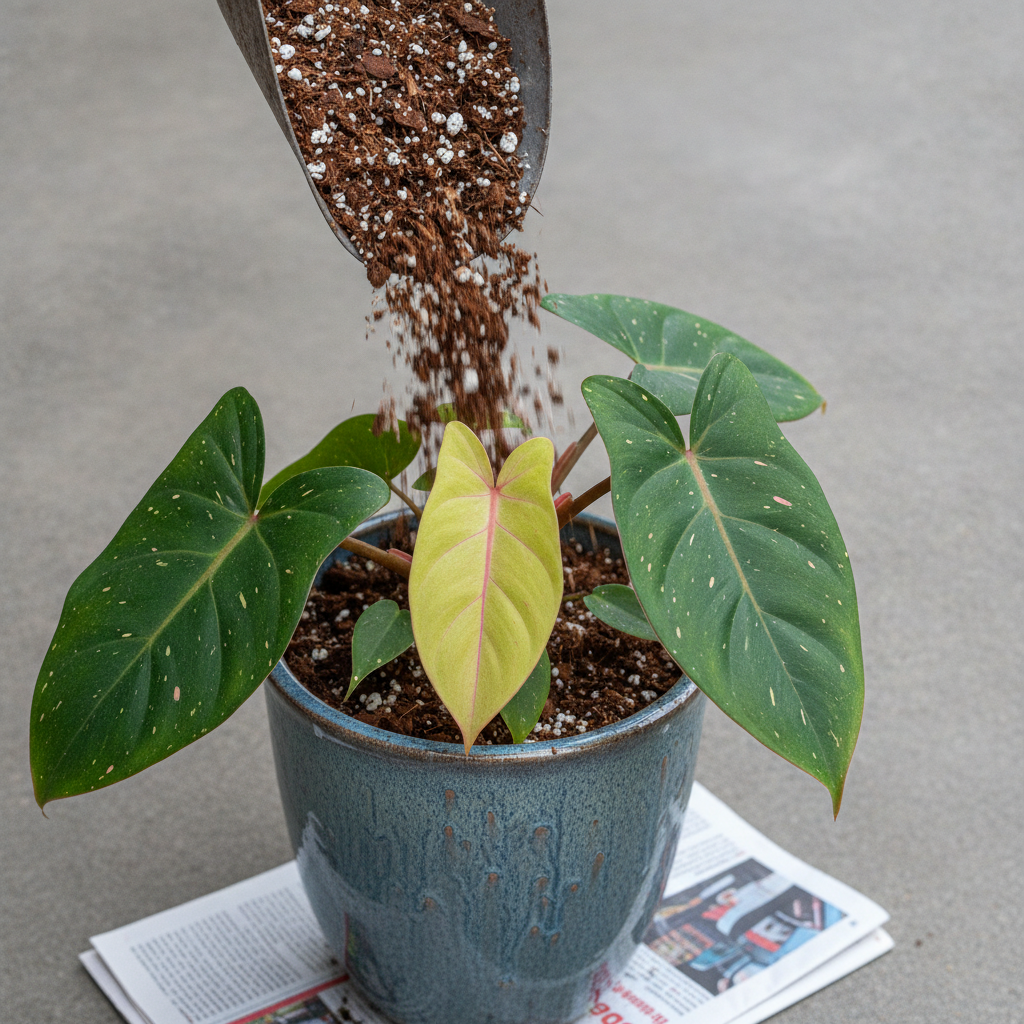
Because Philodendron erubescens is a climbing aroid whose roots cling to bark and run through loose forest litter rather than dense ground soil, it needs a potting mix that mimics those airy conditions. A plain bag of general houseplant compost holds too much water around the roots and compacts over time, which is precisely the situation that leads to rot. The aim is a chunky, open, free-draining medium that holds some moisture while letting plenty of air reach the roots between waterings.
A reliable aroid mix is easy to make by combining roughly equal parts of a quality peat-free houseplant compost, orchid bark, and perlite, with a handful of horticultural charcoal added to keep the mix sweet. The bark creates structure and air pockets, the perlite improves drainage, and the compost provides a moisture-holding base. Some growers add a little coco coir or worm castings for extra water retention and gentle nutrition. The result should feel light and crumbly, never dense or claggy.
Always pot into a container with drainage holes, choosing one only slightly larger than the current root ball, as an oversized pot holds a reservoir of wet mix that the roots cannot use. Terracotta breathes and dries faster, which suits heavy-handed waterers, while glazed ceramic and plastic hold moisture longer. Repot every couple of years, or once you see roots circling the bottom or escaping the drainage holes, ideally in spring as growth resumes. When you repot, refresh the mix entirely rather than simply moving the old root ball into a bigger pot, since old mix breaks down and loses its structure.
Repotting is also the natural moment to add a support. As a Painted Lady matures it begins to climb, and a moss pole or coir pole gives its aerial roots something to grip. Plants given a damp pole to climb often produce noticeably larger leaves, because climbing is their natural growth strategy and the support signals that it is time to size up.
Fertilising
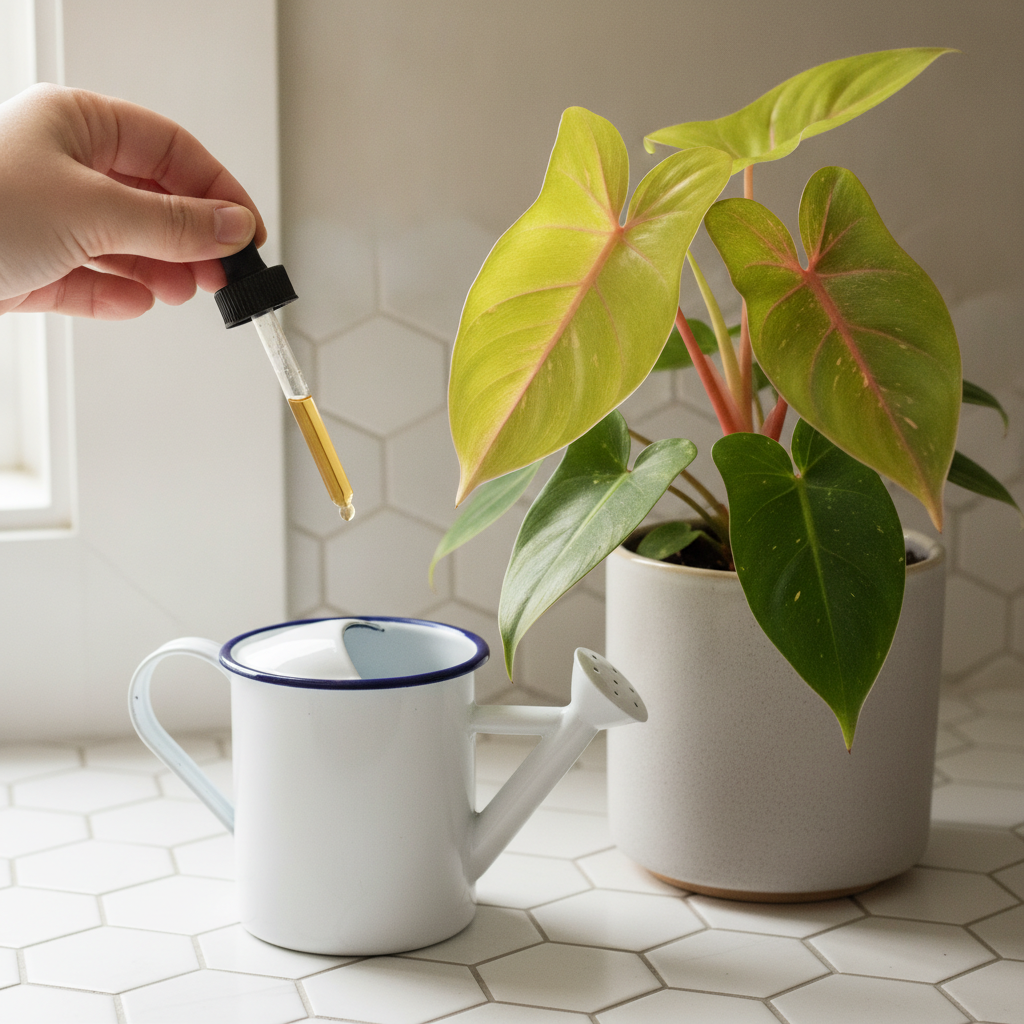
The Painted Lady is a moderate feeder, and regular but gentle fertilising during the growing season is what keeps its new leaves coming large, frequent, and well coloured. A balanced liquid houseplant fertiliser, diluted to roughly half the strength stated on the bottle, applied once a month from spring through to early autumn, covers its needs comfortably. Feeding at half strength reduces the risk of fertiliser burn while still supplying the nitrogen that drives leafy growth and the trace nutrients that keep the foliage healthy.
Apply fertiliser only to soil that is already slightly moist, never to a bone-dry root ball, as concentrated feed on dry roots can scorch them. The most common mistake is overfeeding in the belief that more nutrients mean faster growth. In reality, excess fertiliser accumulates in the mix as mineral salts, which show up as a white crust on the soil surface or pot rim and as brown, scorched leaf tips. If you suspect a build-up, flush the pot thoroughly with plain water two or three times to wash the salts through, and ease back on feeding.
As autumn turns to winter and daylight fades, the plant’s growth naturally slows, and its appetite for nutrients falls with it. Stop feeding through the darkest months, or reduce it to a single very dilute feed across the whole winter, and resume the monthly routine once you see fresh growth pushing out in spring. Letting feeding follow the plant’s own rhythm prevents a build-up of unused salts during the quiet season.
Pro Tip — Let new growth set the pace: If your Painted Lady is pushing out a steady flow of healthy leaves, your current feeding is working. If growth has stalled in the growing season despite good light and water, a gentle feed is more likely to help than a stronger one.
Propagation
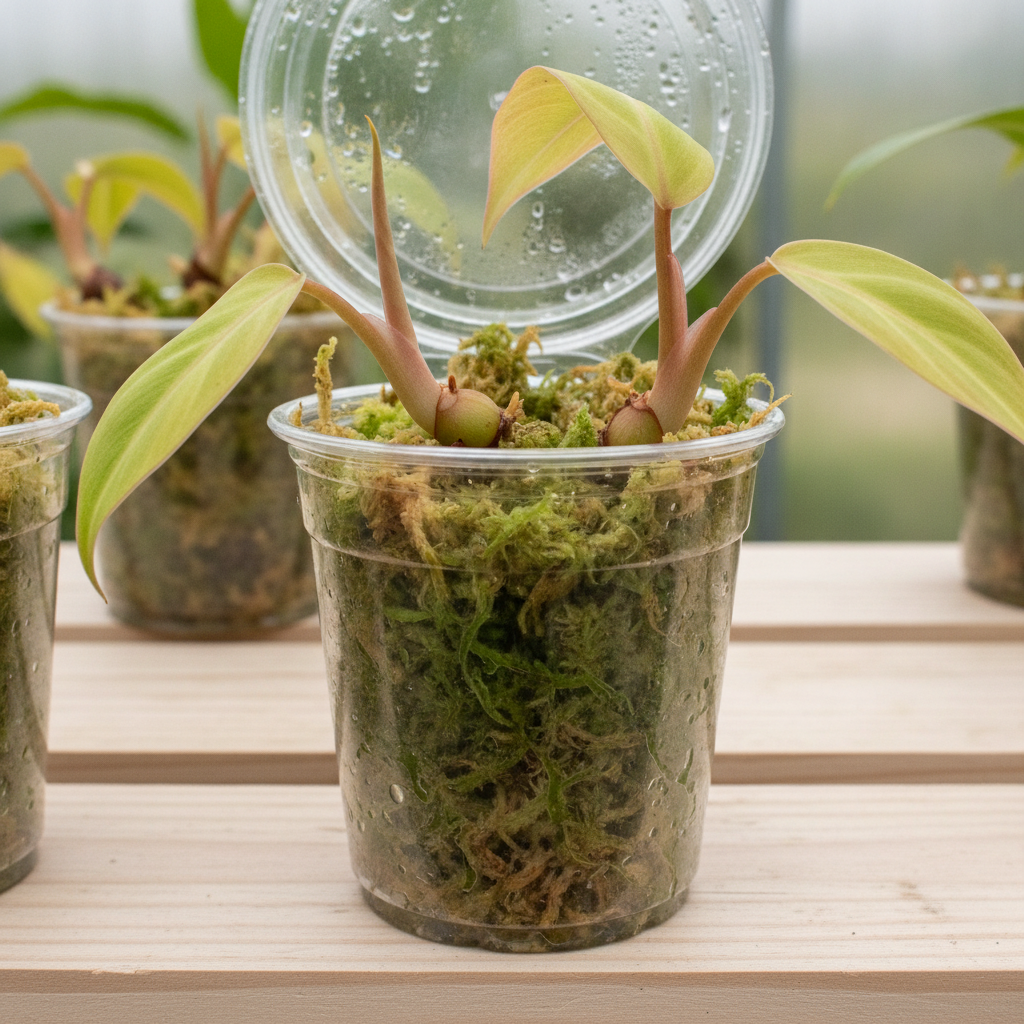
The Painted Lady propagates reliably from stem cuttings, because like all climbing philodendrons it produces roots at the nodes, the points along the stem where a leaf and its petiole meet. Each node carries the potential to grow new roots and shoots, which is what makes a cutting taken just below a node so dependable. The best time to propagate is spring or early summer, when the plant is growing strongly and a cutting will root quickly, and a mature, slightly leggy plant is the ideal candidate since taking a cutting also encourages it to branch.
To take a cutting, follow these steps:
- Identify a healthy section of stem with at least one node and one or two leaves, ideally including a small aerial root if one is present at the node.
- Using clean, sharp scissors or a knife wiped with isopropyl alcohol, cut about one centimetre below the node.
- Remove the lowest leaf so that the bare node will sit in your rooting medium without any foliage submerged.
- Let the cut surface dry and callus for an hour or two to reduce the chance of rot.
- Set the node into damp sphagnum moss, a glass of water, or a small pot of perlite, keeping the node covered and the leaves above the surface.
- Place the cutting in warm, bright, indirect light and keep the medium consistently moist.
Roots usually appear within two to four weeks. Sphagnum moss tends to give the sturdiest results, since it holds both moisture and air around the developing roots, but water rooting is the easiest to monitor because you can watch progress through the glass. Once the new roots reach three to five centimetres long, pot the cutting up into your usual aroid mix and keep it slightly more humid than normal for the first couple of weeks while it adjusts to growing in soil. Covering the freshly potted cutting loosely with a clear bag or placing it inside a propagation case raises the humidity and eases the transition.
Warning — The sap is an irritant: Like all philodendrons, the Painted Lady’s sap contains calcium oxalate crystals that can irritate skin and eyes. Wash your hands after taking cuttings, and keep cuttings and trimmings away from pets and children.
Pests and Problems
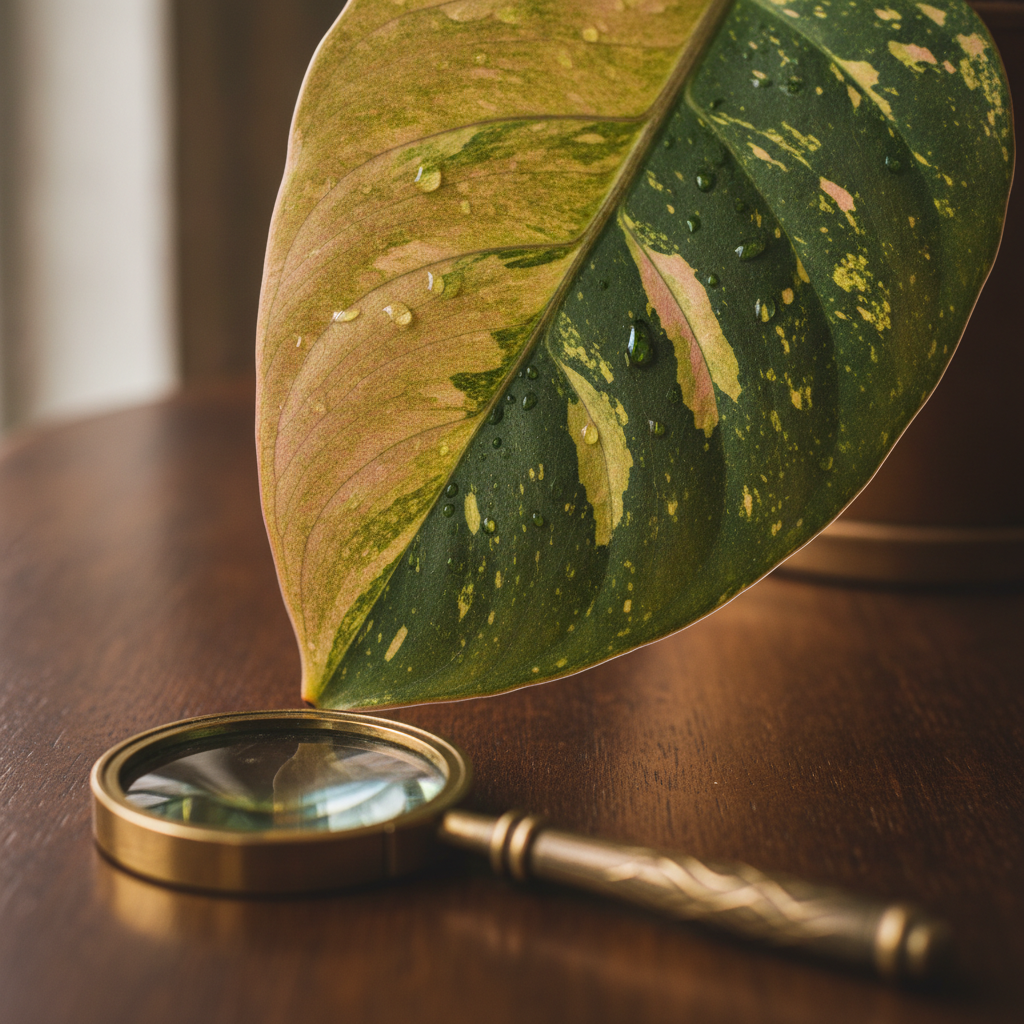
A healthy, well-grown Painted Lady is reasonably resistant to pests, but like any houseplant it can occasionally attract the usual suspects, especially in dry indoor air or when newly brought home alongside other plants. The most likely visitors are spider mites, mealybugs, and the occasional scale insect or thrip. Catching them early is far easier than clearing an established infestation, so a brief inspection each time you water, paying particular attention to the undersides of leaves and the leaf axils where pests like to hide, is the single most useful habit you can adopt.
Spider mites are tiny and hard to see directly, but they betray themselves with fine pale stippling on the leaves and faint webbing in the leaf joints, and they thrive in dry air. Mealybugs appear as small white cottony tufts tucked into the axils and along the stems, while scale shows up as small brown limpet-like bumps that do not brush off easily. The table below sets out how to recognise and deal with each.
| Pest | Signs | Treatment |
|---|---|---|
| Spider mites | Fine pale speckling, faint webbing, dry air | Raise humidity, wipe leaves, treat with insecticidal soap or neem oil |
| Mealybugs | White cottony clusters in axils and stems | Dab with isopropyl alcohol on a cotton bud, then treat with neem oil |
| Scale | Small brown bumps on stems and leaf undersides | Scrape off gently, then treat with neem oil or insecticidal soap |
| Fungus gnats | Small flies around the soil, larvae in wet mix | Let the mix dry more between waterings, use yellow sticky traps |
Many of the problems a Painted Lady owner encounters are not pests at all but symptoms of care that has drifted off course. Yellowing lower leaves most often point to overwatering, while crisp brown leaf tips usually mean the air is too dry, the mix has been allowed to dry out too far, or mineral salts have built up from overfeeding. Pale, washed-out new leaves with weak colour signal too little light, and faded or scorched patches mean too much direct sun. Leggy growth with long gaps between leaves is the plant telling you it wants more light. Because the symptoms overlap, the most reliable approach is to run back through light, water, and feeding in turn rather than reaching first for a pesticide.
Pro Tip — Quarantine new arrivals: Keep any newly bought plant apart from your collection for a couple of weeks and inspect it closely. Most pest outbreaks arrive on a new plant, and a short quarantine stops a single hitchhiker becoming a household problem.
Varieties and Relatives
The Painted Lady belongs to a colourful group of Philodendron erubescens cultivars, the so-called blushing philodendrons, all selected for richly coloured new growth and warm-toned stems. If you fall for the Painted Lady, these close relatives make natural companions on the same shelf and share almost identical care, so a collection of them is both striking and easy to keep.
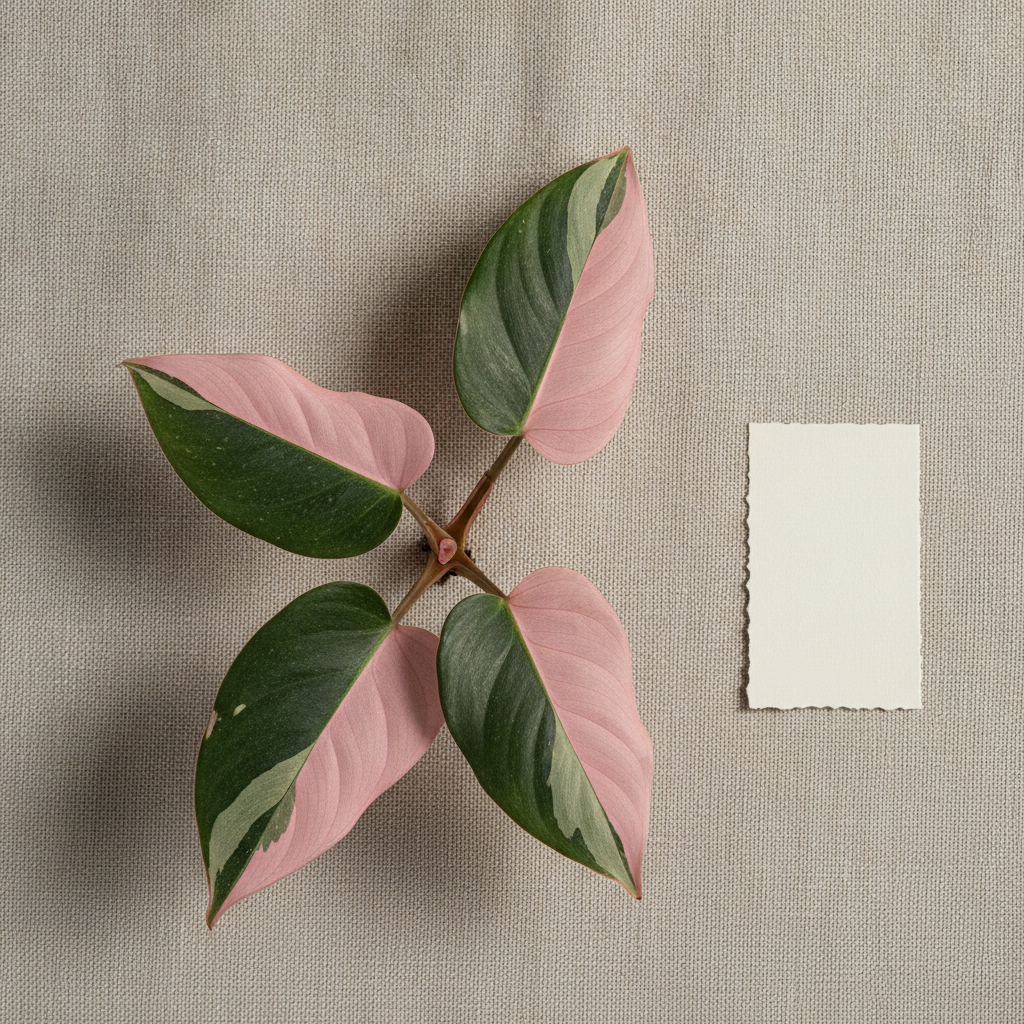
The ‘Pink Princess’ is the most famous of the group, prized for dark green leaves splashed with bubblegum-pink variegation. Because that pink is true variegation rather than pigment in green tissue, it needs bright light to hold its colour and a little more patience than the Painted Lady, but the two share the same chunky mix, even moisture, and warm conditions.
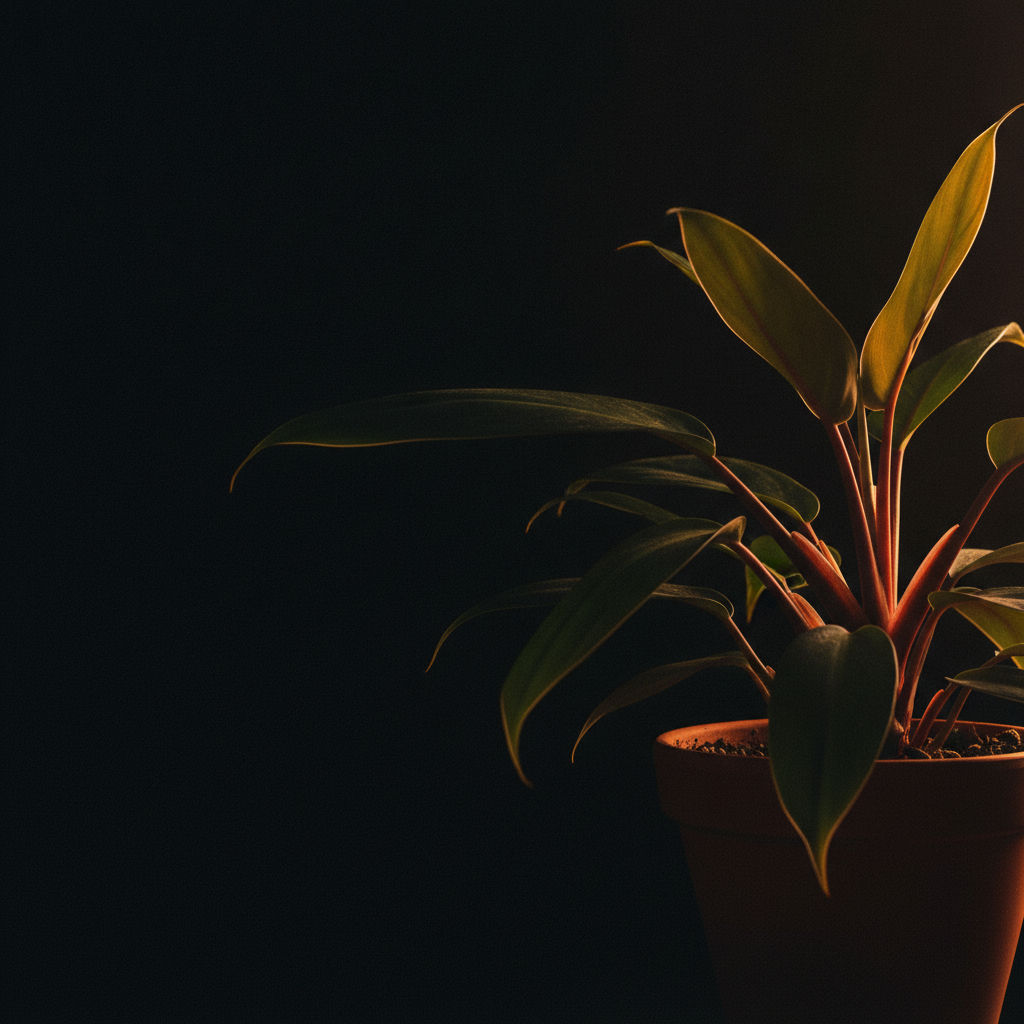
The ‘Red Emerald’ is a vigorous climber with glossy, elongated deep green leaves carried on vivid burgundy-red petioles and stems. It leans more heavily into its climbing habit than the Painted Lady, so a moss pole brings out its best, and its red stems give a similar warm accent without any variegation to maintain.
Other relatives worth knowing include ‘Imperial Red’ and ‘Imperial Green’, compact self-heading forms with broad glossy leaves, and ‘Burgundy’, an older cultivar with deep wine-red new growth. All belong to the same Philodendron erubescens complex and respond to the same care described in this guide, which makes the Painted Lady an excellent gateway into a wider and very collectable group.
Frequently Asked Questions
Why is my Painted Lady’s new growth not as pink as it used to be?
The warm chartreuse and pink tones of the new leaves develop most strongly in bright light, so fading colour almost always points to a position that has become too dim, perhaps as the seasons changed or furniture was moved. Shift the plant closer to a bright, indirect light source, or add a grow light through the darker months, and the colour on subsequent leaves should return.
Is the Painted Lady Philodendron toxic to cats and dogs?
Yes. Like all philodendrons it contains insoluble calcium oxalate crystals, which can cause oral irritation, drooling, and digestive upset if a pet or child chews or swallows any part of the plant. Keep it out of reach, and seek veterinary or medical advice if ingestion is suspected.
Why are the lower leaves turning yellow?
The occasional yellowing of an old lower leaf is normal as the plant redirects energy to new growth. When several lower leaves yellow at once, however, the usual cause is overwatering. Check that the mix is drying appropriately between waterings and that the pot drains freely, and let the top few centimetres dry out before watering again.
Does a Painted Lady need a moss pole?
It does not strictly need one as a younger, self-heading plant, but as it matures and begins to climb, a damp moss or coir pole gives its aerial roots something to grip and encourages noticeably larger leaves. If you want a fuller, taller specimen, adding a pole is well worth doing.
How fast does a Painted Lady Philodendron grow?
In good light, warmth, and with regular feeding through the growing season, a Painted Lady is a moderately fast grower that can push out a new leaf every few weeks in spring and summer. Growth slows or pauses in winter, which is entirely normal and not a sign of a problem.
Why are the tips of the leaves turning brown and crispy?
Crispy brown tips usually mean the air is too dry, the mix was allowed to dry out too far between waterings, or mineral salts have built up from overfeeding or hard tap water. Raise the humidity, keep watering more consistent, flush the pot occasionally with plain water, and consider using filtered or rainwater if your tap water is heavily treated.






