
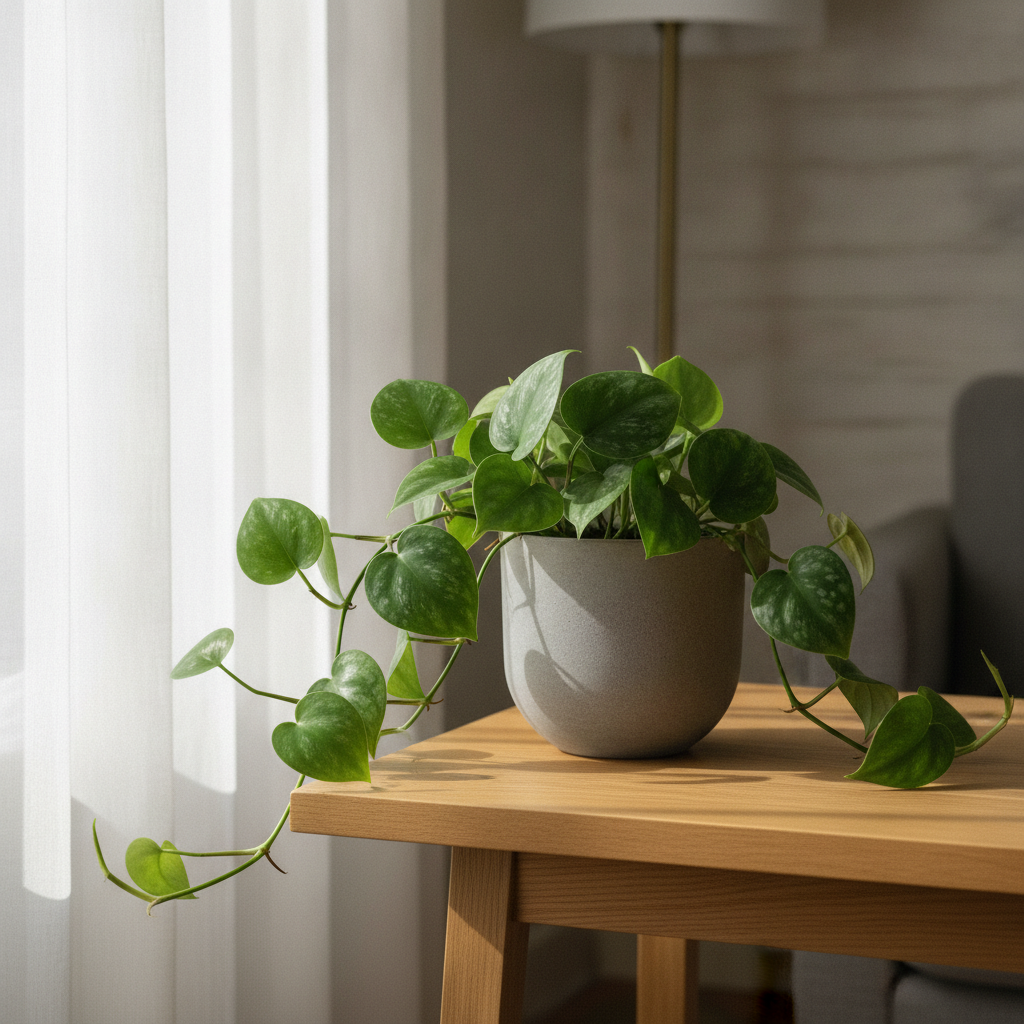
Few trailing plants combine toughness and quiet beauty quite like the satin jade pothos. Despite the common name, this is not a true pothos at all but Scindapsus pictus, a climbing aroid native to the warm forests of Southeast Asia, where it scrambles up tree trunks from India and Bangladesh through Indonesia and the Philippines. Its thick, heart-shaped leaves carry a remarkable matte, almost pewter-like finish that catches the light from across a room, scattered with faint silvery flecks against deep jade green. That satin sheen, caused by microscopic air pockets just beneath the leaf surface, is what sets the whole Scindapsus pictus group apart from the glossier true pothos it is so often confused with.
The satin jade pothos has earned a reputation as one of the most forgiving houseplants you can grow, and that reputation is well deserved. It tolerates low light, shrugs off the occasional missed watering, and rarely demands the high humidity that its tropical cousins insist upon. Yet there is a meaningful gap between a plant that merely survives in a dim corner and one that truly thrives, sending out long, well-furnished vines with leaf after leaf of bright silver patterning. This guide covers everything you need to close that gap, from reading the light in your home to watering by weight, mixing the right soil, feeding without overdoing it, propagating new plants for free, and heading off the handful of pests that occasionally take an interest.
Contents
- Quick Reference
- Why Satin Jade Pothos Makes a Rewarding Houseplant
- Light Requirements
- Watering & Humidity
- Soil, Potting & Repotting
- Fertilising
- Propagation
- Pests & Diseases
- Popular Varieties
- Frequently Asked Questions
Quick Reference: Satin Jade Pothos at a Glance
| Light | Bright, indirect light for the best silver patterning. Tolerates medium light, but variegation fades in deep shade. No direct midday sun. |
| Watering | Let the top 5cm (2in) of soil dry out between waterings. Roughly weekly in summer, every two to three weeks in winter. |
| Temperature | 18 to 29C (65 to 85F). Keep above 12C (55F) and away from cold draughts. |
| Humidity | Happy at average household humidity of 40 to 50 percent. Rewards 60 percent or more with larger, more silvery leaves. |
| Fertiliser | Balanced liquid feed at half strength, monthly during spring and summer. None in winter. |
| Toxicity | Toxic to cats, dogs, and humans if chewed or swallowed, due to insoluble calcium oxalate crystals. |
Why Satin Jade Pothos Makes a Rewarding Houseplant
The appeal of Scindapsus pictus starts with how little it asks of you. This is a plant that genuinely prefers to be left alone between waterings, that holds its good looks in light levels where fussier aroids would sulk, and that grows steadily without ever becoming an unruly monster. For anyone who travels, forgets, or simply wants a beautiful plant that does not turn care into a second job, the satin jade pothos is close to ideal. Its thick, semi-succulent leaves store water, which is exactly why it forgives the dry spells that would finish off a fern or a calathea.
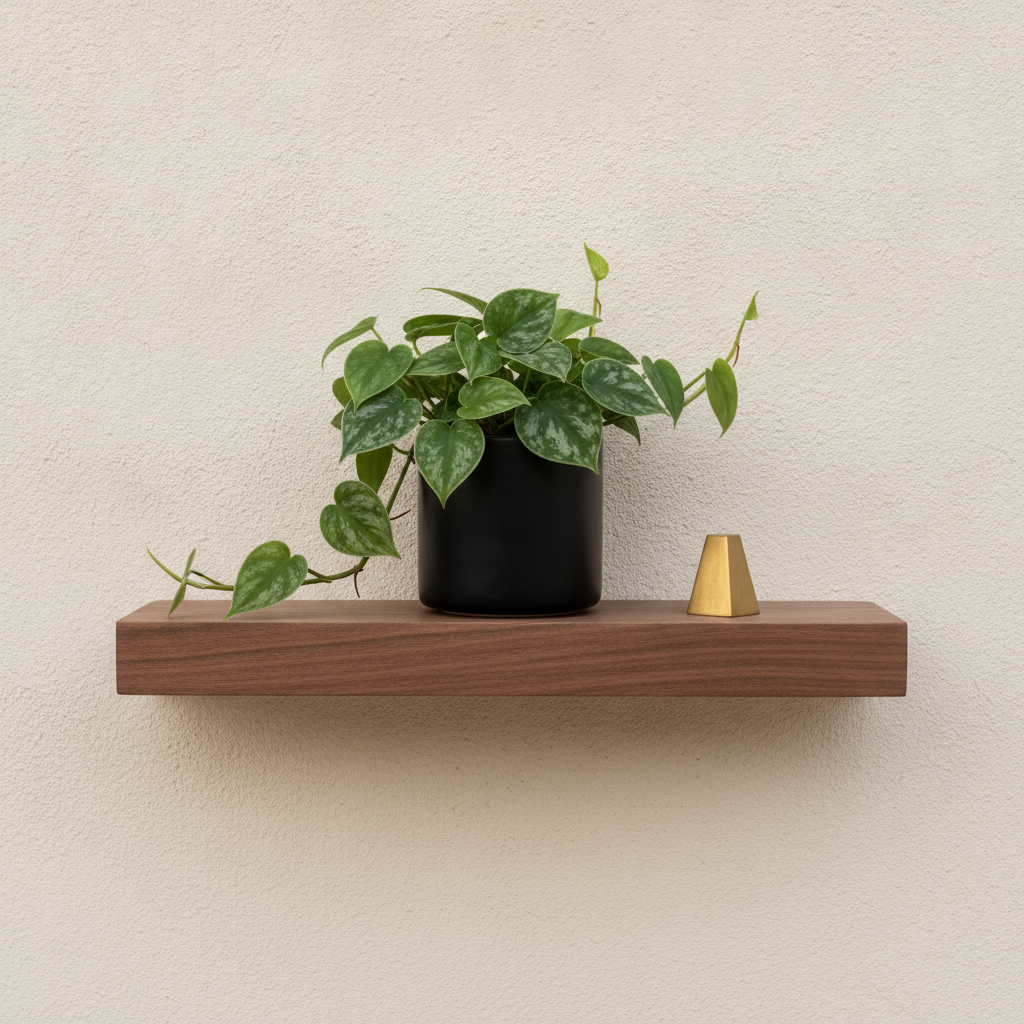
Beyond resilience, there is the sheer decorative range of the plant. Left to trail from a shelf or hanging pot, it forms a curtain of overlapping hearts that softens any corner. Given a moss pole or trellis to climb, the same plant produces noticeably larger leaves with bolder silver, mimicking the way it grows up tree trunks in the wild. It mixes happily with other plants in a grouping yet looks just as composed standing alone. Add to that its modest footprint, its slow-to-moderate growth that keeps repotting infrequent, and its eagerness to propagate, and you have a houseplant that earns its place many times over.
Important — Toxicity: Every part of the satin jade pothos contains insoluble calcium oxalate crystals, which cause intense burning and swelling of the mouth, drooling, and vomiting if chewed by cats, dogs, or curious children. It is not usually life threatening, but it is genuinely unpleasant. Keep trailing vines out of reach of pets that like to nibble, and wash your hands after taking cuttings.
Light Requirements
Light is the single biggest factor in whether your satin jade pothos merely persists or genuinely flourishes, and it is also the factor most growers misjudge. Because the plant tolerates shade, people assume it likes it. In truth, the silver markings that make Scindapsus pictus so striking are a direct response to good light. Move the plant somewhere too dark and the new leaves emerge smaller, plainer, and further apart on the stem.
The ideal is bright, indirect light: a position that is clearly well lit but where the leaves never sit in a beam of harsh, direct sun for more than an hour or so. A spot a metre or two back from a bright window, or directly beside a window screened with a sheer curtain, hits the mark almost perfectly. Here the plant keeps its patterning crisp, holds its leaves close together on the vine, and grows at a satisfying pace through the warmer months.
Light Levels Explained
It helps to think about light in defined tiers rather than vague terms like bright or shady. The table below translates the categories you will see in plant care advice into approximate light intensity, a typical place in the home, and what you can expect from your satin jade pothos in each.
| Light Category | Approx. Level | Typical Location | Outcome |
|---|---|---|---|
| Direct sun | 50,000 lux and above | On an unscreened south or west sill | Avoid. Scorches and bleaches the satin finish. |
| Bright indirect | 10,000 to 20,000 lux | Beside a sheer-curtained window, or a metre back from a bright one | Ideal. Strong silver, compact growth. |
| Medium | 5,000 to 10,000 lux | Centre of a well-lit room | Good. Steady growth, slightly softer markings. |
| Low | 1,000 to 2,500 lux | A few metres from a window, north-facing rooms | Tolerated. Slow, leggy growth, fading silver. |
| Very low | Below 1,000 lux | Interior hallway, windowless space | Decline. Leaf drop over time without a grow light. |
Window Orientation and Placement
South-facing window: The brightest exposure in the northern hemisphere, and too intense directly on the sill. Set the plant back a metre or two, or filter the light with a sheer curtain, and a south window becomes one of the best positions you can offer.
East-facing window: An excellent choice. The plant receives gentle, direct morning sun that is rarely strong enough to scorch, followed by bright indirect light for the rest of the day. Many growers find their satin jade pothos looks its best in an east window.
West-facing window: Similar to east but with hotter afternoon sun, which can be fierce in summer. Pull the plant back from the glass or use a curtain during the warmest months to prevent the harsh light from bleaching the leaves.
North-facing window: The dimmest exposure, but still workable directly on or very close to the sill, where the plant can capture the soft, even light. Expect slower growth and somewhat reduced silver, and avoid pushing the plant deeper into a north-facing room.
Pro Tip — Rotate for Even Growth: Like most plants, the satin jade pothos leans towards its light source. Give the pot a quarter turn each time you water so that every side receives its share, keeping the vines balanced and full rather than all reaching in one direction.
How Light Affects Variegation
The silver on a satin jade pothos is not pigment in the usual sense but a structural effect, created by tiny air gaps between the upper leaf surface and the green tissue below that reflect light back like frost on glass. Producing those reflective layers takes energy, and energy comes from light. In bright indirect conditions the plant invests freely in patterning, and leaves emerge heavily frosted. In dim conditions it conserves resources, and the new growth comes through greener and plainer. If your plant’s recent leaves look duller than the older ones, weak light is almost always the reason, and the fix is simply to move it somewhere brighter.
Warning — Direct Sunlight: A few hours of strong, unfiltered sun will fade the satin sheen to a washed-out grey and can leave permanent crispy brown patches where the leaf has burned. Sun damage does not heal, so when you move a plant into brighter conditions, do it gradually over a week or two and stop short of direct midday rays.
Artificial Lighting
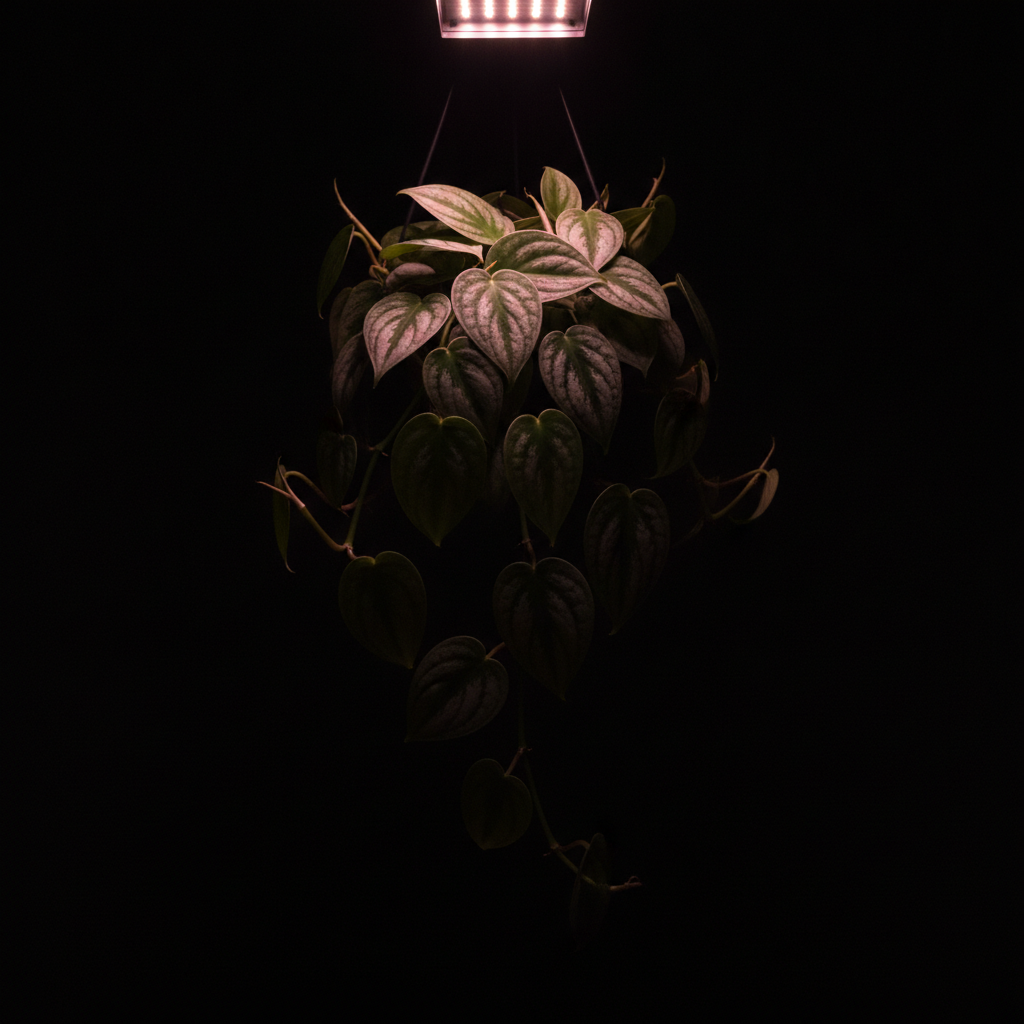
Satin jade pothos responds very well to artificial light, which makes it a fine candidate for offices, basements, and the short, grey days of winter. A standard full-spectrum LED grow light positioned 30 to 45cm (12 to 18in) above the plant and run for 10 to 12 hours a day will keep growth steady and patterning strong. Ordinary household bulbs do little for plants, so look specifically for a grow light with a colour temperature around 5,000 to 6,500 kelvin. A simple plug-in timer takes the guesswork out of the daily cycle.
Seasonal Adjustments
Light intensity indoors can fall by half or more between summer and the depths of winter, even on the same windowsill. As the days shorten, consider moving your satin jade pothos closer to the glass or to a brighter window to compensate, then shift it back in spring when the sun returns and strengthens. Watch the new growth as your guide: pale, widely spaced leaves signal that the plant wants more light, while compact, well-marked growth tells you the current position is working.
Watering & Humidity
If there is one thing that kills more satin jade pothos plants than anything else, it is kindness in the form of too much water. The thick leaves are a clue to the plant’s preference: they store moisture, so the roots like to dry out partially between drinks and resent sitting in soggy soil. Master the rhythm of watering and you have mastered the great majority of this plant’s care.
When to Water
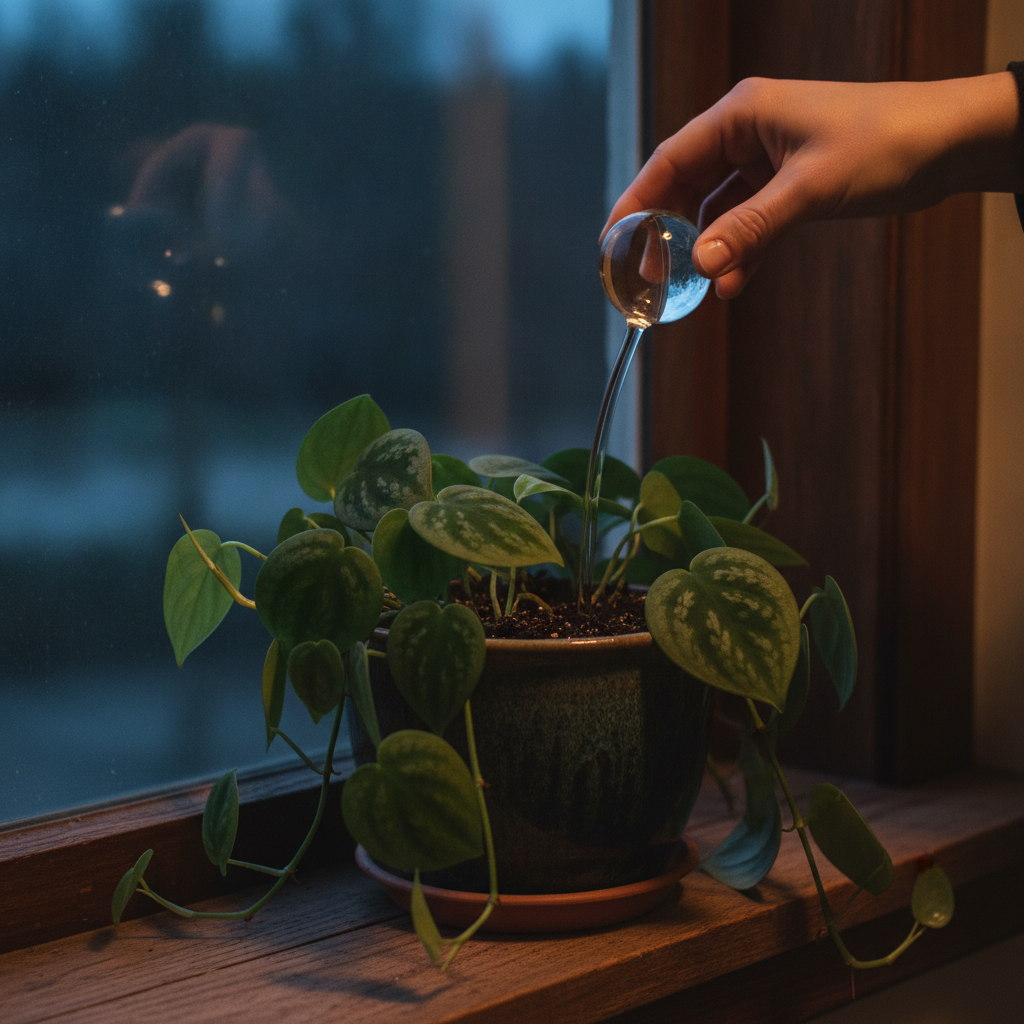
The reliable rule is to water when the top 5cm (2in) of the mix has dried out. Push a finger into the soil to check, or lift the pot and learn its weight: a freshly watered pot feels heavy, while one ready for watering feels noticeably light. In a bright spot during spring and summer this usually works out to roughly once a week, though your home, pot, and mix will set the exact pace.
In autumn and winter, when growth slows and light is weaker, the plant uses far less water and the interval stretches to every two or three weeks. Never water on a fixed schedule alone. Always check the soil first, because the same calendar gap that is perfect in July will drown the plant in January. The satin jade pothos also gives a clear thirst signal: its normally flat leaves curl inward and go slightly limp when it wants a drink, perking back up within hours of watering.
Pro Tip — Read the Leaves: Because the leaves curl when thirsty, you can almost let the plant tell you when to water. A little curling is healthy and helps you avoid overwatering, but do not wait until the leaves are deeply puckered and crisp at the edges, which signals the plant has gone too long and dry.
How to Water Correctly
- Check that the top 5cm (2in) of soil is dry before you begin, using your finger or the weight of the pot.
- Take the plant to a sink and water slowly with room-temperature water, moving around the whole surface of the soil.
- Keep going until water runs freely from the drainage holes, which ensures the entire root ball is moistened, not just the surface.
- Let the pot drain completely for several minutes so no excess water is trapped at the bottom.
- Empty the saucer or cover pot of any standing water. Roots left sitting in it are the most common path to rot.
- Return the plant to its spot and wait until the top layer dries again before the next watering.
Signs of Overwatering vs. Underwatering
| Symptom | Overwatering | Underwatering |
|---|---|---|
| Leaf colour | Yellowing, often several leaves at once | Browning, dry edges and tips |
| Leaf texture | Soft, limp, sometimes translucent | Curled, crisp, papery |
| Soil | Stays wet for many days, may smell sour | Bone dry, pulling away from the pot sides |
| Roots | Brown, mushy, foul smelling | Dry and brittle but still pale |
| Stem base | Soft and blackening at the soil line | Firm but the vine may go limp overall |
Warning — Root Rot: Persistent overwatering suffocates the roots and invites rot, which spreads from the roots up into the stems and is far harder to reverse than simple dehydration. If you find soft, blackened roots, unpot the plant at once, trim away every mushy section with clean scissors, and repot into fresh, dry, well-draining mix. In bad cases, taking healthy vine cuttings and starting over is the surest rescue.
Humidity Requirements
One of the satin jade pothos’s most endearing traits is that it does not need a humid jungle to look good. It grows perfectly well at the 40 to 50 percent humidity found in most homes, which spares you the misting and humidifiers that other aroids demand. That tolerance is a big part of why it suits beginners and busy households so well.
That said, the plant does respond to extra moisture in the air. At 60 percent humidity and above, leaves tend to come through larger and more heavily silvered, and the whole plant grows with a little more vigour. Very dry air, such as you find near a radiator in winter, can cause crisp brown leaf edges and makes spider mites far more likely, so those are the conditions worth correcting.
If you want to raise humidity, the most effective methods are a small room humidifier, grouping plants together so they share the moisture they release, or standing the pot on a tray of pebbles topped up with water so the base never sits in the liquid. Misting is popular but offers only a brief lift and, if overdone on the leaves, can encourage fungal spots, so the other approaches are generally better.
Water Quality
Satin jade pothos is not especially fussy about water, and most tap water is perfectly fine. If your supply is heavily chlorinated, leaving the watering can to stand uncovered overnight allows some of the chlorine to dissipate. In areas with very hard water or where you see a white mineral crust building on the soil, switching to filtered or rainwater now and then helps keep salts from accumulating. Always aim for room-temperature water, as a sudden shock of cold can stress the roots.
Soil, Potting & Repotting
As an epiphytic climber that anchors itself to bark rather than rooting in dense ground, the satin jade pothos wants a soil that mimics that airy, fast-draining home. Get the mix right and you remove the single biggest risk to the plant, which is roots left sitting in waterlogged compost. The goal is a substrate that holds enough moisture to keep the plant going between waterings while letting excess water and air move freely around the roots.
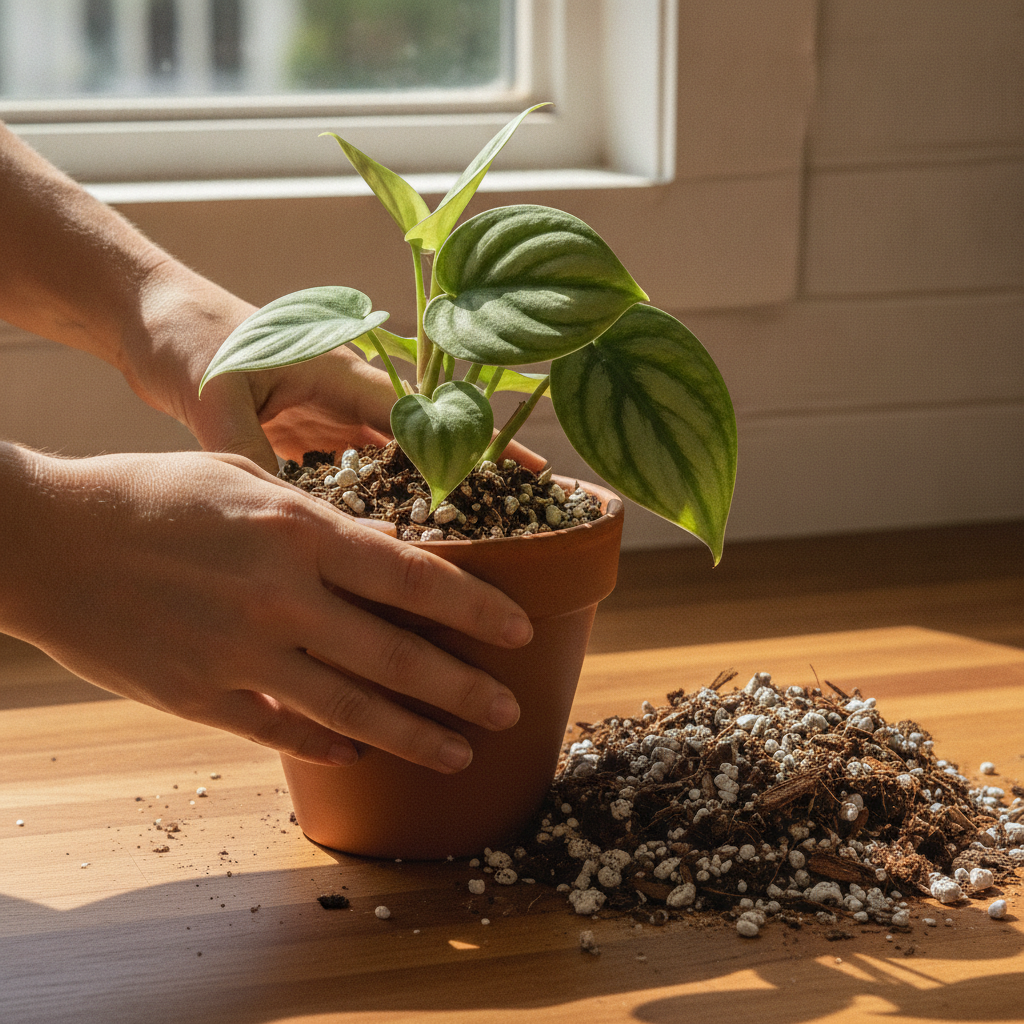
Ideal Soil Composition
A plain bag of standard houseplant compost holds too much water for this plant and compacts over time. The reliable approach is to start with a quality peat-free potting base and open it up with chunky, free-draining ingredients so that air can reach the roots. The classic blend used for aroids works beautifully here.
| Component | Proportion | Function |
|---|---|---|
| Quality potting mix | Half | Holds moisture and nutrients, provides body |
| Orchid bark | One quarter | Creates large air pockets, mimics bark roots |
| Perlite or pumice | One fifth | Sharpens drainage, prevents compaction |
| Coco coir or worm castings | A small handful | Adds gentle moisture retention and nutrients |
The satin jade pothos prefers a slightly acidic to neutral soil, with a pH of roughly 6.1 to 6.5. You rarely need to test or adjust this deliberately, as a good peat-free or bark-based aroid mix naturally falls within range. What matters far more than chasing an exact number is the physical structure: chunky, open, and quick to drain.
Pro Tip — Quick Mix Recipe: If you want a no-fuss formula, combine two parts ordinary houseplant compost, one part orchid bark, and one part perlite, then stir through a handful of worm castings. It takes two minutes to mix, suits almost every aroid you are likely to own, and dramatically reduces the chance of root rot.
Choosing the Right Pot
The container you choose affects watering as much as the soil does. A pot that is too large holds a reservoir of wet soil the roots cannot reach, which stays soggy and breeds rot, so size and drainage both deserve a little thought.
Drainage holes are non-negotiable. Whatever pot you pick, it must have at least one hole in the base so excess water can escape. Decorative cover pots without holes are fine as an outer shell, but only if you lift the inner pot out to water and let it drain fully before returning it, never leaving water pooled in the bottom.
Pot material: Terracotta is unglazed and breathes, wicking moisture out through its walls, which suits growers who tend to overwater. Plastic and glazed ceramic hold moisture longer, which is helpful in dry homes or for those who water less often. Any of them works well provided drainage is good and you adjust your watering to suit.
Pot size: Choose a pot only 2 to 3cm (around an inch) wider than the current root ball when you size up. The satin jade pothos actually grows happily a little snug in its pot, and resisting the urge to over-pot is one of the easiest ways to keep it healthy.
When to Repot
This is a slow-to-moderate grower that does not need frequent repotting, and once every two to three years is typical. The signs that it is time include roots circling the inside of the pot or pushing out through the drainage holes, water running straight through without wetting the soil, and growth that has stalled despite good light and feeding. Spring and early summer, when the plant is in active growth, is the best time to repot so it recovers quickly.
How to Repot: Step-by-Step
- Water the plant a day or two beforehand, as a hydrated root ball slides out more easily and suffers less stress.
- Gently ease the plant from its pot, supporting the base of the stems and teasing the roots loose if they are tightly wound.
- Inspect the roots and trim away any that are brown, soft, or rotten with clean, sharp scissors.
- Add a layer of fresh mix to the base of the new pot, then set the plant in at the same depth it grew before.
- Fill around the root ball with fresh mix, pressing gently to remove large air gaps without compacting the soil hard.
- Water thoroughly and let it drain, then return the plant to bright, indirect light.
Warning — Transplant Shock: Expect a brief pause in growth and perhaps a little leaf droop in the first week or two after repotting. This is normal. Resist the temptation to fertilise straight away or to overwater out of concern, as a freshly repotted plant in moist new soil needs neither, and both can do harm. Give it a fortnight to settle before resuming normal care.
Fertilising
Satin jade pothos is a light feeder, and a modest, regular supply of nutrients during the growing season is all it needs to keep producing healthy, well-marked leaves. Feeding is genuinely helpful here, because the open, fast-draining mix the plant prefers holds relatively few nutrients and they wash through with each watering.
The temptation, as with watering, is to overdo it. More fertiliser does not mean faster or better growth. Beyond a point it simply builds up as salts in the soil and burns the roots. The aim is a steady trickle of food while the plant is growing, and nothing at all while it rests.
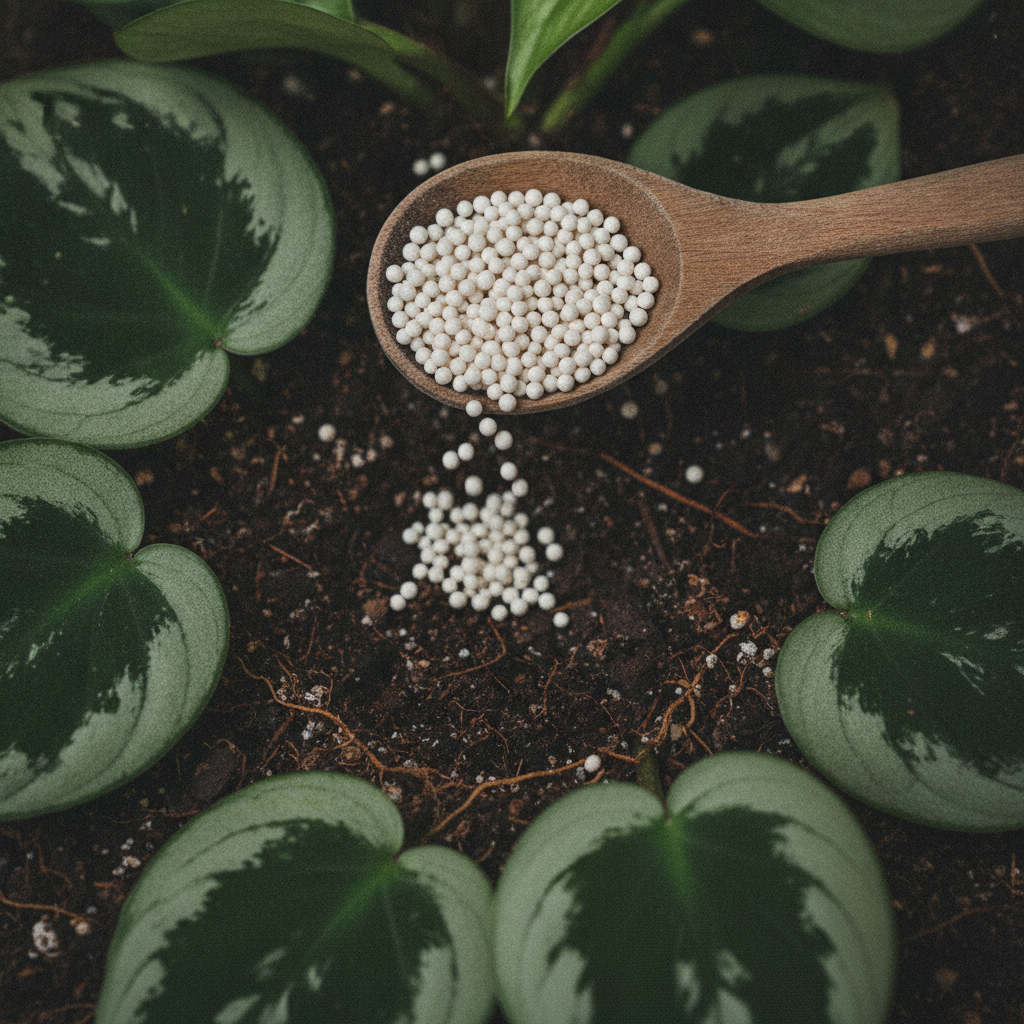
Understanding Plant Nutrients
Fertilisers are labelled with three numbers, the NPK ratio, standing for nitrogen, phosphorus, and potassium. For a foliage plant like the satin jade pothos, a balanced formula where the three are roughly equal, or one slightly higher in nitrogen, encourages the leafy growth you want. Beyond these three macronutrients, plants also draw on a handful of secondary nutrients and trace elements, and a deficiency in any of them shows up first in the leaves.
| Nutrient | Symbol | Primary Function | Deficiency Symptoms |
|---|---|---|---|
| Nitrogen | N | Drives leafy green growth | Older leaves yellow, growth slows |
| Phosphorus | P | Root development and energy transfer | Stunted growth, dull or purplish leaves |
| Potassium | K | Overall vigour and water regulation | Yellow or brown leaf edges |
| Calcium | Ca | Cell wall structure | Distorted, weak new growth |
| Magnesium | Mg | Core of the chlorophyll molecule | Yellowing between leaf veins |
| Iron | Fe | Chlorophyll production | Pale new leaves with green veins |
Types of Fertiliser
Liquid fertilisers: The most popular choice for houseplants, mixed into your watering can and applied during normal watering. They act quickly and give you complete control over dose and timing, which makes them ideal for a light feeder where diluting to half strength is the safest route.
Slow-release granular: Coated prills scattered onto the soil that release nutrients gradually over several months as you water. They are convenient and hard to overdose, though they offer less control, so they suit growers who would rather not think about feeding every few weeks.
Organic fertilisers: Options such as worm castings, diluted seaweed extract, or compost-based feeds release nutrients gently and also improve the soil life over time. They are forgiving and very hard to burn the plant with, making them a relaxed choice for the satin jade pothos.
Feeding Schedule
Feed once a month with a balanced liquid fertiliser diluted to half the recommended strength, through the active growing season of spring and summer. As growth naturally slows in autumn, taper off, and stop feeding entirely through winter when the plant is resting and cannot use the extra nutrients. Resume in spring when you see fresh growth beginning again.
Pro Tip — Less Is More: When in doubt, underfeed rather than overfeed. A satin jade pothos that is fed too little simply grows a little more slowly, which is easily corrected. One that is fed too much suffers scorched roots and brown leaf tips that take far longer to recover. Half strength, once a month, is plenty.
How to Fertilise
- Water the plant lightly first if the soil is bone dry, as feeding into completely dry soil risks burning the roots.
- Mix your liquid fertiliser into room-temperature water at half the dose printed on the bottle.
- Apply the solution evenly across the soil surface until it begins to drain from the bottom of the pot.
- Let the pot drain fully and discard any run-off rather than leaving it in the saucer.
Warning — Salt Build-Up: Over months of feeding, mineral salts accumulate in the soil and show as a white crust on the surface or pot rim, along with brown, crispy leaf tips. Every few months, flush the pot by running plain water through it for a minute or two, letting it drain completely each time. This leaches out the excess salts and resets the soil.
Propagation
Propagating satin jade pothos is one of the great pleasures of growing it, because the plant roots so willingly that success is almost guaranteed. A single healthy vine can become several new plants, and stem cuttings taken to tidy up a leggy specimen need never go to waste.
The method relies on the plant’s nodes, and once you understand those, everything else falls into place. Spring and summer are the best times to propagate, when the plant is growing actively and cuttings root fastest, though a warm, bright spot will give you decent results at almost any time of year.
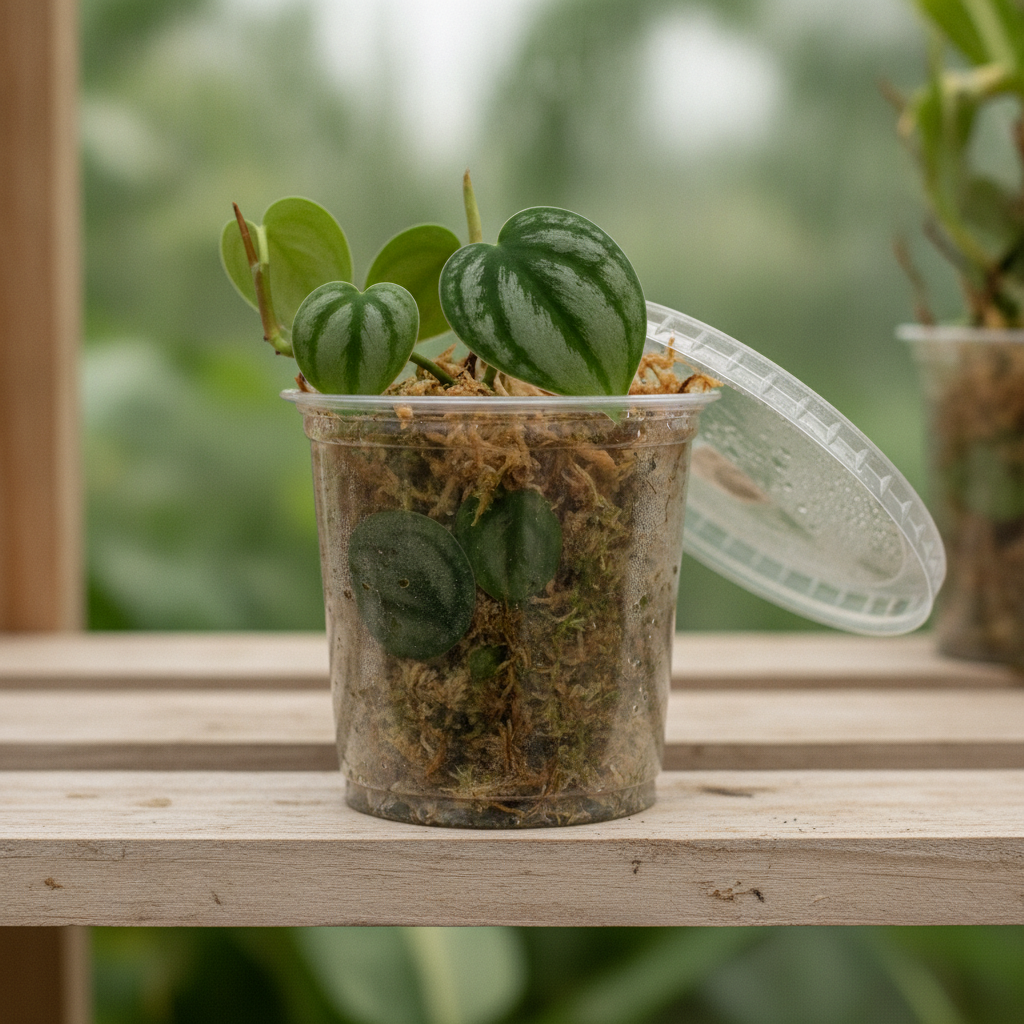
Understanding Nodes
A node is the small bump on the vine where a leaf joins the stem, and it is from here that new roots emerge. On a satin jade pothos you can often spot tiny brown root nubs already poking out at the nodes, especially on older growth, which is the plant practically inviting you to propagate it. Every viable cutting must include at least one node, because a length of stem with leaves but no node will never root. Aim for a cutting with one or two nodes and a couple of healthy leaves, and you have everything the new plant needs to begin.
Water Propagation: Step-by-Step
Rooting cuttings in water is the most popular method, partly because it is reliable and partly because watching the white roots appear through the glass is so satisfying. It is the ideal way for beginners to learn what a healthy rooting cutting looks like.
- Using clean, sharp scissors, cut a healthy length of vine just below a node, including one or two nodes and a few leaves.
- Remove the lowest leaf or two so that the bare nodes will sit below the waterline, since submerged leaves rot and foul the water.
- Place the cutting in a glass of room-temperature water with the nodes submerged and the remaining leaves above the surface.
- Set the glass in bright, indirect light and refresh the water every few days to keep it clear and oxygenated.
- Within two to four weeks, white roots emerge from the nodes. Once they reach 3 to 5cm (1 to 2in), the cutting is ready to pot.
- Plant the rooted cutting into moist, well-draining mix and keep the soil a little more consistently damp than usual for the first few weeks while it adjusts.
Pro Tip — Pot in Small Bunches: Roots that grow in water are slightly different from soil roots and can sulk briefly during the move. Pot several rooted cuttings together in one pot rather than singly, which gives you a fuller, bushier plant from the start and helps the cuttings establish more readily.
Sphagnum Moss Propagation: Step-by-Step
Rooting in damp sphagnum moss produces sturdier roots that transition to soil with less fuss than water roots, and it is the method many experienced growers prefer. The moss holds steady moisture and humidity around the nodes while still letting air through.
- Soak a handful of sphagnum moss in water, then wring it out so it is evenly damp but not dripping.
- Take your node-bearing cuttings as for water propagation, removing the lowest leaves to expose the nodes.
- Nestle the cuttings into the moss inside a clear container or deli cup so the nodes are in good contact with the moss.
- Cover loosely with a lid or clear bag to trap humidity, leaving a small gap for airflow, and place in bright, indirect light.
- Check every few days that the moss stays damp, and watch for roots threading through it over two to four weeks.
- Once roots are 3 to 5cm (1 to 2in) long, pot the cutting up, moss and all, into your usual well-draining mix.
Troubleshooting Propagation
| Problem | Likely Cause | Solution |
|---|---|---|
| Cutting rots in water | A leaf was submerged, or the water was left stale | Remove lower leaves and change the water every few days |
| No roots after a month | Cutting lacks a node, or conditions are too cold and dim | Check for a node and move somewhere warmer and brighter |
| Roots grow but cutting wilts after potting | Transition shock from water to soil | Keep soil evenly moist and humid for the first few weeks |
| Cutting yellows | Too little light or an exhausted, weak cutting | Use fresh, healthy growth and provide bright, indirect light |
Pests & Diseases
The satin jade pothos is a robust plant that suffers few problems when its basic needs are met, and most of the trouble it does run into traces back to either dry air or overwatering. Healthy plants in good conditions resist pests far better than stressed ones, so consistent care is your first line of defence.
Still, even the best-kept plant can pick up an unwelcome visitor, often brought in on a newly purchased plant. The key is to catch any infestation early, which means looking the plant over regularly, including the undersides of leaves and the leaf axils where pests like to hide. A quick inspection each time you water is the simplest habit you can build.
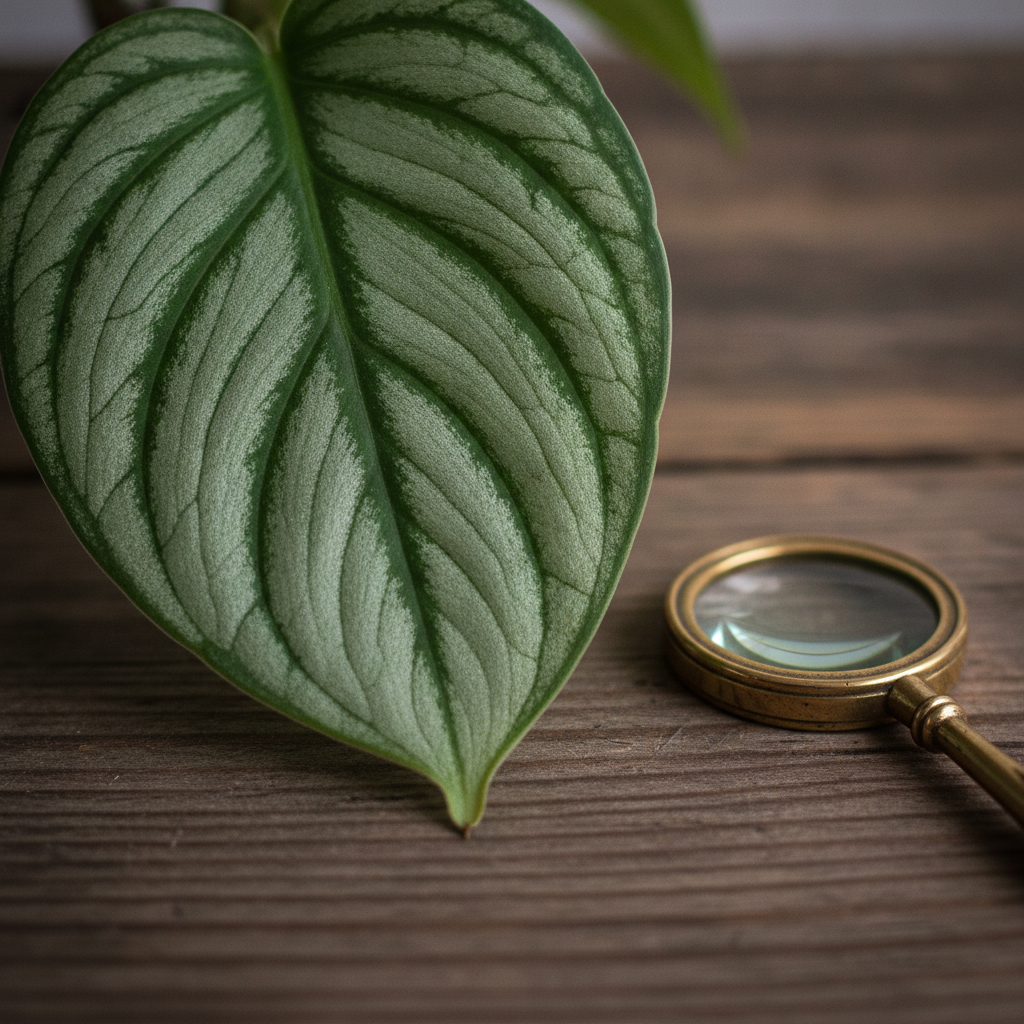
Common Pests
Spider Mites (Tetranychus urticae)
The most likely pest on a satin jade pothos, especially in the dry air of a centrally heated home. They are tiny, hard to see with the naked eye, and announce themselves with fine speckling on the leaves and delicate webbing in the leaf axils. A badly affected plant looks dull and dusty.
Treatment: Rinse the plant thoroughly in the shower to knock the mites back, then treat with insecticidal soap or neem oil, paying special attention to the undersides of the leaves. Repeat weekly for three to four weeks to break the breeding cycle, and raise the humidity, since mites hate moist air.
Mealybugs (Pseudococcus longispinus)
Small, soft-bodied insects that look like tufts of white cotton wool tucked into leaf joints and along the stems. They feed on sap, weakening the plant, and excrete a sticky honeydew that can lead to sooty mould.
Treatment: Dab each mealybug directly with a cotton bud dipped in isopropyl alcohol, which kills them on contact. For a wider infestation, follow up with neem oil or insecticidal soap, and check the plant every few days as new bugs hatch.
Scale (Coccus hesperidum)
Appearing as small, brown, limpet-like bumps along stems and leaf veins, scale insects are easy to mistake for part of the plant. They too feed on sap and produce honeydew, and a heavy infestation saps the plant’s vigour.
Treatment: Scrape off what you can with a fingernail or an alcohol-soaked cotton bud, then treat with neem oil to deal with the mobile young crawlers. Persistence over several weeks is usually needed to clear them fully.
Fungus Gnats (Bradysia species)
Small black flies that hover around the soil surface, more a nuisance than a serious threat. Their larvae live in consistently damp topsoil and feed on organic matter and occasionally fine roots, so their presence is often a sign you are watering too often.
Treatment: Let the top of the soil dry out more thoroughly between waterings to make it inhospitable to the larvae. Yellow sticky traps catch the adults, and a layer of fine grit on the soil surface stops the next generation from laying eggs.
Common Diseases
Root Rot (Pythium and Phytophthora)
By far the most serious problem for this plant, and almost always caused by overwatering or poor drainage. The roots turn brown and mushy, the lower leaves yellow and drop, and the stem base may soften, often accompanied by a sour smell from the soil.
Treatment: Unpot the plant, cut away all soft, dark roots with sterile scissors, and repot into fresh, dry, well-draining mix in a clean pot. Water sparingly while it recovers. If most of the root system has gone, take healthy cuttings from the top growth and start again.
Leaf Spot (Pseudomonas and fungal pathogens)
Brown or black spots, sometimes ringed with a yellow halo, that appear on the leaves when they stay wet for too long or when air circulation is poor. It is rarely fatal but spreads if left unchecked.
Treatment: Remove and discard affected leaves, avoid wetting the foliage when you water, and improve airflow around the plant. In stubborn cases a copper-based fungicide can help bring it under control.
Pest and Disease Summary
| Pest / Disease | Identification | Treatment |
|---|---|---|
| Spider mites | Fine speckling and webbing, dull leaves | Rinse, neem oil weekly, raise humidity |
| Mealybugs | White cottony tufts in leaf joints | Alcohol on a cotton bud, then neem oil |
| Scale | Brown limpet-like bumps on stems | Scrape off, treat with neem oil |
| Fungus gnats | Small black flies around the soil | Dry out topsoil, sticky traps, grit layer |
| Root rot | Mushy brown roots, yellowing, sour smell | Trim roots, repot in fresh dry mix |
| Leaf spot | Brown or black spots on leaves | Remove leaves, keep foliage dry, improve airflow |
Prevention Strategies
Prevention is far easier than cure with houseplant pests. Quarantine any new plant away from your collection for a couple of weeks so that hitchhiking pests reveal themselves before they spread. Wipe the leaves now and then with a damp cloth, which both removes dust and lets you inspect the foliage closely, and keep the plant in good health with appropriate light, water, and feeding, since a vigorous plant resists trouble far better than a stressed one.
Good cultural habits prevent disease just as effectively. Always use pots with drainage, never let the plant sit in standing water, water only when the top of the soil has dried, and give the plant enough space for air to move around it. These simple practices remove the damp, stagnant conditions that root rot and leaf spot depend upon.
Pro Tip — Neem Oil as Routine Defence: A monthly wipe-down or light spray with diluted neem oil, applied in the evening out of direct sun, deters most common pests before they take hold. It works best as prevention rather than a last-minute rescue, so build it into your routine during the growing season.
Popular Varieties
The satin jade pothos belongs to the wider Scindapsus pictus group, and once you fall for that signature satin finish you will likely want to collect a few of its variations. The cultivars differ mainly in how much silver they carry, how large their leaves grow, and the overall density of the patterning, but they all share the same easy-going care described throughout this guide.
It is worth noting that some plants sold under the Scindapsus banner, such as the dark, glossy Scindapsus treubii, are closely related but distinct species rather than forms of pictus. The varieties below are the ones you are most likely to encounter labelled as satin pothos.
| Variety | Leaf Appearance | Light Needs | Growth Rate | Availability |
|---|---|---|---|---|
| Jade Satin | Deep green, minimal silver, strong sheen | Tolerates lower light | Moderate | Common |
| Exotica | Large leaves, broad silver splashes | Bright indirect | Moderate | Common |
| Argyraeus | Small leaves, neat silver spots and margin | Bright indirect | Slow to moderate | Common |
| Silvery Ann | Heavy frosted silver over most of the leaf | Bright indirect | Moderate | Fairly common |
| Silver Splash | Random silver splashing, variable | Bright indirect | Moderate | Less common |
Featured Varieties
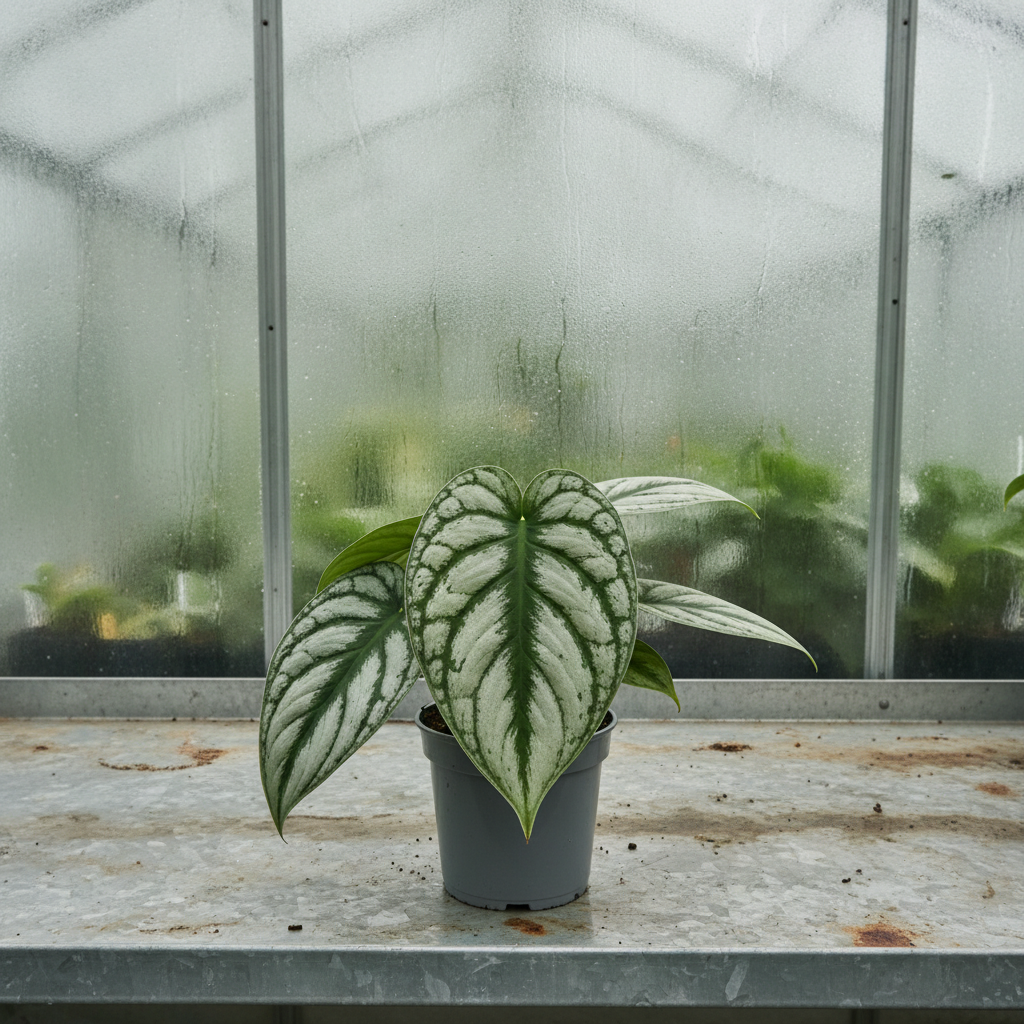
Scindapsus pictus ‘Exotica’
The showiest of the common forms, with notably large heart-shaped leaves splashed generously with frosted silver between deep green veins. Its size and bold patterning make it the variety most often singled out as a statement plant.
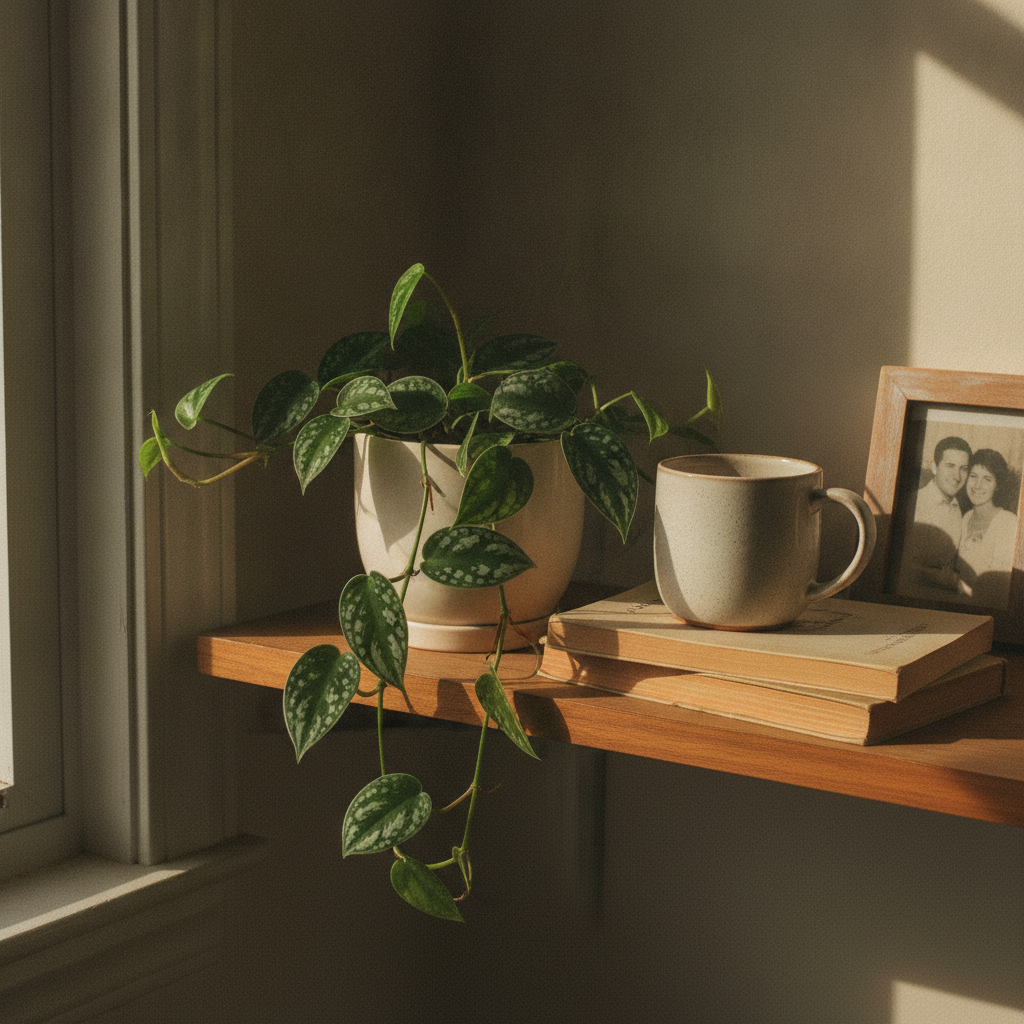
Scindapsus pictus ‘Argyraeus’
A more compact, smaller-leaved form with neat, evenly spaced silver spots and a fine silver edge to each leaf. Its tidy, restrained patterning and dense growth make it a favourite for smaller spaces and trailing displays.
Variety Profiles in Detail
Jade Satin (Scindapsus pictus ‘Jade’)
The plant at the heart of this guide, the Jade form trades heavy silver for a deep, solid jade green with only the faintest flecking, all wrapped in that distinctive matte satin sheen. Because it relies less on silver patterning, it copes a little better than its flashier siblings in lower light, which makes it an excellent, understated choice for trickier spots.
Silvery Ann (Scindapsus pictus ‘Silvery Ann’)
At the opposite end of the spectrum, Silvery Ann carries so much frosted silver that some leaves appear almost entirely metallic. It needs consistently bright, indirect light to hold that heavy variegation, and it makes a luminous contrast when grown alongside the darker Jade form.
Choosing the Right Variety for Your Space
Let your light guide the choice. If you have a bright spot with strong indirect light, the heavily silvered forms like Exotica and Silvery Ann will reward you with their full sparkle. For a position with more modest light, the deep green Jade form holds its looks better and is the more forgiving option. For compact shelves and small trailing displays, the neat Argyraeus is hard to beat, while anyone wanting a single bold statement plant should reach for the large-leaved Exotica.
Frequently Asked Questions
Is the satin jade pothos a true pothos?
No, and this is one of the most common points of confusion. True pothos belong to the genus Epipremnum, whereas the satin jade pothos is Scindapsus pictus, a separate genus within the same arum family. The two look superficially similar as trailing aroids and share much of their care, which is why the nickname stuck, but botanically they are distinct.
Why are my plant’s new leaves less silvery than the old ones?
Fading silver on new growth is almost always a sign of insufficient light. The silver patterning is energy-intensive for the plant to produce, so in dim conditions it invests less in it and the new leaves come through greener and plainer. Move the plant to a brighter spot with strong indirect light and subsequent leaves should regain their frosting.
Why are the leaves curling?
Curling leaves on a satin jade pothos most often mean the plant is thirsty, as the foliage curls inward to reduce water loss when the soil dries out. A good soaking usually sees the leaves flatten out again within hours. If the soil is already moist, curling can instead point to very low humidity or, less commonly, to root problems from overwatering, so check the soil before deciding.
How fast does it grow, and can I make it bushier?
Expect slow to moderate growth, faster in bright light and warmth, and almost dormant through winter. To encourage a fuller, bushier plant rather than a few long, bare vines, pinch or prune the growing tips, which prompts the plant to branch. Potting several cuttings together and giving it good light also produces a denser look.
Should I let it trail or climb?
Either works, and the plant will tell you something about its nature in each. Left to trail from a shelf or hanging pot it forms a graceful curtain but keeps relatively small leaves. Given a moss pole or trellis to climb, it produces noticeably larger leaves with bolder silver, echoing how it grows up trees in the wild. Climbing tends to bring out the most impressive foliage.
Is it safe around cats and dogs?
No. Like other aroids, the satin jade pothos contains insoluble calcium oxalate crystals that cause painful burning and swelling of the mouth, drooling, and vomiting if a pet chews the leaves or stems. It is rarely fatal but genuinely distressing, so keep it out of reach of animals inclined to nibble, and contact a vet if you suspect your pet has eaten any.
Why are the leaf tips turning brown and crispy?
Crispy brown tips usually trace back to dry air, inconsistent watering, or a build-up of mineral salts from fertiliser and hard water. Aim for steadier watering once the top of the soil dries, raise humidity if your home is very dry, and flush the pot with plain water every few months to wash out accumulated salts. Trim the brown tips off with clean scissors for tidiness, as they will not turn green again.
Can it grow in low light?
It will tolerate low light better than most patterned plants, which is why it is so often recommended for offices and dim corners, but tolerate is the operative word. In low light it grows slowly, stretches towards the window with widely spaced leaves, and loses much of its silver. For a plant that genuinely thrives rather than just hangs on, bright indirect light is the goal, and the deep green Jade form is your best bet for the dimmer spots.
How often should I repot it?
Only every two to three years, as this is a plant that grows slowly and actually prefers to be a little snug in its pot. Repot when you see roots circling the pot or escaping the drainage holes, when water rushes straight through the soil, or when growth has clearly stalled. Always step up just one pot size and do it in spring or early summer for the quickest recovery.






