
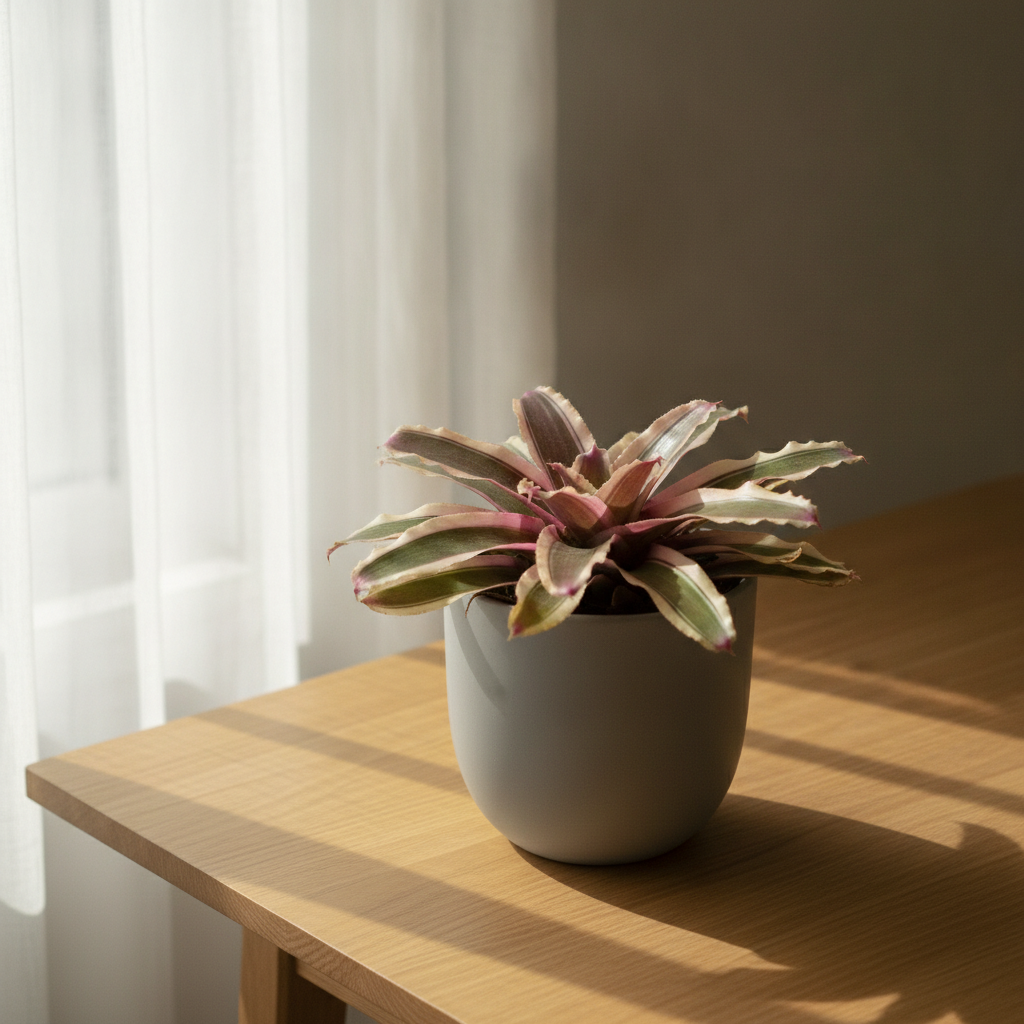
Tucked low against the forest floor of eastern Brazil, the earth star bromeliad (Cryptanthus bivittatus) spends its life doing something most of its bromeliad relatives never attempt: it grows in the ground. While the majority of bromeliads perch high in the branches as epiphytes, this small terrestrial species presses itself flat into the leaf litter and fans out a rosette so symmetrical and pointed that growers christened it the earth star. The genus name translates from Greek as hidden flower, a nod to the tiny white blooms that appear deep in the heart of the rosette, almost shy to be seen. Whatever the plant lacks in floral drama it returns tenfold in foliage, with wavy-edged leaves banded lengthwise in rose-pink, cream and green.
Despite an exotic look that hints at fussiness, the earth star is among the more forgiving members of the bromeliad family for indoor growers, and its compact size makes it a natural fit for terrariums, dish gardens and bright windowsills where a larger plant would never sit comfortably. This guide covers the gap between merely keeping an earth star alive and coaxing it into the vivid, saturated colour and steady offset production that make it worth growing in the first place.
In This Guide
- Quick reference
- Why grow the earth star as a houseplant
- Light
- Watering
- Soil and potting
- Fertilising
- Propagation
- Pests and problems
- Varieties to know
- Frequently asked questions
Quick Reference
Keep this table to hand for the essentials. The sections that follow explain the reasoning behind each line so you can adapt to your own home rather than follow the numbers blindly.
| Common names | Earth star, starfish bromeliad, starfish plant |
| Botanical name | Cryptanthus bivittatus |
| Family | Bromeliaceae |
| Native range | Coastal rainforest floor of eastern Brazil |
| Mature size | 8 to 15 cm (3 to 6 in) tall, spreading 15 to 30 cm (6 to 12 in) |
| Light | Bright indirect; tolerates some gentle direct sun, which deepens colour |
| Water | Keep the mix lightly and evenly moist; water the soil, not the centre |
| Humidity | Moderate to high, ideally 50 to 70 per cent |
| Soil | Loose, fast-draining, slightly acidic; bark, perlite and coir blend |
| Temperature | 16 to 27 degrees C (60 to 80 degrees F); keep above 13 degrees C (55 degrees F) |
| Fertiliser | Weak, copper-free feed monthly in the growing season only |
| Propagation | Offsets (pups) produced after flowering |
| Toxicity | Non-toxic to cats, dogs and people |
| Difficulty | Easy to moderate |
Why Grow the Earth Star as a Houseplant
The earth star earns its place on the windowsill on looks alone, but several practical qualities make it more than a novelty. Foremost is its size. A mature plant rarely climbs above 15 cm and instead spreads outward into a flat, deliberate star, which means it asks for almost no vertical space and slots happily into a closed terrarium, a shallow dish garden or a cluster of small pots where a trailing or upright plant would dominate. Few houseplants of comparable colour stay this compact for this long.
Its terrestrial habit also sets it apart from the bromeliads most people know. The pineapple-style tank bromeliads sold in garden centres hold water in a central cup and want that cup kept topped up, which catches out beginners who then rot the crown. The earth star carries no such reservoir. It roots into soil like an ordinary houseplant and is watered at the roots, a far more intuitive arrangement for anyone coming from pothos or peace lilies. Because it evolved on a shaded, humid forest floor rather than in a sun-baked canopy, it also copes with the moderate light of a typical room better than its epiphytic cousins.
For households with pets, the earth star carries one more advantage worth stating plainly: it is non-toxic to cats and dogs. A curious nibble will not send anyone to the vet, which cannot be said of many of the glossy aroids it is often displayed alongside. Combine that safety with the loud pink striping, the terrarium-friendly footprint and a willingness to forgive the occasional missed watering, and the case for growing one becomes easy to make.
Pro Tip – Read the Rosette: The earth star is monocarpic, meaning each rosette flowers only once and then slowly declines while throwing offsets around its base. A fading mother plant is not a failure on your part; it is the plant handing the next generation forward.
Light
Light is the single biggest lever you have over how an earth star looks. In dim conditions the plant will survive, but it survives green, washing out the pink and cream stripes that are the whole point and stretching its leaves slightly as it reaches for more. In bright, generous light the same plant tightens into a flatter rosette and floods its bands with rose and crimson. The difference between a forgettable specimen and a striking one is very often just the choice of windowsill.
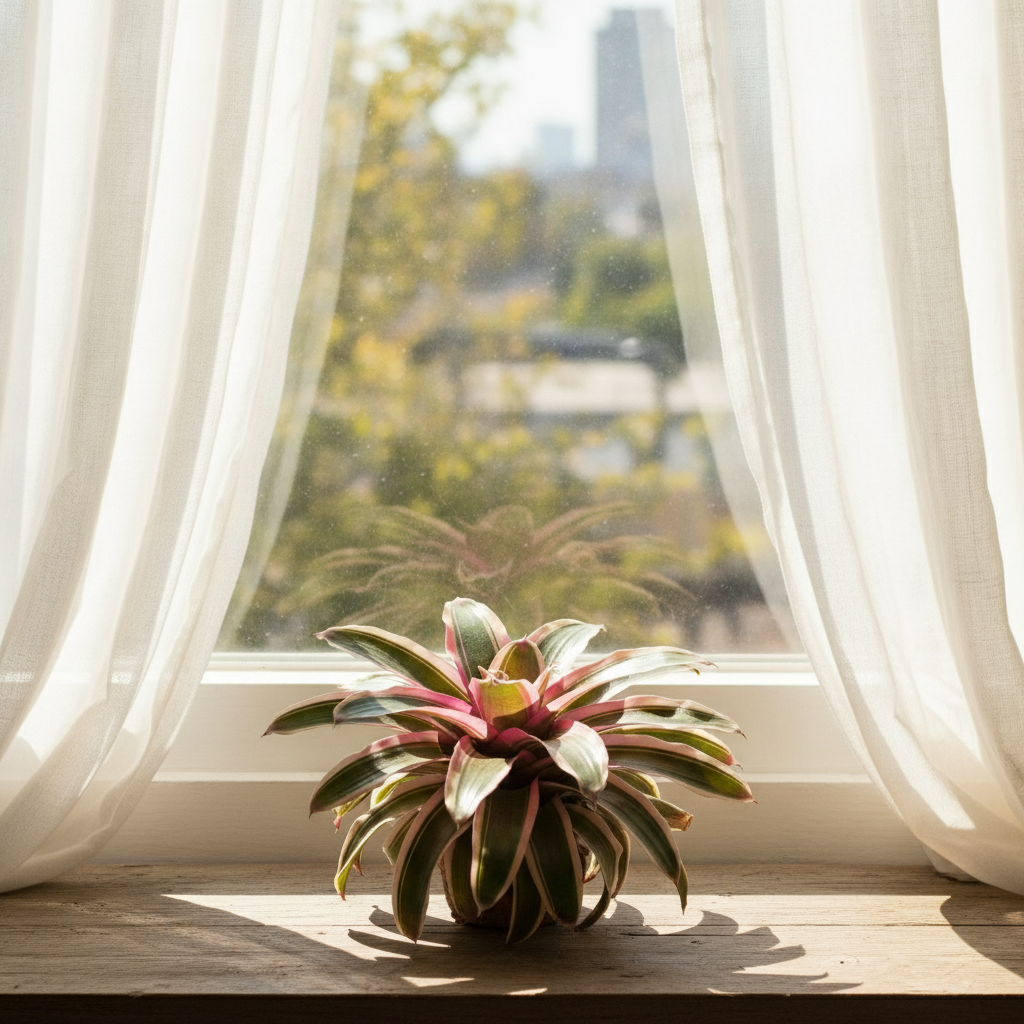
Aim for bright indirect light: an east-facing windowsill that catches gentle morning sun, or a position a little back from a brighter south or west window where a sheer curtain softens the midday glare. The earth star will also accept a few hours of direct sun, particularly the mild early or late kind, and a touch of direct light often pushes the colour to its richest. The line to respect is harsh, unfiltered midday summer sun through glass, which can bleach and crisp the leaf tips. If you see the centre of the rosette paling to yellow-white or the surface taking on a scorched, papery look, the plant is getting too much and should be moved back.
Too little light produces the opposite warning signs: muddy, uniform green colour, a looser and more open rosette, and growth that simply stalls. A plant in this state is not in danger, but it is not thriving either. Shift it somewhere brighter and the new growth will gradually return to colour. If your room genuinely lacks a good window, the earth star responds well to a modest full-spectrum LED grow light run for ten to twelve hours a day, which is also how many terrarium keepers maintain colour in an enclosed setup.
Watering
Because the earth star is terrestrial and holds no central water tank, you water it the way you would any soil-grown houseplant: at the roots, never by filling the crown. Sitting water in the centre of the rosette invites rot, so direct the flow at the mix and let it run through. The plant likes its medium kept lightly and evenly moist, neither soggy nor bone dry. Think of the consistency of a wrung-out sponge as the target, easing off in the cooler, darker months when growth slows.
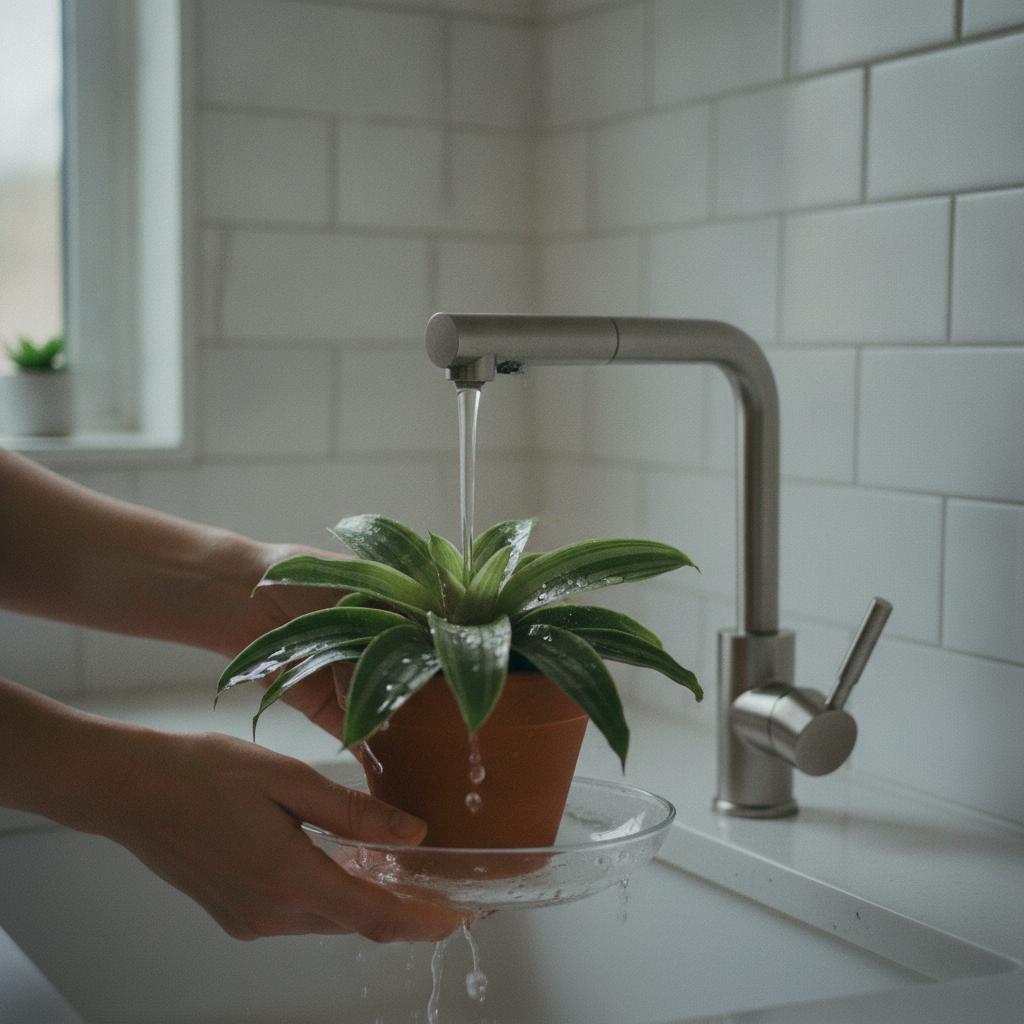
In practice, check the top centimetre or two of the mix with a finger and water when it begins to feel dry but before the whole pot dries out. In a warm, bright spot through spring and summer that often means watering once or twice a week; in a cool, low-light winter it may be every ten days or more. Always let excess drain away completely and never leave the pot standing in a saucer of water, because waterlogged roots are the most common way to kill an otherwise healthy earth star. The plant tolerates a brief dry spell far better than it tolerates a constantly wet base.
Water quality matters more here than for many houseplants. Bromeliads are sensitive to the salts and minerals in hard tap water, which can build up and brown the leaf tips. If your water is hard or heavily treated, rainwater, distilled water or filtered water will keep the foliage cleaner. Room-temperature water is gentler than cold straight from the tap.
Warning – Crown Rot: If the youngest central leaves turn soft, brown and pull away with a gentle tug, water has likely been collecting in the rosette. Move the plant somewhere with better airflow, water only at the soil from then on, and let the mix dry a little more between drinks.
Humidity walks hand in hand with watering for this species. Coming from a damp forest floor, the earth star is happiest at 50 to 70 per cent humidity and rewards it with better colour and crisper form. Average room humidity will do, but in a dry home, grouping plants together, standing the pot on a tray of damp pebbles, or simply growing the plant in a terrarium will all lift the moisture around the leaves. This humidity tolerance is exactly why the earth star is such a celebrated terrarium plant.
Soil and Potting
The earth star wants a medium that holds a little moisture yet drains freely and lets air reach its shallow, modest root system. A dense, water-retentive potting soil straight from the bag is the wrong choice, because it stays wet too long and smothers the roots. The aim is something loose, chunky and slightly acidic that mimics the airy leaf litter of its native floor.
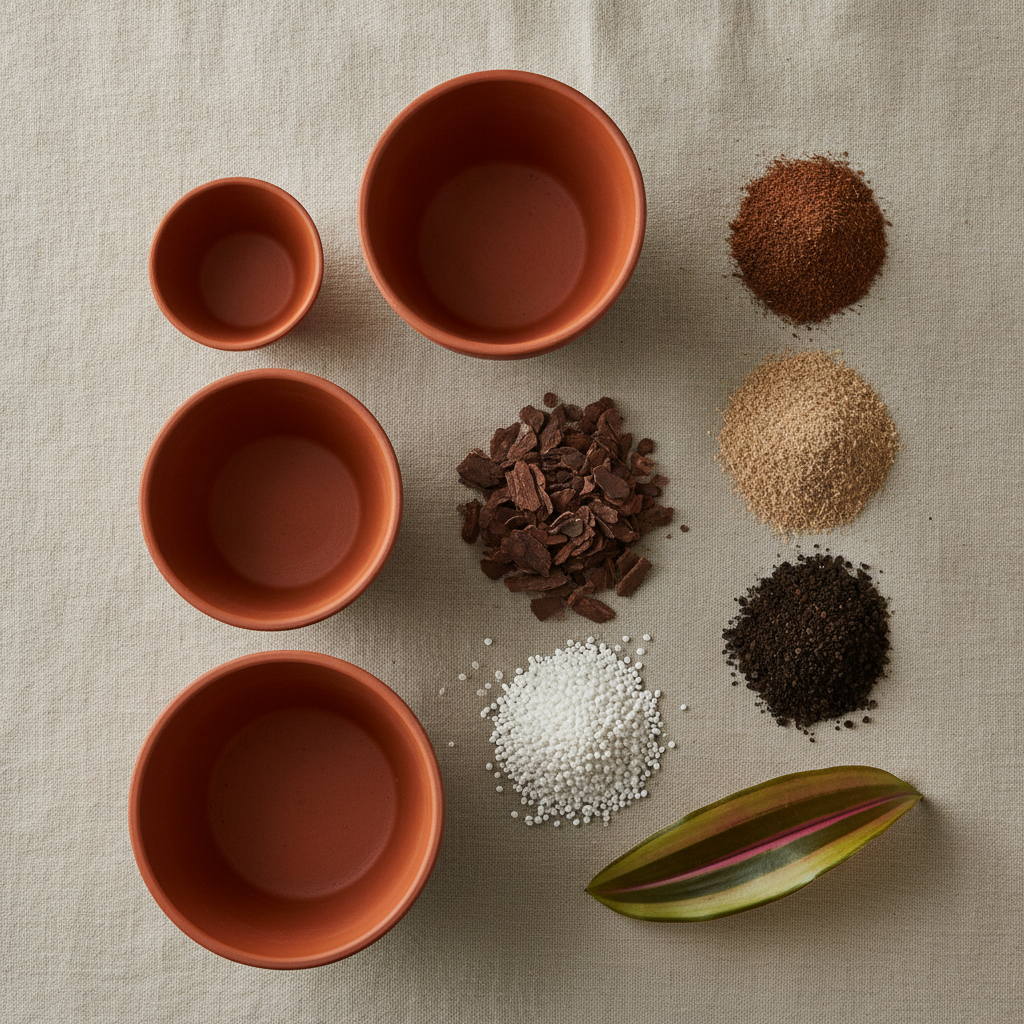
A reliable blend is roughly equal parts orchid bark, perlite and coco coir or peat, which together hold gentle moisture while keeping plenty of open space for air. A standard houseplant mix lightened generously with perlite and a handful of fine bark works almost as well. Whatever you choose, the pot must have drainage holes. The earth star’s roots exist mainly to anchor it and take up modest amounts of water and nutrients, so it does not need a deep container; a shallow, wide pot suits the flat growth habit and reduces the volume of mix that can stay soggy underneath.
Repotting is an occasional task rather than an annual one. These plants are slow and stay small, and they actively prefer being a little snug, so you might only move a mother plant up a size once in its life, if at all. The more common reason to get your hands in the mix is to separate and pot up offsets, covered in the propagation section below. When you do repot, handle the rosette gently, settle it at the same depth it grew before without burying the centre, and firm the fresh mix lightly around the roots.
Fertilising
The earth star is a light feeder, and restraint serves it far better than enthusiasm. Bromeliads as a group are sensitive to the mineral salts in fertiliser, and an over-fed earth star responds by browning at the leaf tips and losing the very colour you were trying to encourage. The plant draws much of what it needs slowly from its mix, so feeding is a gentle supplement rather than a regular feast.
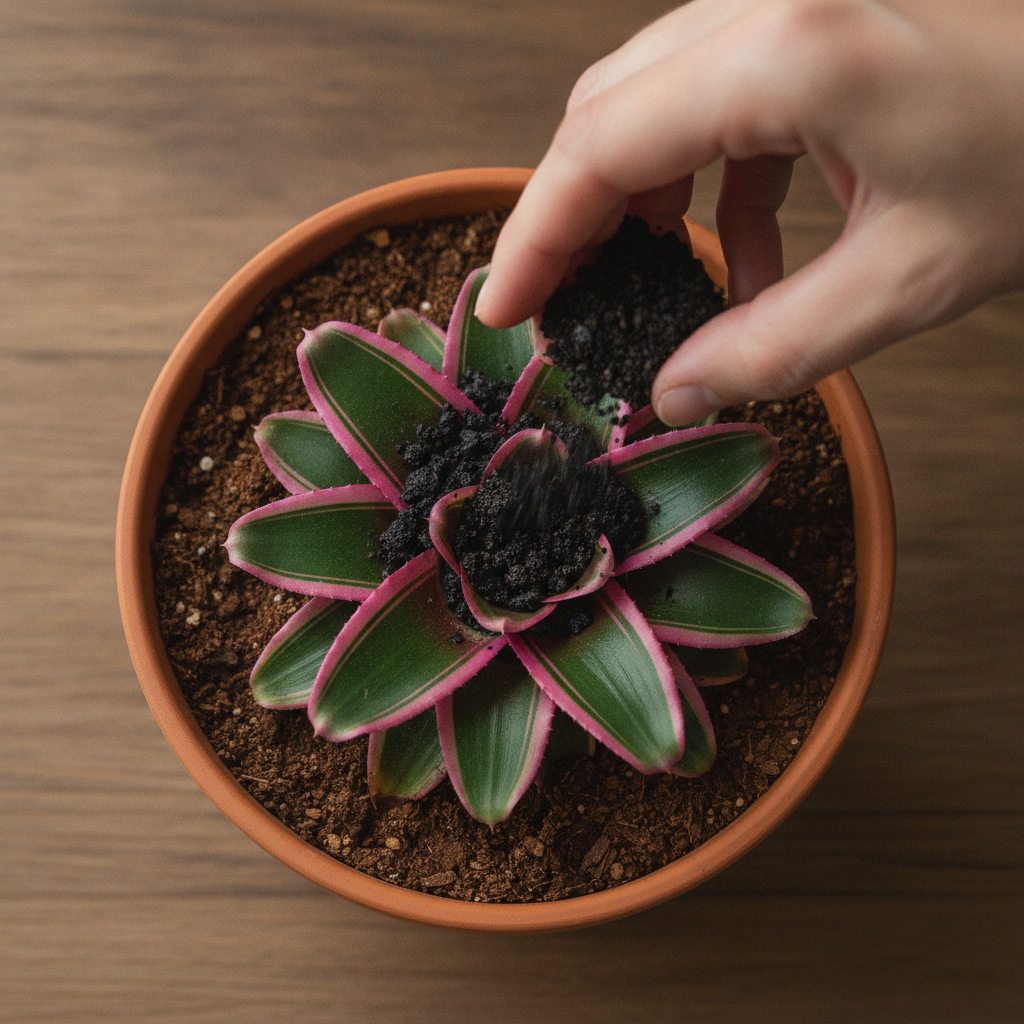
Through the growing season of spring and summer, a balanced liquid houseplant fertiliser diluted to a quarter or half the recommended strength, applied roughly once a month, is plenty. Always feed onto already-moist mix rather than dry roots, which spreads the nutrients evenly and avoids burning. In autumn and winter, when growth naturally slows, stop feeding altogether and let the plant rest. A gentle organic alternative, such as a thin top-dressing of worm castings, feeds even more slowly and carries almost no risk of salt build-up.
Warning – Avoid Copper: Bromeliads, including the earth star, are notably sensitive to copper. Steer clear of copper-based fungicides and pesticides, and avoid letting the plant or its water sit in copper or untreated metal containers, as copper exposure can damage the foliage.
Propagation
Propagating an earth star is less a technique you impose and more a cycle you cooperate with. The plant is monocarpic: a rosette flowers once, sending up its small, hidden white blooms in the centre, and then begins a slow decline. Before and during that decline it produces offsets, commonly called pups, around its base. These pups are the future of your plant, and dividing them is by far the easiest and most reliable way to make more.
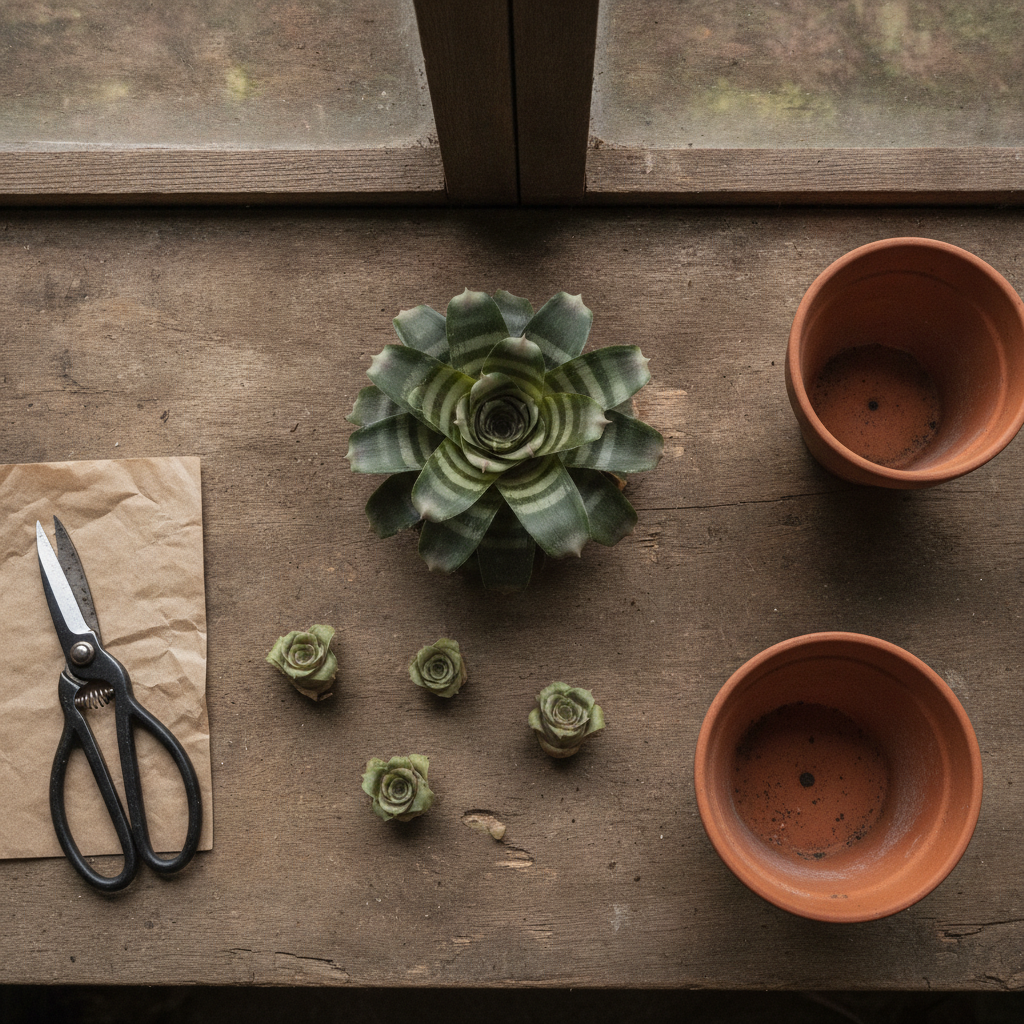
Patience is the only real skill involved. A pup removed too early, before it has formed its own roots, is far harder to establish than one left to grow on. Wait until each offset has reached roughly a third to a half of the mother’s size and has begun making its own small roots, then separate it as follows.
- Ease the whole plant out of its pot so you can see where the pups join the mother and where their roots have formed.
- With clean, sharp scissors or a small knife, cut each pup away from the parent, taking any roots it has already made along with it.
- Let the cut surfaces air-dry for an hour or two, which helps them callus and reduces the chance of rot.
- Pot each pup into its own small container of the same loose, fast-draining mix, settling it firmly enough to stand but no deeper than it grew before.
- Water lightly, then keep the new plants warm, humid and in bright indirect light while they root in over the coming weeks.
New pups establish best in warm conditions with steady humidity, which is why many growers root them under a propagation dome or in a humid terrarium corner. Expect the young plants to take their time; bromeliads are unhurried, and a pup may sit quietly for a few weeks before it visibly grows. As long as the centre stays firm and coloured, it is settling in. Meanwhile, you can leave the spent mother in place a while longer, as she will often continue supporting late pups even as her own rosette fades.
Pests and Problems
A healthy earth star in the right conditions is not especially prone to trouble, and most of the problems owners meet trace back to watering or light rather than to pests. Still, a handful of insects find the species worth visiting, and knowing the early signs keeps a minor visit from becoming an infestation.
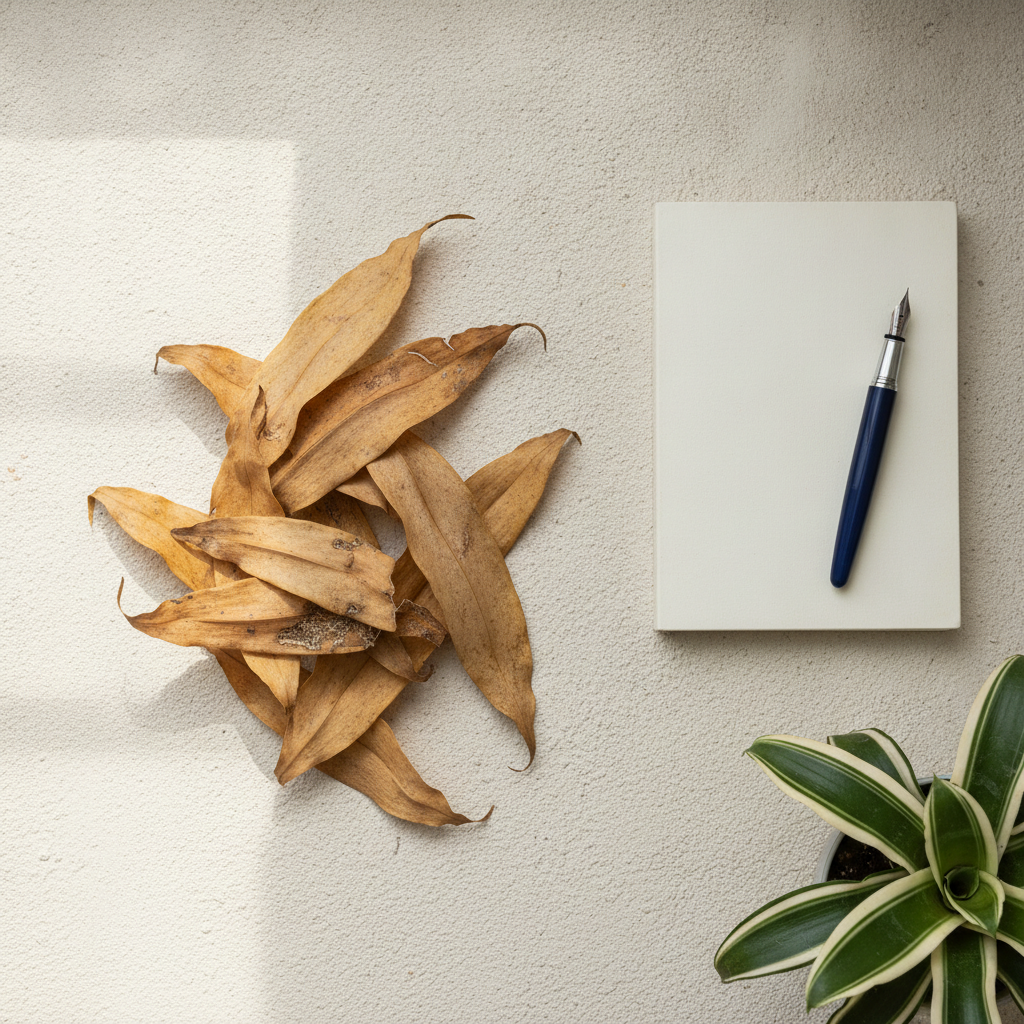
The pests most likely to appear are mealybugs, scale and, in dry air, spider mites. Mealybugs show up as small white cottony tufts tucked into the bases of the leaves, while scale appears as flat brown bumps along the foliage, and both are best dealt with by dabbing them off with a cotton bud moistened in diluted isopropyl alcohol and then wiping the leaves clean. Spider mites are subtler, betraying themselves with fine webbing and a stippled, dusty look to the leaves, and they thrive when humidity is low, so raising the moisture around the plant is both treatment and prevention. Remember the copper caution from the fertilising section when choosing any treatment spray.
Cultural problems are more common than insects. Browning, crispy leaf tips usually point to dry air, mineral-heavy water or over-feeding, while a soft, browning centre signals water sitting in the rosette and the onset of crown rot. Mushy, blackening roots and a generally limp plant mean the mix has stayed too wet, and the remedy is to repot into fresh, fast-draining medium and water more sparingly. Faded, washed-out colour, by contrast, is a light problem rather than a watering one, and is solved by moving the plant brighter. Reading these signals in order, from light to water to feeding, will resolve the great majority of earth star complaints without any need for chemicals.
Varieties to Know
The earth star has been bred and selected into a wide range of colour forms, and the genus Cryptanthus as a whole offers dozens of named cultivars in shades from silvery pink to near-black. Two of the most widely grown give a sense of the range and are both easy to find.
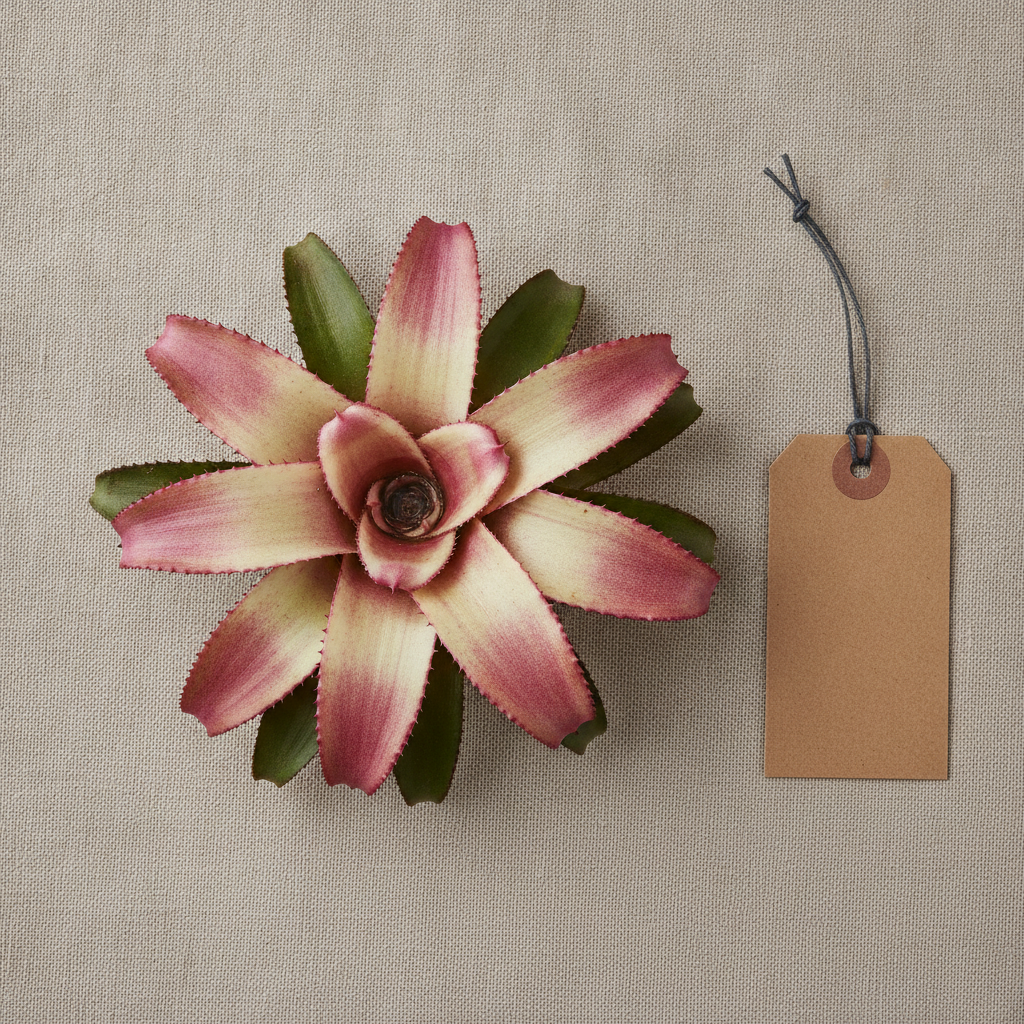
‘Pink Starlight’
The best known of the colour forms, ‘Pink Starlight’ carries broad cream-to-rose longitudinal stripes that flush a deeper pink toward the wavy leaf margins, intensifying the brighter its light. It is the variety most people picture when they hear earth star, and a dependable choice for first-time growers wanting maximum colour.
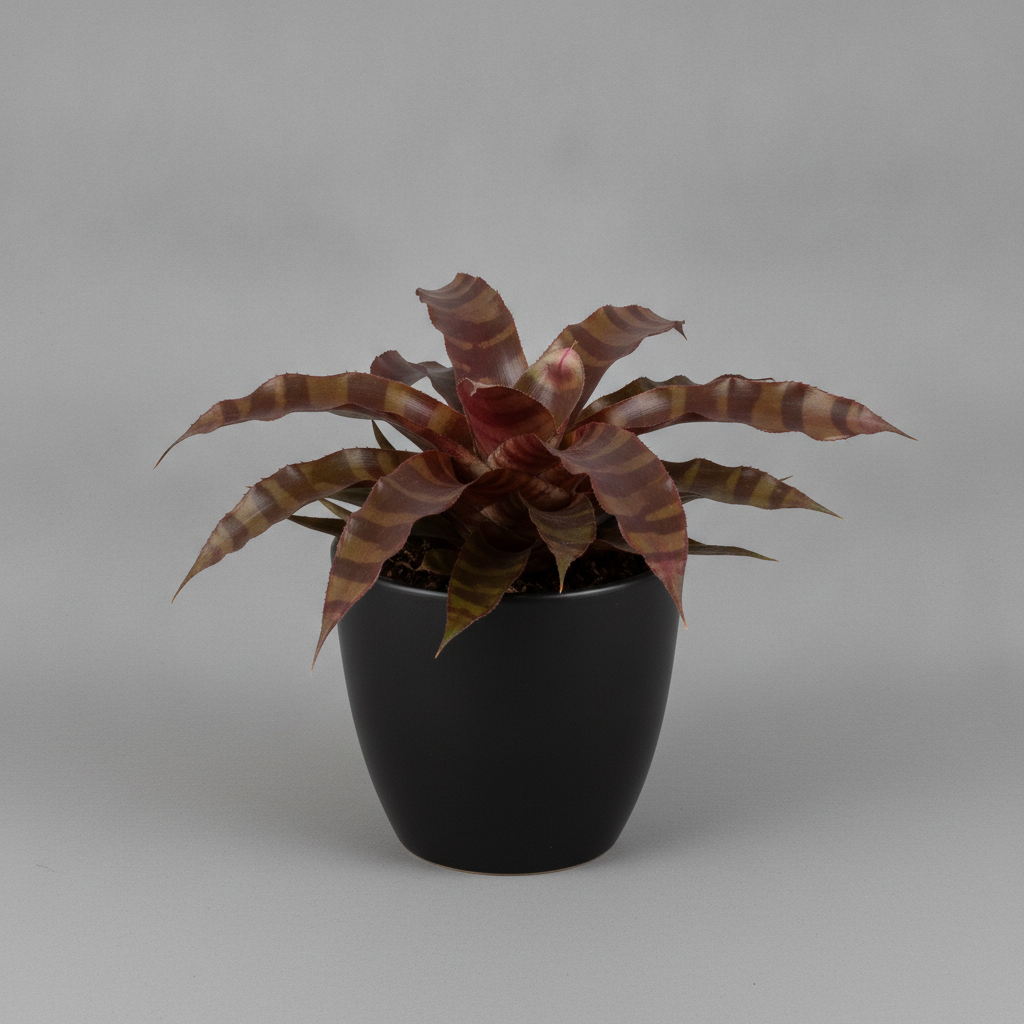
‘Ruby’
For a moodier look, ‘Ruby’ trades pastel stripes for a deep wine-red to bronze rosette with darker cross-banding, its wavy leaves arching low and tapering to fine points. The red tones deepen in strong light and can fade toward green in shade, making it an especially good barometer of whether your plant is getting enough brightness.
Beyond these two, look out for forms such as ‘Red Star’, with its starburst of crimson-tipped leaves, and the many silver-banded and variegated Cryptanthus hybrids. All share the same flat, terrestrial habit and identical care, so once you can grow one earth star well, you can grow the whole tribe.
Frequently Asked Questions
Is the earth star bromeliad safe for cats and dogs?
Yes. Cryptanthus bivittatus is considered non-toxic to cats, dogs and people, which makes it a reassuring choice for homes with pets. As with any plant, discourage persistent chewing, since even a harmless plant can cause mild stomach upset if a lot is eaten.
Why is my earth star losing its pink colour?
Fading to plain green is almost always a sign of too little light. The vivid pinks and reds develop only in bright conditions, so move the plant to a brighter spot with more indirect light, or add a grow light, and the colour will return on new growth.
Do I water an earth star in the centre like other bromeliads?
No. Unlike tank-forming bromeliads, the earth star is terrestrial and has no water-holding cup. Water it at the soil and keep water out of the rosette, as moisture pooling in the centre can cause crown rot.
My earth star is dying after flowering. What did I do wrong?
Nothing. The earth star is monocarpic, so each rosette naturally declines after it flowers. Before it goes, it produces offsets around its base. Leave them attached until they are a third to half the mother’s size, then separate and pot them to continue the plant.
Is the earth star a good terrarium plant?
Excellent, in fact. Its small, flat size, love of humidity and tolerance of moderate light make it one of the classic choices for closed and open terrariums alike, where the enclosed environment keeps the moisture and warmth it enjoys.
How big does an earth star bromeliad get?
It stays small. Most plants reach just 8 to 15 cm (3 to 6 in) tall and spread 15 to 30 cm (6 to 12 in) across, growing slowly throughout. That compact, ground-hugging habit is a large part of its appeal for small spaces and planted displays.






