
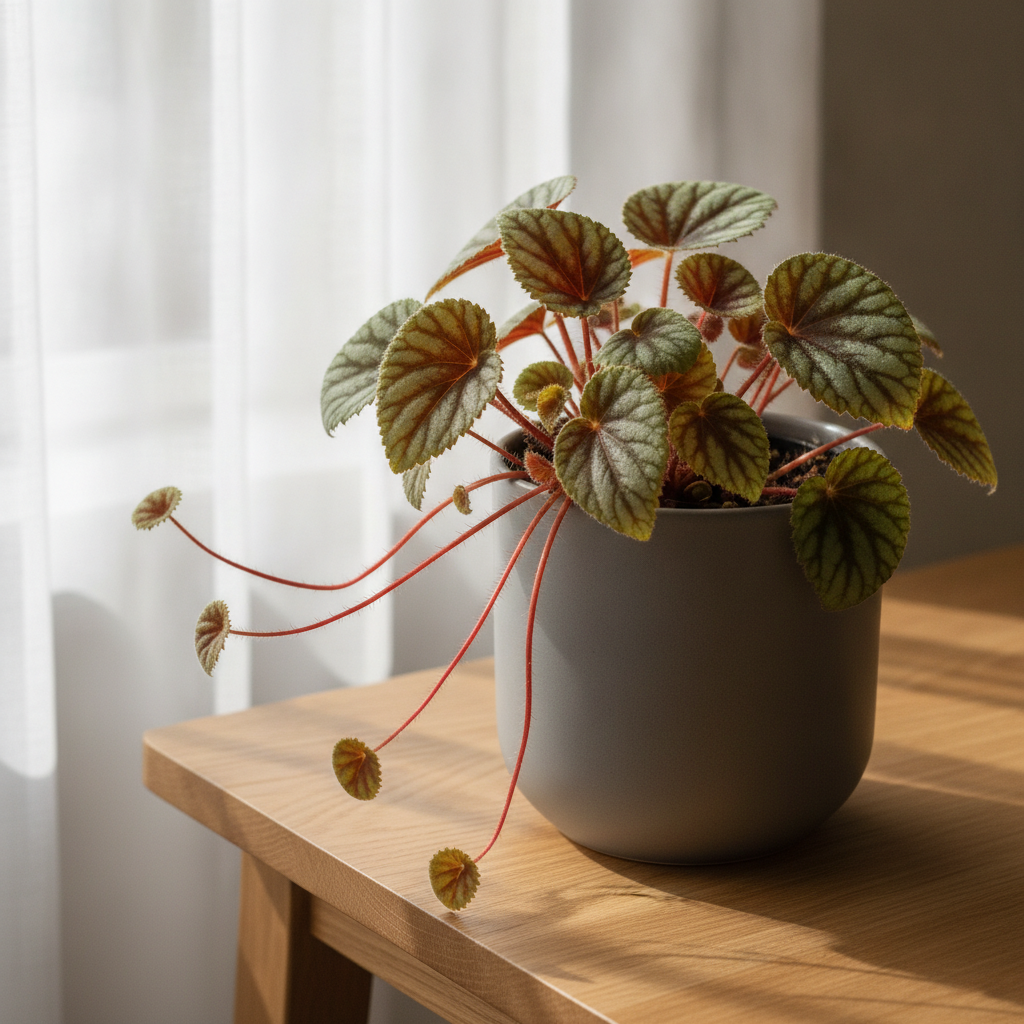
Few houseplants carry a name as misleading as the strawberry begonia. It is neither a strawberry nor a begonia, but a member of the saxifrage family known botanically as Saxifraga stolonifera. The “strawberry” comes from the way it throws out long, thread-like red runners that dangle miniature plantlets, exactly as a garden strawberry does, while the “begonia” refers to the rounded, scallop-edged leaves that echo the foliage of a true begonia. Gardeners have also called it strawberry geranium, creeping saxifrage, roving sailor and Aaron’s beard, a tangle of folk names that says a great deal about how widely it has been grown and how little any single label captures it. Native to the cool, shaded, rocky slopes and stream banks of China, Japan and Korea, it has been a windowsill favourite for well over a century.
Part of the plant’s enduring appeal is that it is genuinely forgiving while still rewarding attention. The leaves are olive-green with a tracery of silvery-white veins on top and a flush of reddish-purple beneath, carried on hairy red stalks that give the whole plant a soft, slightly furred texture. It stays low and mounding, rarely taller than 15 to 20 centimetres (6 to 8 inches), then spills its runners over the pot rim in a way that suits a hanging basket or a high shelf perfectly. This guide walks through everything that separates a strawberry begonia that merely survives, hanging on with crisping edges and few runners, from one that thrives, producing a cascade of plantlets, dense silver-veined foliage and, in good light, airy sprays of small white flowers.
Contents
- Quick Reference
- Why Strawberry Begonia Makes a Rewarding Houseplant
- Light Requirements
- Watering & Humidity
- Soil, Potting & Repotting
- Fertilising
- Propagation
- Pests & Diseases
- Popular Varieties
- Frequently Asked Questions
Quick Reference: Strawberry Begonia at a Glance
| Light | Bright, indirect light; tolerates medium light. Variegated forms need brighter conditions. No harsh direct sun. |
| Watering | Keep the mix evenly moist; water when the top 2 to 3 centimetres (1 inch) feels dry. Reduce in winter. |
| Temperature | 15 to 21°C (59 to 70°F) ideal. Cool-tolerant down to about 7°C (45°F). Dislikes hot, dry air. |
| Humidity | Moderate to high, ideally 50 percent or more. Resents very dry indoor air. |
| Fertiliser | Light feeder. Dilute balanced feed monthly during spring and summer; none in winter. |
| Toxicity | Non-toxic to cats, dogs and humans. One of the safest choices for pet households. |
Why Strawberry Begonia Makes a Rewarding Houseplant
The strawberry begonia earns its place on the windowsill for reasons that go well beyond novelty. It is one of the few trailing houseplants that combines genuinely beautiful foliage with effortless propagation and complete pet safety, a rare trio. Each rosette of rounded, silver-veined leaves is attractive in its own right, but the plant’s signature trick is the way it sends out wiry red stolons, sometimes 30 centimetres (12 inches) long or more, each tipped with a perfectly formed baby plant. A mature specimen in a hanging pot becomes a living mobile of dangling plantlets, and every one of those plantlets is a free new plant waiting to be potted up or given away.
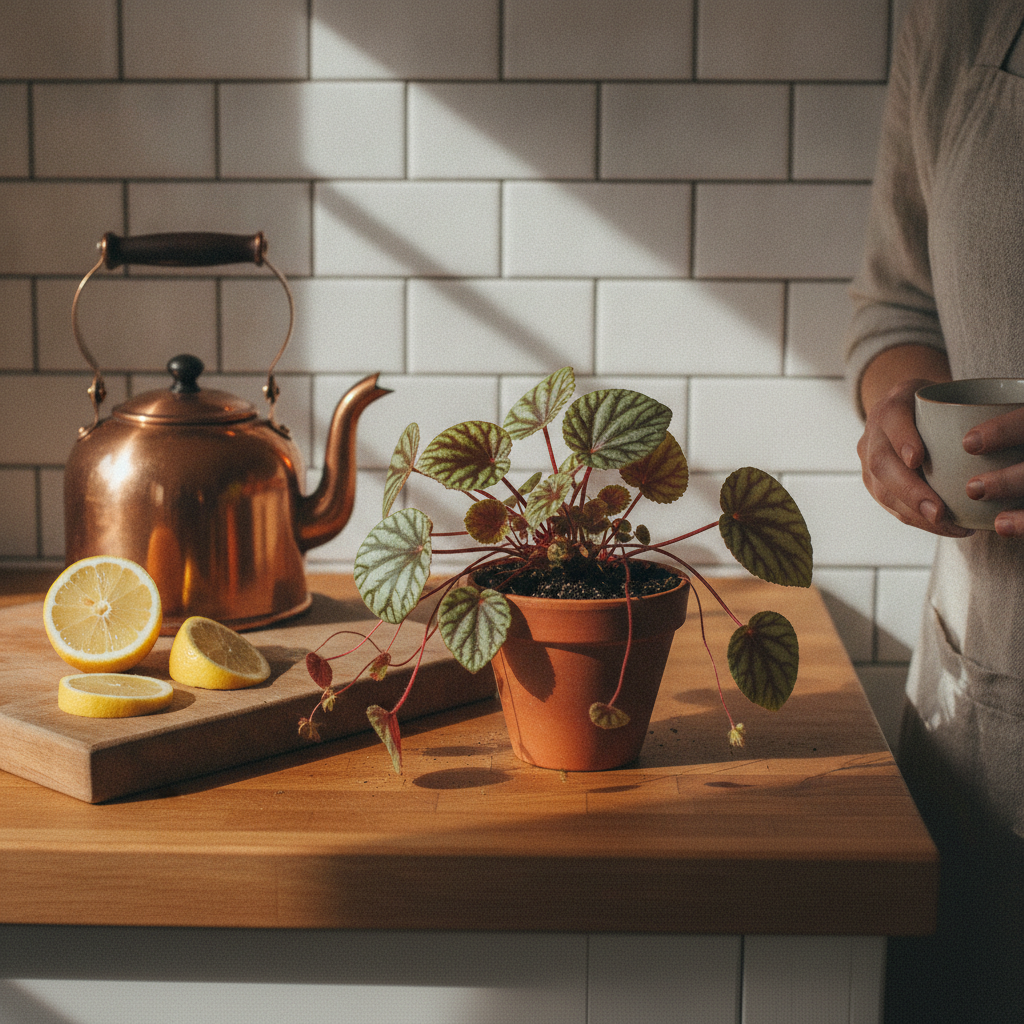
It is also a plant with an unusually wide comfort zone. Unlike most tropical houseplants, Saxifraga stolonifera comes from temperate East Asian woodlands, which means it actively prefers the cooler, draughtier conditions that many homes provide in autumn and winter. It will grow on a chilly porch, in an unheated conservatory or in a north-facing room where a calathea would sulk. In mild climates it is even grown outdoors as a shade-loving ground cover. That tolerance for cool, low-light corners, combined with a refusal to grow leggy and dull, is precisely why it has survived as a houseplant through generations of changing fashion.
Important — Toxicity: The strawberry begonia is listed as non-toxic to cats, dogs and people, making it a reassuring choice for homes with curious pets or small children. As with any plant, nibbling large amounts of foliage can cause mild stomach upset, so it is still sensible to discourage grazing, but there are no toxic compounds to worry about.
Light Requirements
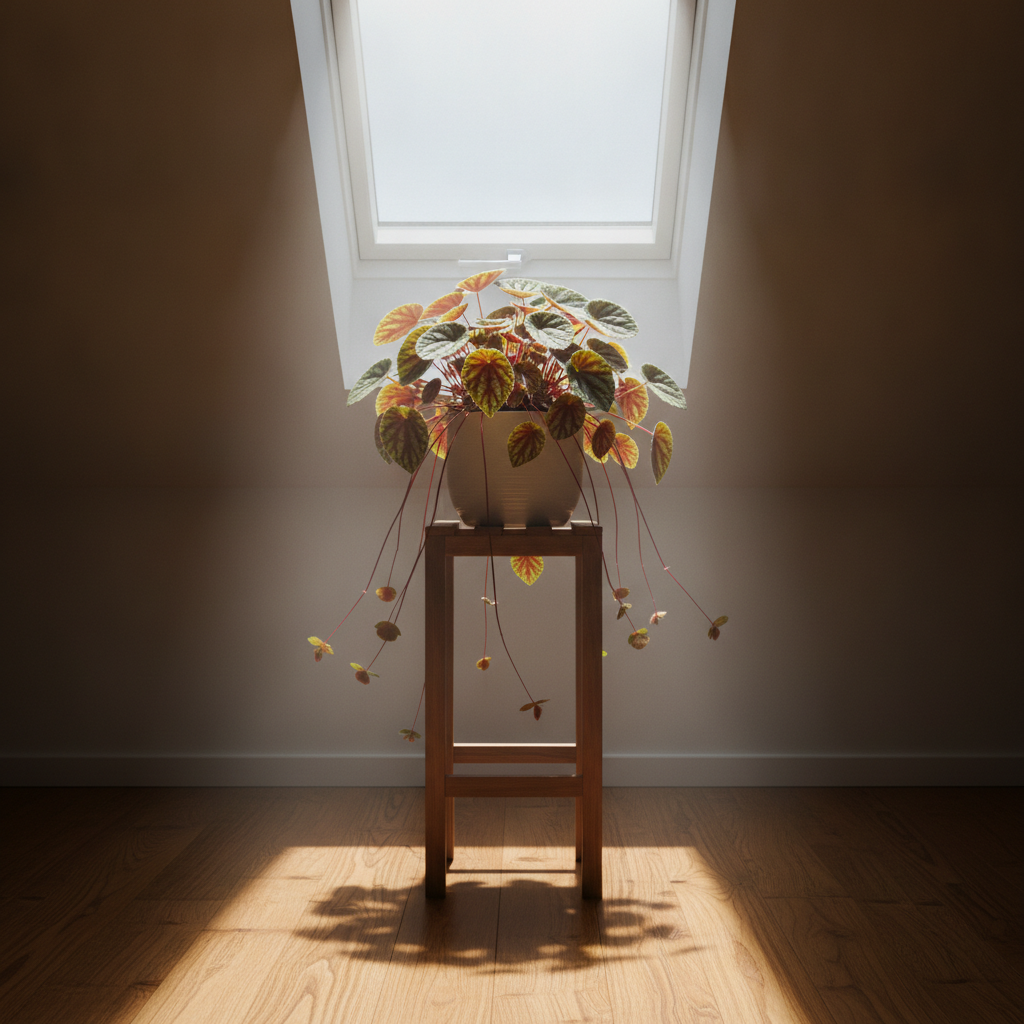
Light is the single biggest lever you have over how a strawberry begonia looks. In its native habitat it grows in dappled woodland shade and on shaded rock faces, so it is adapted to bright but filtered light rather than full sun. Indoors, the sweet spot is bright, indirect light: enough brightness to keep the rosettes compact and the silver veining crisp, but without the direct midday rays that scorch the soft, hairy leaves.
Give it too little light and the plant survives but disappoints. The leaf stalks stretch, the rosette opens up and flops, the silver markings fade towards plain green, and runner production slows to a trickle. Give it bright, indirect light and it thrives: tight rosettes, vivid contrast between the silver veins and the dark leaf, a steady stream of runners and, in spring, a good chance of flowering.
Light Levels Explained
The table below translates the usual light descriptions into approximate illuminance and what you can expect from a strawberry begonia in each band. As a temperate woodland plant, it copes with lower light than most houseplants, but it will not develop its best colour or form in genuinely dim corners.
| Light Category | Approx. Level | Typical Location | Outcome |
|---|---|---|---|
| Direct sun | Over 50,000 lux | Unshaded south window in summer | Leaves scorch and bleach; avoid |
| Bright indirect | 10,000 to 20,000 lux | Near an east or north window, or set back from a south window | Ideal: compact, colourful, free-flowering |
| Medium | 5,000 to 10,000 lux | A metre or two from a bright window | Good growth, slightly looser rosette |
| Low | 1,000 to 5,000 lux | North room, deeper interior | Survives; stretches, fades, few runners |
| Very low | Under 1,000 lux | Hallways, windowless spaces | Slow decline; not recommended |
Window Orientation and Placement
South-facing window: Bright and warm, but too intense directly on the glass in summer. Place the plant a metre (3 feet) back, or filter the light with a sheer curtain, and it will do well year-round.
East-facing window: Close to perfect. Gentle morning sun followed by bright shade for the rest of the day suits the strawberry begonia’s woodland temperament beautifully.
West-facing window: Workable, though the strong afternoon sun can be harsh in midsummer. Pull the plant back from the glass or diffuse the light during the hottest months.
North-facing window: Better tolerated by this plant than by most. A bright north sill gives even, gentle light all day. Plain green forms thrive here; heavily variegated cultivars may want a touch more brightness.
Pro Tip — Read the Runners: Runner production is the clearest signal of light satisfaction. If your plant has stopped throwing out stolons, move it somewhere brighter before changing anything else. A happy strawberry begonia in good light almost never stops making babies.
How Light Affects Leaf Colour
The contrast that makes this plant special, silver veins against an olive ground with red beneath, is light-dependent. In bright indirect light the veining stands out sharply and the undersides flush a deeper wine-red. In low light the leaves grow larger but thinner, the silver dulls and the red fades. Variegated cultivars such as Tricolor are especially demanding: their cream and pink margins only develop properly with plenty of light, and they revert towards plain green in the shade.
Warning — Direct Sunlight: The soft, hair-covered leaves scorch easily. A few hours of unfiltered summer sun can leave permanent bleached or brown patches, particularly on water-droplet-covered foliage, which acts like a lens. If you move the plant to a brighter spot, do it gradually over a week or two.
Artificial Lighting
Strawberry begonias respond well to supplementary lighting, which makes them good candidates for offices and darker rooms. A standard full-spectrum LED grow light positioned 30 to 45 centimetres (12 to 18 inches) above the plant, run for 10 to 12 hours a day, easily provides enough energy to keep the rosette tight and the colour strong. Because the plant is naturally low-growing, even a modest desk lamp fitted with a grow bulb can make a noticeable difference through the dark winter months.
Seasonal Adjustments
As light levels fall in autumn, move the plant closer to the window to compensate. A position that was perfect in July may be too dim by November. Conversely, a winter spot directly on a south sill may become too bright by late spring, so be ready to draw it back as the sun climbs. This small seasonal shuffle keeps growth even and prevents the stretched, pale growth that comes from a plant chasing fading winter light.
Watering & Humidity
Watering is where most strawberry begonias are won or lost. The plant likes its soil consistently moist, reflecting the damp, mossy banks it grows on in the wild, but its fine roots rot quickly if left standing in water. The goal is steady, even moisture: never bone-dry, never waterlogged. Get that balance right and the plant rarely gives any trouble.
When to Water
Check the plant every few days by pushing a finger into the mix. When the top 2 to 3 centimetres (about 1 inch) have dried out but the soil below is still slightly damp, it is time to water. In the warmth of spring and summer this might mean watering twice a week; in the cool of winter it can stretch to once every week or two. Always let the actual condition of the soil, not a fixed calendar, decide.
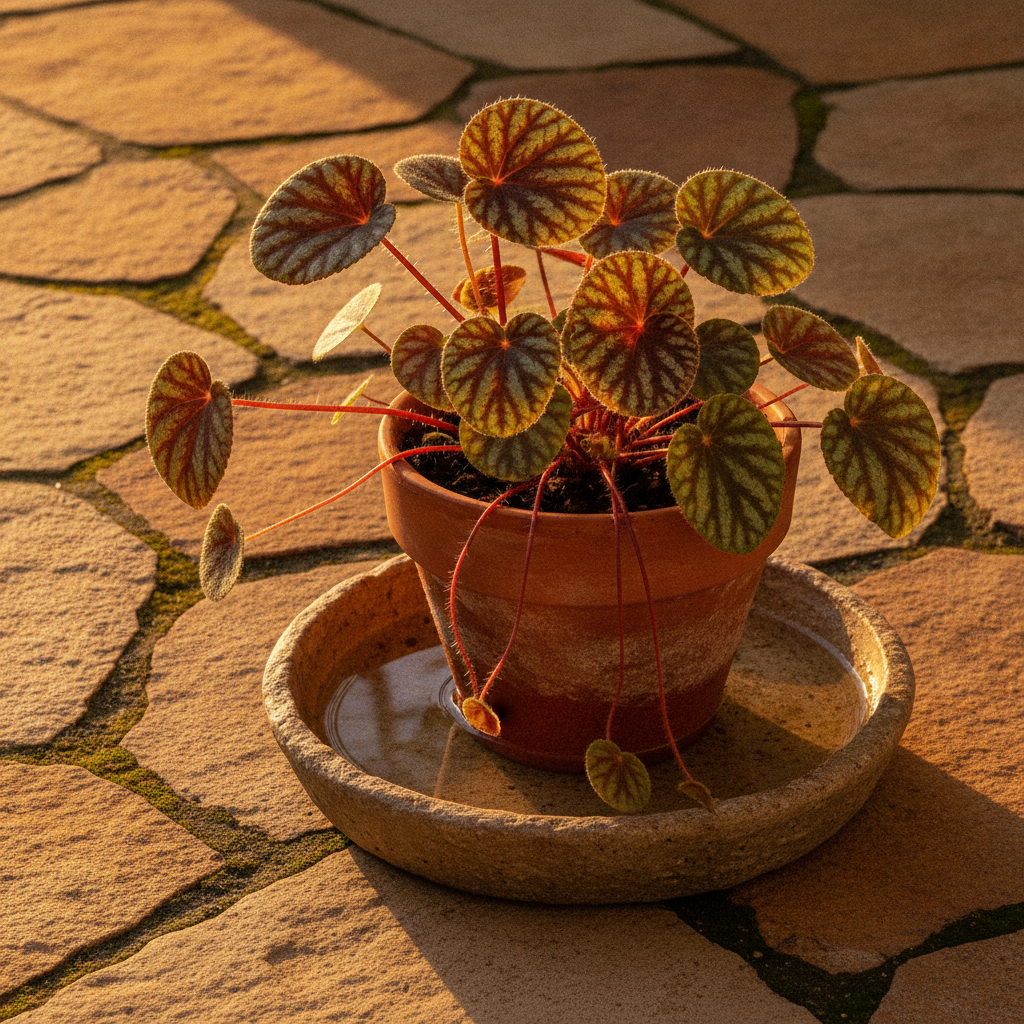
Because the crown of the plant is a dense rosette of hairy leaves and stalks, water sitting in the centre can encourage rot. For this reason many growers prefer to bottom-water, standing the pot in a shallow dish of water for 20 to 30 minutes and letting the mix wick moisture up from below, then draining away anything left. This keeps the crown dry and ensures the rootball is evenly moistened.
Pro Tip — Keep the Crown Dry: If you water from above, aim the spout at the soil surface and avoid splashing the centre of the rosette. Trapped moisture among the hairy leaf bases is one of the few reliable ways to make this otherwise tough plant rot.
How to Water Correctly
- Check that the top 2 to 3 centimetres (1 inch) of mix has dried before reaching for the watering can.
- Use room-temperature water, as cold water can shock the roots of this cool-growing plant.
- Either bottom-water in a shallow tray, or water the soil surface directly while keeping the crown dry.
- Let the mix become thoroughly and evenly moist, but not soaked into a swamp.
- Allow all excess water to drain away completely; never leave the pot sitting in a full saucer.
- Empty the drip tray after 15 to 20 minutes to prevent the roots from sitting in standing water.
Signs of Overwatering vs. Underwatering
| Symptom | Overwatering | Underwatering |
|---|---|---|
| Leaf colour | Yellowing, often from the centre outward | Dull, then browning at the edges |
| Leaf texture | Soft, limp, translucent patches | Crisp, dry, papery margins |
| Soil | Stays wet for days, may smell sour | Pulls away from the pot, dries hard |
| Roots | Brown, mushy, foul-smelling | Dry and brittle but otherwise pale |
| Crown and base | Black, collapsing leaf stalks | Wilting that perks up after watering |
Warning — Root Rot: A sour smell from the soil and blackening leaf stalks at the base are the classic signs that root rot has set in. Act fast: unpot the plant, cut away all soft brown roots and rotten crown tissue with sterile scissors, and repot the healthy remainder into fresh, barely moist mix. Often the safest rescue is to root a few healthy plantlets and start again.
Humidity Requirements
Coming from misty woodland slopes, the strawberry begonia is happiest in moderate to high humidity, ideally around 50 percent or more. It will tolerate average household air, but the very dry conditions created by central heating in winter can leave it struggling, with crisp brown leaf edges the first symptom.
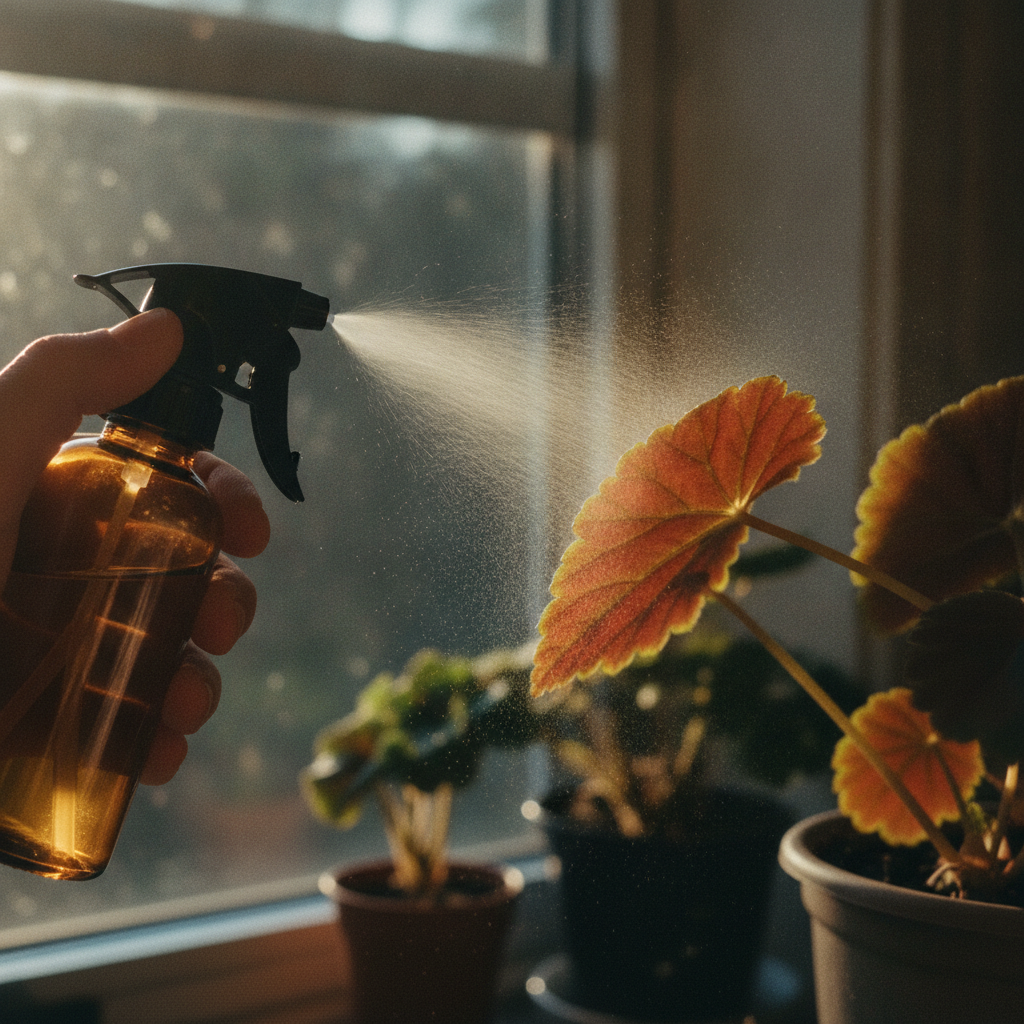
If the leaf margins are browning while the soil is correctly moist, low humidity is the usual culprit rather than thirst. This is most common in heated rooms in winter and in homes with very dry climates. The hairy leaves do not appreciate being misted directly, because trapped water encourages fungal spotting, so it is better to raise the ambient humidity around the plant instead.
The simplest reliable method is a pebble tray: a shallow dish of water filled with gravel, with the pot sitting on top of the stones but above the waterline, so evaporation lifts the local humidity. Grouping plants together creates a shared moist microclimate, and a small room humidifier is the most effective option of all in very dry homes. A cool, naturally humid spot such as a bright bathroom or kitchen often suits this plant perfectly.
Water Quality
Strawberry begonias are not especially fussy about water quality, but in hard-water areas mineral build-up can gradually leave pale crusting on the soil and occasional leaf-tip browning. If you notice this, switch to rainwater, filtered water or tap water left to stand overnight. Room-temperature water is always preferable to cold straight from the tap, since this is a plant that dislikes sudden chills at the root.
Soil, Potting & Repotting
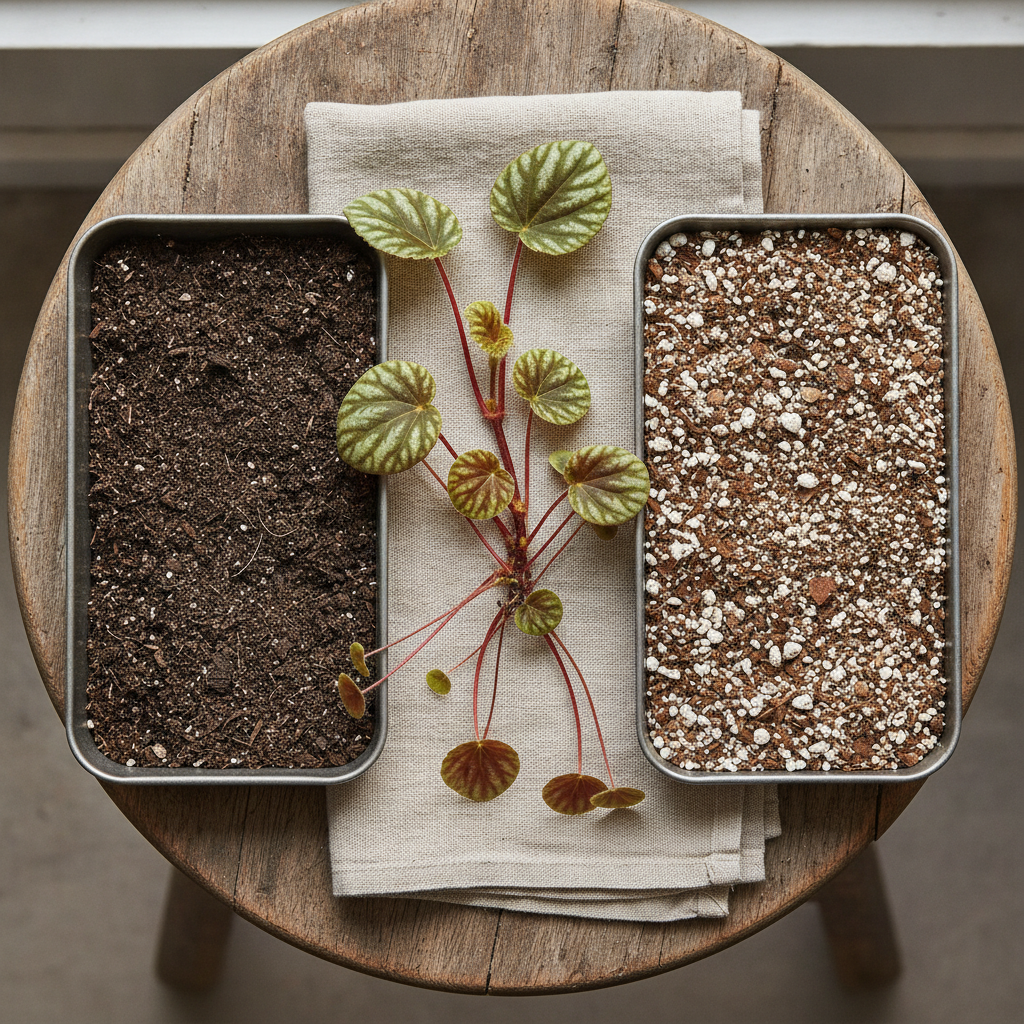
The right growing medium for a strawberry begonia balances two things it cares about deeply: moisture retention and drainage. The plant wants soil that stays evenly damp without ever turning to mud, which means a mix that holds water in organic matter while letting excess drain freely through coarse, airy particles.
Ideal Soil Composition
A good general houseplant compost forms the base, lightened with material that improves aeration and drainage. The aim is a fluffy, open mix that a finger can push into easily and that drains within seconds of watering, yet still feels cool and damp a day or two later.
| Component | Proportion | Function |
|---|---|---|
| Quality potting compost | 50 percent | Holds moisture and nutrients; the base of the mix |
| Perlite or pumice | 25 percent | Opens the mix for drainage and root aeration |
| Coco coir or leaf mould | 15 percent | Retains even moisture without compacting |
| Fine bark or worm castings | 10 percent | Adds structure and a gentle nutrient reserve |
The strawberry begonia prefers a soil pH that is slightly acidic to neutral, roughly 6.0 to 7.0, which most peat-free and standard composts fall within naturally. There is no need to adjust pH for an indoor plant in fresh mix; simply refreshing the compost every year or two keeps it in the right range.
Pro Tip — Quick Mix Recipe: For a no-fuss blend, combine two handfuls of regular houseplant compost with one handful of perlite and a small handful of coco coir. This loose, moisture-retentive mix suits the plant’s woodland roots and drains fast enough to forgive the occasional heavy watering.
Choosing the Right Pot
Strawberry begonias have shallow, fibrous root systems and stay relatively small, so they do best in wide, shallow pots rather than deep ones. A half-pot or pan suits the spreading rosette and trailing runners, and looks the part too. Many growers favour hanging pots so the cascade of plantlets can dangle freely.
Drainage holes are non-negotiable. Whatever vessel you choose, it must have drainage holes. Given the plant’s vulnerability to root rot, a pot that traps water is the fastest route to losing it. If you love a decorative cover pot without holes, use it as an outer sleeve and keep the plant in a plastic nursery pot you can lift out to water and drain.
Pot material: Terracotta is an excellent choice because its porous walls let excess moisture evaporate, providing a useful safety margin against overwatering. Glazed ceramic and plastic hold moisture longer, which can be helpful in very dry homes but demands a more careful hand with the watering can.
Pot size: Move up only one size at a time, typically from a 10 to 12 centimetre (4 to 5 inch) pot to a 13 to 15 centimetre (5 to 6 inch) one. An oversized pot holds a reservoir of wet soil the small root system cannot use, and that lingering moisture invites rot.
When to Repot
This is not a plant that needs frequent repotting. Once every one to two years is plenty, ideally in spring as growth resumes. Signs that it is ready include roots emerging from the drainage holes, water running straight through without wetting the mix, or a rosette that has clearly outgrown its pot and started to crowd the rim. Often, refreshing the top few centimetres of compost each spring is enough to keep an established plant content between full repottings.
How to Repot: Step-by-Step
- Water the plant a day beforehand so the rootball is hydrated and holds together when handled.
- Ease the plant out by tipping the pot and supporting the crown, rather than pulling on the leaves.
- Gently tease away old, spent soil from the outside of the rootball and inspect the roots, trimming any that are brown or mushy.
- Add a layer of fresh, free-draining mix to the base of the new pot, choosing one only slightly larger.
- Set the plant so the crown sits at the same depth as before, never buried, and fill around it with fresh mix.
- Firm the soil gently to remove air pockets, keeping the crown at the surface and proud of the compost.
- Water lightly to settle the mix and return the plant to bright, indirect light out of direct sun.
Warning — Transplant Shock: Avoid burying the crown when you repot. Planting too deep traps moisture against the hairy leaf bases and is a common cause of post-repotting collapse. Keep the crown exactly level with the soil surface and hold off on fertilising for a month while new roots establish.
Fertilising
The strawberry begonia is a modest feeder. In the wild it grows in lean, gritty woodland soils, so it neither needs nor wants heavy feeding. A light, regular touch during the growing season keeps the foliage lush and the runners coming, while overfeeding does far more harm than good.
The growing season runs from spring through summer, when longer days drive active growth. This is the only time the plant uses meaningful amounts of nutrients. In autumn and winter, as growth naturally slows, feeding should stop entirely so that unused fertiliser salts do not accumulate in the soil.
Understanding Plant Nutrients
Fertilisers are labelled with an N-P-K ratio, the percentages of nitrogen, phosphorus and potassium they contain. For a foliage plant like the strawberry begonia, a balanced formula or one slightly higher in nitrogen suits leafy growth well. The table below outlines the main nutrients and the deficiency symptoms to watch for.
| Nutrient | Symbol | Primary Function | Deficiency Symptoms |
|---|---|---|---|
| Nitrogen | N | Leafy growth and green colour | Pale, yellowing older leaves; weak growth |
| Phosphorus | P | Root development and flowering | Stunted roots; poor flowering |
| Potassium | K | Overall vigour and water regulation | Brown leaf edges; weak stems |
| Calcium | Ca | Cell wall strength | Distorted new growth |
| Magnesium | Mg | Core of the chlorophyll molecule | Yellowing between leaf veins |
| Iron | Fe | Chlorophyll production | Yellowing of the youngest leaves |
Types of Fertiliser
Liquid fertilisers: The easiest option for a plant this size. A balanced liquid houseplant feed diluted to half the recommended strength gives precise control and is simply added to the watering can during the growing season.
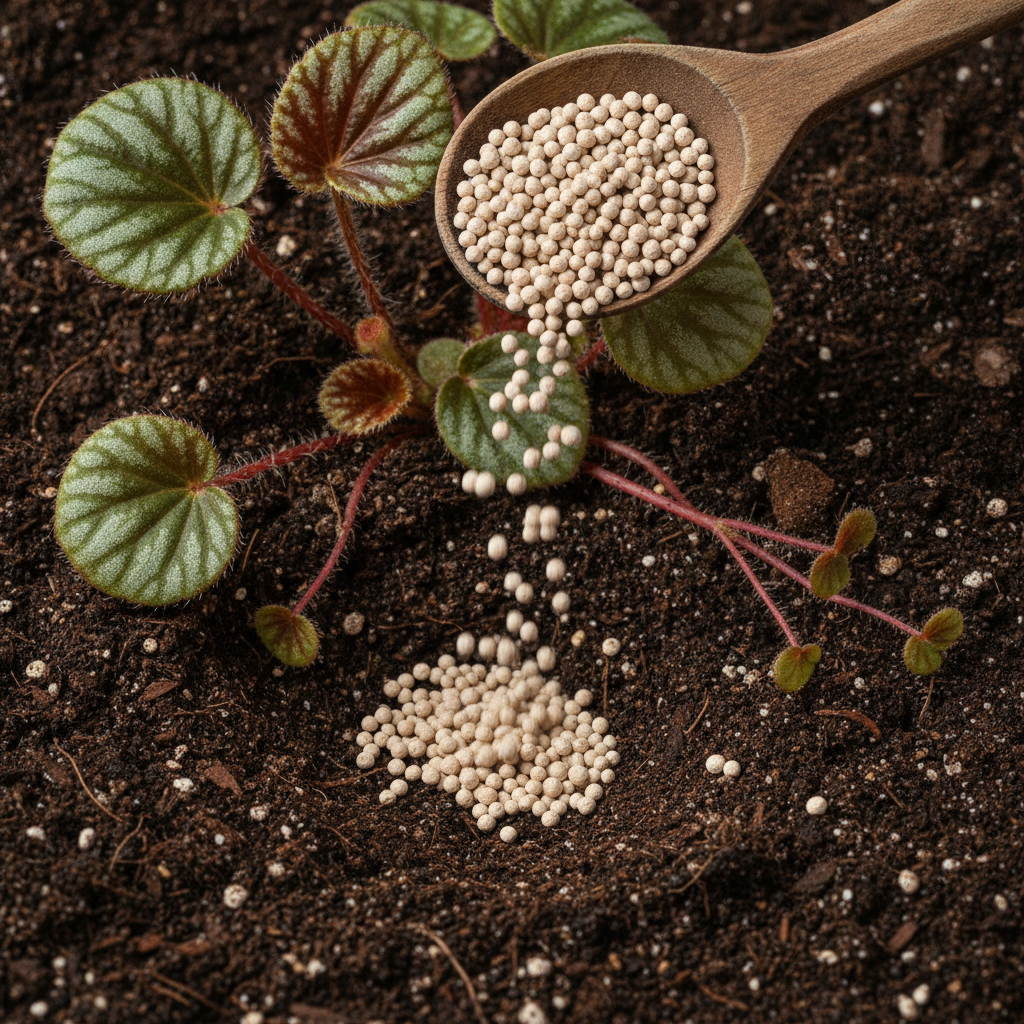
Slow-release granular: Small prills scattered on the soil in spring release nutrients gradually over several months, a convenient choice for anyone who forgets a feeding schedule. Use sparingly, as it is easy to apply too much for such a light feeder.
Organic fertilisers: Worm castings worked into the top layer of soil, or a dilute seaweed or compost feed, provide gentle nutrition with little risk of burning the roots. These suit the plant’s preference for a mild, steady supply rather than concentrated doses.
Feeding Schedule
Feed once a month with a half-strength balanced liquid fertiliser from spring through to the end of summer. That gentle rhythm is all an established strawberry begonia needs. Stop feeding completely in autumn and winter, and do not feed a newly repotted plant for at least a month, since fresh compost already contains enough nutrients to see it through.
Pro Tip — Less Is More: When in doubt, underfeed. This plant shrugs off lean conditions but reacts badly to excess fertiliser, which shows up as scorched brown leaf tips and a white crust on the soil. Half-strength, once a month, is a safe ceiling rather than a minimum.
How to Fertilise
- Water the plant lightly first, as feeding dry roots can scorch them.
- Dilute a balanced liquid fertiliser to half the strength stated on the label.
- Apply the solution to the soil, keeping it off the leaves and out of the crown.
- Allow any excess to drain away, and never feed a plant that is sitting in standing water.
- Flush the pot with plain water every couple of months to wash out accumulated salts.
Warning — Salt Build-Up: Over time, fertiliser salts collect in the soil and show as a white crust on the surface or pot rim, alongside browning leaf tips. Every two to three months, flush the pot thoroughly with plain water, letting it run freely from the drainage holes for a minute or two to leach out the build-up.
Propagation
If the strawberry begonia has a superpower, it is propagation. The plant practically does the work for you, producing ready-made baby plants on the ends of its runners that need only to be encouraged to root. This is one of the most rewarding plants for beginners to multiply, and a single specimen can yield dozens of offspring in a season.
There are two reliable routes: rooting the plantlets that form on the runners, which is the natural and easiest method, and dividing a mature clump, which is useful for rejuvenating an old, congested plant. Spring and summer, during active growth, are the best times for both.
Understanding Runners and Plantlets
The thin red stems that arch out from the parent are stolons, or runners, and the miniature rosettes that form along them are plantlets, complete with tiny leaves and the beginnings of roots. In nature these touch down on the soil nearby, root, and form a new colony. Indoors you simply guide that process, either by letting the plantlet root while still attached to the parent or by removing it to root on its own.
Rooting Plantlets: Step-by-Step
The most foolproof approach keeps the plantlet attached to its parent until it has established roots, so it never has to fend for itself prematurely. This mirrors exactly what the plant does in the wild.
- Fill a small pot with moist, free-draining mix and set it beside the parent plant.
- Choose a healthy plantlet on a runner long enough to reach the new pot.
- Rest the plantlet on the surface of the fresh mix and pin it down gently with a bent paperclip or a small hairpin, keeping the runner intact.
- Keep both pots in bright, indirect light and the small pot’s soil lightly moist.
- After three to four weeks, tug the plantlet very gently; resistance means roots have formed.
- Once well rooted, snip the runner to separate the new plant from its parent.
Pro Tip — Water Rooting Works Too: If you would rather watch the roots develop, snip a plantlet from its runner and rest it on the rim of a small glass of water so the base just touches the surface. Roots usually appear within a couple of weeks, after which you can pot it into soil.
Division: Step-by-Step
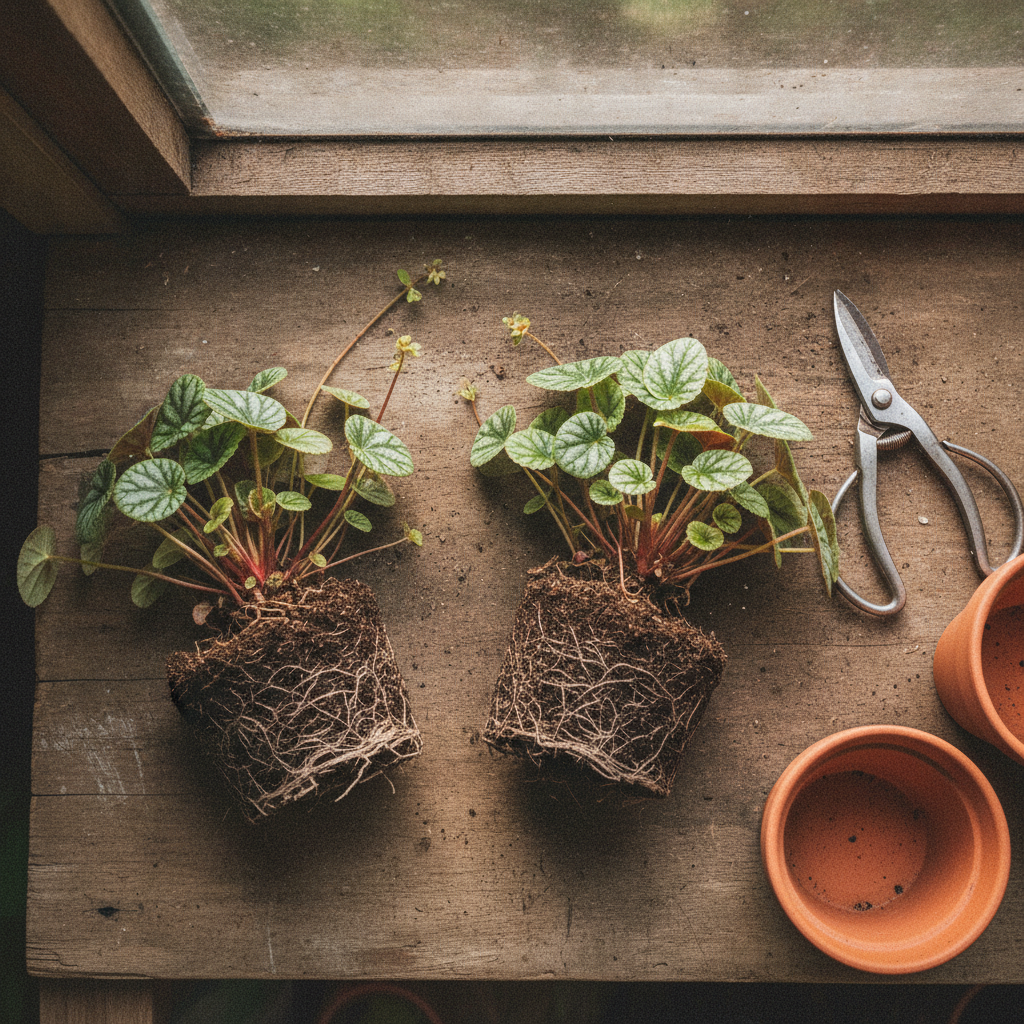
Over time a strawberry begonia forms a clump of several crowns. Dividing it not only creates new plants but also reinvigorates a parent that has grown congested and bare in the centre. This is best done at repotting time in spring.
- Remove the whole plant from its pot and gently shake or wash off the loose soil to expose the crowns.
- Identify natural divisions where separate rosettes have their own roots.
- Tease the clump apart by hand, or cut between crowns with a clean, sharp knife, making sure each section keeps a good share of roots.
- Pot each division into its own small container of fresh, free-draining mix.
- Water lightly and keep the divisions in bright, indirect light, slightly more humid than usual, while they settle.
Troubleshooting Propagation
| Problem | Likely Cause | Solution |
|---|---|---|
| Plantlet rots before rooting | Mix kept too wet, or crown buried | Use barely-moist mix; rest the plantlet on top, do not bury it |
| No roots after several weeks | Too cool, too dark, or plantlet too immature | Move to warmth and brighter light; choose larger, well-formed plantlets |
| Plantlet shrivels after separation | Cut from the parent before it had roots | Always confirm roots have formed before snipping the runner |
| Divisions wilt badly | Too few roots per division, or low humidity | Keep larger root sections; raise humidity while they establish |
Pests & Diseases
The strawberry begonia is not especially prone to pests, but its soft, hairy leaves and preference for cool, humid conditions can occasionally attract trouble. Most problems are easy to head off with regular inspection and quick action, and the plant’s vigour means a healthy specimen usually shrugs off minor infestations.
The most important habit is to check the plant routinely, paying attention to the undersides of leaves and the crowded centre of the rosette, where pests like to hide. Catching an infestation early, when only a few insects are present, makes treatment far simpler than tackling an outbreak that has had weeks to spread.
Common Pests
Aphids (Aphidoidea)
Small green, black or pink soft-bodied insects that cluster on tender new growth and flower stems, sucking sap and leaving sticky honeydew behind. Strawberry begonias in flower are particularly attractive to them. Heavy infestations distort new leaves and weaken the plant.
Treatment: Rinse them off with a firm spray of water, then treat with insecticidal soap or a diluted neem oil solution every few days until they are gone. Check flower stalks closely, as aphids regroup there.
Mealybugs (Pseudococcidae)
White, cottony tufts that lodge in the crown and along leaf stalks, hidden among the plant’s natural hairs where they are easy to miss. They feed on sap and excrete honeydew that encourages sooty mould.
Treatment: Dab each insect with a cotton bud dipped in diluted isopropyl alcohol, then follow up with neem oil or insecticidal soap. Inspect the dense centre of the rosette carefully, as this is their favourite hiding place.
Spider Mites (Tetranychus urticae)
Tiny sap-sucking mites that thrive in hot, dry air, the very conditions this plant already dislikes. Signs include fine stippling on the leaves, a dull bronzed look and delicate webbing between leaves and stalks.
Treatment: Raise the humidity, which mites hate, rinse the foliage, and apply neem oil or a miticide to the leaf undersides. Improving air moisture is both the cure and the best prevention.
Common Diseases
Root Rot (Pythium and Phytophthora)
By far the most serious threat to this plant, caused by soil kept too wet for too long. The roots turn brown and mushy, the crown blackens, and the plant collapses despite looking thirsty. A sour smell from the soil confirms it.
Treatment: Unpot the plant, cut away all soft, dark roots and rotten crown tissue with sterile tools, and repot the healthy remainder into fresh, barely moist mix. If the crown is too far gone, root a few healthy plantlets to save the plant.
Powdery Mildew (Erysiphales)
A dusty white coating on the leaf surface, most likely in stagnant, humid air with poor circulation. It rarely kills the plant but disfigures the foliage and saps its vigour if left to spread.
Treatment: Remove affected leaves, improve air circulation around the plant, and avoid wetting the foliage. A fungicide or a dilute potassium bicarbonate spray controls stubborn cases.
Pest and Disease Summary
| Pest / Disease | Identification | Treatment |
|---|---|---|
| Aphids | Clusters on new growth and flower stems; sticky honeydew | Rinse off; insecticidal soap or neem oil |
| Mealybugs | White cottony tufts in the crown and leaf stalks | Alcohol-dipped cotton bud; neem oil follow-up |
| Spider mites | Fine stippling, bronzing, faint webbing | Raise humidity; rinse; neem oil or miticide |
| Root rot | Mushy roots, blackened crown, sour soil | Cut away rot; repot in fresh mix; improve drainage |
| Powdery mildew | Dusty white coating on leaves | Remove leaves; improve airflow; fungicide |
Prevention Strategies
Prevention rests on getting the basics right. A plant grown in the correct light, watered carefully so the crown stays dry, and given enough humidity is naturally resistant to most pests and diseases. Good air circulation discourages both fungal problems and spider mites, while careful watering is the single best defence against root rot, the one condition that genuinely threatens this plant’s life.
Quarantine any new plant for a couple of weeks before placing it near your strawberry begonia, and inspect the leaf undersides and crown whenever you water. Removing dead leaves and spent flower stems promptly denies pests and fungi a foothold, and keeping the rosette tidy improves airflow through its dense centre.
Pro Tip — Neem as Routine: A light monthly spray of diluted neem oil on the leaf undersides during the growing season acts as a gentle, preventative shield against soft-bodied pests. Apply it in the evening or out of direct sun to avoid leaf scorch, and keep it off the open flowers.
Popular Varieties
Although the plain species is handsome in its own right, plant breeders and collectors have selected a number of strawberry begonia cultivars prized for unusual leaf colour and variegation. These range from boldly tricoloured forms to deep maroon and golden-leaved selections, each with slightly different needs.
As a general rule, the more variegated or unusually coloured a cultivar is, the more light it needs to hold that colour, and the more slowly it grows. The plain green and silver-veined types are the most vigorous and the easiest, while the showiest forms reward a little extra care with striking foliage.
| Variety | Leaf Appearance | Light Needs | Growth Rate | Availability |
|---|---|---|---|---|
| Species (type) | Olive-green, silver veins, red undersides | Bright indirect to medium | Vigorous | Common |
| Tricolor | Green centres edged cream and rose-pink | Bright indirect | Slow | Common |
| Maroon Beauty | Bold silver veins, deep maroon undersides | Bright indirect to medium | Vigorous | Common |
| Harvest Moon | Chartreuse to golden-yellow leaves | Bright indirect | Moderate | Uncommon |
| Eco Butterfly | Green with central gold variegation | Bright indirect | Moderate | Uncommon |
| Hsitou Silver | Heavy silver overlay across the leaf | Bright indirect | Moderate | Rare |
Featured Varieties
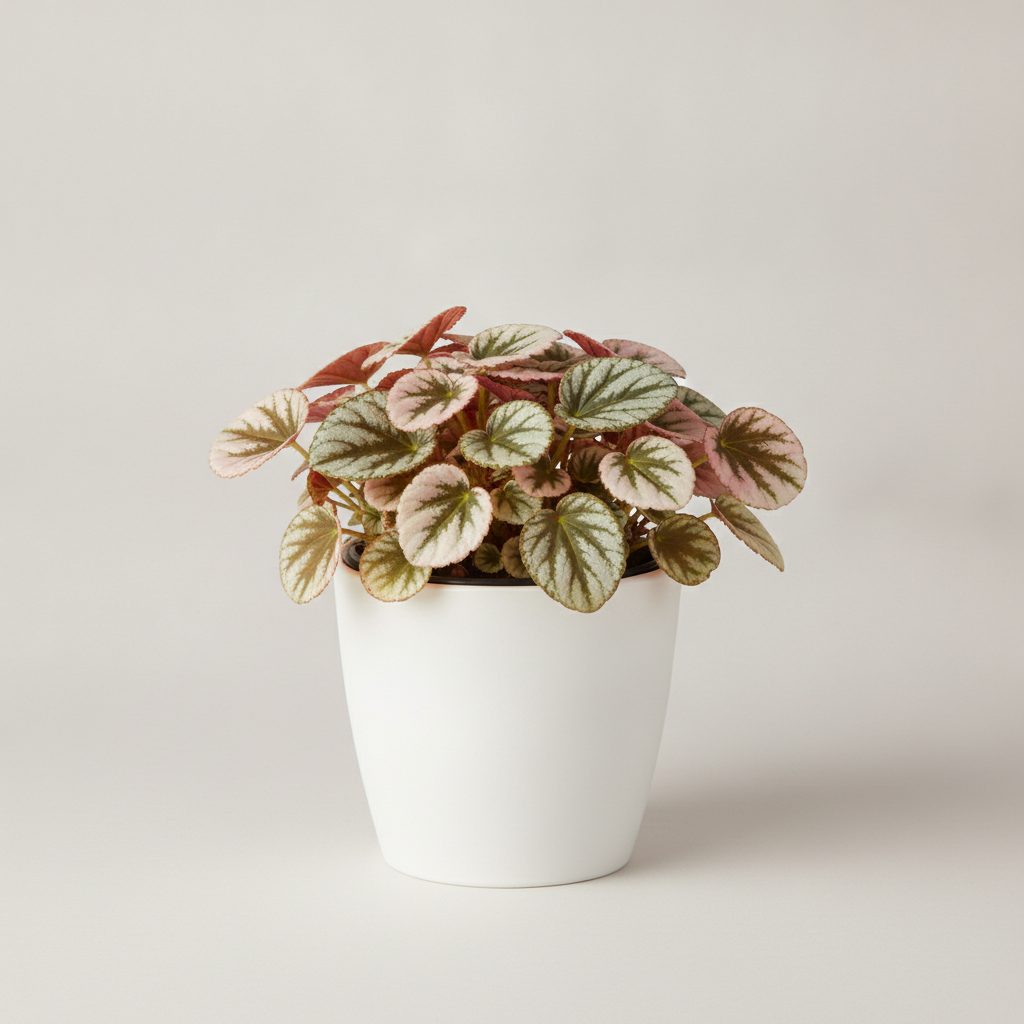
Tricolor
Also sold as ‘Magic Carpet’, this is the showpiece of the group. Olive-green centres are bordered with creamy white and washed with rose-pink, the pink deepening in good light. It is more compact, slower and a little more tender than the species, needing brighter light and warmth to keep its colours, and it dislikes cold, wet soil.
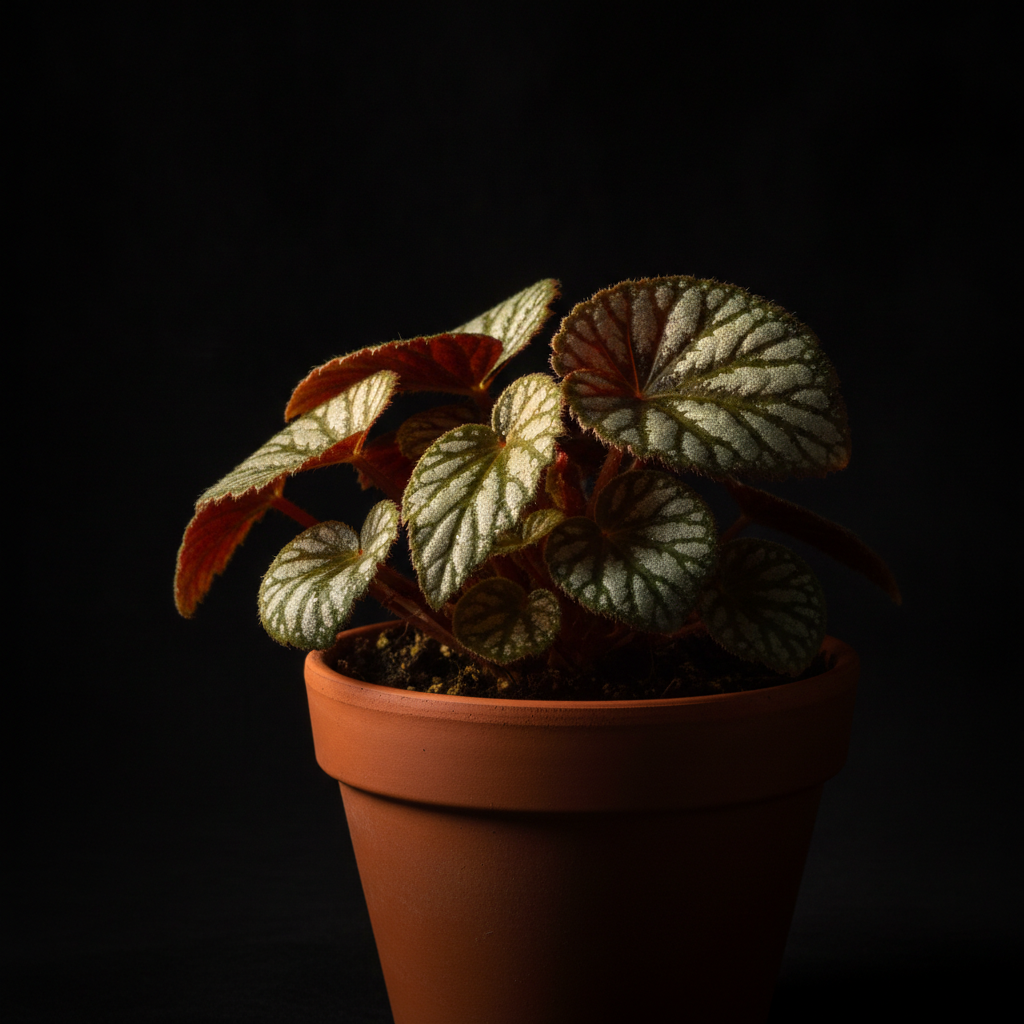
Maroon Beauty
Sometimes listed as ‘Cuscutiformis’, this robust selection intensifies everything that makes the species attractive: crisp silver veins stand out against dark olive leaves whose undersides glow a rich maroon-red. It is vigorous, free with its runners and very easy to grow, making it an excellent choice for hanging baskets and beginners alike.
Variety Profiles in Detail
Harvest Moon (Saxifraga stolonifera ‘Harvest Moon’)
A striking golden-leaved form whose chartreuse to soft-yellow foliage lights up a shaded corner. The bright leaves can scorch more readily in strong sun, so it appreciates gentle, filtered light, and its growth is a touch slower than the green types. The veining and red undersides remain, contrasting beautifully with the pale leaf surface.
Hsitou Silver (Saxifraga ‘Hsitou Silver’)
A collector’s favourite carrying an unusually heavy silver overlay that can cover almost the entire leaf, giving the plant a frosted, metallic sheen. It is grown for foliage rather than vigour, and while less commonly available, it makes a real talking point. Like all the silver-marked forms, it shows its best colour in bright, indirect light.
Choosing the Right Variety for Your Space
For a bright spot and maximum impact, the variegated Tricolor is hard to beat, though it asks for the most light and care. If you want a forgiving plant that trails generously and roots its plantlets with abandon, Maroon Beauty or the plain species are ideal, and both tolerate the cooler, lower-light conditions that defeat fussier houseplants. Gardeners chasing the unusual will enjoy hunting down Harvest Moon or Hsitou Silver, accepting slightly slower growth in return for their distinctive foliage. Whichever you choose, the core care remains the same; the main difference is simply how much light each one needs to look its best.
Frequently Asked Questions
Is the strawberry begonia really a begonia?
No. Despite the name, Saxifraga stolonifera is not a begonia at all, nor a strawberry. It belongs to the saxifrage family, Saxifragaceae. The common name comes from its begonia-like leaves and its strawberry-like habit of spreading by runners, but botanically it is unrelated to either.
Is the strawberry begonia safe for cats and dogs?
Yes. It is listed as non-toxic to cats, dogs and people, which makes it one of the safest trailing plants for a pet household. While eating large amounts of any plant can cause mild digestive upset, there are no toxic compounds to be concerned about.
Why are the leaf edges turning brown?
Brown, crispy leaf margins usually point to low humidity or dry, hot air, often from nearby heating in winter. Less commonly they signal underwatering or a build-up of fertiliser salts in the soil. Raise the humidity, keep the soil evenly moist, and flush the pot occasionally with plain water to rule out salt build-up.
Why has my plant stopped producing runners?
The most common reason is insufficient light. Runner production is a sign of a contented, well-fed plant, so a specimen in a dim spot will slow or stop making them. Move it somewhere brighter, ensure it is fed lightly through the growing season, and the runners usually return.
Does the strawberry begonia flower indoors?
It can, given enough light. In late spring and summer a happy plant sends up airy stems of small white flowers, each with two long lower petals and three short upper ones, resembling tiny butterflies or orchids. Bright, indirect light and a cool spot encourage flowering; in deep shade the plant grows leaves but rarely blooms.
Can I grow a strawberry begonia outdoors?
In mild climates, yes. It is hardy enough to be grown outdoors as a shade-loving ground cover in temperate regions, tolerating cool conditions that would harm tropical houseplants. In colder areas it is best kept as a houseplant or moved indoors before hard frost, though it appreciates a cool, sheltered spot outside during the summer months.
How often should I repot it?
Only every one to two years, ideally in spring. This is a small, shallow-rooted plant that prefers being slightly snug rather than swimming in a large pot. Repot when roots show at the drainage holes or the rosette crowds the rim, and always move up just one pot size at a time.
Why are the leaves losing their silver markings?
Fading silver veining and dull, plain-green leaves are almost always a light problem. The contrast that defines this plant develops only in bright, indirect light; in shade the leaves grow larger but lose their colour. Move the plant closer to a bright window, taking care to avoid harsh direct sun, and the markings should sharpen on new growth.






