
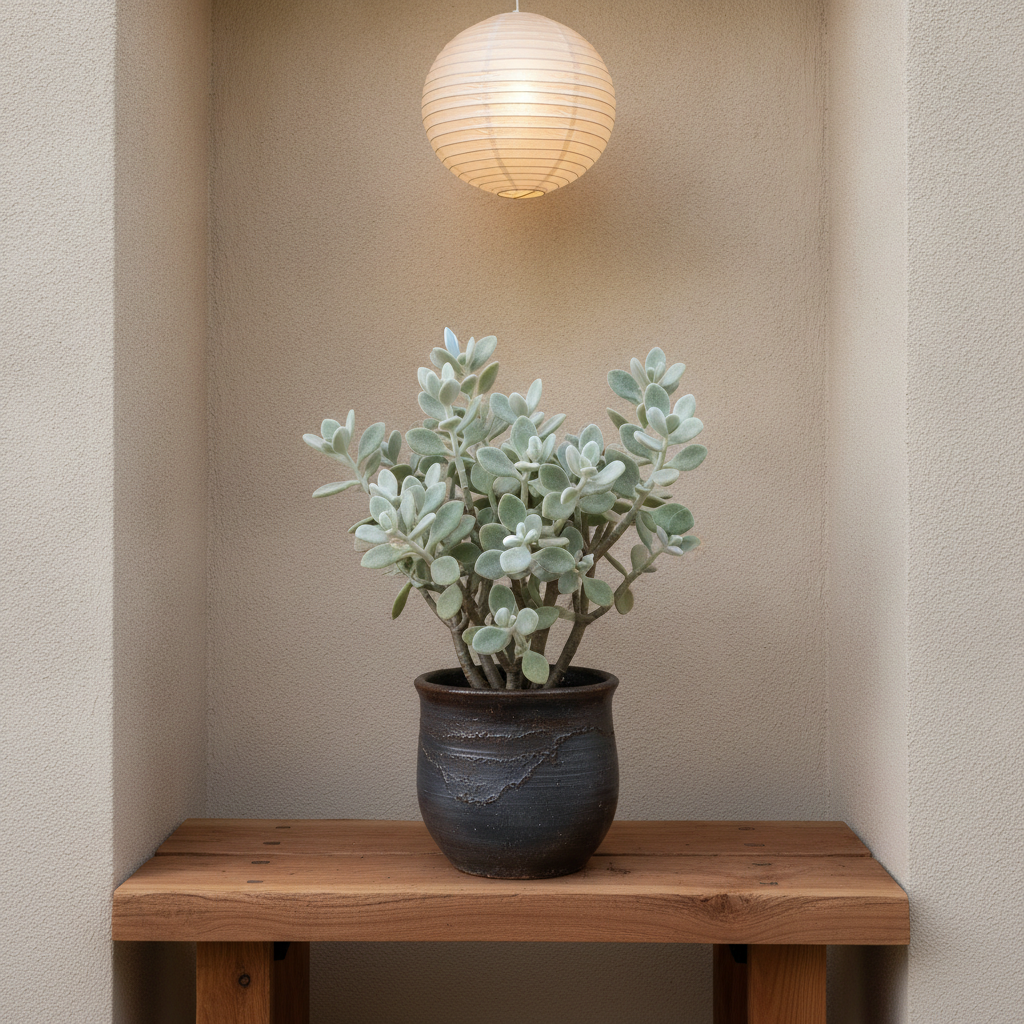
Few succulents announce their love of sunlight quite so plainly as the silver spoon kalanchoe (Kalanchoe bracteata), a Madagascan shrublet whose rounded, spoon-shaped leaves are coated in a chalky silver-white felt so dense the foliage can look as though it has been dusted with powdered metal. That felting is not decoration. It is a survival adaptation honed on the bright, rocky, seasonally dry slopes of central and southern Madagascar, where a reflective coat of fine hairs deflects punishing light and slows the loss of water from the leaf surface. Grown indoors, the plant is sometimes sold as Silver Teaspoons, a nod to the neat cupped shape of its young leaves.
As a houseplant it has a reputation for being almost unkillable, and that reputation is largely deserved, with one important caveat: the silver spoon kalanchoe is killed far more often by kindness than by neglect. Give it the brightest spot you own, a gritty mix that drains in seconds, and the discipline to leave it alone between waterings, and it will reward you for years. This guide covers everything that separates a plant that merely survives on a dim shelf, etiolating into a leggy, dull-green stretch, from one that thrives in full sun with tight, compact growth and that signature luminous silver coat.
Contents
- Quick Reference
- Why Silver Spoon Kalanchoe Makes a Rewarding Houseplant
- Light Requirements
- Watering & Humidity
- Soil, Potting & Repotting
- Fertilising
- Propagation
- Pests & Diseases
- Popular Varieties
- Frequently Asked Questions
Quick Reference: Silver Spoon Kalanchoe at a Glance
| Light | Very bright light, including several hours of direct sun; a south or west window indoors |
| Watering | Soak thoroughly, then let the mix dry out completely; roughly every 2 to 3 weeks in summer, monthly or less in winter |
| Temperature | 18 to 27 degrees C (64 to 81 degrees F); keep above 10 degrees C (50 degrees F) |
| Humidity | Low; average to dry household air is ideal, no misting |
| Fertiliser | Dilute succulent feed once or twice across spring and summer only |
| Toxicity | Toxic to cats, dogs and humans if eaten; contains cardiac glycosides |
Why Silver Spoon Kalanchoe Makes a Rewarding Houseplant
The appeal of Kalanchoe bracteata starts with its colour. In a collection dominated by glossy greens, a plant with genuinely silver foliage is a striking contrast, and the matte, almost suede-like texture of the leaves reads as luxurious rather than busy. The silver is most intense in strong light, so a well-grown specimen on a sunny sill develops a near-metallic sheen that few other easy houseplants can match. The leaves are arranged in opposite pairs along upright, branching stems, giving the plant a tidy, architectural silhouette as it matures into a small shrub.
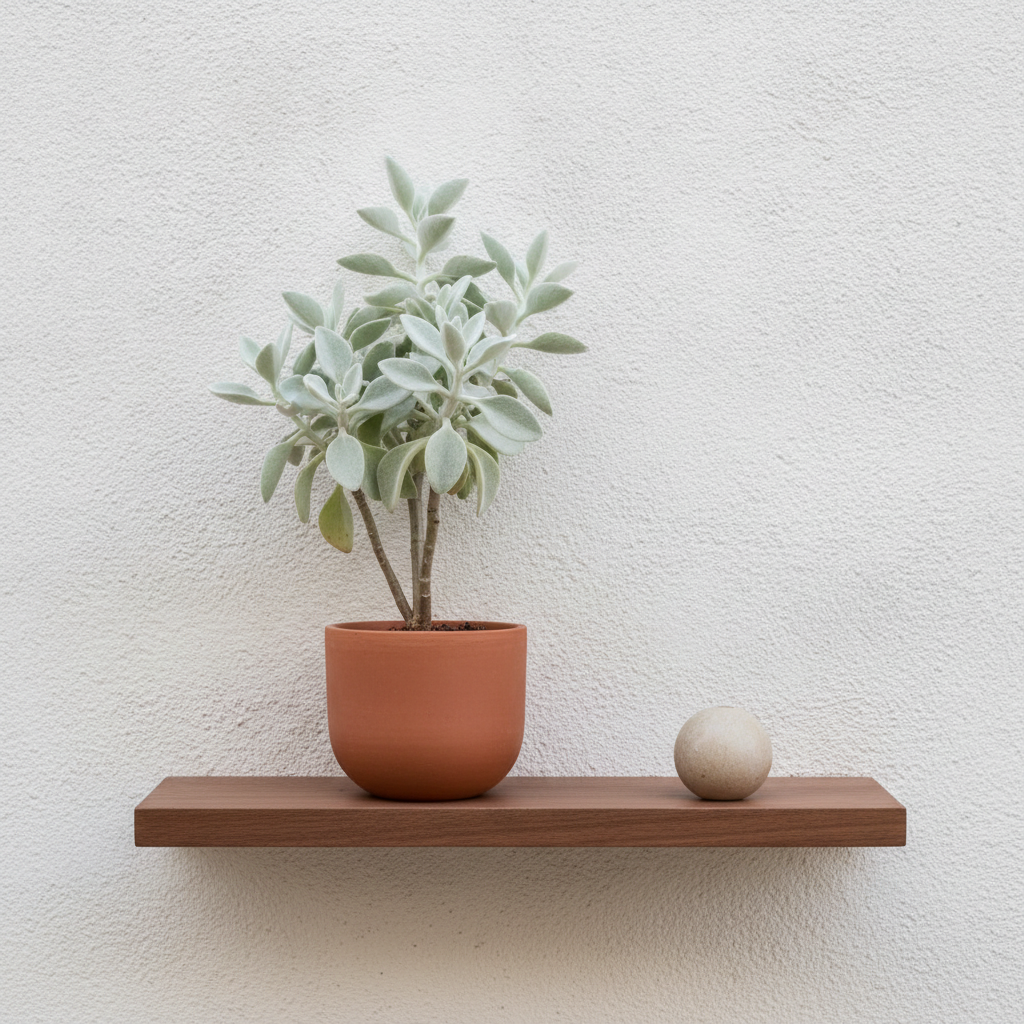
Beyond looks, this is a forgiving plant for anyone who travels, forgets, or simply prefers low-maintenance greenery. Its thick, water-storing leaves and woody stems mean it shrugs off the occasional missed watering that would flatten a fern, and its modest root system is content in a small pot for a long time. It is also an enthusiastic grower from cuttings, so a single plant can quickly become a windowsill row or a generous supply of gifts. For households without curious pets or small children, the main demand it makes is light, and meeting that demand is the single most important thing you can do for it.
Important — Toxicity: Like all kalanchoes, Kalanchoe bracteata contains bufadienolides, a class of cardiac glycosides that can cause vomiting, drooling and, in larger doses, heart rhythm disturbances if the plant is chewed or swallowed. It is considered toxic to cats, dogs and humans. Site it well out of reach of pets and children, and wash your hands after taking cuttings.
Light Requirements
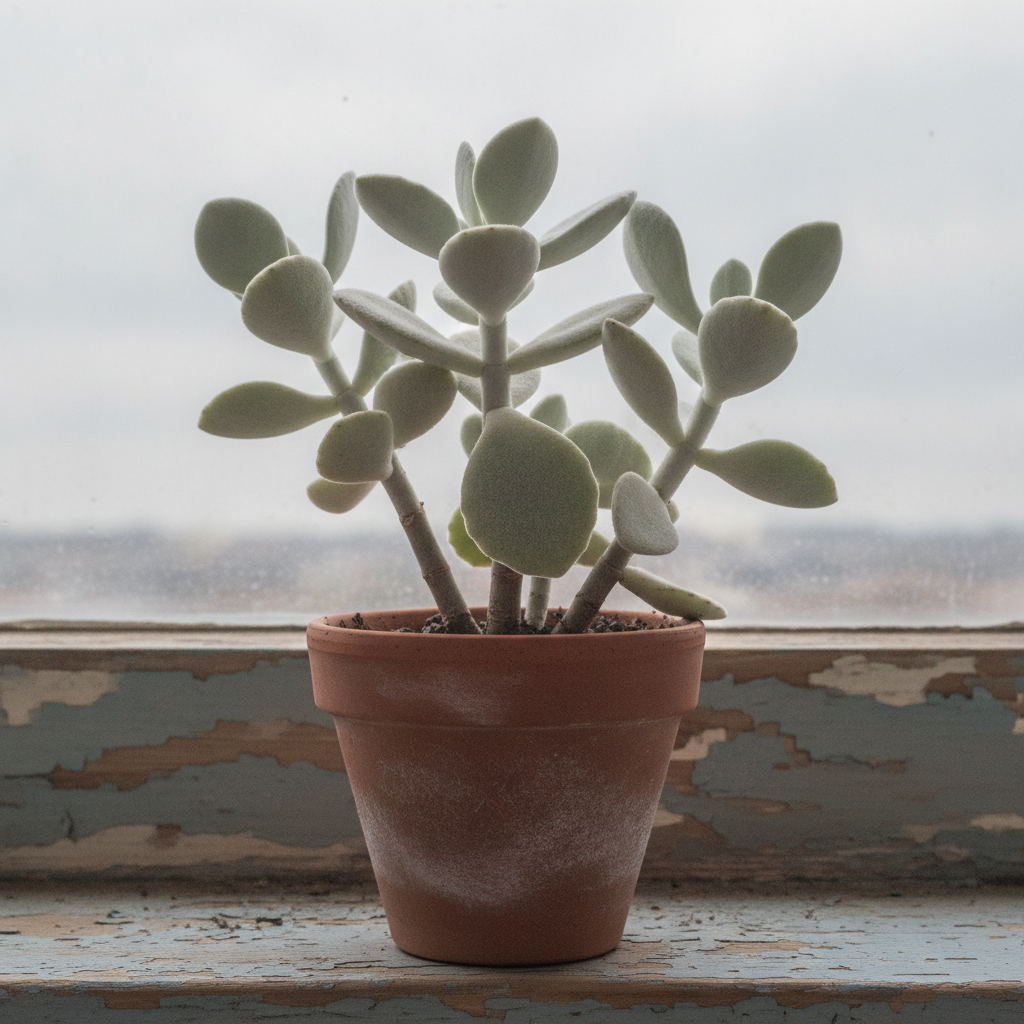
If there is one thing to get right with the silver spoon kalanchoe, it is light. This is a full-sun plant from an open, exposed habitat, and the entire structure of the leaf, from its compact shape to its reflective felt, is built around abundant illumination. Indoors, it wants the brightest position you can offer, ideally with several hours of direct sun falling on the leaves each day. In adequate light the plant stays squat and dense, the silver coat develops fully, and new leaves emerge in tight pairs close together on the stem.
Deprived of light, it changes quickly and unmistakably. The stems stretch, the gaps between leaf pairs lengthen, the silver fades towards a flat grey-green, and the whole plant leans towards the nearest window in a posture botanists call etiolation. This stretching is permanent for the stem that produced it, so the goal is to prevent it rather than reverse it. A plant that has already become leggy can be cut back hard and the cuttings rooted, but the cure is always more light.
Light Levels Explained
It helps to think about light in tiers, because the difference between a window that looks bright to the human eye and one that is genuinely bright enough for a sun-loving succulent is enormous. Our eyes adjust constantly and forgive low light; a kalanchoe cannot. The table below gives a rough guide to indoor light categories and how this plant responds to each.
| Light Category | Approx. Level | Typical Location | Outcome |
|---|---|---|---|
| Direct sun | 20,000 lux and above | On a south or west sill, in the sun | Ideal; compact growth, brightest silver |
| Bright indirect | 10,000 to 20,000 lux | Just back from a sunny window | Good; healthy but slightly looser growth |
| Medium | 5,000 to 10,000 lux | An east window or a few feet inside | Tolerated; growth slows, silver dulls |
| Low | 1,000 to 5,000 lux | A north room or interior wall | Poor; stretching and leaf drop likely |
| Very low | Under 1,000 lux | Hallway or far from any window | Decline; not viable long term |
Window Orientation and Placement
South-facing window: This is the prime location in the northern hemisphere. A south sill delivers the long hours of direct sun the plant craves, and Kalanchoe bracteata will happily sit right in the glass. The only caution is the combination of glass, intense summer sun and trapped heat, which is covered in the warning below.
East-facing window: Gentle morning sun followed by bright light for the rest of the day suits the plant well, especially for a specimen acclimatised to slightly softer conditions. Expect good colour, though perhaps not quite the dazzle of a full south exposure.
West-facing window: Strong afternoon sun makes a west window an excellent choice, nearly the equal of a south one. The plant colours up beautifully here, and the warmth of late-day light is welcome.
North-facing window: The weakest option and best avoided for this species. A north window rarely supplies enough light to keep the plant compact, and over weeks you will see it stretch and pale. If a north room is your only choice, a grow light is essential.
Pro Tip — Rotate for Even Growth: Because the plant leans hard towards light, give the pot a quarter turn every week or two. This keeps the stems growing upright and symmetrical rather than all bending one way, and it ensures the silver develops evenly across every face of the plant.
How Light Affects Leaf Colour
The silver coating is at its most spectacular in bright light, and this is the single most rewarding visual payoff of growing the plant well. In strong sun the felt is dense and bright, and some forms develop subtle bronze or reddish tints along the leaf margins as a sun response. In shade the new growth comes in greener and less felted, and the plant loses much of the character that makes it worth growing. If you want maximum silver, maximise light.
Warning — Direct Sunlight: While this plant loves sun, a specimen grown in low light and then moved abruptly into fierce summer glass can scorch, developing dry brown or bleached patches on the most exposed leaves. Acclimatise gradually over a week or two, increasing exposure in stages, and provide a little airflow behind hot summer glass to prevent the leaves from cooking.
Artificial Lighting
Where natural light falls short, a full-spectrum LED grow light closes the gap effectively. Because this is a high-light plant, position the light fairly close, around 15 to 30 centimetres (6 to 12 inches) above the canopy, and run it for 12 to 14 hours a day. A timer makes this effortless and consistent. A grow light is also the most reliable way to keep colour and form through a dark northern winter, when even a south window may not supply enough intensity.
Seasonal Adjustments
Light changes through the year, and so should placement. In the short, weak days of winter, move the plant as close to the brightest glass as possible and clean the window so nothing is wasted. In high summer, when midday sun can be brutal behind glass, a sheer curtain or a slight step back from a south window can prevent scorch while still delivering plenty of energy. Watch the plant rather than the calendar: tight growth and bright silver mean the light is right, while stretching means it needs more.
Watering & Humidity
Watering is where most silver spoon kalanchoes meet their end, and almost always through generosity rather than thirst. As a succulent from a seasonally dry climate, Kalanchoe bracteata stores water in its fleshy leaves and stems and is built to ride out long droughts. Its roots are adapted to brief soaking followed by fast drainage and a thorough dry-out, and they rot quickly if kept damp. The governing principle is simple: water deeply, then wait until the mix is bone dry before watering again.
When to Water
Forget any fixed schedule and read the plant and the pot instead. The most reliable test is to push a finger into the mix, or lift the pot to feel its weight. Water only when the soil is completely dry all the way through and the pot feels light. In a bright, warm spot during the growing season this might mean watering every two to three weeks, but the interval matters far less than the dryness check.
In winter, when light is low and growth has all but stopped, the plant needs very little. Many growers water no more than once a month, or even less, through the coldest, darkest weeks. A cool, dry winter rest actually benefits the plant and can encourage flowering, so resist the urge to keep it topped up. When in doubt, wait: a thirsty kalanchoe recovers within hours of a drink, while a waterlogged one may be beyond saving.
Pro Tip — Keep the Felt Dry: The silver coat is a layer of fine hairs that traps water and is slow to dry. Always water at soil level and avoid splashing the leaves, because droplets that sit in the felt can leave marks or invite rot. This is also why misting, often recommended for tropical plants, is exactly the wrong move here.
How to Water Correctly
- Check first that the mix is completely dry by touch and by the light weight of the pot.
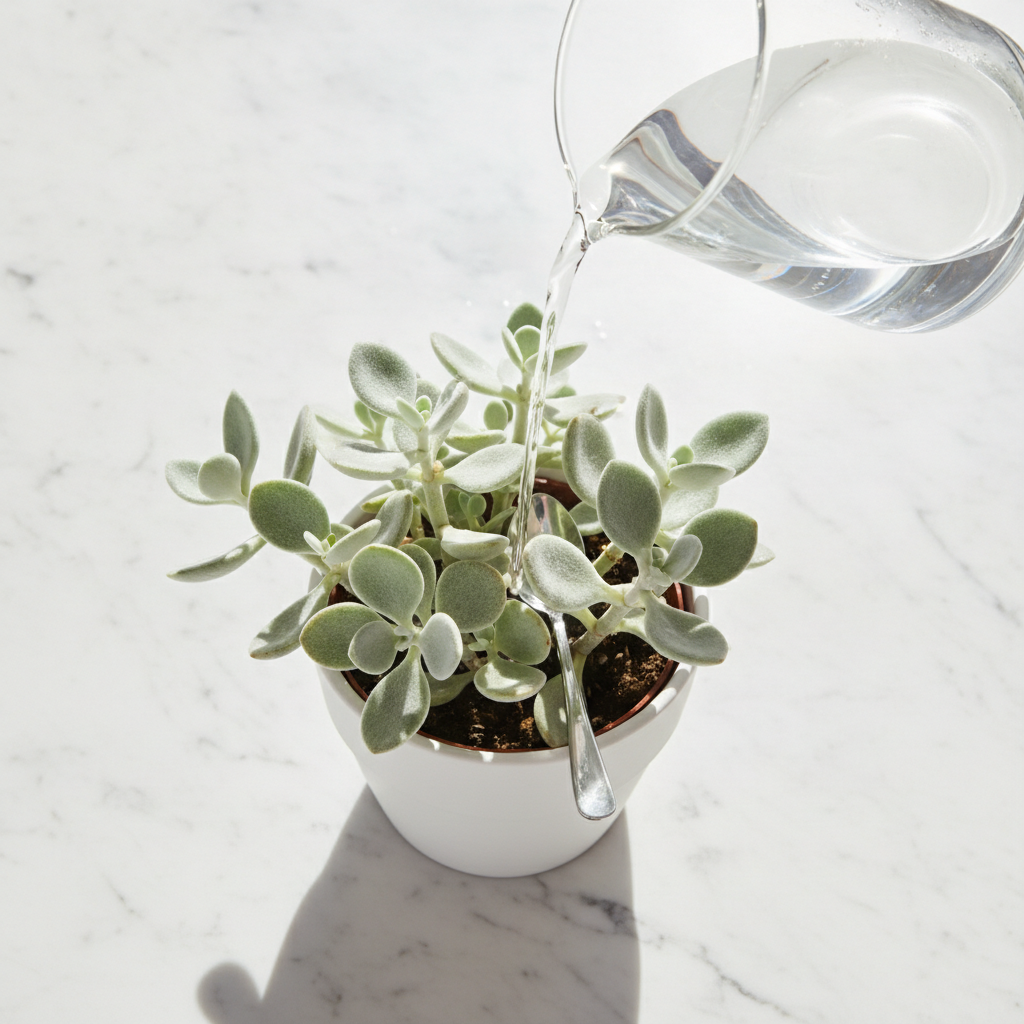
- Take the plant to a sink and water at the soil surface, avoiding the felted leaves.
- Add water steadily until it runs freely from the drainage holes, wetting the whole root ball.
- Let the pot drain fully for several minutes so no water is left standing.
- Never leave the pot sitting in a saucer of water; empty any catch tray once draining stops.
- Return the plant to its bright spot and do not water again until the mix is dry throughout.
Signs of Overwatering vs. Underwatering
| Symptom | Overwatering | Underwatering |
|---|---|---|
| Leaf colour | Yellowing, translucent or blackening leaves | Duller silver, slight loss of vigour |
| Leaf texture | Soft, mushy, water-soaked to the touch | Thin, wrinkled, slightly puckered |
| Soil | Stays wet for days, may smell sour | Bone dry, pulling away from the pot edge |
| Roots | Brown, soft and foul-smelling | Dry but firm and pale |
| Stem base | Soft, dark and collapsing | Firm, perhaps a little shrivelled |
Warning — Root Rot: Soft, blackening stems and a sour smell from the soil signal root rot, the most common cause of death in this plant. Act fast: unpot it, cut away every soft, brown root and any mushy stem tissue with sterilised blades, let the cuts callus for a day, and repot the firm remainder into fresh dry gritty mix. Often the healthiest top growth can be salvaged as a cutting even when the base is lost.
Humidity Requirements
This is one of the rare houseplants that genuinely prefers dry air. Coming from an arid habitat, Kalanchoe bracteata is perfectly content in the low humidity of a centrally heated home, and it has no need of the pebble trays, humidifiers or grouping that tropical foliage plants enjoy. Average household humidity, anywhere from 30 to 50 percent, is ideal.
High humidity, by contrast, works against the plant. Damp, still air sits in the leaf felt and around the dense lower growth, raising the risk of fungal spotting and rot. There is no humidity-related symptom to chase here, because the plant simply wants things drier rather than wetter.
The practical takeaway is to do nothing special and, in fact, to avoid the instinct to mist or coddle. Good airflow is far more valuable than humidity. A gently circulating room, or an open window on warm days, helps the felt and soil dry promptly and keeps fungal problems at bay.
Water Quality
The silver spoon kalanchoe is unfussy about water quality and tolerates ordinary tap water in most areas without complaint. Because it is watered so infrequently, any mineral content has limited chance to accumulate, though in very hard-water regions an occasional flush with rainwater or filtered water helps prevent salt build-up in the mix. Room-temperature water is gentler on the roots than a cold shock straight from the tap.
Soil, Potting & Repotting
Drainage is everything for this plant, and the right mix does more to prevent root rot than any watering schedule. The silver spoon kalanchoe wants a substrate that holds a little moisture briefly and then dries fast, mimicking the sharp, mineral soils of its rocky homeland. A heavy, peaty, moisture-retentive potting compost is the enemy here; it stays wet at the core long after the surface looks dry, and that hidden dampness is what kills the roots.
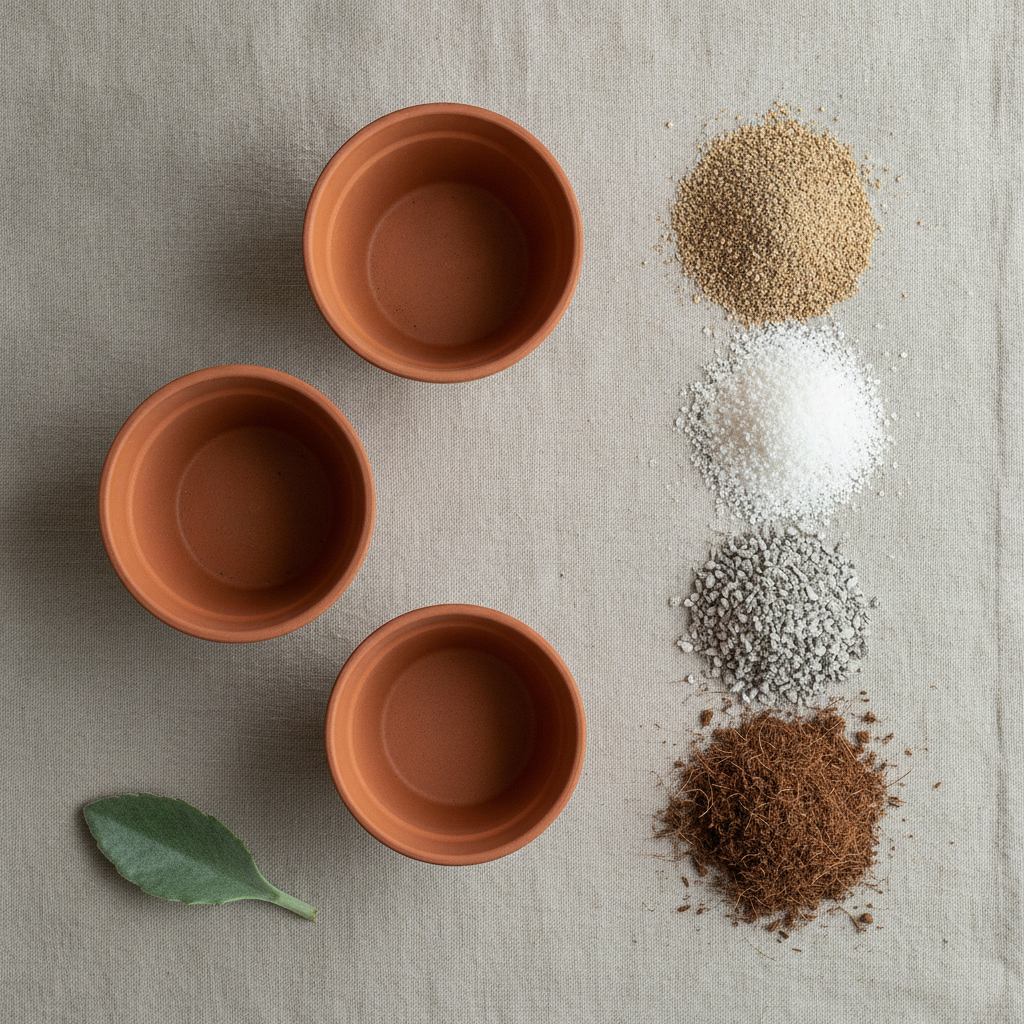
Ideal Soil Composition
Aim for a free-draining, gritty mix that is roughly half mineral matter. Start with a quality cactus and succulent compost as the base, then bulk it out with coarse, inorganic grit to open up the structure. The goal is a blend through which water drains within seconds and which holds almost no standing moisture.
| Component | Proportion | Function |
|---|---|---|
| Cactus and succulent compost | 50 percent | Base structure and modest moisture and nutrient holding |
| Coarse grit or pumice | 30 percent | Sharp drainage and air around the roots |
| Perlite | 20 percent | Lightens the mix and prevents compaction |
The plant is not demanding about pH and grows well in anything from slightly acidic to slightly alkaline, roughly 6.0 to 7.5. Far more important than chemistry is physical structure, so prioritise grit and air over any attempt to fine-tune acidity.
Pro Tip — Quick Mix Recipe: For a reliable blend, combine two parts shop-bought cactus compost with one part coarse perlite and one part fine gravel, pumice or grit. If you can roll a handful of the moist mix into a ball that holds its shape, add more grit; it should crumble apart immediately.
Choosing the Right Pot
Pot choice has a direct effect on how wet the roots stay, so it is worth a moment’s thought rather than grabbing whatever is nearest. For a plant this prone to rot, the pot is part of the drainage strategy.
Drainage holes are non-negotiable. Never plant a silver spoon kalanchoe in a pot without a drainage hole, however attractive the container. Without an exit for excess water, even a perfect mix becomes a reservoir at the base, and the roots sit and rot. If you love a decorative cachepot, keep the plant in a plain plastic nursery pot and slip it inside, lifting it out to water.
Pot material: Unglazed terracotta is the ideal choice. Its porous walls wick moisture out of the mix and breathe, helping the soil dry between waterings, which is exactly what this plant wants. Glazed ceramic and plastic both hold moisture longer, so if you use them, lean even harder towards a gritty mix and a longer dry-out.
Pot size: Choose a snug pot only a little larger than the root ball. An oversized pot holds a large volume of slow-to-dry soil around a small root system, which is a recipe for rot. This is a plant that genuinely prefers to be slightly underpotted, and it flowers more readily when a touch root-bound.
When to Repot
The silver spoon kalanchoe is in no hurry to be repotted and is happiest left undisturbed for a couple of years at a time. Repot only when it is genuinely outgrowing its home, signalled by roots emerging from the drainage holes, the plant becoming top-heavy and unstable, or the mix breaking down and staying wet too long. Early spring, as growth resumes, is the best moment, and always work with dry soil and a plant that has not been watered for a week or so.
How to Repot: Step-by-Step
- Water lightly a few days ahead if the plant is very dry and brittle, otherwise repot dry to reduce root damage.
- Slide the plant from its pot and gently tease away the old mix from around the roots.
- Inspect the roots, trimming any that are brown, soft or rotten with clean, sterilised scissors.
- Choose a pot only one size up, with a drainage hole, and add a layer of fresh gritty mix to the base.
- Set the plant at the same depth it grew before and fill around the roots with mix, firming gently.
- Leave the plant unwatered for about a week so any damaged roots can callus and heal.
- Resume normal watering only once the plant has settled, and return it to bright light.
Warning — Transplant Shock: Watering immediately after repotting is the classic mistake. Freshly cut or disturbed roots are open wounds, and wet soil around them invites rot before they can seal. Always give the plant a dry week to recover, and keep it out of the most intense sun for a few days while it re-establishes.
Fertilising
The silver spoon kalanchoe is a light feeder, and overfeeding does more harm than underfeeding. In the wild it grows in lean, mineral soils and has no expectation of rich nutrition, so the heavy feeding regimes that suit fast tropical foliage will only produce soft, weak, overly green growth here, at the expense of the compact form and silver colour you actually want.
Think of feeding as a small, occasional supplement rather than a routine. A couple of dilute feeds spread across the active growing season are plenty, and many growers report excellent results with even less. The plant will tell you it is satisfied by holding tight, well-coloured growth without your intervention.
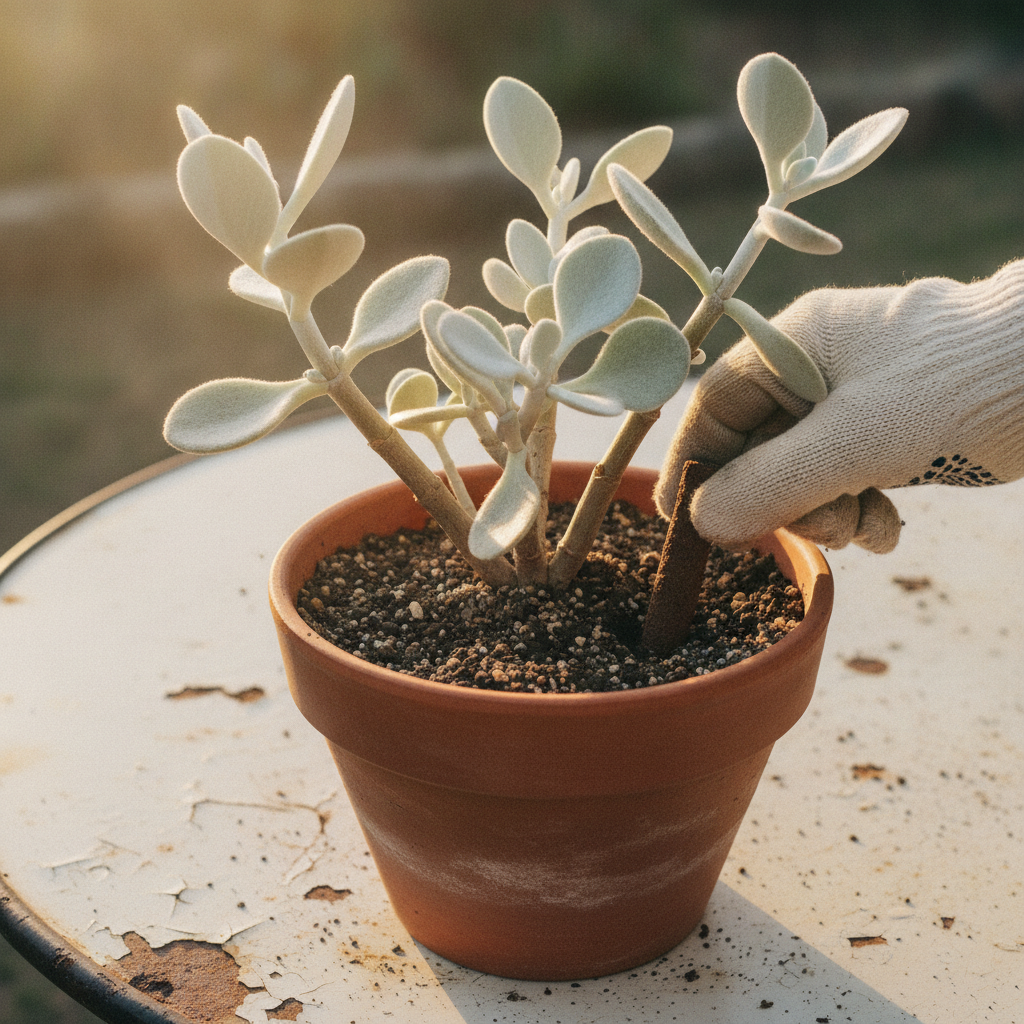
Understanding Plant Nutrients
Fertilisers are labelled with an N-P-K ratio describing the proportion of nitrogen, phosphorus and potassium they contain. For a succulent, a balanced or slightly low-nitrogen formula is preferable, because too much nitrogen drives lush, soft growth rather than the firm, sun-hardened tissue this plant should have. The table below summarises the nutrients that matter most and the signs of their deficiency.
| Nutrient | Symbol | Primary Function | Deficiency Symptoms |
|---|---|---|---|
| Nitrogen | N | Leaf and stem growth | Pale, slow, stunted overall growth |
| Phosphorus | P | Roots and flowering | Weak roots, poor or absent blooms |
| Potassium | K | Overall vigour and stress tolerance | Yellowing or browning leaf edges |
| Calcium | Ca | Cell wall strength | Distorted, weak new growth |
| Magnesium | Mg | Chlorophyll production | Yellowing between leaf veins |
Types of Fertiliser
Liquid fertilisers: A liquid succulent or cactus feed, diluted to half the recommended strength, is the easiest and most controllable option. You can apply it with a normal watering during the growing season and stop entirely the moment growth slows.
Slow-release granular: A small amount of slow-release granular feed worked into the mix at repotting can provide a gentle background supply across the season. Use sparingly, as it is easy to overdo with such a modest feeder.
Organic fertilisers: Diluted organic feeds such as a weak seaweed solution work well and are forgiving of slight over-application. They release nutrients slowly and are unlikely to scorch the roots, making them a safe choice for the cautious grower.
Feeding Schedule
Feed only during the active growing months of spring and summer, roughly once every four to six weeks, and never more than the plant clearly needs. From autumn through winter, stop feeding completely. The plant is resting then, and any nutrients it cannot use simply accumulate as salts in the soil, which can damage the roots over time.
Pro Tip — Always Feed at Half Strength: Succulents are easily burned by concentrated fertiliser, so dilute any feed to half or even a quarter of the dose on the label. With this plant it is far safer to give too little than too much; underfeeding shows only as slightly slower growth, while overfeeding can scorch roots and ruin the form.
How to Fertilise
- Water the plant lightly first if the mix is completely dry, so feed never hits parched roots.
- Dilute a succulent fertiliser to half the recommended strength in your watering can.
- Apply the solution to the soil at the next normal watering, avoiding the felted leaves.
- Let the pot drain fully and never leave it standing in fertiliser solution.
- Repeat only every four to six weeks through spring and summer, then stop for autumn and winter.
Warning — Salt Build-Up: Over months, fertiliser salts can accumulate in the mix and show as a white crust on the soil or pot rim, along with browning leaf tips. If you see this, flush the pot thoroughly with plain water several times to leach the salts out, and ease off the feeding.
Propagation
One of the great pleasures of the silver spoon kalanchoe is how readily it propagates. Like many kalanchoes, it roots with very little fuss from stem cuttings, and a single plant pruned to keep it compact will hand you a steady supply of new plants as a byproduct. Propagation is also the best remedy for a leggy specimen, letting you start fresh, bushy plants from the healthy tips.
The most dependable method is stem cuttings, which carry the plant’s branching habit and silver colour faithfully. Individual leaves can sometimes be rooted too, though stem cuttings are quicker and more reliable. Spring and summer, when the plant is in active growth, give the fastest and most consistent results.
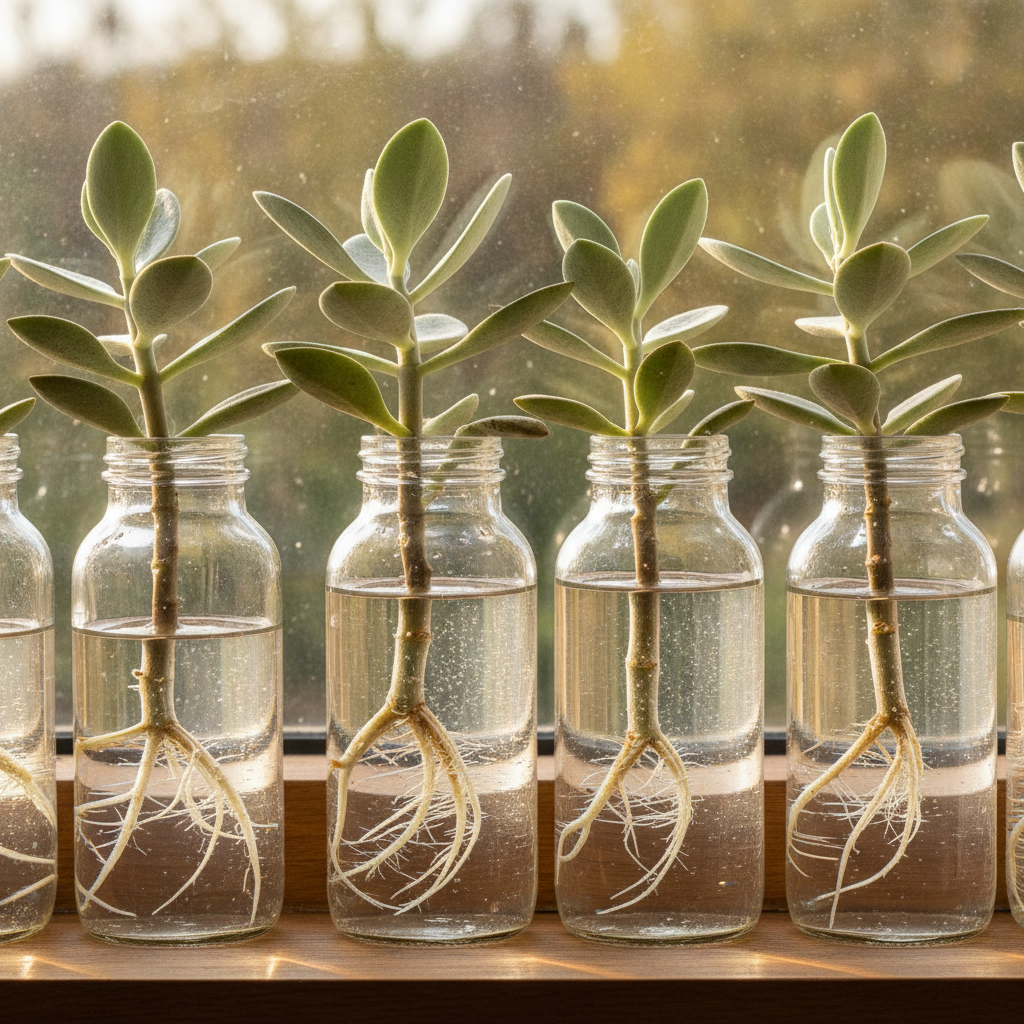
Understanding Nodes and Callusing
Two ideas make succulent propagation click. The first is the node, the point on the stem where leaves attach, which is where new roots most readily form; a cutting should always include at least one node below the leaves. The second is callusing, the process by which a fresh cut dries and seals over a day or two. Allowing a cutting to callus before planting is the single most important step in preventing it from rotting in the soil, because an open, wet wound is an invitation to fungus.
Stem Cuttings: Step-by-Step
This is the primary and most reliable method, ideal for both multiplying the plant and rejuvenating a stretched one.
- Using clean, sharp, sterilised scissors, cut a healthy stem tip 5 to 10 centimetres (2 to 4 inches) long, just below a node.
- Gently remove the lowest pair or two of leaves to expose a short length of bare stem with a node.
- Set the cutting aside in a dry, shaded, airy spot for one to three days until the cut end calluses over.
- Insert the calloused end into a small pot of barely moist gritty succulent mix, deep enough to stand upright.
- Place it in bright, indirect light and leave it dry for several days before the first light watering.
- Water sparingly thereafter, and expect roots to form within two to three weeks; a gentle tug that meets resistance confirms rooting.
Pro Tip — Take Several at Once: Cuttings are so easy and free that it pays to start three or four at a time. You can pot them up individually or cluster several in one pot for an instantly full, bushy plant, and the small surplus makes a perfect low-effort gift.
Leaf Cuttings: Step-by-Step
Leaf propagation is slower and less certain with this felted species than with smooth-leaved succulents, but it is worth trying if you have spare leaves from pruning.
- Gently twist off a whole, healthy leaf so it comes away cleanly with its base intact.
- Lay the leaf on a tray and let the broken end callus for a day or two.
- Rest the calloused leaf on top of, or barely into, a tray of gritty mix in bright, indirect light.
- Mist the soil surface only very lightly every few days, keeping the leaf itself dry.
- Watch for tiny roots and a small plantlet at the base over the following weeks, then pot up once established.
Troubleshooting Propagation
| Problem | Likely Cause | Solution |
|---|---|---|
| Cutting turns soft and black | Planted too wet or before callusing | Allow longer callusing and keep the mix barely moist |
| Cutting shrivels and dries up | Too dry or too much direct sun before rooting | Move to bright indirect light and water very lightly |
| No roots after several weeks | Too cold or low light slowing growth | Provide warmth and brighter light, and be patient |
| Leaf cutting fails to take | Felted leaves root less readily | Switch to stem cuttings for a far higher success rate |
Pests & Diseases
The silver spoon kalanchoe is a robust plant with few enemies, and most of the trouble it does encounter is rooted in overwatering rather than infestation. Its felted leaves are not especially attractive to many sap-sucking pests, but a handful can still take hold, particularly on a stressed or overcrowded plant. Good light, careful watering and airflow prevent the vast majority of problems before they start.
The single most useful habit is to look closely and regularly. Check the leaf axils, the undersides of leaves and the dense lower growth every week or two, ideally with a magnifier, so that any pest is caught while it is still a few individuals rather than a colony. Isolate any new plant for a couple of weeks before introducing it to your collection.
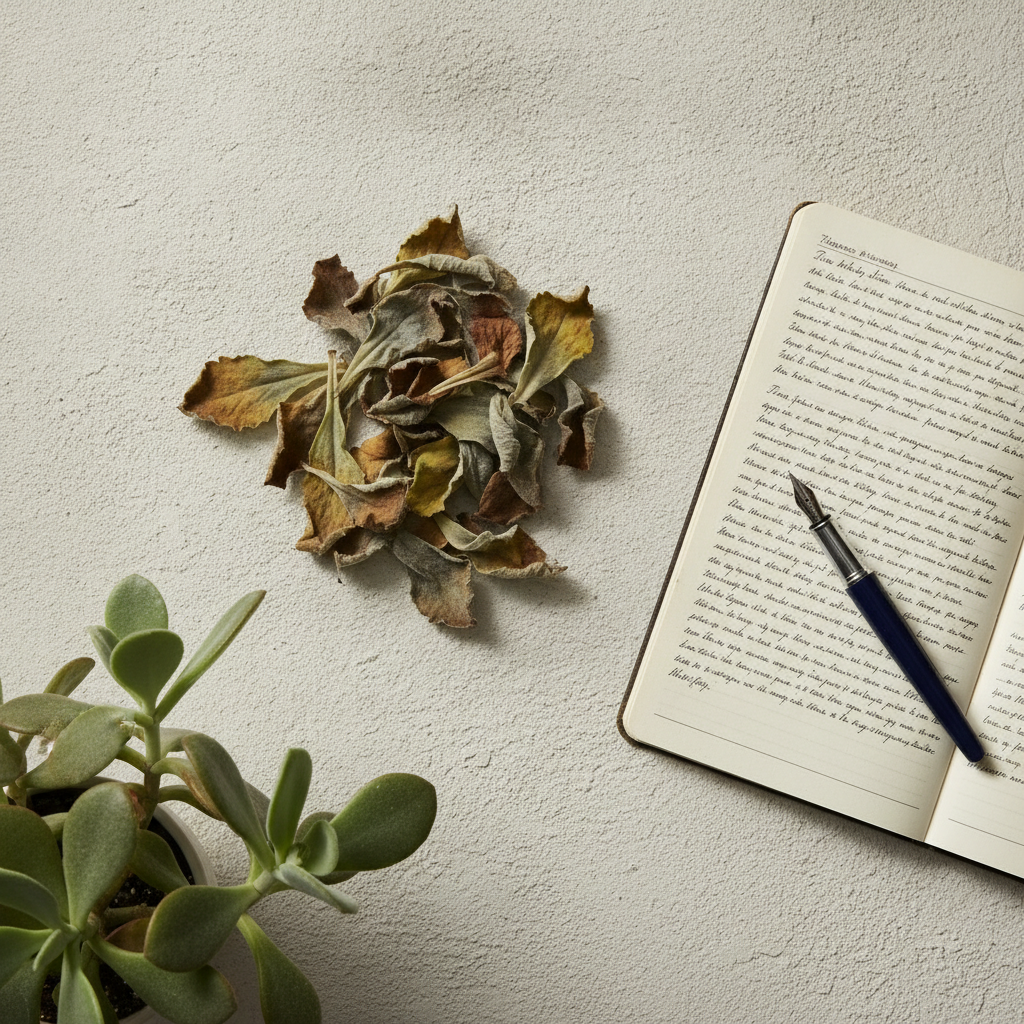
Common Pests
Mealybugs (Pseudococcus species)
Mealybugs are the most likely pest, appearing as small, white, cottony tufts tucked into leaf axils and the crevices of dense growth, where they suck sap and weaken the plant. Their waxy coat can be hard to spot against the silver felt, so look carefully.
Treatment: Dab each insect directly with a cotton bud soaked in isopropyl alcohol, which dissolves their protective coating on contact. For wider infestations, treat the whole plant with a succulent-safe insecticidal soap or diluted neem, and repeat weekly until clear.
Aphids (Aphidoidea)
Aphids are most likely to appear on soft new growth and on the flower stalks if the plant blooms, clustering in numbers and leaving sticky honeydew behind. They are usually green or black and visible to the naked eye.
Treatment: A firm rinse under the tap dislodges many of them, taking care to keep the felt as dry as possible afterwards. Follow up with insecticidal soap or neem on the affected tips, and remove any badly infested flower stalks.
Spider mites (Tetranychus urticae)
Spider mites thrive in hot, dry, stagnant conditions and are tiny, showing themselves first through fine stippling on the leaves and, in bad cases, faint webbing in the growth. They are easy to miss until numbers are high.
Treatment: Improve airflow, isolate the plant, and treat with neem oil or a miticide, repeating every few days to break the rapid breeding cycle. Wiping accessible leaves helps reduce the population directly.
Common Diseases
Root and stem rot (Pythium and Fusarium species)
By far the most serious threat to this plant, rot sets in when the roots or stem base stay wet, turning tissue soft, brown and foul-smelling. It can collapse a healthy-looking plant within days once it reaches the stem.
Treatment: Stop watering at once, unpot the plant, and cut away all soft, discoloured tissue with sterilised blades. Salvage firm top growth as cuttings, let everything callus, and replant into fresh dry gritty mix. Prevention through lean soil and restrained watering is far more effective than any cure.
Powdery mildew (Erysiphe species)
In damp, still, crowded conditions a dusty white fungal film can appear on the leaves, which is especially unwelcome on a plant whose felt can be mistaken for it at a glance. It spreads in stagnant air and high humidity.
Treatment: Improve ventilation immediately, remove the worst-affected leaves, and treat with a suitable fungicide if it persists. Keeping the air dry and moving is the best long-term defence.
Pest and Disease Summary
| Pest / Disease | Identification | Treatment |
|---|---|---|
| Mealybugs | White cottony tufts in leaf axils | Alcohol on a cotton bud, then insecticidal soap or neem |
| Aphids | Green or black clusters on new growth and flowers | Rinse off, then treat with soap or neem |
| Spider mites | Fine stippling and faint webbing | Improve airflow, apply neem or a miticide repeatedly |
| Root and stem rot | Soft, brown, smelly tissue at the base | Cut away rot, take cuttings, replant dry |
| Powdery mildew | Dusty white film on the leaves | Ventilate, remove leaves, apply fungicide |
Prevention Strategies
Prevention with this plant comes down to a handful of habits that reinforce one another. Bright light and restrained watering keep the plant firm and stress-free, and a stress-free succulent is far less inviting to pests and far less prone to rot. Good airflow around the foliage discourages both fungal disease and the mites that love still, dry corners.
Beyond the growing conditions, simple hygiene goes a long way. Quarantine new arrivals, use clean tools, remove fallen leaves and debris from the soil surface promptly, and inspect the plant regularly so that anything amiss is caught early. A healthy, well-sited silver spoon kalanchoe rarely troubles its owner at all.
Pro Tip — Spot-Treat With Alcohol: Keep a small bottle of isopropyl alcohol and a pack of cotton buds with your plants. The moment you see a single mealybug, a direct dab kills it instantly, and dealing with one insect today saves you from treating an infestation next month.
Popular Varieties
The silver spoon kalanchoe is grown above all for its silvery, felted foliage, and the plants you will encounter in cultivation vary more in habit and leaf shape than in dramatic colour breaks. Kalanchoe bracteata itself is the most common form sold, often under the names Silver Spoons or Silver Teaspoons, but it is closely related to and frequently confused with a small group of silver-leaved Madagascan kalanchoes that are worth knowing.
Because nursery labelling in this group is notoriously loose, two silver kalanchoes sold under the same name can look noticeably different, and plants are often distinguished by leaf width, branching habit and ultimate size rather than by formal cultivar names. The table and profiles below cover the forms you are most likely to meet.
| Variety | Leaf Appearance | Light Needs | Growth Rate | Availability |
|---|---|---|---|---|
| Silver Teaspoons (typical form) | Broad, rounded, heavily felted silver spoons | Very bright to full sun | Moderate | Common |
| Silver Tree form | Narrower, elongated silver leaves, tree-like habit | Very bright to full sun | Moderate | Occasional |
| Kalanchoe hildebrandtii | Small, very silver, dense shrubby growth | Very bright to full sun | Slow to moderate | Occasional |
| Kalanchoe pumila | Powdery silver-lilac toothed leaves, trailing | Bright light | Moderate | Specialist |
| Kalanchoe tomentosa | Fuzzy silver leaves with brown-tipped edges | Bright light | Slow | Common |
Featured Varieties
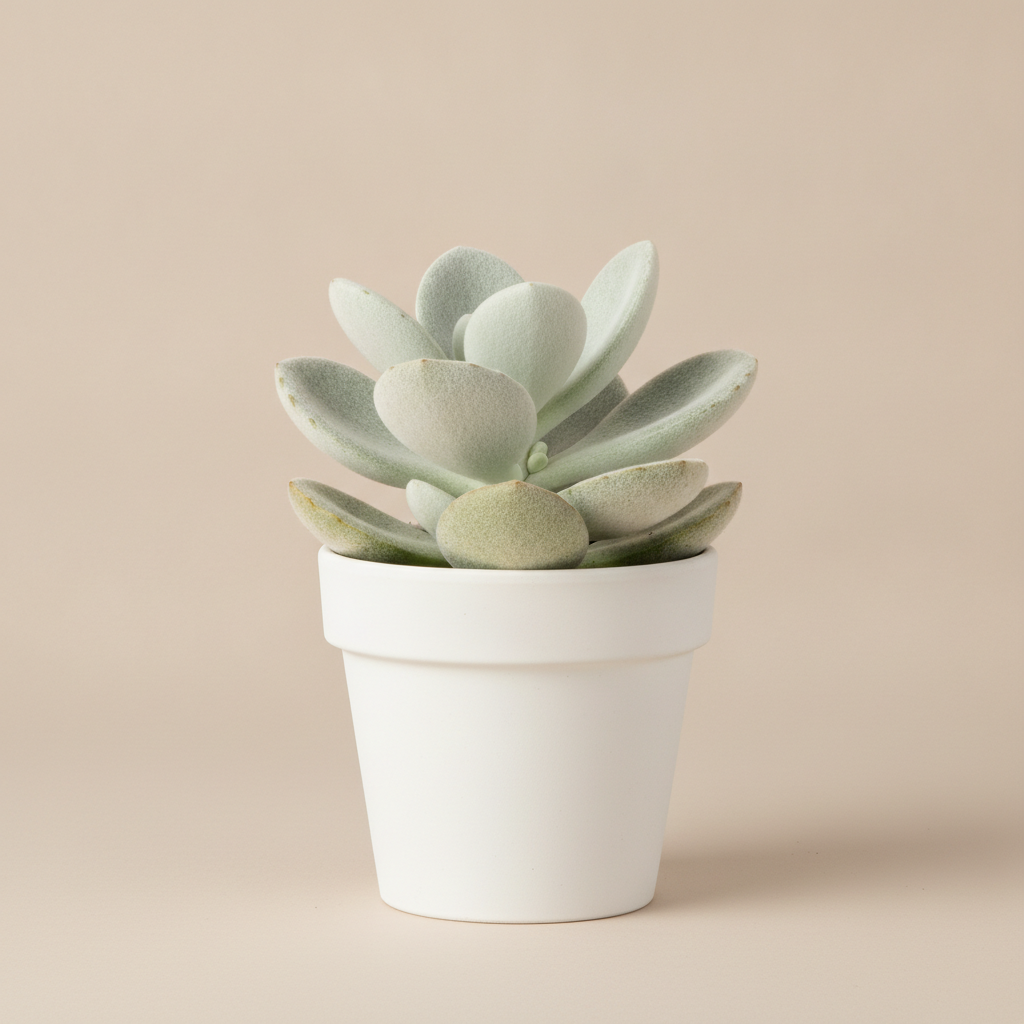
Silver Teaspoons
The classic, most widely sold form, with broad, rounded, deeply cupped leaves coated in a thick chalky silver-white felt. It builds into a tidy, compact shrublet and shows the brightest silver of the group when grown in full sun.
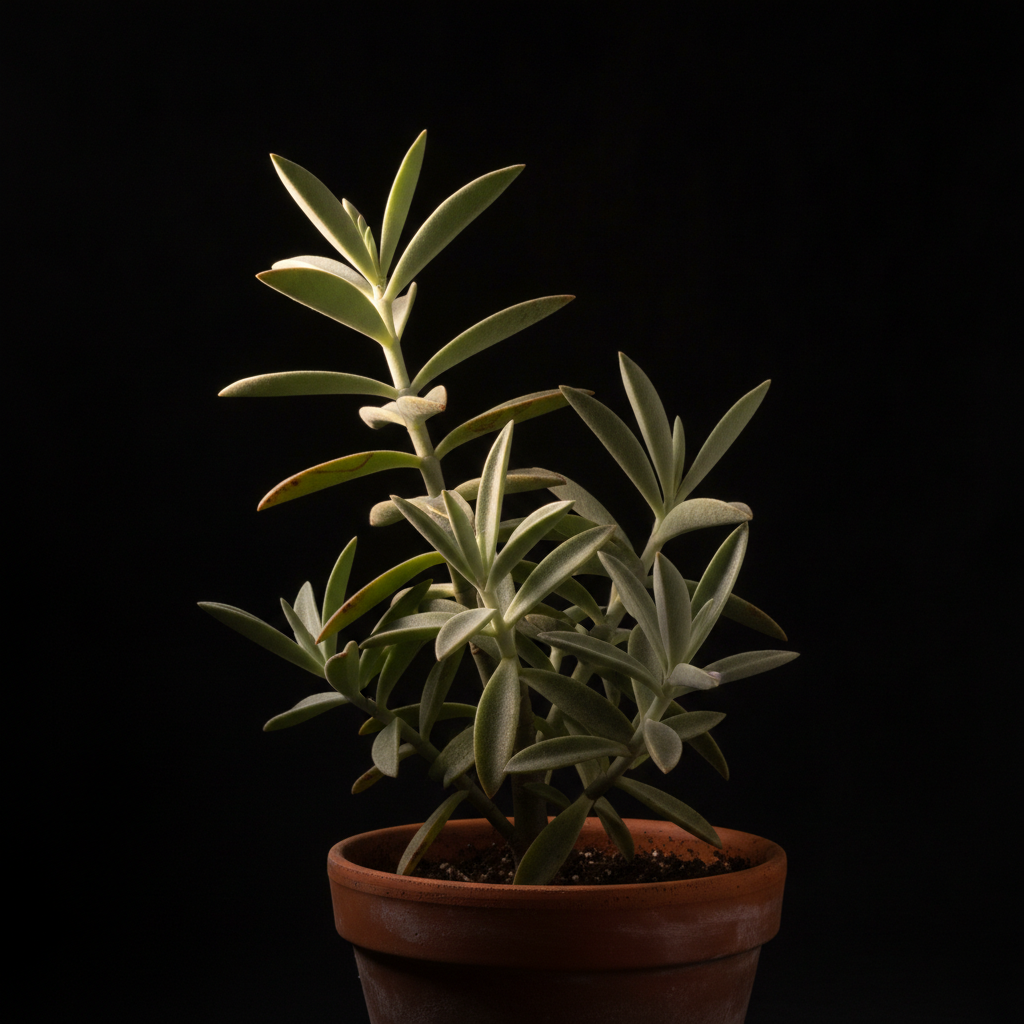
Silver Tree form
A taller, more upright expression with narrower, more elongated silver leaves and a branching, tree-like habit. The leaf edges often blush a faint bronze in strong light, and it makes an elegant, architectural specimen for a bright sill.
Variety Profiles in Detail
Silver Teaspoons (Kalanchoe bracteata)
The reference form of the species, prized for the density and brightness of its felt and for its naturally neat shape. Grown hard in full sun it stays squat and rounded, with leaf pairs packed close along the stem, and mature plants may eventually produce small, tubular orange to red flowers in winter or spring, though blooming is uncommon indoors.
Silver Tree Kalanchoe (Kalanchoe hildebrandtii)
A close relative so often sold under the same common names that the two are routinely muddled. It tends towards a more shrubby, tree-like structure with smaller, intensely silver leaves, and it responds to the same care, making it an easy companion or substitute for anyone drawn to the silvered look.
Panda Plant (Kalanchoe tomentosa)
Not the same species, but the silver-leaved kalanchoe most new growers already know. Its fuzzy, silvery leaves are edged with distinctive chocolate-brown teeth, and it shares the same love of bright light and gritty, fast-draining soil, so anyone succeeding with the silver spoon will find it easy too.
Choosing the Right Variety for Your Space
Whichever silver kalanchoe you choose, the deciding factor is the same: do you have a genuinely sunny window. All of these plants demand strong light to keep their compact form and luminous coat, so the brightest sill in the house is the place to start. If you have that, pick on habit and leaf shape, choosing the broad, rounded Silver Teaspoons for a classic look or the more upright Silver Tree form for height and structure. Without strong light, none of them will hold their character, and a different, lower-light plant would be the kinder choice.
Frequently Asked Questions
Why are my silver spoon kalanchoe’s leaves turning yellow and soft?
This is almost always overwatering. Soft, yellow or translucent leaves mean the roots are sitting in moisture they cannot use. Let the mix dry out completely, check that the pot drains freely, and if the stem base feels soft, unpot the plant to inspect the roots and take cuttings from any healthy growth.
Why is my plant stretching out and losing its silver colour?
Both symptoms point to too little light. The stems elongate, the leaf pairs spread apart, and new growth comes in greener and less felted when the plant is not getting enough sun. Move it to the brightest window you have, ideally a south or west exposure, or add a grow light, and prune back the leggy growth to encourage a more compact shape.
How often should I water it?
Only when the soil is completely dry, which in a bright, warm spot tends to mean roughly every two to three weeks in summer and as little as once a month or less in winter. Rather than counting days, test the mix with a finger or lift the pot to feel its weight, and water only when it is dry throughout and the pot feels light.
Should I mist my silver spoon kalanchoe?
No. This is a dry-air plant, and misting is actively harmful. Water trapped in the felted leaf surface is slow to dry and can cause spotting or rot, so keep the foliage dry and provide good airflow instead of humidity.
Is the silver spoon kalanchoe toxic to pets?
Yes. Like all kalanchoes, it contains cardiac glycosides that are toxic to cats and dogs and can cause vomiting, drooling and, in serious cases, heart problems if eaten. Keep it well out of reach of pets and children, and contact a vet or doctor if ingestion is suspected.
Will it flower indoors?
It can, though it is uncommon. Mature, well-grown plants may produce small, tubular orange to red flowers in winter or early spring, usually after a bright summer and a cool, dry, restful winter. Strong light and a touch of root crowding make blooming more likely, but most people grow this plant for its foliage rather than its flowers.
How do I make my plant bushier?
Pinch or prune the growing tips during spring and summer to encourage branching lower down, and make sure the plant has plenty of light so the new growth stays compact. The tips you remove can be calloused and rooted as cuttings, so a single pruning session both shapes the parent and gives you new plants.
Can I grow it outdoors?
In a warm, frost-free climate it makes an excellent outdoor succulent in full sun and sharply draining soil. In cooler regions it can spend the summer outside in a bright, sheltered spot but must come back indoors before temperatures fall, as it is not frost hardy and suffers below about 10 degrees C (50 degrees F).
Why are the lower leaves dropping off?
Occasional loss of the oldest, lowest leaves is normal as the plant grows and the stems lengthen. If leaf drop is sudden or widespread, suspect a watering problem, either too much, causing rot, or a long spell of drought, and check the soil and roots. Sustained low light will also cause the plant to shed lower leaves as it stretches towards the window.






