
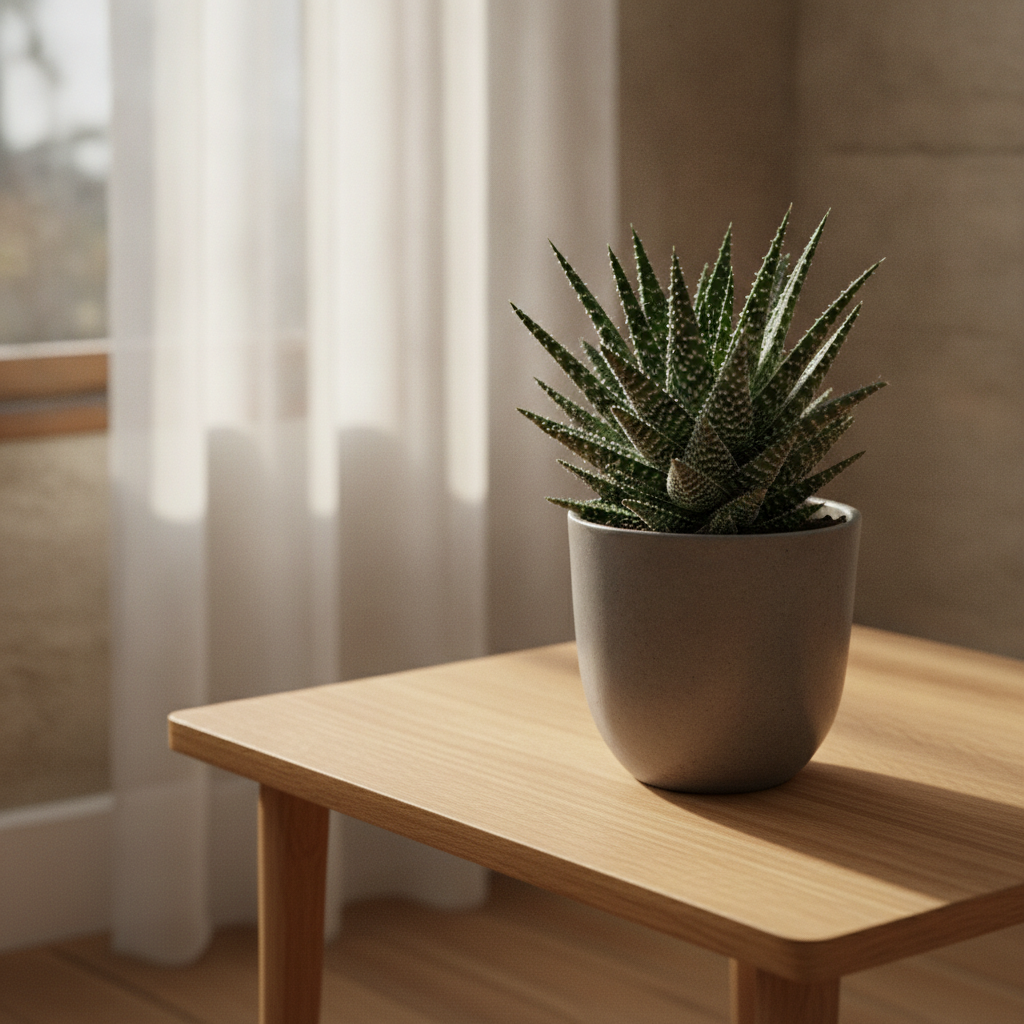
Few succulents pack as much fine detail into so small a footprint as the lace aloe. Barely larger than a coffee mug at maturity, Aristaloe aristata wraps a tight, geometric rosette in soft white teeth and raised pearly spots that read almost like beadwork from across a room. It is one of the toughest, most forgiving members of the wider aloe family, shrugging off cold that would flatten most of its tropical cousins and offsetting freely into generous clumps. For anyone who wants the architectural appeal of a succulent without the size, the spines, or the fuss, this is one of the most rewarding plants you can keep on a sunny sill.
This guide covers everything you need to take a lace aloe from merely surviving to genuinely thriving: the light it craves, the soak-and-dry watering rhythm that keeps its roots alive, the gritty soil it depends on, and the simple division that turns one plant into a windowsill full. Latin names appear in italics throughout, measurements are given in metric first with imperial in brackets, and temperatures in Celsius with Fahrenheit alongside.
- Quick reference
- Why grow a lace aloe
- Light
- Watering
- Soil and potting
- Fertilising
- Propagation
- Pests and problems
- Varieties
- Frequently asked questions
Quick reference
Use the table below as an at-a-glance summary, then read the relevant sections for the detail behind each figure. The lace aloe is genuinely beginner-friendly, but almost every problem it suffers traces back to a single cause: too much water held against its roots.
| Common names | Lace aloe, guinea-fowl aloe, torch plant, hardy aloe |
| Botanical name | Aristaloe aristata (formerly Aloe aristata) |
| Family | Asphodelaceae |
| Native range | Mountain grasslands of South Africa and Lesotho |
| Light | Bright indirect light with some direct sun; 4 to 6 hours of gentle sun ideal |
| Water | Soak thoroughly, then let the soil dry out completely; roughly every 2 to 3 weeks in growth |
| Soil | Free-draining cactus and succulent mix with added grit or pumice |
| Temperature | 18 to 24 C (64 to 75 F); hardy briefly to about -7 C (19 F) |
| Humidity | Low to average; no misting needed |
| Feeding | Dilute succulent feed once or twice across spring and summer |
| Mature size | Rosette 10 to 15 cm (4 to 6 in) tall, clumps spreading to 30 cm (12 in) or more |
| Toxicity | Mildly toxic if eaten; best kept away from pets that chew |
| Difficulty | Easy |
Why grow a lace aloe
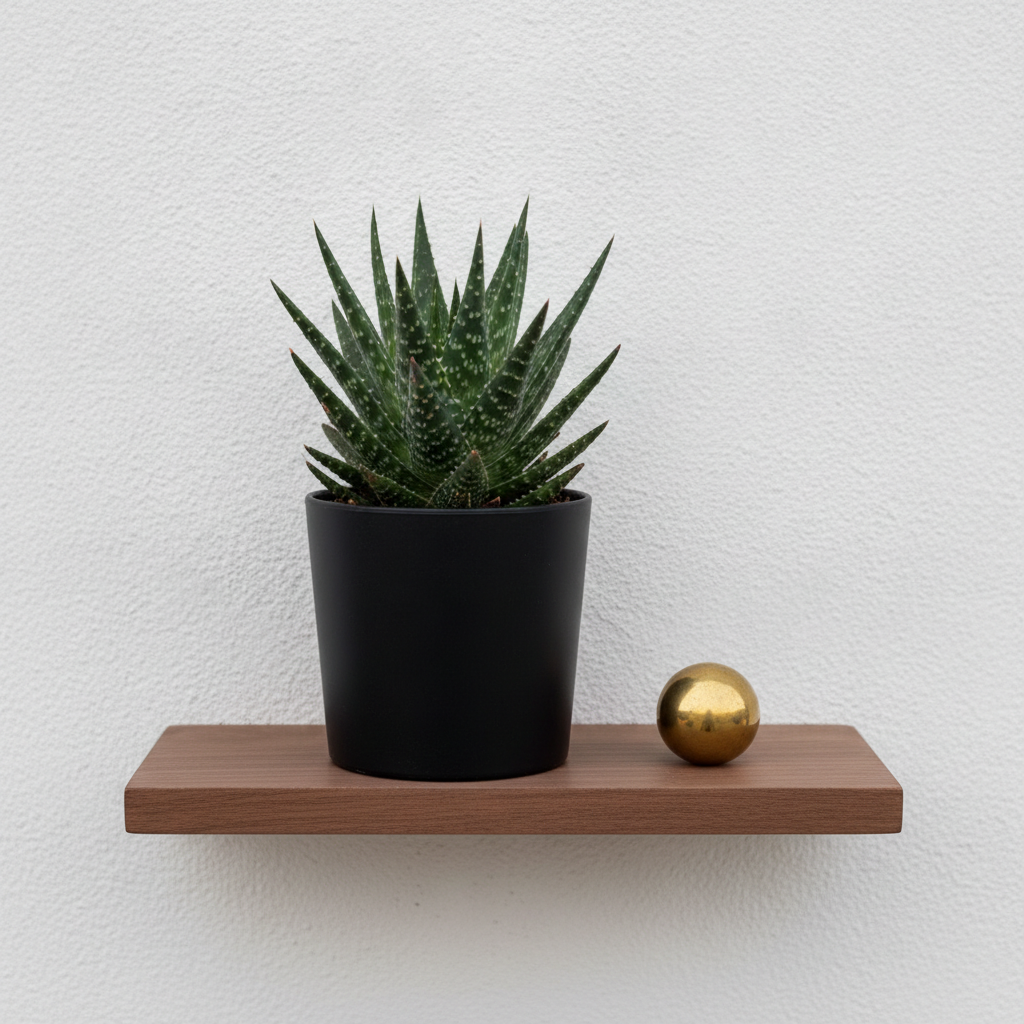
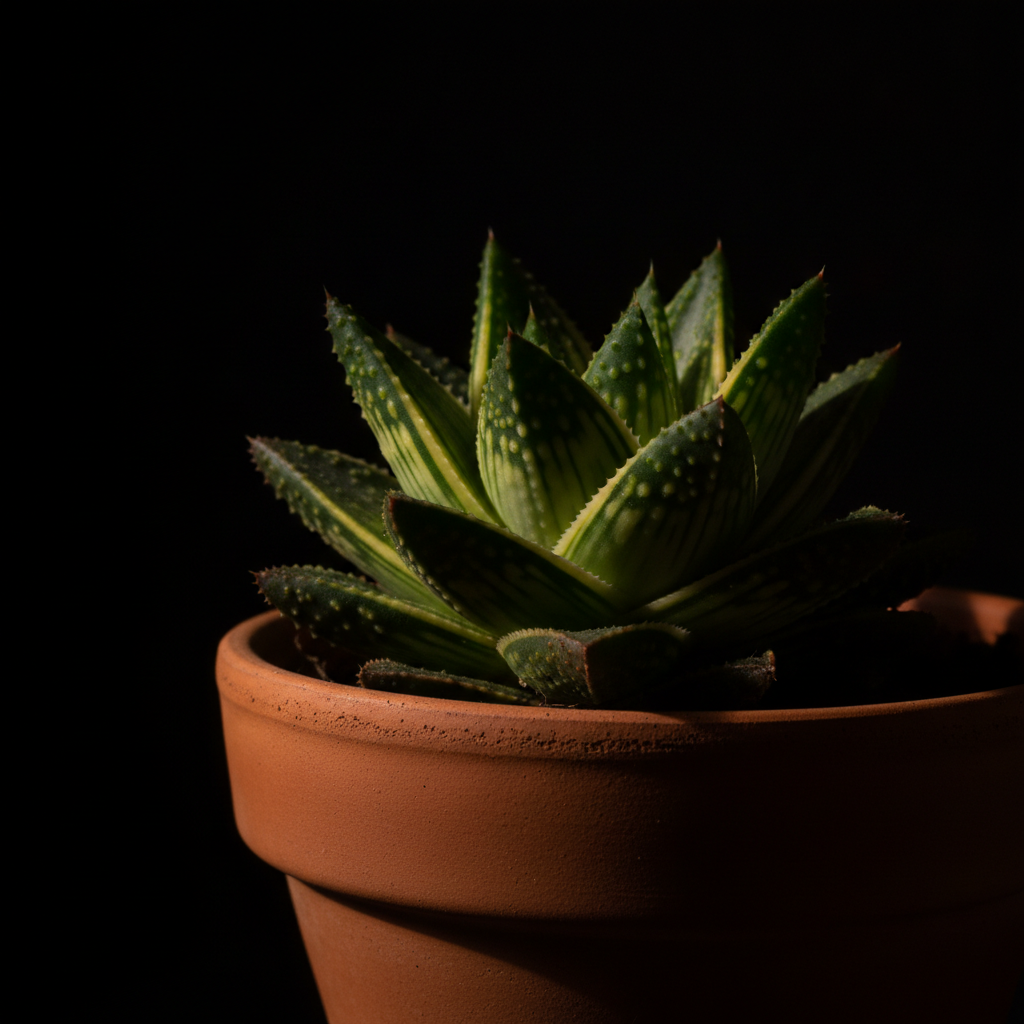
The lace aloe earns its place on three counts: looks, toughness, and generosity. The rosette is densely packed with slender, incurved triangular leaves of deep matte green, each one studded with raised white tubercles and fringed with soft, harmless white teeth. The leaf tips taper to a fine, thread-like bristle, the awn that gives the species its name (aristata means bearing an awn). In good light the whole plant takes on a faint reddish or bronze flush, throwing the white markings into sharper relief.
Botanically it has had a slightly tangled history. For most of the twentieth century it was filed under Aloe as Aloe aristata, but genetic work published in 2014 placed it in its own monotypic genus, Aristaloe, sitting between the true aloes and the closely related gasterias. That last relationship matters to growers, because the lace aloe hybridises readily with Gasteria to produce a popular range of intergeneric crosses sold under the name x Gasteraloe. The plant is the only species in its genus, so every lace aloe you meet, however it is labelled, is essentially the same species with cosmetic variation.
Its real party trick is cold tolerance. Native to the high grasslands of South Africa and Lesotho, where it grows among rocks and tussock grass at altitude, it endures frost, snow, and seasonal drought that would kill a tropical houseplant outright. Established plants survive brief dips to around -7 C (19 F), which makes the lace aloe one of the few aloes that can spend the year outdoors in temperate gardens with sharp drainage and winter shelter. Indoors, that same resilience translates into a plant that forgives a cold windowsill, a missed watering, or a holiday away.
Finally, it is generous. A healthy lace aloe offsets enthusiastically, ringing the parent rosette with pups that can be separated and potted on. Within a couple of seasons a single plant becomes a tight colony, and in summer mature rosettes send up a branched flower spike 30 to 50 cm (12 to 20 in) tall carrying tubular orange-red blooms that draw sunbirds in the wild and the occasional curious pollinator on a balcony.
Light
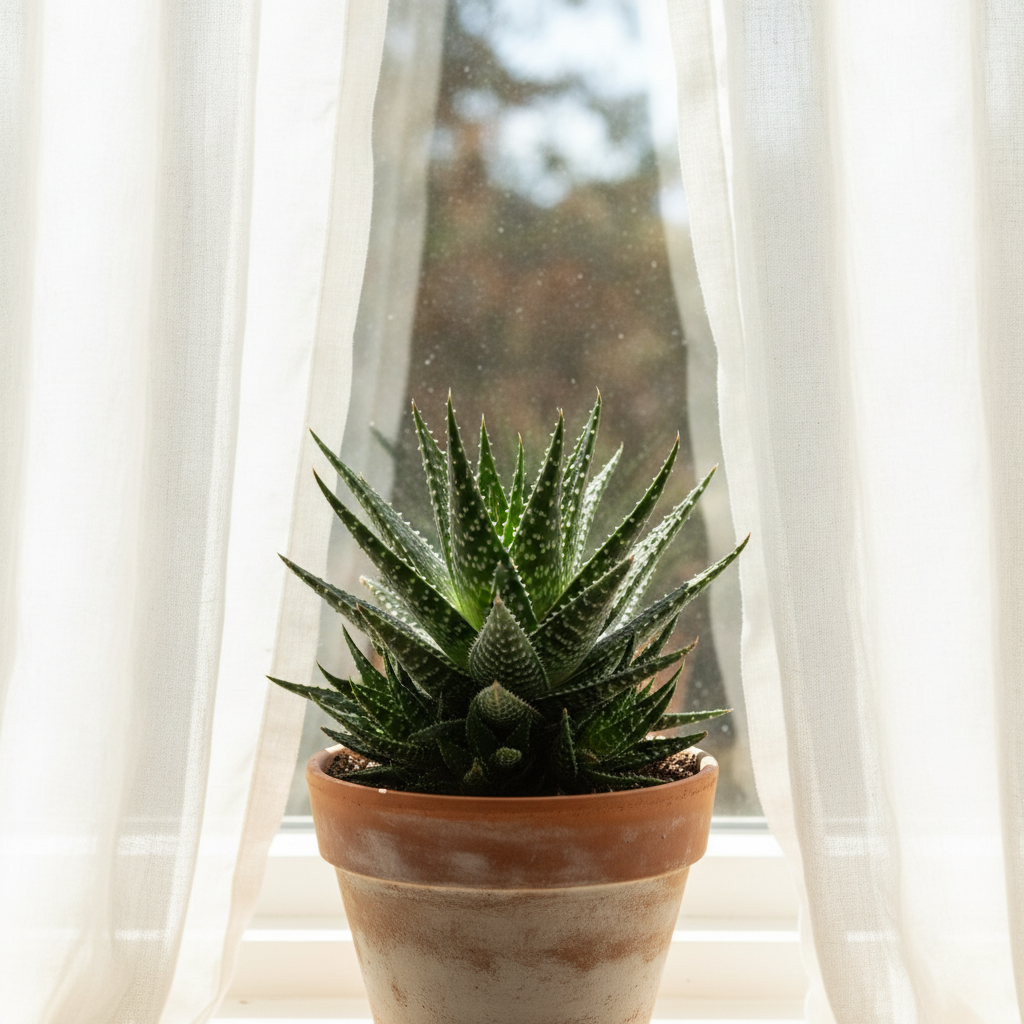
Light is where the difference between surviving and thriving shows most clearly on a lace aloe. The plant will stay alive in a moderately lit room, but it will not stay handsome. Given too little light it stretches, the once-flat rosette opening up and reaching, the leaves lengthening and losing their tight packing, and the contrast between green leaf and white tubercle fading. This stretching, known as etiolation, cannot be reversed once it happens; new growth has to grow back into shape under brighter conditions.
The sweet spot is bright light with a few hours of gentle direct sun each day. An east-facing windowsill that catches the cooler morning sun is close to ideal, as is a south or west window where the plant can sit just back from the glass or behind a light sheer curtain. Four to six hours of soft direct sun keeps the rosette compact and brings out the faint red stress colour at the leaf margins that many growers prize. Unlike many delicate aroids, the lace aloe genuinely wants this brightness rather than merely tolerating it.
There is a limit, though. Intense, unfiltered summer sun through glass, especially scorching afternoon light, can bleach or scald the leaves, leaving permanent pale or brown patches. A plant moved abruptly from a dim shop shelf into full sun will often burn, so acclimatise it over a week or two, increasing exposure gradually. If you grow yours outdoors in summer, give it the brightest position you can in cooler climates, but offer dappled afternoon shade where summers are hot and the midday sun fierce. In a genuinely dark spot, supplement with a full-spectrum LED grow light for ten to twelve hours a day to keep the rosette tight.
Pro Tip – Read the rosette: A flat, dense rosette with leaves curving slightly inward means the light is right. Leaves elongating and the centre opening up like a loosening flower is the first sign your aloe wants to move closer to the window.
Watering
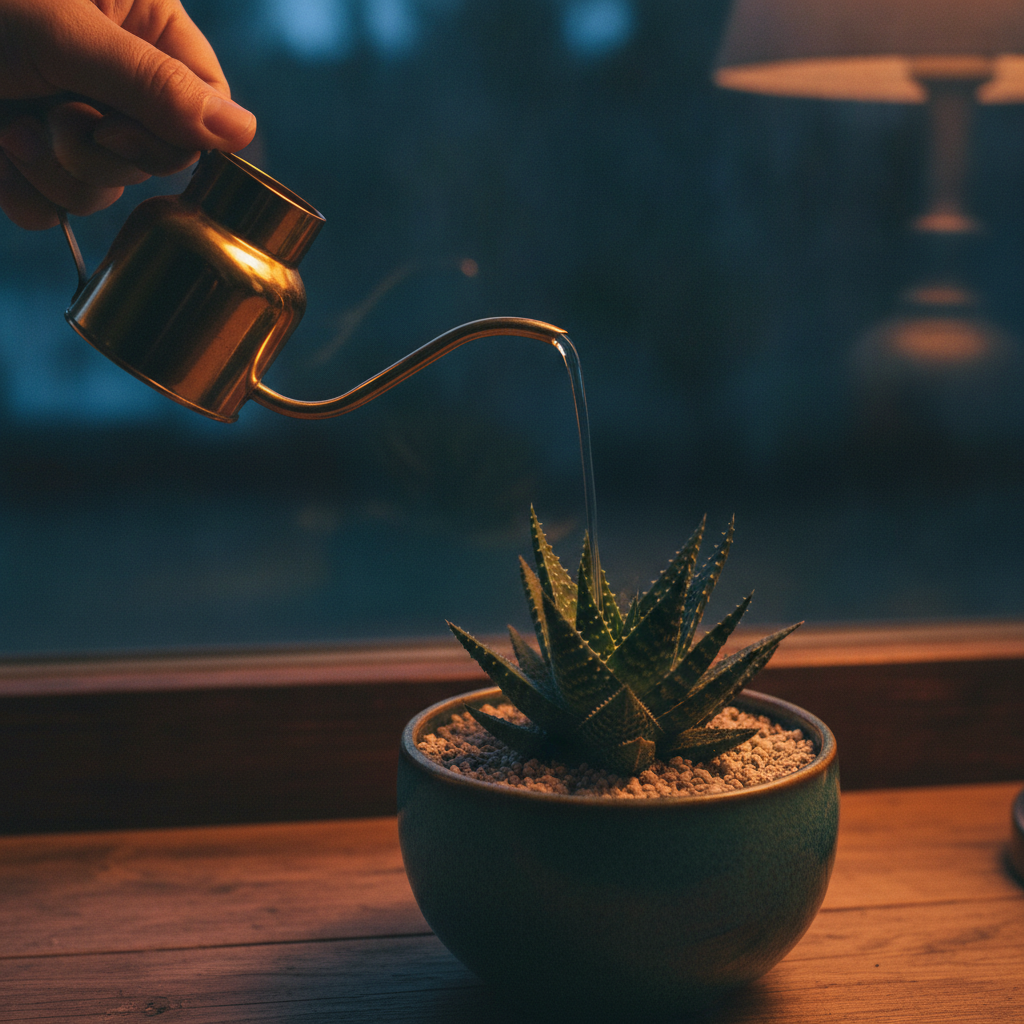
If you remember one thing about the lace aloe, make it this: more plants die from kindness at the watering can than from neglect. As a succulent adapted to dry, rocky grassland, it stores water in its fleshy leaves and expects long gaps between drinks. The method that suits it is the classic soak and dry. When the potting mix has dried out all the way through, water generously until liquid runs from the drainage holes, then empty the saucer and do not water again until the soil is dry once more.
In practice that means roughly every two to three weeks during the warmer growing months, though the only reliable guide is the soil itself rather than the calendar. Push a finger or a wooden skewer into the mix; if it comes out with damp soil clinging to it, wait. A pot that feels heavy still holds water. Factors like pot size, material, light, and the warmth of the room all change the pace, so check before every watering rather than committing to a fixed schedule.
Through autumn and winter the plant slows down and needs far less. Water only enough to keep the leaves from shrivelling, perhaps once every four to six weeks, and even less if it sits somewhere cold. A lace aloe kept cool and nearly dry through winter is far happier, and far more likely to flower, than one kept warm and watered. Try to water in the morning so any stray moisture evaporates through the day, and aim the spout at the soil rather than into the centre of the rosette. Water that pools in the crown can sit and trigger rot, particularly in cool weather.
The warning signs of trouble are worth knowing. Overwatering shows up as soft, translucent, yellowing leaves, a mushy base, or a rosette that suddenly topples because the roots beneath have rotted away. Underwatering, by contrast, produces leaves that wrinkle, thin, and curl inward, a far gentler problem that a good soak quickly reverses. When in doubt, stay dry: a thirsty lace aloe recovers in days, while a waterlogged one often cannot be saved.
Warning – Never leave it standing in water: A saucer left full after watering is the single most common cause of root rot in succulents. Tip away any excess within half an hour, and never use a pot without a drainage hole.
Soil and potting
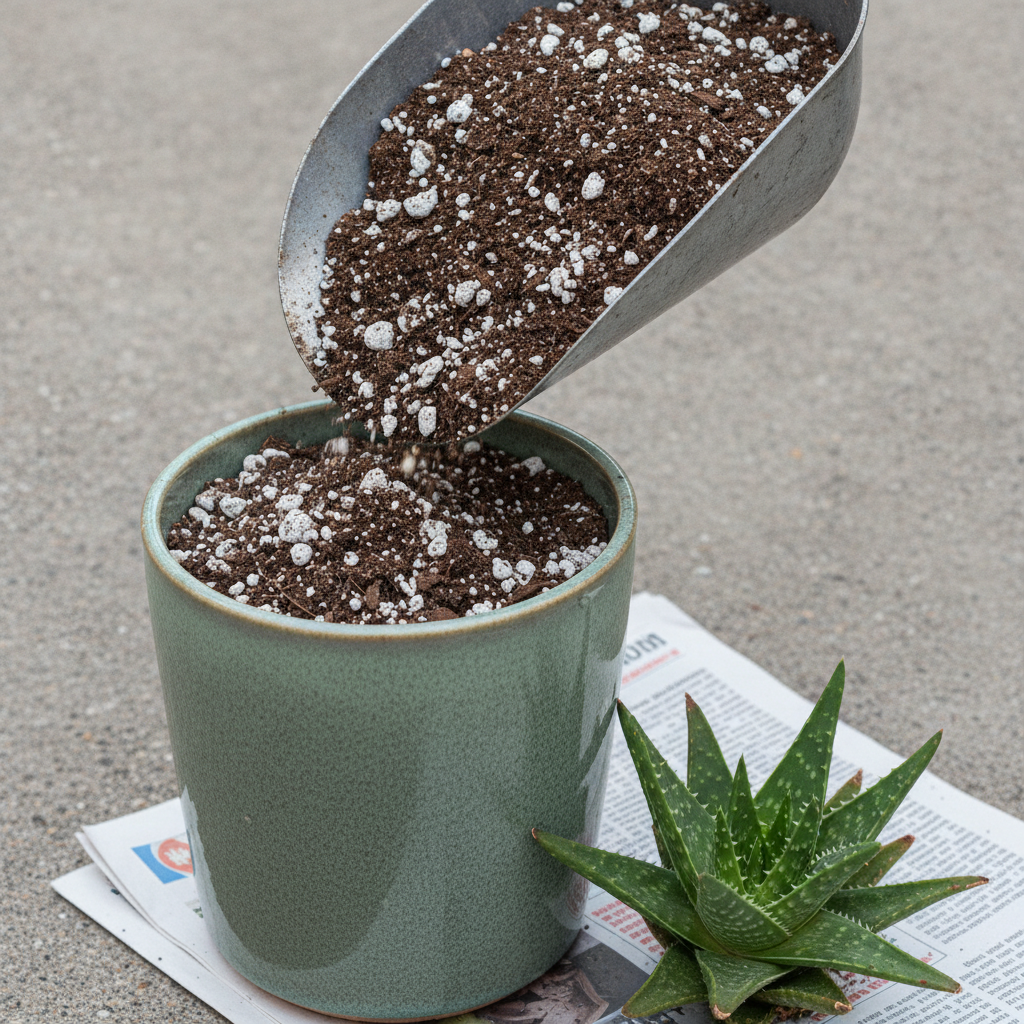
Drainage is everything for this plant, and it starts with the soil. The lace aloe needs a gritty, open mix that lets water rush through and air reach the roots between waterings. A bag of ready-made cactus and succulent compost is a sound base, but most are still a little too water-retentive on their own. Improve them by cutting in extra mineral grit: aim for roughly one part coarse material such as pumice, perlite, or horticultural grit to two parts succulent compost. The finished mix should feel chunky and loose, never dense or peaty.
The pot matters as much as the medium. Always choose one with a drainage hole, and consider unglazed terracotta, which is porous and wicks moisture out of the soil, helping the mix dry faster and giving you a useful margin for error if you tend to overwater. Because the lace aloe has a relatively shallow, fibrous root system and clumps slowly from the edges, it actually prefers to be a little snug in its pot rather than swimming in a large one. A too-big pot holds a reservoir of damp soil around roots that cannot use it, which invites rot. Pick a pot only slightly wider than the rosette and its ring of pups.
Repot only every two to three years, or when the clump has visibly filled the pot and is pushing offsets over the rim. Spring is the best time, at the start of active growth. Lift the plant, gently tease away the old spent soil from the roots, inspect for any soft or blackened sections and trim them off with clean scissors, and settle the plant into fresh dry mix at the same depth it sat before. Resist the urge to water straight away. Waiting four to seven days after repotting lets any roots nicked in the process callous over, sharply reducing the risk of rot taking hold in the fresh, moist soil.
Fertilising

The lace aloe is a light feeder by nature, evolved for the thin, mineral soils of mountain grassland where rich nutrition simply is not on offer. It does not need much, and overfeeding does more harm than good, pushing soft, weak growth that is prone to rot and pests and dulling the compact form that makes the plant attractive. Treat fertiliser as an occasional boost rather than a routine.
A balanced fertiliser formulated for cacti and succulents, which is typically low in nitrogen, is the safest choice. Dilute a liquid feed to half the strength recommended on the label and apply it just once or twice across the whole growing season, for example once in mid-spring and again in early summer. Always feed onto already-moist soil rather than a bone-dry rootball, as concentrated nutrients drawn into dry roots can scorch them. Alternatively, a small scatter of slow-release succulent granules worked into the soil surface in spring will quietly cover the plant’s modest needs for the season.
Stop feeding entirely from late summer onward. The plant is winding down for its winter rest, and fertiliser applied to a dormant or near-dormant aloe simply accumulates in the soil as unused salts, which can build up and damage the roots. If you have repotted into fresh mix in spring, you can skip feeding for that year altogether, since new compost carries enough nutrition to see the plant comfortably through the season.
Propagation
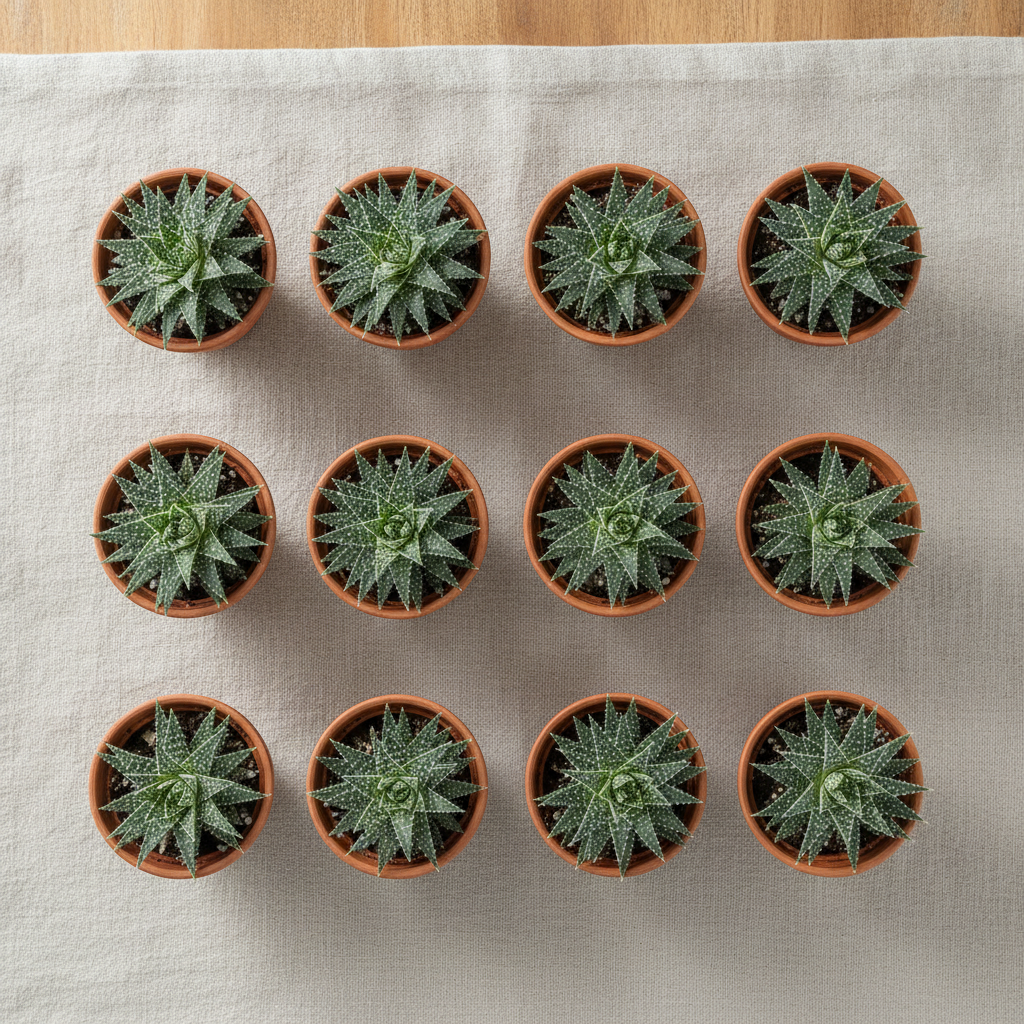
Propagating a lace aloe is refreshingly simple, because the plant does most of the work for you. A healthy specimen rings itself with offsets, small clones known as pups that emerge from the base of the parent and around its roots. Separating these is the fastest, most reliable route to new plants, and it doubles as a way to keep a crowded clump tidy. It is worth being clear about one method that does not work: unlike echeverias and many other succulents, aloes cannot be grown from a single detached leaf. A leaf cutting will simply shrivel or rot rather than root, so do not waste time on it. Stick to offsets, division, or seed.
To propagate from offsets, follow these steps in spring or early summer, when the plant is in active growth and recovers quickest:
- Slide the whole plant out of its pot and brush the soil away from the base so you can see where each pup connects to the parent and whether it has formed its own roots.
- Separate a pup by gently pulling it away from the parent, or by cutting the connecting tissue with a clean, sharp knife. Choose offsets that are at least a few centimetres across and ideally already carry a few roots of their own.
- Leave the separated pups somewhere dry and shaded for two to three days so the cut surfaces callous over. This skin-over step is the key to preventing rot once they are planted.
- Pot each pup into a small container of the same gritty succulent mix, planting it just deep enough to stand upright. A snug pot suits them best.
- Wait about a week before the first light watering, then care for the young plants exactly as you would an adult, keeping them in bright light and letting the soil dry between drinks.
Division works on the same principle for a mature clump that has grown into several connected rosettes: unpot it, separate the crowns by hand or with a clean blade so each piece keeps a share of roots, let the cuts dry, and replant. Growing from seed is also possible but slow and mainly of interest to collectors, since seedlings take several years to reach a presentable size and hybrids will not come true. For almost everyone, the steady supply of pups is all the propagation a lace aloe will ever need.
Pests and problems
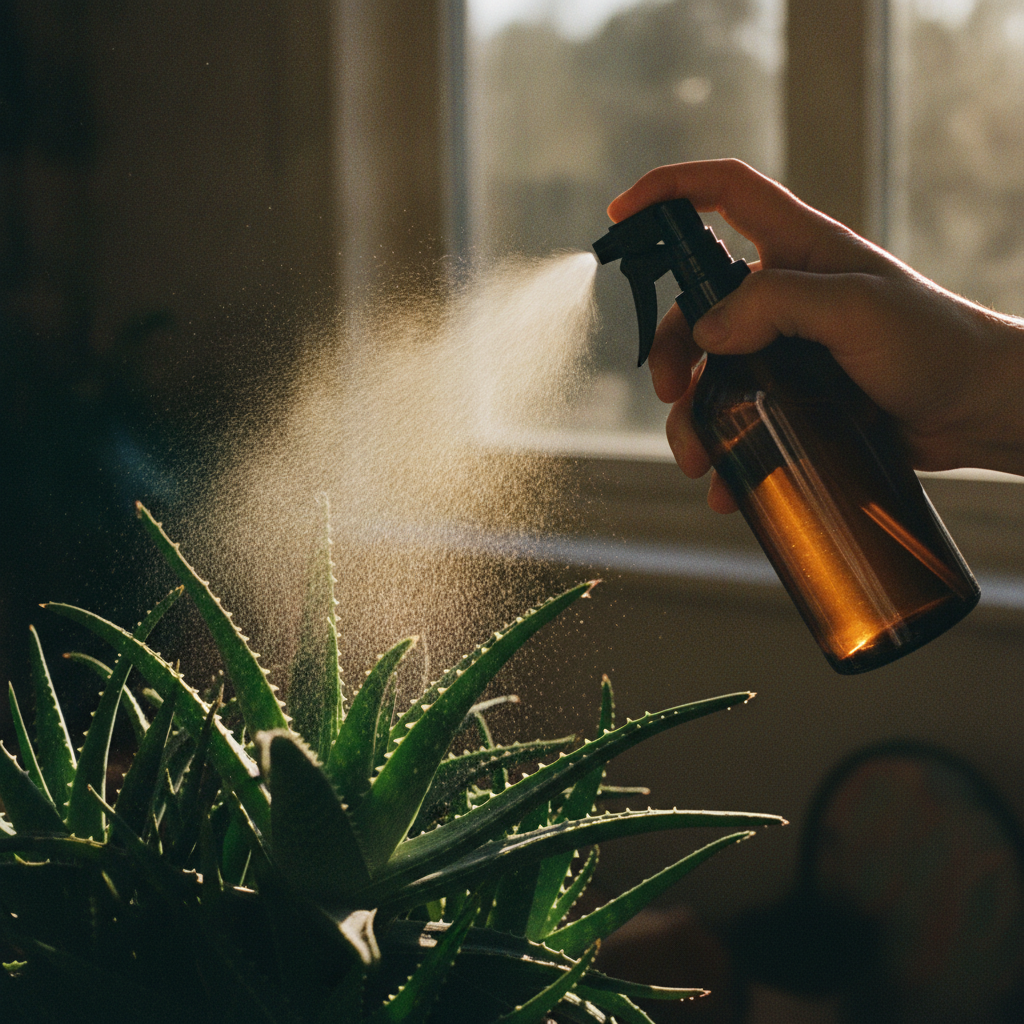
A well-grown lace aloe is robust and rarely troubled, but a handful of pests and problems are worth recognising early. By far the most common nuisance is the mealybug, a small sap-sucking insect that looks like a speck of white cotton wool and likes to hide in the tight angles where leaves meet the centre of the rosette. Left alone they multiply and weaken the plant. Dab them off with a cotton bud dipped in diluted isopropyl alcohol, or wipe the rosette over with a soft brush, and follow up with a neem oil spray every week or two until they are gone. A particularly insidious relative, the root mealybug, lurks unseen in the soil and shows up as white deposits on the roots when you repot, so check the rootball whenever a plant looks inexplicably unhappy.
Scale insects, which appear as small brown limpet-like bumps on the leaves, and the occasional aphid clustering on a flower stalk are the other pests you may meet, and both respond to the same treatment of physical removal followed by neem oil or an insecticidal soap. Fungus gnats, the small black flies that hover around the soil, are a symptom rather than a cause: they breed in soil kept too wet, so the fix is to let the mix dry out more thoroughly between waterings rather than to chase the flies themselves.
The most serious threat by far is not an insect at all but rot, almost always brought on by overwatering or poor drainage. Root rot creeps up unseen until the plant suddenly goes soft at the base, the lower leaves turn yellow and translucent, and the whole rosette can be lifted away from dead roots. If you catch it early, your best hope is to unpot the plant, cut away every soft or blackened part back to firm, healthy tissue, let the remaining crown dry for several days, and replant it in fresh dry mix, treating it as a fresh cutting. Crown rot, where the centre of the rosette collapses after water has sat in it, follows the same prevention rule: water at the soil, not over the leaves, and keep the plant on the dry side in cool weather. Cosmetic issues such as a faded, stretched rosette point to insufficient light, while brown scorched patches point to too much sudden sun, both covered in the light section above.
Varieties
Because Aristaloe aristata is the only species in its genus, there is far less cultivar variation than you would find among the true aloes. What variation exists is mostly down to a striking variegated form and to the intergeneric hybrids it forms with its close cousin Gasteria. The two cards below show the forms you are most likely to encounter for sale.
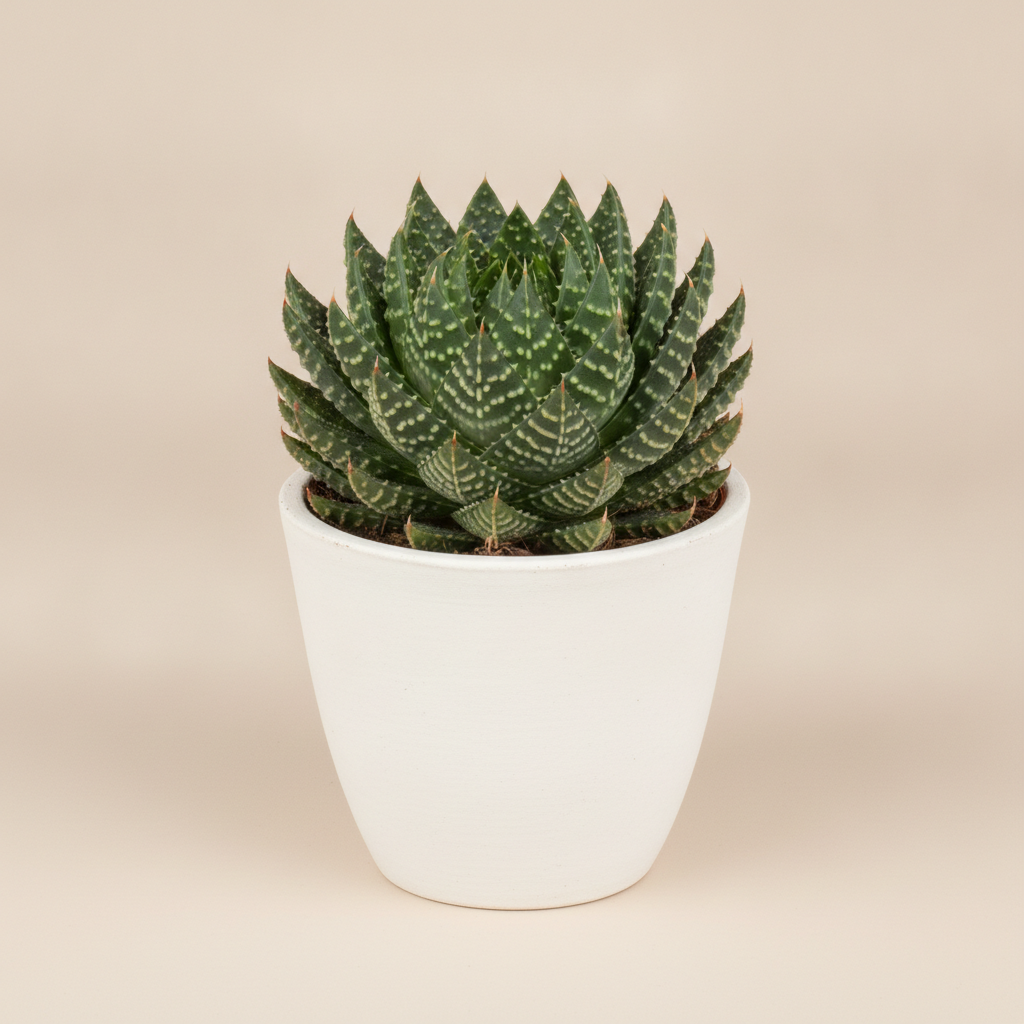
Standard Lace Aloe
The species in its classic form: a tight, stemless rosette of dark green incurved leaves densely studded with white pearly tubercles, edged with soft white teeth and tipped with a fine thread-like awn. It clumps freely, flowers reliably in summer, and is the toughest and most cold-hardy of all the forms. This is the plant most often sold simply as lace aloe or torch plant.
Variegated Lace Aloe
A sought-after sport carrying the same tuberculate rosette but with bold longitudinal cream-yellow striping running through each dark green leaf. The variegation reduces the leaf’s working green tissue, so this form grows a little slower and appreciates bright but slightly gentler light to avoid scorching the pale stripes. Otherwise its care is identical to the standard plant.
Beyond these, look out for the intergeneric hybrids sold as x Gasteraloe, such as the popular ‘Green Ice’, which cross the lace aloe with a gasteria to give thicker, smoother leaves while keeping the easy temperament. They are grown exactly as a lace aloe and are well worth seeking out if you enjoy the form but want a little more variety on the shelf.
Frequently asked questions
Is the lace aloe safe for cats and dogs?
It is best treated as mildly toxic. Like its aloe relatives, the lace aloe contains compounds that can cause stomach upset, drooling, or vomiting if a pet chews and swallows a quantity of leaf, so place it somewhere out of reach of animals that nibble houseplants. It is not among the most dangerous plants you can keep, but it is not a plant to let a curious cat graze on either. If you suspect your pet has eaten a significant amount, contact your vet.
Why is my lace aloe turning brown or red?
A gentle red, bronze, or purple flush across the leaves is usually a healthy stress response to strong light or cooler temperatures, and many growers actively encourage it because it deepens the contrast with the white markings. Hard brown scorched patches, on the other hand, are sunburn from too much sudden direct sun, while brown, dry, crispy leaf tips often point to underwatering. Brown that comes with softness and mush at the base is rot from overwatering and needs urgent attention.
How often should I water a lace aloe?
There is no fixed schedule that fits every home, because the right frequency depends on light, warmth, pot size, and season. As a rough guide, expect to water roughly every two to three weeks in spring and summer and far less in winter, but always let the soil dry out completely before watering again and check it with a finger or skewer rather than relying on the calendar. When unsure, wait: this plant tolerates drought far better than excess.
Will my lace aloe flower indoors?
Yes, mature plants flower readily, sending up a branched spike of tubular orange-red blooms in summer. The most reliable way to encourage flowering is to give the plant a cool, dry, bright rest through winter, mimicking the seasonal conditions of its mountain home. A plant kept warm and watered year-round may stay healthy but is much less likely to bloom.
Can a lace aloe live outdoors?
In many climates, yes. The lace aloe is one of the most cold-hardy aloes, surviving brief frosts down to about -7 C (19 F) once established, provided it has very sharp drainage and is not left sitting in cold, wet soil over winter. In mild regions it can be grown permanently outdoors in a gritty bed or rockery; in colder areas, grow it in a pot that can summer outside and move indoors before hard frost. Wet cold, not cold alone, is what kills it.
Why is my lace aloe stretching and looking flat-leaved?
Stretching, where the rosette opens up and the leaves lengthen and lose their tight, inward curve, is etiolation caused by too little light. The plant is reaching toward the nearest light source. Move it to a brighter spot with some direct sun, and although the stretched growth will not tighten back up, new growth will form a denser rosette under better conditions. The reshaped centre will gradually become the attractive part of the plant.
Lace aloe (Aristaloe aristata) is a hardy, low-maintenance succulent that rewards bright light, lean soil, and a patient hand at the watering can. Get those three things right and it will reward you for years with its lace-edged rosettes and a steady supply of pups to share.






