
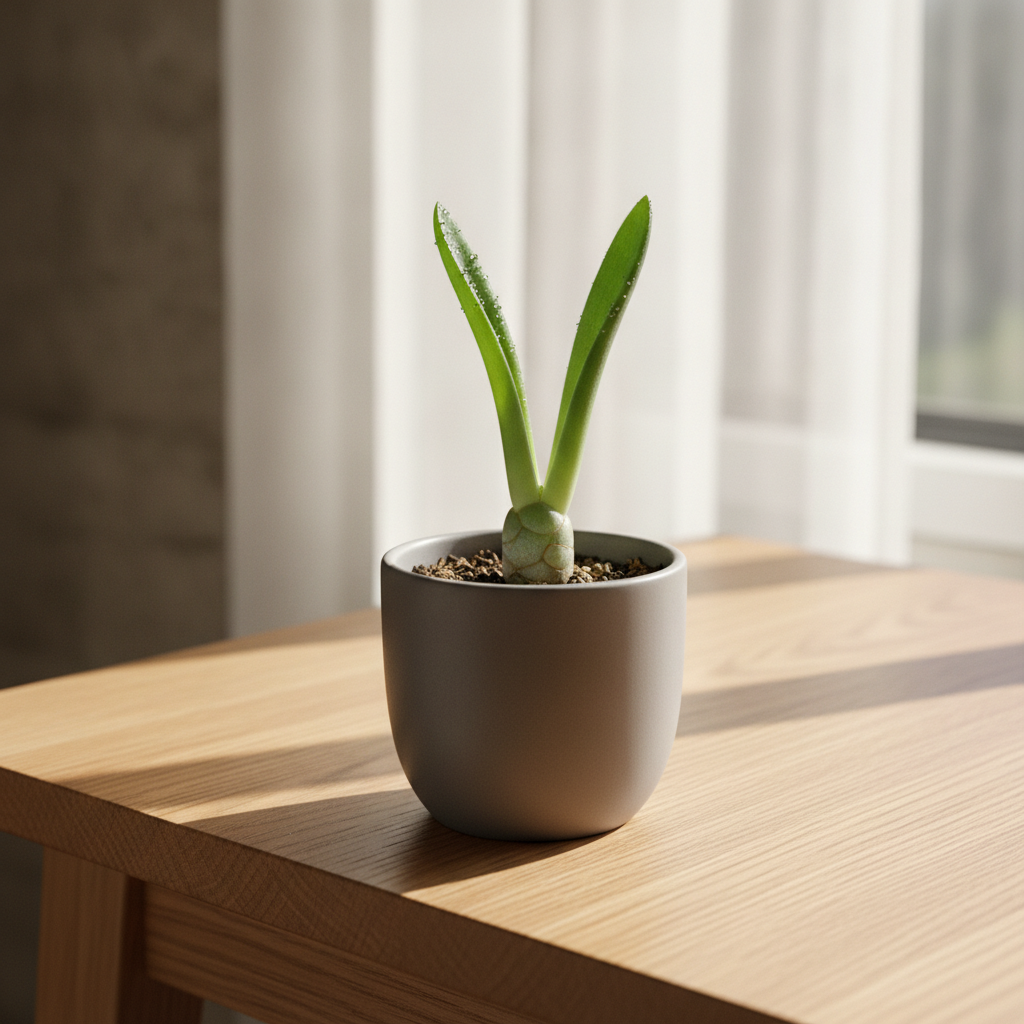
Few succulents earn an affectionate nickname as readily as the bunny succulent (Monilaria obconica), a small winter-growing mesemb from the arid winter-rainfall regions of South Africa whose fresh growth emerges each season as a pair of long, slender, semi-translucent leaves that rise from a bead-like stem and look, to almost everyone who sees them, exactly like a tiny rabbit’s ears. The genus name comes from the Latin monile, meaning necklace, a nod to the knobbly string of segments that the stem forms as it ages, and the species has become a cult favourite among collectors who pass photographs of its sprouting “ears” around online every autumn.
What makes the bunny succulent so rewarding is also what makes it quietly demanding: it lives on a calendar that runs opposite to most of the plants on your windowsill. It wakes, grows and drinks through the cool, short days of autumn and winter, then shrivels back into a cluster of dormant beads through the heat of summer. Get that rhythm right and the plant is almost indestructible, throwing up its charming ears year after year; get it wrong, water it in July as you would a pothos, and it rots away in a matter of days. This guide covers everything that separates a bunny succulent that merely survives from one that genuinely thrives, from its reversed watering cycle to soil, light, propagation and the handful of pests that trouble it.
Contents
- Quick Reference
- Why the Bunny Succulent Makes a Charming Houseplant
- Light Requirements
- Watering & Humidity
- Soil, Potting & Repotting
- Fertilising
- Propagation
- Pests & Diseases
- Popular Varieties
- Frequently Asked Questions
Quick Reference: Bunny Succulent at a Glance
| Light | Very bright light, including several hours of direct sun; the brightest spot you can offer indoors |
| Watering | Water during the autumn-to-spring growing season; keep almost completely dry through summer dormancy |
| Temperature | 10 to 21°C (50 to 70°F) in growth; protect from frost and from prolonged heat above 30°C (86°F) |
| Humidity | Low; average dry indoor air suits it well, good airflow preferred |
| Fertiliser | Light feeding once or twice during the growing season with a dilute low-nitrogen succulent feed |
| Toxicity | Generally regarded as non-toxic to cats, dogs and people, though not intended for eating |
Why the Bunny Succulent Makes a Charming Houseplant
The appeal of Monilaria obconica begins with that unmistakable seasonal flourish. After a hot, dormant summer spent as an unassuming cluster of greyish beads, the plant responds to the first cool, moist conditions of autumn by pushing out brand-new leaf pairs that elongate into the soft, paired “ears” that give the plant its name. For a few weeks each year the windowsill is full of what look like miniature green rabbits, and that small piece of theatre is something no foliage houseplant can replicate.
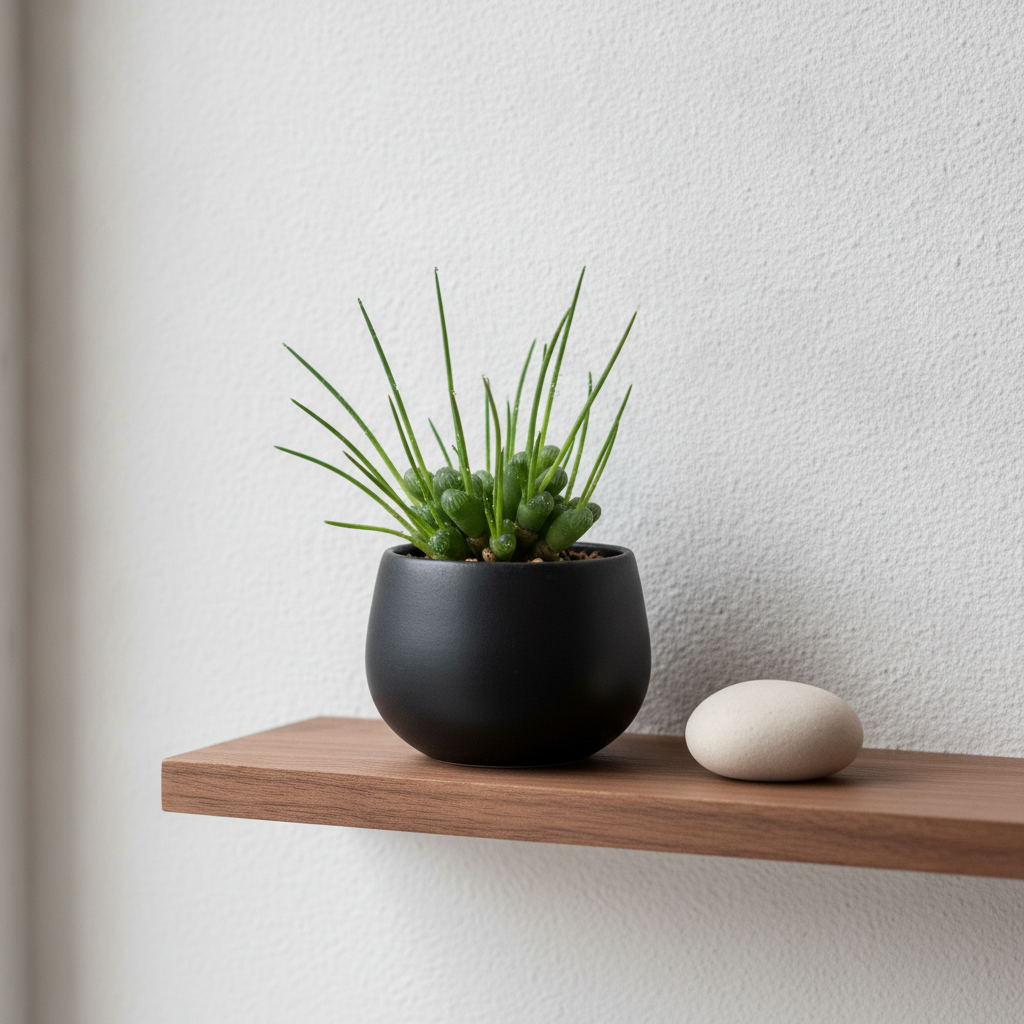
Beyond novelty, the bunny succulent is genuinely compact and undemanding of space, rarely exceeding 8 to 10cm (3 to 4in) in height and spreading slowly into a low cushion of segmented stems. It asks for very little water, no misting and no fussing over humidity, which suits anyone who travels or simply forgets to tend their plants. The single real condition it imposes is that you learn its calendar, because a bunny succulent that is watered on the wrong schedule will fail no matter how attentive you otherwise are. Treat its summer rest as sacred and the rest of its care is remarkably forgiving.
Important — Toxicity: The bunny succulent is not known to contain harmful compounds and is generally regarded as non-toxic to cats, dogs and humans. It is, however, grown as an ornamental and not as food, so it is sensible to keep curious pets and small children from chewing on it and to wash your hands after repotting.
Light Requirements
Light is the single most important environmental factor for a bunny succulent, and in almost every home the honest answer is that it wants more than you think. In habitat it grows fully exposed on open, gritty ground in Namaqualand, soaking up intense sun during the cooler growing months. Indoors it needs the very brightest position you can give it, ideally on a south or west-facing windowsill where it receives several hours of direct light each day during its autumn-to-spring growth.
Insufficient light is the most common reason a bunny succulent disappoints. Starved of brightness, the paired leaves stretch and flop instead of standing up as crisp ears, the beaded stems become pale and elongated, and the whole plant takes on a weak, leggy posture from which it does not easily recover. Because its growing season coincides with the dark half of the year in the northern hemisphere, supplementary light is often worthwhile.
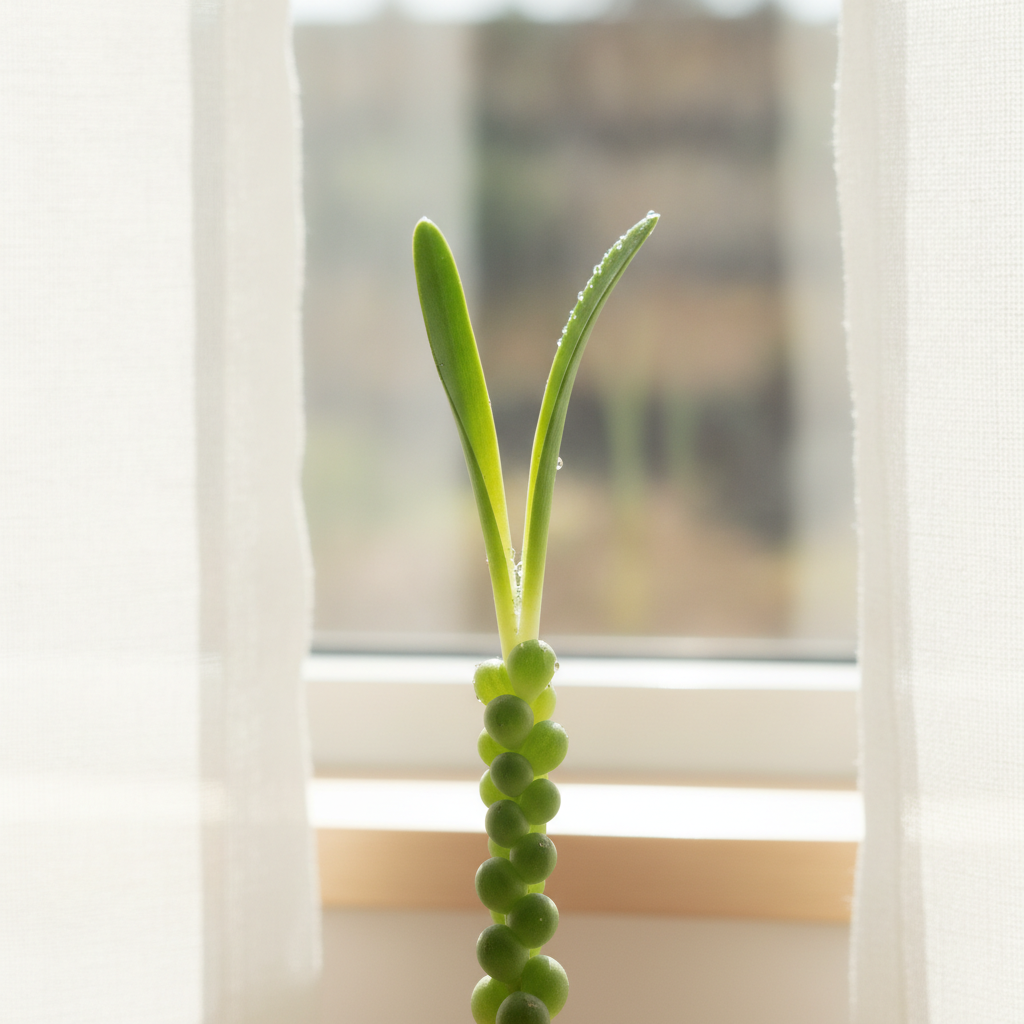
Light Levels Explained
The table below translates the usual houseplant light categories into what they mean for a sun-loving mesemb like the bunny succulent. Note how far it sits towards the bright end of the scale compared with most leafy houseplants.
| Light Category | Approx. Level | Typical Location | Outcome |
|---|---|---|---|
| Direct sun | 20,000 lux and above | On a south or west sill, glass-side | Ideal in the cool growing season; compact, upright ears |
| Bright indirect | 10,000 to 20,000 lux | Just back from a sunny window | Acceptable but growth a little softer and looser |
| Medium | 5,000 to 10,000 lux | East window or a metre from a bright one | Marginal; expect stretching and weak ears |
| Low | 1,000 to 5,000 lux | North window, interior shelf | Unsuitable; plant etiolates and declines |
| Very low | Below 1,000 lux | Hallway, far from any window | Will not survive a season |
Window Orientation and Placement
South-facing window: In the northern hemisphere this is the prime spot, delivering the long, direct exposure the plant craves during its autumn and winter growth. The lower winter sun is rarely strong enough to scorch, so place the plant right against the glass.
East-facing window: Workable, offering gentle morning sun, but the total daily intensity is often a little low for truly compact growth. Expect slightly looser ears and watch for stretching.
West-facing window: A good alternative to south, providing strong afternoon light. During the growing season the sun’s lower angle keeps the heat manageable, which suits this cool-season grower well.
North-facing window: Generally inadequate on its own. A north aspect simply cannot supply the intensity a bunny succulent needs, and a plant kept there will stretch and weaken. If a north window is your only option, plan to supplement with a grow light.
Pro Tip — Rotate for Even Ears: Give the pot a quarter turn every few days during active growth. The paired leaves lean strongly towards the light, and regular rotation keeps the little ears standing symmetrically upright rather than all bending one way.
How Light Affects Leaf Shape and Colour
Light governs not just the health of a bunny succulent but its entire shape. In strong light the new leaf pairs stay short, fat and upright, holding the classic ear silhouette, and the segmented stems remain tight and well coloured. In weak light those same leaves elongate dramatically, splaying outward and losing their charm, while the stems pale and soften. A faint reddish or bronze blush sometimes appears on plants grown very bright and slightly stressed, which many growers prize, though it is never as pronounced as in some other mesembs.
Warning — Direct Sunlight: While the bunny succulent loves sun, a plant moved abruptly from a dim shop shelf into fierce, unfiltered glass-magnified summer sun can scorch. Acclimatise it over a week or two, and be especially cautious with intense midsummer light, which coincides with the plant’s vulnerable dormant period.
Artificial Lighting
Because the bunny succulent grows through the darkest months, a full-spectrum LED grow light is one of the most effective upgrades you can make. Position a reasonably powerful panel 20 to 30cm (8 to 12in) above the plant and run it for 12 to 14 hours a day through the growing season. Supplementary light reliably produces the tight, upright ears that a dim winter windowsill struggles to deliver, and it removes most of the guesswork from this plant’s trickiest season.
Seasonal Adjustments
The bunny succulent’s light needs invert the usual houseplant pattern. During autumn and winter, when it is actively growing, give it everything you have: the brightest sill, supplementary lighting, the lot. Through summer dormancy, when the leaves have dried back to beads, the plant needs far less and benefits from being moved out of the most brutal, baking sun into bright but cooler, airier conditions where it can rest without cooking.
Watering & Humidity
Watering is where the bunny succulent diverges most sharply from ordinary houseplant care, and it is the aspect that most often catches new growers out. This is a winter-growing, summer-dormant species, so its thirst peaks exactly when most of your collection is resting and falls to almost nothing through the height of summer. Learn this single reversal and you have learned the hardest part of keeping the plant alive.
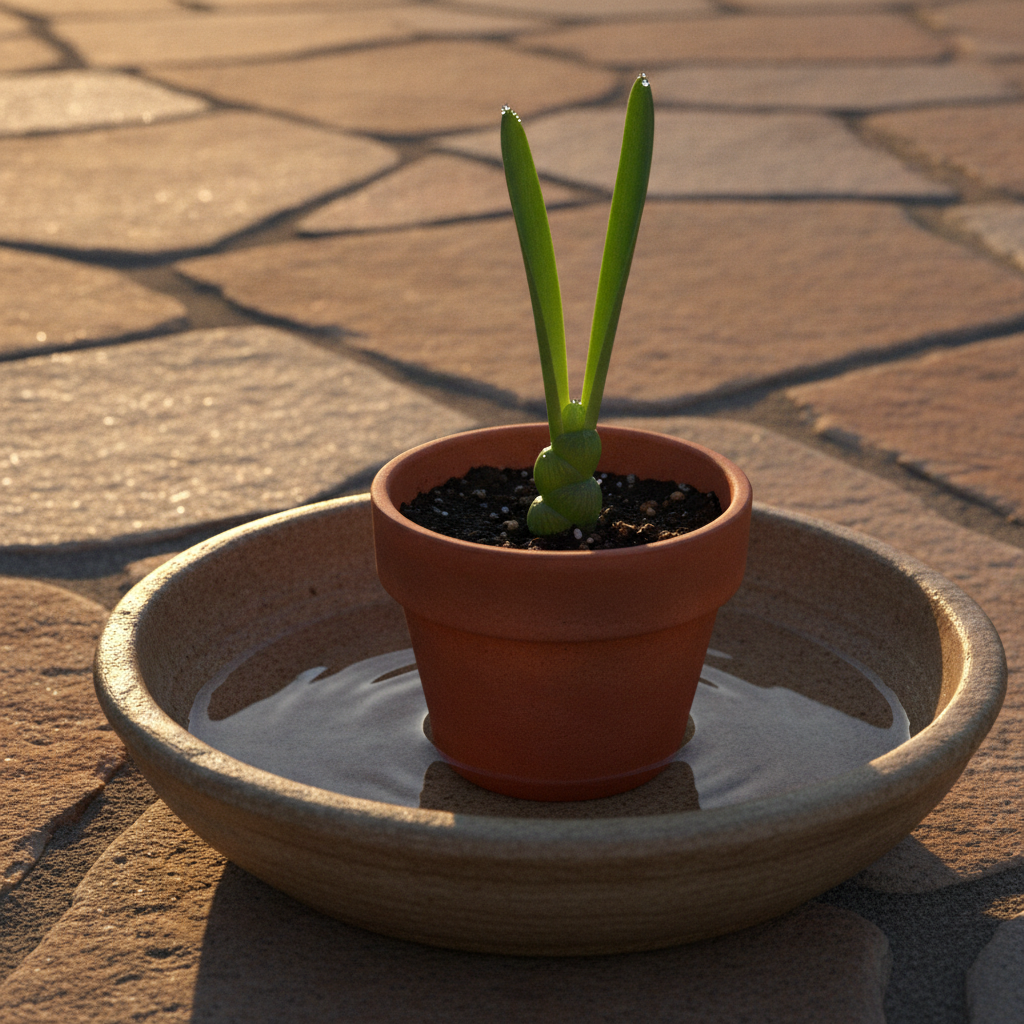
When to Water
Begin watering in early autumn as temperatures fall and you see the first signs of new growth emerging from the dormant beads. Through the autumn-to-spring growing season, water thoroughly whenever the soil has dried out completely, which in a gritty mix and a bright spot typically means every 10 to 14 days. The plant is genuinely growing in this period and will use the moisture, plumping its ears and extending its stems.
As spring turns to summer and the leaves begin to shrivel and dry back, taper off sharply. Through the hottest months the plant is dormant and wants to be kept almost bone dry, with at most a very light splash every few weeks if the beads look severely shrunken. Watering a dormant bunny succulent generously in summer heat is the fastest way to kill it, because the roots cannot use the water and rot sets in almost immediately.
Pro Tip — Follow the Beads, Not the Calendar: Rather than watering by fixed dates, read the plant. When fresh ears are growing, water on dry-out; when the leaves have collapsed into papery beads, hold back. The plant tells you which season it is in more reliably than the thermometer does.
How to Water Correctly
- Confirm the plant is in active growth and that the soil has dried out completely since the last watering.
- Water at the soil surface, or stand the pot in a shallow dish, taking care to keep water off the beaded stems and leaf pairs.
- Allow the gritty mix to take up moisture until it is evenly damp throughout, then let any excess drain freely.
- Tip away any water left standing in the saucer within a few minutes so the roots never sit wet.
- Wait until the mix is bone dry again before the next watering, and stop entirely as the plant enters summer dormancy.
Signs of Overwatering vs. Underwatering
| Symptom | Overwatering | Underwatering |
|---|---|---|
| Leaf colour | Yellowing, translucent and water-soaked | Dull greyish-green, slightly faded |
| Leaf texture | Soft, mushy, splitting open | Wrinkled, thin and papery but firm at the base |
| Stem and beads | Blackening or collapsing at the base | Beads shrink and pucker but stay intact |
| Soil | Stays wet for days, may smell sour | Bone dry well beyond the normal interval |
| Overall posture | Plant slumps and rots from below | Plant looks shrivelled but recovers quickly when watered in season |
Warning — Root Rot: Root and stem rot is by far the most likely cause of death in a bunny succulent, and it is almost always triggered by water during the summer rest or by a mix that holds moisture too long. If the base turns soft and dark, unpot immediately, cut away any rotten tissue, and allow the plant to dry before replanting in fresh gritty mix.
Humidity Requirements
Humidity is mercifully simple for this plant. Coming from a dry, open habitat, the bunny succulent is perfectly content in ordinary, even rather dry, indoor air and has no need of misting or humidity trays. If anything, high humidity combined with poor airflow is a risk rather than a benefit, encouraging fungal problems on the soft new growth.
The clearest signs of a humidity-related problem are not dryness but the opposite: soft spots, fungal blemishes or mould appearing on the leaves and stems in a stuffy, damp corner. These point to stagnant, overly moist air rather than a lack of moisture, and the remedy is better ventilation.
To keep the plant healthy, prioritise air movement over added moisture. A gently circulating, well-ventilated room suits it far better than a sealed terrarium or a crowded, humid shelf. Good airflow also helps the surface of the gritty mix dry quickly after watering, which is exactly what this rot-prone plant wants.
Water Quality
The bunny succulent is not especially fussy about water quality, and ordinary tap water is generally fine. In hard-water areas the main concern is a gradual build-up of mineral salts in the very free-draining mix, which is easily managed by flushing the pot thoroughly once in a while during the growing season. If you have rainwater to hand it makes an excellent choice, but it is far from essential.
Soil, Potting & Repotting
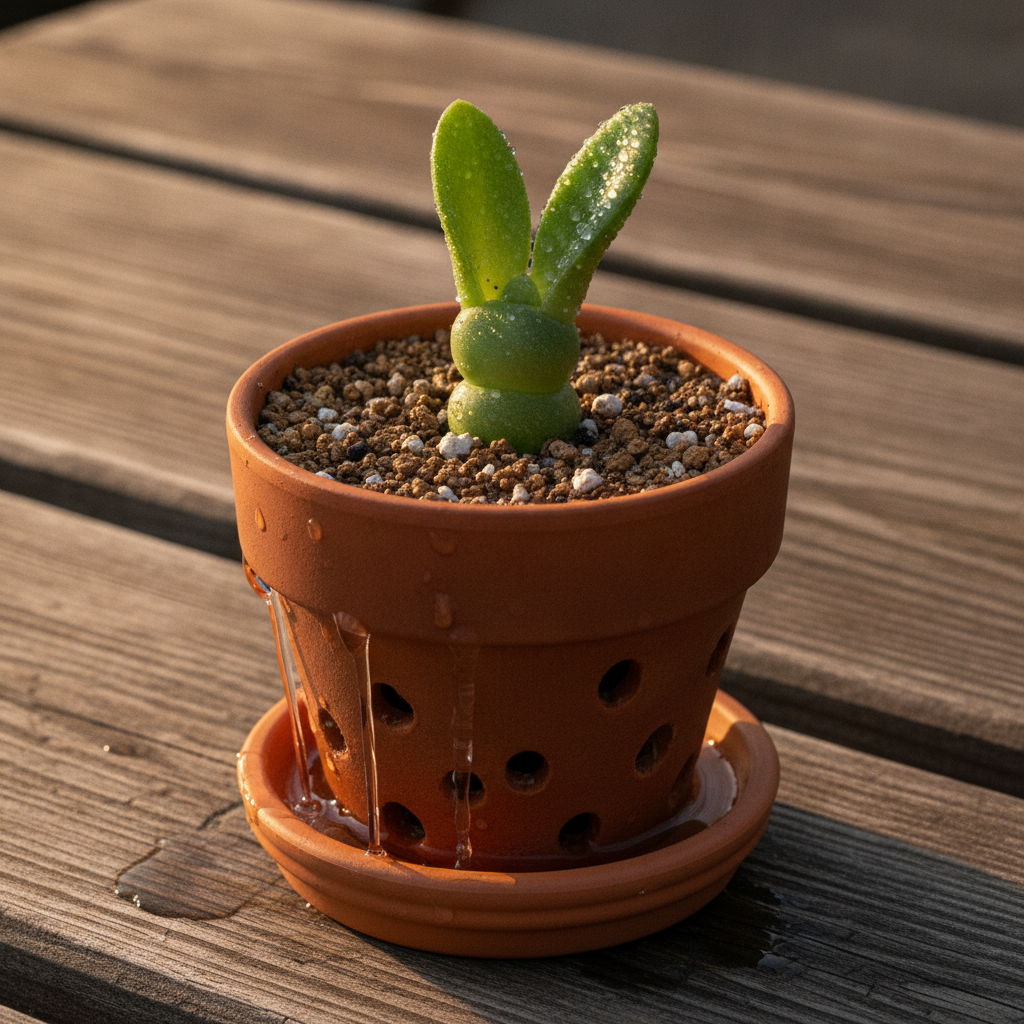
If light sets the bunny succulent’s pace and watering tests your timing, soil is the safety net beneath both. A sharply draining, predominantly mineral mix gives the roots air, dries quickly after watering and forgives the occasional misjudged drink. Ordinary potting compost, by contrast, holds far too much moisture for this rot-prone mesemb and is a common slow killer.
Ideal Soil Composition
Aim for a mix that is at least half, and ideally more, coarse mineral grit by volume, with only a modest fraction of organic matter to hold a little moisture and nutrition. The goal is a substrate that water passes through almost instantly and that never stays soggy. The components below combine to give exactly that character.
| Component | Proportion | Function |
|---|---|---|
| Coarse pumice or perlite | 40% | Holds air around the roots and prevents compaction |
| Sharp grit or fine gravel | 30% | Speeds drainage and adds weight for stability |
| Quality succulent or cactus compost | 30% | Provides a little moisture retention and nutrition |
The bunny succulent grows naturally on neutral to slightly acidic mineral ground, and the mix above sits comfortably in that range without any need for adjustment. Far more important than fine-tuning pH is making sure the substrate is genuinely free-draining, so do not skimp on the grit and pumice in pursuit of a richer-looking compost.
Pro Tip — Quick Mix Recipe: If you want a simple, reliable blend, combine one part standard cactus compost with one part pumice and one part fine grit, then top-dress the surface with a thin layer of pure grit. The mineral top layer keeps the vulnerable base of the beaded stems dry and discourages rot at the soil line.
Choosing the Right Pot
Because the bunny succulent is small and slow, it does not need a large pot, and an oversized container full of slow-drying mix only invites trouble. A snug, shallow pot suits its compact root system far better than a deep one.
Drainage holes are non-negotiable. Whatever pot you choose, it must have generous drainage. With a plant this prone to rot, a sealed decorative container is simply a reservoir waiting to drown the roots, so always pot into something that drains freely and use the pretty cover pot only as a temporary outer shell.
Pot material: Terracotta is the natural choice, as its porous walls wick moisture out of the mix and help it dry quickly between waterings. Glazed ceramic and plastic both work too, but they hold moisture longer, so be that little bit more cautious with the watering can if you use them.
Pot size: Choose a container only a little wider than the plant itself. A shallow pan is ideal, since the roots are not deep and excess soil volume simply stays wet. Repot up by the smallest sensible increment rather than jumping to a large pot.
When to Repot
The bunny succulent rarely needs repotting more than once every two or three years, as it grows slowly and is happy when slightly snug. The best time to repot is at the very start of the growing season in early autumn, when the plant is waking and can quickly re-establish into fresh mix. Repot when the clump has clearly outgrown its pot, when the old mix has broken down and lost its drainage, or when you need to deal with rot.
How to Repot: Step-by-Step
- Wait until the plant is dry and ideally just entering its autumn growth, then gently ease it out of its pot.
- Crumble away the old mix from the roots and inspect them, trimming off anything soft, blackened or dead with clean tools.
- If you intend to divide a clump, separate the crowns now while the roots are exposed.
- Part-fill the new pot with fresh gritty mix and settle the plant at the same depth it sat before, never burying the beaded stems.
- Work more mix gently around the roots and firm it lightly, then top-dress the surface with a thin layer of grit.
- Hold off watering for several days to let any disturbed roots heal, then resume the normal growing-season schedule.
Warning — Transplant Shock: Never water a freshly repotted bunny succulent straight away. Disturbed roots have tiny wounds that rot readily if sat in damp soil, so always allow a few dry days for them to callus before the first watering, and never repot a plant that is in summer dormancy.
Fertilising
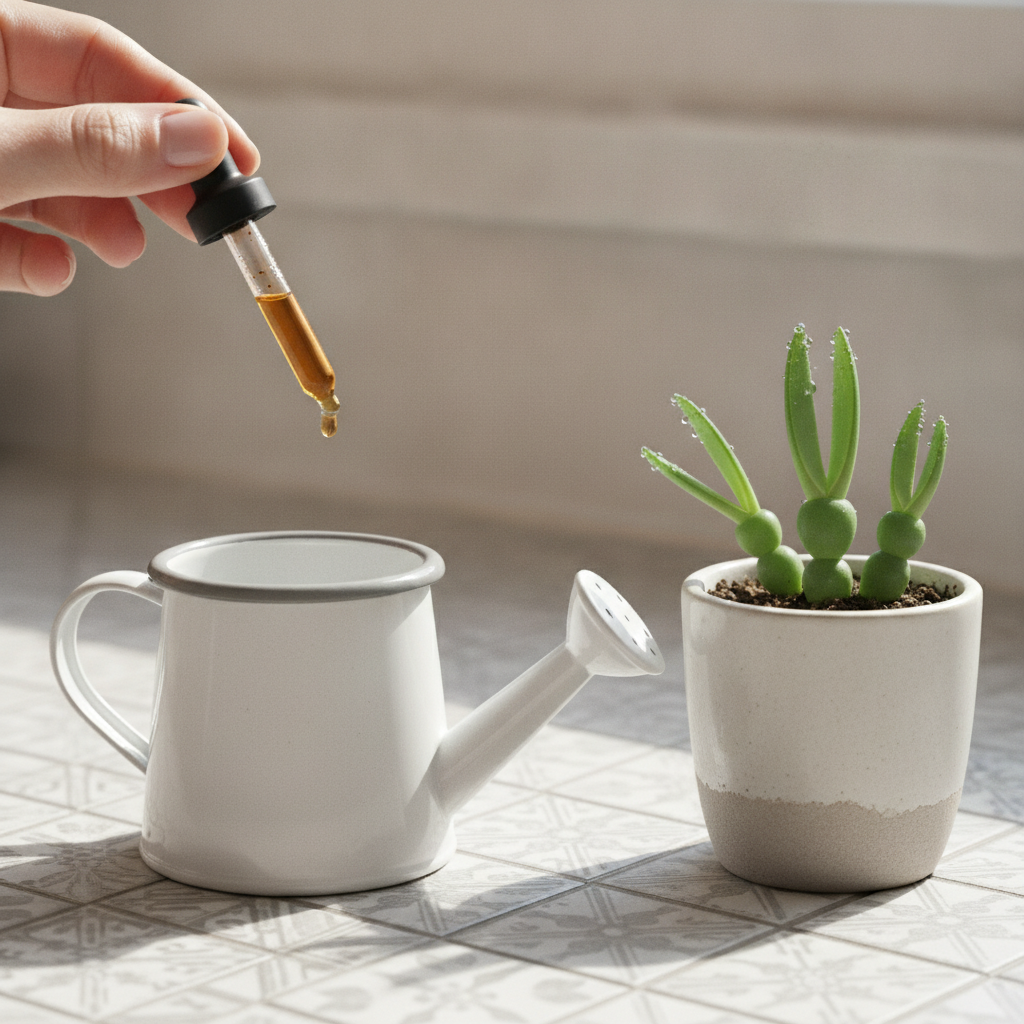
Fertilising a bunny succulent is an exercise in restraint. As a plant adapted to lean, mineral soils, it needs very little supplementary feeding, and the most common nutrient-related mistake by far is giving too much rather than too little. A light touch during the growing season is all it asks.
Overfeeding produces soft, swollen, easily damaged growth that loses the tight, characterful form of a well-grown plant, and excess fertiliser salts accumulate quickly in a fast-draining mineral mix. When in doubt, feed less, dilute more, and lean on fresh soil at repotting to supply most of what the plant needs.
Understanding Plant Nutrients
Plant feeds are described by their N-P-K ratio, the proportions of nitrogen, phosphorus and potassium they contain, alongside trace amounts of other essential elements. For a compact succulent like the bunny succulent, a feed low in nitrogen and relatively higher in potassium encourages firm, well-formed growth rather than the soft, leggy surge that high-nitrogen feeds promote.
| Nutrient | Symbol | Primary Function | Deficiency Symptoms |
|---|---|---|---|
| Nitrogen | N | Drives leafy growth and green colour | Pale, slow growth (rarely an issue here) |
| Phosphorus | P | Supports roots and overall vigour | Stunted, sluggish establishment |
| Potassium | K | Firms tissue and aids stress tolerance | Soft growth, weak stems |
| Calcium | Ca | Builds strong cell walls | Distorted or collapsing new growth |
| Magnesium | Mg | Central to chlorophyll and photosynthesis | Yellowing between leaf surfaces |
| Iron | Fe | Needed for healthy green pigment | Pale, bleached new leaves |
Types of Fertiliser
Liquid fertilisers: A liquid succulent or cactus feed is the easiest option for this plant, since you can dilute it heavily and apply it precisely during a normal watering. Use it at quarter to half the recommended strength and only while the plant is in active growth.
Slow-release granular: Granular feeds release nutrients gradually and are convenient, but they are harder to control on a plant that wants so little. If you use them at all, apply at well below the label rate and keep in mind they may continue feeding into the dormant period, which is undesirable.
Organic fertilisers: Gentle organic options such as dilute worm-casting tea can work, releasing nutrients slowly and at low concentration, which suits the plant’s modest appetite. Avoid anything rich or heavy, which encourages the soft growth you are trying to prevent.
Feeding Schedule
Feed only during the autumn-to-spring growing season, and even then sparingly: one or two dilute feeds across the whole season is plenty. Never fertilise a dormant bunny succulent in summer, when it cannot use the nutrients and the salts simply accumulate around resting roots. A freshly repotted plant needs no feeding at all for its first few months, as the new mix already supplies what little it wants.
Pro Tip — Less Is Genuinely More: With this plant, a feed you forget to give does far less harm than one you give too strong. If you are ever unsure whether to fertilise, skip it; a lean bunny succulent stays compact and characterful, while an overfed one turns soft and shapeless.
How to Fertilise
- Confirm the plant is in active autumn-to-spring growth before feeding at all.
- Dilute a succulent fertiliser to a quarter or half of its recommended strength.
- Apply the diluted feed in place of an ordinary watering, once the mix has dried out.
- Let the pot drain fully, and do not feed again for the rest of the season unless growth is strong and steady.
Warning — Salt Build-Up: Fertiliser salts concentrate fast in a gritty mineral mix and can scorch the fine roots. If you feed regularly, flush the pot thoroughly with plain water once or twice during the growing season to wash accumulated salts out through the drainage holes.
Propagation
Propagating the bunny succulent is most reliably done from seed and, for established plants, by division of mature clumps. Unlike many leafy succulents it does not root readily from single leaves, so the temptation to snap off an ear and pot it up is best resisted. Understanding how the plant builds its beaded clumps makes both seed-raising and division far more intuitive.
Patience is the watchword with either method. Seed-grown plants take a couple of years to reach a presentable size, and divisions need careful aftercare to avoid the rot that disturbed roots invite. Both, however, are deeply satisfying, and raising a tray of tiny bunny succulents from seed is one of the genuine pleasures of growing this species.
Understanding the Beaded Clump
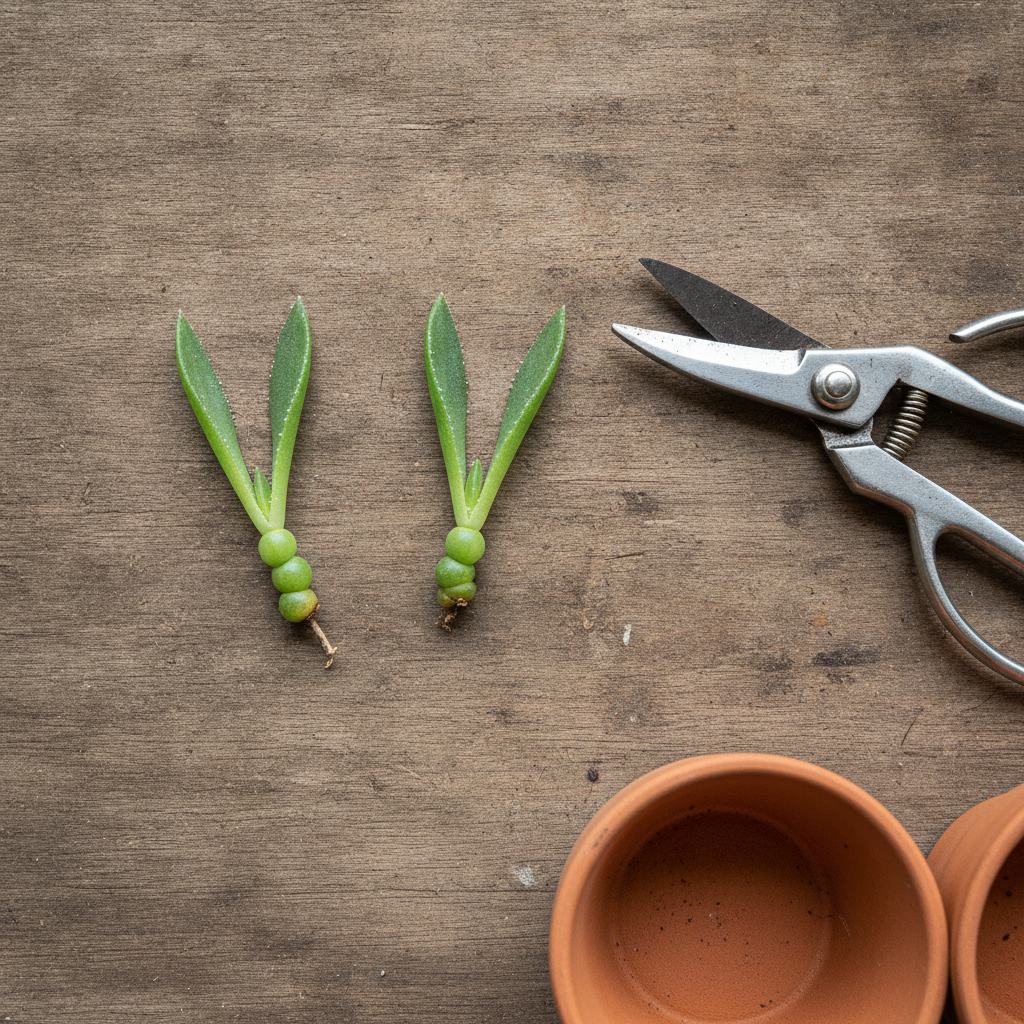
Over the years a bunny succulent builds up a small clump of segmented, bead-like stems, each capable of producing its own crown of paired leaves. These segments are essentially the stacked remains of previous seasons’ growth, and a vigorous plant gradually branches into several heads. This clumping habit is what makes division possible: a mature plant is in effect a colony of small units that can be separated, each with its own roots, into new plants.
Division: Step-by-Step
Division is the quickest way to multiply an established bunny succulent and is best done at the start of the growing season, ideally combined with a routine repot.
- Unpot a mature, multi-headed clump when it is dry and just coming into autumn growth.
- Gently brush the mix from the roots so you can see where the individual heads join.
- Tease the clump apart into sections, making sure each one keeps a share of healthy roots.
- Let the divisions sit dry for a day or two so any torn roots can callus over.
- Pot each division into its own small pot of gritty mix and wait several days before the first careful watering.
Pro Tip — Divide Only Mature Clumps: Resist dividing a young plant that has only one or two heads. Wait until it has built up several well-rooted crowns, and each division will establish far faster and with much less risk of loss.
Growing from Seed: Step-by-Step
Seed is how most bunny succulents are raised and is the method that produces the famous trays of sprouting ears. Sow in early autumn as the growing season begins.
- Fill a shallow tray with a fine, gritty, free-draining mix and firm the surface lightly.
- Scatter the tiny seed thinly across the surface and barely cover it with a dusting of fine grit.
- Moisten gently from below and keep the surface lightly damp, with bright light and good airflow, until germination.
- Once seedlings appear, ease off the moisture gradually so the surface dries between light waterings.
- Grow the seedlings on undisturbed for their first year, then prick out and pot up the strongest the following autumn.
Troubleshooting Propagation
| Problem | Likely Cause | Solution |
|---|---|---|
| Divisions rot at the base | Watered too soon after separation | Allow several dry days to callus before watering |
| Seed fails to germinate | Sown out of season or surface dried out | Sow in autumn and keep the surface lightly moist until sprouting |
| Seedlings damp off | Stagnant air and excess moisture | Improve ventilation and water more sparingly from below |
| Single leaves refuse to root | The species does not propagate from leaves | Use division or seed instead |
Pests & Diseases
The bunny succulent is not especially pest-prone, but its soft new growth and rot-sensitive base mean a handful of problems deserve watching. Most trouble can be headed off by the same conditions that keep the plant happy in general: bright light, a gritty mix, careful seasonal watering and good airflow.
Inspect the plant whenever you water during the growing season, paying particular attention to the crevices between the beaded stems where pests like to hide. Catching an infestation early, while it is still a few insects rather than a colony, makes treatment far simpler on a plant this small and delicate.
Common Pests
Mealybugs (Pseudococcus species)
Mealybugs are the most likely pest, appearing as small, white, cottony tufts tucked into the joints between the beaded segments and around the leaf bases, where they suck sap and weaken the plant. Their waxy coating makes them easy to overlook until numbers build.
Treatment: Dab individual insects with a cotton bud dipped in dilute isopropyl alcohol, then treat the whole plant with a suitable insecticidal soap or a systemic product if the infestation is heavy. Repeat every week or two until no new mealybugs appear.
Root Mealybugs (Rhizoecus species)
Root mealybugs are the hidden cousins of the above, living unseen among the roots and showing as white, powdery deposits when a plant is unpotted. They sap vigour and are a frequent cause of an otherwise well-kept succulent slowly failing for no obvious reason.
Treatment: Wash all soil from the roots, trim away badly affected tissue, and either soak the roots in a systemic insecticide solution or replant into entirely fresh mix in a clean pot after a thorough rinse.
Spider Mites (Tetranychus urticae)
Spider mites are most likely in hot, dry, stagnant conditions, leaving fine stippling on the leaf surface and, in bad cases, faint webbing between the stems. They are tiny and easy to miss until the damage is visible.
Treatment: Improve airflow, rinse the plant gently to dislodge the mites, and apply a miticide or insecticidal soap if they persist. Better ventilation usually prevents a recurrence.
Common Diseases
Root and Stem Rot (various fungi and bacteria)
Rot is overwhelmingly the most serious threat to a bunny succulent and is almost always caused by water during summer dormancy or by a mix that stays wet. It shows as softening, blackening and collapse at the base of the stems, often spreading with alarming speed once it takes hold.
Treatment: Act immediately. Unpot the plant, cut away every trace of soft or discoloured tissue with clean tools, let the remaining healthy part dry for a few days, and replant into fresh gritty mix. Prevention through correct seasonal watering is far more reliable than any cure.
Fungal Leaf Spot (various fungi)
In damp, poorly ventilated conditions the soft leaves can develop fungal blemishes or mould, particularly where water has sat on the new growth. It is rarely fatal but disfigures the plant and signals that conditions are too stagnant.
Treatment: Remove affected leaves, improve airflow markedly, and keep water off the foliage. A succulent that is watered at the base in a well-ventilated spot almost never suffers leaf fungus.
Pest and Disease Summary
| Pest / Disease | Identification | Treatment |
|---|---|---|
| Mealybugs | White cottony tufts in stem joints | Alcohol swab, insecticidal soap, repeat treatments |
| Root mealybugs | White powder among the roots | Bare-root, rinse, fresh mix, systemic soak |
| Spider mites | Fine stippling and faint webbing | Improve airflow, rinse, miticide if needed |
| Root and stem rot | Soft, blackening base, collapse | Cut out rot, dry, replant; correct watering |
| Fungal leaf spot | Blemishes or mould on soft leaves | Remove leaves, improve ventilation, water at base |
Prevention Strategies
The best defence is simply growing the plant well. Bright light, a sharply draining mineral mix, watering that respects the summer rest, and a steady flow of fresh air together prevent the great majority of problems before they start. A bunny succulent kept in those conditions is a robust little plant that rarely troubles its owner.
Quarantine any newly acquired succulent for a few weeks before placing it among your collection, and check the roots of any plant you suspect of harbouring trouble. A little routine vigilance at watering time, especially in the warm crevices between the beads, catches issues while they are still trivial to fix.
Pro Tip — Inspect at the Joints: When you check for pests, look closely into the gaps between the beaded segments rather than at the open leaf surfaces. Mealybugs in particular almost always settle in these sheltered junctions first, so that is where an early infestation will reveal itself.
Popular Varieties
The genus Monilaria is small, and the plants sold as “bunny succulents” or “bunny ear succulents” are really one or two closely related species rather than a long list of named cultivars. Knowing the difference between them helps you understand exactly what you are growing and what to expect from its ears.
The two you are most likely to encounter are Monilaria obconica, the classic long-eared form most often labelled simply “bunny succulent”, and Monilaria moniliformis, a very similar species with a more pronounced string-of-beads stem. Both share the same care and the same enchanting seasonal sprouting.
| Variety | Leaf Appearance | Light Needs | Growth Rate | Availability |
|---|---|---|---|---|
| Monilaria obconica | Long, slender, paired translucent ears | Very bright, direct sun | Slow | Common among collectors |
| Monilaria moniliformis | Shorter, plumper ears, beaded stem | Very bright, direct sun | Slow | Occasional, specialist sellers |
| Monilaria pisiformis | Compact, pea-like beads, short leaves | Very bright, direct sun | Slow | Uncommon |
Featured Varieties
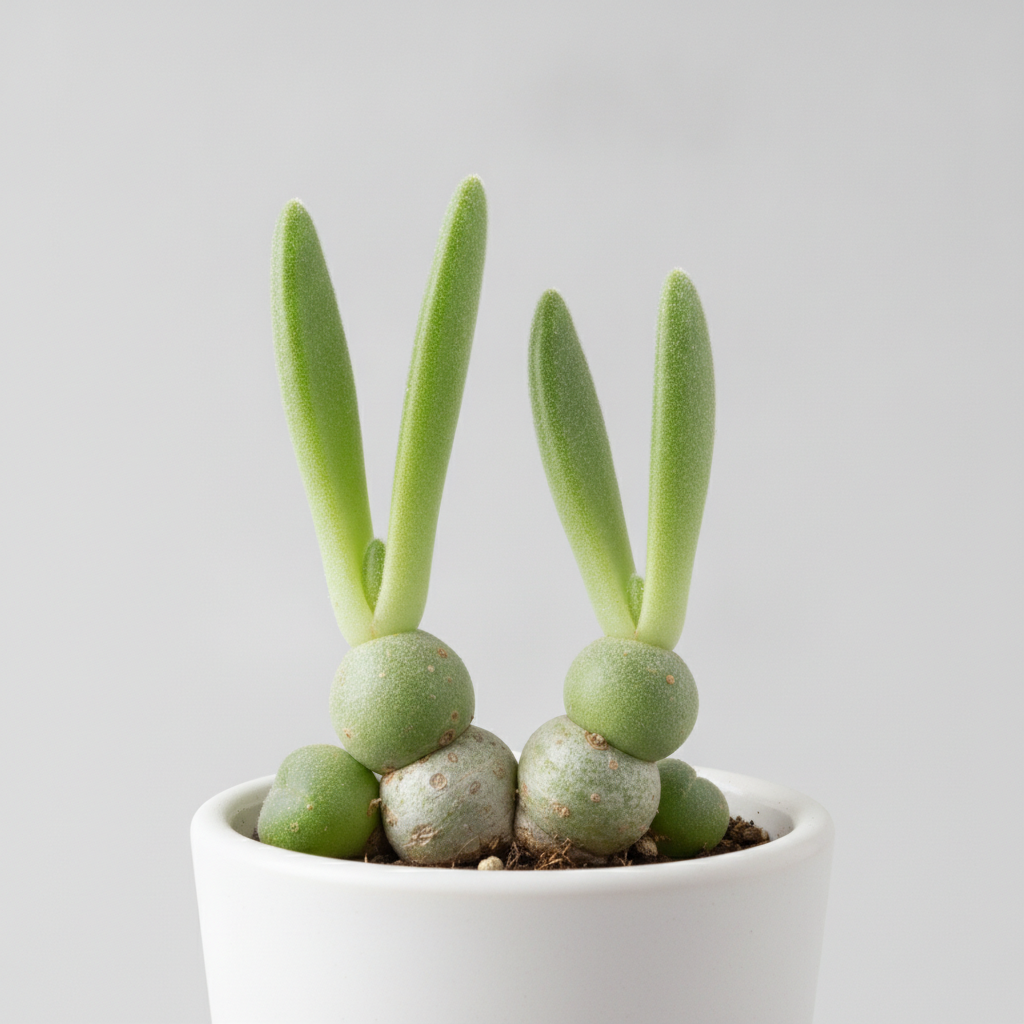
Monilaria obconica
The definitive bunny succulent, with very long, soft, semi-translucent paired leaves rising from a knobbly beaded stem. Its elongated ears make it the most rabbit-like of the genus and the form most growers picture when they hear the name.
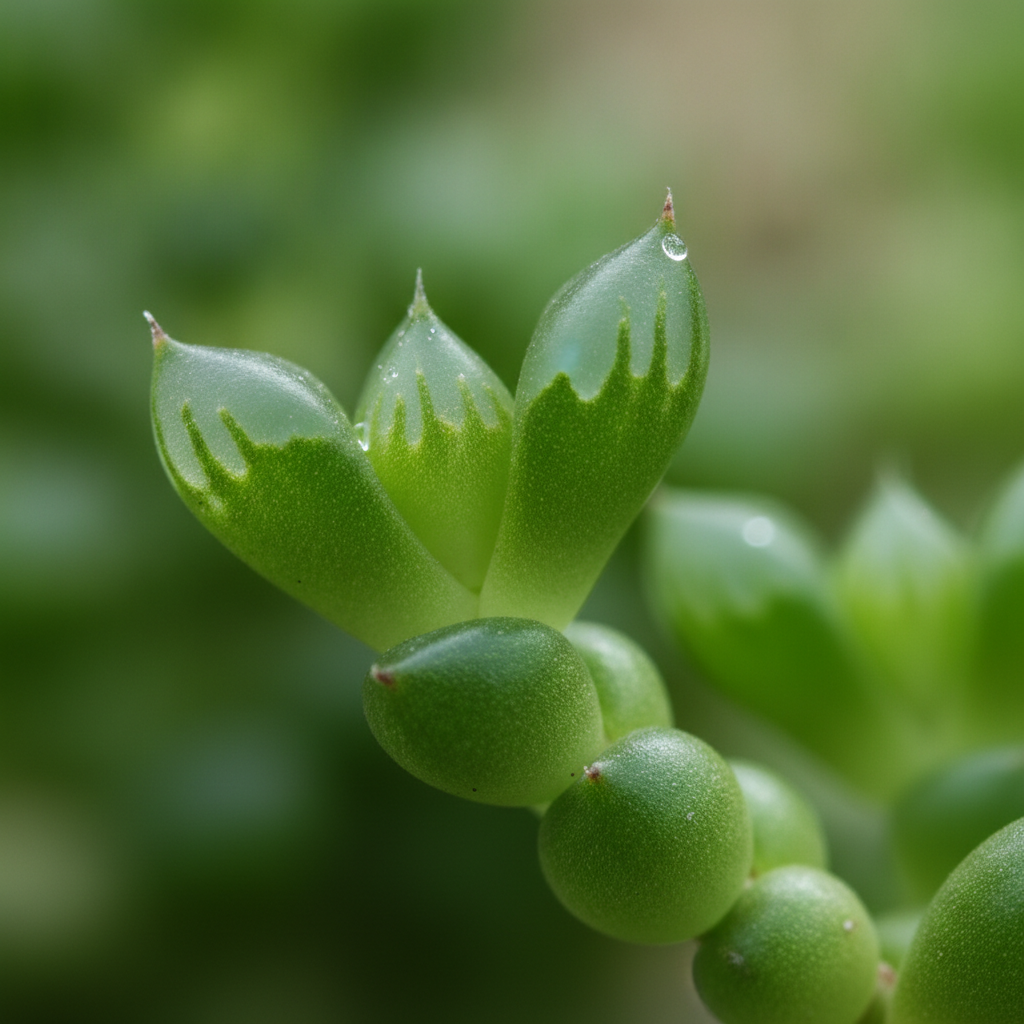
Monilaria moniliformis
A closely related bunny-ears species with slightly shorter, plumper paired leaves and a notably pronounced string-of-beads stem. It shares the same charm and identical care, and is often grown alongside obconica for comparison.
Variety Profiles in Detail
Monilaria obconica (Monilaria obconica)
This is the species behind nearly every viral photograph of sprouting “bunny ears”. Each autumn it produces a fresh pair of long, slender leaves from the top of a segmented stem, and these can extend to several centimetres, drooping gracefully as they age. Over years it builds a small clump of beaded heads, and it is the most widely shared and traded of the genus among succulent enthusiasts.
Monilaria moniliformis (Monilaria moniliformis)
Very similar at a glance, moniliformis tends to hold shorter, fatter leaf pairs and shows the necklace-like beaded stem for which the genus is named especially clearly. It is a touch less common in cultivation but no harder to grow, and collectors often keep both species side by side to enjoy the subtle differences in their ears.
Choosing the Right Variety for Your Space
For most growers the choice is straightforward, because the care is identical across the genus and availability is the real deciding factor. If you want the longest, most dramatic ears and the easiest plant to source, seek out Monilaria obconica. If you enjoy hunting down something a little less common and like the look of a tighter, beadier stem, moniliformis is a rewarding companion. Whichever you grow, a bright, cool windowsill and a respect for the summer rest will serve it perfectly.
Frequently Asked Questions
Why does my bunny succulent shrivel up in summer?
This is entirely normal and not a sign of distress. Monilaria obconica is a winter-growing, summer-dormant plant, so it deliberately dries its leaves back to a cluster of beads and rests through the heat. Keep it almost dry and it will resprout fresh ears when cool autumn conditions return.
When do the bunny ears appear?
The signature paired leaves emerge at the start of the growing season in early autumn, as temperatures drop and the first moisture reaches the plant. Within a few weeks of resuming watering, the dormant beads push out their new ears, which then grow on through autumn and winter.
How often should I water it?
During autumn-to-spring growth, water thoroughly whenever the gritty mix has dried out completely, often every 10 to 14 days. Through summer dormancy, water hardly at all, perhaps a light splash every few weeks if the beads look badly shrunken. The reversed schedule is the key to success with this plant.
Why are the leaves stretching and flopping over?
Stretched, floppy leaves almost always mean too little light. Because the plant grows through the dark half of the year, a winter windowsill often cannot supply enough brightness, and the ears elongate and splay in response. Move it to the sunniest spot you have or add a grow light during the growing season.
Is the bunny succulent safe around pets?
It is generally regarded as non-toxic to cats and dogs and is not known to cause poisoning. Even so, it is an ornamental rather than a food plant, so it is wise to discourage pets from chewing on it and to keep it out of easy reach of determined nibblers.
Can I propagate it from a single leaf?
No. Unlike many popular succulents, Monilaria does not root from detached leaves, so a snapped-off ear will simply wither. To make more plants, divide a mature clump into rooted crowns or raise new plants from seed sown in autumn.
What soil should I use?
Use a sharply draining, predominantly mineral mix, such as one part cactus compost to one part pumice and one part fine grit, topped with a thin layer of grit. Ordinary potting compost holds far too much water for this rot-prone species and should be avoided.
My plant turned soft and black at the base. What happened?
That is root or stem rot, almost certainly from watering during the summer rest or from a mix that stayed wet. Unpot the plant at once, cut away all soft and discoloured tissue with clean tools, let it dry for a few days, and replant any firm, healthy part into fresh gritty mix. Prevent a recurrence by watering only in the cool growing season.
How big does a bunny succulent get?
It stays small, rarely more than about 8 to 10cm (3 to 4in) tall, slowly forming a low cushion of beaded stems. Its compact size and tidy habit make it ideal for a sunny windowsill or a small dish among other miniature succulents.
Does it need a cold winter to grow well?
It does best with cool, bright growing conditions rather than genuine cold, thriving in the 10 to 21°C (50 to 70°F) range while it is in leaf. It is frost-tender, so protect it from freezing, but the cooler temperatures of autumn and winter are exactly what cue its growth and keep the ears compact.






