

Few houseplants stage an event quite like the Queen of the Night. For most of the year Epiphyllum oxypetalum is an unassuming sprawl of flat green stems, content to drape over the edge of a pot or clamber along a support. Then, on one warm evening in summer, it produces enormous waxy white flowers that unfurl after dark, release a heady perfume across an entire room, and collapse by morning. The plant has earned its theatrical common names honestly, and growing one is as much about patience and timing as it is about routine care.
This guide covers everything needed to keep the species healthy and, eventually, to witness that famous bloom. It is an easy plant to keep alive and a slightly trickier one to flower, so the two goals are treated separately throughout: what it takes simply to survive, and what it takes to thrive.
Quick Reference
- Why grow a Queen of the Night
- Light
- Watering
- Soil and potting
- Fertilising
- Propagation
- Pests and problems
- Varieties and relatives
- Frequently asked questions
| Attribute | Detail |
|---|---|
| Botanical name | Epiphyllum oxypetalum |
| Common names | Queen of the Night, Night-Blooming Cereus, Dutchman’s Pipe Cactus, Orchid Cactus |
| Family | Cactaceae |
| Origin | Tropical forests of Mexico and Central America, naturalised widely |
| Plant type | Epiphytic cactus with flattened leaf-like stems |
| Mature size | 2 to 3 metres (6 to 10 feet) of trailing or climbing stem indoors |
| Light | Bright indirect light, with a little gentle morning sun |
| Watering | Water when the top 3 to 5 cm (1 to 2 inches) of mix dries; reduce sharply in winter |
| Soil | Open, fast-draining epiphytic or cactus mix with added bark and perlite |
| Temperature | 16 to 24 degrees C (61 to 75 degrees F); cool winter rest near 10 to 13 degrees C (50 to 55 degrees F) |
| Humidity | Moderate to high, ideally above 50 per cent |
| Feeding | Diluted low-nitrogen feed every 2 to 4 weeks in spring and summer |
| Propagation | Stem-segment cuttings, callused then rooted |
| Toxicity | Generally considered non-toxic to cats, dogs and people |
| Flowering | Large fragrant white flowers, opening for a single night in summer |
Why Grow a Queen of the Night Houseplant
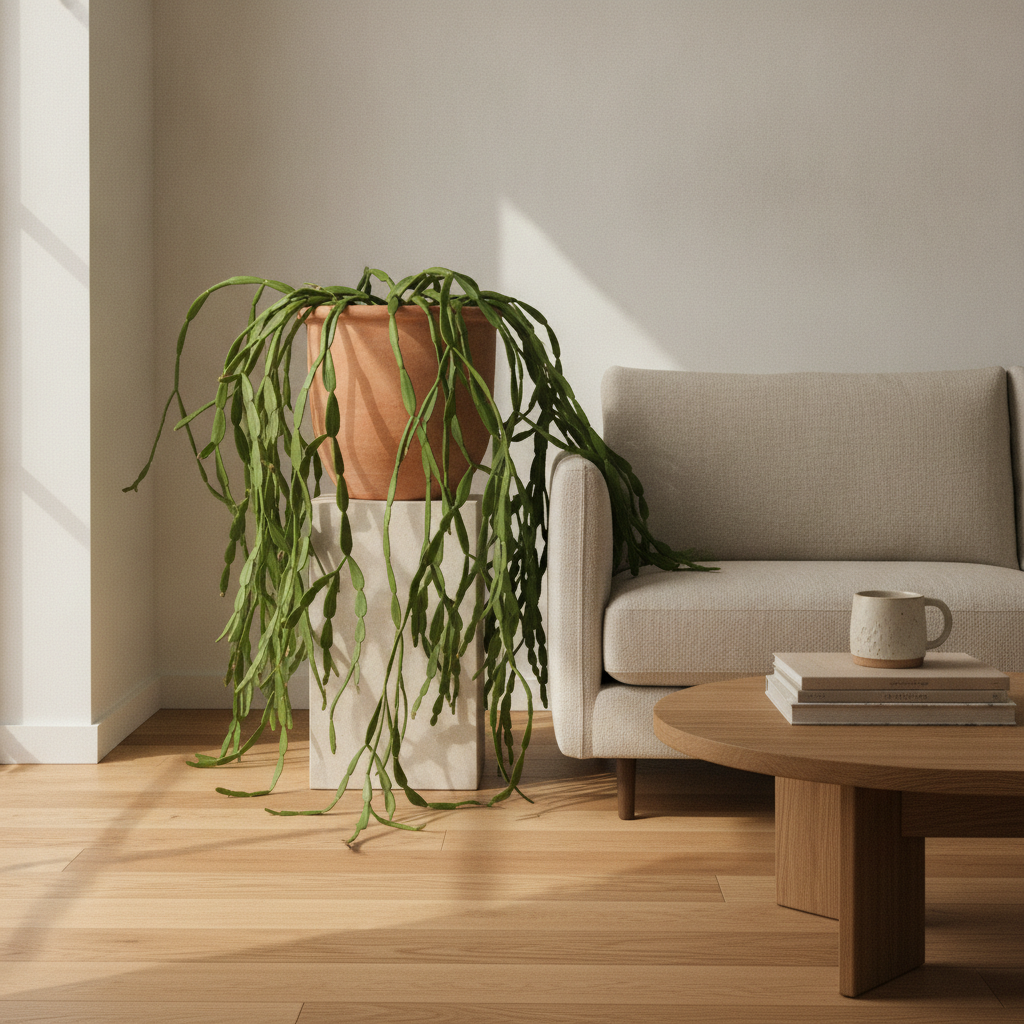
The first thing to understand about Epiphyllum oxypetalum is that it is a cactus that does not look like one. There are no rigid columns, no fierce spines, and nothing that resembles a leaf in the ordinary sense. What appear to be long, strap-shaped leaves are in fact flattened stems, technically cladodes or phylloclades, which have taken over the work of photosynthesis. This adaptation suits the plant’s wild lifestyle, where it grows as an epiphyte perched on tree branches in humid forests rather than rooted in open desert. Its relatives in the genus are often sold together as orchid cacti, a nod to the size and glamour of their flowers.
For day-to-day living, this epiphytic background is the key to the whole plant. It explains why the Queen of the Night wants a loose, airy root run rather than dense soil, why it appreciates more water and humidity than a desert cactus, and why it dislikes the harsh direct sun that a barrel cactus would shrug off. Treat it like a forest dweller and it forgives a great deal.
Then there is the flower, which is the reason most people seek the plant out. A mature, well-rested specimen produces buds on the margins of its stems that swell over a couple of weeks into long, drooping, pipe-shaped structures. On the chosen evening the bud opens slowly over a few hours into a flower that can span 25 centimetres (roughly 10 inches), brilliant white with a ring of slender outer segments, and carrying a sweet, carrying fragrance designed to summon night-flying moths and bats. By sunrise it is spent. The brevity is the whole point, and in many households the opening becomes a small celebration, watched in real time over the course of an evening.
Pro Tip — Manage expectations on flowering: A young plant raised from a cutting will usually not flower for its first several years. Maturity, a degree of root crowding, and a cool, dry winter rest matter far more than any feeding regime. If your plant is healthy but has never bloomed, age and a proper winter rest are almost always the missing ingredients.
It is also a genuinely easy plant to keep alive, which makes the eventual reward feel achievable rather than fussy. It tolerates a range of indoor conditions, stores water in its fleshy stems so it copes with the occasional missed watering, and is widely regarded as non-toxic, a reassuring trait in homes with curious cats, dogs or children. The main commitment it asks for is space, since a happy plant becomes a large and somewhat unruly cascade over time.
Light
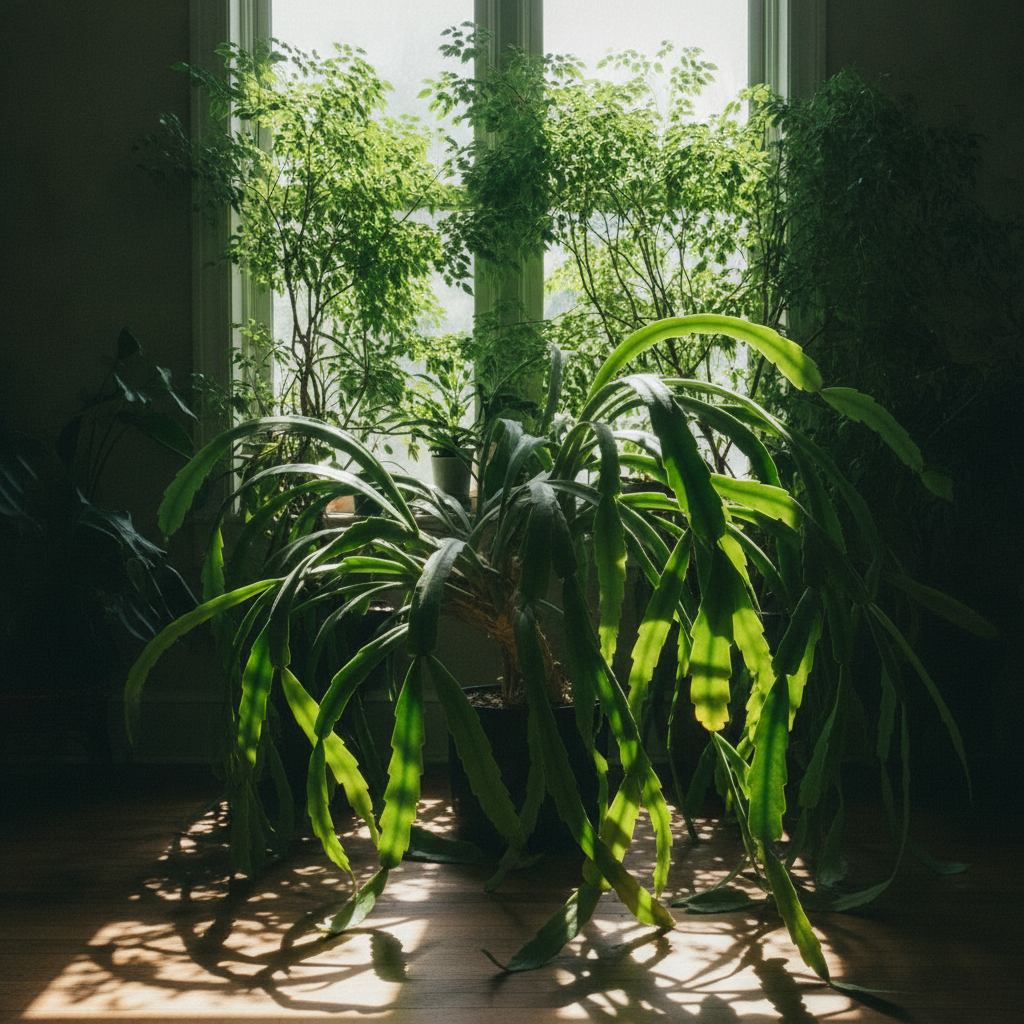
Light is where the survive-versus-thrive distinction becomes practical. To stay alive, the Queen of the Night accepts a fairly broad range of conditions, from moderate indirect light to a brightly lit room. To grow vigorously and eventually flower, it wants bright, indirect light for most of the day, ideally with an hour or two of soft early sun. This mirrors its forest home, where it sits in the dappled brightness beneath the canopy rather than in full exposure.
An east-facing window is close to ideal, offering gentle morning sun followed by bright ambient light for the rest of the day. A spot near a south or west window also works well provided the plant is set back slightly or shielded by a sheer curtain during the fierce middle hours. Harsh, direct midday sun is the main hazard: the flat stems scorch readily, developing pale yellow or bleached patches that later turn papery and brown. These burns do not heal, so prevention matters.
Too little light brings the opposite problem. In a dim corner the plant survives but grows thin, stretched and weak, with stems that are narrow and floppy rather than broad and firm. More importantly, a plant in low light will almost never flower, since bud production depends on the energy reserves built up during a bright growing season. If a plant is healthy but persistently refuses to bloom, insufficient light is a common culprit alongside the lack of a cool winter rest.
Pro Tip — Move it outside for summer: In mild weather, a sheltered, partly shaded spot outdoors during the warmer months does wonders for stem strength and flowering. Acclimatise the plant gradually over a week or two to avoid sunburn, keep it out of strong wind, and bring it back indoors well before the first cold nights arrive.
Watering
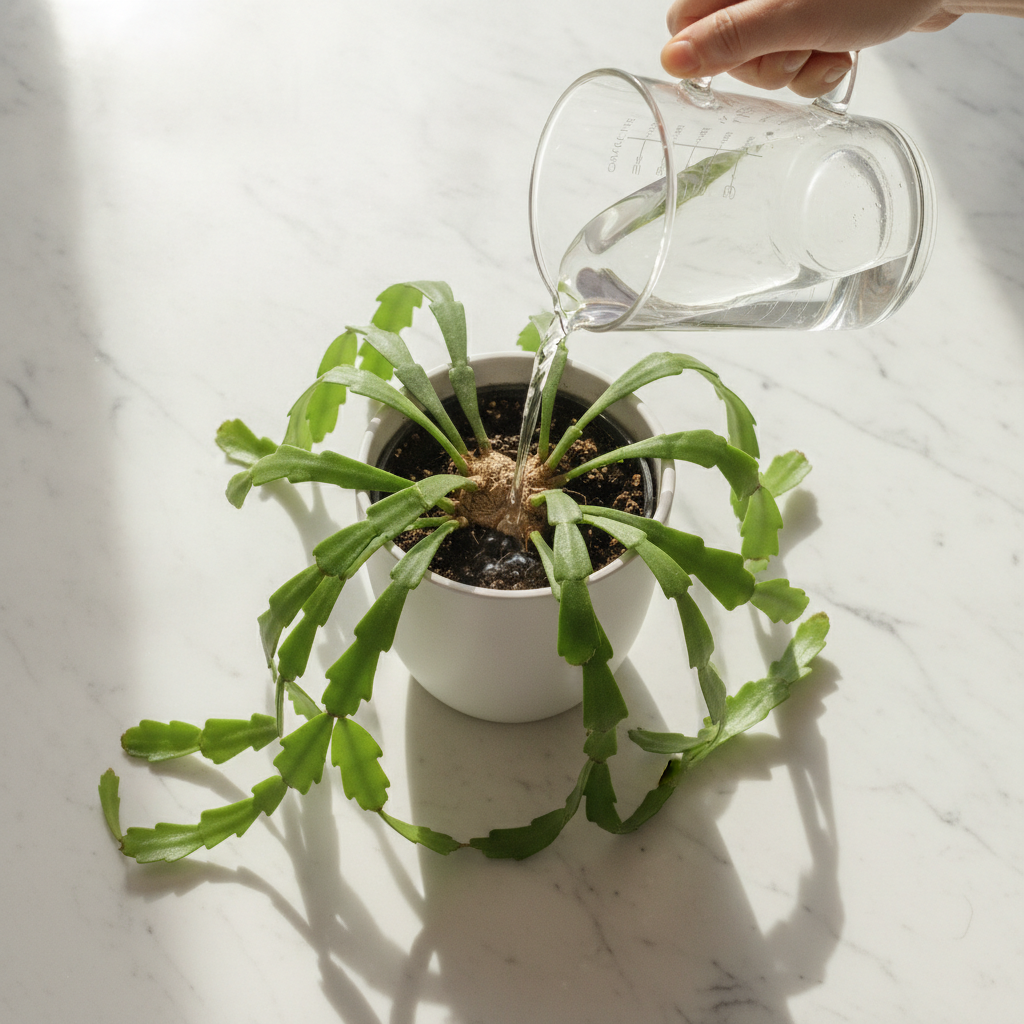
Because it is an epiphyte rather than a desert cactus, the Queen of the Night likes more moisture than its spiny cousins, but it is just as intolerant of standing water. The reliable approach during the growing season is to water thoroughly when the top 3 to 5 centimetres (1 to 2 inches) of the mix have dried out, allowing water to run freely from the drainage holes, then to let the pot drain fully before returning it to its place. The fleshy stems act as a reservoir, so the plant copes far better with being slightly too dry than slightly too wet.
In spring and summer, when the plant is actively growing, this may mean watering once or twice a week depending on warmth, light and pot size. The single most useful habit is to check the mix with a finger rather than watering on a fixed schedule, since the right interval shifts constantly with the season and the room. Tepid water is gentler than cold, and like many forest plants it appreciates rainwater or filtered water where the tap supply is very hard, though it is not especially demanding on this point.
Winter watering is a different matter, and it is also one of the secrets to flowering. From late autumn the plant should be kept noticeably drier and cooler, watered only just enough to stop the stems shrivelling, perhaps every two to three weeks or even less. This dry, cool rest mimics the seasonal lull of its native range and is one of the triggers that prompts a mature plant to set buds the following summer. Resume normal watering gradually in spring as growth restarts.
Warning — Overwatering is the main killer: Soft, yellowing, translucent or mushy stems, especially near the base, usually signal root rot from soil that has stayed wet too long. If you suspect it, unpot the plant, cut away any blackened or slimy roots and rotten stem sections with a clean blade, let the cuts dry, and repot into fresh, fast-draining mix. Never leave the pot sitting in a saucer of water.
Soil and Potting
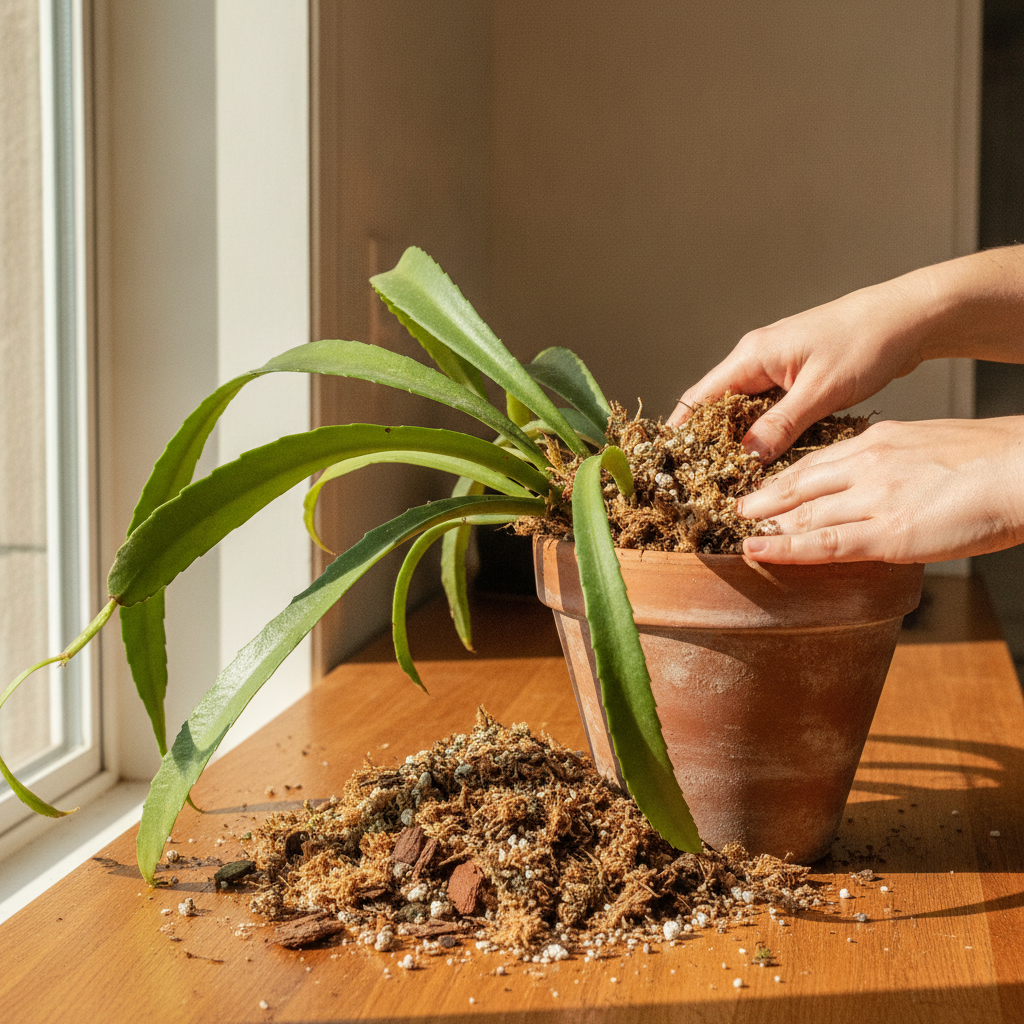
The ideal growing medium follows directly from the plant’s epiphytic nature. In the wild its roots cling to bark and leaf litter rather than soil, surrounded by air and rapidly draining moisture. A potting mix that recreates this is open, chunky and quick to drain, holding some moisture but never staying soggy. A reliable blend is roughly equal parts of a quality cactus or succulent compost, fine orchid bark, and perlite or pumice, which together give both the drainage and the air the roots need.
Ordinary general-purpose potting compost used on its own is too dense and water-retentive, and is the usual cause of the rot described above. If that is all you have, cut it heavily with bark and perlite until it feels loose and free-running. A handful of coco coir can be added for a little extra moisture retention in very warm, dry homes, but the priority is always drainage.
The Queen of the Night flowers more freely when slightly pot-bound, so resist the urge to move it into a much larger container. Repot only every two to three years, or when roots are visibly crowding the surface and escaping the drainage holes, and then move up just one pot size. A pot with generous drainage holes is essential, and a heavier vessel such as terracotta or glazed ceramic helps to anchor what becomes a top-heavy, trailing plant. Spring, as growth resumes, is the best time to repot.
Pro Tip — Give it something to lean on: Long stems can become heavy and ungainly. A simple trellis, moss pole or a position where the stems can trail from a high shelf keeps the plant tidy and shows it off well. Handle the stems gently when tying them in, as they snap more easily than they look.
Fertilising
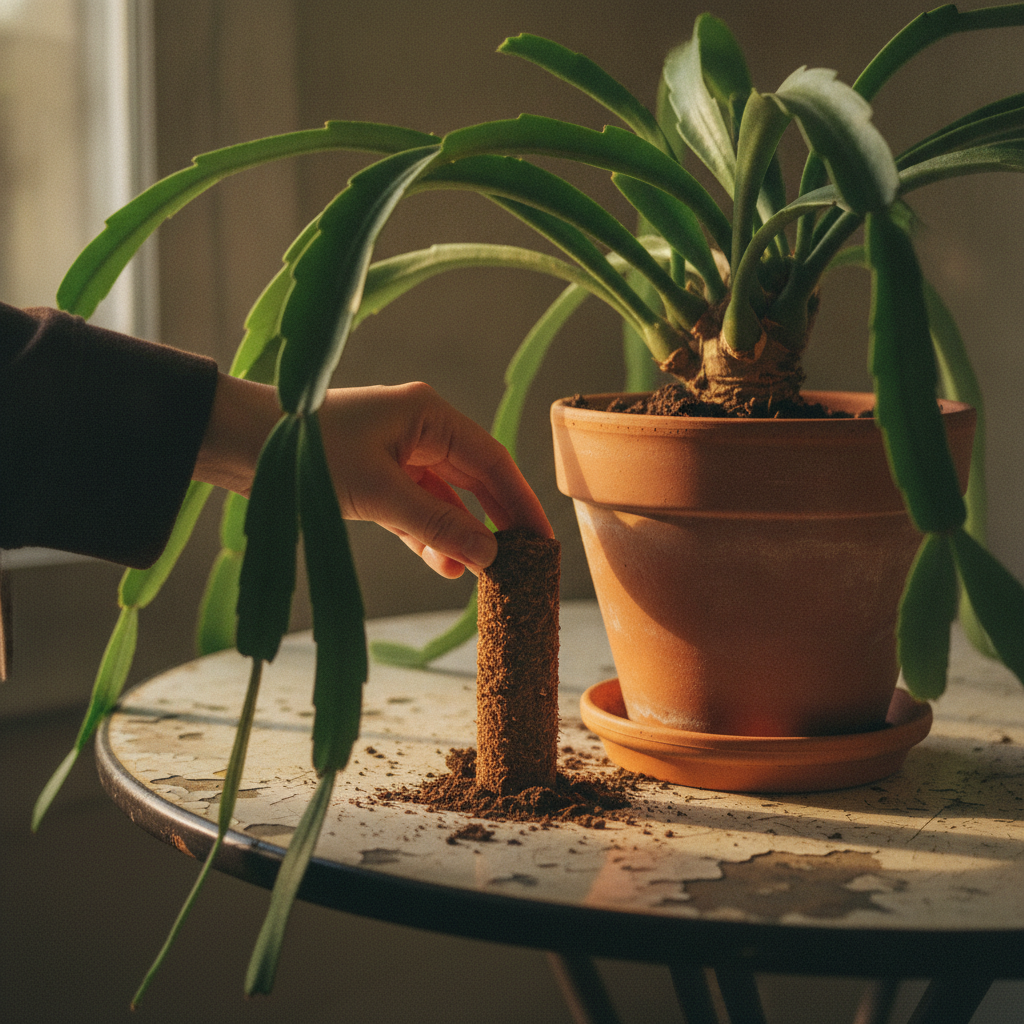
The Queen of the Night is not a heavy feeder, and the most common mistake is giving it too much nitrogen. A high-nitrogen feed encourages lush, soft green growth at the direct expense of flowers, producing a large plant that never blooms. For most of the growing season a balanced, diluted houseplant feed is fine, but as the plant approaches its flowering size it benefits from a feed lower in nitrogen and higher in potassium, of the kind sold for tomatoes or for blooming, which encourages bud production rather than stem.
Through spring and summer, feed roughly every two to four weeks, always at half the recommended strength and always onto already-moist mix to protect the roots. A dilute liquid feed mixed into the watering can is the simplest method, though slow-release sticks or pellets pushed into the surface also work for those who prefer to feed less often. Whatever the form, weak and regular beats strong and occasional.
Stop feeding altogether from autumn through winter while the plant is resting. Feeding during the cool, dry rest period works against the very dormancy that triggers flowering, and risks a flush of weak growth at the worst possible time of year. Resume only when active growth restarts in spring. If the stems ever take on a slightly reddish or bronzed tinge in strong light, that is usually a normal stress response rather than a sign of hunger, and is not a reason to increase feeding.
Propagation
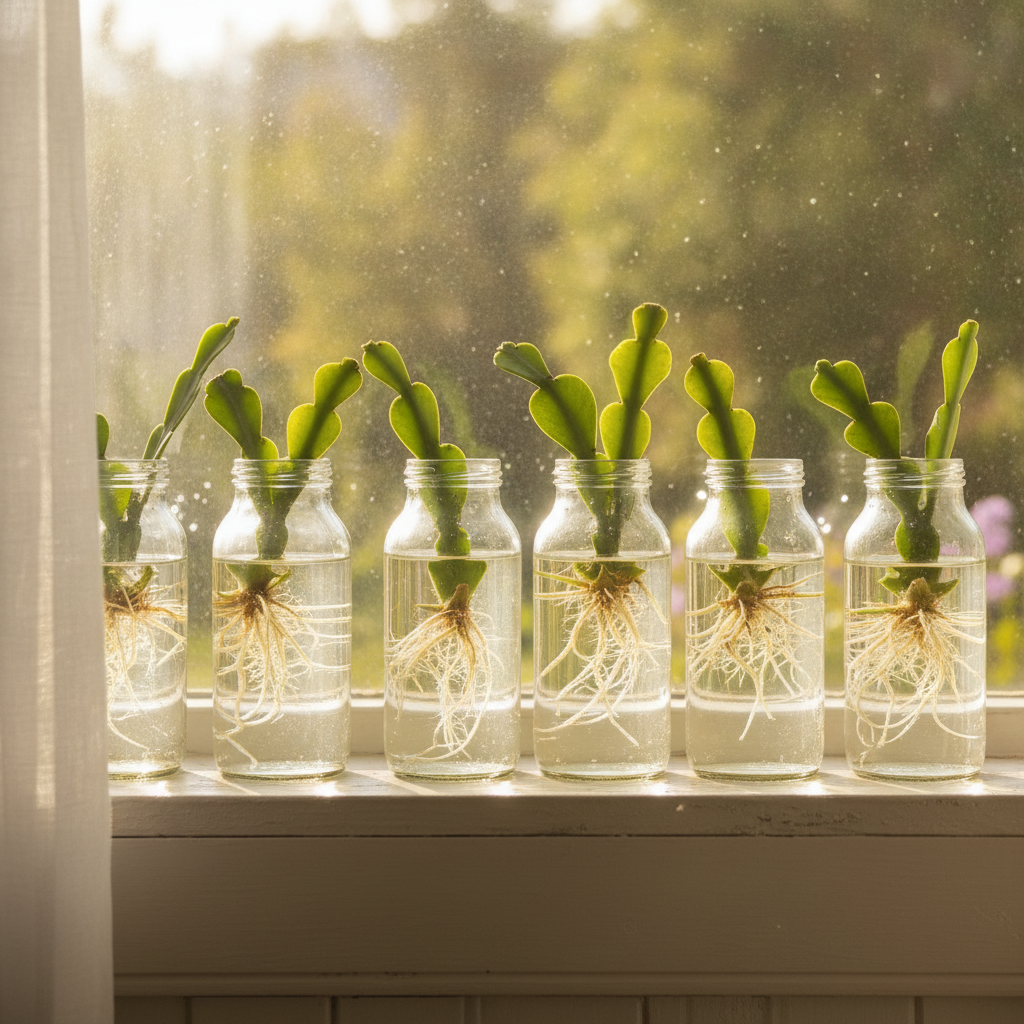
Propagation is one of the most satisfying parts of growing this plant, because it is easy, reliable, and a natural by-product of the pruning that keeps a large specimen in shape. The Queen of the Night is propagated from stem cuttings, and a single healthy stem can yield several new plants. The one rule that matters above all others is to let the cut surface dry and callus before it touches any moisture, since a fresh wet wound is an open invitation to rot.
The steps below describe the most dependable method.
- Using a clean, sharp blade, cut a healthy, mature stem segment around 15 to 20 centimetres (6 to 8 inches) long, ideally where one segment naturally joins another.
- Set the cutting aside in a dry, shaded, airy spot for several days to a week, until the cut end has dried and formed a firm, pale callus.
- Insert the callused end a few centimetres deep into lightly moist, fast-draining cactus or propagation mix, or stand it in a jar with just the very base in water.
- Place it in bright, indirect light and keep the medium barely moist rather than wet, watering very sparingly until roots form.
- After several weeks roots will develop and new growth will appear at the tip; from then on, treat the young plant as a small adult and pot it on into a normal mix.
Late spring and early summer are the best times to take cuttings, when the plant is in active growth and roots form quickly. A rooting hormone is not necessary but can speed things along. The main test of patience is flowering rather than rooting: a cutting establishes within weeks, but the resulting plant will still need to reach maturity, usually several years, before it produces its first bloom. This is simply the nature of the species, and no shortcut changes it.
Pests and Problems

The Queen of the Night is robust, and the great majority of its problems are cultural rather than caused by pests. The single most common issue, by a wide margin, is overwatering, which shows as soft, yellowing or translucent stems and, in advanced cases, a blackened, mushy base. The remedy is always the same: reduce watering, improve drainage, and if rot has set in, take healthy cuttings to start again before the whole plant is lost. Shrivelled, wrinkled stems point the other way, towards a plant that is too dry or too root-bound, and respond to a thorough soak and, eventually, repotting.
When pests do appear, they are the usual indoor suspects. Mealybugs are the most frequent, lodging as small white cottony tufts in the joints and along the stem edges, where they can be dabbed away with a cotton bud dipped in diluted isopropyl alcohol. Scale insects show as small brown limpet-like bumps that can be scraped off gently. Spider mites, more likely in hot dry air, cause fine stippling and faint webbing, and are discouraged by raising humidity. Fungus gnats hovering around the pot are a reliable sign that the mix is being kept too wet, and tend to vanish once watering is reined in.
For any visible infestation, isolate the plant from its neighbours, wipe down or rinse off what you can, and treat with insecticidal soap or a neem-oil solution, repeating every week or so until the problem clears. The flat stems are easy to inspect, so a quick look over the plant whenever you water catches most trouble early, while it is still simple to deal with.
The most emotionally charged problem is not a disease at all but a failure to flower, and it is worth restating the causes in one place. A plant that will not bloom is usually too young, kept too warm and wet through winter, growing in too little light, fed too much nitrogen, or potted into too large a container, often several of these at once. Correcting the winter rest and the light levels resolves it more often than anything else, and the reward, when it finally comes, is unforgettable.
Varieties and Relatives
Strictly speaking, Epiphyllum oxypetalum is a single species rather than a group of named cultivars, but it sits within a wider world of orchid cacti that are often grown and sold alongside it. The species itself remains the classic, prized for the size and scent of its nocturnal white flowers, while the broader genus and its hybrids offer a spectacular range of daytime colour for those who want flowers they can more reliably catch in the act.
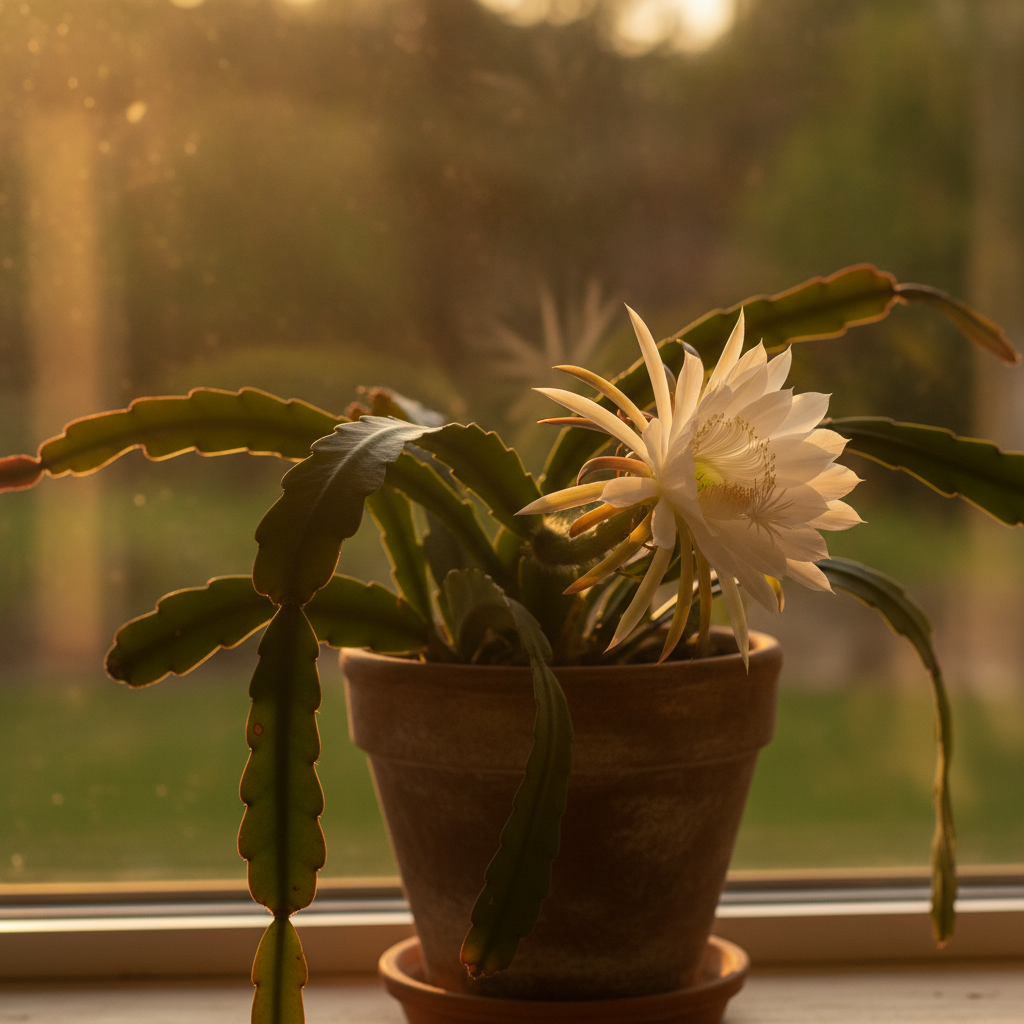
The classic species. The true Queen of the Night, with long, flat, scalloped green stems and the celebrated white flowers that open after dark and fade by dawn. This is the plant to choose for fragrance and for the sheer drama of the one-night bloom, accepting that it takes maturity and a cool winter rest to perform.
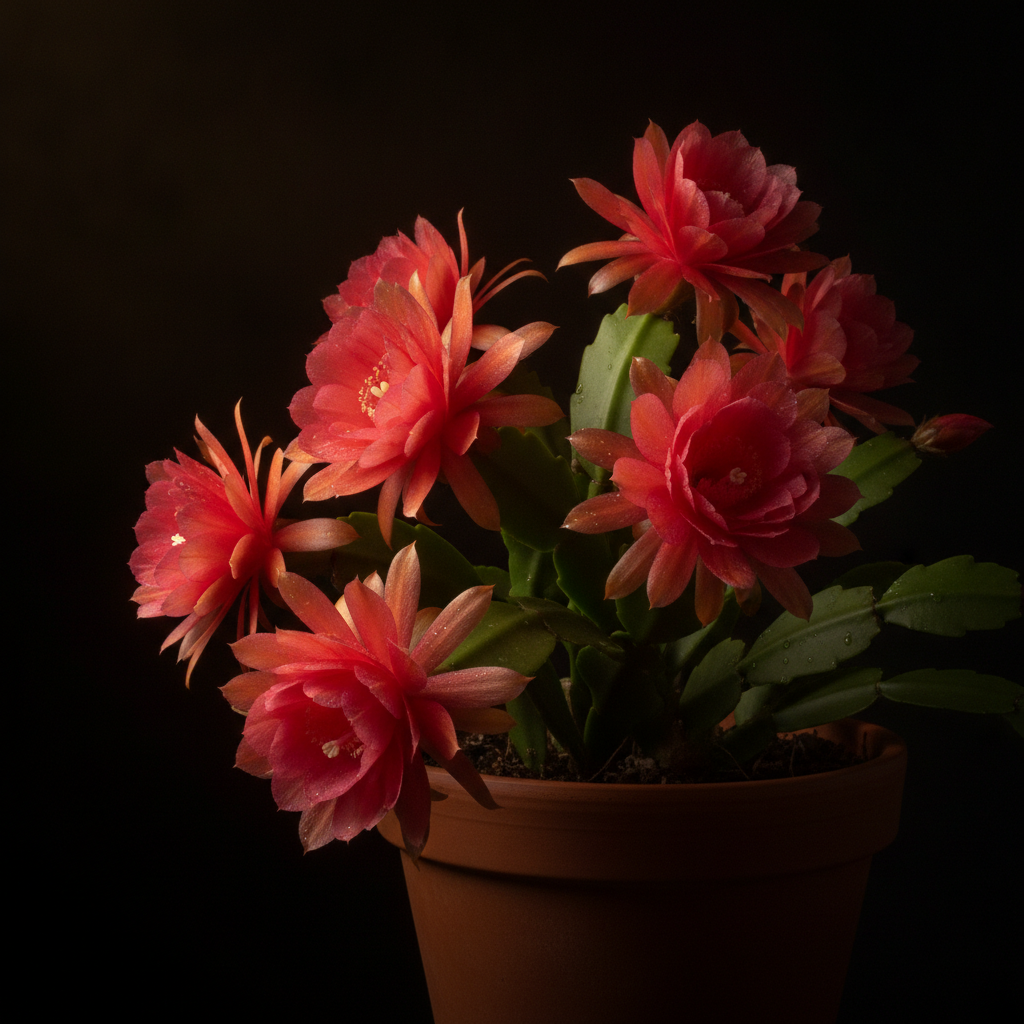
Hybrid orchid cactus. The wider family of Epiphyllum hybrids, bred for fuller, more compact growth and large flowers in pink, coral, red and orange that open in daylight and last longer than the species bloom. Their care is almost identical, making them a rewarding companion for anyone who wants colour they can enjoy without staying up past midnight.
Two close relatives are worth knowing because the common names overlap confusingly. The night-blooming cereus name is shared with several other cacti, including Selenicereus species sometimes called the King of the Night, while the fishbone or zigzag cactus, Disocactus anguliger, is another popular epiphytic relative with deeply notched stems. All of them enjoy broadly similar conditions, so the care described here transfers well across the group.
Frequently Asked Questions
Why won’t my Queen of the Night flower?
The usual reasons are immaturity, the lack of a cool dry winter rest, too little light, or too much nitrogen feed. Plants commonly take several years to reach flowering size, and even mature ones need a distinct cool, dry period in winter to set buds. Give it bright indirect light through the growing season, rest it cool and dry over winter, and switch to a lower-nitrogen feed as it matures.
How long does the flower actually last?
A single night. The bud opens slowly over the course of an evening, is fully open for a few hours in the dark, releases its strongest scent at that point, and has usually wilted by the following morning. A mature plant may open several flowers over a season, sometimes a few on the same night, but each individual bloom is fleeting, which is precisely what makes it so prized.
Is the Queen of the Night safe around pets?
Epiphyllum oxypetalum is generally regarded as non-toxic to cats and dogs and is not listed among the common toxic houseplants. As with any plant, nibbling can still cause mild stomach upset, so it is sensible to discourage pets from chewing the stems, but it is considered one of the safer choices for a pet-friendly home.
Why are the stems turning yellow or red?
Soft, yellow, translucent stems usually mean overwatering and possible root rot, and call for drier conditions and better drainage. A reddish or bronzed tinge, by contrast, is most often a harmless reaction to bright light or cool temperatures, and fades when conditions ease. Check the soil and the roots before assuming the worst: firm stems with good colour at the base point to light stress rather than rot.
How big does it get, and can I keep it smaller?
Indoors the stems can reach 2 to 3 metres (6 to 10 feet) in length over time, trailing or climbing rather than standing upright. It can be kept in bounds by pruning, and the off-cuts make ideal propagation material, so trimming serves two purposes at once. Prune after flowering or in spring, and avoid heavy cutting just before the flowering season so as not to remove the stems that would carry buds.
Should I bring it indoors for winter?
Yes, in any climate with cold nights. The plant is not frost hardy and should come inside well before temperatures approach freezing. The ideal winter is cool but not cold, around 10 to 13 degrees C (50 to 55 degrees F), kept on the dry side, which both protects the plant and provides the rest period that encourages the next year’s flowers.






