
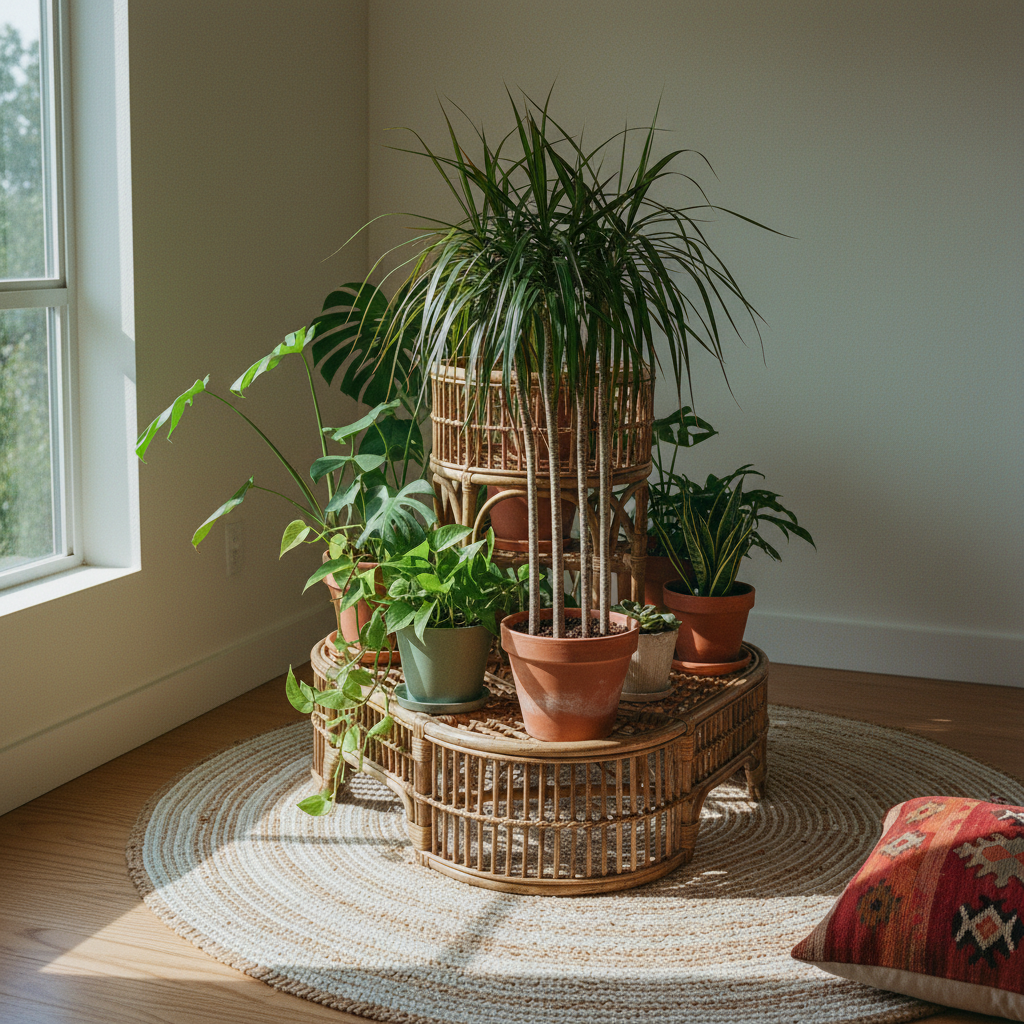
Few houseplants carry themselves with quite the spare, sculptural elegance of the red-edged dracaena. Known botanically as Dracaena marginata and sometimes sold under the names dragon tree or Madagascar dragon tree, it grows as a cluster of slim, grey, woody canes, each crowned with a fountain of narrow arching leaves in deep green outlined by a fine ribbon of reddish purple. Native to Madagascar and a handful of neighbouring islands in the Indian Ocean, it has become one of the most widely grown architectural foliage plants in homes and offices around the world, valued as much for its tolerance of neglect as for its clean, modern silhouette.
The red-edged dracaena has a deserved reputation as one of the easiest large houseplants to keep alive, but there is a meaningful gap between a plant that survives and one that truly thrives. A surviving specimen tolerates dim corners, irregular watering and dry air, slowly shedding lower leaves and gaining a thin, leggy look. A thriving one, by contrast, holds a full head of glossy, richly coloured foliage and puts on steady new growth each year. This guide covers everything you need to close that gap, from light and water to soil, feeding, propagation and the pests most likely to find your plant.
Contents
- Quick Reference
- Why Red-Edged Dracaena Makes a Great Houseplant
- Light Requirements
- Watering & Humidity
- Soil, Potting & Repotting
- Fertilising
- Propagation
- Pests & Diseases
- Popular Varieties
- Frequently Asked Questions
Quick Reference: Red-Edged Dracaena at a Glance
| Light | Bright, indirect light preferred; tolerates medium and low light, though colour and density suffer |
| Watering | Allow the top third to half of the soil to dry out between waterings; roughly every 10 to 14 days in growth |
| Temperature | 18 to 24 degrees C (65 to 75 degrees F); keep above 15 degrees C (59 degrees F) |
| Humidity | Average household humidity is fine; appreciates 40 to 50 percent or higher |
| Fertiliser | Balanced liquid feed at half strength once a month in spring and summer only |
| Toxicity | Toxic to cats and dogs if eaten; mildly irritating to humans |
Why Red-Edged Dracaena Makes a Great Houseplant
The strongest argument for the red-edged dracaena is its sheer resilience. It belongs to a genus that has evolved in seasonally dry habitats, so it stores energy in thick canes and copes well with the occasional missed watering, the kind of forgiving constitution that suits beginners and frequent travellers alike. Its slow, predictable growth means it rarely outgrows a room in a hurry, while its narrow footprint lets it slip into corners and narrow gaps where a bushier plant would crowd the space. A mature specimen can eventually reach 1.8 to 3 metres (6 to 10 feet) indoors, yet it does so over many years, giving you ample time to enjoy each stage.
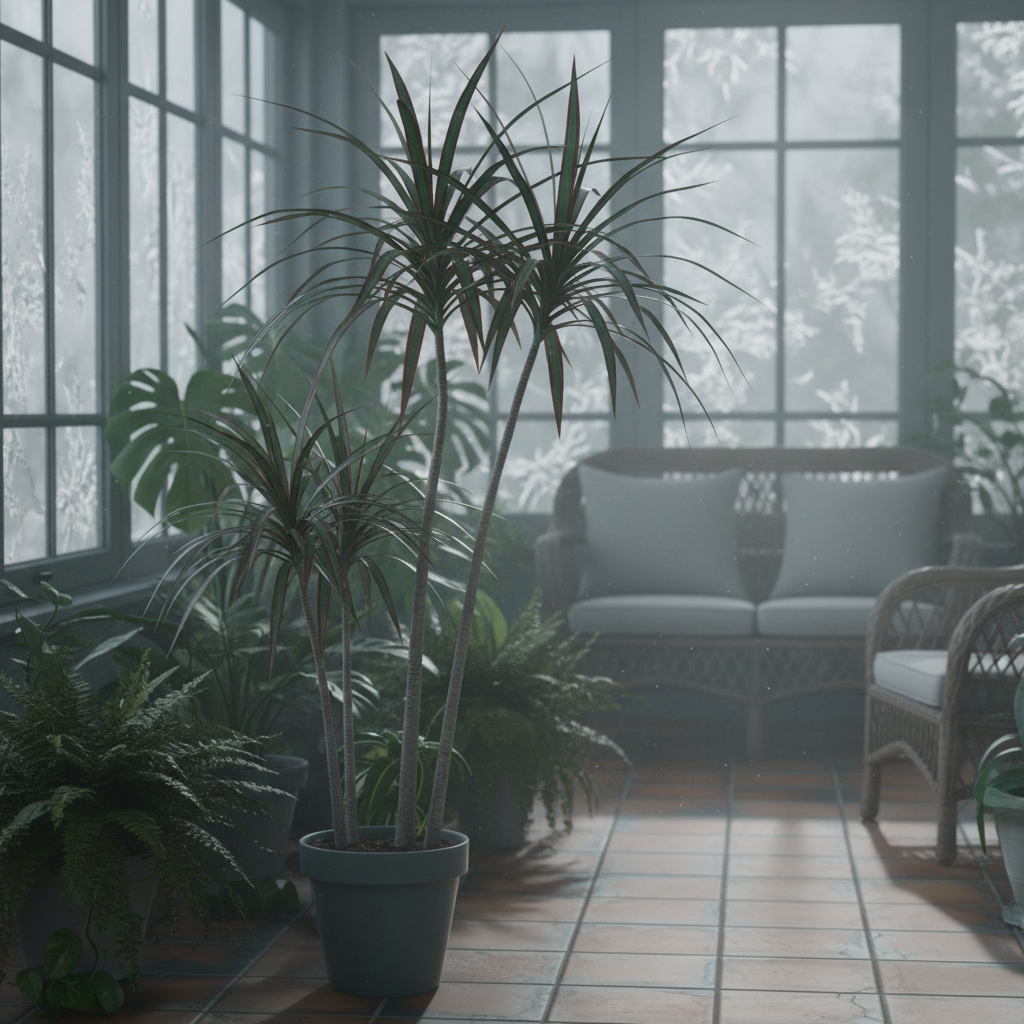
Beyond looks and toughness, the red-edged dracaena earns its place through versatility. It accepts a wide range of light levels, shrugs off the dry air of centrally heated rooms better than most tropical foliage plants, and lends itself to easy propagation, so a single plant can become several over time. It is also frequently cited in lists of plants studied for their air-cleaning potential, and while the practical effect indoors is modest, the plant is undeniably good company. The one important caveat is toxicity, which is worth understanding before you bring one home to a household with curious pets.
Important — Toxicity: All parts of Dracaena marginata contain saponins that are toxic to cats and dogs. Ingestion can cause vomiting (sometimes with blood), drooling, loss of appetite and dilated pupils in cats. Keep the plant out of reach of pets and children, and contact a vet promptly if you suspect your animal has chewed the leaves.
Light Requirements
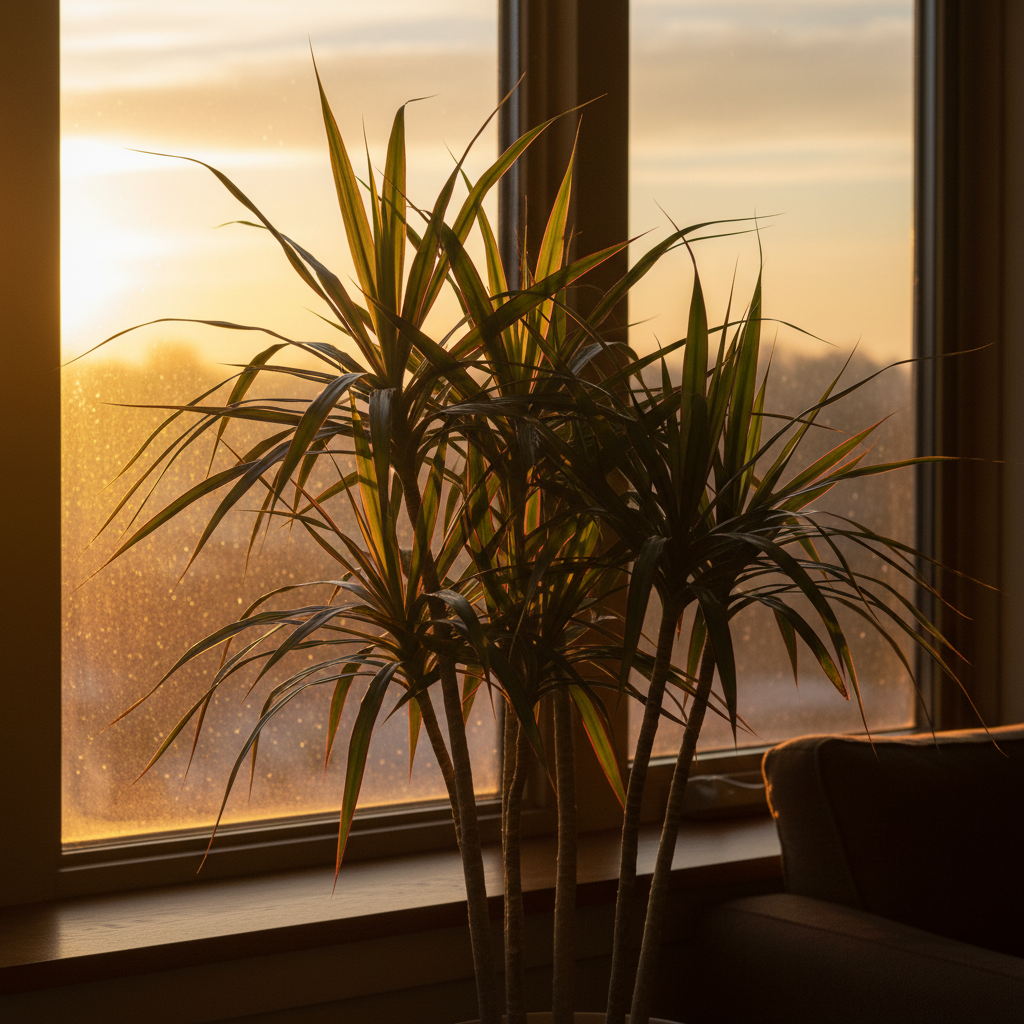
Light is the single biggest lever you have over how full and colourful your red-edged dracaena becomes. In its native Madagascar it grows in bright, often dappled conditions, and indoors it rewards a position with plenty of gentle light by holding more leaves per cane and keeping the red margins vivid. While the plant is famous for tolerating gloom, tolerance is not the same as preference, and a dracaena left too long in a dark corner will gradually thin out from the bottom up.
The ideal spot is one with bright but indirect light for most of the day, such as a few feet back from an east or west window, or beside a south window screened by a sheer curtain. In these conditions the plant grows steadily, retains its lower foliage longer and shows the richest leaf colour. Variegated forms such as Tricolor and Colorama are noticeably more light-hungry than the plain species, since their reduced green tissue captures less energy.
Light Levels Explained
It helps to think of indoor light in broad categories rather than precise figures, since household conditions vary so much with season and aspect. The table below sets out how a red-edged dracaena tends to respond across the usual range.
| Light Category | Approx. Level | Typical Location | Outcome |
|---|---|---|---|
| Direct sun | Over 50,000 lux | On an unscreened south sill | Risk of scorched, bleached leaves, especially in summer |
| Bright indirect | 10,000 to 20,000 lux | Near a curtained south, or close to east or west window | Best growth, full crown, vivid red margins |
| Medium | 5,000 to 10,000 lux | A few metres from a bright window | Slower but healthy growth, slightly fewer leaves |
| Low | 1,000 to 5,000 lux | North-facing room or interior corner | Survives, becomes leggy, muted colour over time |
| Very low | Under 1,000 lux | Windowless space or far interior | Gradual decline, leaf drop, needs a grow light |
Window Orientation and Placement
South-facing window: This is the brightest aspect and offers excellent light, but the midday sun in spring and summer can scorch the thin leaves. Position the plant a metre or two back from the glass, or filter the light with a sheer curtain, and it will be very happy.
East-facing window: An ideal home for a red-edged dracaena. The gentle morning sun is rarely strong enough to burn, and the bright indirect light through the rest of the day suits the plant perfectly. Variegated forms do especially well here.
West-facing window: Also a good choice, providing bright light and some warm afternoon sun. Watch for leaf scorch during summer heatwaves and pull the plant back slightly from the glass if the leaves begin to bleach or crisp.
North-facing window: The dimmest aspect. The plain green species will cope, growing slowly and reaching towards the light, but variegated cultivars will fade and stretch. Consider rotating the plant regularly or supplementing with a grow light if a north room is your only option.
Pro Tip — Rotate for Even Growth: Dracaenas lean strongly towards their light source, and the slim canes can become permanently curved if the plant is never turned. Give the pot a quarter turn each week so that every side receives its share of light and the canes grow straight and balanced.
How Light Affects Leaf Colour
The defining red margin of Dracaena marginata is a form of pigmentation that intensifies with good light. In bright, indirect conditions the edges deepen to a rich burgundy and the contrast against the green centre is at its sharpest. In low light the plant prioritises chlorophyll production, the margins thin and dull, and new leaves emerge greener overall. If your dracaena has lost its colour, the most common cause is simply that it is not receiving enough light, and moving it to a brighter spot usually restores the red over subsequent flushes of growth.
Warning — Direct Sunlight: Although the red-edged dracaena enjoys bright light, prolonged exposure to harsh, direct midday sun will scorch the thin leaves, leaving dry, bleached patches that do not recover. Acclimatise a plant gradually to any brighter position over a week or two rather than moving it abruptly into full sun.
Artificial Lighting
Red-edged dracaenas respond well to artificial light, making them a reliable choice for offices and interior rooms with little natural daylight. A full-spectrum LED grow light positioned 30 to 60 centimetres (12 to 24 inches) above the crown, running for 10 to 12 hours a day, will keep the plant healthy and even encourage modest new growth. Ordinary bright office lighting on its own is rarely enough for vigorous growth but can help a plant hold its own.
Seasonal Adjustments
Light levels indoors drop substantially through autumn and winter, and your dracaena’s needs shift with them. Move the plant closer to a window during the darker months to compensate for the weaker, shorter days, then ease it back in spring as the sun strengthens and the risk of scorch returns. Growth naturally slows in winter, so do not be alarmed if your plant produces little new foliage until the days lengthen again.
Watering & Humidity
If light determines how well your red-edged dracaena grows, watering determines whether it lives at all. More dracaenas are killed by overwatering than by any other cause, because the plant’s drought-adapted roots quickly rot when left sitting in soggy compost. The guiding principle is restraint: this is a plant that would rather be a little too dry than a little too wet.
When to Water
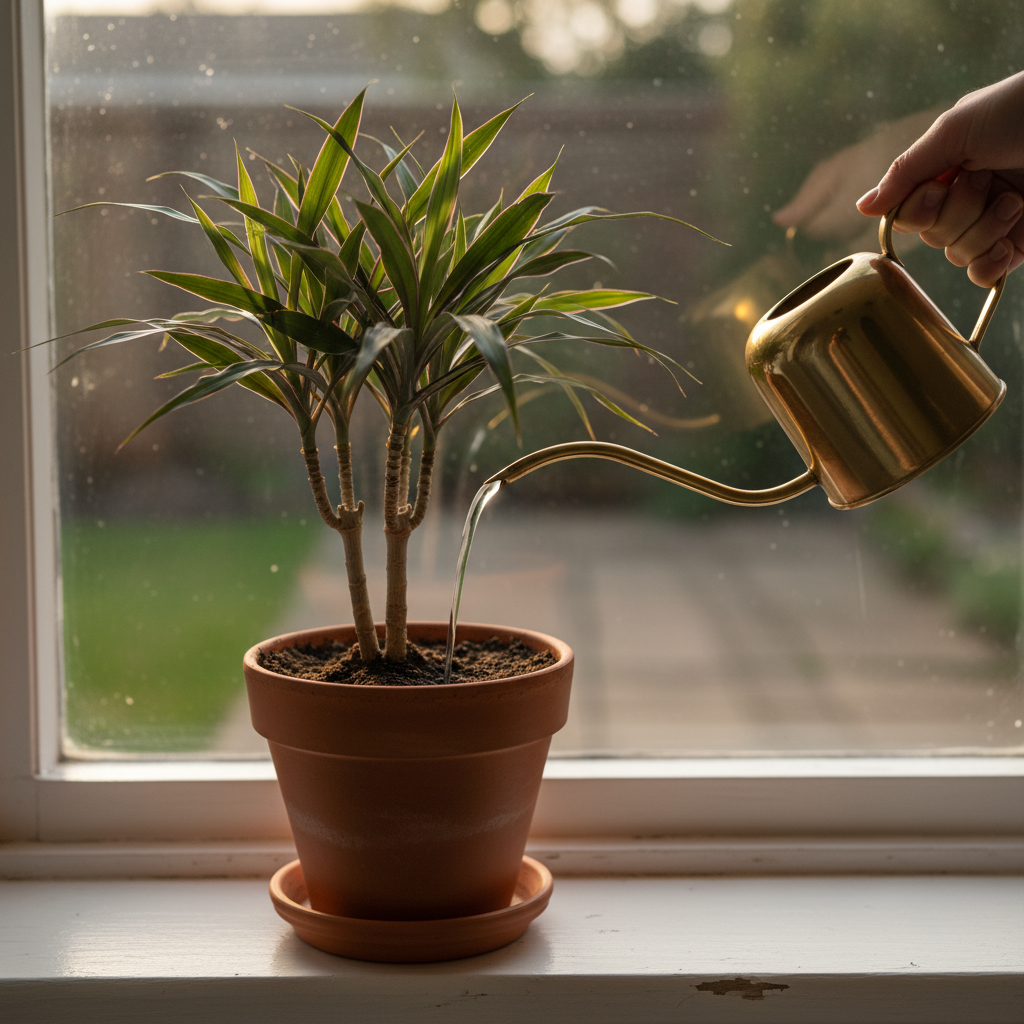
Rather than watering on a fixed calendar, let the soil be your guide. Push a finger into the compost and water only once the top third to half of the pot has dried out, which in average conditions tends to mean roughly every 10 to 14 days during the growing season. In a bright, warm room a plant will drink more often, while in a cool or dim spot the interval can stretch to three weeks or more.
Watering slows markedly in autumn and winter, when lower light and cooler temperatures reduce the plant’s thirst. During these months check the soil even more cautiously, and resist the urge to water simply because some time has passed. A red-edged dracaena will signal genuine thirst by curling or drooping its leaves slightly, and it recovers quickly once watered, whereas the damage from chronic overwatering is far harder to reverse.
Pro Tip — The Weight Test: Lift the pot just after watering to learn how heavy it feels when fully moist, then lift it again every few days. A pot that feels light has dried out and is ready for water, a quick and reliable check that works even when the surface of the soil is misleading.
How to Water Correctly
- Check that the top third to half of the soil has dried before you begin.
- Water slowly and evenly across the surface, using room-temperature water that is low in fluoride and chlorine where possible.
- Continue until water runs freely from the drainage holes, ensuring the whole root ball is moistened.
- Let the pot drain completely for several minutes.
- Empty the saucer or cachepot so the roots never stand in residual water.
- Wait until the soil has dried to the right depth again before the next watering.
Signs of Overwatering vs. Underwatering
| Symptom | Overwatering | Underwatering |
|---|---|---|
| Leaf colour | Yellowing, often starting low on the plant | Browning and crisping, usually at the tips first |
| Leaf texture | Soft, limp, sometimes translucent | Dry, papery, curling inwards |
| Soil | Constantly wet, may smell sour | Bone dry, pulling away from the pot edge |
| Roots | Brown, mushy and foul-smelling | Dry and brittle but otherwise firm |
| Stem base | Soft or spongy canes near the soil line | Canes firm but foliage sparse and thirsty |
Warning — Root Rot: Soft, browning canes at the soil line and a sour smell from the compost are signs of advanced root rot. Unpot the plant immediately, trim away every blackened, mushy root with sterilised scissors, and repot into fresh, free-draining mix. Catching it early is the only reliable cure.
Humidity Requirements
One of the red-edged dracaena’s most endearing traits is its tolerance of ordinary indoor air. While it appreciates moderate humidity of around 40 to 50 percent, it copes far better with the dry conditions of centrally heated rooms than fussier tropicals such as calatheas or ferns. For most households, no special humidity measures are needed at all.
That said, very dry air, especially close to a radiator or a winter heating vent, can show up as brown, crispy leaf tips. If you see this pattern combined with low ambient humidity, the air is likely the culprit, particularly if your watering is otherwise sound. Bear in mind that brown tips on a dracaena are more often caused by mineral build-up in the water than by humidity, so consider both possibilities.
If you do wish to raise humidity, the most effective methods are grouping plants together to create a moister microclimate, standing the pot on a tray of damp pebbles kept topped up with water, or running a small room humidifier during the driest months. Misting offers only fleeting benefit and is better avoided, since lingering moisture on the leaves can encourage fungal spotting.
Water Quality
Red-edged dracaenas are unusually sensitive to the fluoride, chlorine and dissolved salts found in tap water, and the classic symptom is brown, scorched leaf tips and margins that no amount of careful watering seems to fix. Where your tap water is hard or fluoridated, switch to filtered water, collected rainwater, or tap water that has been left to stand uncovered overnight so some of the chlorine can dissipate. This single change resolves a surprising number of stubborn brown-tip problems.
Soil, Potting & Repotting
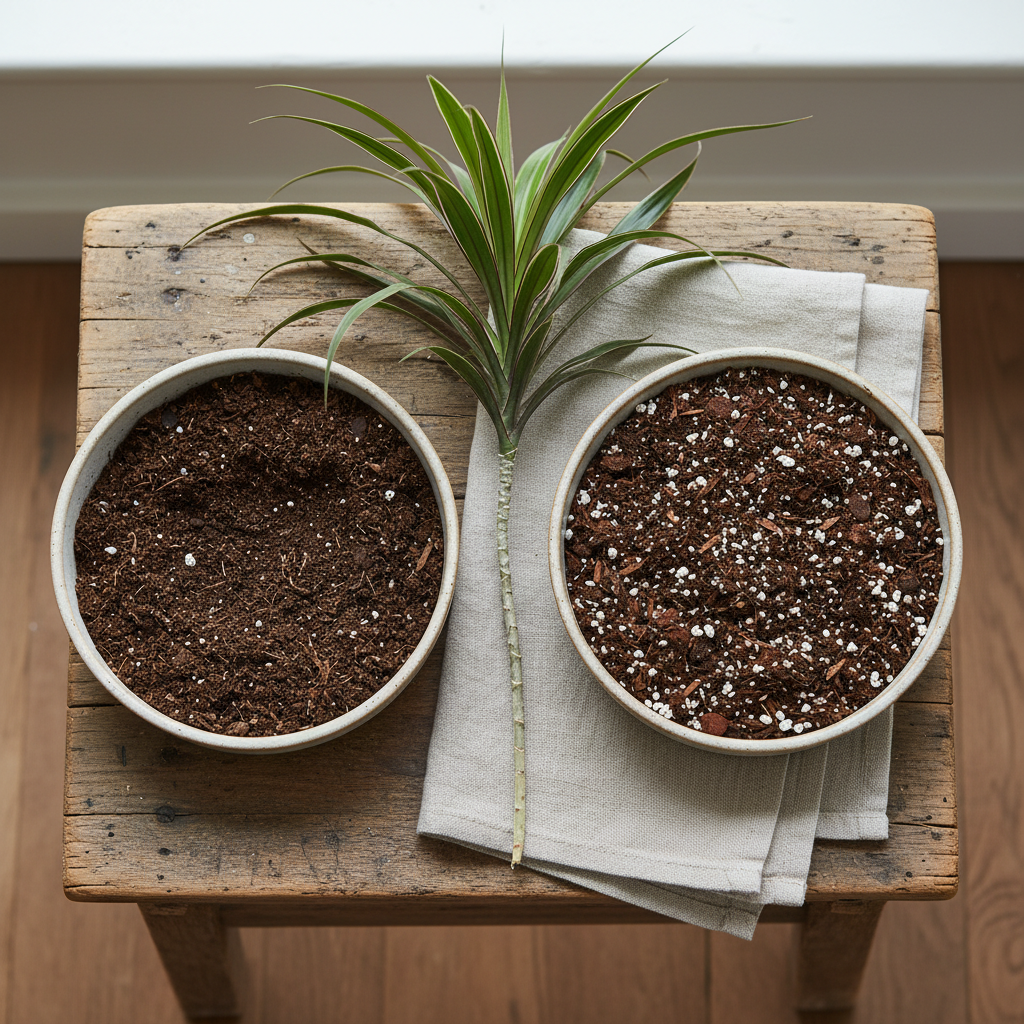
Because the red-edged dracaena is so vulnerable to soggy roots, the compost you choose matters more than its modest appearance might suggest. The aim is a mix that holds enough moisture to sustain the plant between waterings yet drains freely and admits plenty of air to the roots.
Ideal Soil Composition
A good base is a quality peat-free houseplant compost, opened up with generous amounts of drainage material. The goal is an open, crumbly structure that water can move through quickly rather than a dense mix that stays wet for days. The components below combine to achieve exactly that.
| Component | Proportion | Function |
|---|---|---|
| Houseplant or multipurpose compost | 2 parts | Provides structure, nutrients and moisture retention |
| Perlite or pumice | 1 part | Improves drainage and keeps the mix aerated |
| Orchid bark or coarse grit | 1 part | Adds chunkiness and stops compaction over time |
| Worm castings (optional) | Small handful | Adds gentle, slow-release nutrition |
Red-edged dracaenas prefer a slightly acidic to neutral soil, in the region of pH 6.0 to 6.5, which most standard houseplant composts already provide. There is rarely any need to adjust pH deliberately, and a balanced, free-draining mix will keep the plant content for years.
Pro Tip — Quick Mix Recipe: For a no-fuss blend, combine two handfuls of houseplant compost with one handful of perlite and one handful of orchid bark. It drains beautifully, resists compaction and suits not only dracaenas but most easy-going foliage plants.
Choosing the Right Pot
The right container does much of the work of keeping a dracaena healthy, chiefly by managing how quickly the soil dries.
Drainage holes are non-negotiable. A red-edged dracaena should never be planted in a pot without drainage. If you love a decorative cachepot with no holes, keep the plant in a plain plastic nursery pot that does drain and simply slip it inside, lifting it out to water and allowing it to drain fully before returning it.
Pot material: Terracotta is an excellent choice because its porous walls wick moisture away and make overwatering far harder, a real advantage for a rot-prone plant. Glazed ceramic and plastic retain moisture longer, which is fine provided you are disciplined about letting the soil dry. Taller specimens benefit from a heavy pot for stability, since a top-heavy dracaena can topple in a lightweight container.
Pot size: Choose a pot only 2 to 5 centimetres (1 to 2 inches) wider than the current root ball. An oversized pot holds a large volume of damp soil that the roots cannot use quickly, which dramatically raises the risk of rot. Dracaenas are happy being a little root-bound, so err towards a snug fit.
When to Repot
This is a slow grower that dislikes disturbance, so it needs repotting only every two to three years, or when you see clear signs that it has outgrown its home. Roots emerging from the drainage holes, water that runs straight through without wetting the soil, or a plant that dries out within a day or two of watering all suggest it is time. The best moment to repot is spring, as the plant enters its active growth phase and can recover quickly.
How to Repot: Step-by-Step
- Water the plant lightly a day beforehand so the root ball holds together and slides out cleanly.
- Ease the plant out of its pot, supporting the canes near the base and tipping rather than pulling.
- Gently tease away some of the old, spent compost from around the roots and inspect them, trimming any that are brown or mushy.
- Add a layer of fresh, free-draining mix to the base of a pot one size larger.
- Position the plant at the same depth it sat before, then fill around the root ball with fresh compost, firming gently to remove air pockets.
- Water thoroughly, let the pot drain completely, and return the plant to its usual spot.
- Hold off on feeding for four to six weeks while the roots settle into the new mix.
Warning — Transplant Shock: Dracaenas can sulk after repotting, dropping a few leaves or pausing growth for a few weeks. This is normal. Keep the plant in stable, bright-but-indirect light, water sparingly until you see fresh growth, and avoid the temptation to feed or fuss it back to health, which usually does more harm than good.
Fertilising
Red-edged dracaenas are light feeders, and the most common feeding mistake is giving too much rather than too little. As a slow grower the plant needs only modest, occasional nutrition during its active months, and overfeeding shows up quickly as scorched leaf tips from the build-up of mineral salts.
Combined with the plant’s sensitivity to fluoride and other minerals in water, this means a gentle hand pays off. Think of fertiliser as a small seasonal top-up rather than a regular meal, and your dracaena will reward the restraint with clean, undamaged foliage.
Understanding Plant Nutrients
Fertiliser labels carry three prominent numbers, the NPK ratio, standing for nitrogen, phosphorus and potassium, the three nutrients plants need in the largest quantities. For a foliage plant such as the red-edged dracaena, a balanced formula in which the three numbers are roughly equal serves well. Beyond these, several secondary and trace elements support healthy growth, and the table below summarises the most relevant.
| Nutrient | Symbol | Primary Function | Deficiency Symptoms |
|---|---|---|---|
| Nitrogen | N | Drives leaf and stem growth | Pale, yellowing older leaves, weak growth |
| Phosphorus | P | Supports roots and energy transfer | Stunted growth, dull foliage |
| Potassium | K | Regulates water use and overall vigour | Yellowing or browning leaf edges |
| Magnesium | Mg | Central to chlorophyll and green colour | Yellowing between the veins of older leaves |
| Iron | Fe | Needed for chlorophyll formation | Yellowing between veins on the newest leaves |
Types of Fertiliser
Liquid fertilisers: The easiest option to control. Diluted into water and applied during the growing season, they let you feed at half strength and stop instantly if you see any sign of over-feeding. For dracaenas this precision makes liquid feeds the recommended choice.
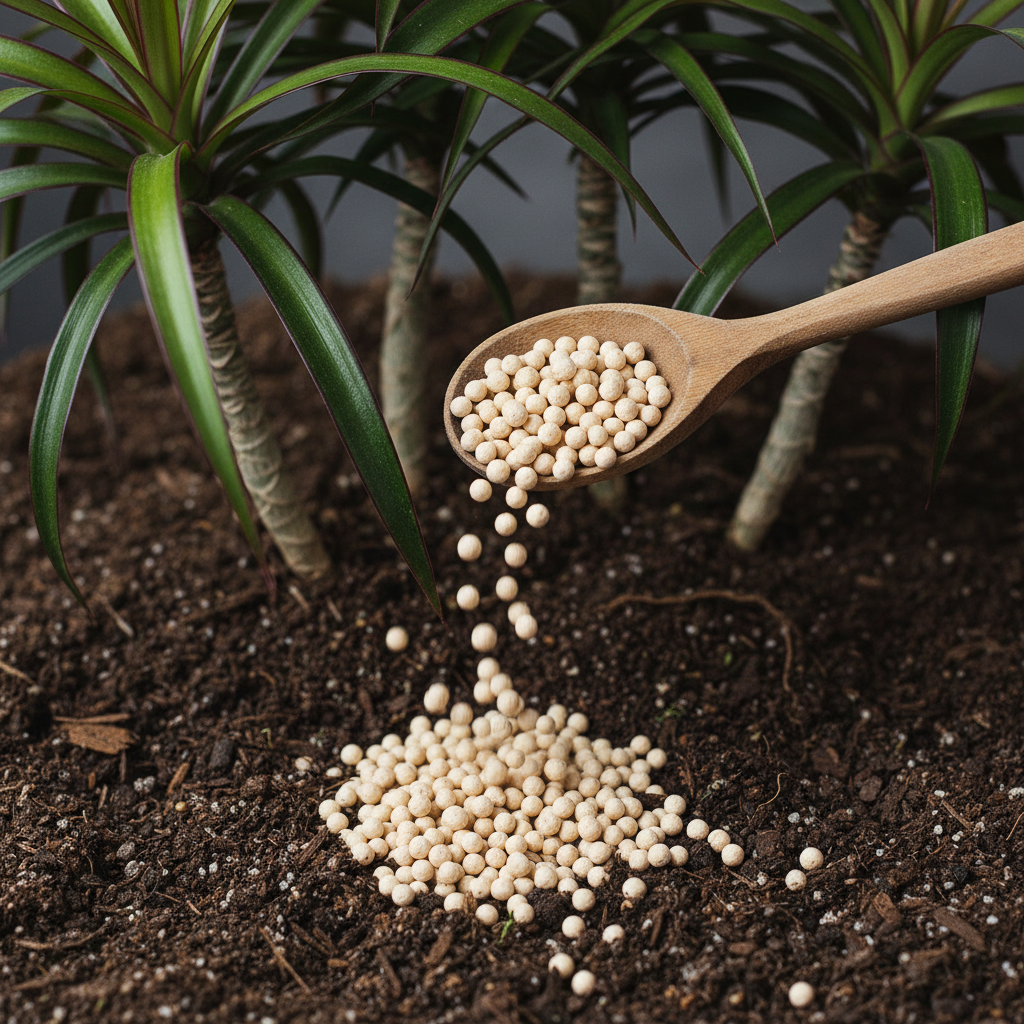
Slow-release granular: Coated prills release nutrients gradually over several months, which is convenient but harder to dial back if the plant shows signs of too much feed. If you use them, apply at the lower end of the recommended rate.
Organic fertilisers: Worm castings, diluted seaweed and similar organic feeds offer gentle, low-risk nutrition that is very hard to overdo. They are an excellent fit for a plant as easily scorched as the red-edged dracaena.
Feeding Schedule
Feed only during the active growing season, from spring through to the end of summer, offering a balanced liquid fertiliser at half the recommended strength roughly once a month. Stop feeding entirely in autumn and winter, when the plant is resting and cannot use the extra nutrients, which would otherwise accumulate in the soil and damage the roots.
Pro Tip — Less Is More: When in doubt, underfeed. A red-edged dracaena will tolerate a missed feed without complaint but reacts badly to too much. Half the stated dose, given half as often as you think you should, is the safest rhythm for this plant.
How to Fertilise
- Water the plant lightly first, so the roots are never fed when the soil is bone dry.
- Dilute a balanced liquid fertiliser to half the recommended strength.
- Apply evenly to the soil, avoiding splashing the leaves.
- Allow any excess to drain away and empty the saucer.
- Every few months, flush the pot with plain water to wash out accumulated salts.
Warning — Salt Build-Up: A white crust on the soil surface or around the pot rim signals a build-up of fertiliser salts, which scorches roots and leaf tips. Flush the pot thoroughly with plenty of plain water two or three times a year to leach the salts away, and reduce how often you feed.
Propagation
Propagating a red-edged dracaena is both easy and strangely satisfying, because the same cuts that multiply your plant also rejuvenate a tall, leggy specimen into a fuller one. The plant grows from its cane tips, so removing a length of cane prompts the parent to branch below the cut, while the cutting itself roots readily to become a new plant.
The best time to propagate is spring or early summer, when warmth and lengthening days drive vigorous root and shoot growth. Cuttings taken then root faster and more reliably than those taken in the cooler, darker months.
Understanding Canes and Nodes
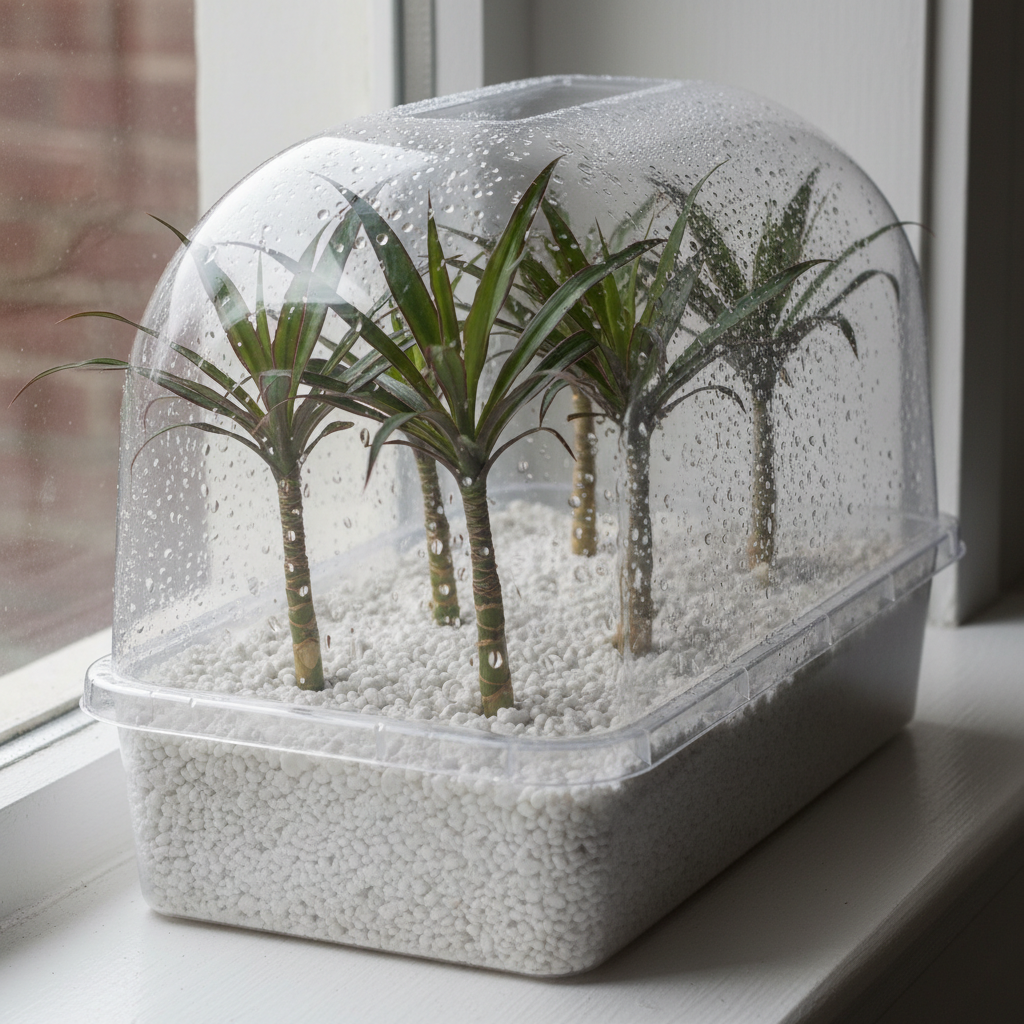
A red-edged dracaena is essentially a collection of woody canes, each ringed with faint scars that mark where old leaves once attached. These rings are the nodes, and they hold dormant buds capable of producing both new shoots and new roots. Knowing where the nodes sit is the key to successful propagation, because every cutting needs at least one or two nodes to grow from, and the parent will sprout fresh growth from the node just below where you cut.
Top (Tip) Cuttings: Step-by-Step
Tip cuttings use the leafy crown of a cane and are the quickest route to a presentable new plant, since they already carry foliage.
- With a clean, sharp knife, cut the top 10 to 20 centimetres (4 to 8 inches) of a cane just below a node.
- Remove any leaves from the lowest few centimetres so they will not sit in water or soil.
- Place the cutting in a glass of clean water, or insert it into moist perlite or a light potting mix.
- Set it somewhere warm with bright, indirect light, changing the water every few days if rooting in water.
- Wait for roots to appear, which usually takes three to six weeks.
- Once roots are a few centimetres long, pot the cutting into a free-draining mix and treat it as a young plant.
Pro Tip — Don’t Discard the Stump: The bare cane left behind after taking a tip cutting is not waste. Keep watering it sparingly and, within a few weeks, one or more new shoots will usually sprout from the node below the cut, giving the parent plant a fuller, branched habit.
Stem (Cane) Cuttings: Step-by-Step
Stem cuttings use the leafless lower sections of a cane and let you make several plants from one tall stem. They take longer than tip cuttings but are remarkably reliable.
- Cut a leafless length of cane into sections 8 to 15 centimetres (3 to 6 inches) long, each containing at least two nodes.
- Mark which end was the bottom, since cane cuttings must be planted the right way up to root.
- Let the cut ends dry and callus for a day or two to reduce the risk of rot.
- Insert the bottom end into moist, free-draining mix, or lay the section horizontally and half-bury it.
- Keep warm in bright, indirect light and the soil lightly moist but never wet.
- Be patient, as roots and new shoots can take six to eight weeks or more to emerge from the nodes.
Troubleshooting Propagation
| Problem | Likely Cause | Solution |
|---|---|---|
| Cutting rots before rooting | Too wet, or cut end not callused | Use fresh water or barely moist mix, and let cuts dry before planting |
| No roots after many weeks | Too cold or too dark | Move somewhere warmer and brighter, and be patient |
| Cane cutting fails entirely | Planted upside down | Always keep track of which end was the base |
| Leaves yellow on the cutting | Normal early stress or stale water | Refresh the water regularly and wait for roots to establish |
Pests & Diseases
A healthy red-edged dracaena is fairly resistant to pests, but no houseplant is immune, and dry indoor air can make certain sap-suckers more likely. Most problems are far easier to manage when caught early, so a quick inspection each time you water is the single most valuable habit you can develop.
The diseases that affect dracaenas are almost all linked to overwatering or persistently wet foliage, which means good cultural care prevents the great majority of them before they start. Keep the plant correctly watered and well ventilated, and disease should rarely trouble you.
Common Pests
Spider Mites (Tetranychus urticae)
The most frequent pest of dracaenas, spider mites thrive in warm, dry air and are tiny enough to be easily missed until fine webbing appears between the leaves. Affected foliage takes on a stippled, dusty or faintly yellow look as the mites drain the sap.
Treatment: Rinse the plant in a shower to dislodge the mites, then treat with insecticidal soap or neem oil, repeating every five to seven days for several weeks. Raising humidity helps prevent their return.
Mealybugs (Pseudococcus species)
Mealybugs appear as small, white, cottony tufts tucked into leaf joints and along the canes. They feed on sap, weakening the plant and leaving behind a sticky residue called honeydew that can lead to sooty mould.
Treatment: Dab each insect directly with a cotton bud dipped in isopropyl alcohol, then follow up with insecticidal soap or neem oil. Check regularly, as mealybugs hide in crevices and often reappear.
Scale (Coccidae family)
Scale insects look like small, brown, immobile bumps clinging to the canes and undersides of leaves. They too excrete honeydew and can sap a plant’s vigour if left unchecked.
Treatment: Scrape or wipe the scales off with an alcohol-dipped cloth, then treat the plant with neem oil or horticultural oil to catch any crawlers, repeating until no new insects appear.
Common Diseases
Root Rot (Pythium and Fusarium species)
By far the most serious threat to a red-edged dracaena, root rot is caused by fungal pathogens that flourish in waterlogged soil. Symptoms include yellowing leaves, soft canes at the base and a sour smell from the compost.
Treatment: Unpot the plant, cut away all soft, blackened roots with sterilised tools, and repot into fresh, free-draining mix in a clean pot. Water sparingly thereafter and prevention is far more effective than cure.
Leaf Spot (various fungal and bacterial pathogens)
Leaf spot shows as brown or tan lesions, sometimes ringed with yellow, usually appearing where leaves stay wet for long periods or where air circulation is poor.
Treatment: Remove affected leaves, avoid wetting the foliage when watering, improve airflow around the plant, and treat persistent cases with an appropriate fungicide.
Pest and Disease Summary
| Pest / Disease | Identification | Treatment |
|---|---|---|
| Spider mites | Fine webbing, stippled, dusty leaves | Rinse, then neem oil or insecticidal soap repeatedly |
| Mealybugs | White cottony tufts in leaf joints | Alcohol on a cotton bud, then neem oil |
| Scale | Brown immobile bumps on canes and leaves | Scrape off, then horticultural or neem oil |
| Root rot | Yellow leaves, soft base, sour soil | Trim rotten roots, repot in fresh dry mix |
| Leaf spot | Brown lesions, sometimes yellow-ringed | Remove leaves, improve airflow, keep foliage dry |
Prevention Strategies
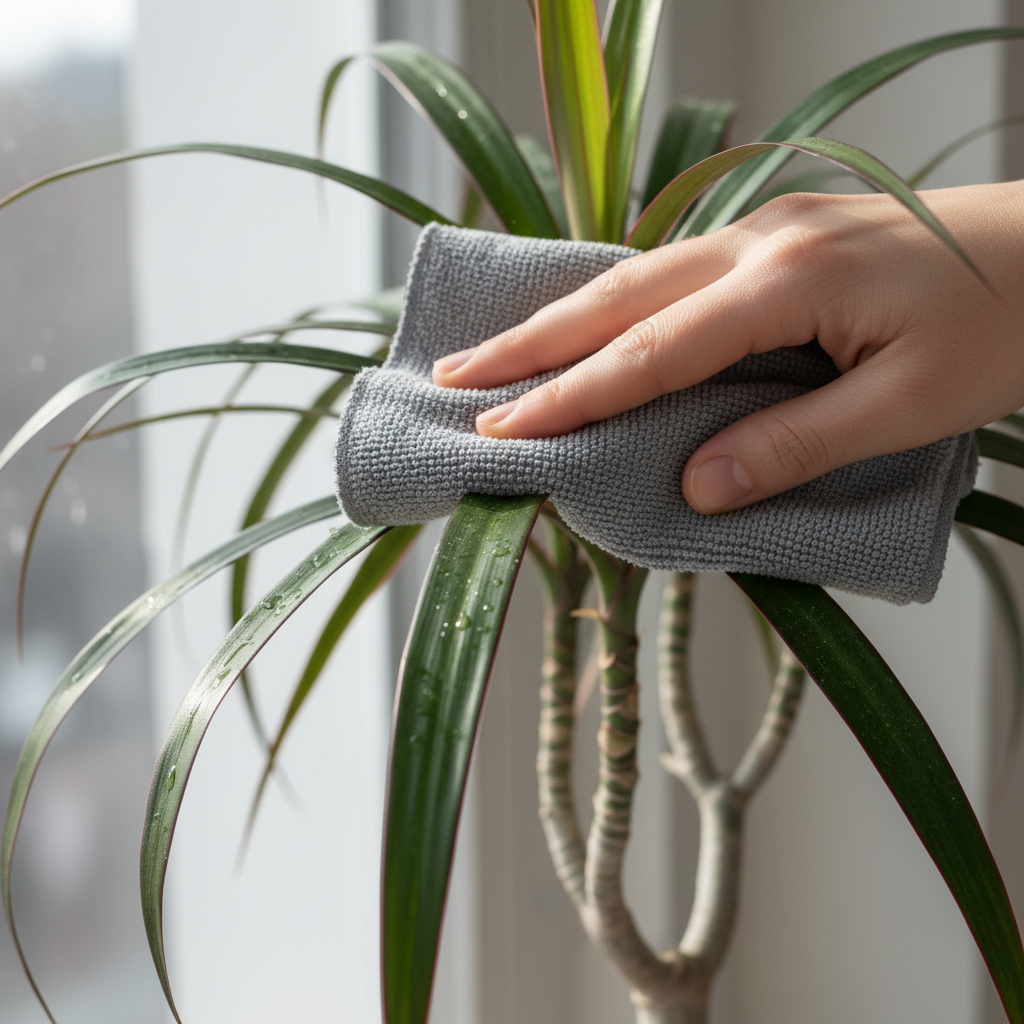
Prevention rests on a few simple habits. Inspect your plant whenever you water, paying attention to leaf joints and undersides where pests gather. Wipe the leaves occasionally with a damp cloth to remove dust and discourage mites, and quarantine any newly bought plant for a couple of weeks before placing it near your others.
Equally important is correct watering, since the most damaging dracaena problems stem from soggy soil. A plant kept in bright, indirect light, watered only when the soil has dried appropriately, and given good air circulation is naturally far more resistant to both pests and disease than a stressed, overwatered one.
Pro Tip — Neem as Routine Defence: A light monthly spray of diluted neem oil, applied in the evening out of direct sun, works as a gentle preventative that keeps most sap-sucking pests from ever gaining a foothold. Always test on a single leaf first to check the plant tolerates it.
Popular Varieties
Although the plain species is handsome in its own right, Dracaena marginata has given rise to several striking cultivars that vary chiefly in the amount and intensity of colour in their leaves. Some carry bolder red margins, others add stripes of cream or pink, and a few have been bred for a more compact, tufted habit.
All of these varieties share the same easy-going care, with one consistent caveat: the more colourful and variegated a cultivar, the more light it needs to keep that colour, since variegated tissue contains less chlorophyll. The table and profiles below cover the forms you are most likely to encounter.
| Variety | Leaf Appearance | Light Needs | Growth Rate | Availability |
|---|---|---|---|---|
| Species (plain) | Green with a thin red margin | Adaptable | Slow | Very common |
| Tricolor | Green, cream and red stripes | Bright indirect | Slow | Common |
| Colorama | Broad pink-red, looks mostly red | Bright indirect | Slow | Common |
| Bicolor | Green and pale cream stripes | Bright indirect | Slow | Occasional |
| Magenta (Cintho) | Deeper, wider purple-red edges | Adaptable | Slow | Common |
| Tarzan | Thicker leaves, fuller crown | Bright indirect | Slow | Occasional |
| Kiwi | Green with yellow-cream centre stripes | Bright indirect | Slow | Less common |
Featured Varieties
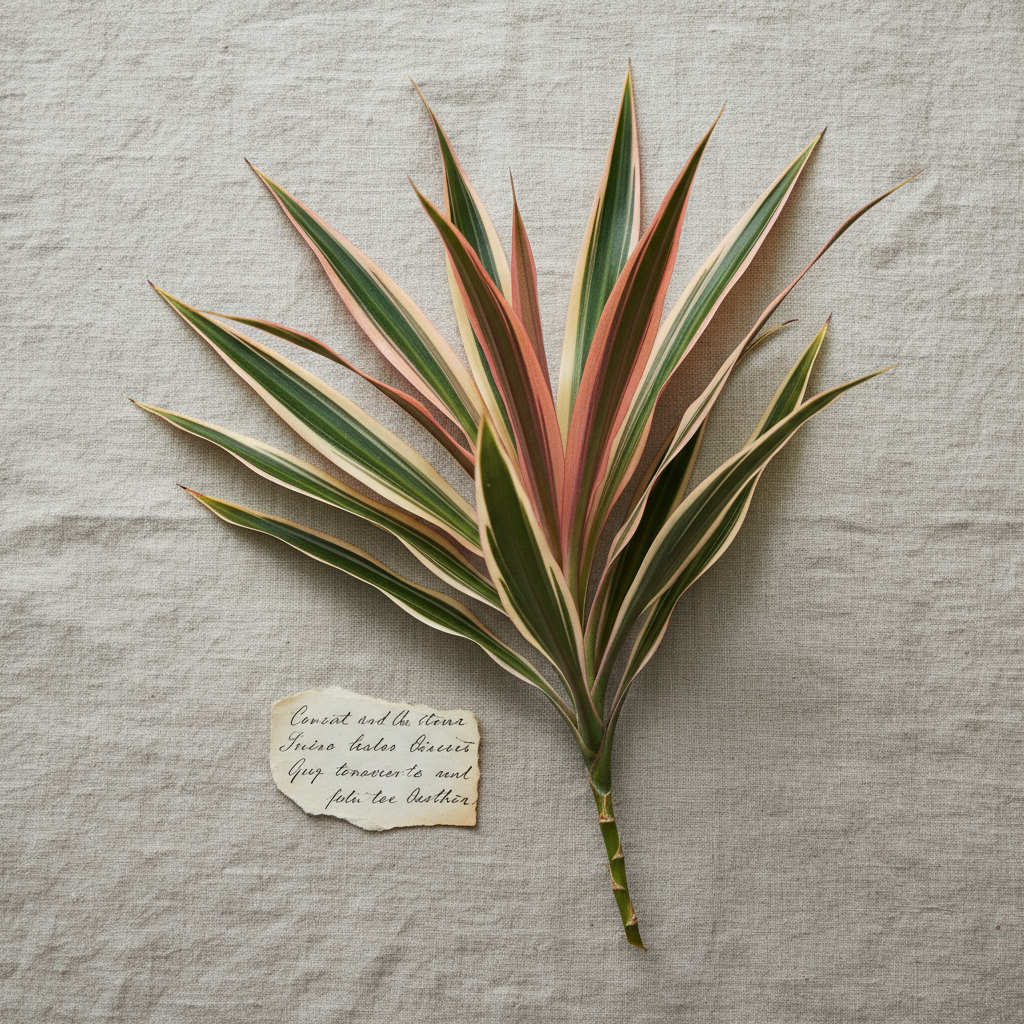
Tricolor
The most beloved variegated form, Tricolor stripes each leaf with green, creamy ivory and red, blending at a distance into a warm, golden-pink glow. It needs brighter light than the plain species to hold this colouring.
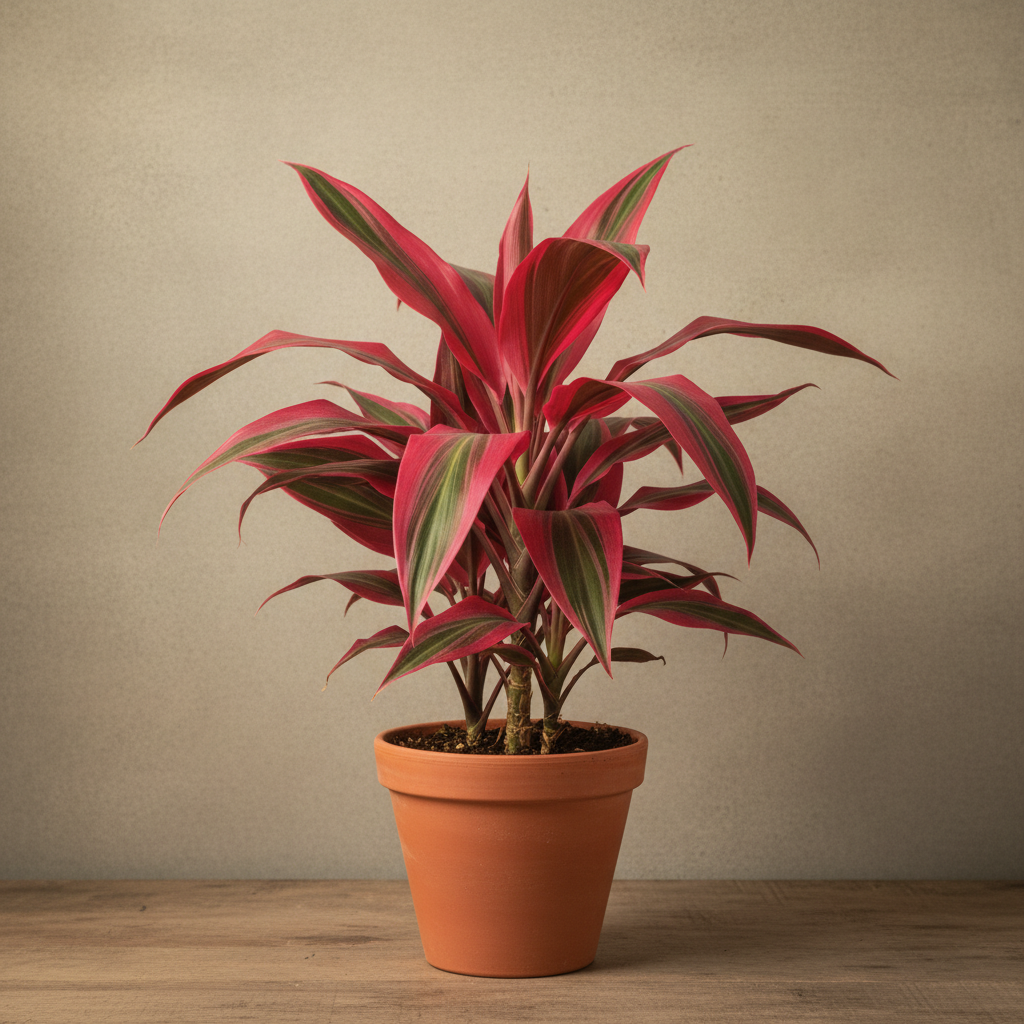
Colorama
Colorama takes the red further still, with margins so broad that the foliage looks predominantly pink and red, leaving only a slim green stripe down each leaf centre. It is the most vivid of the cultivars and the hungriest for light.
Variety Profiles in Detail
Tricolor (Dracaena marginata ‘Tricolor’)
Tricolor is the cultivar most often singled out for its beauty. The interplay of green, ivory and red gives the whole crown a soft pinkish cast, especially when backlit. It grows just as slowly and forgivingly as the species but rewards a brighter position by keeping its cream and red tones crisp rather than fading towards plain green.
Colorama (Dracaena marginata ‘Colorama’)
Often described as the showiest dragon tree, Colorama can look almost entirely rosy-red in strong light. Because so little of each leaf is green, it depends on ample bright, indirect light to photosynthesise and may grow more slowly than greener forms. Give it your brightest spot short of direct sun.
Magenta (Dracaena marginata ‘Magenta’)
Sometimes sold as ‘Cintho’, Magenta resembles the species but with deeper, wider purple-red margins. It strikes a useful balance, offering richer colour than the plain form while remaining more tolerant of moderate light than the heavily variegated cultivars.
Choosing the Right Variety for Your Space
Let your light guide your choice. If your room is bright, the colourful Tricolor and Colorama will reward you with their full display. If light is more limited, the plain species or the adaptable Magenta will stay handsome where a heavily variegated form would fade and stretch. Whichever you choose, the care remains the same, so the decision comes down to the look you prefer and the light you can offer.
Frequently Asked Questions
Why are the tips of my red-edged dracaena turning brown?
Brown leaf tips are the single most common complaint with this plant, and the usual culprit is the fluoride, chlorine or salts in tap water, to which dracaenas are unusually sensitive. Switching to filtered water, rainwater or tap water left to stand overnight often solves it. Very dry air and a build-up of fertiliser salts can also contribute, so check your watering and feeding too.
Why is my dracaena dropping its lower leaves?
Some loss of the oldest, lowest leaves is completely normal as the plant grows and lengthens its canes, which is how it develops that classic palm-like silhouette. However, sudden or heavy leaf drop usually points to overwatering, a cold draught or a sharp change in light, so review recent changes in the plant’s conditions if the loss seems excessive.
How big will a red-edged dracaena grow indoors?
Given time and good conditions, a red-edged dracaena can reach 1.8 to 3 metres (6 to 10 feet) tall indoors, though it grows slowly and may take many years to do so. You can keep it shorter and bushier by cutting the canes back, which also encourages branching from below the cut.
Is the red-edged dracaena safe around pets?
No. Dracaena marginata is toxic to both cats and dogs because of the saponins in its tissues, and ingestion can cause vomiting, drooling, loss of appetite and, in cats, dilated pupils. Keep it well out of reach of pets, and seek veterinary advice if you suspect your animal has eaten any.
How can I make my dracaena bushier?
The best way to encourage a fuller plant is to prune the canes. Cutting the top off a cane prompts the plant to sprout two or more new shoots from just below the cut, and you can root the removed top as a new plant. Repeating this on different canes over time builds a denser, multi-headed specimen.
How often should I repot my red-edged dracaena?
Only every two to three years, as this is a slow grower that is quite happy being a little root-bound. Repot in spring when you see roots emerging from the drainage holes or the plant drying out very quickly after watering, and move up just one pot size at a time.
Can a red-edged dracaena survive in low light?
Yes, the plain green species in particular tolerates low light better than most large houseplants, which is part of its appeal for offices and dim corners. It will simply grow more slowly, hold fewer leaves and show less vivid red colour. Variegated forms such as Tricolor and Colorama, however, will fade and stretch noticeably in poor light and really do need a bright position.
Why are there pale or yellow patches on the leaves?
If the patches appear bleached and dry, the plant has likely been scorched by direct sun and should be moved to bright but indirect light. If older leaves are yellowing more evenly, suspect overwatering, while yellowing between the veins can indicate a magnesium or iron deficiency that a balanced feed in the growing season will usually correct.






