
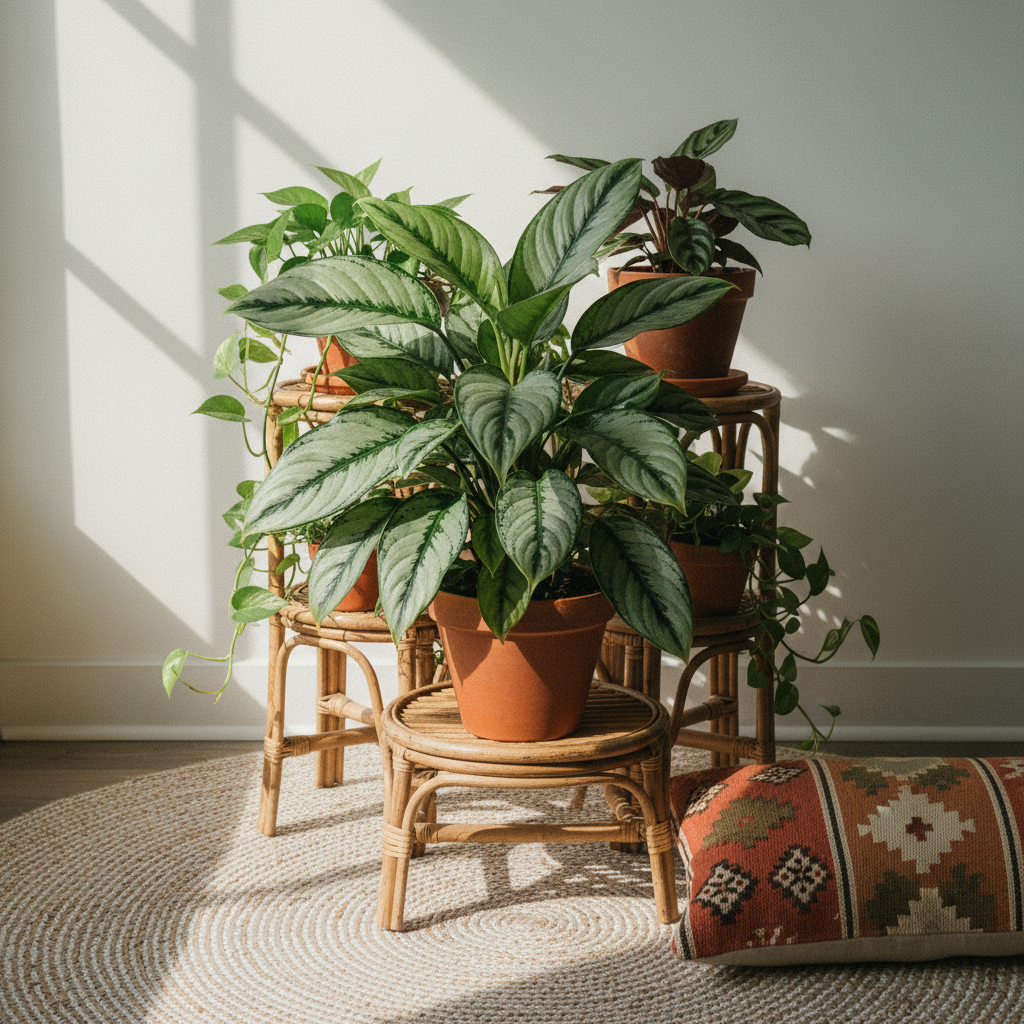
Few houseplants reward neglect quite as gracefully as the Silver Bay Aglaonema, a robust cultivar of the Chinese evergreen group within the genus Aglaonema. Bred for the broad, paddle-shaped leaves that carry a soft wash of silver-grey down their centres and fade into deep green at the margins, ‘Silver Bay’ was selected in Florida during the late twentieth century and quickly became one of the most widely sold foliage plants in the world. Its parentage traces back to the warm, shaded forest floors of tropical Asia, where wild aglaonemas grow as understorey plants beneath a dense canopy, and that ancestry explains almost everything about how it behaves in a living room.
This plant has earned a reputation as nearly unkillable, and the reputation is largely deserved. It tolerates low light, forgives a missed watering, and shrugs off the dry air of a centrally heated home better than most tropical foliage. Yet there is a meaningful gap between a Silver Bay that merely survives in a dim corner and one that thrives into a full, lush clump of arching leaves. This guide covers everything needed to close that gap, from reading light levels correctly to watering by feel, repotting without shock, propagating new plants, and heading off the handful of pests that ever bother it.
Contents
- Quick Reference
- Why Silver Bay Aglaonema Makes an Outstanding Houseplant
- Light Requirements
- Watering & Humidity
- Soil, Potting & Repotting
- Fertilising
- Propagation
- Pests & Diseases
- Popular Varieties
- Frequently Asked Questions
Quick Reference: Silver Bay Aglaonema at a Glance
| Light | Low to bright indirect; no direct midday sun. Tolerates shade but grows fuller in moderate light. |
| Watering | When the top 4 to 5 cm (1.5 to 2 in) of soil dries out, roughly every 7 to 14 days. Err on the dry side. |
| Temperature | 18 to 27 degrees C (65 to 80 degrees F). Keep above 15 degrees C (59 degrees F). |
| Humidity | Average room humidity (40 to 60 per cent) is fine; tolerates lower but prefers moderate. |
| Fertiliser | Balanced liquid feed at half strength, monthly through spring and summer. |
| Toxicity | Toxic to cats, dogs and humans if chewed or swallowed (calcium oxalate crystals). |
Why Silver Bay Aglaonema Makes an Outstanding Houseplant
The Silver Bay holds a place near the top of nearly every list of beginner-friendly plants, and the reasons go beyond simple toughness. Its leaves are unusually large for an aglaonema, broad ovals up to 25 to 30 cm (10 to 12 in) long, arranged in a dense rosette that thickens into a substantial floor or table specimen over a few years. The silver patterning sits in the middle of each leaf rather than scattered as flecks, giving the plant a calm, architectural presence that suits both minimalist and densely planted interiors.
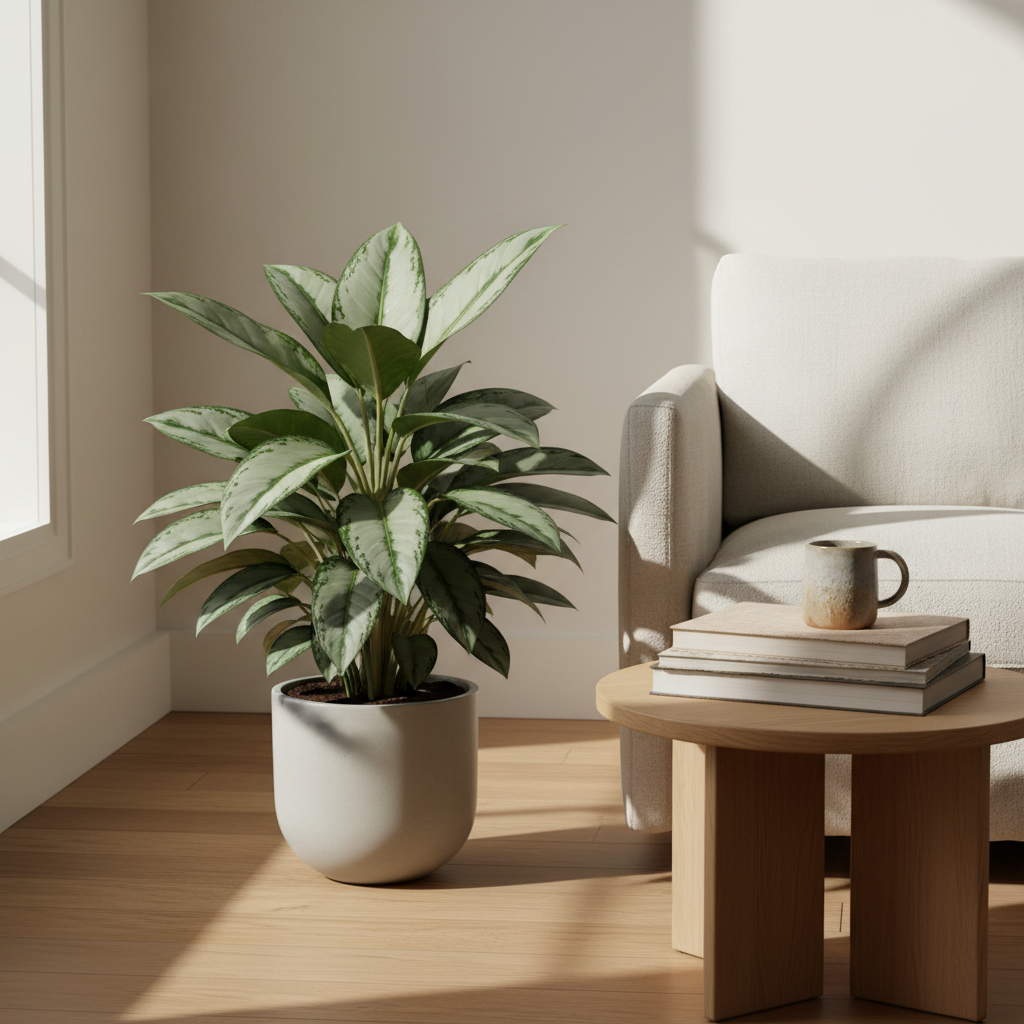
What sets the Silver Bay apart practically is its tolerance for the conditions most houseplants resent. It accepts low light where a calathea would sulk, copes with the dry warmth of winter heating, and stores enough moisture in its thick stems and roots to ride out an occasional lapse in watering. It is also a slow, tidy grower that rarely outgrows its space quickly or drops leaves dramatically, which makes it forgiving for anyone still learning to read a plant’s signals. For offices, north-facing rooms, and busy households, few plants offer this much foliage for so little fuss.
Important — Toxicity: Like all members of the arum family, the Silver Bay contains insoluble calcium oxalate crystals throughout its leaves and stems. Chewing or swallowing any part can cause intense burning, drooling, and swelling of the mouth and throat in cats, dogs, and people. Keep it out of reach of pets and small children, and wash your hands after pruning or repotting.
Light Requirements
The single most useful thing to understand about the Silver Bay is that its low-light tolerance is a tolerance, not a preference. In the wild it grows on shaded forest floors where only dappled, filtered light reaches the leaves, so it is genuinely adapted to dim conditions and will hold its colour and form in places where many plants decline. That said, light is the engine of growth, and a Silver Bay given more of it (within reason) will produce leaves faster, hold a fuller shape, and show crisper silver patterning.
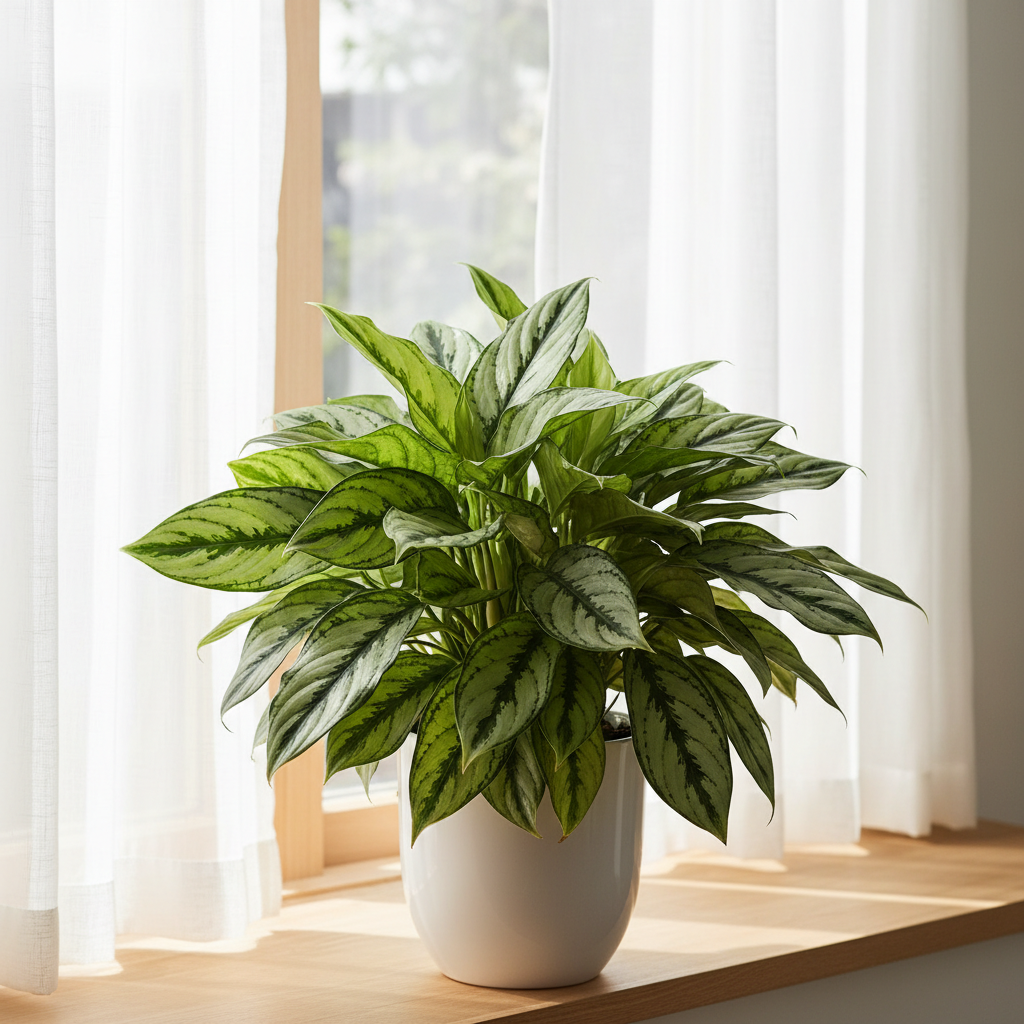
The ideal spot is bright, indirect light: a position near a window where the plant receives plenty of ambient brightness but the sun’s rays never fall directly on the foliage. A couple of metres back from an east or north window, or behind a sheer curtain on a brighter exposure, suits it perfectly. In these conditions the plant grows steadily and keeps its leaves close together rather than stretching toward the light.
Light Levels Explained
Indoor light is far dimmer than most people assume, and the human eye adjusts so well that a room that feels bright may offer a plant very little. The table below translates the usual descriptive categories into rough lux values and explains what each means for a Silver Bay.
| Light Category | Approx. Level | Typical Location | Outcome |
|---|---|---|---|
| Direct sun | Over 50,000 lux | On a south windowsill, unfiltered | Avoid; scorches and bleaches the leaves |
| Bright indirect | 10,000 to 20,000 lux | Near an east window or behind a sheer curtain | Best growth, fullest form, crispest pattern |
| Medium | 5,000 to 10,000 lux | A metre or two from a bright window | Reliable, steady growth |
| Low | 1,000 to 5,000 lux | An interior corner or north room | Tolerated; slower growth, holds colour |
| Very low | Under 1,000 lux | A windowless hallway or deep corner | Survives short term but slowly declines |
Window Orientation and Placement
South-facing window: The brightest exposure in the northern hemisphere, and too intense for a Silver Bay placed directly on the sill. Set the plant a few metres back, or diffuse the light with a sheer curtain, and it will thrive on the abundant ambient brightness.
East-facing window: Close to ideal. The gentle morning sun is rarely strong enough to burn, and the plant can sit on or very near the sill, enjoying bright light for the first half of the day and soft indirect light for the rest.
West-facing window: Workable, but the harsh afternoon sun can scorch leaves placed too close. Keep the plant back from the glass or filter the light, especially in summer.
North-facing window: The dimmest exposure, and one the Silver Bay handles better than almost any other foliage plant. Growth will be slower, but the plant stays healthy and keeps its markings. This is the exposure where the Silver Bay truly earns its keep.
Pro Tip — Rotate for Symmetry: Aglaonemas lean gradually toward their light source. Give the pot a quarter turn each time you water and the clump will grow evenly on all sides rather than developing a flat, one-directional front.
How Light Affects Leaf Colour
The silver variegation on a Silver Bay is structural rather than a sign of reduced chlorophyll, so the plant does not lose its pattern in low light the way a heavily variegated philodendron might. In very dim conditions, though, new leaves tend to emerge smaller and a touch greener, and the spacing between leaves stretches as the plant reaches for brightness. In good medium to bright indirect light the silver centres come through boldly and the leaves reach their full, broad size. There is no need to chase intense light to keep the colour; moderate, consistent brightness is enough.
Warning — Direct Sunlight: A few hours of unfiltered sun, especially through summer glass, will bleach pale, papery patches into the leaves that never recover. If the foliage starts to look washed out or develops crisp brown spots on the upper surface, move the plant out of the direct beam at once.
Artificial Lighting
Because it asks for so little, the Silver Bay is one of the best candidates for a windowless office or interior room lit only by artificial light. A standard LED or fluorescent fixture running for ten to twelve hours a day provides enough energy to keep the plant healthy, and a dedicated full-spectrum grow light positioned 30 to 60 cm (12 to 24 in) above the foliage will support active growth. This adaptability is a large part of why the plant is a fixture in shopping centres, lobbies, and offices the world over.
Seasonal Adjustments
Light indoors falls sharply between autumn and midwinter as the sun sits lower and days shorten. Growth slows or pauses through this period, which is normal and not a cause for concern. Many growers shift their Silver Bay closer to a window for the darkest months and move it back again in spring. Resist the urge to compensate with extra water during the low-light season, since a plant that is barely growing uses far less moisture than one in active growth.
Watering & Humidity
If there is one way to harm a Silver Bay, it is overwatering. The plant’s thick roots and stems store moisture as an adaptation to the variable conditions of a forest floor, which means it copes well with drought but rots quickly when left sitting in soggy soil. The guiding principle is simple: water thoroughly, then wait until the soil has dried out substantially before watering again.
When to Water
Rather than watering on a fixed schedule, check the soil with a finger. When the top 4 to 5 cm (1.5 to 2 in) feels dry, it is time to water. In a warm, brighter room during summer this might mean watering every week; in a cool, dim room in winter it could stretch to every two or three weeks. The plant itself, not the calendar, sets the pace.
A Silver Bay that is slightly too dry recovers within hours of a good drink, whereas one that has been kept too wet may already be losing roots by the time the damage shows above the soil. When in doubt, wait another day or two. The plant’s drought tolerance gives you a wide margin for error on the dry side and almost none on the wet side.
Pro Tip — The Lift Test: Learn the weight of the pot when freshly watered and again when dry by lifting it. A heavy pot still holds plenty of moisture; a light one is ready for water. With a little practice this is faster and more reliable than any moisture meter.
How to Water Correctly
- Check that the top few centimetres of soil are dry before you begin.
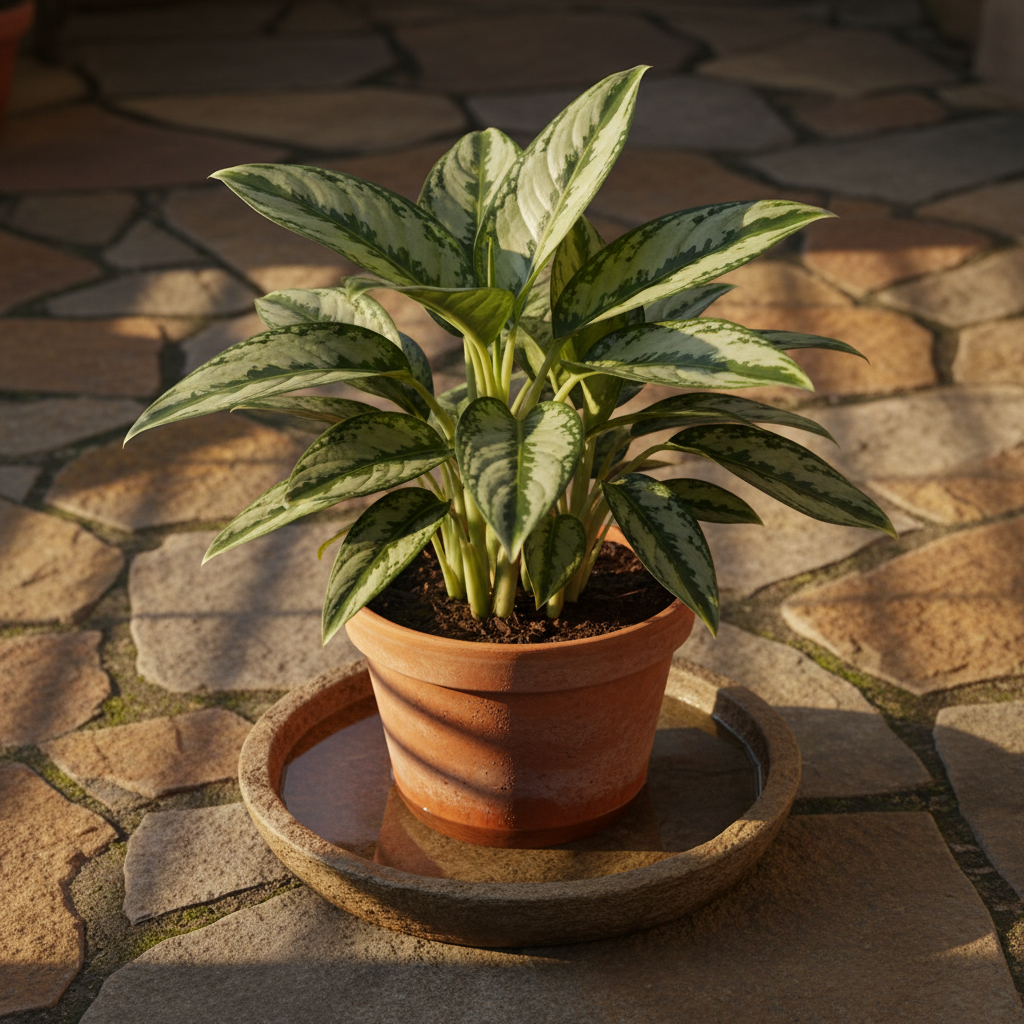
- Water slowly and evenly over the whole soil surface, or stand the pot in a tray of water to soak from below.
- Continue until water runs freely from the drainage holes, ensuring the entire root ball is moistened.
- Let the pot drain completely for several minutes.
- Tip away any water that collects in the saucer or cover pot so the roots never sit in standing water.
- Wait until the soil dries to the correct depth again before repeating.
Signs of Overwatering vs. Underwatering
| Symptom | Overwatering | Underwatering |
|---|---|---|
| Leaf colour | Yellowing, often starting with lower leaves | Dull green, edges browning and crisp |
| Leaf texture | Soft, limp, sometimes translucent | Dry, papery, curling inward |
| Soil | Stays wet for many days, may smell sour | Pulls away from the pot edge, dusty dry |
| Roots | Brown, mushy, easily detached | Pale and intact but dry |
| Stem base | Soft, darkened, may collapse | Firm but the whole plant may droop |
Warning — Root Rot: A sour smell from the soil and a soft, darkened stem base are signs of advanced root rot. Unpot the plant immediately, cut away every mushy brown root and stem section with sterilised scissors, and repot the healthy remainder into fresh, barely moist mix. Caught early, a Silver Bay often pulls through.
Humidity Requirements
Although it comes from humid tropical forests, the Silver Bay adapts comfortably to the average humidity of a home, somewhere between 40 and 60 per cent. This easygoing nature is one of its great advantages over fussier tropicals, and it rarely shows the brown, crisping edges that plague calatheas and ferns in dry rooms.
If humidity drops very low, as it can near a radiator in winter, you may notice the occasional brown leaf tip. This is cosmetic rather than serious and is easily prevented. The plant does not need misting, which wets the foliage to little benefit and can encourage fungal spotting on the dense crown.
Where extra humidity helps, the simplest reliable method is a pebble tray: a shallow dish of water with stones to keep the pot above the waterline, set beneath the plant so evaporation raises the local moisture. Grouping plants together also creates a gently humid microclimate, and moving the plant away from direct heat sources does more good than any amount of spraying.
Water Quality
Aglaonemas can be mildly sensitive to the fluoride and chlorine found in some tap water, which occasionally shows as brown leaf tips. In most regions ordinary tap water is perfectly fine, but if you notice persistent tip burn despite correct watering, switch to filtered or rainwater, or leave tap water to stand uncovered overnight before using it so some of the chlorine dissipates. Always water at room temperature, since cold water can shock the roots.
Soil, Potting & Repotting
The right soil does half the watering work for you. Because the Silver Bay is so prone to root rot in heavy, water-retentive media, the goal is a mix that holds enough moisture to keep the plant hydrated between waterings while draining freely enough that the roots never suffocate.
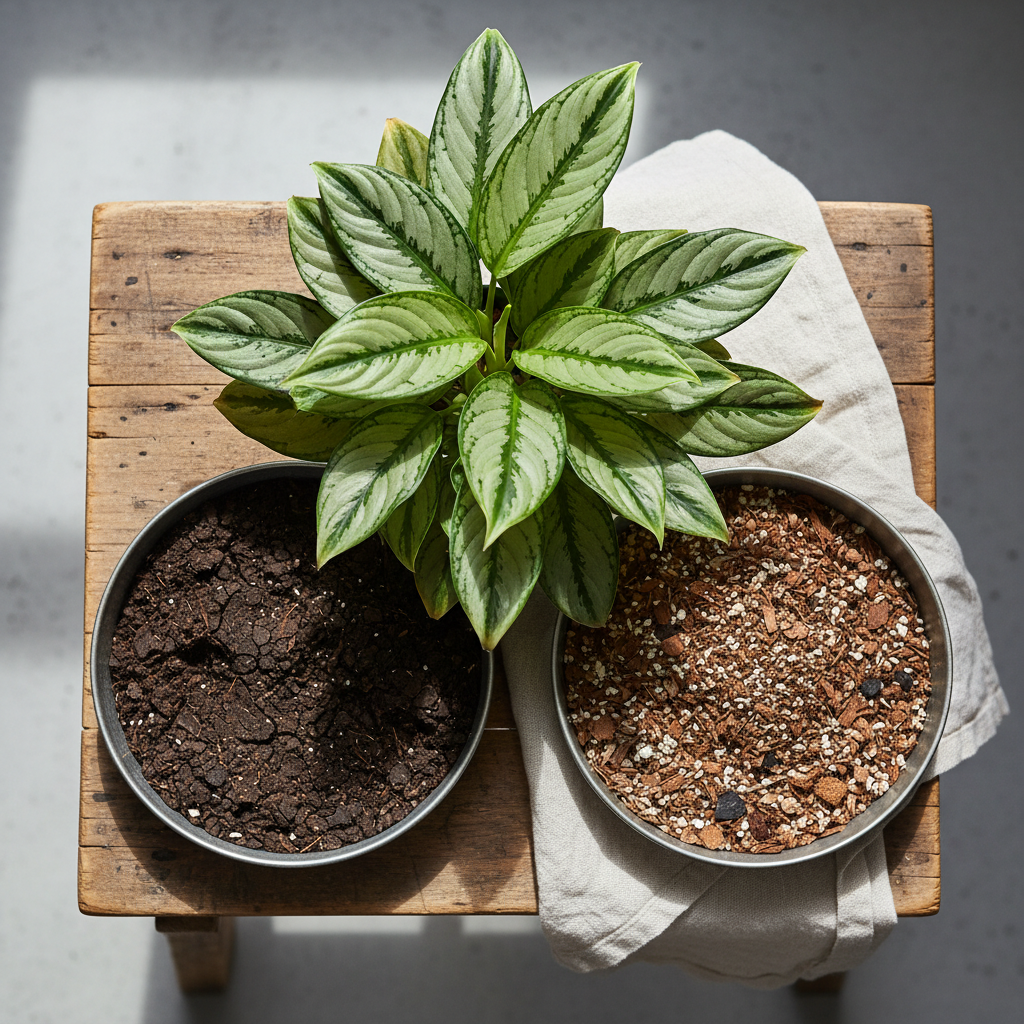
Ideal Soil Composition
A good Silver Bay mix is light and open, built around a quality peat-free or peat-based potting compost with generous additions of material that creates air pockets. A loose aroid-style blend gives the roots the balance of moisture and oxygen they prefer, and it dries down at a sensible pace rather than staying sodden.
| Component | Proportion | Function |
|---|---|---|
| Houseplant or potting compost | 50 per cent | Holds moisture and nutrients, the body of the mix |
| Orchid bark or coco chips | 20 per cent | Creates structure and air channels around the roots |
| Perlite or pumice | 20 per cent | Improves drainage and prevents compaction |
| Worm castings or coir | 10 per cent | Adds gentle nutrition and water-holding capacity |
The Silver Bay is not fussy about pH, but it does best in a slightly acidic to neutral range of about 5.5 to 6.5, which most standard potting composts already provide. There is no need to test or adjust pH for ordinary indoor culture.
Pro Tip — Quick Mix Recipe: For a fast, reliable blend, combine two handfuls of ordinary houseplant compost with one handful of perlite and one handful of orchid bark. This three-to-one-to-one ratio drains well, resists compaction, and suits almost any aglaonema.
Choosing the Right Pot
The pot matters as much as the mix, because it governs how quickly the soil dries and how much room the roots have to breathe.
Drainage holes are non-negotiable. A Silver Bay in a pot without drainage is at constant risk of root rot, no matter how carefully you water. If you love a decorative cover pot with no holes, keep the plant in a plain plastic nursery pot inside it and lift it out to water, returning it only once it has fully drained.
Pot material: Terracotta is porous and wicks moisture from the soil, which suits over-cautious waterers and cooler rooms. Glazed ceramic and plastic hold moisture longer, which works well in bright, warm spots where the soil would otherwise dry too fast. Either is fine as long as drainage is good.
Pot size: Choose a pot only 2 to 3 cm (about an inch) wider than the current root ball. Aglaonemas actually flower and grow more contentedly when slightly snug, and an oversized pot holds a reservoir of wet soil around the roots that invites rot.
When to Repot
The Silver Bay is a slow grower and dislikes disturbance, so it needs repotting only every two to three years. The clearest signals are roots emerging from the drainage holes or circling tightly at the surface, water running straight through without wetting the soil, or growth stalling despite good care. Spring and early summer, as the plant enters its active season, is the best time to repot, giving it months of growing weather to settle in.
How to Repot: Step-by-Step
- Water the plant a day beforehand so the root ball holds together and slides out cleanly.
- Ease the plant from its pot by tipping it and supporting the base of the clump, rather than pulling on the leaves.
- Gently tease apart any tightly circling roots and brush off some of the old, spent soil.
- Inspect the roots, trimming away anything brown, soft, or rotten with sterilised scissors.
- Add a layer of fresh mix to the new pot and set the plant at the same depth it grew before.
- Fill around the root ball with fresh mix, firming gently to remove large air gaps.
- Water lightly to settle the soil, then hold off on the next watering until the surface dries.
Warning — Transplant Shock: A repotted Silver Bay may droop or pause for a week or two while it re-establishes its roots. Keep it out of direct sun, resist the urge to overwater in sympathy, and do not fertilise until you see fresh growth. The plant almost always recovers on its own.
Fertilising
The Silver Bay is a light feeder, and far more plants are harmed by overfeeding than by going hungry. A modest, regular feed through the growing season keeps the foliage rich and supports steady new growth without the risk of fertiliser burn.
Because the plant grows slowly, it simply cannot use large quantities of nutrients, and any excess accumulates in the soil as mineral salts that damage the roots. Restraint is the watchword: less fertiliser, applied consistently and at reduced strength, beats occasional heavy doses every time.
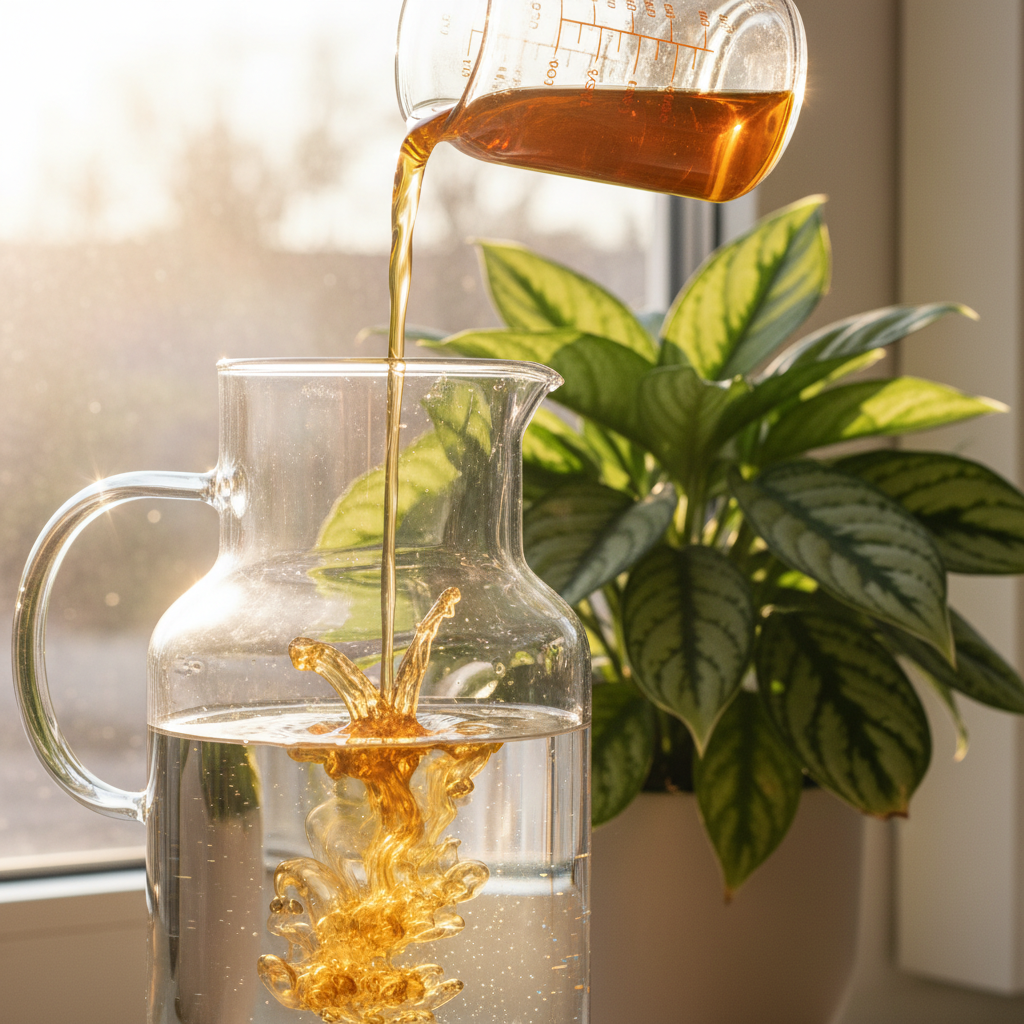
Understanding Plant Nutrients
Houseplant fertilisers are labelled with an N-P-K ratio showing the percentage of nitrogen, phosphorus, and potassium they contain. For a foliage plant like the Silver Bay, a balanced ratio or one slightly higher in nitrogen supports lush, healthy leaves. The table below outlines the main nutrients and what their shortage looks like.
| Nutrient | Symbol | Primary Function | Deficiency Symptoms |
|---|---|---|---|
| Nitrogen | N | Leaf and stem growth, green colour | Pale, yellowing older leaves; stunted growth |
| Phosphorus | P | Root development and energy transfer | Dull leaves, weak roots, slow establishment |
| Potassium | K | Overall vigour and water regulation | Brown, scorched leaf edges |
| Calcium | Ca | Cell wall strength | Distorted or hooked new growth |
| Magnesium | Mg | Core of the chlorophyll molecule | Yellowing between the veins of older leaves |
| Iron | Fe | Chlorophyll production in new growth | Yellowing between veins on the youngest leaves |
Types of Fertiliser
Liquid fertilisers: The easiest option for a Silver Bay. Diluted into the watering can, a balanced liquid feed delivers nutrients in a form the plant absorbs immediately and gives you precise control over strength and timing. Half the recommended dose is plenty.
Slow-release granular: Coated prills that release nutrients gradually over several months. Convenient for those who forget to feed, but harder to control, and easy to overdose if you also feed liquid. Use one method or the other, not both at once.
Organic fertilisers: Worm castings, diluted seaweed, and similar gentle organic feeds release nutrients slowly and improve the soil. They are almost impossible to overdo and suit anyone who prefers a low-intervention approach, though they act more slowly than synthetic feeds.
Feeding Schedule
Feed roughly once a month through spring and summer, when the plant is actively growing, using a balanced liquid fertiliser at half strength. Stop feeding entirely in autumn and winter, when growth slows and the plant cannot use the nutrients. A newly repotted Silver Bay needs no feeding for the first couple of months, as fresh compost already contains enough to sustain it.
Pro Tip — Always Feed Moist Soil: Never apply fertiliser to dry roots, which concentrates the salts against tender tissue and causes burn. Water first, or feed as part of watering, so the diluted nutrients spread evenly through already-moist soil.
How to Fertilise
- Dilute a balanced liquid fertiliser to half the strength stated on the label.
- Make sure the soil is already moist, watering first if needed.
- Apply the diluted feed evenly across the soil surface until it begins to drain.
- Let the pot drain fully and discard any run-off from the saucer.
- Flush the soil with plain water every few months to wash out accumulated salts.
Warning — Salt Build-Up: A white crust on the soil surface or pot rim, along with browning leaf tips, signals a build-up of fertiliser salts. Flush the pot by running plenty of plain water through it until it drains freely from the bottom, and ease off the feeding.
Propagation
Propagating a Silver Bay is straightforward and a satisfying way to turn one mature plant into several, or to rejuvenate a specimen that has grown leggy with a bare lower stem. The two reliable methods are division of the clump and rooting of stem cuttings.
One thing to keep in mind is that ‘Silver Bay’ is a named hybrid cultivar, and like most cultivars it is propagated vegetatively to stay true to type. Division and cuttings both produce exact clones of the parent, whereas seed (rarely set indoors) would not come true. For the home grower, vegetative propagation is by far the easier and more dependable route.
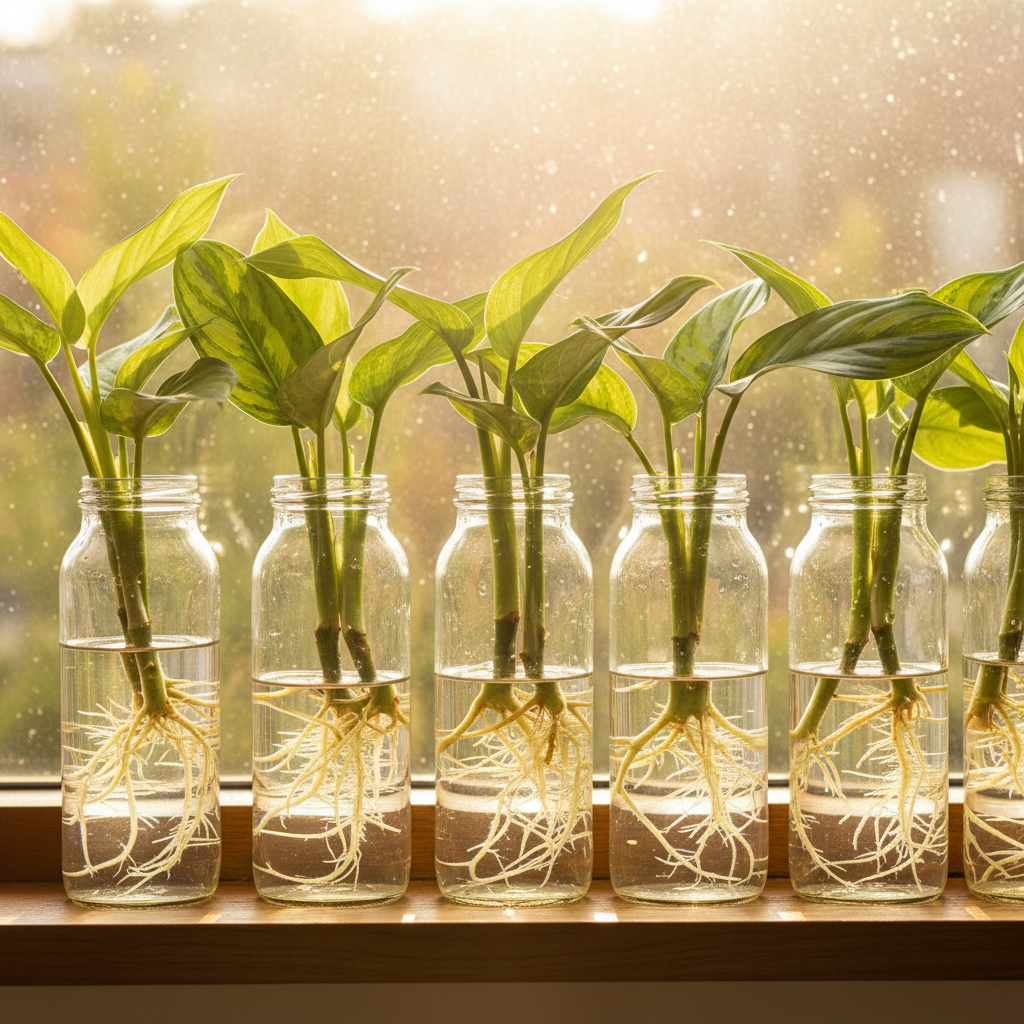
Understanding Nodes and Offsets
Aglaonemas grow from a central crown, producing new shoots at the base that gradually build the plant into a multi-stemmed clump. Each stem carries nodes, the slightly raised points where leaves attach, and it is from these nodes that new roots emerge. A successful cutting must include at least one node, and a healthy division must carry its own roots and at least one growing shoot. Recognising these structures makes both methods far more reliable.
Division: Step-by-Step
Division is the cleanest method for a mature, clumping Silver Bay and is best done at repotting time in spring. It instantly produces full-sized new plants rather than slow-growing cuttings.
- Water the plant a day ahead, then slide the whole clump out of its pot.
- Gently brush away loose soil so you can see where the separate shoots and their roots join.
- Tease the clump into two or more sections by hand, each with its own healthy roots and at least one or two leaves.
- If the sections will not pull apart, cut between them with a clean, sharp knife, keeping roots attached to each piece.
- Pot each division into its own appropriately sized container of fresh aroid mix.
- Water lightly and keep the new plants warm and out of direct sun while they settle.
Pro Tip — Sterilise Your Blade: Wipe any knife or scissors with isopropyl alcohol before cutting. The open wounds on roots and stems are easy entry points for rot, and a clean blade is the simplest insurance against introducing infection.
Stem Cuttings: Step-by-Step
If your Silver Bay has developed a long, bare stem, you can behead it and root the top, which both creates a new plant and encourages the old base to resprout. Cuttings root readily in either water or moist mix.
- Choose a healthy stem with several leaves and at least one node below the lowest leaf.
- Cut cleanly just below a node with sterilised scissors, taking a section 10 to 15 cm (4 to 6 in) long.
- Remove the lowest leaf or two to expose a bare node for rooting.
- Place the cutting in a jar of room-temperature water, or insert it into moist, well-draining mix.
- Keep it warm and brightly but indirectly lit, changing the water every few days if rooting in water.
- Once roots reach 3 to 5 cm (1 to 2 in), pot water-rooted cuttings into aroid mix and keep the soil lightly moist while they establish.
Troubleshooting Propagation
| Problem | Likely Cause | Solution |
|---|---|---|
| Cutting rots in water | Stale water or no node submerged | Refresh water often; ensure a node sits below the surface |
| No roots after a month | Too cold or too dim | Move somewhere warmer and brighter; be patient |
| Division wilts badly | Root damage during separation | Keep warm and humid, out of sun, until it recovers |
| Leaves yellow on cutting | Normal energy redirection or overwatering | Remove the yellow leaf; check the mix is not waterlogged |
Pests & Diseases
The Silver Bay is among the more pest-resistant houseplants, and a healthy specimen in good conditions is rarely troubled. Most problems trace back to overwatering or dry, stagnant air rather than to any inherent vulnerability, so good culture is itself the best defence.
Even so, it pays to inspect the plant regularly, paying attention to the undersides of leaves and the crevices where leaves meet the stem, since these are where the few pests that bother aglaonemas first take hold. Catching an infestation early makes it trivial to treat.
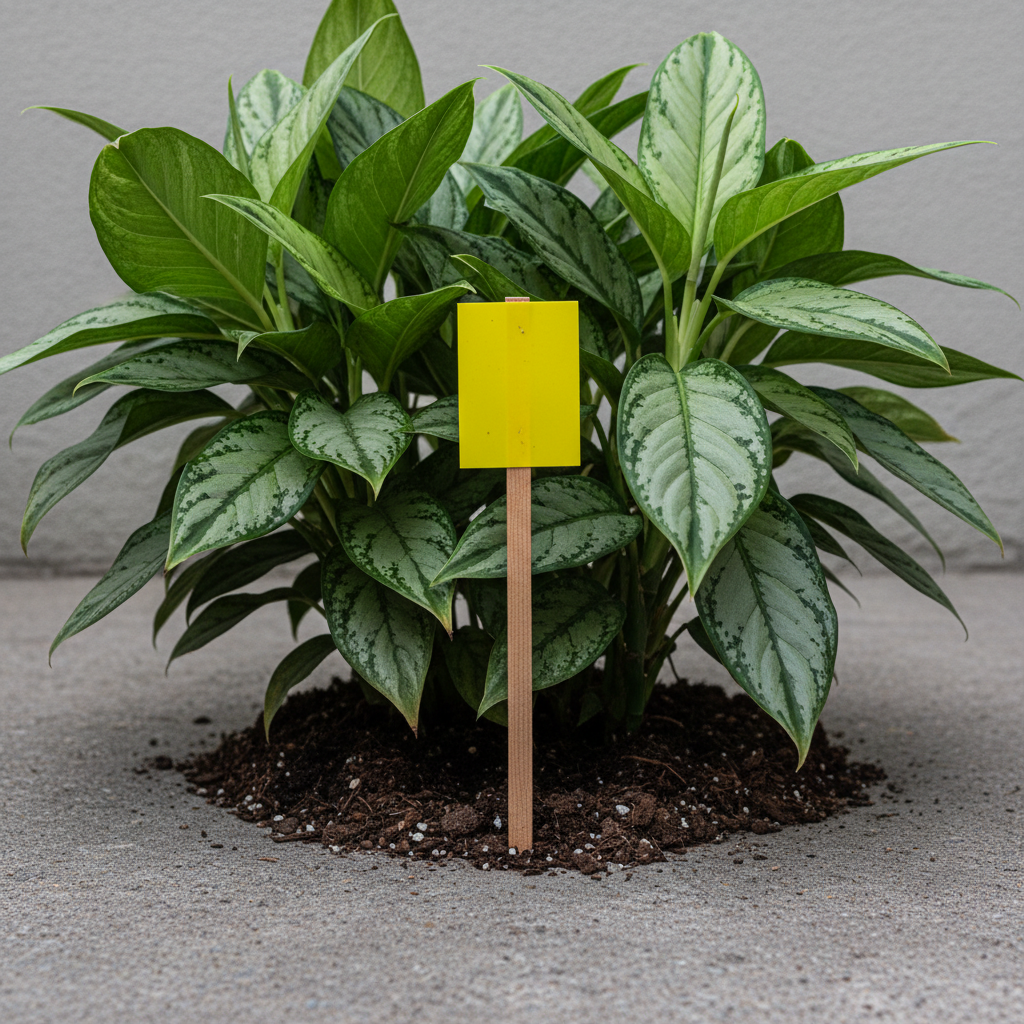
Common Pests
Mealybugs (Pseudococcus spp.)
The most frequent pest of aglaonemas, mealybugs appear as small, white, cottony tufts tucked into leaf axils and along stems. They suck sap and excrete sticky honeydew, slowly weakening the plant and leaving a sooty residue.
Treatment: Dab each insect with a cotton bud dipped in isopropyl alcohol, then wipe the plant down. For wider infestations, spray with a diluted insecticidal soap or neem solution weekly until they are gone, checking the hidden crevices each time.
Spider Mites (Tetranychus urticae)
Tiny sap-sucking mites that thrive in hot, dry air. They are hard to see directly, but the fine webbing they spin between leaves and the faint yellow stippling they leave on the foliage give them away.
Treatment: Rinse the foliage thoroughly in the shower to dislodge them, raise the humidity to make conditions less favourable, and treat with insecticidal soap or neem oil. Repeat every few days to break the rapid breeding cycle.
Fungus Gnats (Bradysia spp.)
Small black flies that hover around the soil, a near-certain sign of overwatering. The adults are merely a nuisance, but their larvae feed on roots in consistently wet compost.
Treatment: Let the top of the soil dry out fully between waterings to break their life cycle, set yellow sticky traps to catch the adults, and top the soil with a layer of grit or sand if they persist.
Common Diseases
Root Rot (Pythium and Phytophthora spp.)
By far the most serious threat to a Silver Bay, root rot is caused by waterlogged soil that suffocates the roots and lets fungal pathogens take hold. Yellowing leaves, a soft stem base, and a sour smell are the warning signs.
Treatment: Unpot the plant, cut away all mushy brown roots and stem tissue with sterilised tools, and repot the healthy remainder into fresh, fast-draining mix. Then correct the watering habit that caused it.
Leaf Spot (Colletotrichum and bacterial spp.)
Brown or tan spots, sometimes ringed with yellow, that appear on the foliage when water sits on the leaves in still, humid air. It spreads through splashing and contact.
Treatment: Remove affected leaves, stop wetting the foliage, and improve air circulation around the plant. Avoid misting, and water at soil level so the leaves stay dry.
Pest and Disease Summary
| Pest / Disease | Identification | Treatment |
|---|---|---|
| Mealybugs | White cottony tufts in leaf axils | Alcohol swab, insecticidal soap or neem |
| Spider mites | Fine webbing, yellow stippling | Rinse, raise humidity, treat with neem |
| Fungus gnats | Small flies over wet soil | Dry the soil out, sticky traps |
| Root rot | Yellow leaves, soft base, sour smell | Cut away rot, repot in fresh dry mix |
| Leaf spot | Brown spots ringed with yellow | Remove leaves, keep foliage dry, improve airflow |
Prevention Strategies
Prevention costs almost nothing and saves a great deal of trouble. Inspect new plants before bringing them home and quarantine them for a couple of weeks away from your collection, since most infestations arrive on a newly bought plant. Wipe the broad leaves of your Silver Bay occasionally with a damp cloth, which both removes dust that blocks light and lets you spot trouble early.
Above all, water correctly. The overwhelming majority of Silver Bay problems, from root rot to fungus gnats to leaf spot, stem from soil that stays too wet. Get the watering right and provide a little air movement, and the plant will largely look after itself.
Pro Tip — Treat at the First Sign: A single mealybug is far easier to deal with than a colony. Make a quick inspection part of every watering, and tackle any pest the moment you spot it rather than waiting to see whether it spreads.
Popular Varieties
‘Silver Bay’ is one cultivar within a large and colourful group of Chinese evergreens, and once you have grown one successfully it is hard to resist the others. Modern aglaonema breeding, much of it carried out in Thailand and Florida, has produced an enormous range of leaf colours, from the cool silvers and greens of the older hybrids to vivid pinks and reds in the newer ones.
The varieties below share the Silver Bay’s easygoing nature, with one important caveat: the more heavily coloured pink and red cultivars need noticeably brighter light to keep their pigment, while the green-and-silver types are the true low-light champions. The table gives a quick comparison before the featured profiles.
| Variety | Leaf Appearance | Light Needs | Growth Rate | Availability |
|---|---|---|---|---|
| Silver Bay | Broad leaves, silver centre, green margin | Low to bright indirect | Slow to moderate | Very common |
| Silver Queen | Narrow leaves, heavy silver marbling | Low to bright indirect | Slow | Common |
| Maria | Compact, dark green with silver feathering | Low light tolerant | Slow | Common |
| Cutlass | Long, narrow, lance-shaped silver leaves | Medium to bright indirect | Slow | Occasional |
| Red Siam Aurora | Green leaves edged and veined in pink-red | Bright indirect | Moderate | Common |
| Pink Dalmatian | Green leaves speckled with bright pink | Bright indirect | Moderate | Increasingly common |
Featured Varieties
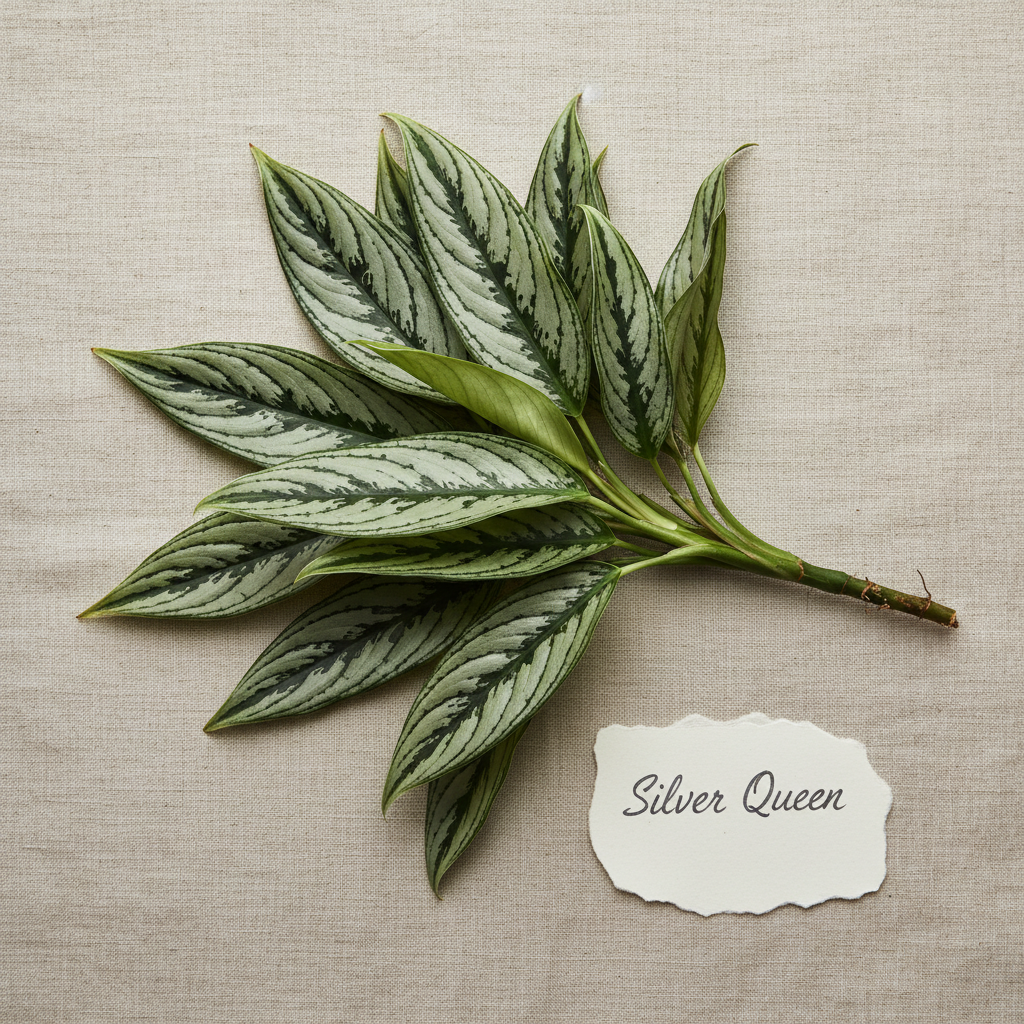
Silver Queen
The classic that made aglaonemas popular, with narrower leaves than ‘Silver Bay’ and a heavier overall wash of silver-grey laced with fine green veining. Just as tolerant of low light, and a graceful, slightly more delicate alternative.
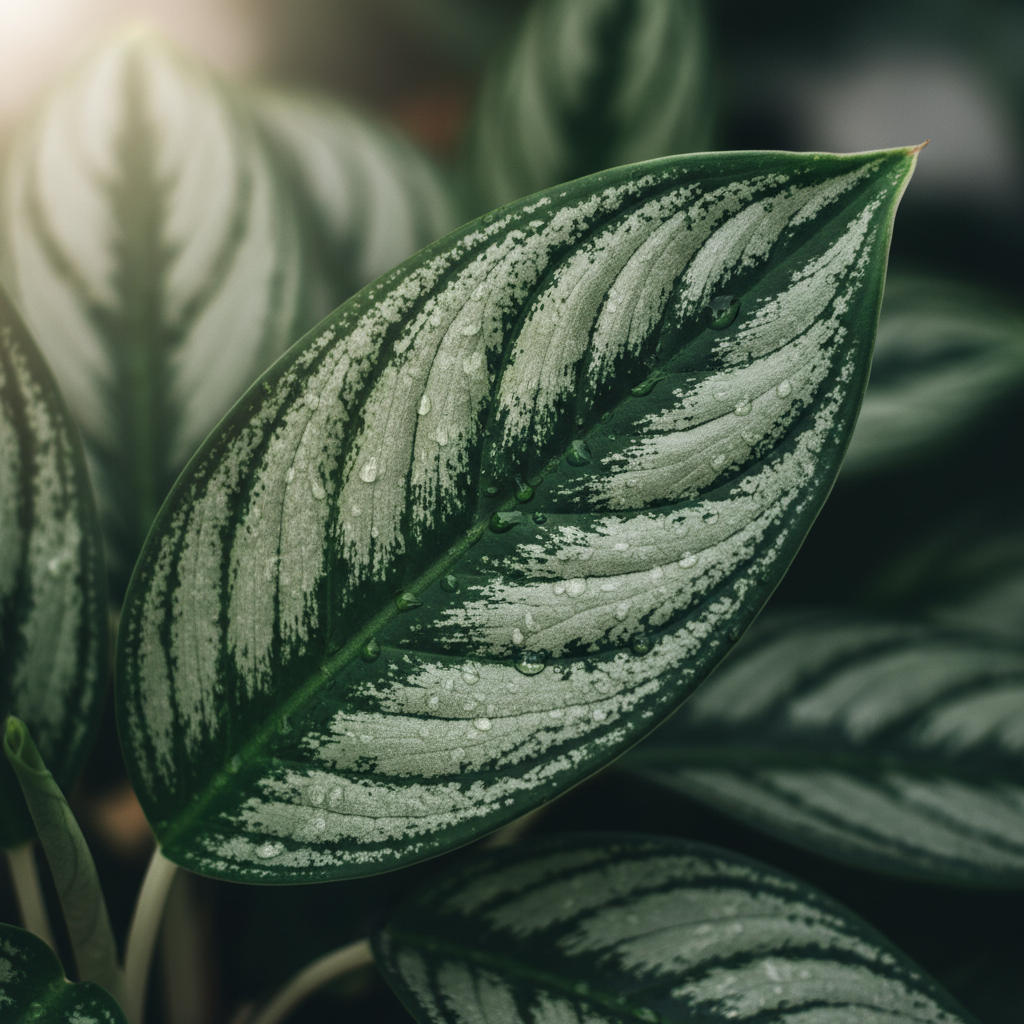
Maria
A compact, upright cultivar with deep green leaves feathered subtly in silver along the midrib. Perhaps the most shade-tolerant aglaonema of all, and an excellent choice for dim offices and north-facing rooms.
Variety Profiles in Detail
Silver Queen (Aglaonema ‘Silver Queen’)
An award-winning hybrid and arguably the cultivar that launched the aglaonema’s career as a houseplant. Its slender, pointed leaves carry so much silver that the green is reduced to fine veining and a thin margin. It grows a little more slowly than ‘Silver Bay’ and stays somewhat more compact, making it a fine choice for a shelf or side table where its delicate patterning can be appreciated up close.
Maria (Aglaonema commutatum ‘Maria’)
Also sold as ‘Emerald Beauty’, Maria is the darkest and most shade-loving of the popular cultivars. Its dense, upright habit and deep green leaves brushed with grey-silver make it almost indestructible in low light, and it is the variety most often recommended for the truly dim corners that defeat other plants.
Red Siam Aurora (Aglaonema ‘Siam Aurora’)
One of the modern colourful hybrids, with green leaves boldly edged and veined in pink and red. It brings warmth that the silver types cannot, but the pigment depends on light, so it needs a bright indirect spot to stay vivid. In dim conditions the red fades and the plant reverts toward green.
Choosing the Right Variety for Your Space
The choice comes down mostly to light. For a genuinely dim room or office, stick with the green-and-silver cultivars, Silver Bay, Silver Queen, and especially Maria, which hold their looks where little else will grow. If you have a bright, curtain-filtered window to offer, the pink and red hybrids reward that extra light with colour no other foliage houseplant can match. Whichever you choose, the care described in this guide applies across the whole group, with only the brighter light needs of the coloured types to bear in mind.
Frequently Asked Questions
Why are the leaves on my Silver Bay turning yellow?
Yellowing most often points to overwatering, especially when it starts with the lower leaves and the soil stays wet. Check that the top few centimetres of soil dry out between waterings and that the pot drains freely. An occasional old leaf yellowing and dropping is normal; widespread yellowing is a watering signal.
Why does my Silver Bay have brown leaf tips?
Brown tips usually come from very dry air, a build-up of fertiliser salts, or sensitivity to fluoride and chlorine in tap water. Raise the local humidity a little, flush the soil to clear salts, and try filtered or stood-out water if the problem persists.
Can a Silver Bay really survive in low light?
Yes, it is one of the most low-light tolerant foliage plants available. It will grow more slowly and stay a touch more compact in dim conditions, but it keeps its silver patterning and good health where many plants would decline. For the fullest growth, give it bright indirect light, but a north room or interior corner is well within its tolerance.
Is the Silver Bay safe around pets and children?
No. Every part of the plant contains calcium oxalate crystals that cause painful burning and swelling of the mouth and throat if chewed or swallowed, and it is toxic to cats, dogs, and people. Keep it out of reach, and wash your hands after handling cut stems or sap.
How fast does a Silver Bay grow?
Slowly to moderately. In good light through spring and summer it produces a steady flush of new leaves, but it is not a fast or sprawling plant. Expect it to take a few years to build into a full, substantial clump, which is part of why it stays tidy and rarely outgrows its spot.
Why is my Silver Bay growing leggy with a bare stem?
Over time the lowest leaves naturally age and drop, leaving a length of bare stem, and very low light accelerates the stretch. You can cut the leafy top off and root it as a cutting, which gives you a fresh compact plant, while the old base will usually push out new shoots and fill back in.
Does the Silver Bay flower indoors?
Mature plants occasionally produce a small, pale spathe-and-spadix flower typical of the arum family. It is unremarkable compared with the foliage, and many growers pinch it off so the plant directs its energy into leaves rather than into setting seed.
What temperature does a Silver Bay need?
Ordinary room temperatures of 18 to 27 degrees C (65 to 80 degrees F) suit it well. It dislikes the cold and should be kept above 15 degrees C (59 degrees F), away from draughty windows, doorways, and cold glass in winter, as chilling causes greyish blotches and leaf drop.






