
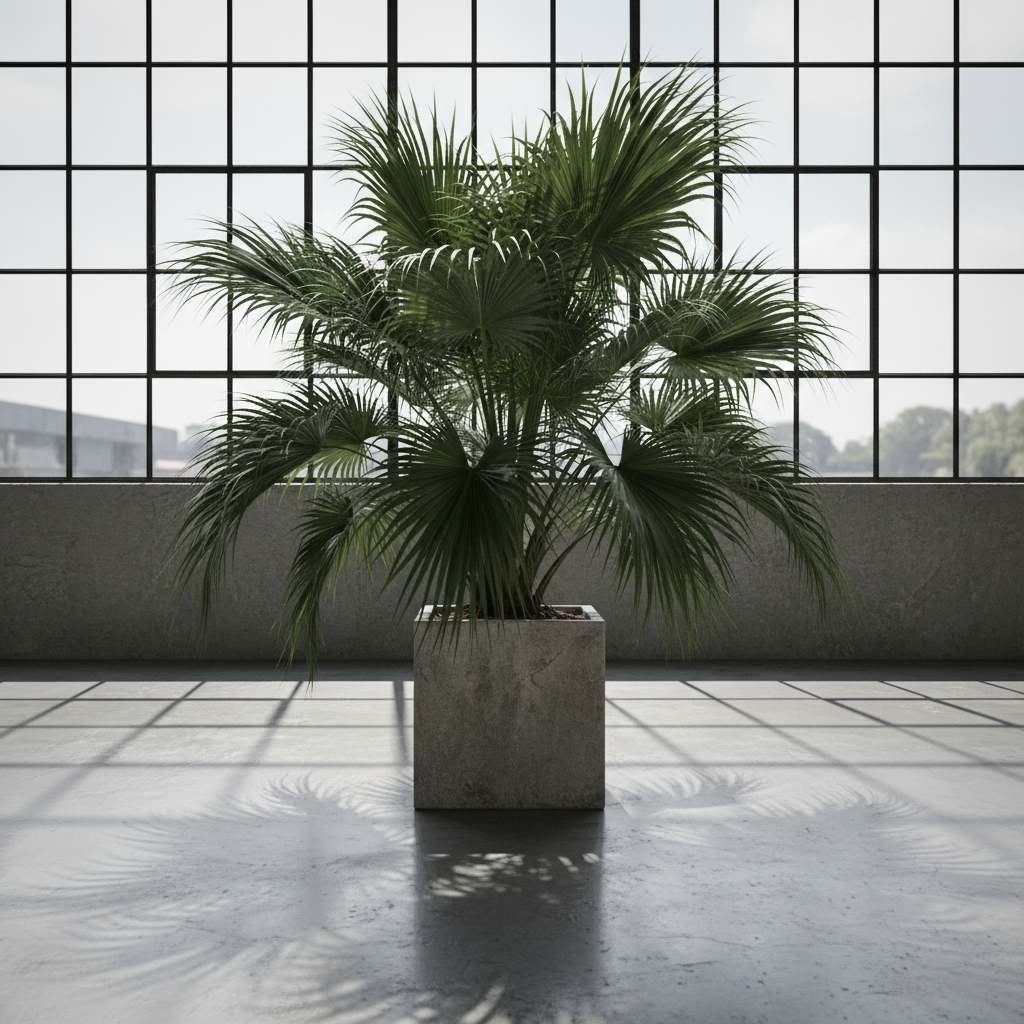
Few indoor palms carry themselves with the quiet drama of the Chinese fan palm. Where most houseplant palms reach for height with feathery, upright fronds, Livistona chinensis spreads outward in broad, pleated fans whose slender segment tips spill downward like falling water, the habit that earns it the second name of fountain palm. It is a plant that asks for very little beyond patience, and in return it builds, season by season, into one of the most architectural living things you can keep in a room.
This guide walks through everything needed to keep a Chinese fan palm not merely alive but genuinely thriving indoors, from the light it prefers and the rhythm of its watering to the slow art of growing it from seed. The distinction between surviving and thriving matters with this species in particular: a neglected fan palm will cling to life for years while looking progressively shabbier, so the goal here is the lush, glossy, full-crowned plant that the species is capable of becoming.
Quick Reference
Use the table below as an at-a-glance summary, then read on for the detail behind each figure. The numbers describe what the plant prefers indoors in a temperate home, not the wider extremes it can endure outdoors in its native range.
| Botanical name | Livistona chinensis |
| Common names | Chinese fan palm, fountain palm |
| Family | Arecaceae (palm family) |
| Native range | Southern Japan, Taiwan and southern China |
| Light | Bright indirect light; tolerates some gentle direct sun |
| Water | Keep evenly moist; let the top 2 to 3 cm (1 inch) dry between waterings |
| Humidity | Moderate to high; tolerates average indoor air |
| Temperature | 18 to 24 degrees C (64 to 75 degrees F); keep above 10 degrees C (50 degrees F) |
| Soil | Free-draining, loam-based mix, slightly acidic to neutral |
| Feeding | Balanced palm fertiliser with micronutrients, spring to early autumn |
| Mature size indoors | 1.8 to 3 metres (6 to 10 feet) over many years |
| Growth rate | Slow |
| Propagation | Seed only |
| Toxicity | Generally considered non-toxic to cats and dogs |
Why the Chinese Fan Palm Makes a Good Houseplant
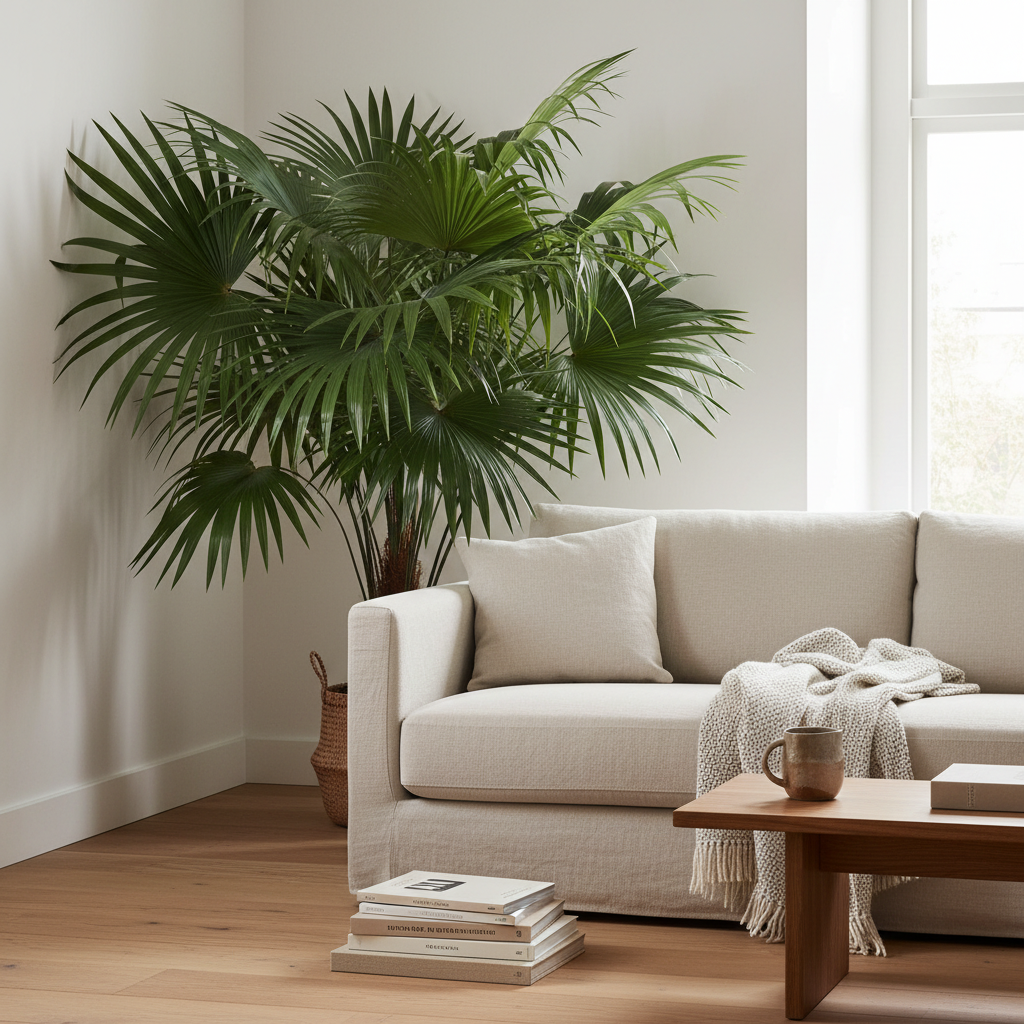
The case for Livistona chinensis as a houseplant rests on three qualities that rarely sit together in one plant: striking form, genuine forgiveness, and a slow growth rate that keeps it in scale with a room for years. The fronds are costapalmate, meaning each fan has a short extension of the leaf stalk running into the blade, which curves the fan and lets the divided segments droop at their tips. On a young plant the effect is neat and rounded; on a mature specimen it becomes the full weeping fountain that gives the palm its character.
Forgiveness is the quality that matters most for everyday growers. The Chinese fan palm tolerates a range of light levels, shrugs off the occasional missed watering far better than a fern or a calathea, and is not unduly fussy about humidity once established. It is also a solitary, single-trunked palm, which means it never sends up the messy thicket of suckers that some clustering palms produce, and its slow pace means a plant bought at a comfortable size will stay a comfortable size for a long time before it needs rethinking.
There is a practical bonus for households with animals. The Chinese fan palm is generally regarded as non-toxic to cats and dogs, unlike a number of popular foliage plants, so a curious pet that nibbles a frond is not cause for alarm. As always, it is sensible to discourage chewing regardless, since fibrous palm material can still upset a stomach mechanically, but the species carries none of the chemical toxicity that makes some houseplants a real worry.
Pro Tip — Buy the size you want: Because this palm grows so slowly indoors, it pays to buy a plant already close to the height you have in mind rather than expecting a small one to fill the space quickly. A specimen palm is an investment in years of slow, steady presence rather than fast growth.
Light
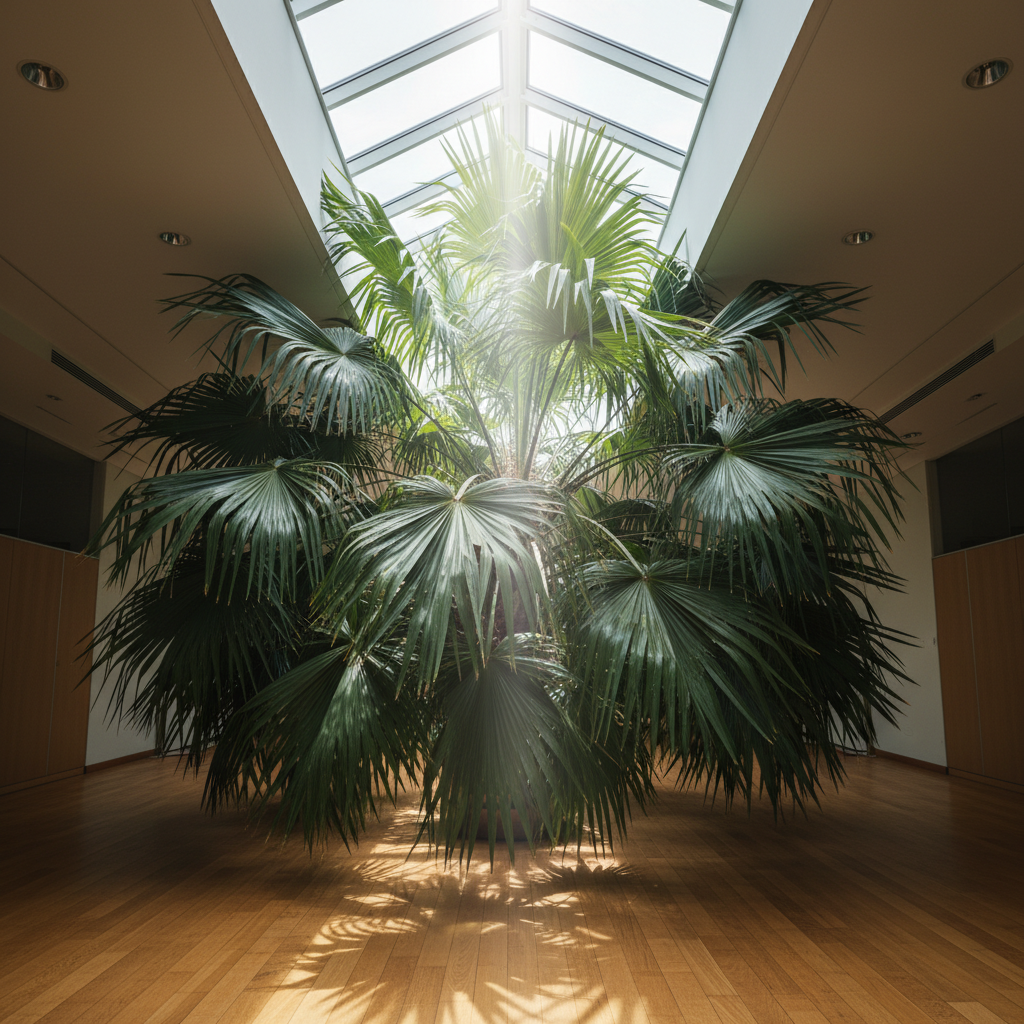
Light is the single biggest lever on how good a Chinese fan palm looks. In the wild the species grows in open woodland and forest margins, where seedlings start life in dappled shade and gradually climb into stronger light as they mature. That history translates neatly to indoor care: a juvenile plant is comfortable in bright indirect light and will even cope with a moderately lit corner, while a larger, established palm wants as much bright light as it can get to keep its crown dense and its colour rich.
The ideal indoor position is within a metre or two of a bright window that receives plenty of daylight but not hours of unfiltered, scorching sun directly on the leaves. An east-facing window suits it well, giving gentle morning light, and a south or west aspect works provided sheer curtains or a little distance soften the harshest midday hours. The palm will accept some direct sun, particularly in the weaker light of autumn and winter, but a plant moved abruptly from a shaded shop into a hot, sunny window can scorch, with the exposed segments bleaching to pale tan. Acclimatise any plant to brighter conditions over a week or two rather than all at once.
In a genuinely dim spot the palm will survive but slowly decline in quality, producing fewer, smaller, more widely spaced fronds and gradually losing the full look that makes it worth growing. If a brighter window is not available, a full-spectrum grow light running for ten to twelve hours a day is a reliable substitute and keeps growth compact. Turning the pot a quarter rotation every couple of weeks helps the crown develop evenly rather than leaning toward the light.
Watering
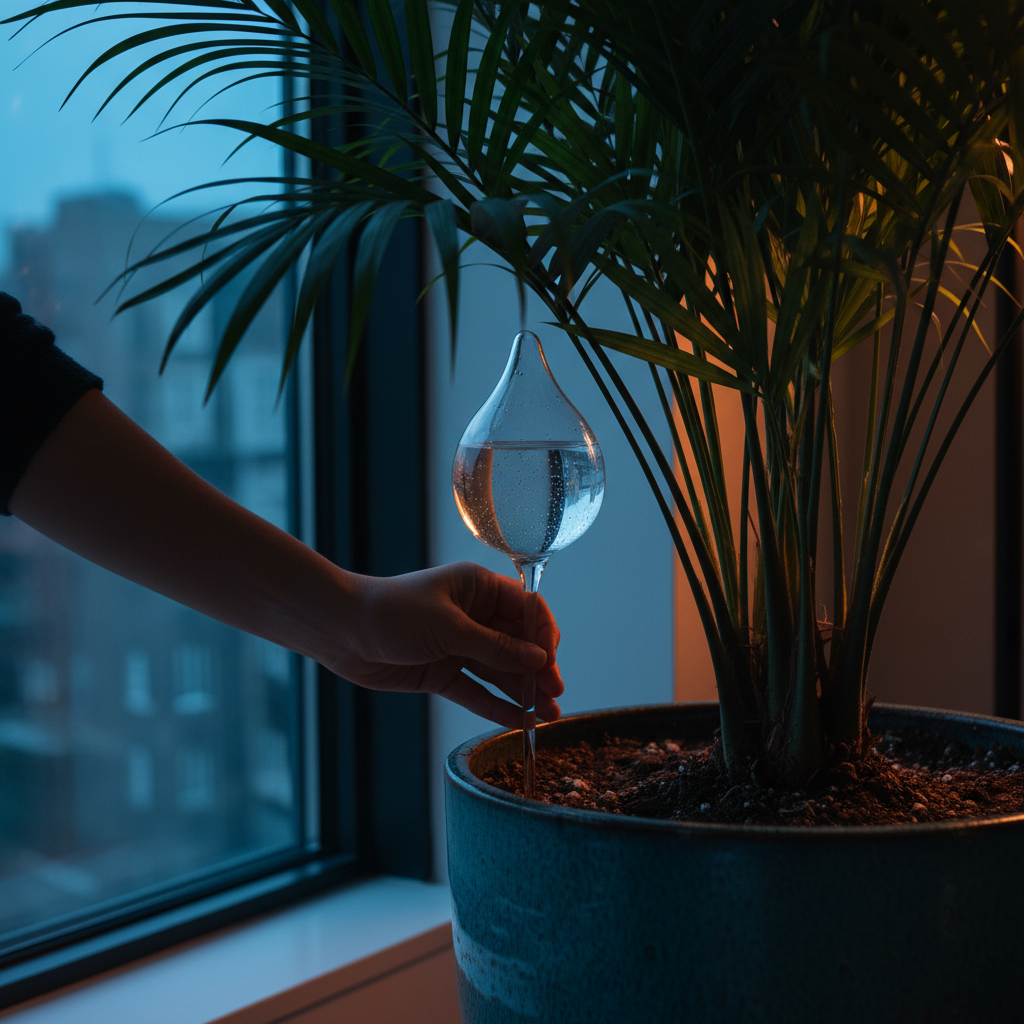
The Chinese fan palm likes its compost kept evenly moist through the growing season, but it is emphatically not a bog plant, and the most common way to harm one is by overwatering. The reliable rhythm is to water thoroughly when the top 2 to 3 cm (about an inch) of the mix has dried, letting water run freely from the drainage holes each time, then emptying the saucer so the roots never sit in standing water. In a bright, warm room through spring and summer this might mean watering once or twice a week; in the lower light and cooler temperatures of winter it can stretch to every ten days or more.
Feel rather than schedule should guide you. Push a finger into the compost, or lift the pot to judge its weight, and water only when the surface layer is dry to the touch. The roots resent both extremes: prolonged sogginess starves them of oxygen and invites root rot, which shows first as a general yellowing and a sour smell from the soil, while repeated drought scorches the frond tips brown and crisp. Of the two, a fan palm recovers far more readily from a brief dry spell than from sustained wet feet, so when in doubt, wait a day.
Water quality deserves a mention. Like many palms, Livistona chinensis can be sensitive to the fluoride and accumulated salts found in some tap water and in softened water, which contribute to browning leaf tips over time. If your tap water is heavily treated and you notice persistent tip browning despite good watering habits, switching to rainwater, distilled water or tap water left to stand overnight can make a visible difference. Flushing the pot thoroughly every month or two, by running water through until it pours freely from the base, also helps wash out built-up mineral salts.
Warning — Never leave it standing in water: Decorative cache pots without drainage are the silent killers of palms. If you grow the plant inside an ornamental outer pot, always tip away any water that collects in the bottom within half an hour of watering.
Soil and Repotting
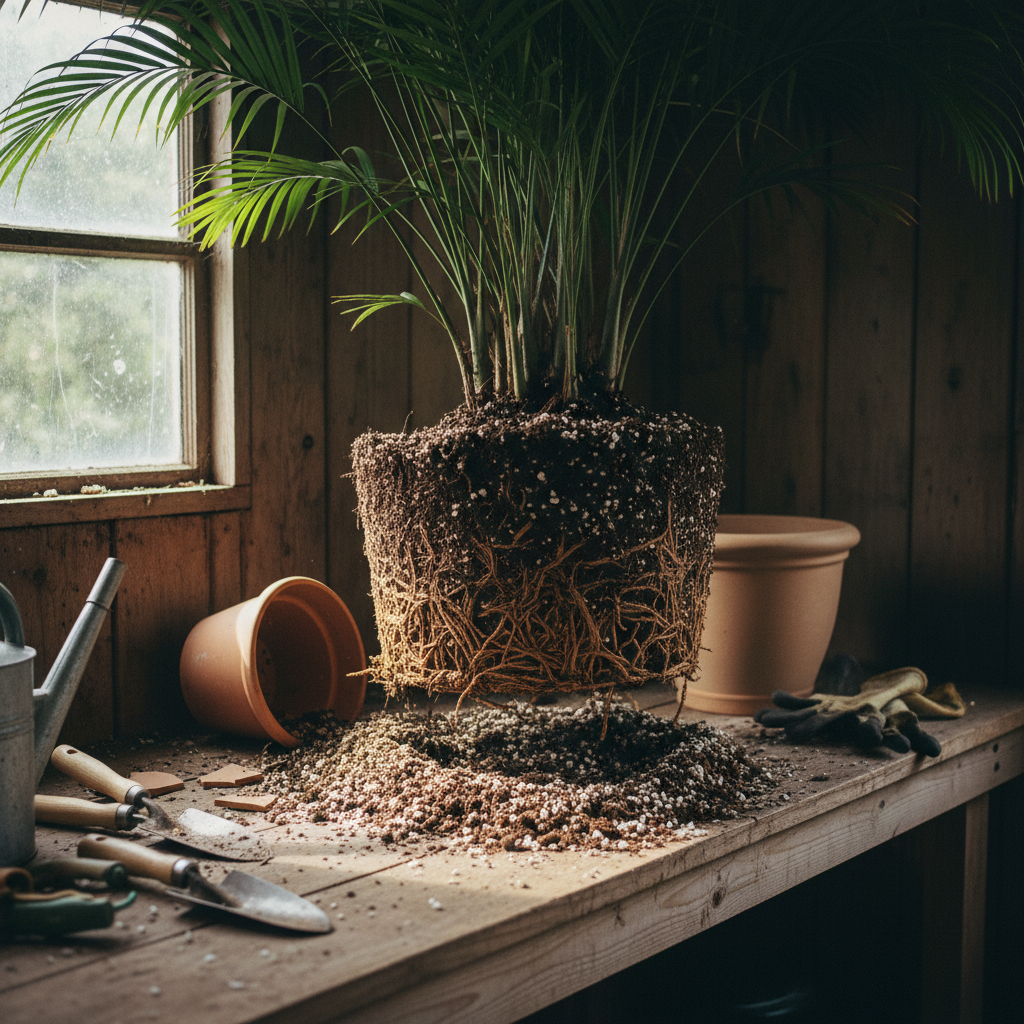
The right growing medium for a Chinese fan palm balances two demands that pull in opposite directions: it must hold enough moisture to keep the plant evenly hydrated, yet drain freely enough that the roots are never starved of air. A good working recipe is a quality loam-based potting compost lightened with roughly one third coarse material, such as perlite, horticultural grit or fine bark, to open up the structure. Many growers add a handful of coir or composted bark for moisture retention. The mix should be slightly acidic to neutral, which suits the species and most general-purpose composts already provide.
This palm is slow growing and, like most palms, actively prefers to be a little snug in its pot rather than swimming in a large volume of compost that stays wet. Expect to repot only every two to three years, and only when roots are clearly circling the base or emerging from the drainage holes. Choose a new pot just one size larger, no more, and always one with generous drainage. Spring, as growth resumes, is the best time to do it.
Handle the roots gently during repotting. Palms have relatively brittle root systems and do not appreciate having their roots teased apart or trimmed hard the way some plants tolerate, so ease the plant out, loosen only the outermost roots if they are tightly bound, and settle it into fresh mix at the same depth it sat before. Burying the trunk deeper than it grew can cause rot at the base. Firm the compost gently, water it in, and then keep the plant out of strong direct sun for a week or two while it re-establishes.
Fertilising
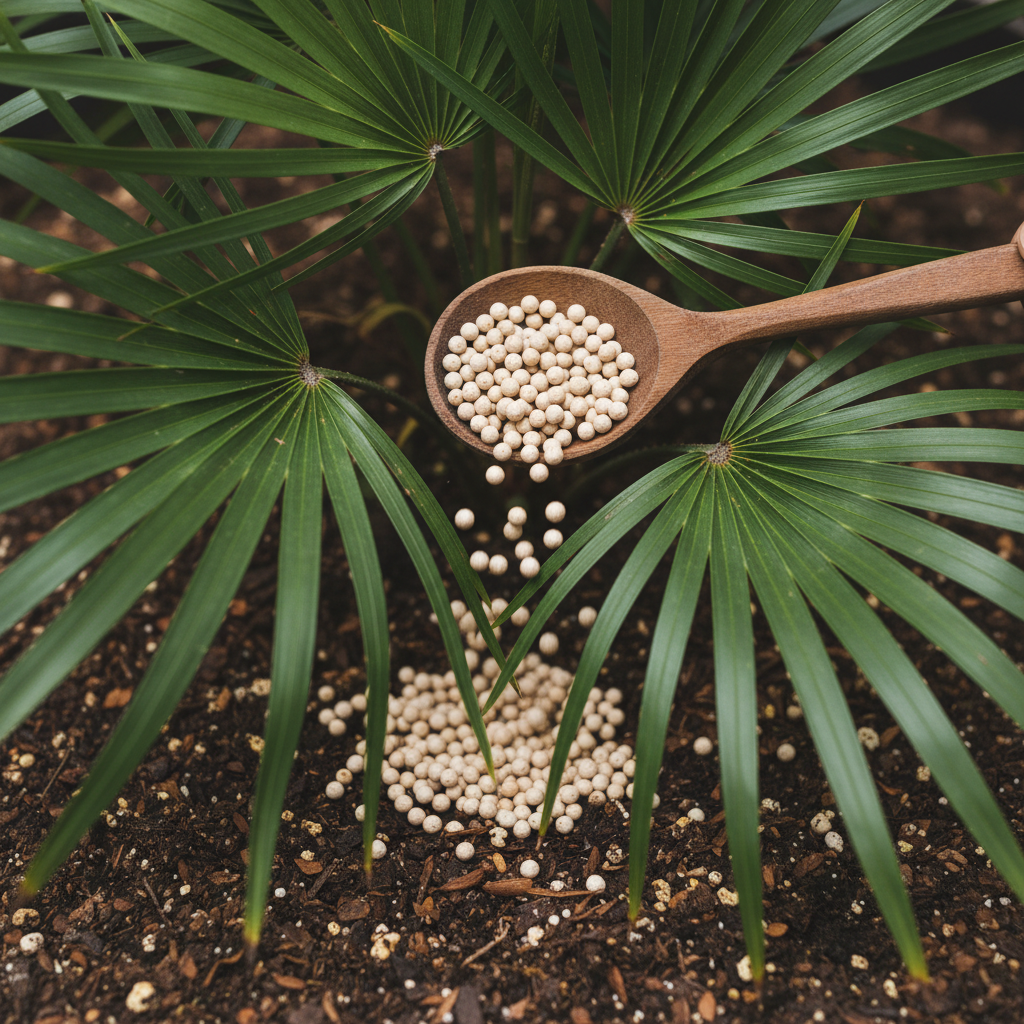
Palms are notoriously hungry for a particular set of nutrients, and the Chinese fan palm is no exception. While it responds to ordinary balanced feeding, it does best on a fertiliser formulated specifically for palms, because these blends include the magnesium, manganese, iron and other micronutrients that palms draw on heavily and that are often missing from general houseplant feeds. The classic palm disorders, from yellowing older fronds to the puckered, stunted new growth known as frizzle top, are usually nutrient deficiencies rather than disease.
Feed during the active growing season, roughly from mid-spring to early autumn. A slow-release palm fertiliser worked lightly into the soil surface in spring is the simplest approach and releases nutrients gradually over months. Alternatively, a diluted liquid palm feed applied every four to six weeks through the growing season works well, provided you follow the label rates or err on the weaker side. Stop feeding entirely through the darker, cooler months when the plant is barely growing, as fertiliser applied to a dormant palm simply accumulates as salt in the soil and can scorch the roots.
Less is genuinely more here. Overfeeding causes the same brown, crisped leaf tips that underwatering and poor water quality produce, because the excess fertiliser salts build up and draw moisture out of the root tissue. If you have been feeding generously and see tip burn, flush the pot thoroughly with plain water several times to leach out the surplus, then resume at a gentler rate.
Pro Tip — Watch the oldest fronds: Magnesium and potassium deficiencies show first on the lowest, oldest leaves as yellowing or orange-bronze edges. Catching this early and switching to a proper palm feed usually halts the decline before it reaches the newer growth.
Propagation
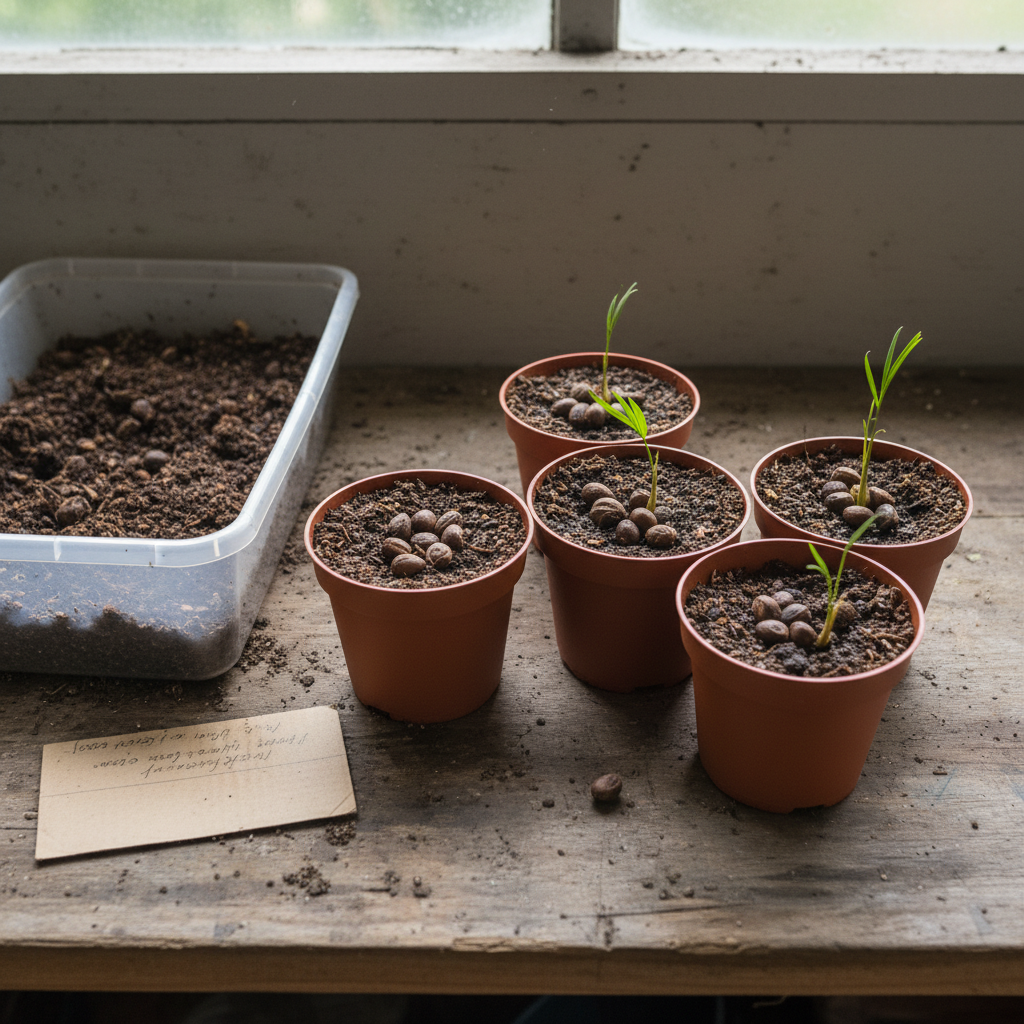
It is worth being clear from the outset: the Chinese fan palm can only be propagated from seed. As a solitary, single-trunked palm it produces no offsets, pups or suckers to divide, and palms cannot be grown from stem or leaf cuttings the way many foliage houseplants can. Any guide suggesting you take a cutting from a fan palm is simply wrong about how palms grow. The growing point sits at the top of the single trunk, and removing it kills the plant. This makes propagation a project for the patient rather than a quick way to multiply your collection.
For those who do want to raise plants from seed, the process is straightforward in method if slow in pace. Fresh seed germinates far more reliably than old, dried seed, so source it as fresh as possible. The steps below describe the standard approach.
- Soak the cleaned seeds in warm water for one to three days, changing the water daily, to soften the seed coat and rehydrate the embryo.
- Sow each seed about its own depth into small pots or a tray of moist, free-draining seed compost mixed with extra perlite or sand.
- Place the pots somewhere consistently warm, ideally 24 to 30 degrees C (75 to 86 degrees F), as palm seed germinates poorly in cool conditions. A heated propagator helps enormously.
- Keep the compost lightly moist but never sodden, and maintain humidity by covering with a clear lid or bag, ventilating occasionally to prevent mould.
- Be patient. Germination is erratic and can take anywhere from one to three months, sometimes longer, with the first growth appearing as a single narrow, grass-like leaf rather than a recognisable fan.
- Once seedlings have a root or two and their first leaf, pot them on individually into small containers and grow them on in bright, indirect light.
From this point it is a long road. A seedling takes several years to develop the divided, fan-shaped fronds that make the species recognisable, and many more to reach a presentable size. This slow maturation is precisely why nursery-grown specimens command the prices they do, and why most growers buy an established plant rather than starting from seed.
Pests and Common Problems
The Chinese fan palm is reasonably robust, but indoor conditions, particularly dry winter air from central heating, leave it open to a small cast of familiar pests. Spider mites are the most persistent. These tiny sap-suckers thrive in warm, dry air and announce themselves with fine pale stippling across the fronds and, in bad cases, faint webbing in the leaf junctions. Raising humidity, rinsing the foliage and treating with an insecticidal soap or a diluted horticultural oil usually brings them under control, though repeat treatments are needed to break the breeding cycle.
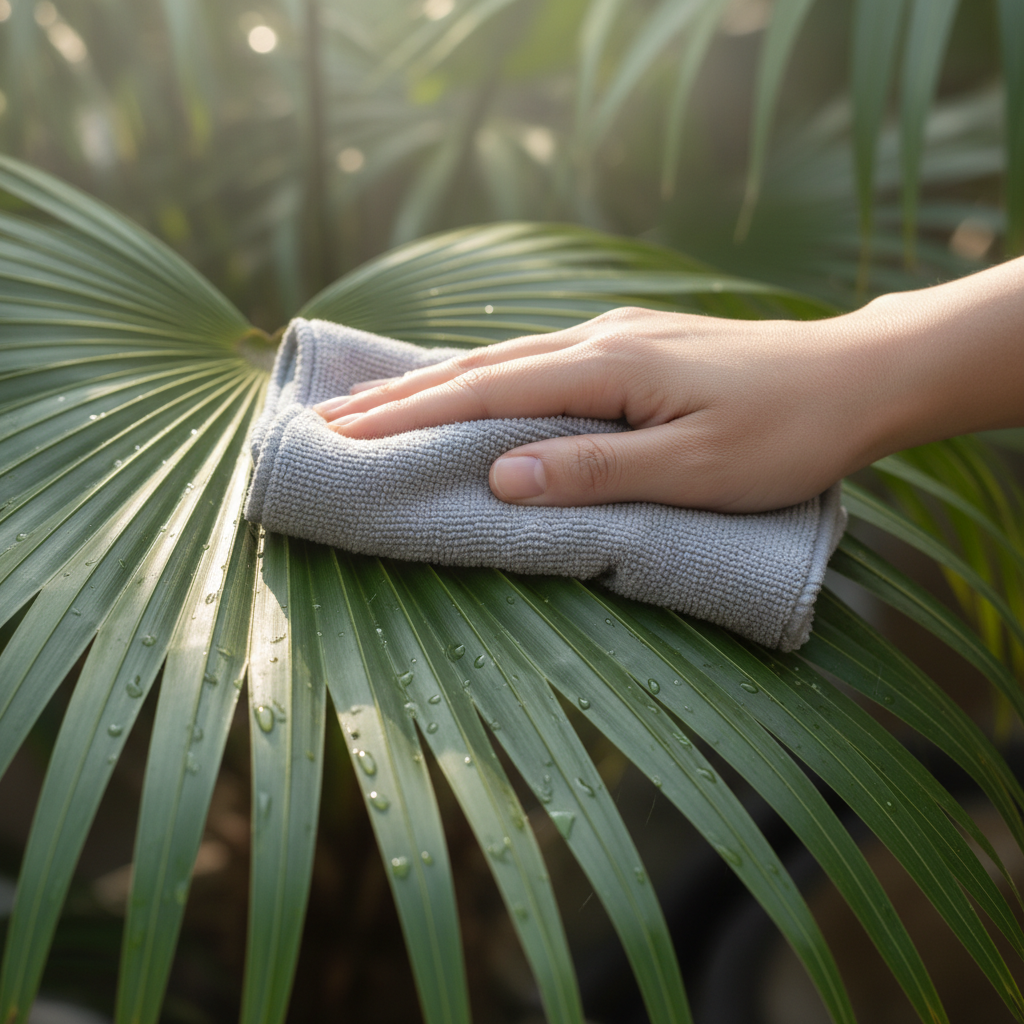
Mealybugs and scale insects are the other two to watch for. Mealybugs appear as small cottony white tufts tucked into the crevices where the leaf stalks meet, while scale shows up as small brown or tan bumps clinging to stalks and frond undersides. Both can be dabbed off with a cotton bud dipped in dilute isopropyl alcohol for light infestations, with insecticidal soap or oil for anything more widespread. Wiping the fronds with a damp cloth every couple of weeks is the single best preventative measure, as it removes dust, denies pests a foothold and gives you a regular chance to inspect the plant closely.
Most non-pest problems trace back to watering and air. Brown, crispy leaf tips are the classic complaint and usually point to low humidity, mineral build-up from hard or fluoridated water, underwatering, or overfeeding, often a combination. Widespread yellowing with soft, limp fronds and damp soil signals overwatering and the onset of root rot, calling for an immediate reduction in watering and, in serious cases, repotting into fresh dry mix with any blackened roots trimmed away. Yellowing confined to the oldest lower fronds, by contrast, is often simply natural ageing or a nutrient shortfall rather than a crisis. It is normal for a palm to shed its lowest fronds over time as it grows.
Warning — Resist the urge to trim every brown tip: Cutting into the green tissue of a frond can cause the whole leaf to brown back further. If you must tidy brown tips, trim only the dead brown portion, following the natural shape of the segment, and leave a thin margin of brown rather than cutting into living green.
Varieties and Relatives
Unlike many houseplants, the Chinese fan palm has not been bred into a long list of named cultivars. What you will usually encounter is the species itself, sometimes alongside a closely related fan palm that is grown in much the same way and frequently sold beside it. The two below are the forms most likely to cross your path.
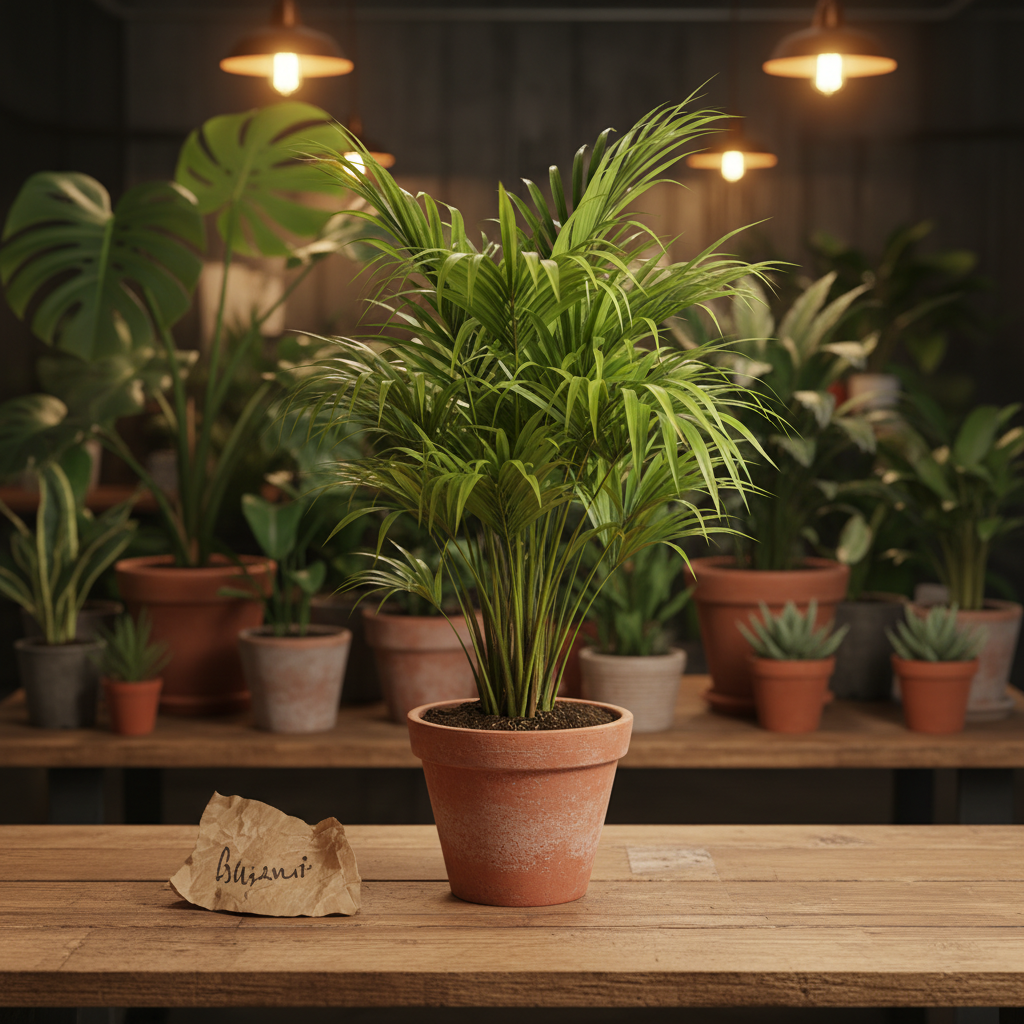
Chinese fan palm (species type)
The straight species, Livistona chinensis, is what most sellers mean by Chinese fan palm. Its glossy green costapalmate fronds split into many segments whose tips droop gracefully, building into the signature weeping fountain as the plant matures. A recognised botanical variety, Livistona chinensis var. subglobosa, differs mainly in fruit shape and is not meaningfully different to grow indoors.
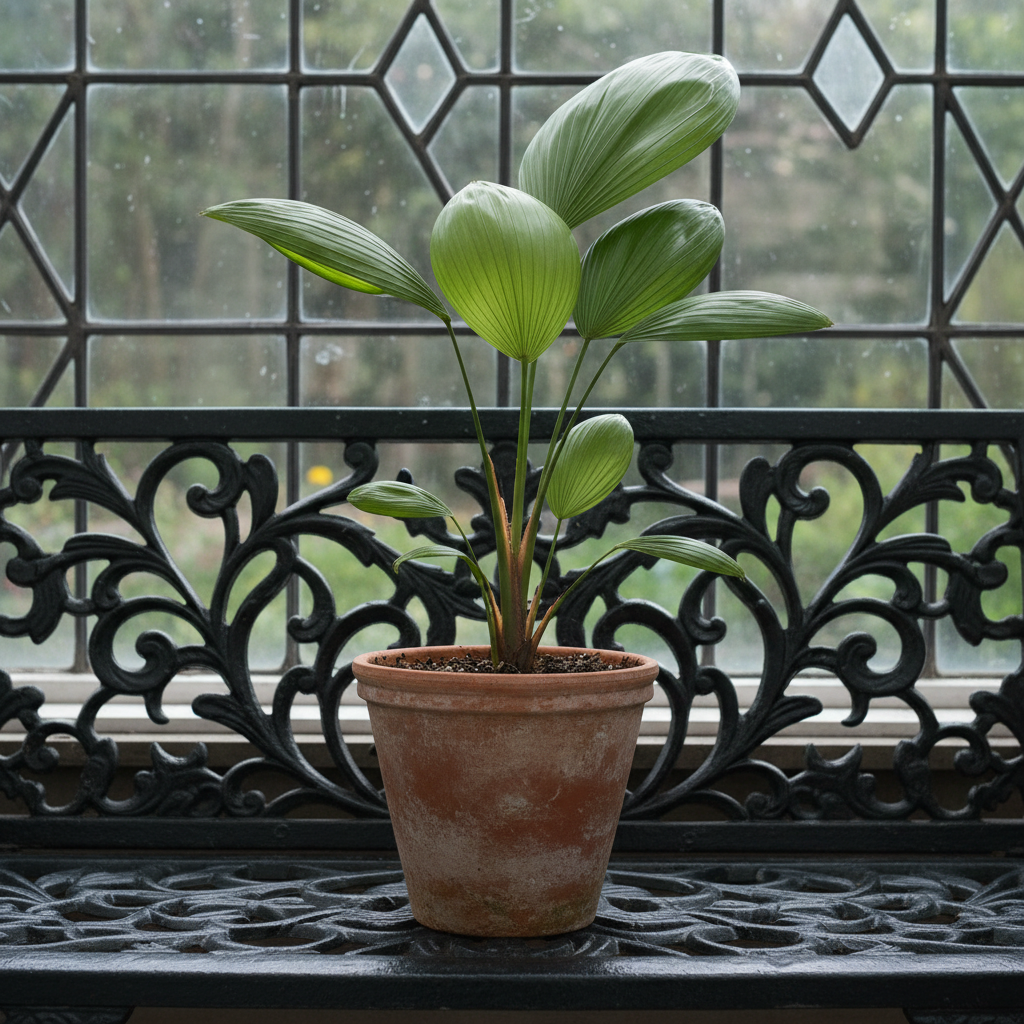
Footstool palm (Livistona rotundifolia)
A close relative often grown indoors and sometimes confused with the Chinese fan palm at the nursery. Its juvenile leaves are notably rounder, glossy and almost undivided, forming near-circular fans that give it the footstool name. Care is essentially identical, so the choice between them comes down to whether you prefer the weeping divided fans of chinensis or the bolder, rounder leaves of rotundifolia.
Frequently Asked Questions
How big does a Chinese fan palm get indoors?
Grown as a houseplant it typically reaches 1.8 to 3 metres (6 to 10 feet) over many years, because its indoor growth rate is slow and pot confinement keeps it in check. In its native habitat and in frost-free gardens it can become a tree of 9 to 15 metres (30 to 50 feet), but that scale is never reached in a container indoors.
Why are the tips of my Chinese fan palm turning brown?
Brown, crispy frond tips are the most common complaint and usually stem from low humidity, mineral and fluoride build-up in tap water, inconsistent or insufficient watering, or overfeeding. Work through those causes in turn: raise humidity, switch to rainwater or distilled water if your tap supply is heavily treated, keep watering even, and ease off on fertiliser. Flushing the pot thoroughly with plain water helps clear accumulated salts.
Is the Chinese fan palm safe for cats and dogs?
Yes. Livistona chinensis is generally listed as non-toxic to cats and dogs, which sets it apart from many popular foliage plants. It is still wise to discourage pets from chewing the fronds, since fibrous plant material can cause mild stomach upset mechanically, but the palm contains no known toxic compounds.
How often should I water a Chinese fan palm?
Water when the top 2 to 3 cm (about an inch) of compost has dried, rather than on a fixed schedule. In a bright, warm room through spring and summer that often means once or twice a week, dropping to every ten days or more in winter. Always water thoroughly until it drains freely, then empty the saucer so the roots never sit in water.
Can I grow a Chinese fan palm from a cutting?
No. Palms cannot be propagated from stem or leaf cuttings, and because the Chinese fan palm is a solitary, single-trunked species it produces no offsets to divide either. The only way to raise a new plant is from seed, which germinates slowly and takes several years to develop its characteristic fan-shaped fronds.
Why is my Chinese fan palm not growing?
Some slowness is simply the nature of the species, which is a famously unhurried grower indoors. That said, if it has produced no new fronds for a very long time, the usual culprits are insufficient light, the cold and short days of winter dormancy, or a lack of the specific nutrients palms need. Move it to a brighter spot, be patient through the darker months, and feed with a proper palm fertiliser through the growing season.






