
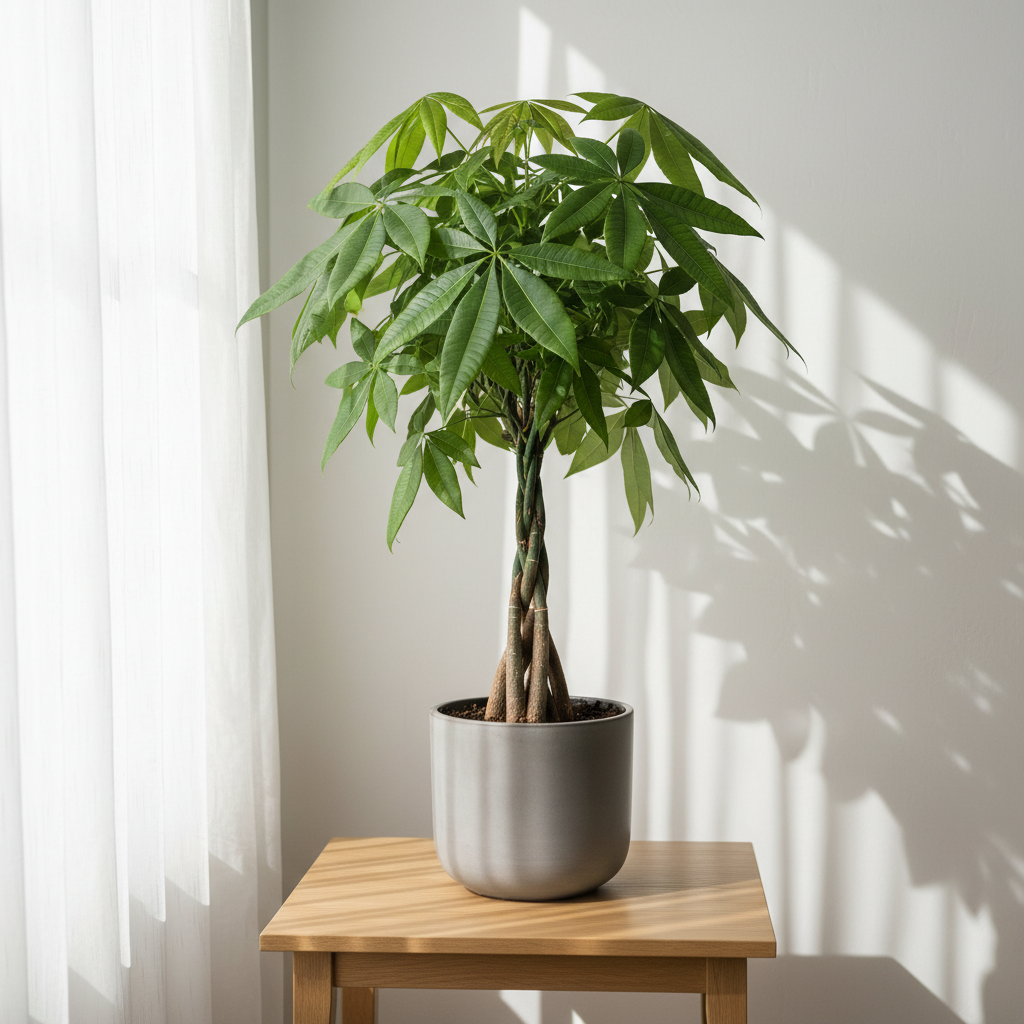
Few houseplants carry as much symbolic weight as the money tree (Pachira aquatica), a glossy-leaved tropical tree most often sold with several slender trunks plaited into a single decorative braid. Native to the swamps and river margins of Central and South America, where it can soar to eighteen metres (sixty feet) and produce large showy flowers, the species earns its botanical name from its love of water. Indoors it stays a manageable one to two metres (three to six feet), unfurling umbrella-like whorls of five to seven lance-shaped leaflets that give it an unmistakable hand-shaped silhouette. It is also known as the Guiana chestnut, Malabar chestnut and saba nut, a nod to its edible seeds.
The money tree has a reputation as one of the more forgiving statement plants, and that reputation is largely deserved. It tolerates a range of light levels, recovers gracefully from the occasional missed watering, and rarely demands the fussy humidity routines that calatheas and ferns insist upon. Yet there is a meaningful gap between a money tree that merely survives, holding onto a thinning canopy of pale leaves, and one that truly thrives, pushing out dense flushes of deep green growth each season. This guide walks through every aspect of care, from reading the light in your room to diagnosing a leaning braid, so you can land firmly on the thriving side of that line.
Contents
- Quick Reference
- Why Money Tree Makes a Rewarding Houseplant
- Light Requirements
- Watering & Humidity
- Soil, Potting & Repotting
- Fertilising
- Propagation
- Pests & Diseases
- Popular Varieties
- Frequently Asked Questions
Quick Reference: Money Tree at a Glance
| Light | Bright indirect light; tolerates medium light, dislikes harsh midday sun |
| Watering | When the top 5cm (2in) of soil is dry, roughly every 7 to 10 days in summer |
| Temperature | 16 to 27°C (61 to 81°F); avoid below 10°C (50°F) |
| Humidity | Moderate to high, ideally 50 percent or above |
| Fertiliser | Balanced feed monthly during spring and summer |
| Toxicity | Generally regarded as non-toxic to cats, dogs and humans |
Why Money Tree Makes a Rewarding Houseplant
The money tree occupies a sweet spot that few houseplants manage to reach. It is sculptural enough to anchor a room as a single specimen, with its braided trunk and tiered canopy reading almost like a piece of living furniture, yet it is undemanding enough to suit a beginner who travels often or forgets the occasional watering. Because it stores moisture in its swollen trunk base, a holdover from its wetland origins where flooding alternates with dry spells, it weathers irregular care far better than thirstier tropicals.
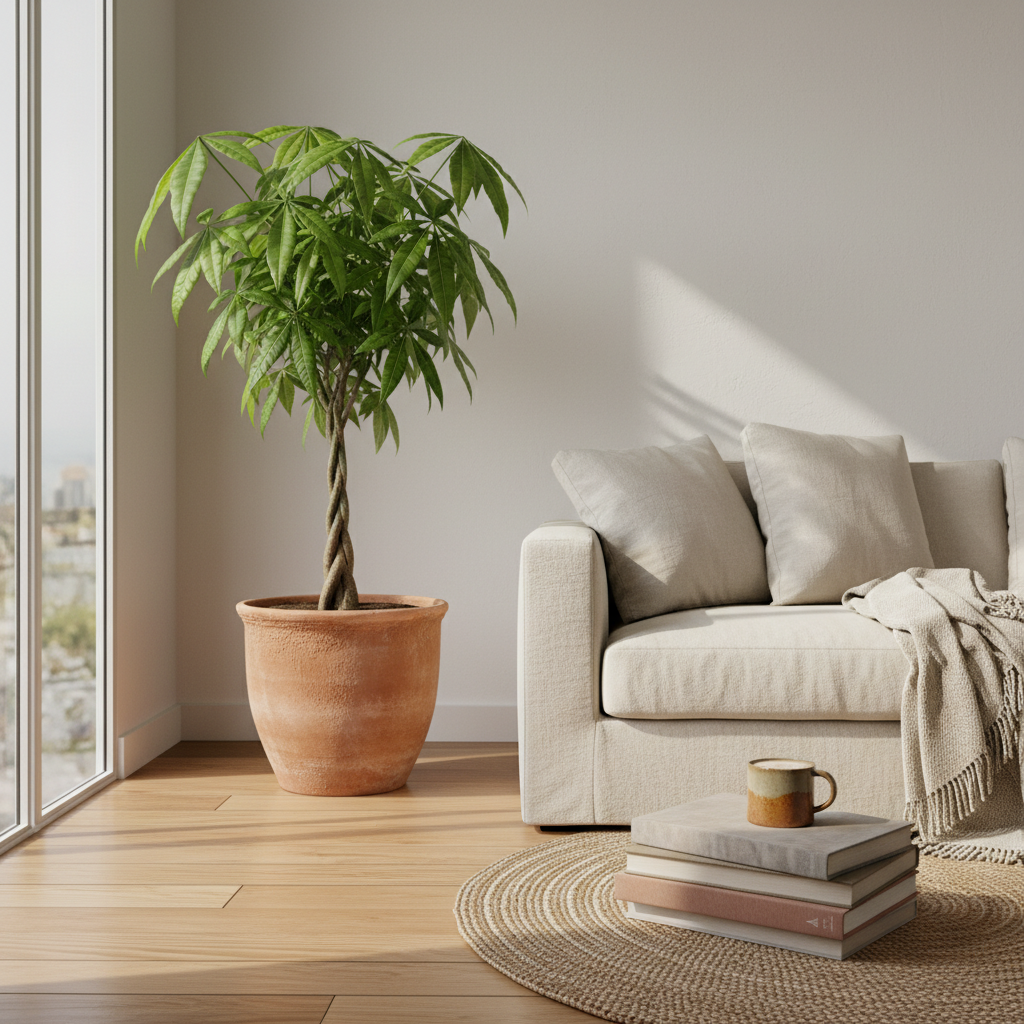
There is also the matter of folklore. In feng shui practice the money tree is associated with prosperity and good fortune, the five leaflets of each leaf said to represent the five elements of wood, fire, earth, metal and water. Whether or not that resonates with you, the plant’s cultural cachet has made it a fixture in homes, offices and shop counters worldwide, which means it is widely available and inexpensive. Beyond symbolism, it is a genuinely effective air-purifying foliage plant that pairs handsome looks with real resilience, and it can live for a decade or more with steady care.
Important — Toxicity: The money tree is widely listed as non-toxic to cats and dogs, and its seeds are even edible when cooked. That said, no plant material is designed to be eaten by pets, and curious animals chewing foliage may still experience mild stomach upset, so it is sensible to discourage nibbling and keep an eye on very determined chewers.
Light Requirements
Light is the single biggest lever you can pull to move a money tree from surviving to thriving. In its native habitat the species grows in open, sunny wetlands, so it is genuinely a high-light plant at heart, even though it has earned a reputation for tolerating dim corners. It will persist in medium light, but persistence is not the same as health: in low light the internodes stretch, new leaves emerge smaller and paler, and the plant gradually thins from the bottom up.
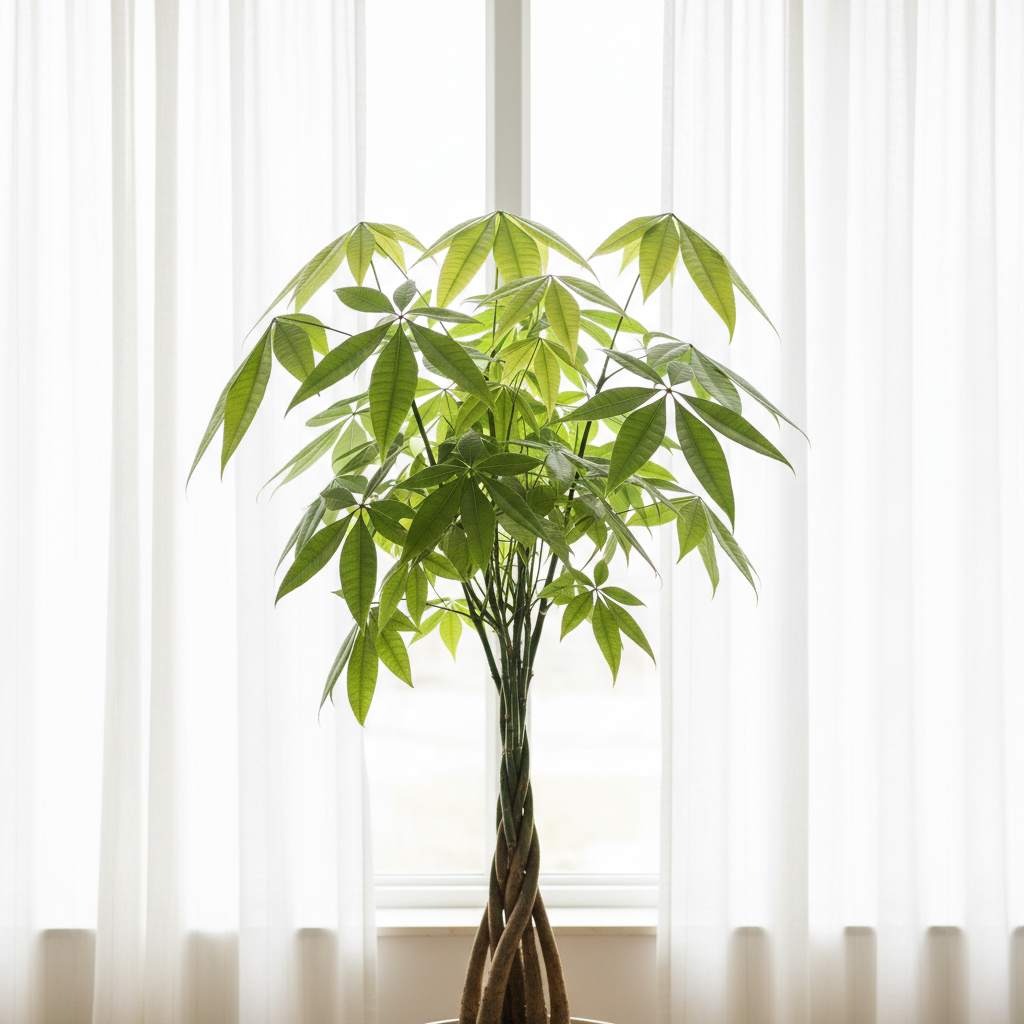
The ideal is bright, indirect light for most of the day, the kind you find a metre or two back from a large sunny window or directly in front of one screened by a sheer curtain. In this light the canopy stays dense, the leaflets hold a deep glossy green, and the trunk thickens steadily. A money tree given good light also drinks more, which keeps its roots active and reduces the risk of the soil staying soggy.
Light Levels Explained
Understanding how different light intensities map onto real rooms helps you place a money tree with confidence. The figures below are approximate, since the angle of the sun, nearby buildings and the depth of your window all shift the numbers, but they give a useful frame of reference.
| Light Category | Approx. Level | Typical Location | Outcome |
|---|---|---|---|
| Direct sun | 20,000 lux and above | On an unscreened south sill | Tolerable if acclimatised, but risks leaf scorch in summer |
| Bright indirect | 10,000 to 20,000 lux | Beside a large bright window | Ideal; dense, deep green growth |
| Medium | 5,000 to 10,000 lux | A metre or two into a bright room | Acceptable; slower, slightly sparser growth |
| Low | 1,000 to 5,000 lux | A north room or dim corner | Survives but stretches and thins over time |
| Very low | Below 1,000 lux | An interior hallway, far from windows | Decline; leaf drop and weak, leggy stems |
Window Orientation and Placement
South-facing window: The brightest option in the northern hemisphere and an excellent spot, provided you diffuse the harshest midday rays with a sheer curtain or set the plant a short distance back from the glass. A money tree that has been gradually acclimatised can even take a few hours of gentle direct sun here.
East-facing window: Often the easiest position of all. The plant receives soft, cool morning sun that it can take directly without scorching, then bright indirect light for the rest of the day. Leaves stay lush and the risk of overheating is low.
West-facing window: A good choice, offering bright afternoon light. The later sun is stronger and warmer than morning light, so a sheer screen during the hottest months helps prevent the leaf tips from crisping.
North-facing window: The dimmest aspect and the most challenging for a money tree. It will hold on, but expect slower growth and a tendency to lean toward the light. If north light is all you have, consider supplementing with a grow light to keep the canopy full.
Pro Tip — Rotate for an Even Canopy: Money trees lean noticeably toward their light source, which can leave the braid crooked and the foliage one-sided. Give the pot a quarter turn every week or two so all sides receive equal light and the crown stays balanced.
How Light Affects Growth and Leaf Density
Light does more than keep a money tree alive; it dictates the entire character of the plant. In strong light the stems stay short between leaves, producing a compact, bushy canopy with leaflets held flat and broad to catch the sun. As light drops, the plant compensates by stretching toward whatever it can find, lengthening the gaps between leaves and tilting its crown. The result is the leggy, top-heavy look that troubles so many money tree owners. Restoring brighter conditions slows the stretching, but it will not retroactively shorten stems that have already extended, which is why getting placement right from the start pays off.
Warning — Direct Sunlight: A money tree moved abruptly from a shop’s interior lighting to a blazing south window will often develop bleached, scorched patches within days. Acclimatise it over two to three weeks, increasing exposure gradually, rather than relocating it into full sun overnight.
Artificial Lighting
Money trees respond well to supplemental lighting, which makes them a realistic option for windowless offices and dim rooms. A full-spectrum LED grow light positioned thirty to sixty centimetres (twelve to twenty-four inches) above the canopy, run for ten to twelve hours a day, comfortably replaces or tops up natural light. Because the plant is large and its lower leaves are easily shaded by the upper canopy, a broad light source works better than a narrow spotlight, ensuring the whole crown is illuminated rather than just the top.
Seasonal Adjustments
As the days shorten through autumn and winter, the light reaching your money tree can fall by half or more, even if you have not moved it. Many plants slow almost to a standstill during these months, and that is perfectly normal. Take the opportunity to shift the plant closer to its window for the darker season, then move it back as spring light returns. Cutting back on water during this slower period matters just as much, since a plant receiving less light uses less moisture and is far more vulnerable to root rot in soggy compost.
Watering & Humidity
Watering is where the money tree’s swamp heritage can mislead people. Because the species grows in seasonally flooded wetlands, owners sometimes assume it wants to be kept constantly wet. In a pot, with far less airflow around the roots than a riverbank provides, that approach is the fastest route to root rot. The reliable rule is to water thoroughly, then let the top portion of the soil dry before watering again.
When to Water
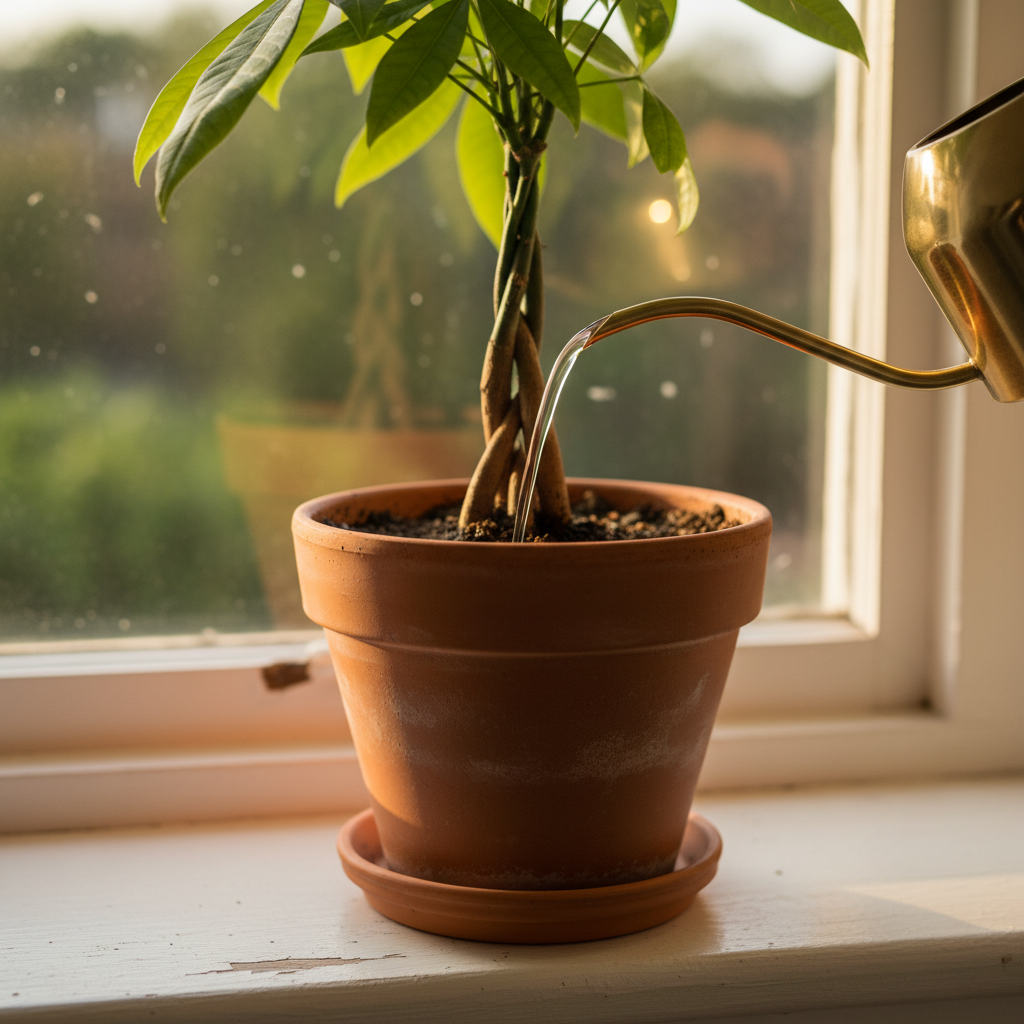
Check the soil rather than the calendar. Push a finger about five centimetres (two inches) into the compost; if it feels dry at that depth, it is time to water, and if it is still damp, wait a few more days. In a bright, warm room during summer this typically works out to once every seven to ten days, while in winter the interval can stretch to two or even three weeks.
Several factors shift that timing. A money tree in a small terracotta pot in a sunny window will dry out far faster than the same plant in a large glazed pot in a cool room. Higher temperatures, brighter light and active growth all speed up water use, while cool, dim, dormant conditions slow it dramatically. Rather than memorising a fixed schedule, learn to read these cues and let the soil tell you when to act.
Pro Tip — Lift the Pot: A freshly watered money tree is surprisingly heavy, and a dry one is noticeably light. Lifting the pot becomes one of the most accurate watering gauges you have. After a few weeks you will know by weight alone whether the plant needs a drink, no finger test required.
How to Water Correctly
- Take the plant to a sink or use a saucer, and check that the top five centimetres (two inches) of soil are dry before you begin.
- Pour water evenly over the entire soil surface, working slowly so it soaks in rather than running straight down the sides.
- Continue until water flows freely from the drainage holes, which ensures the whole root ball is moistened, not just the top layer.
- Let the pot drain completely for several minutes so no excess sits at the bottom.
- Empty the saucer or cache pot; never leave the money tree standing in collected water.
- Return the plant to its spot and wait until the soil dries to the right depth before repeating.
Signs of Overwatering vs. Underwatering
| Symptom | Overwatering | Underwatering |
|---|---|---|
| Leaf colour | Yellowing, often starting with lower leaves | Browning, crisp edges and tips |
| Leaf texture | Soft, limp, sometimes translucent | Dry, papery, brittle |
| Soil | Stays wet for many days, may smell sour | Pulls away from the pot edge, bone dry |
| Roots | Brown, mushy, foul-smelling | Dry and intact but sparse |
| Trunk base | Soft or spongy, a serious warning sign | Slightly shrunken or wrinkled |
Warning — Root Rot: A soft, squishy trunk base is the money tree’s most ominous symptom. It usually means rot has reached the stem from waterlogged roots, and by this stage recovery is difficult. Prevention through careful watering and free-draining soil is far easier than any cure, so err toward letting the plant dry rather than keeping it wet.
Humidity Requirements
As a tropical species the money tree appreciates moderate to high humidity, ideally around fifty percent or above. It is more tolerant of average household air than many of its rainforest relatives, but very dry conditions, particularly the parched air near radiators and heating vents in winter, can leave it unhappy.
The clearest sign that the air is too dry is browning, crisping leaflet tips and edges, sometimes accompanied by a general dullness in the foliage. These symptoms are easy to confuse with underwatering, so check the soil before assuming humidity is the culprit. If the soil moisture is right but the tips still brown, dry air is the more likely cause.
Raising humidity is straightforward. Grouping plants together creates a more humid microclimate as they transpire, a pebble tray filled with water beneath the pot adds local moisture, and a small room humidifier is the most effective option for genuinely dry homes. Misting offers only a brief lift and is not a reliable long-term fix, so reach for a humidifier if the air is persistently dry.
Water Quality
Money trees are not especially fussy about water quality, but they can show sensitivity to the fluoride and chlorine found in some tap water, occasionally registering as brown leaf tips. If your tap water is heavily treated and you notice this, switch to filtered or rainwater, or simply leave tap water to stand uncovered overnight so some of the chlorine can dissipate before you use it. Room-temperature water is gentler on the roots than icy cold water straight from the tap.
Soil, Potting & Repotting
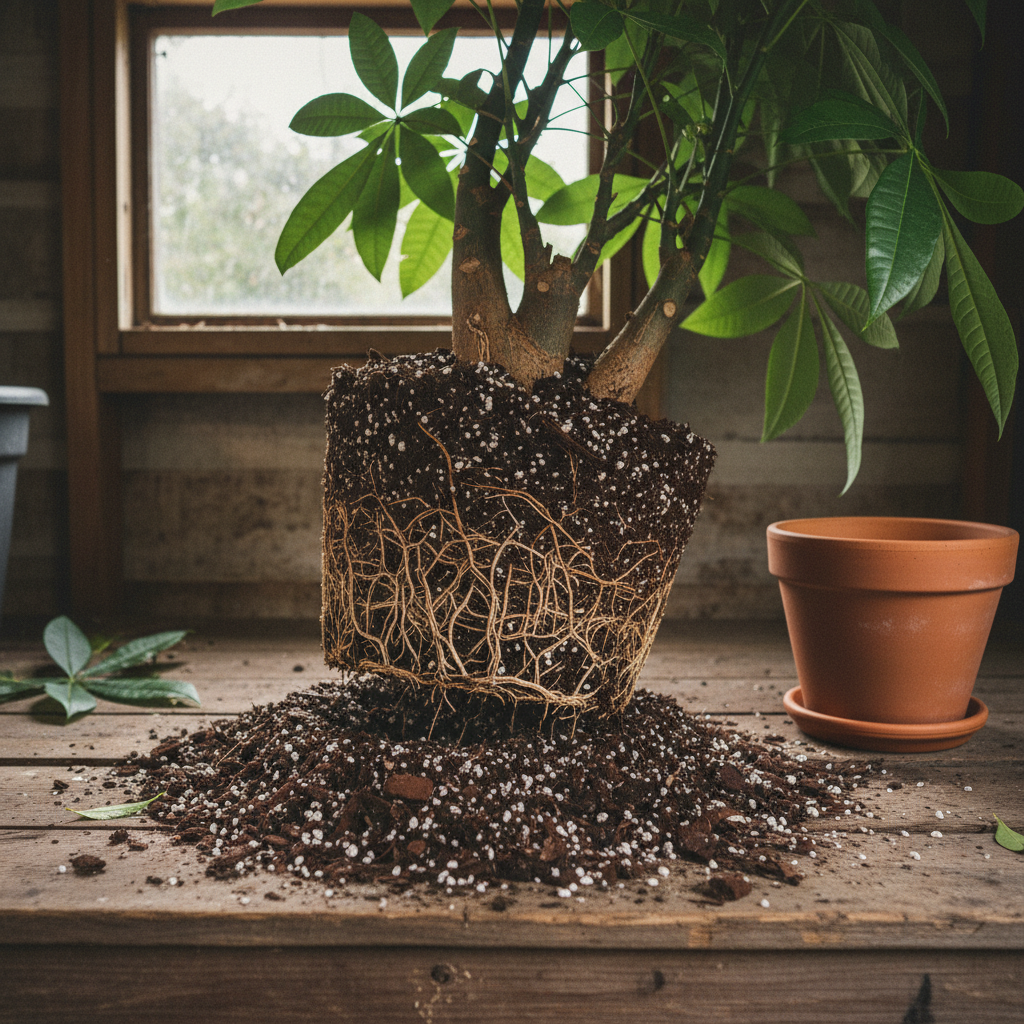
The right soil makes watering forgiving and the wrong soil makes it treacherous. Because the greatest threat to a money tree is waterlogged roots, the goal is a mix that holds enough moisture to keep the plant hydrated while draining quickly enough that the roots never sit in standing water. A dense, water-retentive compost straight from the bag is a common cause of trouble.
Ideal Soil Composition
A good money tree mix starts with a quality peat-free houseplant compost as its base, then opens it up with generous amounts of grit and aeration. The aim is a structure that feels loose and crumbly rather than heavy and claggy, with plenty of air pockets for the roots to breathe.
| Component | Proportion | Function |
|---|---|---|
| Houseplant compost | 50 percent | Holds moisture and nutrients, the body of the mix |
| Perlite or pumice | 30 percent | Creates drainage and air pockets, prevents compaction |
| Orchid bark or coco coir | 15 percent | Adds structure and slows compaction over time |
| Coarse sand or grit | 5 percent | Improves drainage and adds weight for stability |
Money trees prefer a slightly acidic to neutral soil, in the range of about 6.0 to 7.0 on the pH scale. Most standard houseplant composts already fall comfortably within this band, so unless you are mixing your own from unusual ingredients there is rarely any need to adjust it.
Pro Tip — Quick Mix Recipe: For a fuss-free blend, combine two parts standard houseplant compost with one part perlite and one part orchid bark. This roughly two to one to one ratio drains fast, resists compaction and suits a money tree well without any need to source specialist ingredients.
Choosing the Right Pot
The container you choose has a direct effect on how easy the plant is to keep alive, influencing drainage, watering frequency and even stability for a top-heavy braided specimen.
Drainage holes are non-negotiable. A money tree planted in a pot without drainage is living on borrowed time, since excess water has nowhere to escape and the roots inevitably sit in a reservoir at the base. If you love a decorative cache pot that lacks holes, use it as an outer sleeve only, keeping the plant in a plain nursery pot inside that you can lift out to water and drain.
Pot material: Terracotta is forgiving because its porous walls let moisture evaporate, helping the soil dry between waterings and reducing rot risk, which makes it a sound choice for heavy-handed waterers. Glazed ceramic and plastic retain moisture longer, so they suit drier rooms or anyone who tends to underwater. A heavier pot also helps counterbalance the weight of a tall canopy.
Pot size: Choose a pot only two to four centimetres (one to two inches) wider in diameter than the current root ball. An oversized pot holds a large volume of soil that stays wet long after the roots have taken their fill, and that lingering moisture is exactly what invites rot.
When to Repot
Money trees are slow to moderate growers and are quite content to be a little snug in their pots, so they need repotting only every two to three years. The clearest signals that it is time are roots emerging from the drainage holes, water running straight through without soaking in, or the plant becoming visibly top-heavy and unstable. The best moment to repot is spring or early summer, when the plant is entering active growth and can recover quickly from the disturbance.
How to Repot: Step-by-Step
- Water the plant a day beforehand, which reduces stress and helps the root ball slide out cleanly.
- Ease the money tree out by tipping the pot and supporting the braided trunk at its base, rather than pulling on the stems.
- Gently tease apart any tightly circling roots and trim away anything brown, soft or mushy with clean scissors.
- Add a layer of fresh, free-draining mix to the bottom of the new pot so the plant will sit at the same depth as before.
- Position the plant centrally and backfill around the root ball with fresh mix, firming lightly to remove large air gaps.
- Keep the trunk base at its original soil level; planting deeper invites stem rot in the braid.
- Water thoroughly to settle the soil, then hold off on feeding for four to six weeks while new roots establish.
Warning — Transplant Shock: Do not be alarmed if your money tree drops a few leaves or looks subdued for a couple of weeks after repotting. This is normal transplant shock as the roots adjust. Keep the plant in stable, bright indirect light, resist the urge to overwater while it recovers, and avoid fertilising until you see fresh growth.
Fertilising
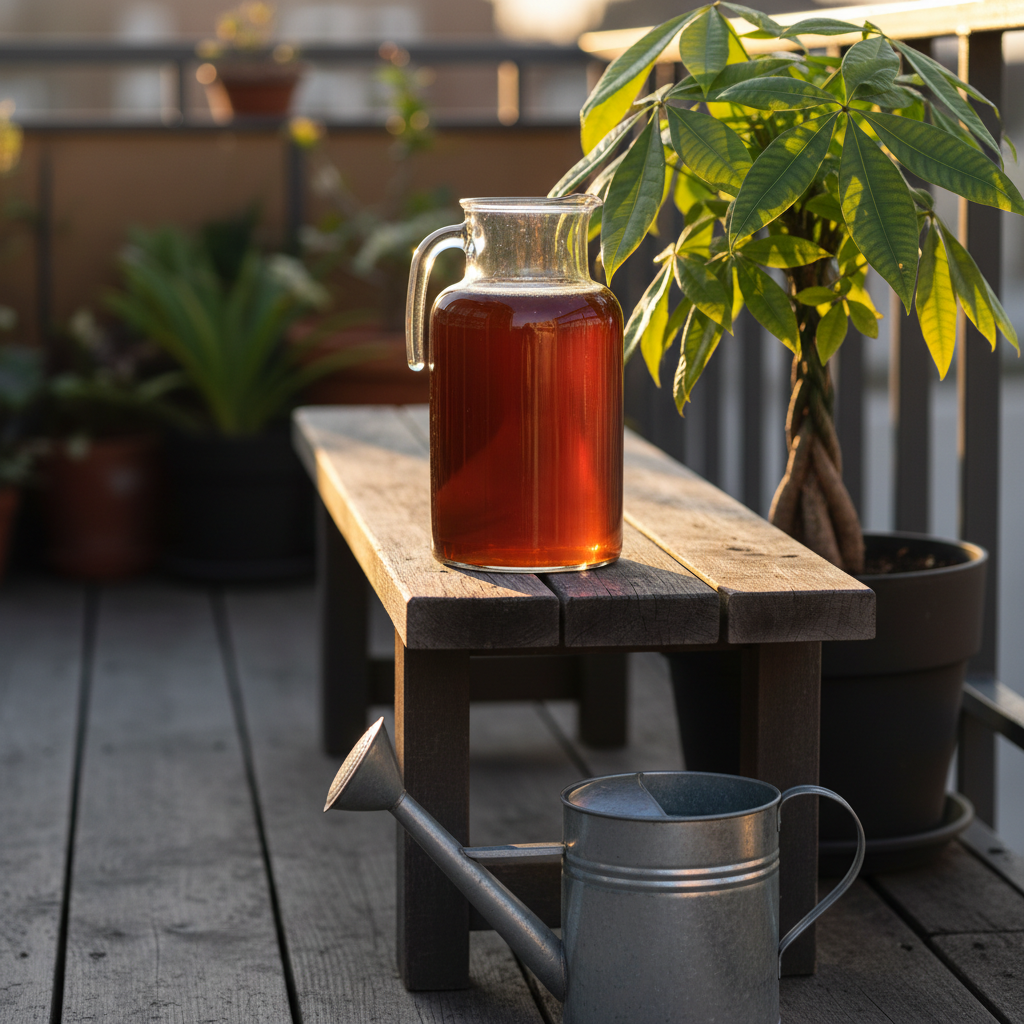
Money trees are not heavy feeders, but a steady supply of nutrients through the growing season keeps the canopy full and the leaves a rich green. Potting compost contains only a limited store of nutrients, most of which is depleted within a couple of months as the plant grows and as watering flushes minerals out through the drainage holes.
Replenishing those nutrients with regular feeding during spring and summer supports new growth and helps the plant resist pests and stress. The key is moderation, since money trees are far more easily harmed by overfeeding than by going slightly hungry.
Understanding Plant Nutrients
Most fertilisers are labelled with three numbers representing the ratio of nitrogen, phosphorus and potassium, the three nutrients plants use in the largest quantities. For a foliage plant like the money tree, a balanced formula in which these three numbers are roughly equal, or one slightly higher in nitrogen, supports healthy leaf growth. A handful of secondary nutrients matter too, and deficiencies in any of them show up in characteristic ways.
| Nutrient | Symbol | Primary Function | Deficiency Symptoms |
|---|---|---|---|
| Nitrogen | N | Drives leaf and stem growth, the green canopy | Pale, yellowing older leaves; weak growth |
| Phosphorus | P | Supports roots and energy transfer | Stunted growth, dull foliage |
| Potassium | K | Regulates water use and overall vigour | Browning leaf edges, weak stems |
| Calcium | Ca | Builds strong cell walls | Distorted, hooked new growth |
| Magnesium | Mg | Central to chlorophyll and photosynthesis | Yellowing between leaf veins |
| Iron | Fe | Aids chlorophyll production in new leaves | Yellow young leaves with green veins |
Types of Fertiliser
Liquid fertilisers: Diluted in water and applied during normal watering, liquid feeds give you the most control over dose and timing, which makes them the easiest choice for most money tree owners. They act quickly and are simple to dilute to half strength.
Slow-release granular: These coated prills release nutrients gradually over several months as you water, offering convenience for anyone who prefers not to remember a feeding schedule. The trade-off is less precise control, since you cannot easily dial the dose back once they are in the soil.
Organic fertilisers: Options such as worm castings, diluted seaweed extract and compost-based feeds release nutrients gently and improve soil life over time. They are very hard to overdo, making them a forgiving choice, though they tend to act more slowly than synthetic feeds.
Feeding Schedule
Feed your money tree roughly once a month during the active growing season of spring and summer, using a balanced houseplant fertiliser diluted to half the strength stated on the label. As growth slows in autumn, taper off, and through the depths of winter stop feeding altogether, since a dormant plant cannot use the nutrients and the unused salts simply accumulate in the soil.
Pro Tip — Half Strength is Plenty: When it comes to feeding a money tree, less is more. Diluting to half the recommended concentration delivers ample nutrition while sharply reducing the risk of fertiliser burn and salt build-up. A lightly underfed plant recovers easily, but an overfed one can suffer scorched roots and browned leaf margins.
How to Fertilise
- Water the plant lightly first if the soil is very dry, since feeding bone-dry roots can burn them.
- Dilute a balanced liquid fertiliser to half the strength recommended on the label.
- Pour the solution evenly over the soil until it begins to drain from the bottom.
- Empty any excess from the saucer so the roots are not left sitting in nutrient-rich water.
- Resume normal watering between feeds, and flush the soil with plain water every few months.
Warning — Salt Build-Up: Over time, mineral salts from fertiliser can accumulate in the soil and appear as a white crust on the surface or pot rim, eventually scorching the roots. Every couple of months, flush the pot by running plenty of plain water through it for a minute or two, letting it drain fully to wash the excess salts away.
Propagation
Propagating a money tree lets you grow new plants from an existing one, whether to fill out a sparse specimen, share with friends or simply for the satisfaction of it. The most reliable home methods are stem cuttings and air layering, both of which work with the same actively growing wood the plant produces in spring and summer.
It is worth noting that the braided trunk effect you see in shops is created by training several separate young seedlings together while they are still flexible; it is not something a single propagated cutting will produce on its own. A cutting will grow into a single upright stem, which is perfectly attractive in its own right.
Understanding Nodes and Active Growth
Successful propagation hinges on the node, the slightly thickened point on a stem where leaves emerge and where new roots are able to form. A cutting without at least one node has no growth point from which to develop roots and will simply rot. Take cuttings from healthy, semi-firm growth rather than the very softest new tips or the oldest woody base, and always work during the growing season when the plant has the energy to root.
Stem Cuttings: Step-by-Step
Stem cuttings are the simplest method and can be rooted in either water or soil. Water rooting lets you watch progress, while soil rooting skips the transplant step that sometimes shocks water-grown roots.
- Choose a healthy stem ten to fifteen centimetres (four to six inches) long with at least one node and a few leaves.
- Cut just below a node with clean, sharp secateurs, making a neat angled cut.
- Remove the lower leaves, leaving two or three at the top to power the cutting without overtaxing it.
- Dip the cut end in rooting hormone if you have it, then place the cutting in water or insert it into moist, free-draining mix.
- Keep it warm and in bright indirect light, changing the water every few days or keeping the soil lightly moist.
- Wait four to eight weeks for roots to develop, then pot up water-rooted cuttings once the roots reach a few centimetres long.
Pro Tip — Warmth Speeds Rooting: Money tree cuttings root noticeably faster in warm conditions. Aim for a temperature around 24 to 27°C (75 to 81°F), and if your home runs cool, a heat mat beneath the propagation container can be the difference between a cutting that roots in weeks and one that stalls for months.
Air Layering: Step-by-Step
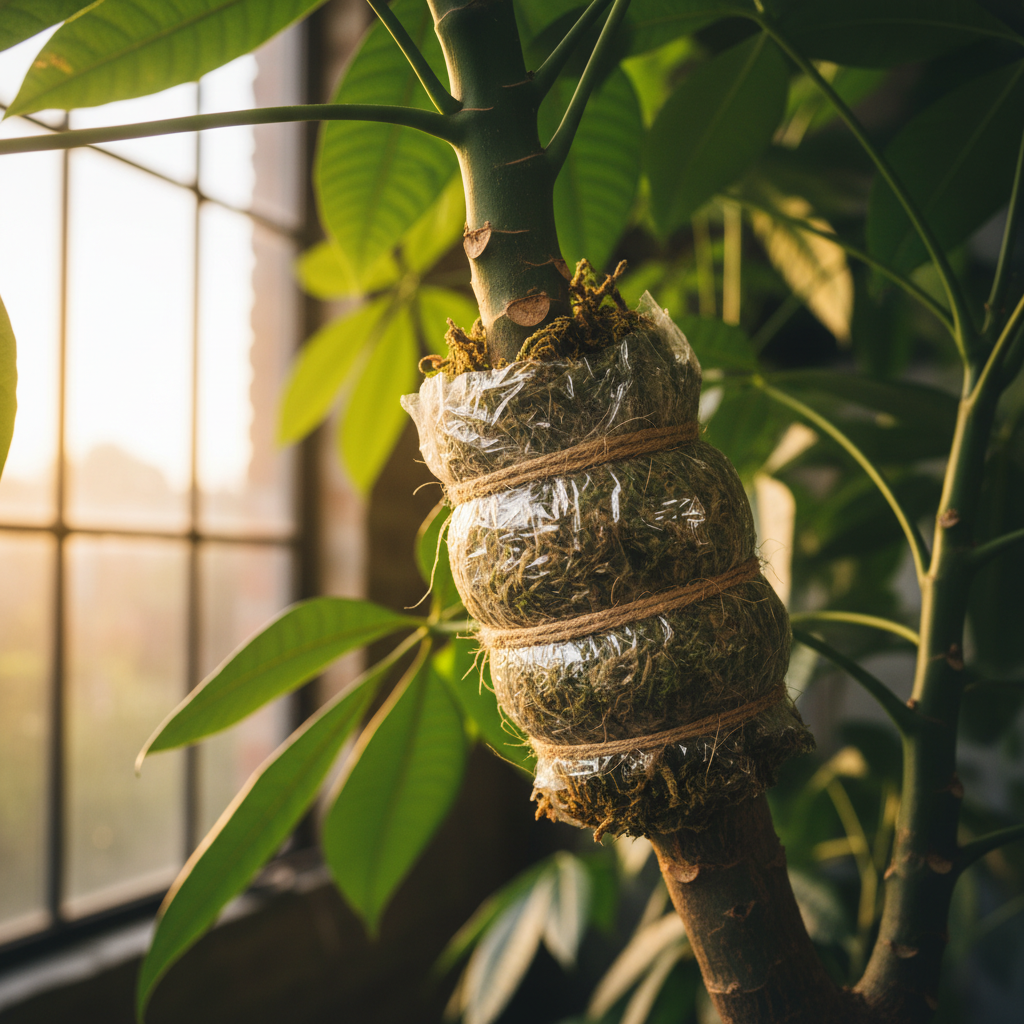
Air layering encourages a stem to root while it is still attached to the parent, which means the developing roots are supported by the whole plant. It has a high success rate and is ideal for thicker stems that might be slow or reluctant to root as cuttings.
- Select a healthy section of stem and locate a node where you want roots to form.
- Make a shallow upward cut or remove a thin ring of bark just below the node to expose the inner tissue.
- Wrap the wounded area in a handful of moist sphagnum moss, enclosing the node fully.
- Cover the moss with clear plastic film and secure it at both ends with twine or ties, keeping the moss damp inside.
- Wait several weeks, misting the moss as needed, until you see roots developing through the plastic.
- Cut the stem just below the new root mass and pot it up as an independent plant.
Troubleshooting Propagation
| Problem | Likely Cause | Solution |
|---|---|---|
| Cutting rots before rooting | Too wet, too cold, or no node included | Use fresh water or airy mix, keep warm, ensure a node is present |
| No roots after many weeks | Insufficient warmth or light, or off-season timing | Move somewhere warmer and brighter, propagate in spring or summer |
| Leaves yellow and drop | Normal stress, or the cutting is exhausting its reserves | Be patient if the stem stays firm; remove only fully dead leaves |
| Roots form but plant stalls after potting | Transplant shock from water to soil | Pot up gently, keep soil lightly moist and humidity high while it settles |
Pests & Diseases
A healthy money tree in good conditions is fairly resistant to pests, but no houseplant is immune, and the dry indoor air of winter in particular can tip the balance in a pest’s favour. Catching an infestation early, while it is still a few insects rather than a colony, makes all the difference to how easily you can deal with it.
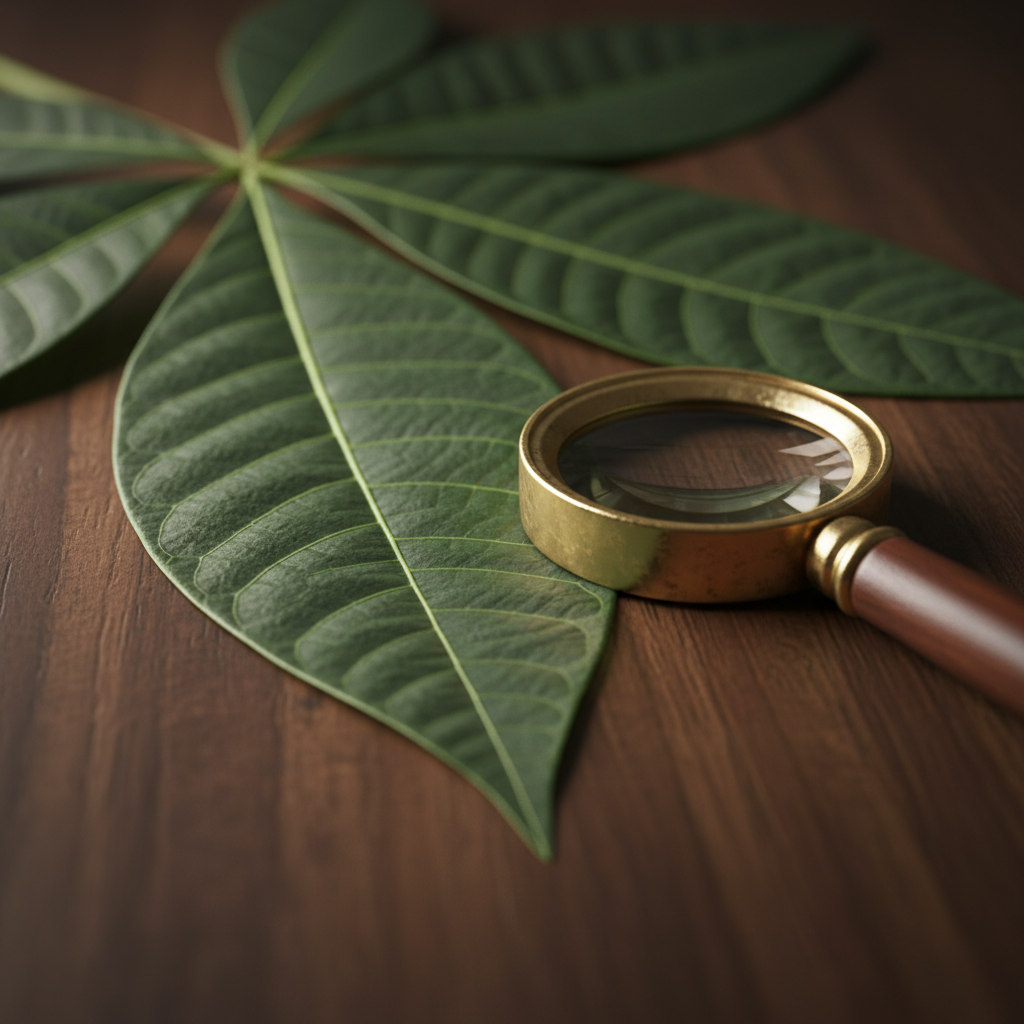
Make a habit of inspecting your plant whenever you water, paying special attention to the undersides of leaves and the leaf axils where pests like to hide. The most common money tree problems are sap-sucking insects and, more seriously, the fungal diseases that follow from overwatering.
Common Pests
Spider Mites (Tetranychus urticae)
These tiny arachnids thrive in warm, dry air and are often the first pest to appear on a money tree in a centrally heated room. They cause fine pale stippling on the leaves and spin delicate webbing between the leaflets and stems, gradually giving the foliage a dusty, faded look.
Treatment: Rinse the plant thoroughly under a shower to dislodge the mites, raise the humidity to make conditions less favourable, and treat repeatedly with insecticidal soap or neem oil every five to seven days until the population is gone.
Mealybugs (Pseudococcus longispinus)
Mealybugs appear as small, white, cottony tufts clustered in leaf axils and along stems. They suck sap and excrete sticky honeydew, which can in turn encourage sooty mould, leaving the plant weakened and grubby.
Treatment: Dab each insect directly with a cotton bud dipped in isopropyl alcohol to kill it on contact, then follow up with neem oil or insecticidal soap, repeating weekly and checking hidden crevices for survivors.
Scale (Coccus hesperidum)
Scale insects look like small, brown, waxy bumps fixed firmly to stems and the undersides of leaves. Their protective shells make them easy to overlook and stubborn to treat, and like mealybugs they produce honeydew as they feed.
Treatment: Scrape or rub off what you can by hand, wipe the affected areas with alcohol, and apply neem oil to smother the remainder, repeating every week or two until no new bumps appear.
Fungus Gnats (Bradysia species)
These small black flies hover around the soil and are a classic symptom of overwatering, since their larvae feed on fungus and organic matter in persistently damp compost. While the adults are mostly a nuisance, large larval populations can nibble at fine roots.
Treatment: Let the soil dry out more between waterings to break the breeding cycle, set yellow sticky traps to catch the adults, and top-dress with a layer of sand or grit to deter egg-laying at the surface.
Common Diseases
Root Rot (Pythium and Phytophthora species)
By far the most serious money tree ailment, root rot is a fungal infection of waterlogged roots. Symptoms include yellowing leaves, a wilting canopy despite wet soil, a sour smell from the compost and, in advanced cases, a softening trunk base.
Treatment: Remove the plant from its pot, cut away all brown, mushy roots with sterilised scissors, and repot into fresh, free-draining mix in a clean container. Then correct the watering habits that caused it, as no amount of repotting will help a plant that stays waterlogged.
Leaf Spot (various fungal pathogens)
Leaf spot shows as brown or black patches, sometimes with a yellow halo, that spread across the leaflets in damp, poorly ventilated conditions. It is usually a sign of water sitting on the foliage or air that is too stagnant.
Treatment: Remove affected leaves promptly, improve air circulation around the plant, avoid wetting the foliage when watering, and treat persistent cases with a suitable houseplant fungicide.
Pest and Disease Summary
| Pest / Disease | Identification | Treatment |
|---|---|---|
| Spider mites | Fine stippling and webbing, dusty leaves | Rinse, raise humidity, neem oil weekly |
| Mealybugs | White cottony tufts in axils | Alcohol swab, then neem or soap |
| Scale | Brown waxy bumps on stems and leaves | Scrape off, wipe with alcohol, neem oil |
| Fungus gnats | Small black flies around the soil | Dry the soil, sticky traps, grit top-dressing |
| Root rot | Yellowing, wilting, sour wet soil | Trim rotten roots, repot, correct watering |
| Leaf spot | Brown or black patches on leaflets | Remove leaves, improve airflow, fungicide |
Prevention Strategies
The most effective pest and disease control is a healthy, well-grown plant, because vigorous money trees shrug off problems that overwhelm stressed ones. Right light, careful watering and good airflow do more to keep trouble away than any spray bottle. Inspect new leaves regularly, wipe the foliage occasionally to remove dust and discourage mites, and always quarantine any new plant for a couple of weeks before letting it join your collection.
If a problem does appear, act quickly and isolate the affected plant so pests cannot spread to its neighbours. Most infestations caught early are dealt with in two or three treatments, whereas a colony left to establish can take months to clear and may permanently disfigure the canopy.
Pro Tip — Neem Oil as a Routine: A monthly wipe-down or light spray of diluted neem oil during the warmer months acts as a gentle preventive, deterring pests before they settle in. Apply it in the evening or out of direct sun, since oil on the leaves combined with strong light can cause scorching.
Popular Varieties
The money tree sold in shops is almost always the species Pachira aquatica itself, but it appears in several distinct forms and a handful of cultivated selections. The differences lie less in dramatic leaf variation, as with a pothos or philodendron, and more in trunk training, leaf colour and overall stature.
It is also worth knowing that a closely related species, Pachira glabra, is frequently sold under the same money tree name and is nearly identical in care, differing mainly in subtle botanical details of its flowers and fruit. For the home grower the two are effectively interchangeable.
| Variety | Leaf Appearance | Light Needs | Growth Rate | Availability |
|---|---|---|---|---|
| Braided Money Tree | Glossy green, five to seven leaflets | Bright indirect | Slow to moderate | Very common |
| Single-Trunk Money Tree | Glossy green, upright form | Bright indirect | Slow to moderate | Common |
| Variegated Money Tree | Cream and pale green marbling | Bright indirect, slightly more | Slow | Uncommon |
| Pachira glabra | Glossy green, slightly broader | Bright indirect | Slow to moderate | Common, often mislabelled |
| Dwarf forms | Compact, smaller leaflets | Bright indirect | Slow | Occasional |
Featured Varieties
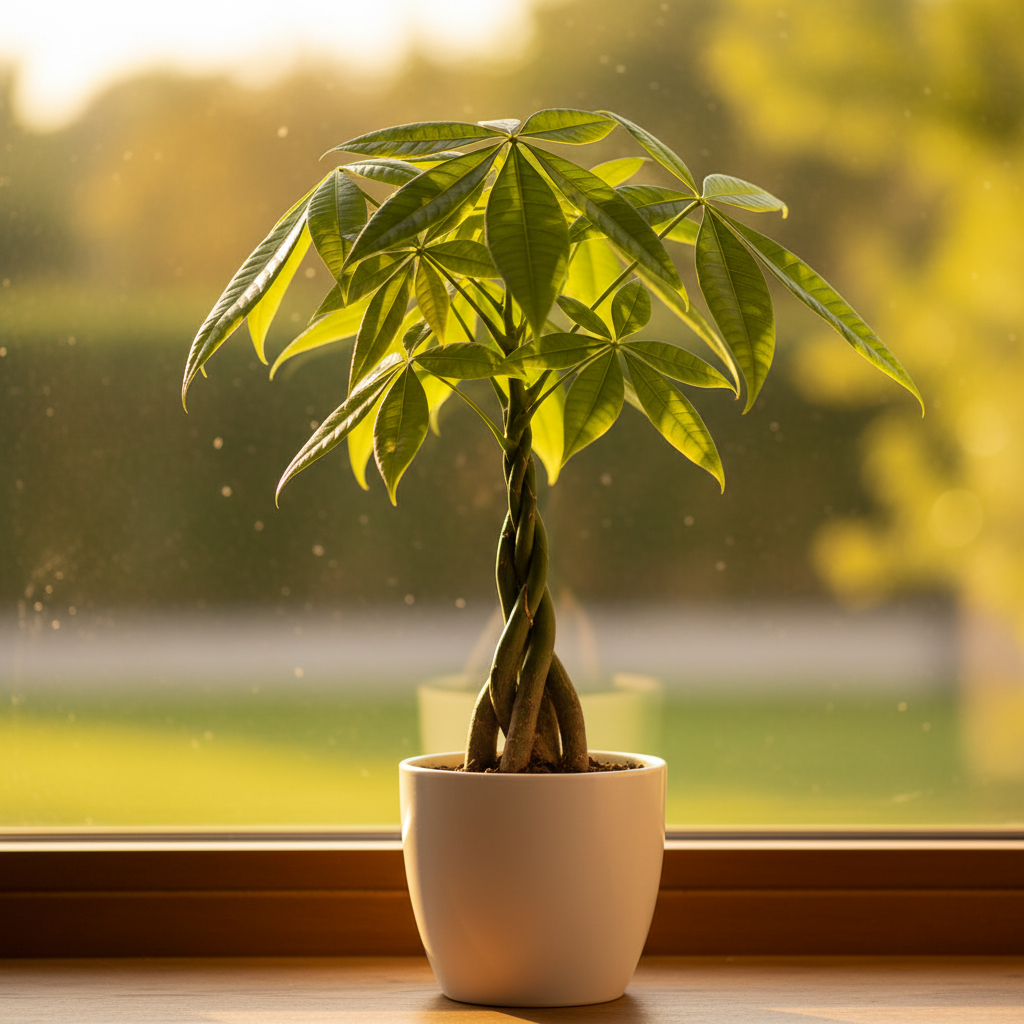
Braided Money Tree
The iconic form, with several slender trunks plaited together while young into a single living braid, topped by umbrella-like whorls of glossy green leaflets. It is by far the most widely sold version and the one most people picture when they think of a money tree.
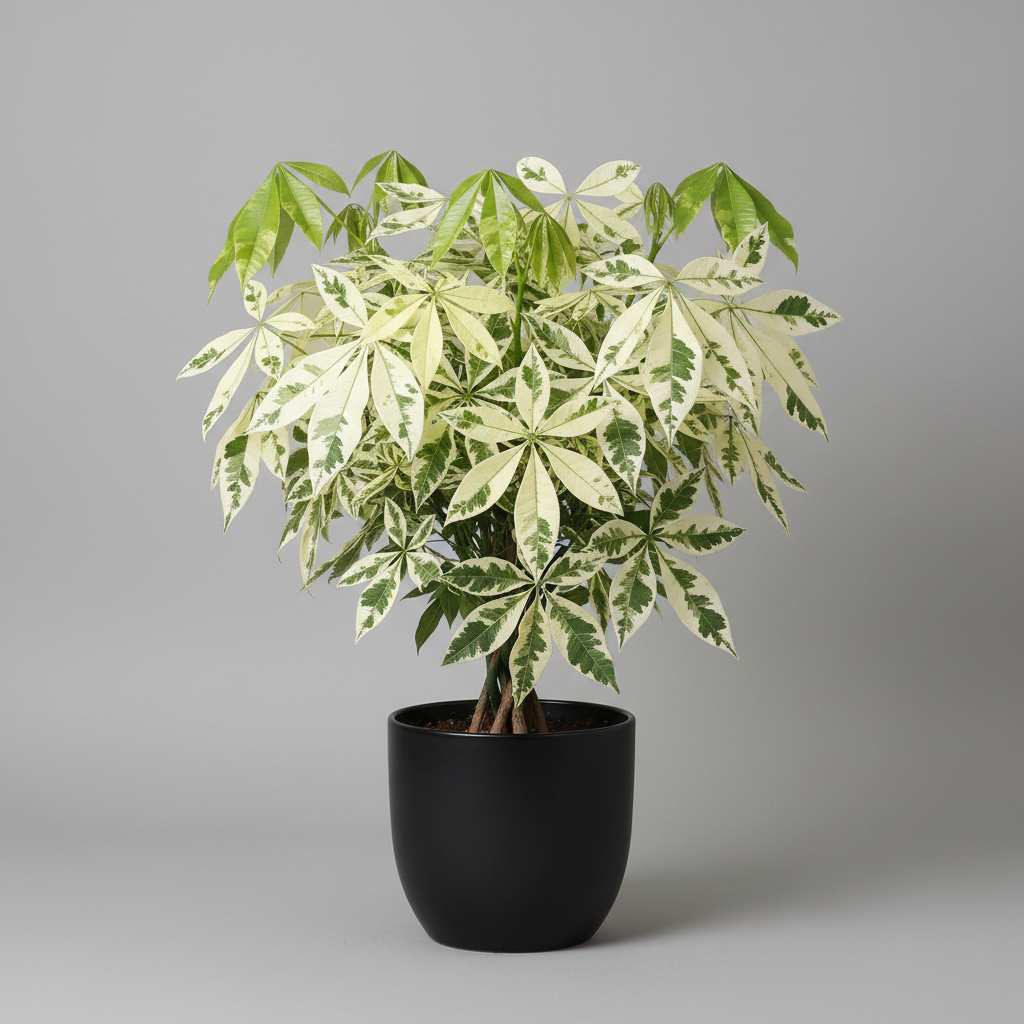
Variegated Money Tree
A scarcer and more collectable selection whose leaflets are marbled and splashed with creamy white and pale green. The variegation makes it a striking specimen, though the reduced chlorophyll means it grows more slowly and appreciates a touch more light than the all-green form.
Variety Profiles in Detail
Single-Trunk Money Tree (Pachira aquatica)
Grown as a single upright stem rather than a braid, this form has a cleaner, more tree-like silhouette and is what a propagated cutting naturally becomes. It suits a more minimalist style and tends to thicken its trunk over the years into a sturdy little specimen.
Pachira glabra (Pachira glabra)
Often sold interchangeably as a money tree, this near-twin differs mainly in its smoother seed pods and a slightly more swollen trunk base when mature. Care is identical, so there is no need to worry if your plant turns out to be this species rather than Pachira aquatica.
Choosing the Right Variety for Your Space
For most homes the classic braided money tree is the obvious choice, offering maximum visual impact and the widest availability at a friendly price. If you have a bright spot and enjoy a rarer plant, the variegated form rewards the extra light with beautiful marbled foliage. Those after a more architectural, single-stemmed look should seek out an unbraided specimen or grow one from a cutting, while anyone short on space can hunt down a naturally compact dwarf selection.
Frequently Asked Questions
Why are my money tree’s leaves turning yellow?
Yellowing leaves, especially lower ones, are most often a sign of overwatering, the single most common money tree problem. Check whether the soil is staying wet for many days and whether the trunk base feels firm. Let the soil dry further between waterings and ensure the pot drains freely. Occasional yellowing of the oldest leaves is natural ageing and nothing to worry about.
How often should I water a money tree?
There is no fixed schedule, but a rough guide is once every seven to ten days in summer and every two to three weeks in winter. Always check the soil first; water only when the top five centimetres (two inches) feel dry. Lifting the pot to judge its weight is an even more reliable method once you are familiar with the plant.
Is the money tree toxic to cats and dogs?
The money tree is widely regarded as non-toxic to cats and dogs, which is part of its appeal as a family-friendly houseplant. As with any plant, a pet that eats a large amount of foliage may suffer mild digestive upset, so it is still wise to discourage chewing, but it does not carry the serious risks of genuinely toxic species.
Why is my money tree dropping leaves?
Leaf drop is usually a response to a change in conditions, such as being moved to a new spot, a shift in light, draughts, or inconsistent watering. Money trees are sensitive to sudden change and may shed leaves while they adjust. Keep the plant in a stable position with steady light and watering, and new growth should return once it settles.
Can I grow a money tree in low light?
It will survive in low light but will not thrive there. Expect slower growth, stretched stems and a gradually thinning canopy. If a dim spot is your only option, supplement with a grow light to keep the plant full and healthy. For best results, bright indirect light is the goal.
How do I keep my money tree bushy instead of leggy?
Legginess is driven mainly by insufficient light, so the first step is brighter placement. Beyond that, you can prune the growing tips in spring to encourage the plant to branch and fill out, and rotating the pot regularly keeps growth even on all sides. A well-lit, occasionally pruned money tree stays compact and dense.
Why is my money tree’s trunk getting soft?
A soft, spongy trunk is a serious sign that rot has set in, almost always from overwatering. Act immediately: remove the plant, cut away affected roots and any rotten stem tissue, and repot into fresh, dry, free-draining mix. Unfortunately, once rot reaches the trunk recovery is uncertain, which is why careful watering is so important.
Can a money tree grow flowers or nuts indoors?
In the wild, mature money trees produce large showy flowers followed by woody seed pods containing edible nuts, but flowering is very rare on indoor specimens, which seldom reach the size or maturity needed. Most home growers enjoy the plant purely for its handsome foliage and braided trunk rather than expecting blooms.
Do I need to keep the braid, or can I let it grow naturally?
The braid is purely decorative, created by training several young plants together. You can continue the braid as the trunks grow by gently weaving new flexible growth, or simply let the plant grow as it wishes. Established braids hold their shape on their own, so there is no harm in leaving a mature plant to its own devices.






