
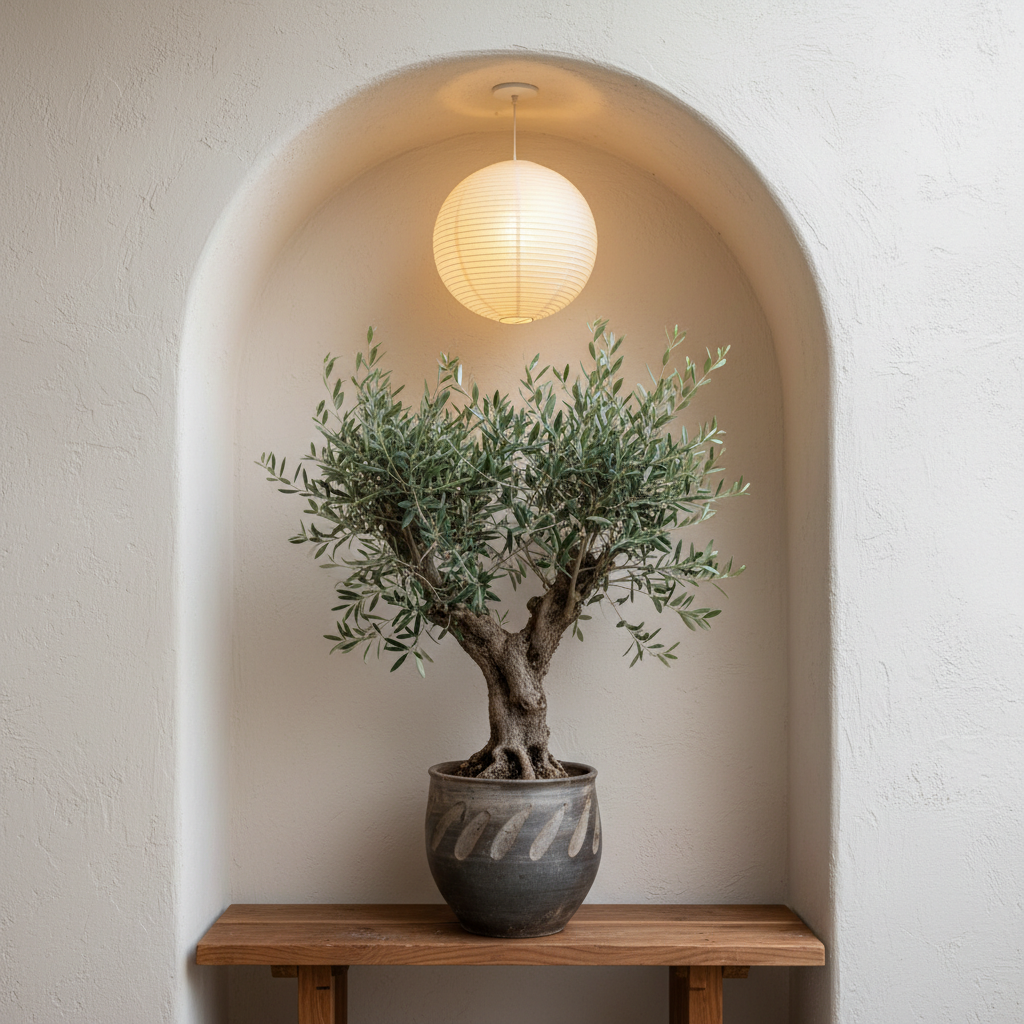
Few houseplants carry as much history in their leaves as the olive tree. Olea europaea has been cultivated around the Mediterranean for more than six thousand years, and the silvery, drought-hardened foliage that makes it so striking on a sunny windowsill is the same foliage that has shaded Greek hillsides and Roman groves for millennia. Bringing one indoors is less about coaxing a delicate tropical into bloom and more about persuading a sun-baked survivor to accept life in a pot. Get the light and the drainage right and an olive will reward you for decades; get them wrong and it will quietly sulk, drop leaves and decline. This guide covers everything that separates an olive that merely survives indoors from one that genuinely thrives.
Contents
- Quick reference
- Why grow an olive tree indoors
- Light
- Watering
- Soil and potting
- Fertilising
- Propagation
- Pests and problems
- Varieties
- Frequently asked questions
Quick reference
| Botanical name | Olea europaea |
| Common names | Olive tree, European olive, common olive |
| Family | Oleaceae |
| Origin | Mediterranean basin, western Asia and parts of Africa |
| Light | As much direct sun as possible, minimum six hours; a bright south-facing window indoors |
| Water | Deep soak, then allow the top half of the pot to dry; drought tolerant, intolerant of wet roots |
| Soil | Free-draining, gritty, slightly alkaline; loam-based mix cut with grit and perlite |
| Temperature | 18 to 28 degrees Celsius (64 to 82 Fahrenheit) when growing; a cool winter rest is beneficial |
| Humidity | Low to moderate; tolerates dry indoor air well |
| Feeding | Balanced feed monthly through spring and summer; none in winter |
| Growth habit | Slow-growing evergreen tree or shrub, easily kept at 1 to 2 metres (3 to 6 feet) in a pot |
| Toxicity | Foliage non-toxic to cats and dogs; whole fruit stones are a choking and obstruction hazard |
| Difficulty | Easy to keep alive, harder to keep happy; light is the single deciding factor |
Why grow an olive tree indoors
The olive earns its place indoors on the strength of its foliage rather than its flowers or fruit. The leaves are narrow and lance-shaped, a soft sage-green above and a pale, almost metallic silver beneath, carried on woody grey stems that give even a young plant the architectural presence of a miniature tree. That silver underside is not just decorative. It is a dense felt of fine hairs, called trichomes, that reflect strong sunlight and trap a thin layer of still air to slow water loss, an adaptation to the fierce summers of the olive’s homeland. Indoors it translates into a plant that shrugs off the dry warmth of centrally heated rooms far better than the tropical foliage plants it shares shelf space with.

An olive is also a genuinely long-lived companion. In the ground these trees can survive for centuries, and even a container specimen will outlast almost everything else in your collection if its basic needs are met. It is slow and deliberate rather than fast and dramatic, putting on modest growth each year and thickening its trunk gradually, which makes it forgiving of the neglect that kills thirstier plants. The honest caveat is sunlight. The olive evolved in open, treeless landscapes and it needs more direct light than nearly any other plant sold as a houseplant. A home without a genuinely sunny window will keep an olive alive for a season or two, but it will slowly etiolate, thin out and disappoint. Treat it as a sun-worshipper first and everything else becomes straightforward.
Pro Tip – Think like a Mediterranean summer: The single most useful mental model for olive care is to imagine a hot, bright, dry hillside with a wet winter and a baking summer. Bright light, sharp drainage, deep but infrequent watering and a cool winter rest all flow naturally from that picture.
Light
Light is where olive care begins and ends. This is a full-sun plant in every sense, and indoors that means the brightest position you can offer it. A south-facing window with at least six hours of direct sun is the baseline, and more is better. Olives genuinely enjoy the kind of hot, glare-filled spot that would scorch a calathea or bleach a pothos. If your brightest window faces east or west, an olive can manage, but expect slower, leggier growth and watch for the plant stretching its stems and spacing its leaves further apart as it reaches for more light.

The difference between surviving and thriving shows up clearly in the foliage. An olive in strong light holds short internodes, a compact bushy outline and that prized silver sheen. An olive in poor light produces long bare stretches of stem, larger and greener leaves with less of the characteristic shimmer, and a generally floppy, reaching posture. If you see this happening, move it closer to the glass before reaching for any other remedy. In the depths of winter, when daylight is short and weak even at a sunny window, a full-spectrum LED grow light running for ten to twelve hours a day will keep growth tight and prevent the seasonal leaf drop that comes from sudden light starvation.
Olives benefit enormously from a summer outdoors. If you can move the pot to a sunny patio, balcony or doorstep once nights are reliably above about 10 degrees Celsius (50 Fahrenheit), the plant will repay you with vigorous, sturdy growth and far better colour. Acclimatise it gradually over a week or two so the leaves that grew under glass do not sunburn in unfiltered light, and bring it back indoors before the first hard frost in autumn.
Watering
If light is what an olive needs more of, water is what it needs less of. These are deeply drought-adapted plants, and far more potted olives die from constant moisture and waterlogged roots than from drying out. The reliable approach is to water thoroughly, letting water run freely from the drainage holes so the entire root ball is wetted, and then to wait until the top half of the pot has dried before watering again. Push a finger several centimetres into the mix, or lift the pot to feel its weight; a dry olive pot is noticeably light. Only when that upper layer is properly dry should you soak it again.
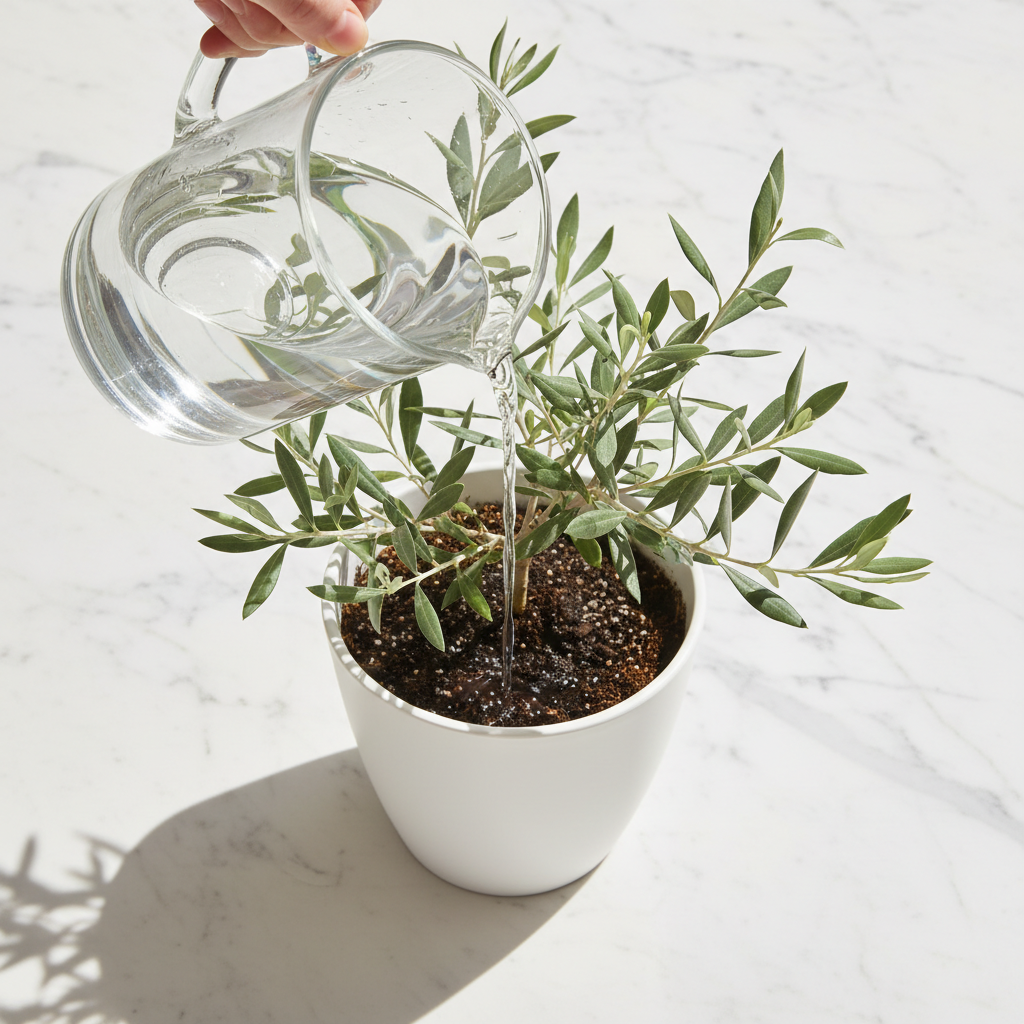
Frequency shifts dramatically with the seasons. Through the bright, warm growing months an olive in active growth and strong sun may need watering once or twice a week, especially if it is summering outdoors where wind and heat dry the pot quickly. In winter, when the plant is resting and light is low, that can drop to once every two or three weeks or even less. The cardinal rule is to let the soil, not the calendar, dictate the schedule. Never leave the pot standing in a saucer of water; tip out anything that collects within half an hour of watering.
The plant will tell you when it is unhappy. Leaves that yellow and drop from the lower interior of the canopy, particularly if the soil is wet, point to overwatering and the early stages of root rot. Leaves that turn crisp, grey and brittle, curling at the edges, suggest the plant has been left bone-dry for too long. Olives recover from a degree of underwatering far more readily than from the slow suffocation of soggy roots, so when in doubt, wait another day.
Warning – Drainage holes are non-negotiable: Never pot an olive in a container without drainage. A decorative cachepot is fine as an outer sleeve, but the olive itself must sit in a pot that drains freely, and that pot must never be allowed to stand in collected water. Wet feet are the most common killer of indoor olives.
Soil and potting
Olives want a soil that drains fast and never stays sodden. The peat-heavy, moisture-retentive mixes sold as general houseplant compost are exactly wrong for them; they hold too much water around roots that expect to dry out between rains. The ideal medium is loam-based and gritty. A reliable recipe is roughly two parts of a loam-based potting compost, such as a John Innes No. 2 or No. 3, blended with one part horticultural grit or coarse sand and one part perlite. The aim is a mix that water passes through quickly while still holding enough structure to anchor the roots. A slightly alkaline to neutral pH suits olives, which is another reason loam-based composts work better than acidic peat blends.
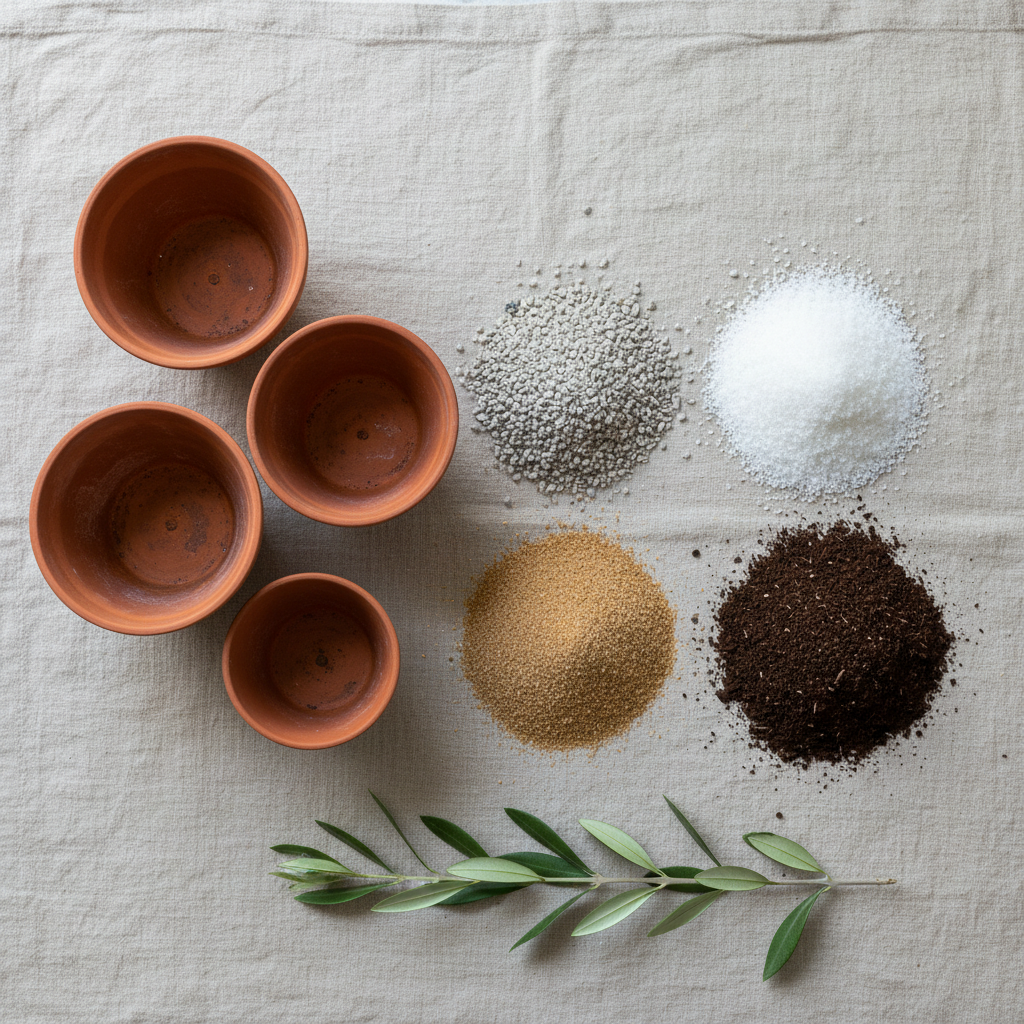
Container choice matters as much as the mix. Terracotta is the natural partner for an olive because the porous clay breathes and wicks moisture from the soil, helping the root ball dry between waterings in a way that plastic and glazed ceramic do not. Choose a pot only slightly larger than the current root ball rather than a vast one; olives tolerate and even appreciate having their roots somewhat restricted, and an oversized pot holds a reservoir of damp soil that invites rot. Heavy pots also stop a top-heavy young tree from toppling.
Repotting is an occasional task rather than an annual one. Every two to three years, ideally in early spring as growth resumes, lift the plant, tease away some of the old exhausted soil and move it into fresh mix, stepping up one pot size only if the roots have genuinely filled the container. Press the new mix gently around the roots to remove large air pockets, water it in once, and then return to the normal dry-down routine. Many growers keep a mature olive in the same large pot for years, simply refreshing the top few centimetres of soil annually, and the trees are perfectly content.
Fertilising
Olives are not heavy feeders, but a potted specimen has only the nutrients in its limited soil to draw on, so a light, regular feed through the growing season keeps it green and growing. A balanced liquid houseplant fertiliser diluted to the recommended strength and applied roughly once a month from spring through to late summer is plenty. Some growers prefer a fertiliser formulated for citrus or Mediterranean plants, which tends to include the extra nitrogen and trace elements that support steady foliage growth. Always feed onto already-moist soil rather than a dry root ball, to avoid scorching the roots.
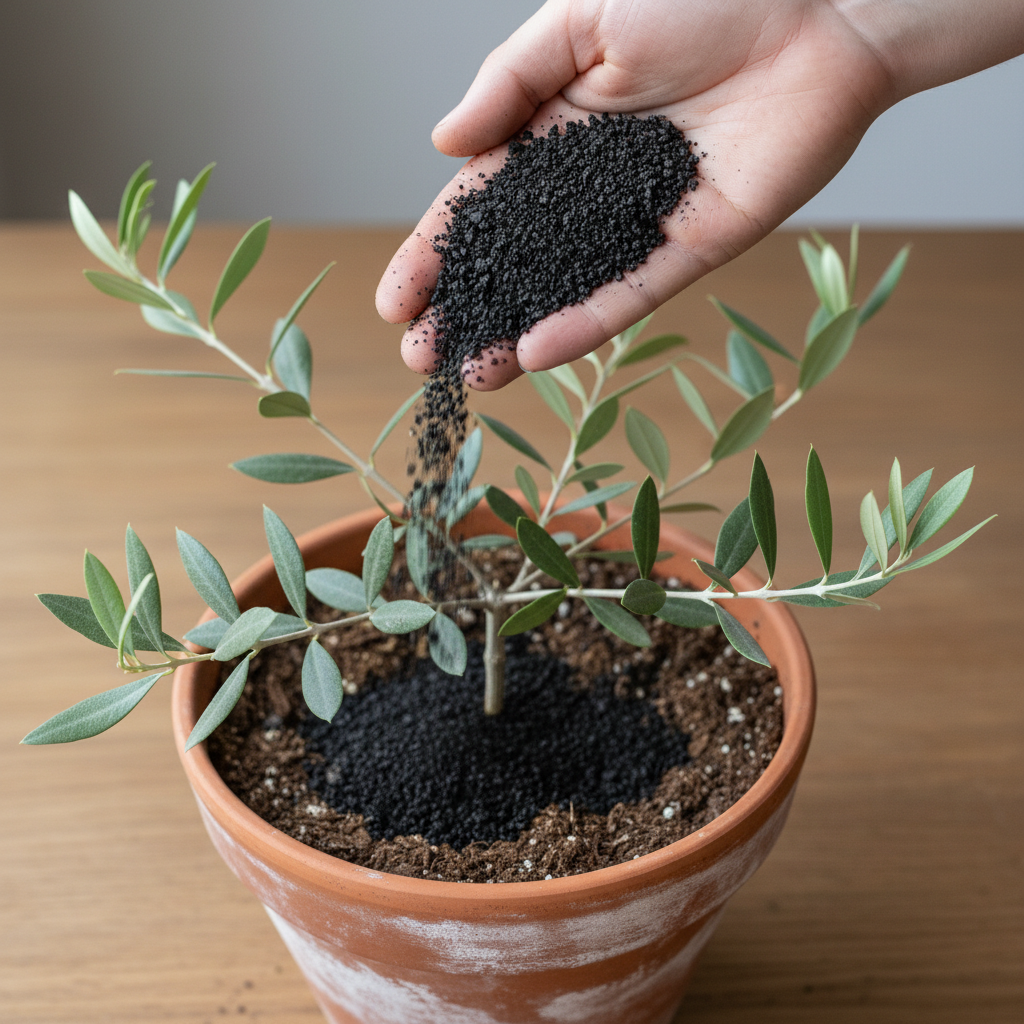
An equally good approach for those who prefer to feed less often is a slow-release option. A spring top-dressing of worm castings worked into the surface, or a measured dose of controlled-release granules, will trickle nutrients out over several months without the need to remember a monthly schedule. Whichever route you take, stop feeding entirely from autumn through winter. The plant slows right down in the short days and cool temperatures of its resting period, and pushing fertiliser at it then only produces weak, sappy growth that is vulnerable to pests and poor light. Resume in spring when you see new shoots beginning to extend.
Propagation
The most reliable way to make new olive trees at home is from semi-hardwood cuttings taken in mid to late summer. Choose healthy stems from the current season’s growth that have started to firm up and turn woody at the base but are still flexible toward the tip. Cut sections around 10 to 15 centimetres (4 to 6 inches) long, strip the leaves from the lower half, and dip the cut end in rooting hormone, which makes a real difference with a woody subject like this. Insert the cuttings into a gritty, free-draining propagation mix or into damp sphagnum moss, keep them warm and humid, and be patient. Olive cuttings are slow and can take two to three months to root, so do not be tempted to tug at them.
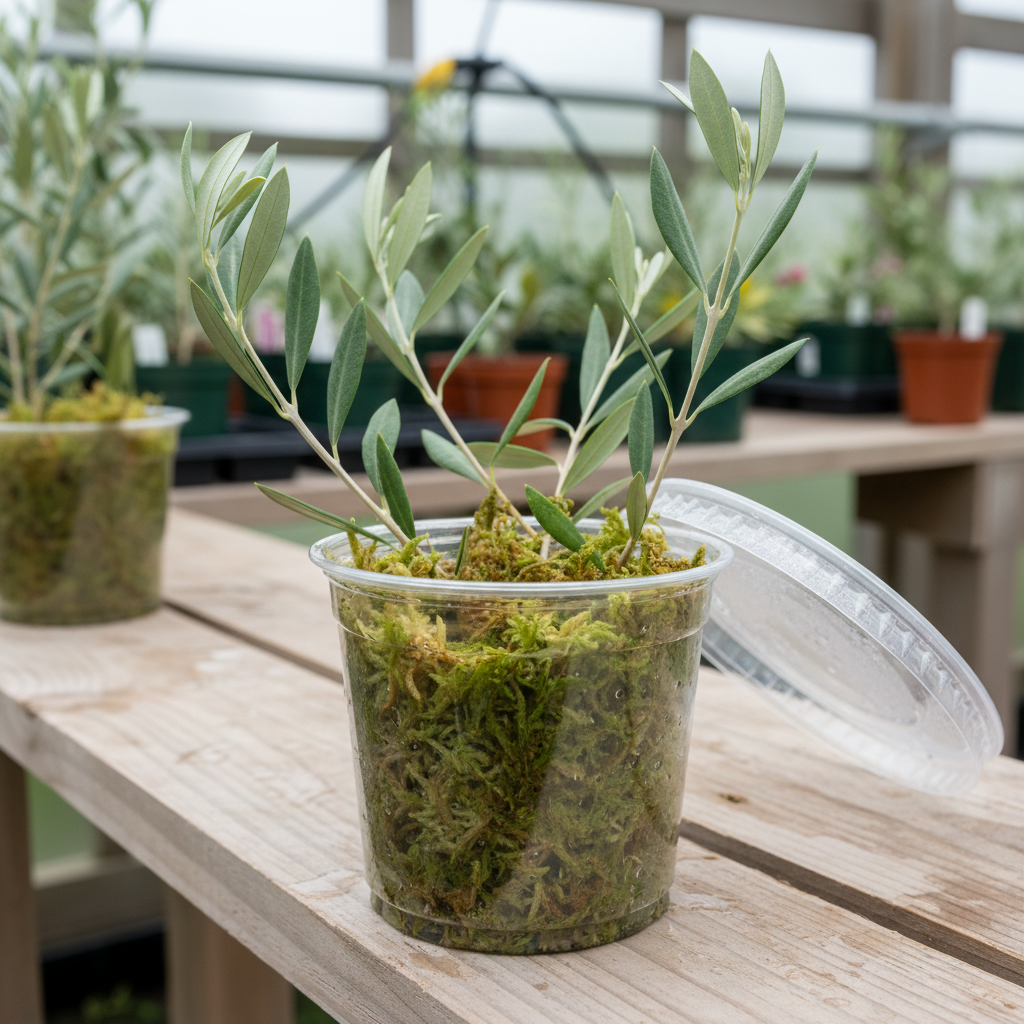
A covered propagation tray, a clear plastic dome or even a deli cup with the lid ajar provides the steady humidity and warmth that encourage rooting, while a heated propagation mat underneath speeds things considerably. Bottom heat of around 20 to 24 degrees Celsius (68 to 75 Fahrenheit) is close to ideal. Resist the urge to keep the mix wet; damp is enough, and sodden moss will rot the cuttings before they can root. Once you see firm new growth and gentle resistance when you tug, the cutting has rooted and can be potted on into a small terracotta pot of standard olive mix.
Two other methods are worth knowing. Air layering, where a stem is wounded, wrapped in damp moss and film and left to root while still attached to the parent, works well for olives and produces a larger plant more quickly, though it is fiddlier. Growing from seed, by contrast, is a long game best left to the patient: the stones need cleaning and scarifying, germination is slow and erratic, and seed-grown trees do not come true to their parent variety. For a named cultivar with predictable habit and leaf colour, cuttings or air layering are the way to go.
Pests and problems
Indoors, the olive’s main adversaries are sap-sucking insects that take advantage of dry, still air and crowded foliage. Scale insects are the classic olive pest, appearing as small brown or tan limpet-like bumps along the stems and leaf undersides, often accompanied by sticky honeydew and the black sooty mould that grows on it. Mealybugs, which look like tiny tufts of white cotton tucked into leaf axils, are the next most common, and in very dry conditions spider mites can colonise the leaves, leaving fine stippling and faint webbing. Regular close inspection, particularly of the undersides and the points where leaves meet stems, catches these early when they are easy to deal with.
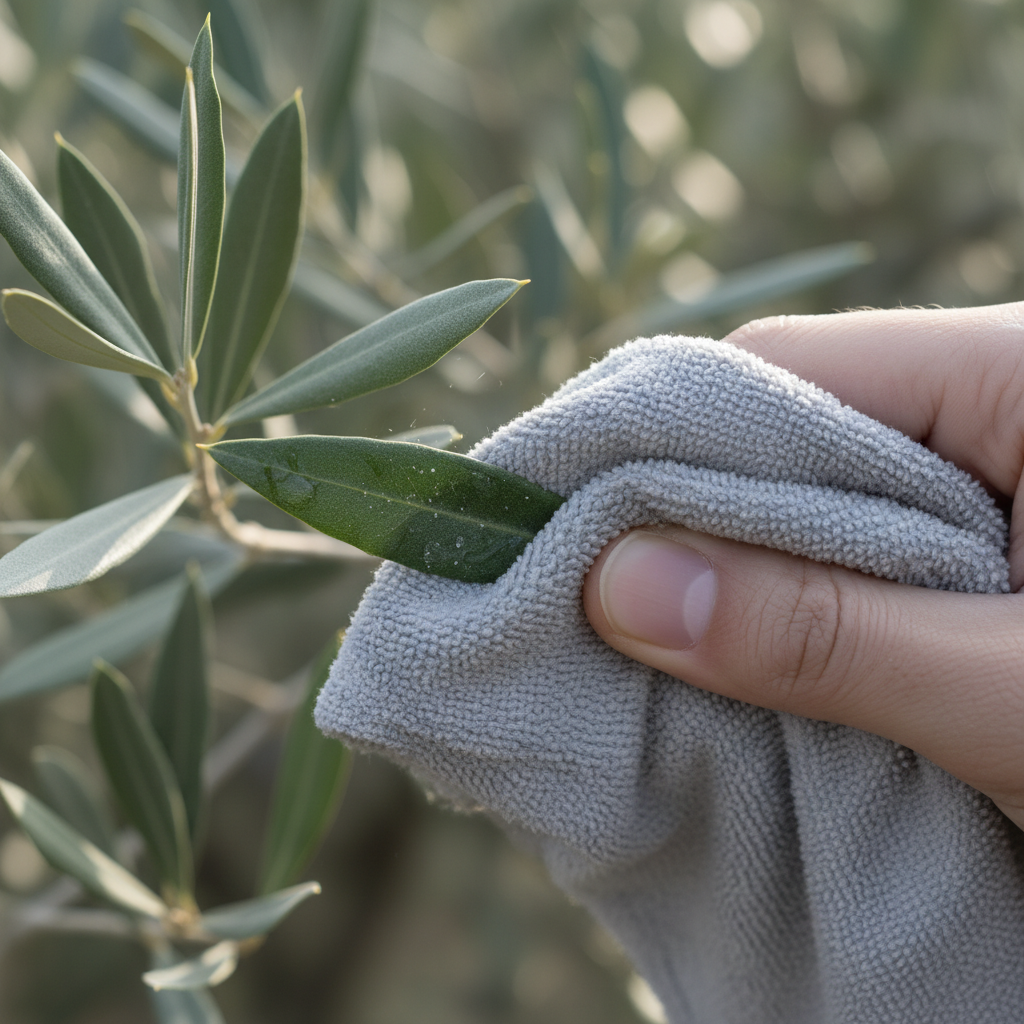
Treatment is straightforward if you act promptly. Light infestations of scale and mealybug can be dealt with by dabbing each insect with a cotton bud soaked in dilute isopropyl alcohol, which dissolves their protective coating. For wider outbreaks, a thorough spray of horticultural soap or neem oil, repeated every week or two until the population collapses, is effective; wiping the leaves down afterwards removes residue and honeydew. Spider mites hate moisture and improved airflow, so raising humidity slightly and showering the foliage knocks them back. Quarantine any new plant for a couple of weeks before letting it join the rest of your collection, since most infestations arrive on a newcomer.
The most serious problems, though, are cultural rather than entomological. Persistently yellowing leaves combined with damp soil almost always mean overwatering and incipient root rot, the leading cause of decline in indoor olives; the cure is sharper drainage, a lighter hand with the watering can and, in bad cases, repotting into fresh dry mix with any blackened roots trimmed away. Heavy, sudden leaf drop usually follows a shock such as a move to much lower light, a cold draught or a swing from drought to drowning. Olives are also semi-deciduous in habit and will shed some older interior leaves naturally, so a modest, gradual loss of the oldest foliage is nothing to worry about. Brown, crispy leaf tips point to underwatering or very dry air, while a thin, stretched, pale plant is the unmistakable signature of insufficient light.
Varieties
While all olives share the same basic needs, a handful of cultivars stand out for container and indoor life because they are naturally compact, self-fertile or grown purely for their looks. Two in particular are worth seeking out.
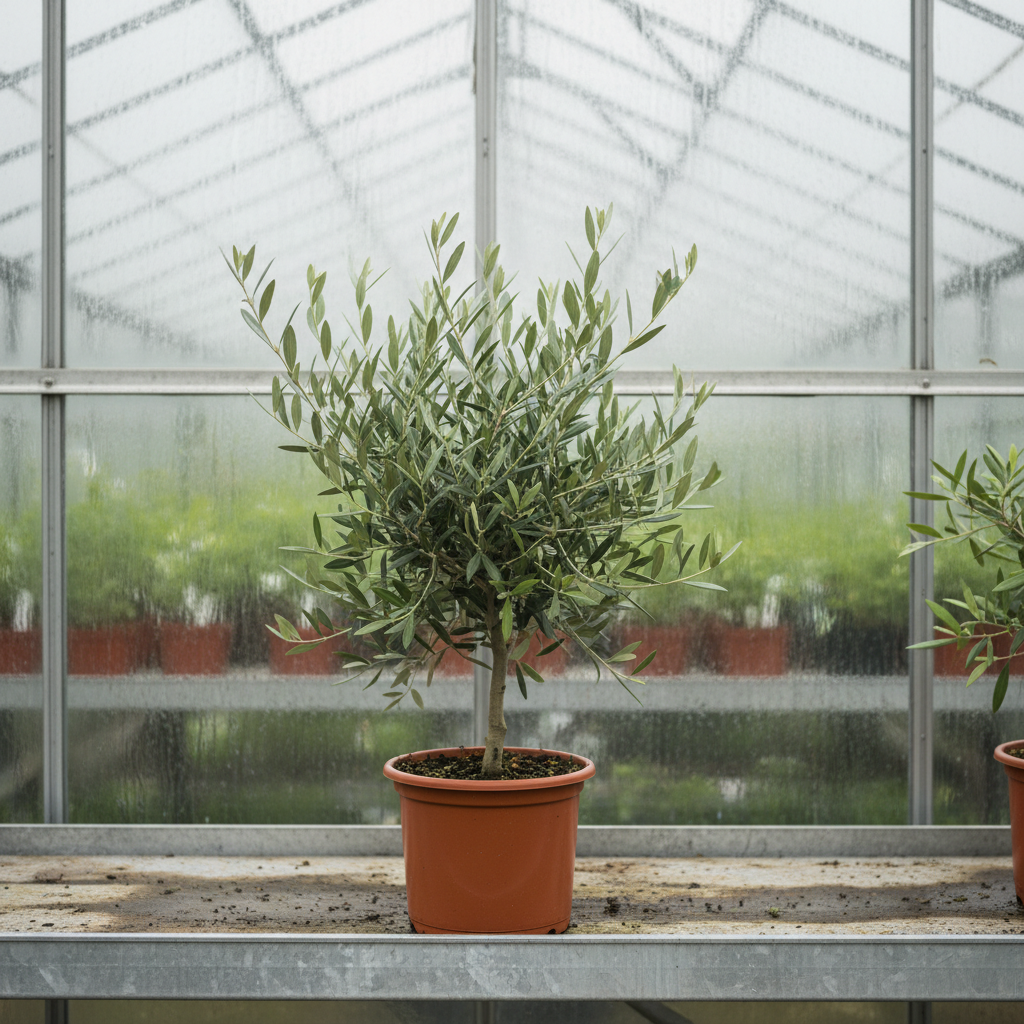
Arbequina is the cultivar most often recommended for indoor and container growing, and for good reason. This Spanish variety is naturally compact with a dense, slightly weeping habit and narrow silvery-green leaves, and crucially it is self-fertile, meaning a single plant can set fruit without a second tree for pollination. It begins fruiting young and tolerates pot life well, making it the practical first choice for anyone hoping to see olives form on an indoor plant.

Little Ollie, sold under the botanical name Olea europaea ‘Montra’, is a dwarf, fruitless ornamental olive bred purely for foliage and form. It carries very fine, dense deep grey-green leaves on a tidy, compact shrubby framework, staying naturally small and bushy without the sprawl of a full-sized tree. Because it does not fruit, there is no mess to clear up, which makes it a popular choice for tabletop displays, low hedging in conservatories and anyone who wants the olive look without the harvest.
Beyond these two, oil and table cultivars such as the vigorous Italian Frantoio and the large-fruited Manzanillo are sometimes grown in pots, though they are happier in the ground and need more room. For most indoor growers, a compact self-fertile type like Arbequina or a true dwarf like Little Ollie delivers the most satisfaction in a container.
Frequently asked questions
Will my indoor olive tree produce olives?
Possibly, but do not count on it. Olives need a great deal of direct sunlight to flower, and most also require a cool winter period below about 10 degrees Celsius (50 Fahrenheit) for a couple of months to trigger flowering the following season. A self-fertile cultivar like Arbequina, given a genuinely sunny position and a cool rest, may set a handful of fruit, especially if it summers outdoors. Many indoor olives grown purely for their foliage never fruit at all, and that is perfectly normal.
Why is my olive tree dropping leaves?
A little leaf drop from the oldest interior foliage is natural. Heavy or sudden drop usually signals a shock or a watering problem. The two most common culprits are overwatering, where leaves yellow and fall while the soil stays wet, and a sharp drop in light, such as moving the plant away from its window or bringing it in from a sunny summer outdoors too abruptly. Cold draughts and letting the pot dry out completely can also trigger it. Check the soil moisture and the light level first.
Can an olive tree really live indoors long term?
Yes, provided it gets enough light. An olive will live happily in a pot for many years and can be kept indoors permanently in a bright, sunny room. That said, it does best with a summer outdoors and benefits from a cool, brighter winter spell, so a porch, unheated conservatory or sunny patio that it can move to seasonally will keep it in much better health than a permanently warm, dim interior.
How often should I water a potted olive tree?
Let the soil decide rather than a fixed schedule. Water deeply, then wait until the top half of the pot has dried before watering again. In bright, warm conditions that might mean once or twice a week; in winter it can stretch to once every two or three weeks. The biggest mistake is keeping the soil constantly moist, which rots the roots. When unsure, wait a day longer.
Is the olive tree toxic to cats and dogs?
The foliage of the olive tree is not considered toxic to cats or dogs, which makes it one of the safer larger plants to keep in a pet household. Some cats are drawn to olive wood and leaves much as they are to catnip. The main caution is the fruit: a whole olive stone is a choking and intestinal-obstruction hazard if swallowed, so clear up any dropped fruit, and as always discourage pets from chewing on houseplants in general.
How do I keep my olive tree compact and bushy?
Olives respond very well to pruning and can be shaped freely. Pinch or trim the growing tips in spring to encourage branching, and thin out crossing or inward-growing stems to open up the canopy and let light into the centre. The plant tolerates quite hard pruning if you want to keep it to a particular size or train it as a standard with a clear trunk and rounded head. Combine regular shaping with strong light, since the single biggest cause of a thin, leggy olive is too little sun rather than a lack of pruning.






