

Few houseplants carry their name as confidently and as misleadingly as the foxtail fern. The dense, upright plumes that give Asparagus densiflorus ‘Myersii’ its common name do look uncannily like the bushy tails of a fox, each stem packed with thousands of soft, needle-like green points radiating outward in a tapering cylinder. Yet despite the label, this plant is not a fern at all. It is a member of the asparagus family, a close relative of the vegetable on your dinner plate, native to the coastal scrub and woodland margins of South Africa’s Eastern Cape. The fine green structures that look like leaves are technically cladodes, flattened stems that have taken over the work of photosynthesis, and the plant reproduces by seed rather than spores.
That botanical quirk turns out to be good news for the grower, because it means the foxtail fern is considerably tougher than the true ferns it resembles. Hidden beneath the soil sit fleshy, water-storing tubers that let the plant shrug off the occasional missed watering, and its tolerance for ordinary household humidity makes it far less temperamental than a maidenhair or a Boston fern. The gap between merely keeping a foxtail fern alive and growing one into a lush, symmetrical fountain of plumes comes down to a handful of details: how much light it receives, how you balance its appetite for moisture against its hatred of soggy roots, and how you handle the inevitable needle drop that alarms so many new owners. This guide covers all of it, from the day you bring the plant home to the day you divide it into three.
Contents
- Quick Reference
- Why the Foxtail Fern Makes a Rewarding Houseplant
- Light Requirements
- Watering & Humidity
- Soil, Potting & Repotting
- Fertilising
- Propagation
- Pests & Diseases
- Popular Varieties
- Frequently Asked Questions
Quick Reference: Foxtail Fern at a Glance
| Light | Bright indirect light; tolerates a few hours of gentle morning sun and copes with medium light, though plumes thin out in dim corners. |
| Watering | Keep lightly and evenly moist in spring and summer, letting the top 2 to 3 cm (about 1 inch) dry between waterings; water sparingly in winter. |
| Temperature | 15 to 24 degrees Celsius (59 to 75 degrees Fahrenheit); protect from anything below about 7 degrees Celsius (45 degrees Fahrenheit). |
| Humidity | Comfortable in average household humidity of 40 to 50 per cent; happier above 50 per cent, with browning tips a sign of very dry air. |
| Fertiliser | Balanced liquid feed at half strength roughly every two to four weeks during active growth; none in winter. |
| Toxicity | Mildly toxic. The red berries and sap contain saponins that can cause stomach upset and skin irritation, and the plant is toxic to cats and dogs. |
Why the Foxtail Fern Makes a Rewarding Houseplant
The single greatest argument for the foxtail fern is its silhouette. Where most foliage plants present broad, flat leaves, this one builds architecture out of texture, sending up arching stems clothed so densely in fine cladodes that each plume reads as a solid, three-dimensional form. A mature specimen, perhaps 60 to 70 cm (24 to 28 inches) across, looks less like a single plant and more like a small green fountain frozen in mid-spray. That sculptural quality lets it hold its own in a styled interior without flowers, variegation or a dramatic leaf shape, and it pairs as easily with mid-century timber and brass as it does with plain white minimalism.
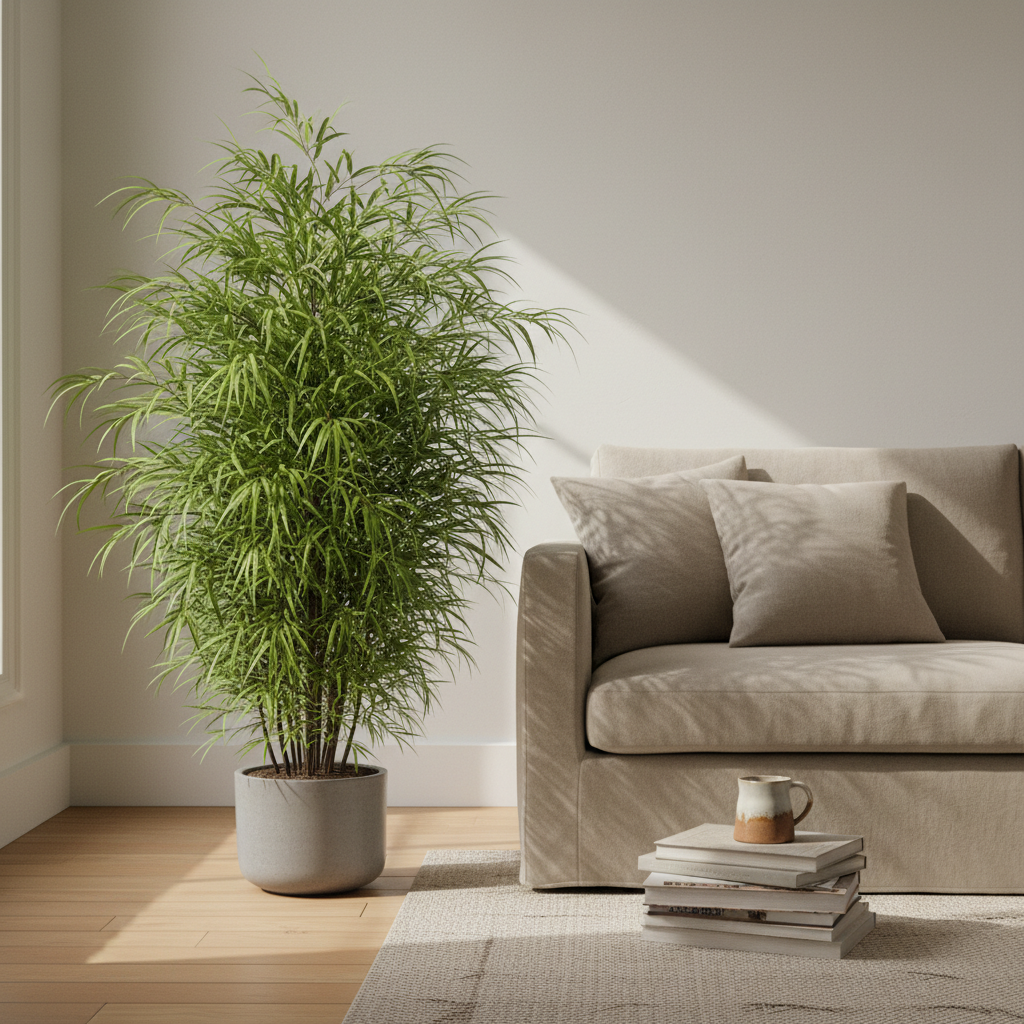
Beyond looks, the plant rewards beginners because it forgives the mistakes that kill fussier foliage. Its tuberous root system, a network of swollen, pale storage organs, banks water and nutrients so the plant can ride out a forgotten watering or a short holiday without collapse. It does not demand the constant misting and bog-like soil that true ferns insist on, it grows quickly enough to feel responsive without overwhelming its pot in a single season, and it divides readily into new plants once established. The trade-off for all this resilience is a tendency to shed cladodes when stressed, scattering what look like tiny green or yellow needles across the floor, but this is cosmetic rather than fatal and almost always traces back to a watering or light problem you can correct.
Important — Toxicity: Every part of the foxtail fern contains saponins, and the bright red berries are the most hazardous if eaten, capable of causing vomiting, diarrhoea and abdominal pain in people and pets. The sap can also provoke contact dermatitis on sensitive skin, so wear gloves when dividing or pruning. Keep the plant out of reach of cats, dogs and small children, and clear away any fallen berries promptly.
Light Requirements
Light is the lever that controls everything about how a foxtail fern looks. In its native habitat the plant grows at the woodland edge and in dappled coastal scrub, scrambling through bright but broken sunlight rather than baking in the open or languishing in deep shade. Recreating that middle ground indoors is the key to dense, upright plumes that hold their colour.
The ideal position is a spot that receives plenty of bright, indirect light for most of the day, with perhaps an hour or two of soft early sun. In those conditions the stems grow thick, closely spaced and a deep saturated green, and the plant maintains the tight, brush-like form that makes it worth growing. Too little light and the plumes stretch, the cladodes space out along the stems, and the whole plant takes on a sparse, reaching look as it searches for brightness.
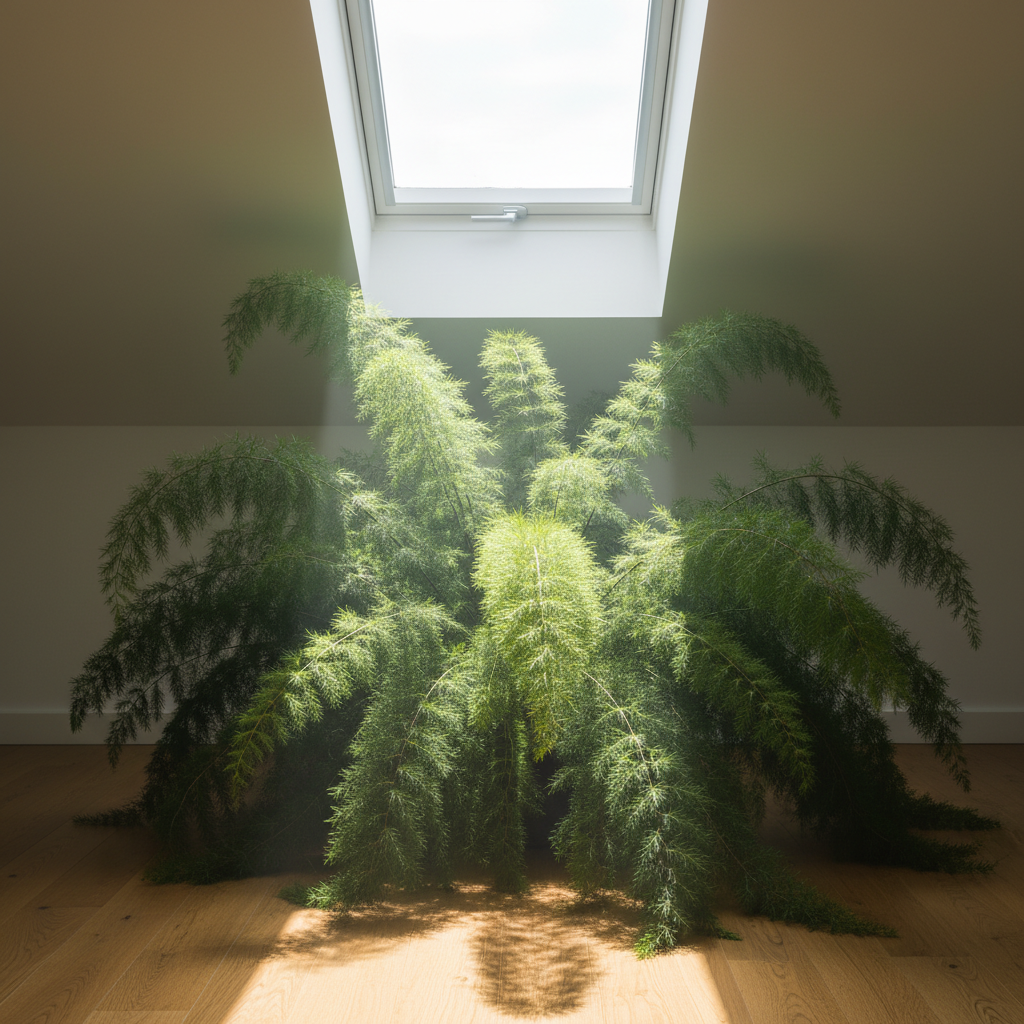
Light Levels Explained
Indoor light is easy to overestimate, because the human eye adjusts to dimness in a way that plants cannot. The table below translates the broad light categories into rough illuminance figures and practical locations, so you can judge where your foxtail fern will actually thrive rather than merely survive.
| Light Category | Approx. Level | Typical Location | Outcome |
|---|---|---|---|
| Direct sun | Over 50,000 lux | On an unshaded south or west sill | Risk of scorched, bleached plumes in summer; tolerable only as gentle morning sun |
| Bright indirect | 10,000 to 25,000 lux | Near an east window or a metre back from a south window | Ideal; dense, upright, deep green growth |
| Medium | 5,000 to 10,000 lux | A few metres from a bright window | Acceptable; slower growth, slightly looser plumes |
| Low | 1,000 to 5,000 lux | A north corner or interior wall | Survives but stretches; sparse, pale, leggy stems |
| Very low | Under 1,000 lux | A windowless room or dim hallway | Decline over time; not recommended |
Window Orientation and Placement
South-facing window: In the northern hemisphere this is the brightest aspect and can be too intense at the glass in summer, so set the plant a metre or so back or filter the light with a sheer curtain. In winter, when the sun sits low and weak, the plant can move closer to make the most of the available light.
East-facing window: Arguably the perfect spot. The plant catches a few hours of soft, cool morning sun and then sits in bright indirect light for the rest of the day, which suits its woodland-edge origins precisely.
West-facing window: A good choice, though the afternoon sun here is hotter and stronger than the morning equivalent. A light curtain during the most intense hours prevents the outer plumes from bleaching.
North-facing window: Workable but marginal. The plant will hold on in the steady, gentle light of a north aspect, but expect slower, looser growth and be ready to supplement with a grow light through the darkest months.
Pro Tip — Rotate for Symmetry: Because the foxtail fern grows toward its light source, a plant left in one position slowly leans and develops a fuller side and a thin side. Give the pot a quarter turn each time you water and the plumes will radiate evenly in all directions, preserving that prized fountain shape.
How Light Affects Plume Density and Colour
The most visible effect of light on this plant is the spacing of its cladodes. In strong, bright conditions the plant produces short internodes, so the needle-like cladodes sit close together and each stem looks plush and solid. As light drops, the internodes lengthen, the cladodes spread apart, and the plumes become see-through and floppy. Colour follows the same logic: well-lit plants are a rich, even green, while shaded ones fade toward a yellowish, washed-out tone as chlorophyll production falls. If a once-dense plant has gone leggy, the cure is almost always more light rather than more water or feed.
Warning — Direct Sunlight: While the foxtail fern enjoys gentle morning sun, prolonged exposure to harsh midday or afternoon rays will scorch the fine cladodes, turning the outer plumes a dry, straw-yellow that does not recover. Move a sun-stressed plant back from the glass gradually rather than all at once, since a sudden swing in light is itself a shock.
Artificial Lighting
The foxtail fern responds well to supplementary lighting, which makes it a candidate for rooms with no good natural window. A full-spectrum LED grow light positioned 30 to 45 cm (12 to 18 inches) above the plant and run for 10 to 12 hours a day will keep growth dense through a dark winter or in a windowless interior. Ordinary household bulbs do little for it, so look specifically for a horticultural fixture rated for foliage plants, and remember that distance matters: too close and the cladodes can scorch, too far and the light is too weak to make a difference.
Seasonal Adjustments
Light changes dramatically through the year, and the foxtail fern notices. As days shorten and the sun weakens in autumn, move the plant closer to its window or toward a brighter aspect to compensate, and consider adding a grow light if growth stalls or stretches. In spring, reverse the process, easing the plant back from glass that is gaining strength so the returning sun does not scorch foliage that grew accustomed to gentler winter light. These small seasonal moves prevent the abrupt stress that triggers needle drop.
Watering & Humidity
Watering is where most foxtail ferns are won or lost, because the plant sits in an awkward middle ground. Its tuberous roots store water and make it genuinely drought tolerant, so it resents the constant sogginess a true fern would enjoy, yet its fine cladodes transpire freely and the plant browns and sheds if left bone dry for too long. The aim is steady, moderate moisture rather than either extreme.
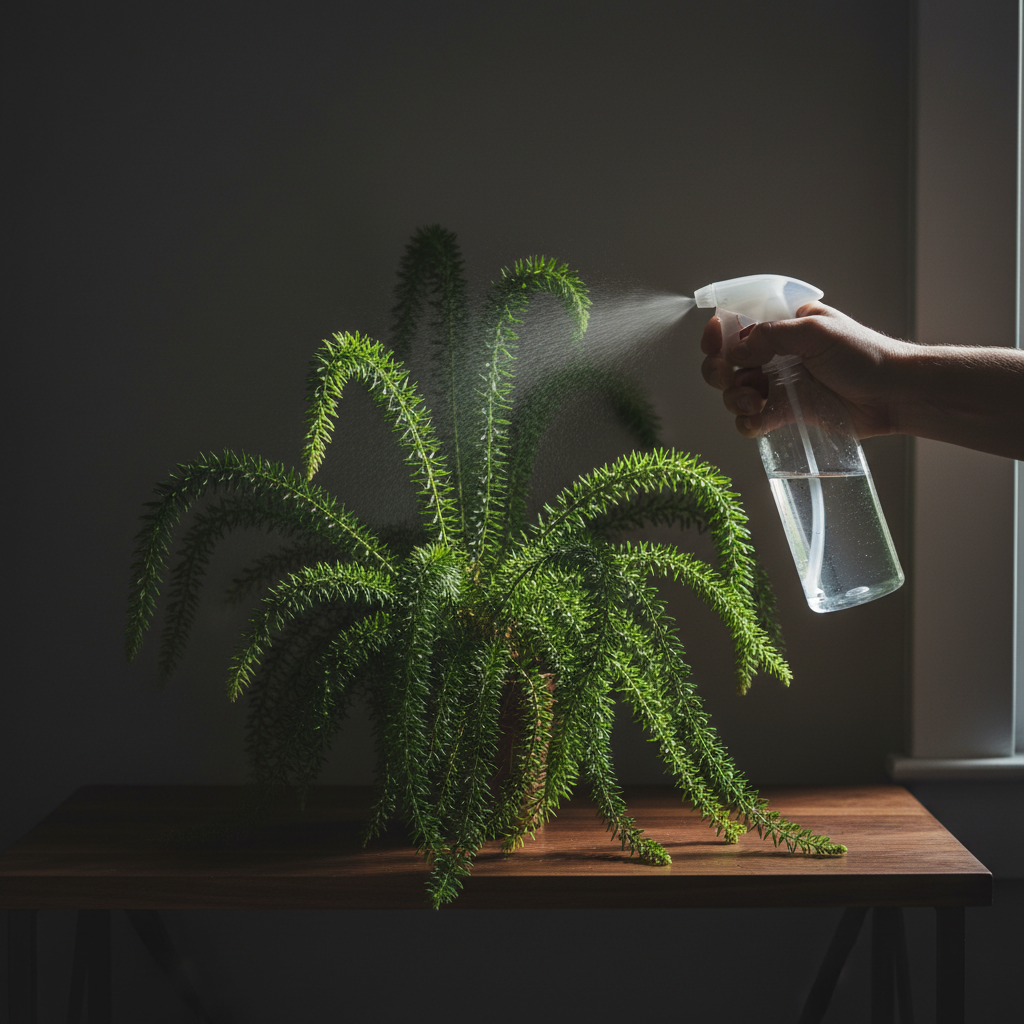
When to Water
Through the active growing season of spring and summer, water when the top 2 to 3 cm (about 1 inch) of the mix has dried out but the deeper soil remains slightly moist. The most reliable test is your finger: push it into the soil to the first knuckle, and if it comes out dry at that depth, it is time to water. A plant in bright light and warmth might need watering twice a week in high summer, while the same plant in cooler, dimmer conditions could go a week or more between drinks.
In autumn and winter, when growth slows and light fades, cut back markedly. Let the soil dry out further between waterings, to roughly half the pot’s depth, and water only enough to keep the tubers plump rather than to keep the mix continuously damp. Cold, wet soil in winter is the single most common route to root rot, so when in doubt at that time of year, wait an extra few days.
Pro Tip — Weigh the Pot: A freshly watered pot is noticeably heavy, and a dry one surprisingly light. After a few weeks of lifting your foxtail fern just before and just after watering, you will be able to judge its thirst by weight alone, which is far more accurate than any fixed schedule because it accounts for changes in light, temperature and season.
How to Water Correctly
- Check the soil first, pushing a finger into the mix to confirm the top few centimetres have dried before you reach for the watering can.
- Water at the soil surface, directing the flow around the base of the plumes rather than over the foliage, and pour slowly and evenly across the whole surface.
- Keep going until water runs freely from the drainage holes, which ensures the entire root ball and its tubers are moistened rather than just the top layer.
- Let the pot drain completely for several minutes, ideally in a sink or over a tray, so excess water escapes.
- Empty the saucer or cover pot of any standing water, because tubers left sitting in a reservoir will rot.
- Wait until the top of the mix dries again before repeating, adjusting the interval to the season rather than watering on a rigid calendar.
Signs of Overwatering vs. Underwatering
| Symptom | Overwatering | Underwatering |
|---|---|---|
| Cladode colour | Yellowing across whole plumes, often from the base outward | Browning and crisping, usually at the tips and outer edges first |
| Cladode texture | Soft, limp stems that flop and feel mushy near the soil | Dry, brittle needles that snap and shed in showers |
| Soil | Stays wet for many days, may smell sour or sulphurous | Pulls away from the pot edges and is dry well below the surface |
| Roots and tubers | Brown, mushy, foul-smelling tubers and dark roots | Shrivelled, wrinkled tubers that have drawn down their reserves |
| Overall vigour | General collapse and stem die-back despite moist soil | Wilting and rapid needle drop that perks up after a thorough soak |
Warning — Root Rot: Because the tubers store water, a foxtail fern can look healthy above the soil while rotting below it. If the stems begin yellowing and softening at the base while the mix stays wet, unpot the plant immediately, cut away any brown, mushy tubers and roots with sterilised scissors, and repot into fresh, fast-draining mix. Caught early, the plant usually recovers from its remaining healthy tubers.
Humidity Requirements
One of the foxtail fern’s great advantages over the true ferns is that it does not need a steamy atmosphere. It is perfectly content in the average household humidity of 40 to 50 per cent, which is enough to keep its cladodes supple without any intervention. This tolerance is what lets it live happily in an ordinary living room or bedroom where a maidenhair would crisp up within days.
That said, the plant does look its best with a little more moisture in the air, and the surest sign that humidity has dropped too low is browning at the tips of the outermost cladodes. This often appears in winter, when central heating dries indoor air dramatically, or in a room with strong draughts. It is a cosmetic warning rather than an emergency, but it tells you the plant would appreciate more ambient moisture.
To raise humidity, group the foxtail fern with other plants so they share the moisture they transpire, stand the pot on a wide tray of pebbles topped up with water so evaporation rises around the foliage without the roots ever sitting in the water, or run a small humidifier nearby during the driest months. Misting helps only briefly and, if done heavily and often, can encourage fungal problems among the densely packed cladodes, so it is the least reliable of the options.
Water Quality
The foxtail fern is not especially fussy about water, but like many houseplants it can show sensitivity to the fluoride and chlorine in heavily treated tap water, which may contribute to tip browning over time. If your tap water is very hard or strongly chlorinated and you notice persistent tip damage despite good humidity, switch to rainwater, filtered water, or tap water that has stood uncovered overnight to let some chlorine dissipate. Room-temperature water is gentler on the roots than cold water straight from the tap.
Soil, Potting & Repotting
The foxtail fern’s roots tell you most of what you need to know about its soil. Those swollen tubers want to draw water in and then drain freely, so the mix must hold a little moisture while letting the excess escape quickly. A dense, water-retentive compost suffocates the tubers and invites rot, while a pure, gritty cactus mix dries out faster than the plant can cope with. The sweet spot is an open, structured blend that stays lightly moist but never waterlogged.
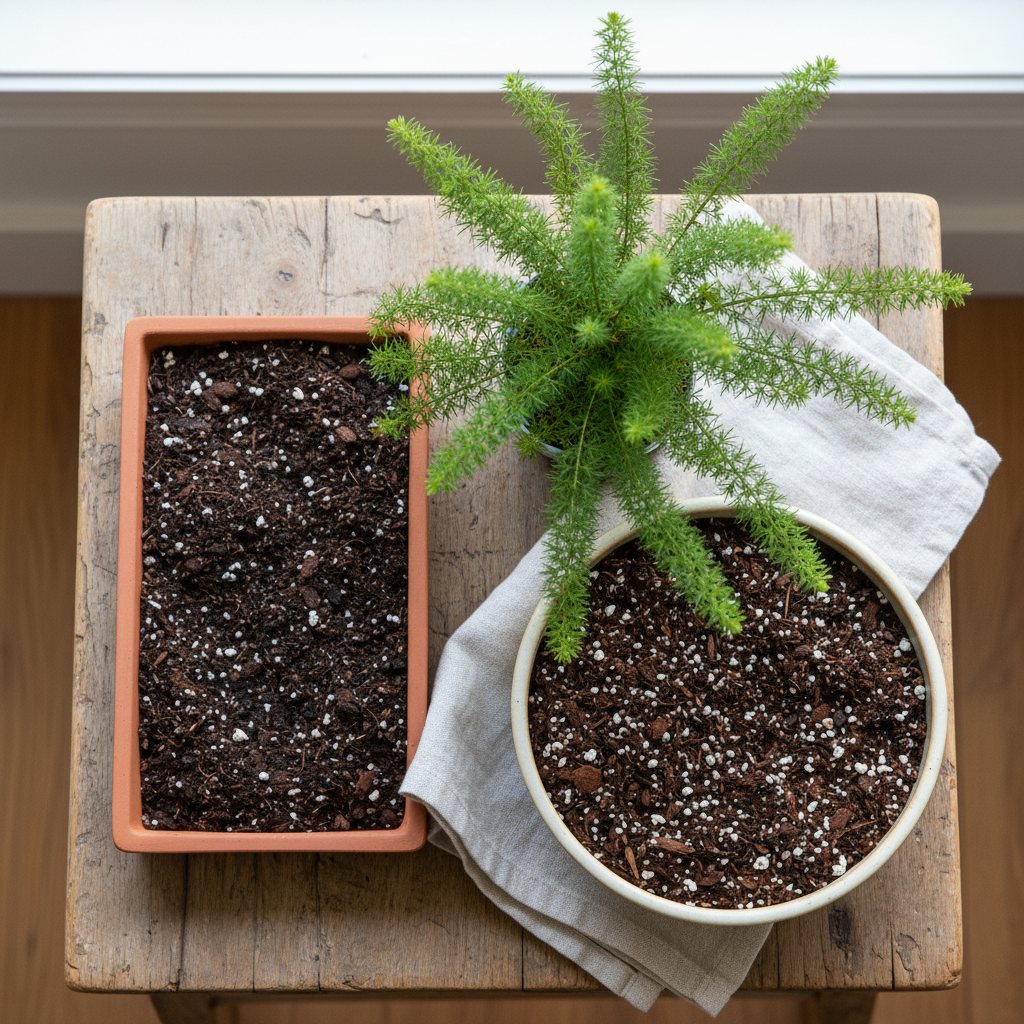
Ideal Soil Composition
A good foxtail fern mix starts with a quality peat-free houseplant compost as its moisture-holding base, then opens it up with generous additions of drainage material and a little organic richness. The goal is a substrate that you can squeeze damp into a loose clump that falls apart again readily, rather than a solid, sticky ball. The proportions below give a reliable starting recipe.
| Component | Proportion | Function |
|---|---|---|
| Peat-free houseplant compost | Two parts | Holds moisture and provides the bulk of the rooting medium |
| Perlite or pumice | One part | Opens the mix, creating air pockets and rapid drainage |
| Fine orchid bark or coco chips | One part | Adds structure and stops the mix compacting around the tubers |
| Worm castings or mature compost | A small handful | Supplies slow, gentle nutrition and beneficial microbes |
The foxtail fern prefers a slightly acidic to neutral substrate, with a pH in the region of 6.0 to 6.8, which most peat-free houseplant composts fall within naturally. There is rarely any need to test or adjust pH for this plant, since it is far more sensitive to drainage and watering than to small swings in acidity.
Pro Tip — Quick Mix Recipe: If you want a fast, no-measuring blend, take any bag of standard houseplant compost and stir through roughly one third its volume of perlite by eye. That single addition transforms a dense, slow-draining compost into something far better suited to the foxtail fern’s tubers, and it is enough for most growers who do not want to source bark and castings.
Choosing the Right Pot
The foxtail fern is a vigorous rooter, and its tubers expand with surprising force as the plant matures, so the pot you choose has to accommodate that growth while protecting the roots from sitting in water. It is not unusual for a pot-bound foxtail fern to crack a thin plastic nursery pot or push itself partly out of the soil as the tubers swell.
Drainage holes are non-negotiable. Whatever pot you select must have at least one generous drainage hole, because the surest way to rot the tubers is to leave them standing in water trapped at the bottom of a sealed container. If you love a decorative pot without holes, use it as a cover pot and keep the plant in a plain plastic nursery pot inside it, lifting the inner pot out to water and drain.
Pot material: Terracotta is an excellent choice for this plant, since its porous walls let excess moisture evaporate and make overwatering harder, which suits the rot-prone tubers well. Glazed ceramic and plastic both work too and retain moisture longer, so if you use them you simply need to be a little more disciplined about letting the soil dry between waterings.
Pot size: Move up only one size at a time, choosing a new pot 2 to 4 cm (1 to 2 inches) wider than the old one. A pot that is too large holds a reservoir of damp soil the roots cannot reach, and that stagnant moisture is exactly what causes rot, so resist the temptation to give a small plant a big home.
When to Repot
Foxtail ferns grow quickly and typically need repotting every one to two years. The clearest signals are roots and tubers pushing up above the soil line or escaping through the drainage holes, water that races straight through the pot because there is more root than soil left, and a plant that dries out within a day or two of watering. The best time to repot is spring, just as the plant enters active growth and can recover quickly, and repotting doubles as the ideal moment to divide an overgrown specimen.
How to Repot: Step-by-Step
- Water the plant a day beforehand so the root ball is moist and holds together, which reduces stress and makes removal easier.
- Slide the plant from its pot, tipping it sideways and squeezing a flexible pot or running a knife around the inside of a rigid one; expect a solid mass of pale tubers.
- Tease away as much old, spent soil as you can from between the tubers without tearing them, and trim off any that are brown, soft or rotten with sterilised scissors.
- Add a layer of your fresh, free-draining mix to the base of the new pot, enough that the crown will sit at the same depth it did before.
- Centre the plant and backfill around the tubers with fresh mix, working it gently into the gaps so there are no large air pockets.
- Firm the surface lightly with your fingers, leaving a small gap below the rim for watering.
- Water thoroughly, let the pot drain completely, and keep the plant out of strong direct sun for a week or two while it settles.
Warning — Transplant Shock: Some needle drop and a brief check in growth are normal after repotting, but you can minimise the shock by repotting in spring, disturbing the tubers as little as possible, and resisting the urge to fertilise for four to six weeks afterward. Feeding freshly disturbed roots can scorch them while they are still re-establishing.
Fertilising
The foxtail fern is a moderate feeder rather than a hungry one, and its tubers store enough reserves that it will not starve quickly even if you forget to feed it. Still, regular, gentle feeding through the growing season is what fuels the rapid production of new plumes and keeps the foliage a deep, even green rather than a hungry pale yellow.
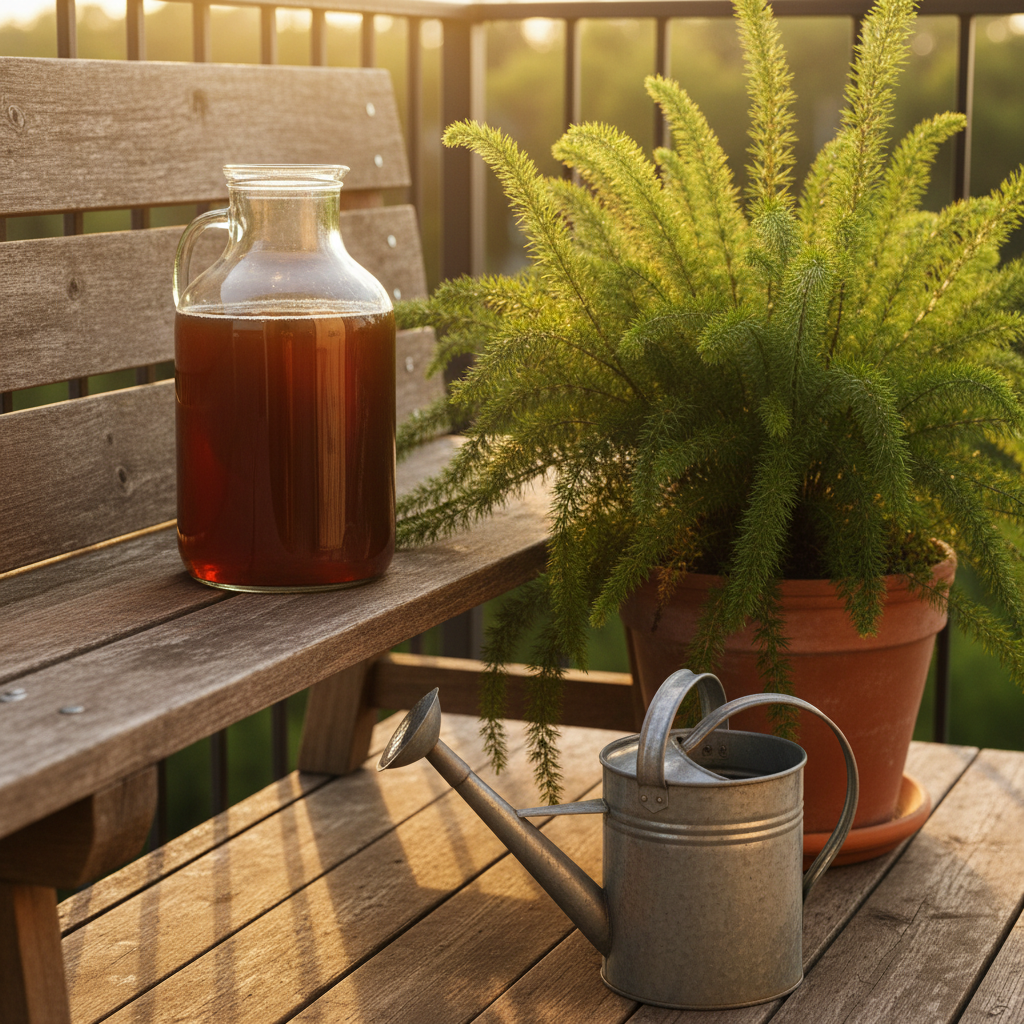
The cardinal rule with this plant is to feed lightly and often rather than heavily and rarely. Its fine roots and tubers are easily burned by concentrated fertiliser, and the dense foliage hides any salt build-up until damage is well advanced, so a diluted, frequent approach is far safer than a strong monthly dose.
Understanding Plant Nutrients
Most balanced houseplant fertilisers list three numbers on the label, the NPK ratio, which gives the percentages of nitrogen, phosphorus and potassium. For a foliage plant grown for its lush green stems, a balanced or slightly nitrogen-led ratio is ideal. Beyond those three headline nutrients, the plant also needs smaller amounts of secondary nutrients and trace elements, and a deficiency in any of them shows up in the foliage in characteristic ways.
| Nutrient | Symbol | Primary Function | Deficiency Symptoms |
|---|---|---|---|
| Nitrogen | N | Drives leafy, green growth and overall vigour | Pale, yellowing older stems and slow, weak growth |
| Phosphorus | P | Supports root and tuber development and energy transfer | Stunted growth and a dull, sometimes purplish cast |
| Potassium | K | Regulates water use and strengthens overall resilience | Browning or scorched edges on the cladodes |
| Magnesium | Mg | Central to chlorophyll and so to green colour | Yellowing between veins while stems stay green |
| Iron | Fe | Needed to form chlorophyll in new growth | Pale or yellow new plumes while old growth stays green |
Types of Fertiliser
Liquid fertilisers: These are the easiest match for the foxtail fern, because you can dilute them precisely and deliver a weak, frequent feed alongside normal watering. A general-purpose balanced houseplant feed diluted to half the recommended strength is ideal for this plant.
Slow-release granular: Coated pellets stirred into the top of the mix or scattered on the surface release nutrients gradually over several months, which suits forgetful growers. Use them at the lower end of the label’s recommended rate, since the dense foliage makes it hard to spot over-feeding early.
Organic fertilisers: Worm castings, diluted seaweed extract and well-matured compost feed the plant gently and improve the soil’s biology at the same time. They are very hard to overdo, which makes them a safe and sustainable option, though they act more slowly than synthetic feeds.
Feeding Schedule
Feed every two to four weeks through the active growing season of spring and summer, using a balanced liquid feed at half strength. As growth slows in autumn, stretch the interval out and then stop entirely through winter, when the plant is resting and cannot use the extra nutrients. Resume in spring once you see fresh plumes emerging, which is the plant’s own signal that it is growing again and ready to be fed.
Pro Tip — Half Strength Always: When in doubt, dilute further. The foxtail fern responds better to a feed that is slightly too weak, applied a little more often, than to a strong dose that risks burning the tubers. Mixing to half the label rate and feeding fortnightly is almost impossible to get wrong.
How to Fertilise
- Water the plant lightly first if the soil is very dry, since feeding bone-dry roots concentrates the fertiliser and can scorch the tubers.
- Mix your liquid fertiliser to half the recommended strength in a watering can of room-temperature water.
- Pour the diluted feed evenly over the soil surface until it begins to drain from the bottom, distributing it through the whole root mass.
- Let the pot drain fully and tip away any feed that collects in the saucer so the roots do not sit in concentrated solution.
- Every few months, flush the pot with plain water until it runs freely from the drainage holes to wash out accumulated mineral salts.
Warning — Salt Build-Up: Over time, fertiliser leaves behind mineral salts that accumulate in the soil and burn the roots, often showing as crisp brown tips on the cladodes. A white crust on the soil surface or pot rim is the giveaway. Flush the pot thoroughly with plain water a few times a year, letting plenty run out of the drainage holes, to leach those salts away before they do harm.
Propagation
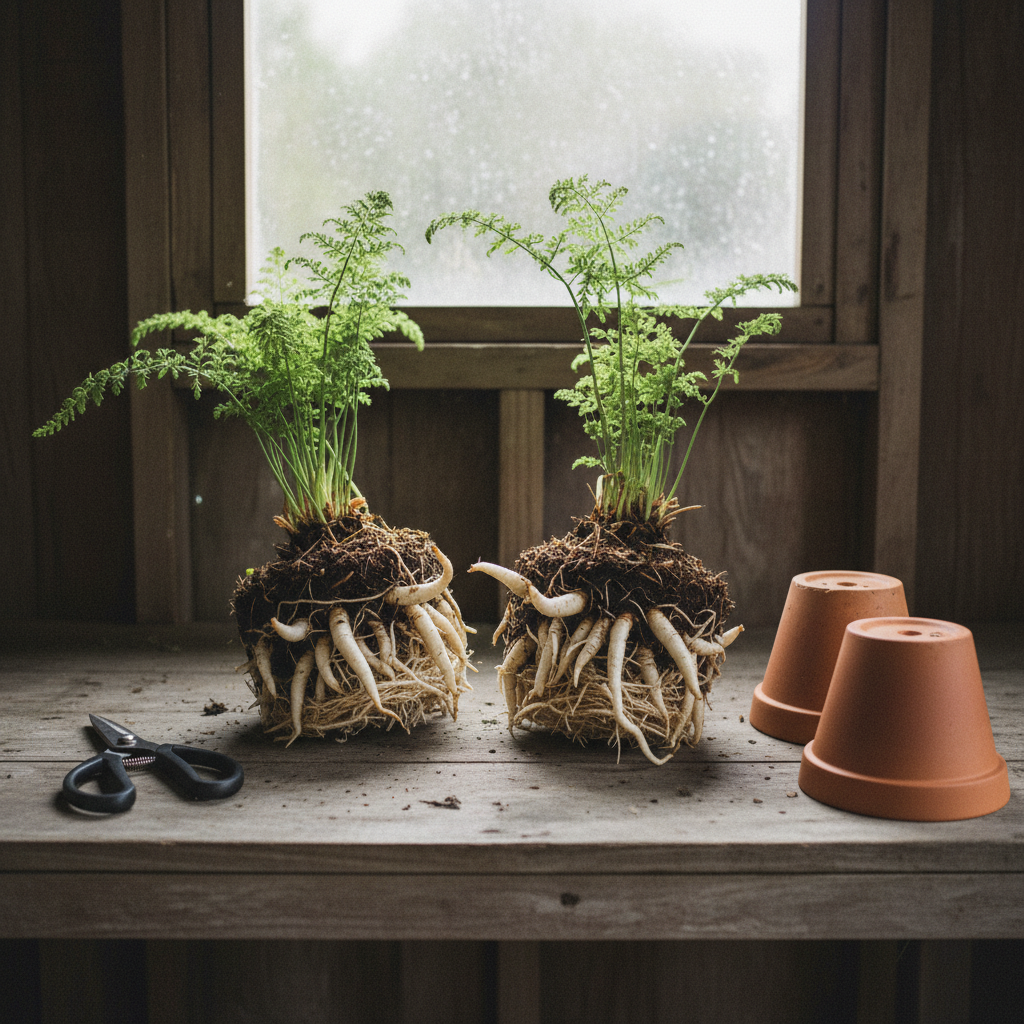
Propagating a foxtail fern is one of the simplest and most satisfying jobs in indoor gardening, but it is important to understand from the outset that this plant cannot be grown from stem or leaf cuttings. Unlike a pothos or a philodendron, a cut piece of foxtail fern plume will simply wither, because the cladodes have no capacity to root. Instead, the plant multiplies by division of its tuberous crown, and it can also be raised from the seeds inside its red berries.
Division is by far the more practical and reliable route for the home grower. It produces full-sized new plants instantly, takes advantage of the repotting you will be doing anyway, and has a very high success rate because each division arrives with its own established tubers and roots already in place.
Understanding the Tuberous Crown
The key structure to understand is the crown, the dense mass at soil level where the plumes emerge and the tubers cluster below. A mature foxtail fern is not a single growing point but a tight colony of many growing points, all sharing one tangled tuber system. Because each section of that crown carries its own stems and its own water-storing tubers, you can slice the whole thing into pieces and each piece will carry on as an independent plant. The trick is simply to make sure every division keeps both top growth and a healthy share of tubers and roots.
Division: Step-by-Step
Division is best done in spring, ideally combined with a scheduled repotting, when the plant has the whole growing season ahead of it to recover. Wear gloves, since the sap can irritate skin and older stems sometimes carry small spurs.
- Water the plant the day before so the root ball is moist, then slide the whole plant out of its pot.
- Brush and tease away enough loose soil to expose the crown and see where natural clumps of tubers and stems group together.
- Decide on your divisions, aiming for two or three generous sections from a mature plant rather than many tiny ones, each with a good fan of plumes and a solid clump of tubers.
- Cut down through the crown and tubers with a clean, sharp, sterilised knife, sawing firmly since the tuber mass is dense and fibrous.
- Gently pull the divisions apart, trimming any torn or damaged tubers cleanly.
- Pot each division into its own appropriately sized pot of fresh, free-draining mix, setting the crown at the same depth it grew before.
- Water each new plant well, let it drain, and keep the divisions in bright indirect light and out of harsh sun while they settle over the following weeks.
Pro Tip — Do Not Over-Divide: It is tempting to slice a big plant into as many pieces as possible, but each division needs enough tubers and foliage to support itself. Two robust divisions establish far faster and look better far sooner than five weak ones, so be generous with the size of each piece.
Growing from Seed: Step-by-Step
If your plant has flowered and set its small red berries, you can grow new foxtail ferns from seed, though it is a slower and more patient route than division. Each berry contains one or more hard black seeds.
- Harvest fully ripe red berries, then squeeze and clean the hard seeds out of the soft pulp and rinse them.
- Soak the seeds in room-temperature water for about a day to soften the coat and speed germination.
- Sow them just below the surface of a moist, fine seed-starting mix, spacing them out in a tray or small pots.
- Cover with a clear lid or bag to hold humidity, and keep the mix warm, around 20 to 24 degrees Celsius (68 to 75 degrees Fahrenheit), and consistently moist.
- Be patient, since germination is erratic and can take anywhere from three to eight weeks, then grow the seedlings on in bright indirect light until they are large enough to pot up individually.
Troubleshooting Propagation
| Problem | Likely Cause | Solution |
|---|---|---|
| Division wilts badly after potting | Too much foliage lost relative to the surviving roots, or harsh light | Trim back some plumes to reduce demand and move it to softer light until established |
| Division rots at the base | Damaged tubers kept too wet in a dense mix | Use a fast-draining mix, water sparingly until new growth appears, and remove rotten tubers |
| A cutting fails to root | Stem and plume cuttings cannot root on this plant | Switch to division of the crown, which is the only reliable vegetative method |
| Seeds never germinate | Old seed, no soaking, or soil too cold and dry | Use fresh ripe seed, soak first, and keep the mix warm and consistently moist |
Pests & Diseases
The foxtail fern is reasonably resistant to pests and disease, and a healthy, well-watered plant in good light is rarely troubled. When problems do arise they usually follow a period of stress, dry air or overwatering, which weakens the plant and opens the door to opportunistic invaders.
The dense, plume-like growth that makes this plant so attractive is also its weak point when it comes to pest control, because the closely packed cladodes give insects countless places to hide and make thorough spraying difficult. Catching infestations early, before they spread deep into the plumes, is therefore especially important with this plant.
Common Pests
Spider Mites (Tetranychus urticae)
These tiny sap-sucking arachnids thrive in the warm, dry air that also stresses the foxtail fern, making them the most common pest on this plant. They cause a fine yellow speckling or stippling on the cladodes, and in bad cases you will see delicate webbing strung between the stems. Because they are nearly invisible to the naked eye, a dusty, dull, sickly look to the foliage is often the first clue.
Treatment: Rinse the whole plant under a tepid shower to dislodge as many mites as possible, then raise the humidity, since mites hate moist air. Repeated treatment with insecticidal soap or a diluted horticultural oil, applied every few days and worked deep into the plumes, will break the breeding cycle, but test on a small area first because this plant can be sensitive to oils.
Mealybugs (Pseudococcus longispinus)
Mealybugs appear as small, soft, white cottony tufts tucked into the crown and the joints where plumes meet stems. They suck sap and excrete sticky honeydew, which in turn encourages sooty mould, and the dense growth of the foxtail fern gives them plenty of sheltered hiding places.
Treatment: Dab each visible bug with a cotton bud dipped in diluted isopropyl alcohol, which dissolves their protective coating on contact. For larger outbreaks, follow up with insecticidal soap, and isolate the plant from your collection until you are sure the infestation has cleared, since mealybugs spread readily.
Scale Insects (Coccus hesperidum)
Scale shows up as small, flat or domed brown bumps clinging to the stems, often mistaken at first for part of the plant. Like the other pests here they feed on sap and excrete honeydew, gradually weakening the plant and yellowing the foliage as numbers build.
Treatment: Scrape or pick off the scales by hand or with a cotton bud soaked in diluted alcohol, then treat with insecticidal soap or horticultural oil to catch the mobile young. Because their waxy shells protect them, persistence over several weeks is usually needed to clear an established population.
Common Diseases
Root Rot (Pythium and Phytophthora species)
By far the most serious threat to the foxtail fern, root rot sets in when the tubers are kept too wet for too long, allowing soil-borne fungi to attack the waterlogged tissue. Above ground it shows as yellowing, softening stems and a general collapse despite soil that remains damp, while below ground the tubers turn brown, mushy and foul-smelling.
Treatment: Unpot the plant at once, cut away every soft or discoloured tuber and root with sterilised scissors, and repot what remains into fresh, fast-draining mix in a clean pot. Then correct the underlying cause by watering less, improving drainage, and never letting the plant sit in standing water.
Leaf and Stem Blight (Botrytis cinerea)
In cool, stagnant, overly humid conditions a grey, fuzzy mould can take hold among the densely packed cladodes, causing patches of browning and die-back, particularly where dead needles have collected and trapped moisture. Poor air circulation around a crowded plant is the usual trigger.
Treatment: Remove affected stems and clear out any dead, matted cladodes to open up the plant, improve air movement around it, and avoid heavy misting. In persistent cases a houseplant-safe fungicide can help, but improving ventilation usually solves the problem on its own.
Pest and Disease Summary
| Pest / Disease | Identification | Treatment |
|---|---|---|
| Spider mites | Fine yellow stippling and faint webbing on the plumes | Rinse, raise humidity, repeat insecticidal soap or oil |
| Mealybugs | White cottony tufts in crowns and stem joints | Dab with alcohol, follow with insecticidal soap, isolate |
| Scale | Brown bumps fixed to the stems, sticky honeydew | Scrape off, treat with soap or oil, repeat for weeks |
| Root rot | Soft yellow collapse with mushy, smelly tubers | Cut away rot, repot in fresh mix, water far less |
| Grey mould blight | Fuzzy grey patches and die-back in dense, damp growth | Remove affected parts, improve airflow, reduce humidity |
Prevention Strategies
Prevention with this plant comes down to vigour and vigilance. A foxtail fern grown in good light, watered correctly and fed gently is naturally resilient, so the most powerful thing you can do is simply get the basic care right and avoid the stress that invites pests in. Inspect new plants carefully before bringing them home, and keep any new arrival isolated from your collection for a couple of weeks to be sure it carries no hidden passengers.
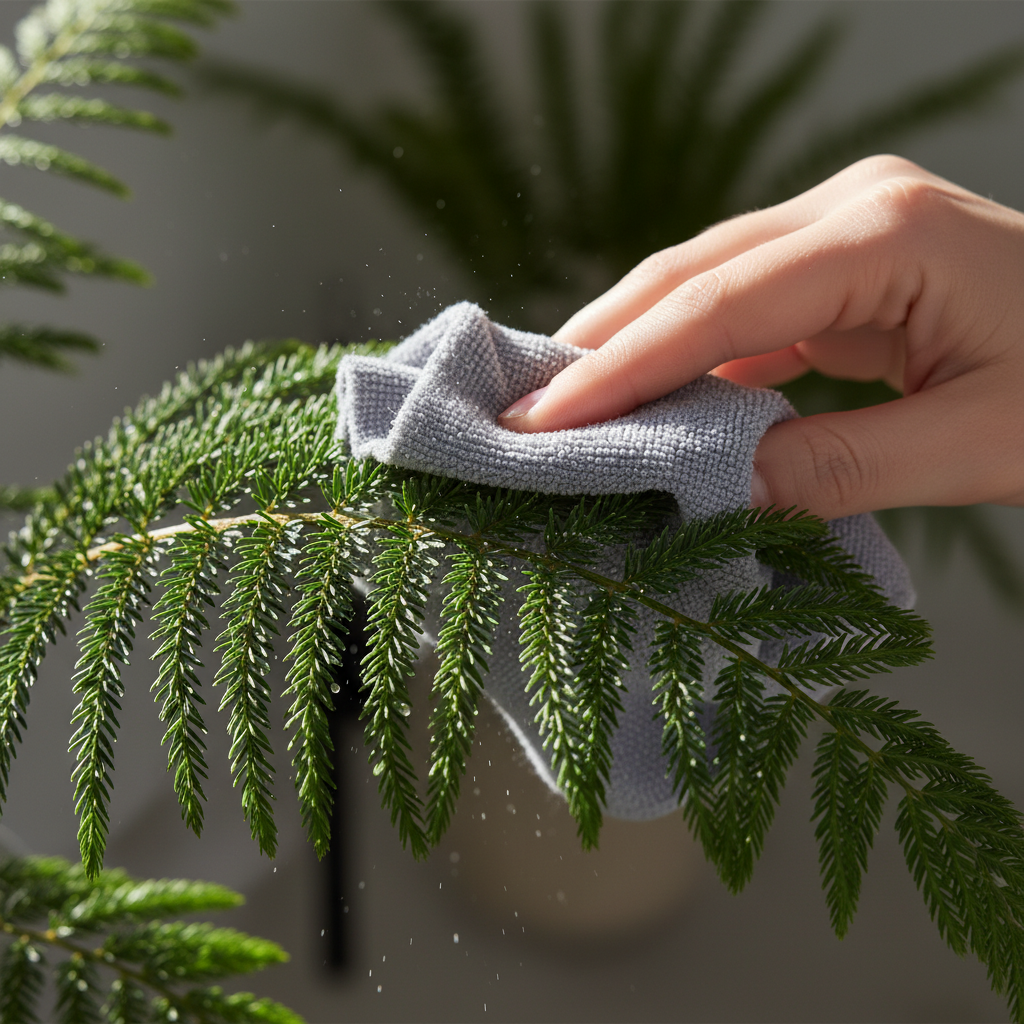
Regular grooming pays off too. Periodically part the plumes and check the crown and stem joints where pests like to hide, clear away dead cladodes that collect at the base and trap moisture, and gently clean the foliage now and then to remove dust and dislodge any early invaders. Good air circulation around the plant discourages both mites and mould, so avoid cramming it into a tight, stagnant corner.
Pro Tip — Test Oils First: The foxtail fern’s fine cladodes can react badly to neem and horticultural oils, sometimes browning where the oil is applied. Always treat a small section first and wait a couple of days to check for damage before spraying the whole plant, and apply oils out of direct sun to avoid scorching.
Popular Varieties
The foxtail fern itself is a named cultivar, Asparagus densiflorus ‘Myersii’, and it belongs to a wider group of ornamental asparagus relatives that are all sold loosely as asparagus ferns. These cousins share the same family, the same easy temperament and much the same care, but they differ enormously in form, from the tight upright plumes of the foxtail to airy, climbing lace and arching, trailing fountains.
Knowing the wider group is useful both for choosing companions with a similar look and for identifying exactly which plant you actually own, since garden centres frequently muddle the names. The table and profiles below cover the most widely available relatives alongside the true foxtail.
| Variety | Leaf Appearance | Light Needs | Growth Rate | Availability |
|---|---|---|---|---|
| Foxtail Fern (‘Myersii’) | Dense, upright, tapering plumes like bushy tails | Bright indirect | Moderate to fast | Common |
| Sprenger’s Asparagus (‘Sprengeri’) | Loose, arching, trailing stems with sparser needles | Bright indirect | Fast | Very common |
| Lace Fern (A. setaceus) | Flat, feathery, lace-like fronds; climbing habit | Bright indirect | Moderate | Common |
| Ming Fern (A. retrofractus) | Tufted pom-pom clusters on zigzag woody stems | Bright indirect | Slow to moderate | Less common |
| Broom Fern (A. virgatus) | Tall, slender upright stems with fine foliage | Bright indirect to medium | Moderate | Less common |
Featured Varieties
Sprenger’s Asparagus Fern
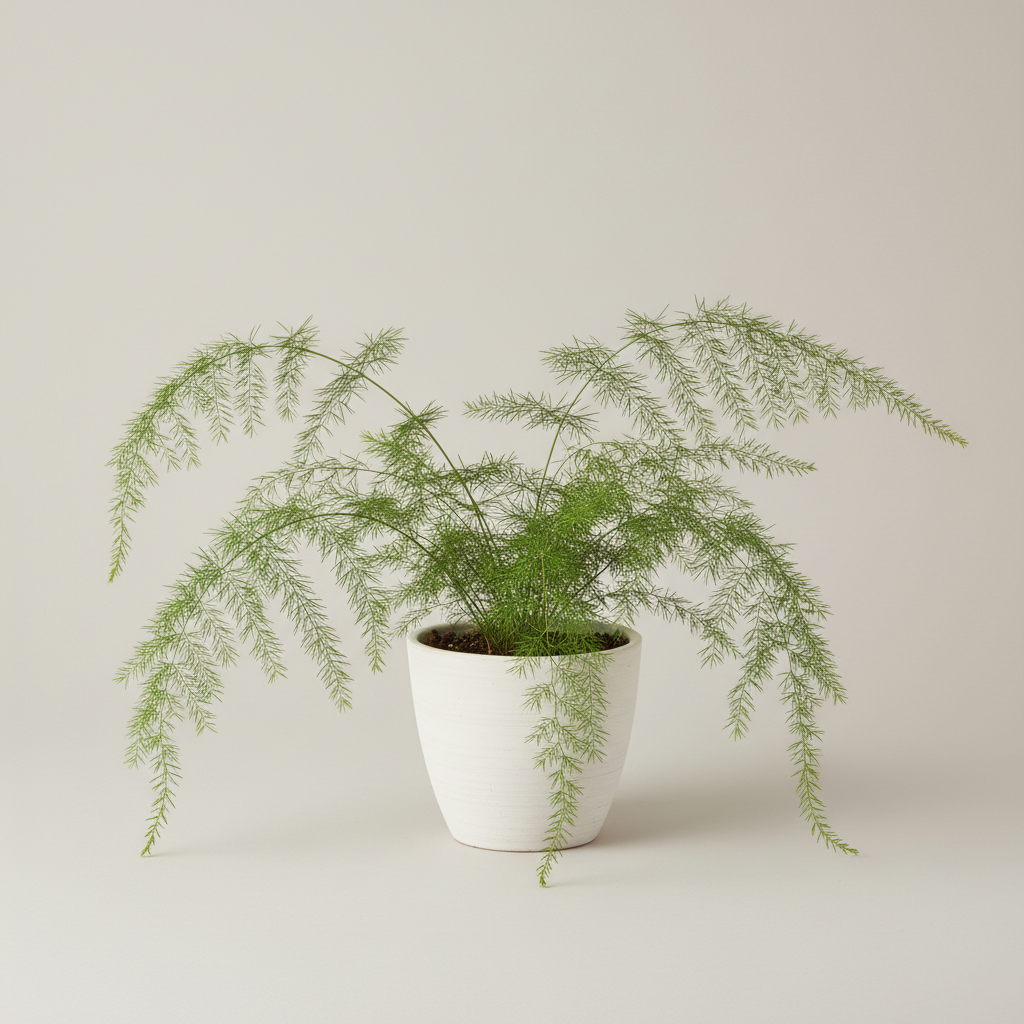
The most familiar relative, ‘Sprengeri’ swaps the foxtail’s tight upright plumes for loose, arching and cascading stems clothed in sparser, flatter needles. Its trailing habit makes it a natural for hanging baskets and high shelves, where it spills over the edge in a soft green fountain.
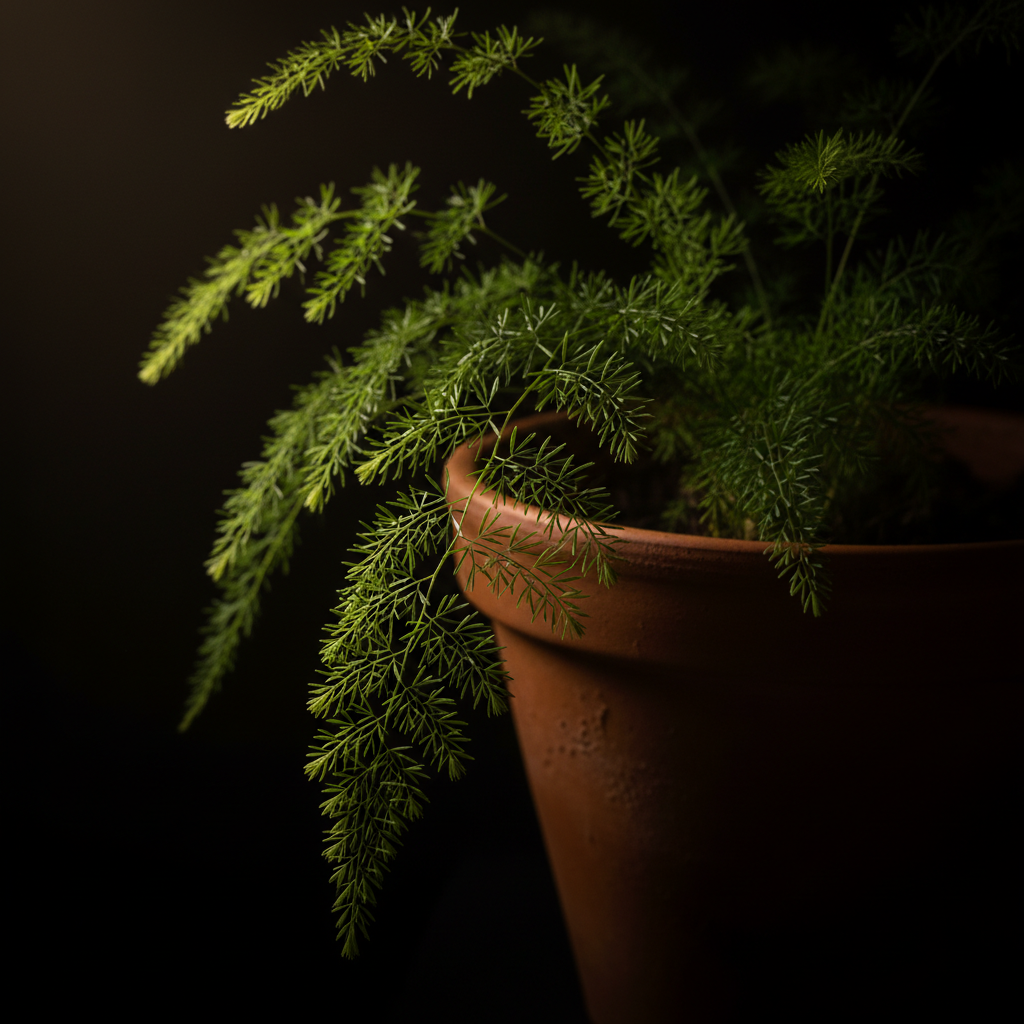
Lace Fern (Plumosus)
Quite different in character, the lace fern produces delicate, flat, feathery sprays of extremely fine foliage that look like green lace, on a wiry climbing habit. Prized by florists as a filler, it is daintier and a little more humidity-loving than the robust foxtail.
Variety Profiles in Detail
Sprenger’s Asparagus Fern (Asparagus densiflorus ‘Sprengeri’)
Sharing the foxtail’s exact species, ‘Sprengeri’ is its looser, wilder sibling. Rather than building neat vertical plumes it throws out long, arching stems that trail and tumble, studded with small flat needles and the occasional fine spur. It is even more vigorous and forgiving than the foxtail, tolerating brighter light and drier soil, and is the classic choice for a cascading hanging display.
Lace Fern (Asparagus setaceus)
The lace fern, sometimes labelled ‘Plumosus’, is the most delicate-looking member of the group, with flattened, horizontally held sprays of needle-fine foliage that genuinely resemble lace or fine fern fronds. As it matures it develops a climbing, twining habit and can send up surprisingly tall, wiry stems. It appreciates slightly higher humidity than the foxtail and is more prone to browning in very dry air.
Ming Fern (Asparagus retrofractus)
The ming fern is the architectural oddity of the family, carrying soft, rounded pom-pom tufts of fine foliage along zigzagging, slightly woody stems. Slower growing and more upright and tree-like in habit, it makes an unusual specimen plant and shares the same easy, drought-tolerant care as its relatives.
Choosing the Right Variety for Your Space
Let the form guide your choice. If you want a bold, self-contained sculptural shape on a table or plant stand, the upright foxtail is unbeatable. For a trailing display from a shelf or hanging basket, reach for the cascading ‘Sprengeri’. If you are after something soft, fine and a little romantic to fill a brighter, more humid spot, the lace fern fits beautifully, while the ming fern suits anyone wanting an unusual upright accent. All of them share the same forgiving nature, so your decision is really about silhouette and where in the room the plant will live.
Frequently Asked Questions
Is the foxtail fern actually a fern?
No. Despite the name, the foxtail fern is not a true fern at all. It is Asparagus densiflorus ‘Myersii’, a member of the asparagus family and a relative of edible asparagus. True ferns reproduce by spores, whereas the foxtail fern flowers and sets seed, and the fine green points along its stems are cladodes, which are modified stems, rather than true leaves.
Why is my foxtail fern dropping needles everywhere?
Shedding cladodes is the plant’s classic stress response, and it almost always points to a watering or light problem. The usual culprits are underwatering or letting the soil dry out completely, too little light, very dry air from central heating, or a sudden change in conditions such as a move to a new spot. Correct the underlying cause, and the plant will push out fresh growth, though the bare stems themselves will not re-needle.
Is the foxtail fern safe around cats and dogs?
No, it is considered toxic to pets. The plant contains saponins that can cause vomiting, diarrhoea and abdominal discomfort if the foliage or berries are eaten, and the sap can irritate skin on contact. The red berries are the most dangerous part. Keep the plant well out of reach of curious cats, dogs and small children, and clear away any fallen berries.
How often should I water a foxtail fern?
There is no fixed schedule, because it depends on light, warmth and season, but as a guide water when the top 2 to 3 cm (about 1 inch) of soil has dried out in spring and summer, which might mean once or twice a week. In winter, let the soil dry out further and water much less often. Always check the soil with your finger before watering rather than relying on a calendar.
Why are the tips of my foxtail fern turning brown?
Browning tips usually signal dry air, inconsistent watering, or a build-up of mineral salts from tap water or fertiliser. Try raising the humidity around the plant, keeping your watering more even so the soil never swings between bone dry and sodden, and flushing the pot thoroughly with plain water a few times a year to wash out accumulated salts.
Can I grow a foxtail fern from a cutting?
No. Stem and plume cuttings will not root, because the cladodes have no ability to form roots. The only reliable way to make new plants vegetatively is to divide the tuberous crown of a mature plant, ideally in spring. You can also grow new plants from the seeds inside the ripe red berries, though that is a slower process.
Can a foxtail fern live outdoors?
In warm, frost-free climates it grows happily outdoors year-round in bright, partly shaded positions, and in some regions it is even considered invasive. In cooler climates it can spend the summer outside in a sheltered, shaded spot but must come indoors before temperatures fall, since it is damaged by cold below about 7 degrees Celsius (45 degrees Fahrenheit) and will not survive frost.
How big does a foxtail fern get?
As a houseplant a foxtail fern typically reaches around 45 to 60 cm (18 to 24 inches) in height and a similar spread, forming a rounded mound of plumes. Grown outdoors in ideal conditions it can become larger and more sprawling. Individual plumes commonly reach 30 to 60 cm (12 to 24 inches) long, arching outward from the dense central crown.






