
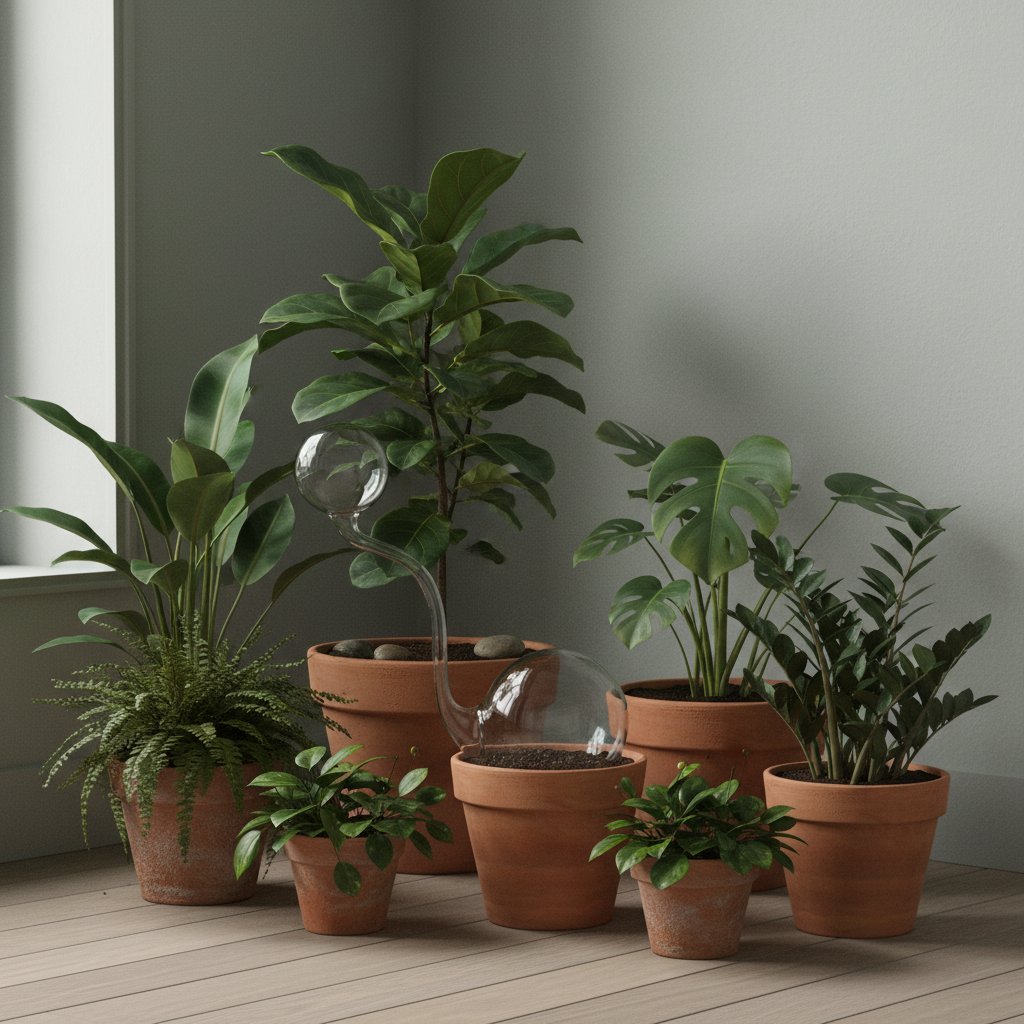
- Quick Reference: Vacation Plant Care
- Start a Few Days Before You Leave
- Group Plants to Slow Drying
- Water Thoroughly, Then Let Drain
- Use Self-Watering Methods Carefully
- Leave Clear Instructions for Plant-Sitters
- What to Do When You Return
- Frequently Asked Questions
Houseplants are surprisingly tolerant of a short holiday, provided you do not panic-water them into a swamp before leaving. Most vacation disasters happen because the plant owner tries to be generous at the last minute. Unfortunately, roots do not interpret a flooded pot as affection.
The best vacation plan is simple: prepare plants a few days ahead, reduce stress while you are away, and use slow watering only where it is genuinely needed. UGA Cooperative Extension recommends grouping container plants in a cool, shady area to create a more humid microclimate, reduce heat and slow soil drying.[1]
Quick Reference: Vacation Plant Care
| Trip length | Best approach | Extra caution |
|---|---|---|
| 2–4 days | Water only plants that are actually dry before leaving. | Do not water everything “just in case.” |
| 5–10 days | Group plants, move them out of harsh sun and use wick systems for thirsty plants. | Test any watering device before the trip. |
| 2+ weeks | Ask a reliable person to check plants or set up tested self-watering methods. | Written instructions prevent heroic overwatering. |
| Hot summer trip | Reduce heat and direct sun exposure. | Plants dry faster in high light and warmth. |
| Winter trip | Avoid cold windows and draughts. | Plants in lower light use less water. |
Start a Few Days Before You Leave
Do not begin vacation care on the way to the airport. Check each plant three to five days before leaving. Remove dead leaves, inspect for pests, and water only when the potting mix indicates the plant needs it. A plant that is already wet should not be watered again simply because your suitcase is packed.
Plants in low light use less water, while plants in high light and warm locations dry more quickly.[2] This means a plant beside a bright summer window may need different preparation than a plant in a cooler room away from direct sun.
Group Plants to Slow Drying
Grouping plants together can slightly raise the local humidity and reduce drying speed. UGA Extension specifically recommends grouping container plants in a shady, cool area to conserve moisture and reduce heat stress.[1]
This does not mean hiding every plant in the darkest room. A week in lower light is usually manageable for many foliage plants, but a month in near-darkness is not a holiday; it is a hostage situation. Choose a bright but indirect location where plants are protected from harsh sun.
Pro Tip — Make a Vacation Zone: Put plants with similar watering needs together before leaving. Your future plant-sitter will thank you, and your cactus will not be treated like a fern.
Water Thoroughly, Then Let Drain
Before leaving, water plants that need it thoroughly until excess water runs from the drainage holes. Let them drain completely, and empty saucers and cachepots. Standing water can suffocate roots and encourage rot.
University of Illinois Extension recommends discarding water that collects in saucers after watering and checking decorative outer pots so they do not fill with water.[3] That advice becomes even more important before travel because a plant can sit in stagnant water for days without anyone noticing.
Use Self-Watering Methods Carefully
Slow-release watering tools can help, but they should be tested before the trip. UGA Extension describes several options, including inverted bottles, watering globes and wick systems that move water from a reservoir to potting soil by capillary action.[1]
A wick system can be useful for moisture-loving plants. Place a water reservoir slightly higher than the pots, wet the cord fully, submerge one end in the water and bury the other end a few centimetres into the potting mix. Test it for several days before relying on it.
| Method | Best for | Risk |
|---|---|---|
| Wick system | Moisture-loving foliage plants | Too much or too little flow if not tested. |
| Watering globe or bottle | Medium-sized plants in evenly moist mix | Can empty too quickly in loose soil. |
| Plant-sitter | Longer trips or valuable collections | Overwatering if instructions are vague. |
| Moving to cooler bright shade | Most foliage plants | Too little light if left too long. |
| Bath/sink soaking methods | Only specific short-term uses | High rot risk if plants sit in water. |
Leave Clear Instructions for Plant-Sitters
If someone will check your plants, do not say, “Water them if they look sad.” Sadness is not a measurement. Instead, label the plants or group them by need. Write simple instructions such as: “Check every five days. Water only if the top 3 cm of soil is dry. Empty saucers.”
Most plant-sitter damage comes from kindness. People who do not grow houseplants often assume watering is always helpful. It is not. Sometimes the most helpful thing they can do is admire the plants from a respectful distance.
What to Do When You Return
Do not immediately fertilise, repot or prune everything. Check moisture first. Remove any yellow or dead leaves, return plants gradually to their usual locations, and water only where needed. If a plant has dried severely, rehydrate it gently; very dry potting mix may repel water at first and need repeated slow watering.
Frequently Asked Questions
| Question | Answer |
|---|---|
| Should I water every plant before vacation? | No. Water only plants that need it. Wet plants should be left alone. |
| Can houseplants survive a week without care? | Many can, especially in moderate light and temperatures. Small pots and thirsty plants may need help. |
| Should I move plants away from windows? | Move them away from harsh direct sun, but avoid leaving light-loving plants in darkness. |
| Is a plant-sitter better than a device? | For longer trips, yes, if the person follows clear instructions and avoids overwatering. |



