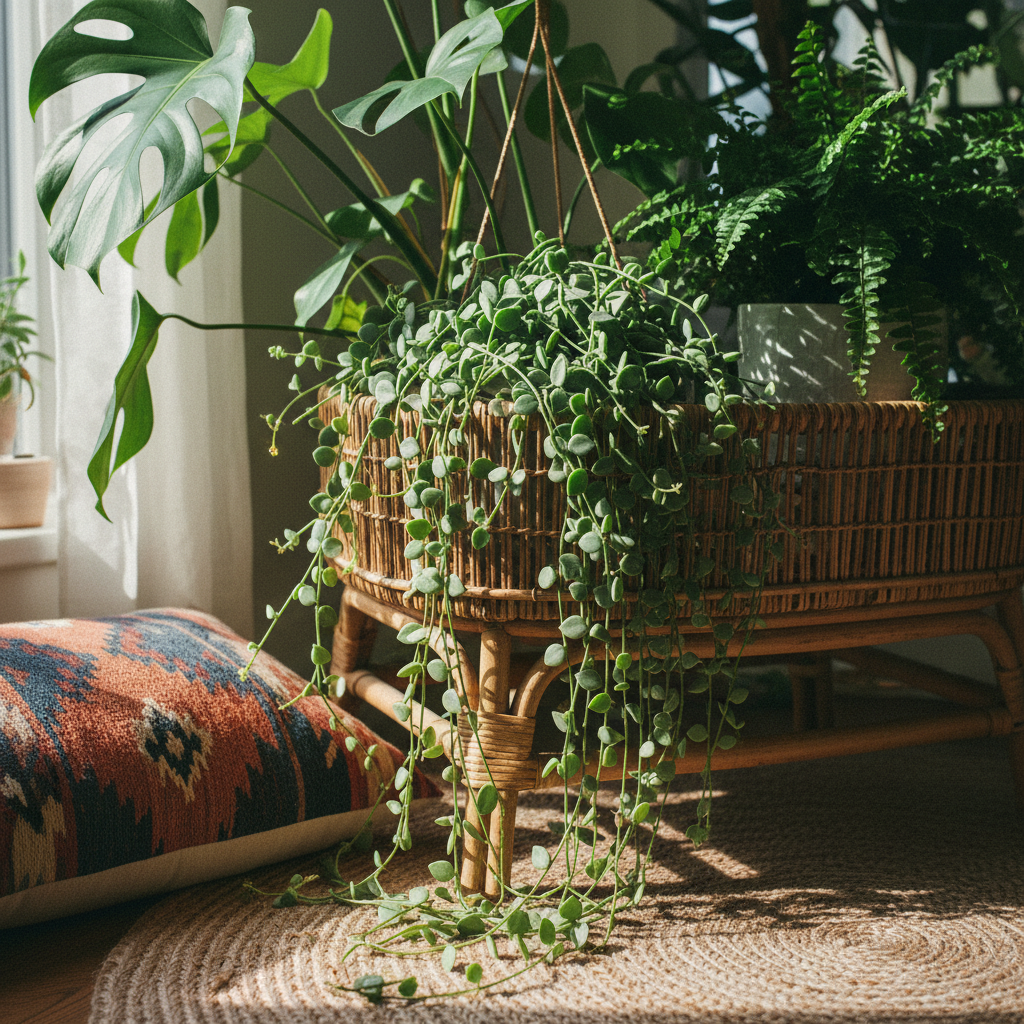
Few trailing houseplants look quite as deliberate as the string of nickels. Each stem hangs like a strand of beaten coins, the small round leaves overlapping in neat rows of silvery sage. Dischidia nummularia is an epiphyte by nature, a plant that spends its wild life clinging to the bark of rainforest trees rather than rooting in the ground, and that single fact explains almost everything about how to keep it happy indoors. Understand that it wants air around its roots, warmth on its leaves and humidity in the space between, and the rest of its care falls into place.
This guide walks through the difference between merely keeping a string of nickels alive and genuinely helping it thrive, from the light it prefers to the airy mix it demands, with honest notes on the mistakes that most often send it into decline.

Quick Reference
Use the contents below to jump to any section, then return here for the at-a-glance summary whenever you need a quick reminder.
- Why grow a string of nickels
- Light
- Watering
- Soil and potting
- Fertilising
- Propagation
- Pests and problems
- Varieties
- Frequently asked questions
| Care factor | What it wants |
| Light | Bright, indirect light; tolerates a little morning sun |
| Water | When the mix is almost dry; less in winter |
| Soil | Very airy, fast-draining epiphytic mix |
| Humidity | High, ideally 60 per cent or more |
| Temperature | 18 to 29 degrees Celsius (64 to 84 Fahrenheit) |
| Feeding | Dilute feed monthly in the growing season |
| Toxicity | Generally regarded as non-toxic to cats and dogs |
| Difficulty | Moderate, mostly about getting watering right |
Why Grow a String of Nickels as a Houseplant
The string of nickels earns its place on a shelf through quiet charm rather than drama. Where many trailing plants reach for length with sparse, leggy growth, Dischidia nummularia produces dense, evenly spaced foliage that drapes in long curtains of overlapping discs. The effect is architectural and soft at once, and a well-grown specimen in a hanging pot can trail a metre (about three feet) or more, the silvery cast of the leaves catching light in a way that flat green plants never quite manage.
It belongs to the milkweed family, Apocynaceae, and shares that family’s habit of growing as an epiphyte. In the rainforests of southern Asia and tropical Australia it scrambles up tree trunks and along branches, drawing moisture from humid air and brief downpours rather than from soggy ground. Some populations form a remarkable partnership with ants, offering shelter among their stems in exchange for nutrients, which is why the plant is sometimes grouped loosely with the “ant plants.” None of that complicates indoor care, but it does frame the right instincts: this is a plant adapted to fast-drying conditions and constant air movement, not to the steady damp that suits a fern.
For the grower, the appeal is threefold. It is compact enough for a small home yet generous in trailing length, it asks for little once its drainage is sorted, and it is widely regarded as safe around cats and dogs, which makes it an easy choice for households where more toxic trailing plants are a worry. The trade-off is a need for humidity and warmth that suits some homes far better than others, a point worth weighing honestly before you buy.
Pro Tip — Give it height: Because the trailing stems are the whole point, place a string of nickels where it can hang freely, on a high shelf, in a hanging planter or at the top of a plant stand. Stems left to pool on a surface stay damp underneath and can rot at the contact points.
Light
Light is where the difference between survival and vigour begins. As an epiphyte growing beneath a forest canopy, the string of nickels is built for bright, filtered light, the kind that reaches a branch through a screen of leaves above. Indoors, that translates to a position with plenty of brightness but little or no harsh direct sun on the foliage for most of the day.
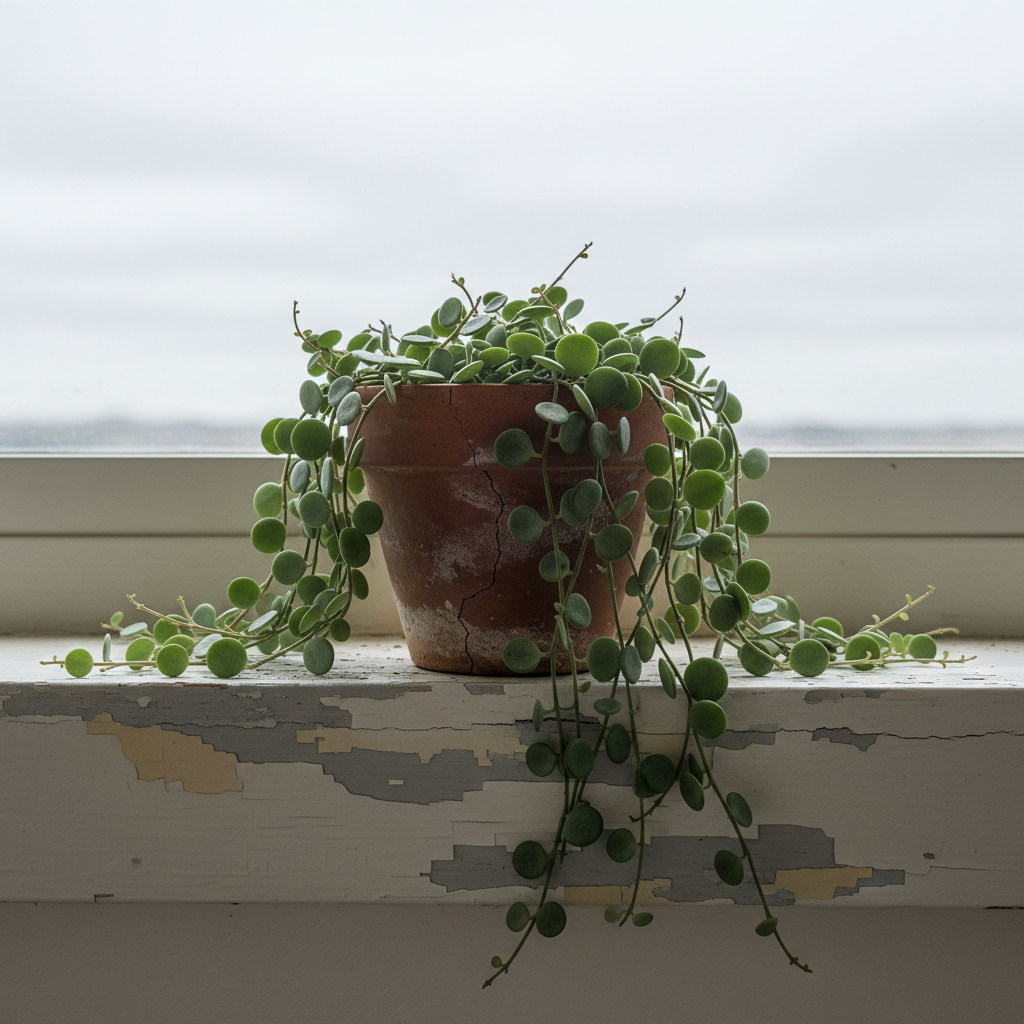
An east-facing window is close to ideal, delivering gentle morning sun that the plant takes happily before the day turns hot. A bright north window in the northern hemisphere works well too, giving steady light without intensity. South and west windows can be excellent provided the plant sits a little back from the glass or behind a sheer curtain, because prolonged midday and afternoon sun will scorch the thin-skinned coins, leaving them bleached or crisped at the edges. In a very dim corner the plant will not die quickly, but it will stretch, the spaces between leaves widening into bare stem and the dense, beaded look giving way to something thin and disappointing.
Watch the plant for its own verdict. Leaves that stay tightly spaced, plump and faintly silvered are getting the light they want. Stems that elongate with growing gaps are reaching for more, and leaves that yellow or develop pale dry patches are getting too much direct sun. If your home simply lacks bright spots, a full-spectrum LED grow light placed thirty centimetres (about a foot) above the plant for ten to twelve hours a day will keep growth compact through the darkest months.
Watering
If a string of nickels is going to fail, watering is almost always the reason. The semi-succulent leaves store moisture, and the epiphytic roots are accustomed to drying quickly between rains, so the plant copes far better with a missed watering than with a constantly wet root ball. The governing principle is simple: water thoroughly, then let the mix dry out almost completely before watering again.
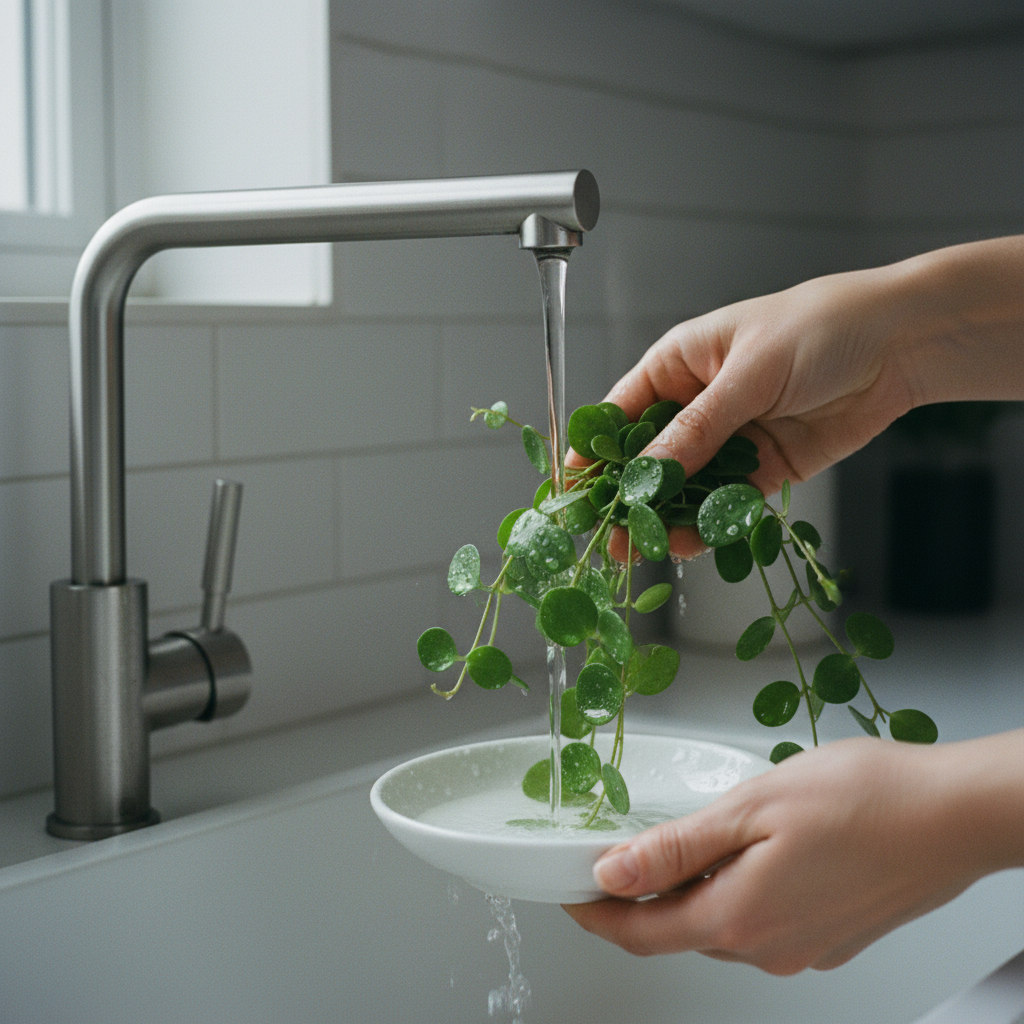
When you do water, do it properly. Take the plant to a sink and let water run through the mix until it streams freely from the drainage holes, which wets the whole root zone and flushes out accumulated mineral salts. Let every drop drain away before the pot goes back in place, because a saucer of standing water is the surest route to rot. In the warm growing months this rhythm might mean watering every seven to ten days; in winter, with lower light and cooler temperatures, it can stretch to every two or three weeks. Always let the mix, not the calendar, make the decision. Push a finger into the substrate, or lift the pot to feel its weight, and water only when it is nearly dry throughout.
The leaves themselves are an honest gauge. Plump, firm coins mean the plant is well hydrated. Leaves that look slightly flattened or softly wrinkled are asking for a drink and will firm up within a day of watering. Leaves that turn yellow, translucent or mushy are the opposite warning, a sign of too much water, and the right response is to stop watering, check the roots and improve drainage rather than to water more.
Warning — Soft, yellow leaves mean stop: Overwatering and a yellowing, translucent set of leaves go hand in hand. If you see them, hold off watering entirely, ease the plant out of its pot, and check for dark, mushy roots. Caught early, trimming the rot and repotting into fresh airy mix usually saves the plant.
Humidity matters as much as the water in the pot. Coming from steamy forests, the string of nickels is happiest above sixty per cent relative humidity and will sulk in the dry air of a heated winter room. Grouping it with other plants, standing it near a humidifier or keeping it in a naturally humid room such as a bright bathroom all help. Misting offers only fleeting relief and, on a plant prone to rot, can do more harm than good if water lingers in the crowded leaf joints, so favour ambient humidity over a spray bottle.
Soil and Potting
Ordinary potting compost is the wrong home for an epiphyte, and packing a string of nickels into dense, water-retentive soil is one of the quickest ways to lose it. The roots evolved to grip bark and breathe in open air, so they need a substrate that drains in seconds and never stays sodden. Think of building a mix that mimics the loose debris caught in the fork of a tree rather than the earth of a garden bed.
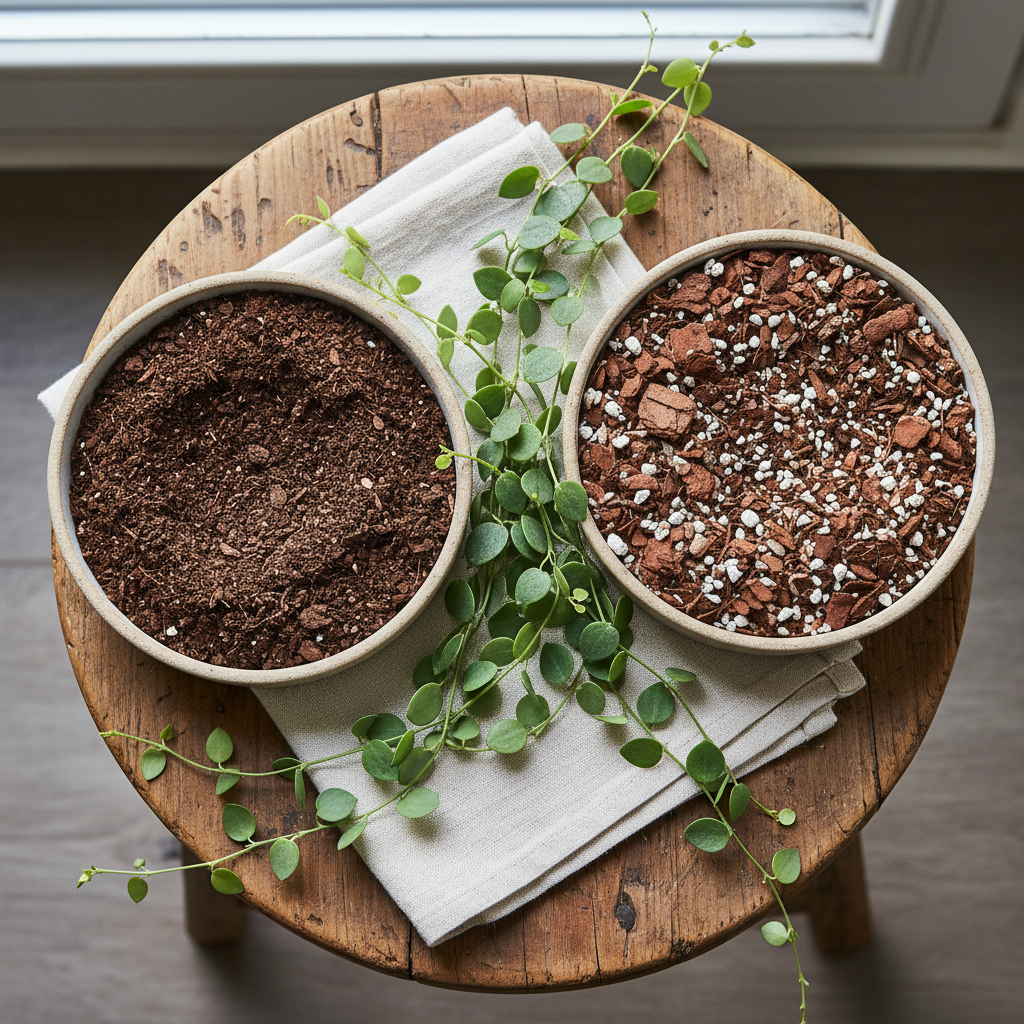
A reliable blend is roughly half orchid bark, a quarter perlite or pumice and a quarter coco coir or a handful of sphagnum moss to hold just enough moisture without staying wet. Many growers succeed with an off-the-shelf orchid or aroid mix used straight from the bag, which already balances chunk and grip. Some grow the plant on a slab of bark or in a hanging basket lined with sphagnum, closer to its wild habit, and this works beautifully if you can keep the humidity high. Whatever the recipe, the test is the same: water should run straight through and the mix should feel barely damp, never soggy, an hour later.
Choose a pot with generous drainage holes and resist the urge to oversize it. A snug pot dries faster and is far safer than a large one that holds a reservoir of damp mix the small root system cannot use. Terracotta is a sound choice because its porous walls wick moisture away and speed drying. Repot only every couple of years, or when the plant has clearly filled its container, and do it in spring as growth picks up. When you repot, handle the brittle stems gently, settle the plant at the same depth it grew before, and water lightly at first while new roots establish.
Fertilising
The string of nickels is a light feeder, drawing modest nutrition from the scant organic matter that collects around its roots in the wild. Indoors it needs only a gentle supplement during the growing season, and overfeeding does more harm than going without, because concentrated fertiliser salts can burn the fine roots and scorch the leaf margins.
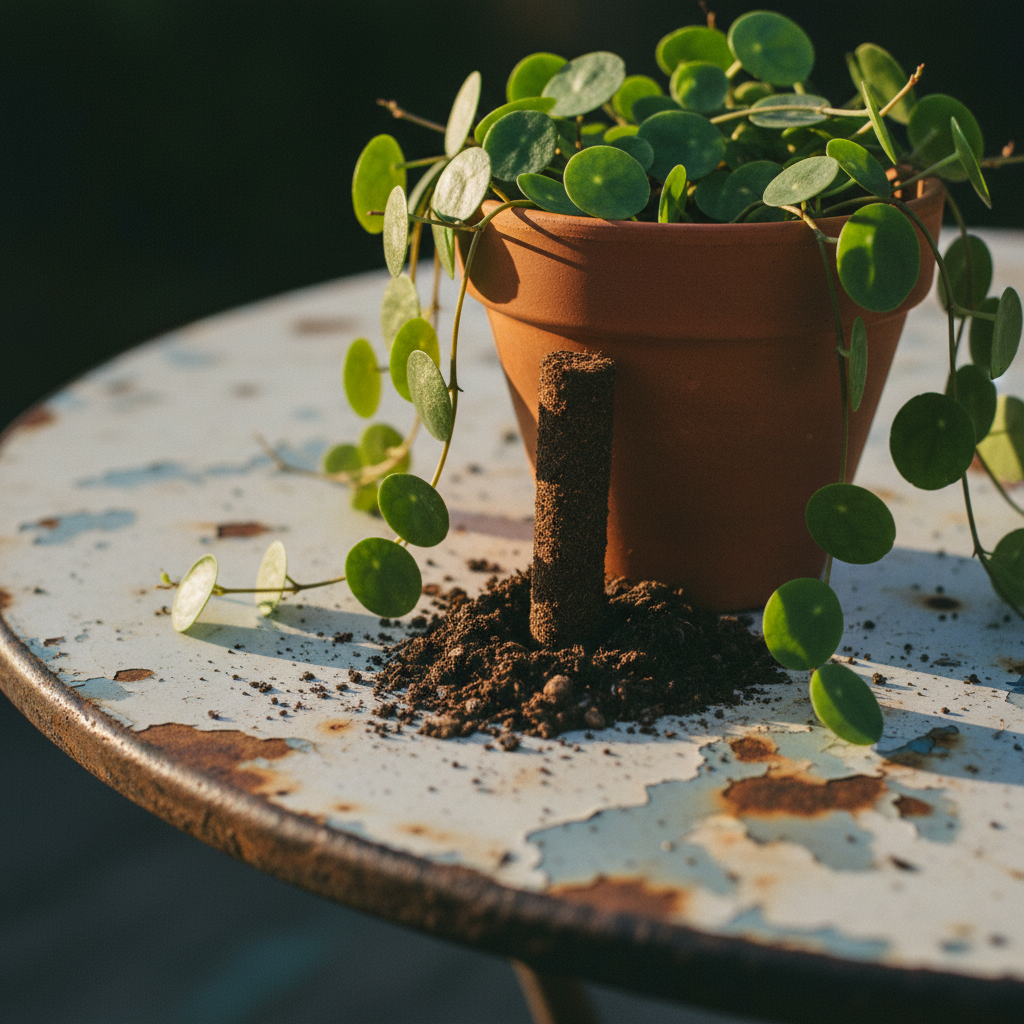
From spring through early autumn, feed roughly once a month with a balanced liquid houseplant fertiliser diluted to half the strength the label suggests. Apply it to already-moist mix rather than to dry roots, which protects against burn and spreads the nutrients evenly. A diluted liquid feed is easier to control than slow-release granules on a plant this small, though a single, sparing stick of organic fertiliser at the pot edge works for growers who prefer to feed and forget. Through autumn and winter, when growth slows or stops, suspend feeding entirely and let the plant rest.
Watch for the signs of too much. A white crust on the mix surface or the pot rim points to salt build-up, easily cured by flushing the pot thoroughly with plain water. Brown, scorched leaf tips can also signal excess feed. When in doubt, feed less; a slightly underfed string of nickels stays healthy, while an overfed one suffers.
Propagation
One of the pleasures of this plant is how readily it multiplies from stem cuttings, so a single specimen can fill a hanging basket or furnish gifts for friends within a season. Unlike clumping plants that are divided at the root, the string of nickels is propagated by rooting lengths of its trailing stems, each of which carries the nodes from which new roots emerge.
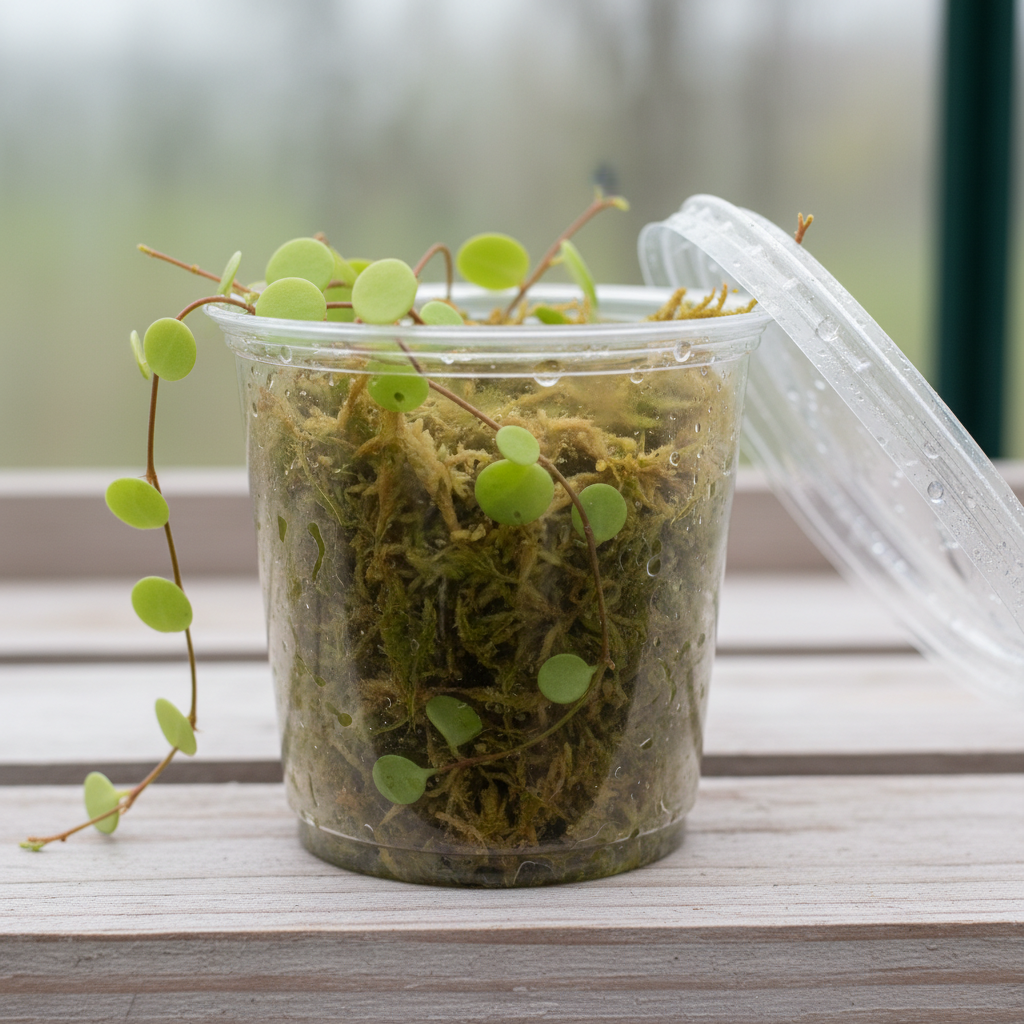
The most dependable method uses damp sphagnum moss in a covered container, which surrounds the cut nodes with the humid warmth they need to root.
- Using clean scissors, cut a healthy length of stem with at least three or four nodes, the small points where leaves meet the stem.
- Strip the leaves from the lowest one or two nodes so that bare stem will sit against the rooting medium.
- Lay the cutting on a bed of pre-moistened sphagnum moss in a clear cup or tray, pressing the bare nodes gently into contact with the moss.
- Cover loosely with a lid or clear bag to trap humidity, leaving a small gap for air, and set it in bright, indirect light.
- Keep the moss lightly damp but never waterlogged, and within a few weeks roots will appear at the nodes.
- Once roots are a couple of centimetres long, pot the cutting into the same airy mix you use for mature plants and care for it as normal.
Cuttings will also root in a small jar of water, with the bare nodes submerged and the leaves kept dry, though water-grown roots can be slightly more delicate when moved to mix. Whichever route you choose, propagate in spring or summer when the plant is in active growth, take more than one cutting to hedge against the occasional failure, and be patient, because warmth and humidity do the work and rushing the move to soil is the commonest cause of a lost cutting.
Pests and Problems
A healthy, well-grown string of nickels is not especially prone to pests, but the dense, crowded foliage gives sap-sucking insects plenty of sheltered joints to hide in, so regular inspection pays off. The plant’s more serious troubles, though, are almost always self-inflicted through watering, and learning to read the leaves quickly tells you which problem you face.
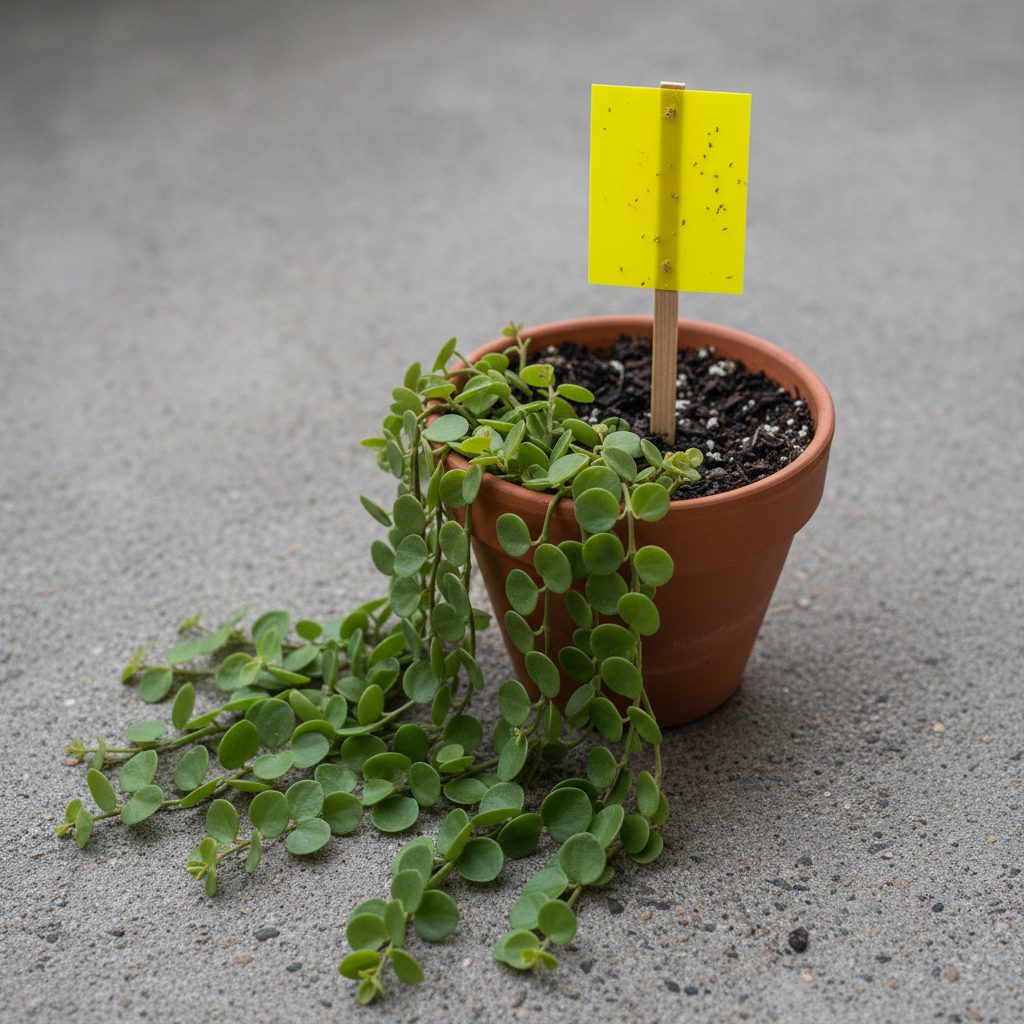
Mealybugs are the most likely visitor, appearing as small white cottony tufts tucked into the leaf joints. Aphids and spider mites turn up occasionally, the latter announced by fine webbing and a stippled, dusty look to the leaves, usually in air that has grown too dry. Treat any infestation early by wiping the insects away with a cotton bud dipped in diluted isopropyl alcohol and following up with insecticidal soap or a horticultural oil, repeated weekly until the pest is gone. Fungus gnats, those small flies drifting up from the mix, are less a pest of the plant than a symptom of soil kept too wet, and they fade once you let the mix dry properly between waterings, with yellow sticky traps helping to clear the adults.
The most common disorders have nothing to do with insects. Yellowing, soft or translucent leaves point almost without exception to overwatering and the root rot that follows, and the cure is to dry the plant out, check the roots and improve drainage. Shrivelled, wrinkled leaves that do not recover after watering can signal the opposite, a root system too damaged to take up moisture, often itself the aftermath of earlier overwatering. Leggy stems with widening gaps between leaves mean too little light, while crisp brown leaf edges suggest sun scorch or air that is simply too dry. Read each symptom as a message about conditions, adjust the one factor at fault, and the plant usually rights itself.
| Symptom | Likely cause | Fix |
| Yellow, soft, translucent leaves | Overwatering, root rot | Dry out, check roots, repot in airy mix |
| Wrinkled leaves that stay shrivelled | Damaged roots, underwatering | Inspect roots, water gently, raise humidity |
| Long stems with wide leaf gaps | Too little light | Move to brighter, indirect light |
| Crisp brown leaf edges | Sun scorch or dry air | Shade from midday sun, raise humidity |
| White cottony tufts in joints | Mealybugs | Dab with alcohol, treat with insecticidal soap |
Varieties
The plain species is the form most often sold, and for good reason, but a couple of variations are worth seeking out for collectors who want something a little different. The two below are the ones you are most likely to encounter.
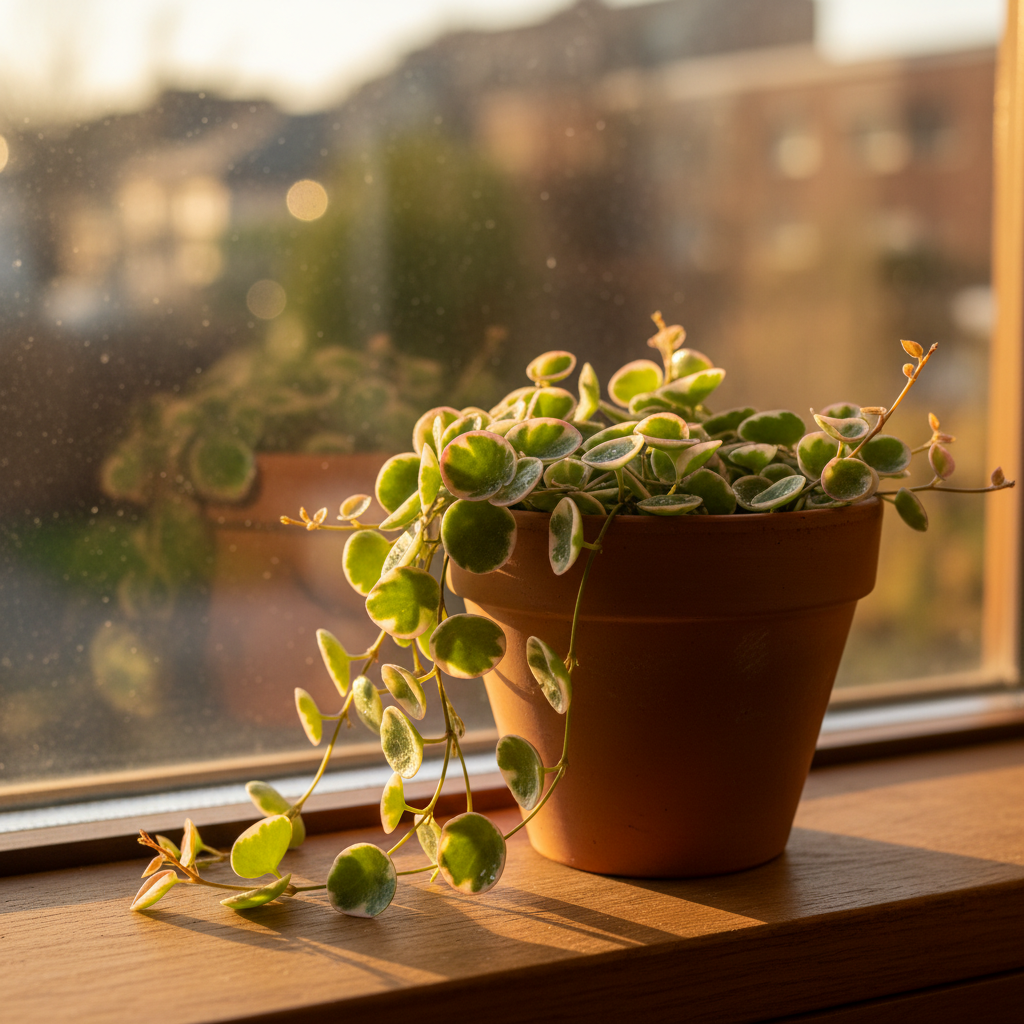
Variegata
The variegated string of nickels edges each coin in creamy white, often blushing pink where light strikes the new growth. It is slower and a little more demanding than the species, needing bright indirect light to hold its colour without scorching, but the soft marbled effect is unmistakable and highly prized among collectors.
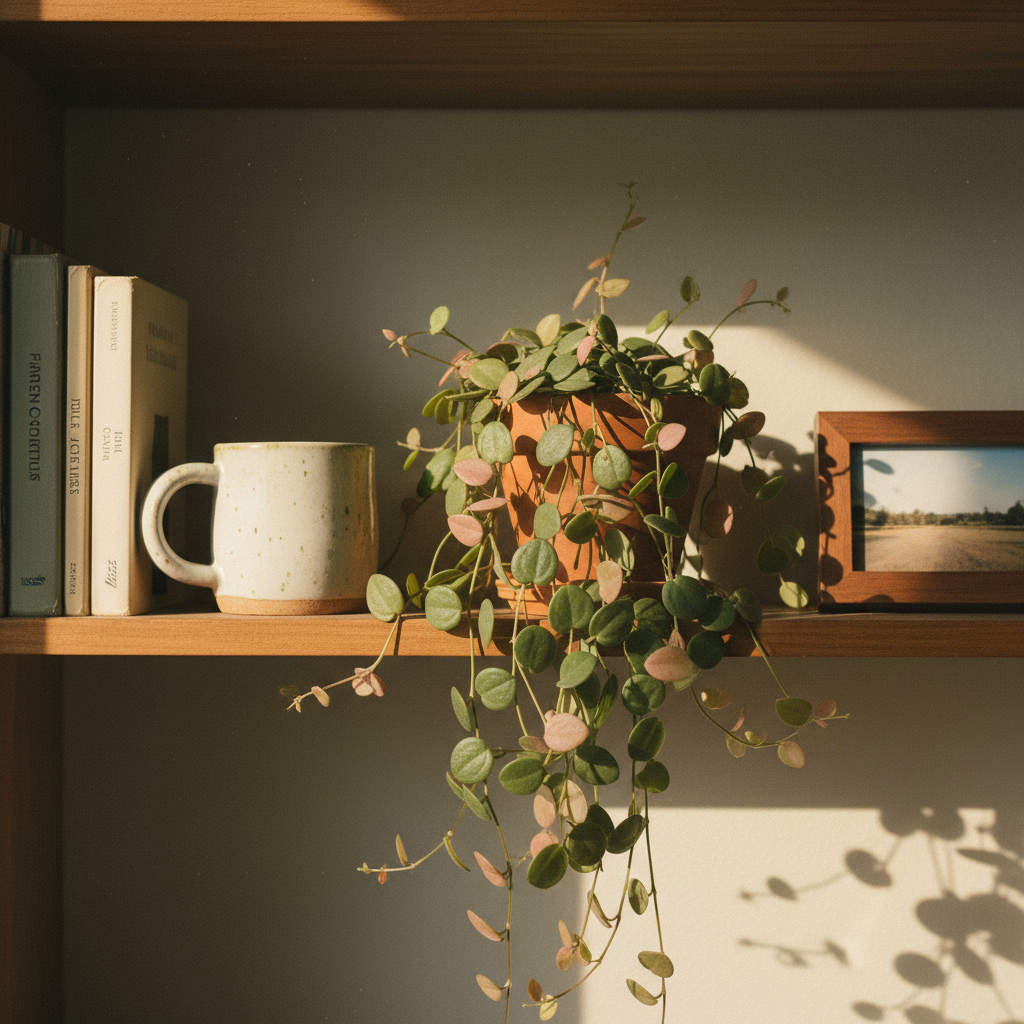
Oiantha
Often labelled Dischidia nummularia ‘Oiantha’, this form carries larger, slightly more elongated coins that flush a warm bronze or pink on fresh growth before settling to green. It trails densely and grows with the same easy vigour as the species, making it a rewarding choice for anyone who wants a fuller, more colourful curtain of foliage.
Frequently Asked Questions
Is the string of nickels toxic to cats and dogs?
Dischidia nummularia is generally regarded as non-toxic to cats and dogs and is widely sold as a pet-friendly trailing plant. As with any houseplant, it is sensible to discourage pets from chewing it, since the milky sap common to the wider family can cause mild stomach upset if eaten in quantity, but it is not considered a serious hazard.
Why are my string of nickels leaves wrinkling?
Wrinkled, flattened coins usually mean the plant is thirsty, and they should plump up within a day of a thorough watering. If they stay shrivelled even after watering, the roots may be damaged, often from earlier overwatering, leaving them unable to take up moisture. In that case, check the roots, water carefully and raise the humidity while the plant recovers.
How often should I water a string of nickels?
Water only when the mix is almost completely dry, which in warm, bright months tends to fall every seven to ten days and in winter every two to three weeks. Rather than following a fixed schedule, check the substrate with a finger or by the weight of the pot, and always let excess water drain away fully so the roots never sit wet.
Why is my string of nickels growing leggy?
Stems that stretch with widening gaps between the leaves are reaching for more light. Move the plant to a brighter spot with plenty of indirect light, or add a grow light through the darker months, and new growth will return to the dense, beaded look. Pinching back the longest leggy stems also encourages fuller branching.
Does the string of nickels need high humidity?
Yes. As a tropical epiphyte it prefers humidity above sixty per cent and can struggle in the dry air of a heated room. A humidifier, a pebble tray, grouping it with other plants or a naturally humid spot such as a bright bathroom all help it thrive. Steady ambient humidity is far more useful than occasional misting, which can leave water sitting in the crowded leaf joints.