
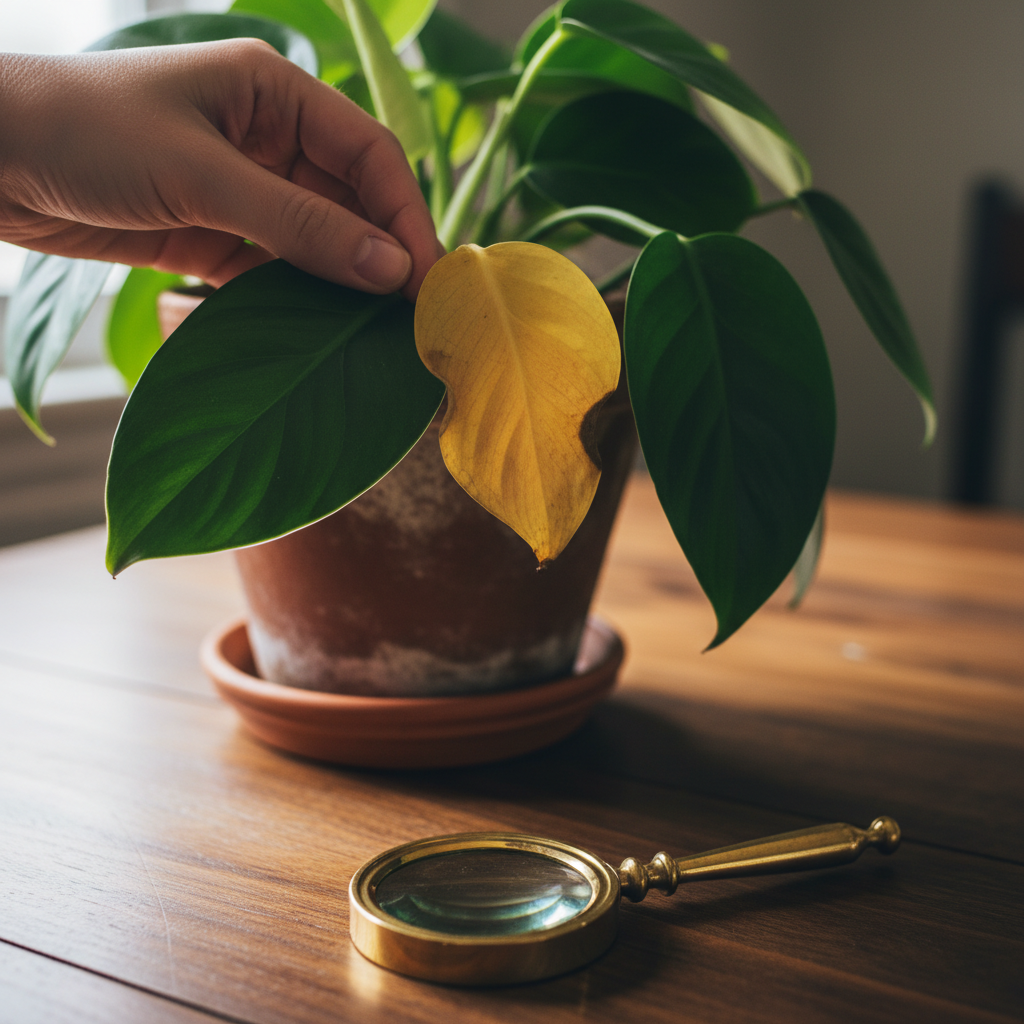
- Quick Reference: Symptom Decoder
- Yellow Leaves
- Brown Tips and Edges
- Drooping
- Leaf Drop After Moving
- Pests: The Usual Suspects
- When the Problem Is the Pot
- The Three-Step Plant Triage Method
- Frequently Asked Questions
Houseplants do not suddenly become dramatic for no reason. Yellow leaves, brown tips, drooping stems and sticky foliage are all messages. The difficulty is that plants have a limited vocabulary. The same symptom can mean several different things, which is why confident diagnosis starts with context rather than panic.
Before changing anything, ask four questions. Has the light changed? Has the soil stayed wet or dry for longer than usual? Has the plant recently been moved, repotted or fertilised? Are there visible pests? Most indoor plant problems fall somewhere inside those answers.
Quick Reference: Symptom Decoder
| Symptom | Common causes | First check |
|---|---|---|
| Yellow lower leaves | Overwatering, age, low light, nutrient issues | Soil moisture and drainage. |
| Brown crispy tips | Dry air, salt buildup, underwatering, hard water | Watering pattern and mineral crust. |
| Wilting in wet soil | Root rot, low oxygen, damaged roots | Smell soil and inspect roots. |
| Wilting in dry soil | Underwatering, hydrophobic mix, rootbound pot | Pot weight and rootball condition. |
| Sticky leaves | Scale, aphids, mealybugs | Undersides, stems and leaf joints. |
| Fine webbing | Spider mites | Leaf undersides and dry dusty conditions. |
| Small black flies | Fungus gnats | Wet soil and decaying organic matter. |
Yellow Leaves
One yellow leaf is not a crisis. Old leaves age, especially lower leaves shaded by newer growth. The pattern matters. If a plant is steadily losing the oldest leaf every now and then while producing healthy new growth, it is probably normal turnover.
Multiple yellow leaves appearing at once usually point to stress. The most common culprit is overwatering or poor drainage. Missouri Extension notes that plants with “wet feet” soon look sick, with symptoms including yellowing or dropping leaves and brown roots.[1] Low light often contributes because a plant in dim conditions uses water slowly, leaving the pot wet for too long.
Yellowing can also follow drought, cold drafts, abrupt moves or lack of nutrients, but do not fertilise first. Fertiliser is not medicine. If the roots are stressed, feeding can make damage worse.
Brown Tips and Edges
Brown tips are frustrating because they are so nonspecific. Dry indoor air can cause them, especially on ferns, palms and calatheas. But mineral salts from fertiliser or hard water can produce the same cosmetic damage. Maryland Extension lists brown leaf tips among the symptoms of soluble salt buildup in potting media.[3]
Check for a white crust on the soil surface, pot rim or drainage holes. If present, leach the pot by running a generous volume of water through the mix and letting it drain fully. If your water is very hard, alternate with rainwater or filtered water where practical. If the room is dry, raise humidity for sensitive plants with a humidifier rather than relying on misting.
Pro Tip — Trim for Looks, Not Healing: A brown tip will not turn green again. You can trim it with clean scissors, following the natural leaf shape, but the real fix is correcting the condition that caused it.
Drooping
Drooping is the symptom most likely to trick people into overwatering. A dry plant droops because cells lack water pressure. An overwatered plant droops because damaged roots cannot deliver water. The leaves look similarly sad, but the soil tells the truth.
If the pot is light and the mix is dry, water thoroughly. If the pot is heavy and wet, stop. Slide the plant out if possible and inspect the roots. Healthy roots are usually pale, firm and earthy-smelling. Rotten roots are brown or black, soft, hollow, and often sour-smelling. Remove dead roots, repot into fresh airy mix if necessary, and improve light and drainage.
Leaf Drop After Moving
Plants acclimate to positions. Leaves orient toward light and adjust to humidity and temperature over time. Missouri Extension notes that abrupt light changes can damage foliage, especially moves into more intense sunlight.[1] A ficus dropping leaves after being moved across the room is not being spiteful. It has lost the conditions those leaves were built for.
Keep care steady and avoid compensating with extra water. If the new position is darker, reduce watering accordingly. If it is brighter, acclimate gradually.
Pests: The Usual Suspects
Indoor pests usually arrive on new plants, cut flowers, produce, open windows or plants summered outdoors. The best defence is inspection. Look under leaves, along stems, at new growth and in leaf joints.
Spider mites cause fine stippling, dull leaves and delicate webbing, especially in warm dry rooms. Mealybugs look like white cottony clusters in crevices. Scale appears as small brown or tan bumps that scrape off reluctantly, often with sticky honeydew below. Aphids cluster on soft new growth. Fungus gnats are tiny flies that breed in persistently damp organic mix; their presence is often a watering clue as much as a pest problem.
For minor infestations, isolate the plant, rinse foliage, remove visible pests with cotton swabs dipped in alcohol where appropriate, and repeat weekly. Insecticidal soap or horticultural oil can help, but coverage and repetition matter more than one heroic spray.
Warning — Quarantine New Plants: Keep new purchases separate for two weeks if you can. Most pest problems are easier to prevent at the doorway than eradicate from a crowded shelf.
When the Problem Is the Pot
If a plant needs watering constantly, wilts soon after a soak, or has roots circling densely at the base, it may be rootbound. If water runs straight through, the mix may be hydrophobic or there may be little mix left. If the plant stays wet for weeks, the pot may be too large, the mix too dense, the light too low, or the container may be trapping runoff.
Repotting solves some problems and creates others if done casually. Only repot when the root environment is part of the diagnosis.
The Three-Step Plant Triage Method
First, stabilise. Move the plant out of direct stress: no scorching sun, no cold draft, no heater blast. Second, inspect. Check soil moisture, drainage, roots and pests before adding anything. Third, change one variable at a time. If you repot, move, fertilise, prune and spray all on the same afternoon, you will never know what helped or what harmed.
Frequently Asked Questions
| Question | Answer |
|---|---|
| Should I cut off yellow leaves? | Yes, once mostly yellow. They will not recover and removing them improves appearance. |
| Are brown spots always disease? | No. Sunburn, cold damage, physical bruising and water stress can all create spots. |
| Can a plant recover from root rot? | Sometimes, if enough healthy roots remain and the plant is moved into an airy mix with better watering. |
| Why are pests returning after treatment? | Eggs and hidden adults survive first treatments. Repeat weekly and inspect nearby plants. |



