
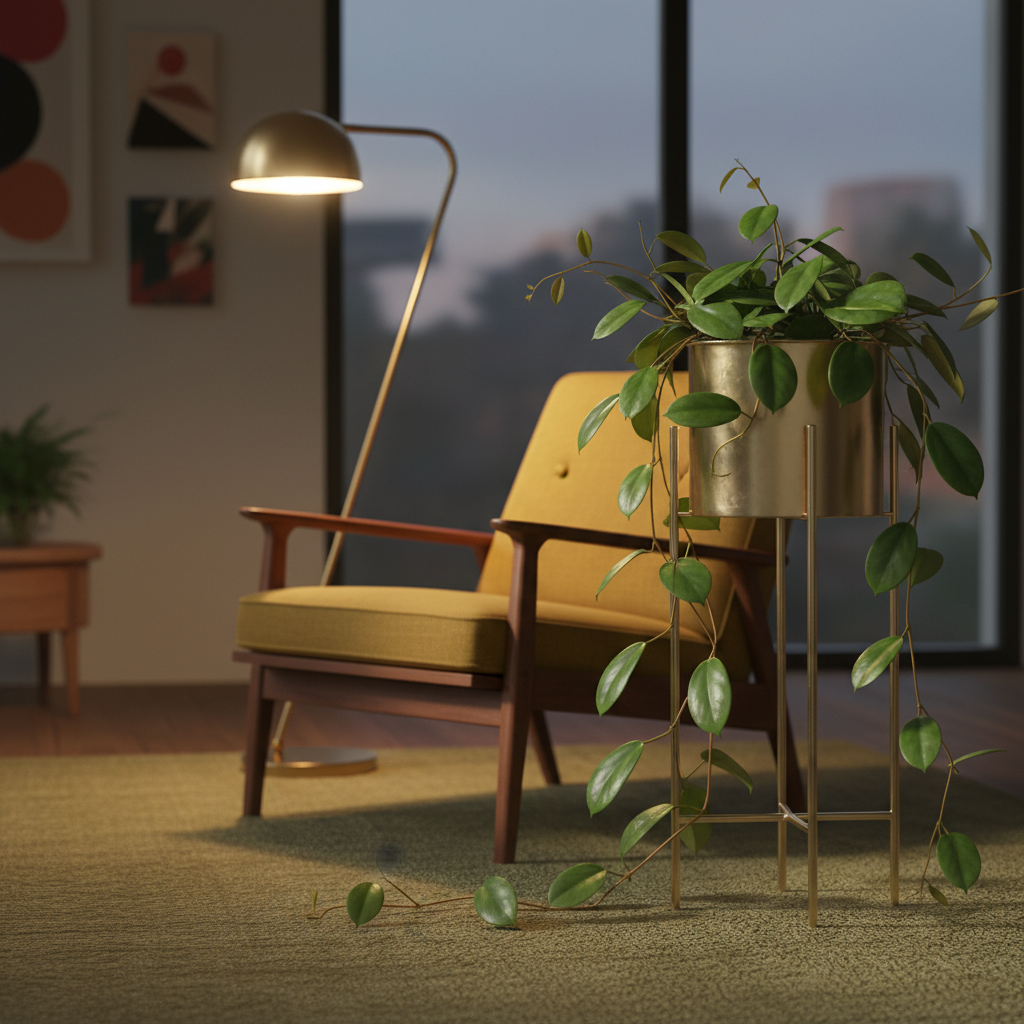
Few houseplants combine the lush, jungly look of a tropical climber with the bulletproof temperament of a hardy survivor as gracefully as the Kangaroo Vine. Known botanically as Cissus antarctica, this Australian native belongs to the grape family Vitaceae and earns its common name from the way its glossy, toothed leaves seem to bound up a trellis on slender reddish stems, propelled by tightly coiled tendrils that grab anything within reach. Gardeners in temperate climates have been growing it indoors since the Victorian era, when it was prized for tolerating the cool, dim drawing rooms of the period, and it has quietly remained a workhorse of the houseplant world ever since.
Where many tropical vines demand bright light, warm temperatures and steady humidity, the Kangaroo Vine asks for surprisingly little. It will survive in a draughty hallway, an unheated conservatory or a corner that gets only filtered north light, and it will thrive given even modestly better conditions. That gap between bare survival and genuine thriving is the heart of this guide. The plant is forgiving enough that almost anyone can keep one alive, but understanding what it actually wants will turn a tired, leggy specimen into a glossy, dense climber that grows fast, fills space generously and stays handsome for years. It is also non-toxic to cats and dogs, which makes it one of the few large vining plants that can be grown freely in homes with curious pets.
Contents
- Quick Reference
- Why Kangaroo Vine Makes an Excellent Houseplant
- Light Requirements
- Watering and Humidity
- Soil, Potting and Repotting
- Fertilising
- Propagation
- Pests and Diseases
- Popular Varieties
- Frequently Asked Questions
Quick Reference: Kangaroo Vine at a Glance
| Botanical name | Cissus antarctica, family Vitaceae |
| Common names | Kangaroo Vine, Kangaroo Ivy, Vine Grape |
| Origin | Rainforests of eastern Australia (New South Wales and Queensland) |
| Mature size indoors | 2 to 3 metres (6 to 10 feet) when climbing; 1 to 1.5 metres (3 to 5 feet) when trailing |
| Growth habit | Evergreen climber with paired tendrils; also looks excellent trailing from a hanging basket |
| Light | Bright indirect light is ideal; tolerates medium and lower light better than most vines |
| Watering | Water thoroughly when the top 2 to 3 cm (1 inch) of soil feels dry; reduce noticeably in winter |
| Temperature | 15 to 24 degrees Celsius (59 to 75 degrees Fahrenheit); will tolerate brief dips to 7 degrees Celsius (45 degrees Fahrenheit) |
| Humidity | Average household humidity of 40 to 60 percent is fine; not a fussy plant |
| Soil | Well-draining loam-based potting mix amended with perlite or coarse grit; pH 5.5 to 7.0 |
| Fertiliser | Balanced liquid feed at half strength every 3 to 4 weeks in spring and summer; none in winter |
| Propagation | Stem tip cuttings root easily in water or moist perlite |
| Toxicity | Considered non-toxic to cats, dogs and humans by the ASPCA |
| Difficulty | Easy; one of the most forgiving large vines available |
Why Kangaroo Vine Makes an Excellent Houseplant
Kangaroo Vine occupies an unusual niche among indoor climbers. Most popular vining houseplants come from tropical lowlands and need consistent warmth, humidity and a long growing season to look their best. Cissus antarctica, by contrast, evolved in the temperate rainforests of eastern Australia, where winters are cool, light levels vary widely under a dense forest canopy and rainfall is reliable but not constant. That heritage gives the plant a remarkable tolerance for the conditions found in ordinary homes and offices, even rooms that are too cool or too dim for the more glamorous tropicals.
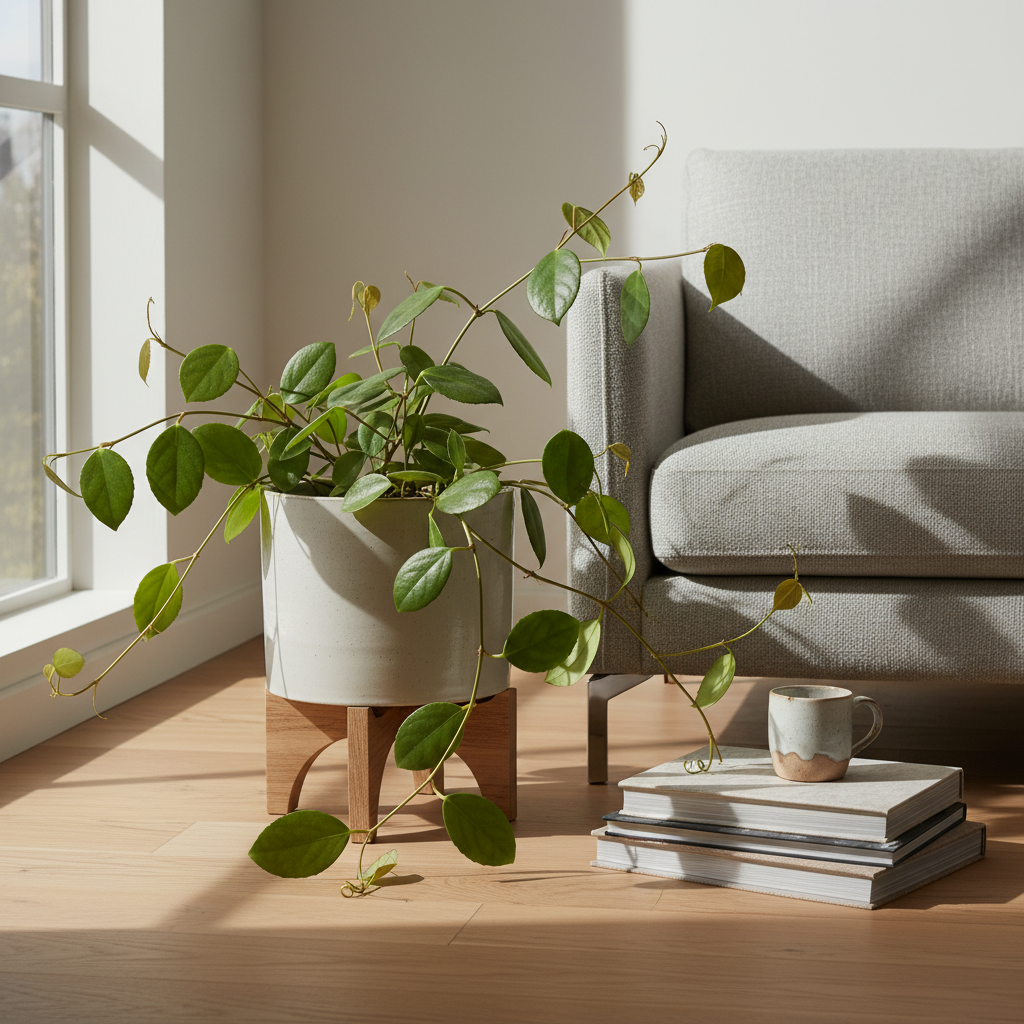
The plant's aesthetic appeal is more subtle than that of a Monstera or a Pothos, but no less rewarding. Its leaves are small to medium-sized, typically 6 to 10 cm (2.5 to 4 inches) long, glossy mid-green above and slightly paler below, with finely serrated margins that catch light along their edges. Each leaf sits on a short petiole that joins a slender, often reddish-brown stem, and at the joint of each leaf you will usually find a pair of tightly coiled tendrils. These are modified stems, not roots, and they will reach out and grasp anything within range: a moss pole, a length of twine, the spokes of a trellis, even a neighbouring picture frame if you let things wander. The overall effect is of a plant that looks tidy and architectural close up but creates a soft, layered curtain of green when grown to size.
For households with pets, the Kangaroo Vine is one of the very few large vining plants that is genuinely safe. Both the American Society for the Prevention of Cruelty to Animals (ASPCA) and most veterinary toxicology references list Cissus antarctica as non-toxic to cats and dogs, which sets it apart from common alternatives such as Pothos, Philodendron and English Ivy. The plant is also non-toxic to humans, though as with any plant the fibrous tissue is not pleasant to chew and any garden chemicals applied to it should obviously be kept away from children and animals.
Practically, the appeal comes down to three traits: shade tolerance, cool tolerance and quick recovery from neglect. A Kangaroo Vine left in a too-dim corner for a few months will not collapse the way a Fiddle Leaf Fig might; it will simply slow down, grow a little leggier and wait for better light. Move it to a brighter spot in spring and it will resume vigorous growth within weeks. A short cold draught that would scorch a Calathea will only make the Kangaroo Vine pause. And a missed watering or two during a holiday is rarely fatal, because the plant's woody stems and tough leaves hold reserves of moisture far better than thin-leaved tropicals.
Pro Tip — Survive versus thrive: A Kangaroo Vine in low light, cool temperatures and irregular watering will keep its leaves and stay alive almost indefinitely. To see it actually grow, you need to give it bright indirect light, temperatures above 18 degrees Celsius (64 degrees Fahrenheit) and a regular watering rhythm during spring and summer. The plant will not complain about the worse conditions, but it will only put on real new growth in the better ones.
Light Requirements
Kangaroo Vine is celebrated for its shade tolerance, but that reputation can mislead new growers into placing it somewhere genuinely too dark to grow. In its native habitat the plant scrambles through the understorey of subtropical rainforest, where direct sun rarely reaches the lower canopy but dappled bright light pours down through gaps in the trees. That is the closest analogue to the conditions you want indoors: bright but indirect, with a clear view of the sky rather than a clear view of the sun.
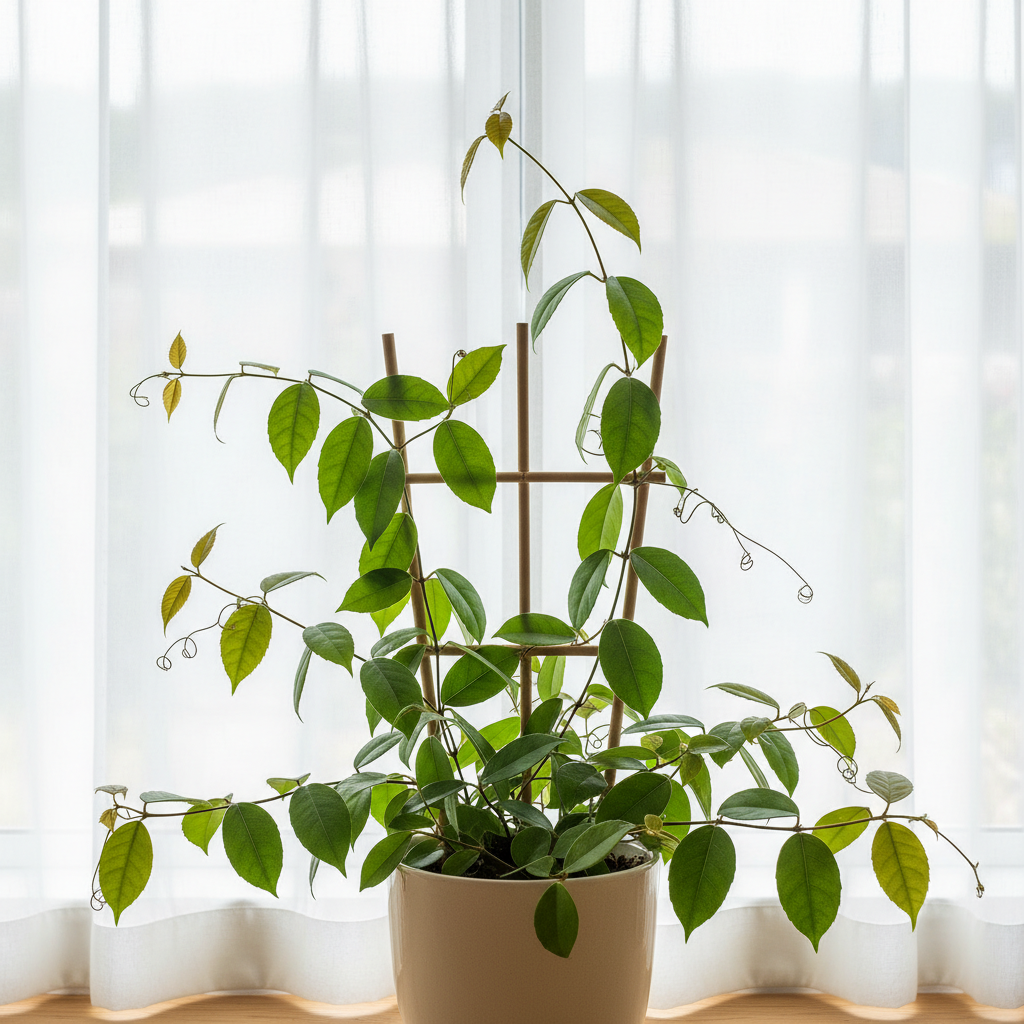
In practical terms, a position one to two metres back from a south-facing window, or set directly in an east or west window, suits the plant beautifully. North-facing windows work too, though growth will be slower and internodes longer. The leaves are sensitive to harsh direct sun: a few hours of summer afternoon light through unfiltered glass will scorch the upper surfaces and produce bleached, papery patches that never recover. If you cannot avoid a hot window, hang a sheer curtain or move the plant a metre back into the room and you will solve the problem immediately.
The lower limit of acceptable light is harder to pin down because the plant fades so gracefully. As light dwindles, the Kangaroo Vine stops producing new leaves at the tips, internodes lengthen visibly, and existing leaves may begin to thin or drop. The colour stays a respectable green, which is why many growers fail to notice the problem until their plant looks distinctly stretched. If you are seeing more than about 8 cm (3 inches) between leaf nodes on new growth, the plant is reaching for more light and needs to be moved closer to a window or supplemented with a small full-spectrum grow light.
Artificial light is a viable option, especially in rooms with deep interiors. A 20 to 30 watt LED grow light running 10 to 12 hours per day at a distance of 30 to 40 cm (12 to 16 inches) from the top of the plant is enough to keep a Kangaroo Vine in active growth. Set the light on a timer; this plant responds well to a stable day-night rhythm and is one of the few houseplants that genuinely benefits from being given a proper winter rest under reduced light levels, more on which below.
If you are growing the plant for a particular structural effect, such as climbing up a tall moss pole or a wall-mounted trellis, place the support in front of the strongest light source and the vine will orient itself naturally. Tendrils are phototropic and will reach toward the brightest area within a few centimetres of the stem, which means a thoughtfully positioned trellis encourages the plant to grow exactly where you want it. Conversely, if you let the support sit in shadow while the plant itself faces the window, you will end up with growth that turns its back on the trellis and trails away across furniture instead.
Pro Tip — The quarter-turn rule: Give the plant a 90-degree turn every two to three weeks. Without rotation, all new growth orients toward the light source and the side facing the room becomes bare. A regular quarter-turn keeps the canopy balanced and the foliage dense on every side.
Watering and Humidity
Watering is where most Kangaroo Vine problems begin, and almost all of those problems come from overwatering rather than underwatering. The plant's thick, woody stems and leathery leaves store water effectively, and its root system, while fibrous and reasonably extensive, is intolerant of waterlogged soil for any length of time. The single most useful rule for this species is to let the top 2 to 3 cm (1 inch) of soil dry out between waterings during spring and summer, and to extend that dry-down to half the pot depth during the cool, low-light months.
Test the soil with a finger before every watering. Push your index finger gently into the substrate to the first knuckle. If it comes out clean and dry, water. If you can feel coolness or any dampness, wait another day or two and test again. With a little practice you will develop an accurate sense of the pot's weight: a freshly watered Kangaroo Vine in a 20 cm (8 inch) pot feels noticeably heavier than the same pot when the substrate is dry, and many experienced growers rely on lift alone after a few months.
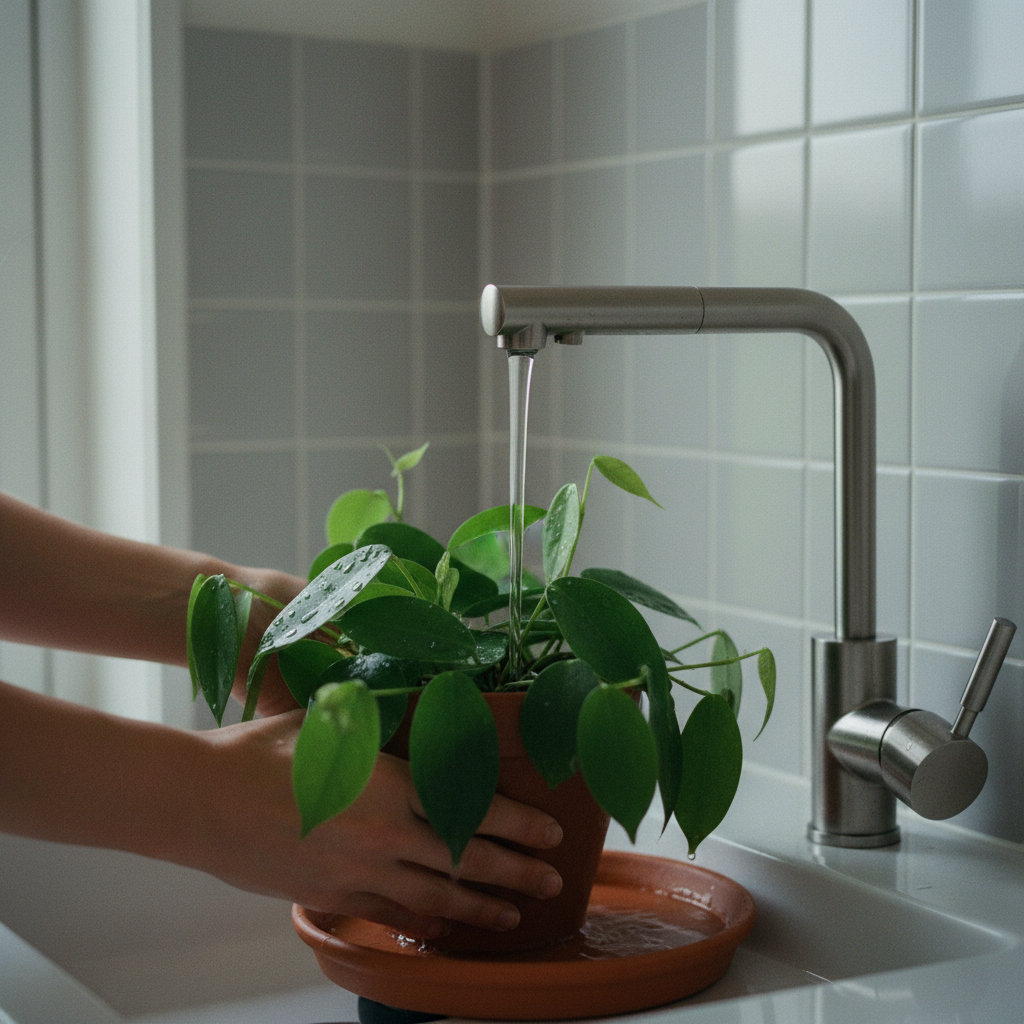
When you do water, water thoroughly. Take the plant to a sink or carry a watering can in slowly until water runs freely from the drainage holes at the base. Let the pot drain fully for several minutes before returning it to its saucer, and never let the plant sit in standing water for more than half an hour. This drench-and-drain rhythm flushes accumulated mineral salts out of the substrate, draws fresh air into the root zone behind the water column, and ensures the entire root ball is hydrated rather than just the top few centimetres.
Water quality matters less for Kangaroo Vine than for sensitive plants like Calatheas or Marantas, but if your tap water is heavily chlorinated or very hard, filtered or left-out tap water will give slightly better long-term results. Rainwater, if you can collect it, is ideal. Avoid softened water from a domestic ion-exchange softener, which is high in sodium and slowly damaging to most houseplants.
Seasonal watering rhythm
In spring and summer, a healthy Kangaroo Vine in a 20 to 25 cm (8 to 10 inch) pot, kept in bright indirect light, typically needs watering once every 7 to 10 days. In a smaller pot, or for a plant sitting in a warmer, brighter spot, that interval might shrink to 5 to 7 days. In autumn, as light levels fall and growth slows, the plant uses less water and the interval naturally extends to roughly every 10 to 14 days. By midwinter, especially if the room is cool and dim, watering once every 2 to 3 weeks is often plenty. Forcing summer-frequency watering on a winter plant is one of the most common reasons that Kangaroo Vines drop leaves in February and March.
Reading the plant's signals
An underwatered Kangaroo Vine wilts visibly, with the youngest stem tips drooping first and older leaves curling slightly along their margins. After a thorough watering, a thirsty plant usually rebounds within a few hours and looks normal again by the next day. An overwatered Kangaroo Vine looks different: leaves yellow from the bottom of the plant upward, and may develop soft brown patches near the petiole. The yellowing is not patchy or marginal as it would be with sun scorch; it is wholesale, with whole leaves changing colour over several days before falling. If you see this pattern, hold off watering, check that the pot is draining freely, and consider whether the substrate has stayed wet for too long.
Humidity
Kangaroo Vine is genuinely undemanding about humidity, which is another reason it suits ordinary homes. The plant is comfortable in the 40 to 60 percent range that most centrally heated rooms naturally maintain, and it will tolerate winter dips into the 30s without leaf damage. There is no need to mist this plant or to run a dedicated humidifier for it. If you do happen to keep one in a particularly bright bathroom or sunroom, it will respond with slightly larger, glossier leaves, but the difference is modest and not worth contriving high humidity for. Grouping the plant with others, as you would in any well-planted room, does it more good than any pebble tray, by gently raising the local humidity through shared transpiration.
Soil, Potting and Repotting
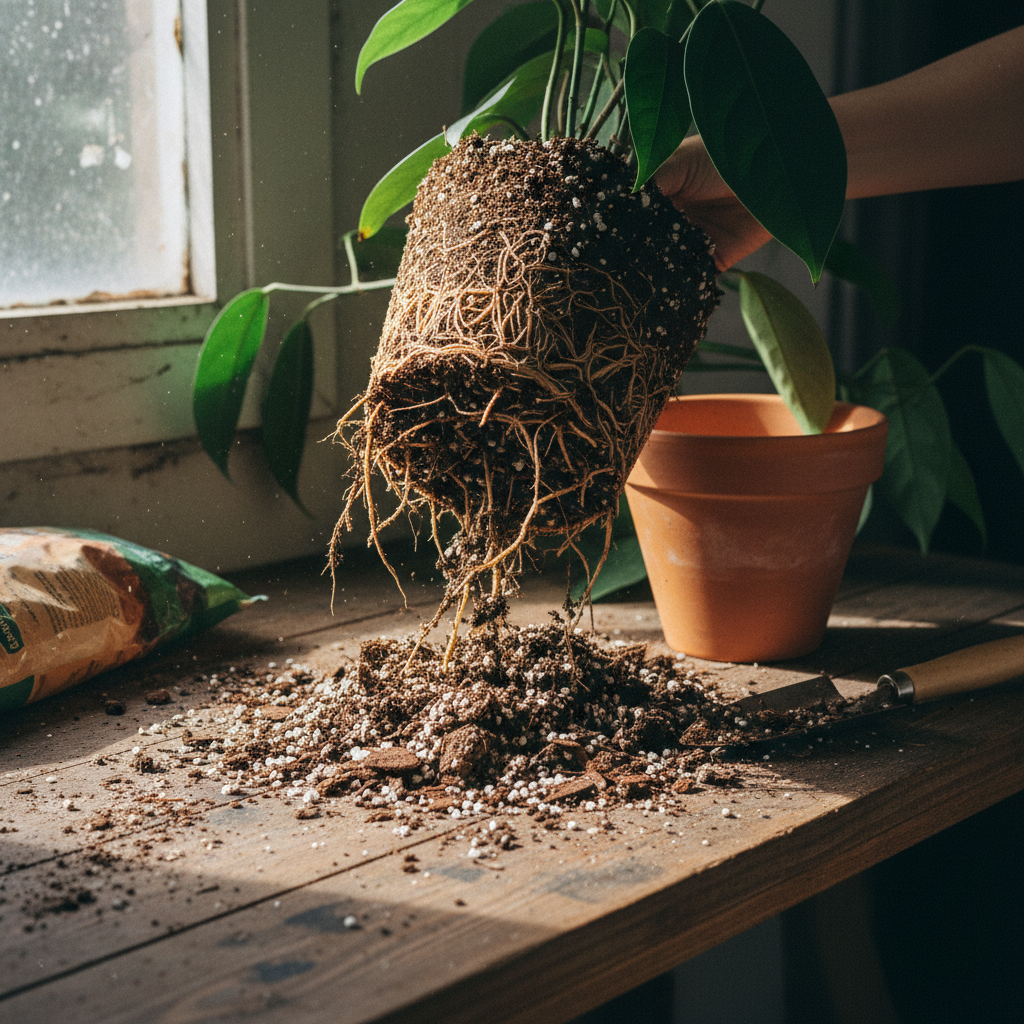
Although Kangaroo Vine is a rainforest plant, its native soils are mineral-rich and well-drained rather than the spongy peat substrates one might assume. The plant's roots prefer an open, gritty mix that holds some moisture but never stays sodden, and that contains enough loam or compost to provide steady nutrition between feeds. A pure peat or coir-based houseplant compost, used straight from the bag, retains too much moisture for this species and gradually compacts to the point of suffocating the roots. Mixing in coarse drainage material is the single most useful thing you can do to keep a Kangaroo Vine healthy long-term.
A reliable mix
A simple and reliable recipe is three parts general-purpose houseplant compost, one part perlite or pumice and one part coarse horticultural grit or fine bark. By volume that means roughly 60 percent compost, 20 percent perlite and 20 percent grit. The compost provides organic matter and a mild nutrient base; perlite ensures lasting drainage and aeration; the grit adds weight and structural integrity so the mix does not slump over time. If you cannot source horticultural grit, doubling the perlite proportion gives a slightly lighter mix that still drains well.
For growers who want a more refined substrate, replacing some of the compost with loam-based John Innes No. 2 (in the UK) or a similar mineral-based potting soil produces a noticeably more stable mix for a long-lived climber. Loam adds clay and silt fractions that hold nutrients well between feeds and resist breakdown over years. Adding a small handful of fine charcoal per pot is optional but useful: it adsorbs minor salts and helps the mix stay fresh through repeated waterings.
Choosing a pot
Drainage trumps decoration when choosing a pot for any Kangaroo Vine. Whatever the outer cachepot, the inner growing container must have at least one generous drainage hole and ideally several. Terracotta is excellent because it wicks moisture from the substrate and helps prevent waterlogging, but it dries out faster, so balance that against the heat and light of the room. Glazed ceramic and plastic both work; just adjust your watering interval upward, because a sealed pot retains moisture for longer.
Size the pot conservatively. The plant prefers to be slightly snug, with its root ball filling about two-thirds of the pot volume after repotting. A pot that is far too large stays wet between waterings because the unrooted volume of substrate has nothing to drink it, and that is a fast track to root rot. When stepping up at repotting time, go up one size only, typically 2 to 5 cm (1 to 2 inches) wider in diameter.
Repotting frequency
Kangaroo Vine is moderately slow-rooting for a vine and does not need annual repotting. Most healthy plants are content to be repotted every 2 to 3 years. Signs that the time has come include roots circling visibly at the surface, water running straight through the pot without wetting the substrate, a noticeable slowing of growth despite good light and feeding, and the pot tipping over because the plant has become top-heavy. Spring, just as new growth begins, is the best time to repot; the plant has the full growing season ahead to recover and put on root growth in its new container.
The repotting process itself is straightforward. Water the plant a day in advance so the root ball comes out cleanly. Slide the plant out, tease the outer roots gently with your fingers to encourage them to grow outward into the fresh substrate, and trim any obviously dead or mushy roots with clean scissors. Centre the plant in its new pot, fill around the root ball with fresh mix, firm gently with your fingers rather than packing it hard, and water in thoroughly. Hold off on fertiliser for 4 to 6 weeks; fresh compost contains enough nutrients to sustain the plant while it re-establishes.
Warning — Don't bury the crown: Plant Kangaroo Vine at exactly the same depth it was sitting in its previous pot. Burying the woody crown a few centimetres below the new soil surface invites stem rot at the base, which is one of the very few problems that can kill an otherwise healthy plant outright.
Fertilising
Like many tough houseplants, Kangaroo Vine is more likely to suffer from over-fertilising than from under-fertilising. The plant is a moderate feeder during active growth and an effectively dormant one through winter, which means the feeding schedule needs to track the seasons closely. A simple, balanced approach delivers excellent results: dilute liquid feeding through spring and summer, and complete rest through autumn and winter.
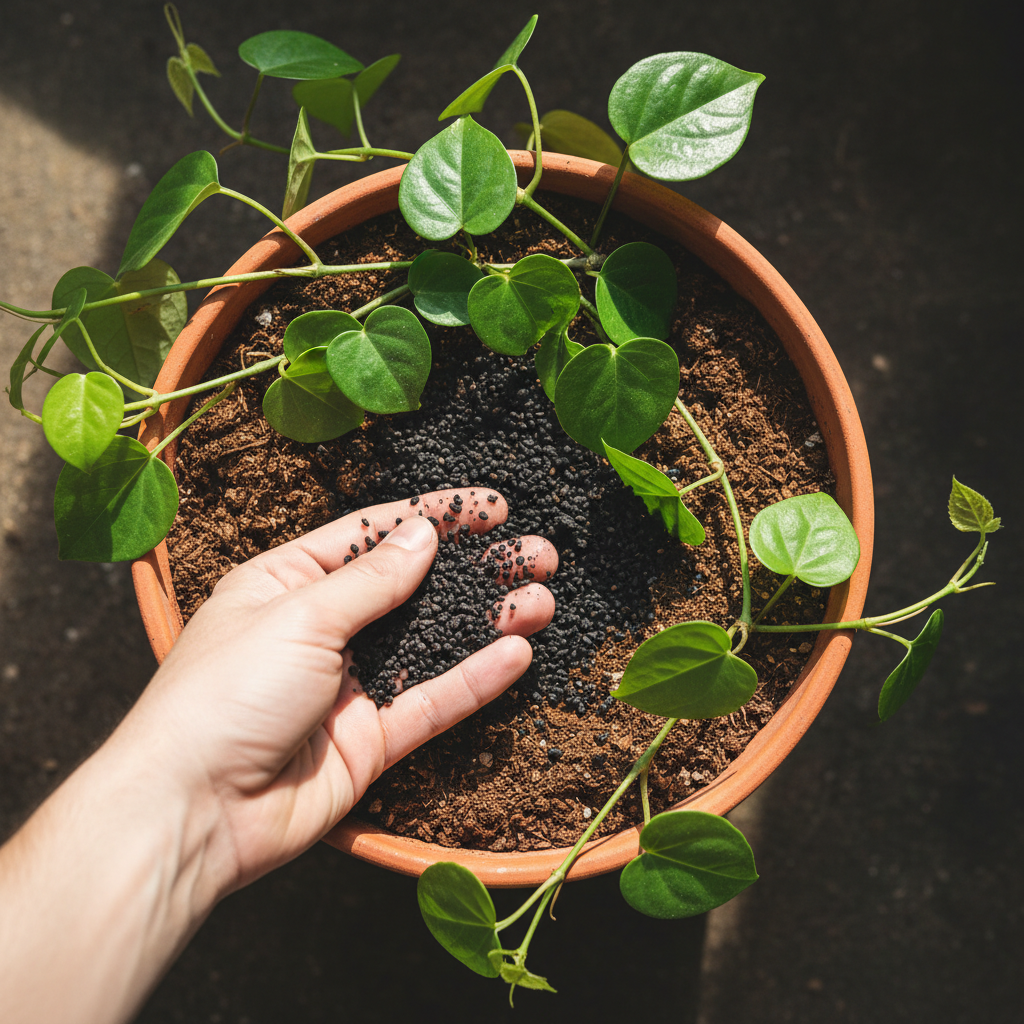
From early spring through to late summer, feed the plant with a balanced general-purpose liquid houseplant fertiliser diluted to roughly half the manufacturer's recommended strength, applied every 3 to 4 weeks. Look for a formulation with similar nitrogen, phosphorus and potassium values such as 10-10-10 or 7-7-7, or use a leafy-plant feed with slightly higher nitrogen if the plant is putting on lots of new foliage and you want to encourage more. Applying feed at half strength to a wet, recently watered root ball spreads the nutrients gently and reduces any risk of burn.
Organic alternatives work very well for this species and arguably produce a calmer, more sustained growth pattern. A light top-dressing of worm castings in early spring (a 1 cm layer scratched gently into the soil surface) followed by monthly applications of compost tea or fish emulsion through the season is an effective regimen that also improves the long-term biology of the substrate. Slow-release pellets, applied at half the labelled rate at the start of the growing season, provide a low-maintenance option for growers who travel or who simply prefer not to remember a feeding schedule.
Signs of feeding problems
Underfed Kangaroo Vines develop pale, smaller leaves and noticeably slower growth, with occasional patchy yellowing of older leaves as the plant moves nitrogen up to support new ones. Overfed plants show the opposite problem: vigorous but weak, soft growth that flops easily, brown-edged or crispy leaf tips, and a faint white salty crust on the soil surface or on the rim of unglazed pots. If you spot the latter, flush the substrate by watering thoroughly with clear water two or three times in succession, draining each time, and pause feeding for at least a month before resuming at half the previous rate.
Winter rest
Stop feeding entirely from late October through to early March in temperate climates. The plant's metabolism slows in line with shorter days and cooler temperatures, and any nutrients applied during this period are not absorbed effectively. Worse, they accumulate as salts in the substrate and can damage roots that are barely active. Treat the winter rest as a feature, not a limitation. A Kangaroo Vine that has had three to four months of cool, dry, unfed rest will burst into vigorous, well-shaped new growth in early spring, often with a markedly better display of fresh foliage than a year-round-warm plant.
Propagation
Kangaroo Vine is delightfully easy to propagate from stem cuttings, which is one of the great pleasures of the species. A single mature plant can produce dozens of viable cuttings over a single summer, and the resulting young plants establish quickly enough to make presentable gifts within six months. The two reliable methods are water rooting and direct rooting in a humid perlite or substrate mix; both work, with slightly different timelines and success rates.
Taking cuttings
Spring and early summer are the ideal months to take cuttings, when the parent plant is in active growth and ambient warmth is high enough to encourage rooting. Choose semi-mature stems: not the very softest new growth at the tips, which can wilt before rooting, and not the woodiest old wood, which roots slowly. Aim for stems where the wood is still flexible but no longer bright green and tender. Cut a length of 10 to 15 cm (4 to 6 inches) containing at least three to four leaf nodes, using clean, sharp secateurs or a craft knife. Make the cut just below a node, where rooting hormones naturally concentrate.
Strip the leaves and tendrils from the lowest one or two nodes, leaving two or three leaves at the top of the cutting. If the remaining leaves are unusually large, trim each in half across the blade to reduce moisture loss while the cutting is rootless. Dipping the cut end briefly in rooting hormone powder is optional and modestly improves success rates; the plant roots readily enough without it.
Method 1: Water rooting
- Place each cutting in a clear glass or jar of tepid water, with the stripped lower nodes submerged and the leaves clear of the water line.
- Set the jars on a bright windowsill out of direct sun.
- Refresh the water every 4 to 5 days to keep it oxygenated and prevent algae.
- Watch for fresh white roots emerging from the submerged nodes within 2 to 3 weeks.
- When roots are 3 to 5 cm (about 1 to 2 inches) long, pot the cuttings into small individual containers of damp, well-draining substrate.
- Keep the newly potted plants in slightly higher humidity, for example under a clear bag with a few small holes cut for airflow, for the first 7 to 10 days while the water-grown roots adjust to soil.
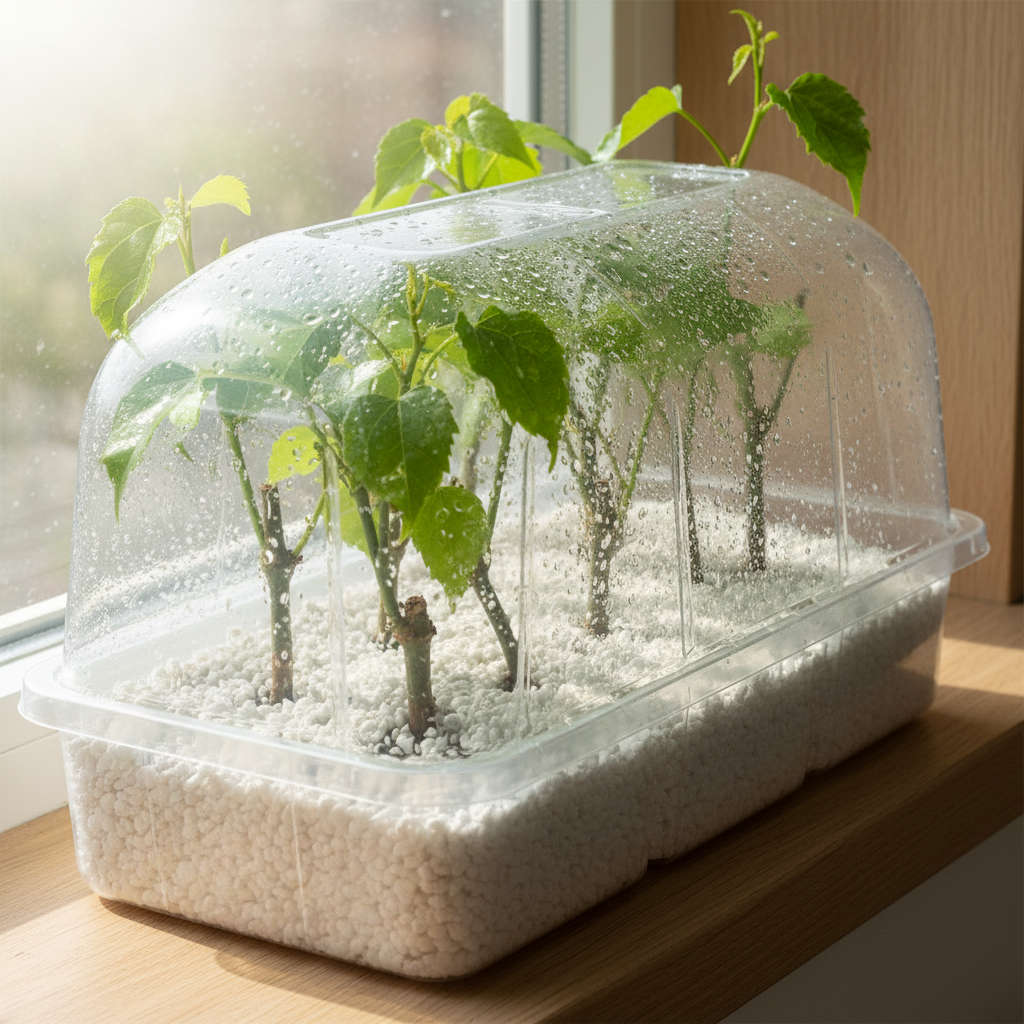
Method 2: Perlite or substrate rooting under a humidity dome
- Fill a shallow tray with damp horticultural perlite, or a 50:50 perlite and coir mix, to a depth of 5 to 7 cm (2 to 3 inches).
- Insert each prepared cutting upright so that at least two nodes are buried in the substrate.
- Cover the tray with a clear plastic dome, an upturned freezer bag on supports, or any improvised hood that traps humidity while letting in light.
- Place the tray in bright indirect light, never in direct sun, and keep the substrate consistently moist but never sodden.
- Open the cover briefly every couple of days for fresh air and to check for fungal growth.
- Expect resistance when you tug gently after 3 to 4 weeks; that resistance indicates roots have formed. Pot the rooted cuttings into individual containers and gradually wean them off the humidity dome over a week.
Both methods give roughly 80 to 90 percent success rates under normal conditions. Water rooting is more visually rewarding, since you can watch the roots develop, and is the better introduction for beginners. Substrate rooting produces stronger root systems that transplant with less shock, and is preferred for cuttings destined to grow on into large mature specimens.
Growing on young plants
Young Kangaroo Vine plants establish quickly once potted. For the first three months, keep them in slightly brighter conditions than you would a mature plant, water more often (the root systems are small and dry out faster) and pinch out the growing tips after the first 20 cm (8 inches) of new growth to encourage branching. Three to five cuttings rooted together in a single 15 cm (6 inch) pot give a much fuller plant than a single cutting, and is the trick used commercially to produce the bushy specimens sold at garden centres.
Pests and Diseases
One of the great advantages of Kangaroo Vine over more delicate houseplants is its resistance to most common pests. The tough leaf cuticle makes the plant unattractive to many sap-feeders, and the plant generally shrugs off minor infestations that would devastate a thinner-leaved species. That said, three pests turn up regularly enough to be worth knowing, and a small handful of cultural diseases can affect overwatered or stressed plants.
Spider mites
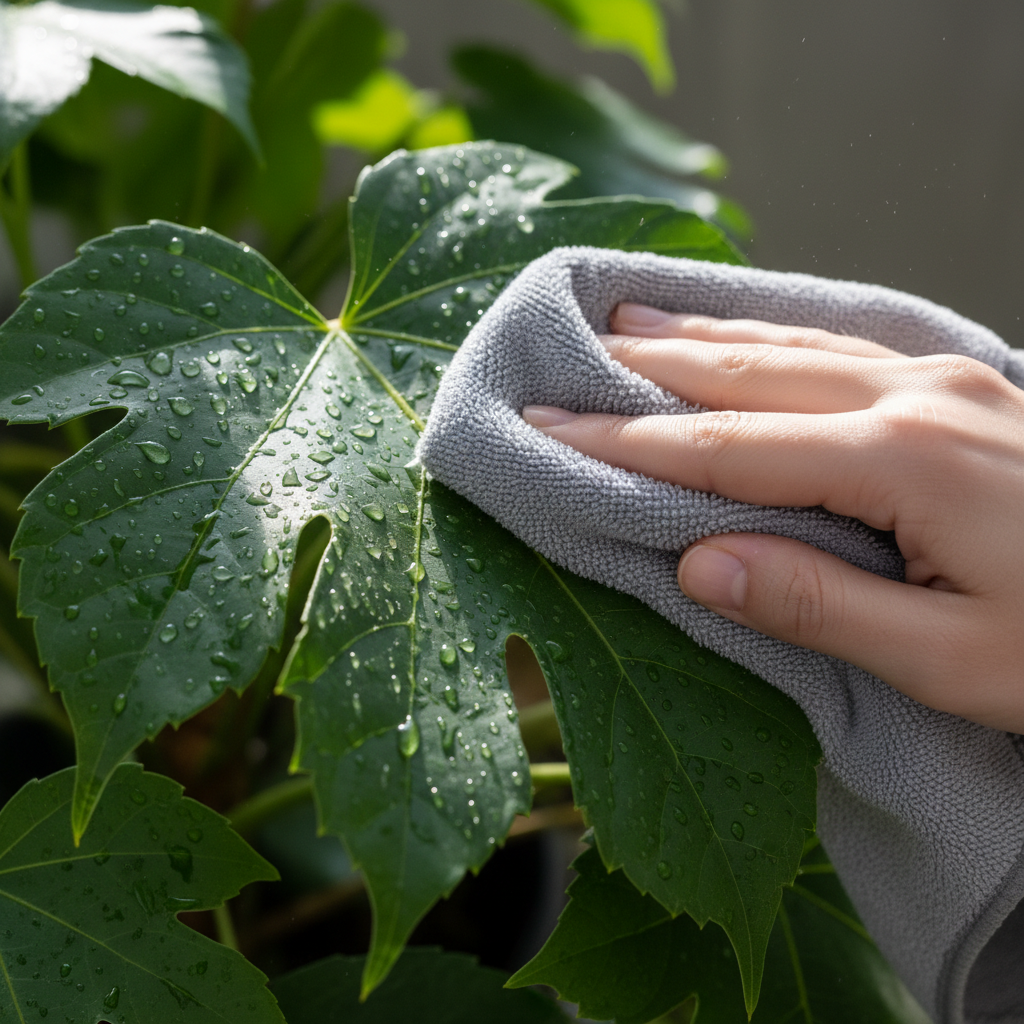
Spider mites are the most likely pest on a Kangaroo Vine, especially during dry winter months when central heating drops the local humidity below 30 percent. Their feeding produces fine pale stippling on the upper leaf surfaces, and severe infestations show as faint webbing in the leaf axils. Use a magnifying glass or your phone camera at maximum zoom on the underside of an affected leaf to confirm; the mites are tiny, slow-moving and reddish-brown.
Treat by first physically removing as many mites as possible: take the plant to the sink or shower and rinse both leaf surfaces with a gentle stream of tepid water. Follow with a thorough spray of insecticidal soap or a 1 percent neem oil solution, paying particular attention to leaf undersides. Repeat every 5 to 7 days for three cycles to break the egg-hatch cycle. Raising local humidity afterwards, by grouping the plant with others or running a small humidifier nearby, makes a recurrence less likely.
Mealybugs
Mealybugs occasionally settle into the leaf axils and on the underside of older leaves, where their white waxy bodies look at first glance like flecks of cotton wool. The first sign for most growers is a stickiness on the leaves, a sugary residue called honeydew that drips down onto whatever the plant sits above. For light infestations, dab each mealybug directly with a cotton bud dipped in 70 percent isopropyl alcohol; the alcohol dissolves their waxy coating and kills them on contact. For heavier infestations, follow with a full plant spray of insecticidal soap and repeat weekly until two consecutive inspections come up clean.
Scale insects
Brown scale insects sometimes attach themselves along the stems and the major leaf veins, where they look at first like small lumps of bark. Inspect any stickiness or sooty mould growth carefully, because scale is the most likely culprit on a Kangaroo Vine. Treatment is the same as for mealybugs but slower-going: scrape or wipe each scale off with a fingernail or cotton bud dipped in alcohol, then follow with a horticultural oil spray to suffocate any unhatched young. Two or three rounds of treatment, a week apart, usually clears the problem.
Diseases and physiological problems
Root rot, almost always caused by a combination of waterlogged substrate and cool temperatures, is the most serious disease that affects Kangaroo Vine. The first symptoms are general yellowing and leaf drop without any visible pest. If you suspect rot, unpot the plant, rinse the roots gently and inspect them. Healthy roots are pale cream or tan and firm to the touch; rotting roots are dark brown or black, slimy and detach easily. Trim away every soft root with sterilised scissors, repot the plant in fresh, dry substrate, and water sparingly for the next several weeks while it recovers.
Powdery mildew sometimes appears as a fine white dust on leaf surfaces, usually in still, humid conditions with poor air circulation. Improve airflow first, then treat with a milk-and-water spray (one part milk to nine parts water) or a sulphur-based fungicide as needed. Brown leaf tips, in the absence of any pest or disease, almost always indicate either underwatering, low humidity in a particularly dry room, or salt accumulation from over-fertilising; each has the cultural fix described in the sections above.
Pro Tip — Quarantine new arrivals: Whenever you bring a new plant home, keep it well separated from your other plants for two weeks and inspect it every few days. Most pest outbreaks in established collections begin with a single uninspected newcomer, and Kangaroo Vines are robust enough to be the survivors, not the patient zero, of an infestation.
Popular Varieties
Compared with houseplant genera that have produced hundreds of named cultivars, Cissus antarctica remains a relatively un-bred species. Most plants offered for sale are the straight species, which is more than handsome enough to deserve no improvement. There is, however, one widely traded dwarf form, and the species is sometimes confused at point of sale with its close relatives in the genus Cissus. Knowing the difference helps you buy the plant you actually want.
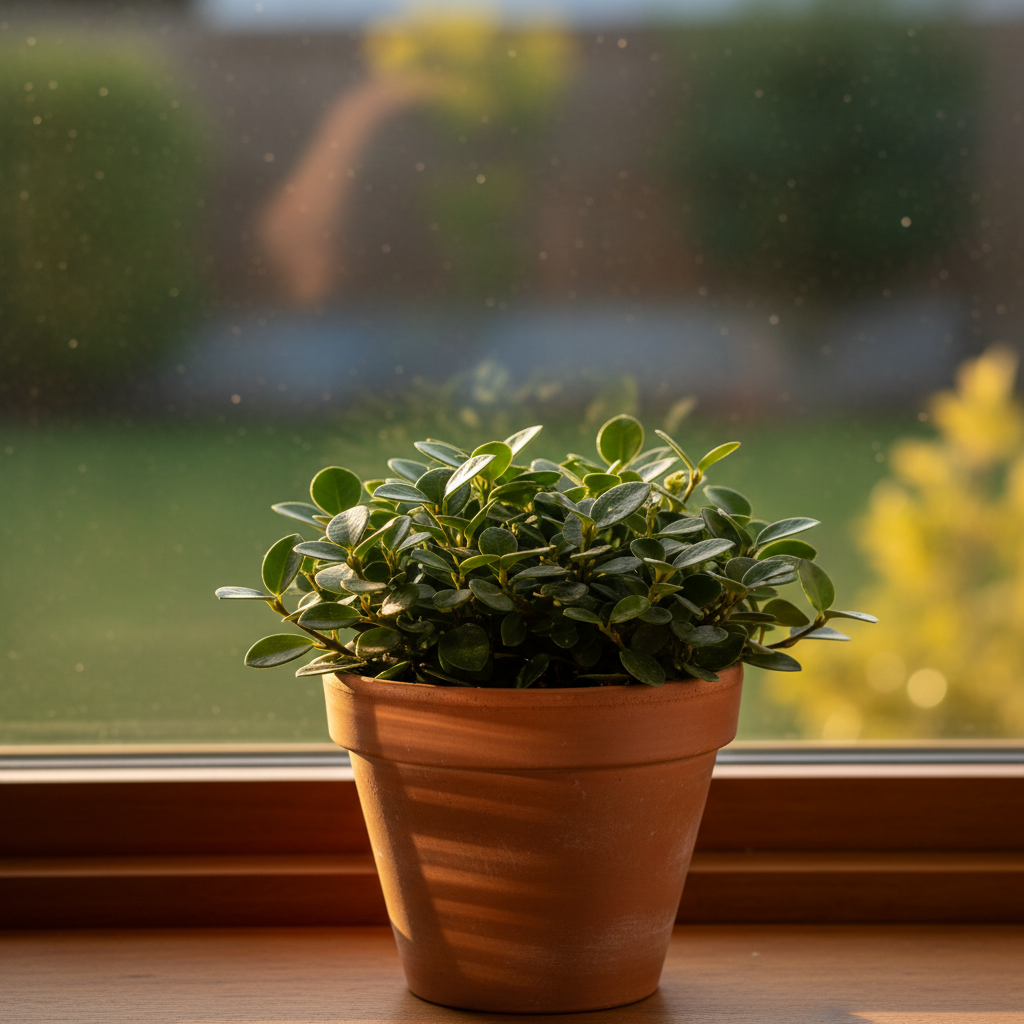
Cissus antarctica 'Minima'
The most readily available cultivated form is 'Minima', a naturally dwarf selection with shorter internodes, slightly smaller darker leaves and a noticeably denser, bushier silhouette than the standard species. 'Minima' rarely climbs much above a metre indoors and looks particularly good in a tabletop pot or a small wall-mounted planter where the standard species would quickly outgrow its space. Care requirements are identical to those of the standard form, though the more compact growth means it tolerates a slightly smaller pot for longer between repottings.
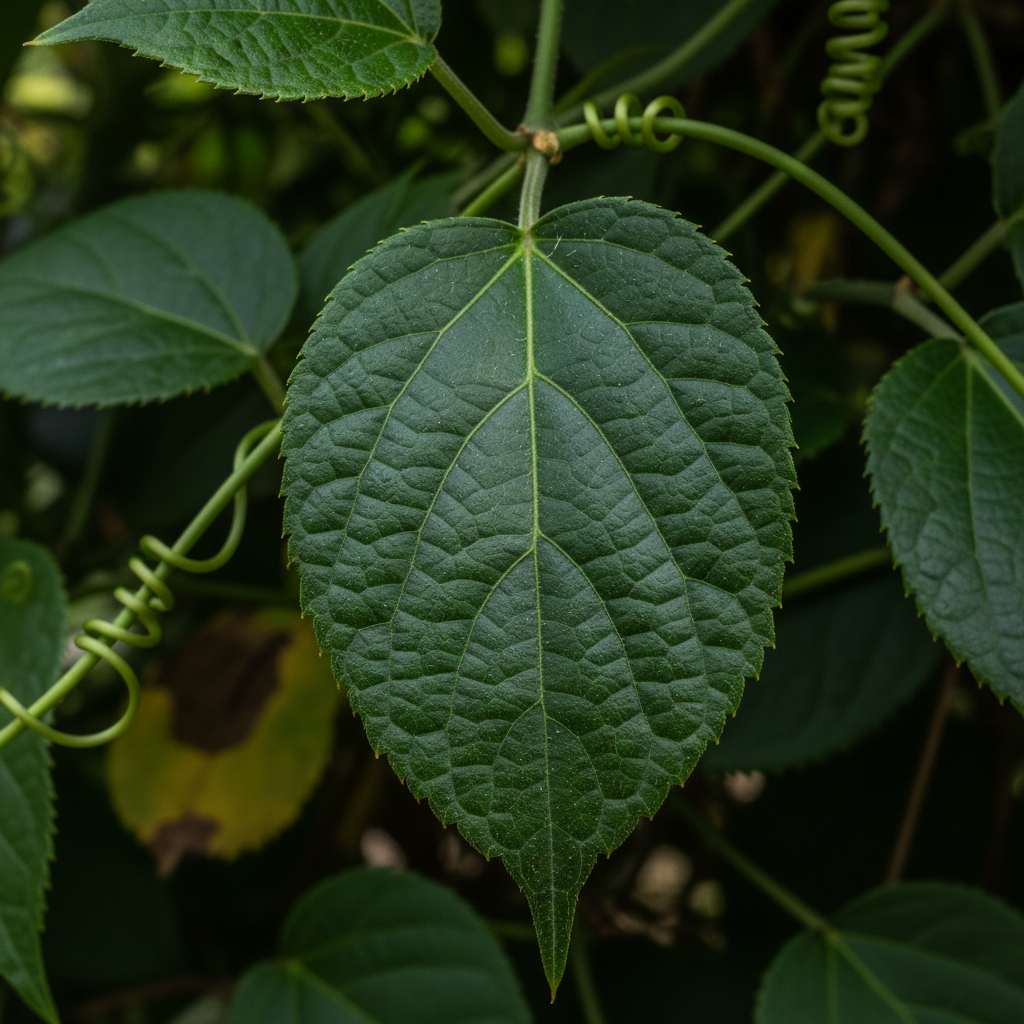
Standard species form
The straight species, Cissus antarctica, is the form sold most widely as "Kangaroo Vine" without any cultivar suffix. Leaves average 8 to 10 cm (3 to 4 inches) long with prominent serrations, and the plant climbs vigorously to 2 to 3 metres (6 to 10 feet) indoors when given a tall support. The standard form is the right choice for trellises, moss poles and any setting where you want the vine to make a substantial vertical statement.
Close relatives often mistaken for Kangaroo Vine
Several other Cissus species share the indoor-plant trade with C. antarctica and are sometimes mislabelled. Cissus rhombifolia, sold as Grape Ivy or Oak Leaf Ivy, has trifoliate leaves and a more delicate appearance. Cissus discolor, the Rex Begonia Vine, has dramatically patterned silver-and-burgundy leaves and is more humidity-demanding. Cissus striata, Miniature Grape Ivy, has small five-lobed leaves and a fine-textured trailing habit. If you are buying a Kangaroo Vine specifically, look for the characteristic simple, undivided, glossy oval leaves with serrated margins on long single-stem vines; that distinguishes it from any of the lookalikes.
Frequently Asked Questions
Is Kangaroo Vine safe for cats and dogs?
Yes. The ASPCA lists Cissus antarctica as non-toxic to both cats and dogs, and it is one of the very few large vining plants that can safely share a room with pets. Sensible precautions still apply: keep newly applied fertilisers and pesticides out of reach, and discourage chewing simply because chewed leaves spoil the plant's appearance.
How fast does Kangaroo Vine grow?
Growth rate is moderate. In bright indirect light, with regular watering and feeding through spring and summer, a healthy plant can add 60 to 90 cm (24 to 36 inches) of vining growth in a single growing season. In lower light or cooler conditions, expect about half that. A pinched plant that is encouraged to branch will fill out sideways more than it climbs, which can be the more useful pattern for hanging baskets and shelf displays.
Can I grow Kangaroo Vine outdoors?
Yes, in a suitable climate. Cissus antarctica is hardy outdoors in USDA zones 10 and 11, roughly corresponding to frost-free Mediterranean, subtropical and warm temperate climates. In cooler regions it makes an excellent summer-on, winter-in container plant: bring it out to a sheltered, partially shaded position once night temperatures stay above 10 degrees Celsius (50 degrees Fahrenheit), and return it indoors before the first autumn cold snap.
Why is my Kangaroo Vine dropping leaves?
Sudden leaf drop in Kangaroo Vine almost always traces back to a sharp change in conditions: a sudden cold draught, a move from a bright shop into a dim home, a missed watering followed by overcompensation, or a recent repotting. The plant's response to stress is to shed leaves quickly to reduce its water demands, and the leaves dropped are usually older ones from the lower stem rather than fresh top growth. Stabilise the conditions, water and feed normally, and new growth will resume within a few weeks.
My plant's leaves are turning brown at the tips. Why?
Brown leaf tips on Kangaroo Vine usually indicate one of three things: extended dry-out of the substrate between waterings, accumulated mineral salts from overfeeding or hard water, or genuine low humidity in a particularly dry heated room. Flush the substrate by watering thoroughly two or three times in succession to wash salts through, settle into a more consistent watering rhythm, and consider moving the plant away from any nearby radiator. Existing brown tips will not green up; new growth will emerge clean if the underlying cause is fixed.
Does Kangaroo Vine need a moss pole or trellis?
It does not strictly need one. The plant trails attractively from a hanging basket or a high shelf, and many growers prefer that look. However, the species is at its most spectacular when given a tall vertical support: the leaves orient outward, internodes shorten, and the plant develops a fuller, more architectural silhouette. A 1 to 1.5 metre (3 to 5 foot) moss pole or a wall-mounted lattice are both excellent options. The tendrils grip readily; you should rarely need to tie the plant in.
How long does a Kangaroo Vine live?
With reasonable care, an indoor Kangaroo Vine easily lives 10 to 15 years, and well-tended specimens have been known to thrive for two or three decades. Old plants develop attractively woody main stems and a slightly bonsai-like presence, and benefit from occasional hard pruning every few years to refresh their canopy. Take and root cuttings periodically; even if the parent plant remains healthy, having a young plant in reserve is the cheapest possible insurance against an unexpected accident.
Should I prune my Kangaroo Vine?
Yes, light pruning improves the plant in almost every way. Pinching out the growing tips of vigorous shoots in spring encourages branching and a fuller, denser plant. Cutting back overly long or bare stems in late winter, just before the growing season starts, often triggers strong new growth from dormant nodes lower down the stem. Always sterilise your secateurs with isopropyl alcohol between cuts to avoid spreading disease, and keep the cuttings for propagation; almost any healthy piece of stem will root.
Cared for with even modest attention, a Kangaroo Vine repays years of patient steady growth with a generous, glossy presence in the home. It is not the showiest houseplant on the market, but it is among the most reliable, and its quiet good looks tend to grow on people. Plant one in a sturdy pot, give it a clear corner with good light, and let it find its own way up a support. A few years later you will likely wonder how you ever did without it.






